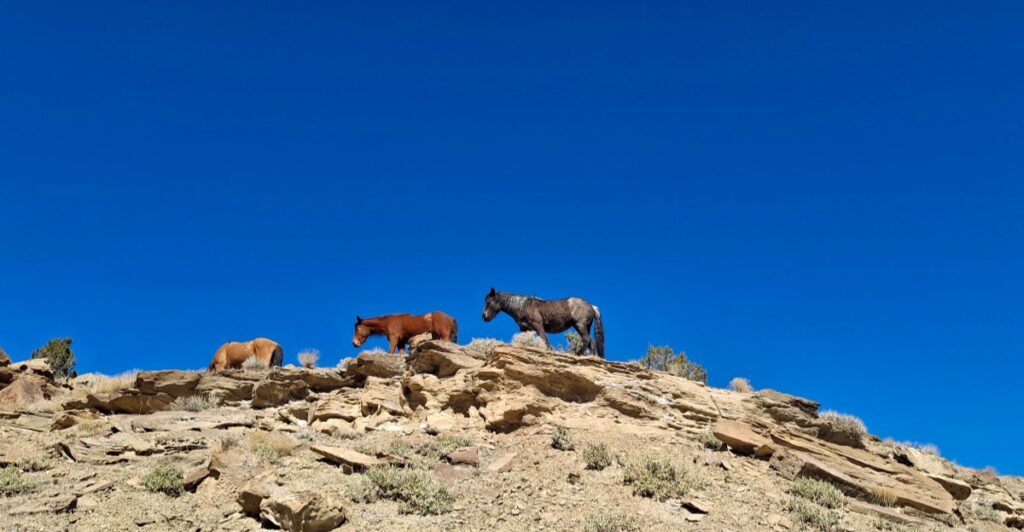
A flash of movement across the desert can turn an ordinary hike into something unforgettable at the Little Book Cliffs Wild Horse Range near Grand Junction. Rugged trails wind through sandstone canyons and open country where wild horses roam, graze, and raise their young across thousands of acres.
There are no guarantees that a herd will appear around the next bend, which makes patience—and a little luck—part of the adventure. The remote terrain also demands preparation, especially when temperatures climb. But for hikers who come ready for the conditions, catching sight of mustangs moving freely across the Colorado landscape can make every dusty mile worthwhile.
Sandstone Walls and Hidden Canyons Above Grand Junction
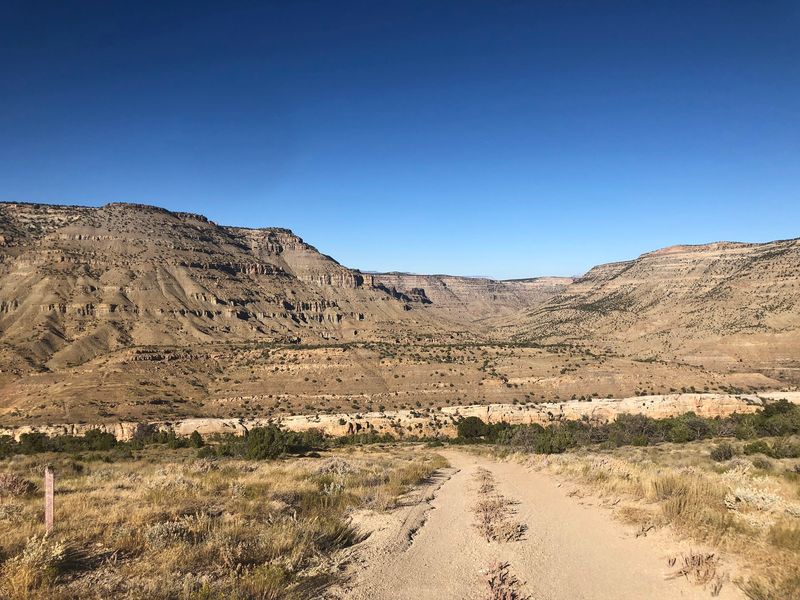
Drive a few miles north of the orchards and vineyards of the Grand Valley, and the ground suddenly folds upward into giant layered cliffs.
The Book Cliffs got their name because the stacked rock bands look like the edges of books lined up on a shelf. Up close, those pages turn into steep walls, narrow side canyons, and dry washes that twist out of sight.
The range covers roughly 36,000 acres of this broken country. Pinyon pine and juniper trees dot the slopes, while sagebrush fills the flatter benches. Down in the canyon bottoms, sandy creek beds act like natural roads for animals, hikers, and riders.
Look closely at the cut banks along the trail and dark stripes appear in the rock. Those are coal seams, a reminder that miners once worked this area long before it became a horse refuge. The black layers sit right beside pale sandstone, making the walls look striped like a layered cake.
Color shifts all day here. Morning light turns the cliffs soft gold, midday flattens everything into bleached tan, and evening paints the upper ledges orange and pink. Shadows pool deep in the canyons long before the ridges go dark.
Sound changes too. Once you drop below the rim, highway noise vanishes and wind through juniper branches takes over. Ravens call from the ledges, and loose gravel clicks under boots or tires.
Distance plays tricks in this landscape. A ridge that looks a short walk away might take an hour to reach because canyons cut between you and it.
Trails loop around fins of rock, then open onto wide views of the valley below, where green farm fields sit like a patchwork quilt beside the Colorado River.
Meet the Mustangs of the Little Book Cliffs
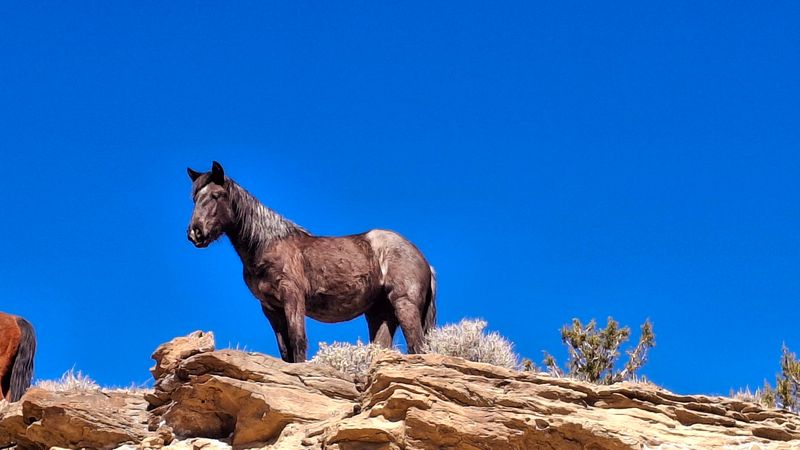
A stallion standing on a ledge, mane blowing, watching his family below. That scene really happens here, and it happens without any ranch owner or fence involved. The horses of the Little Book Cliffs are truly wild, living in small family groups called bands.
Each band usually has one stallion, a few mares, and their young. Foals often show up in spring, wobbling after their mothers on skinny legs. Young males eventually leave and form bachelor groups, hanging out together until they can win mares of their own.
The range is one of only three places in the country set aside mainly for wild horses. The Bureau of Land Management oversees the herd and keeps track of each animal. Many horses here even have names, because local volunteers know them by their markings and family history.
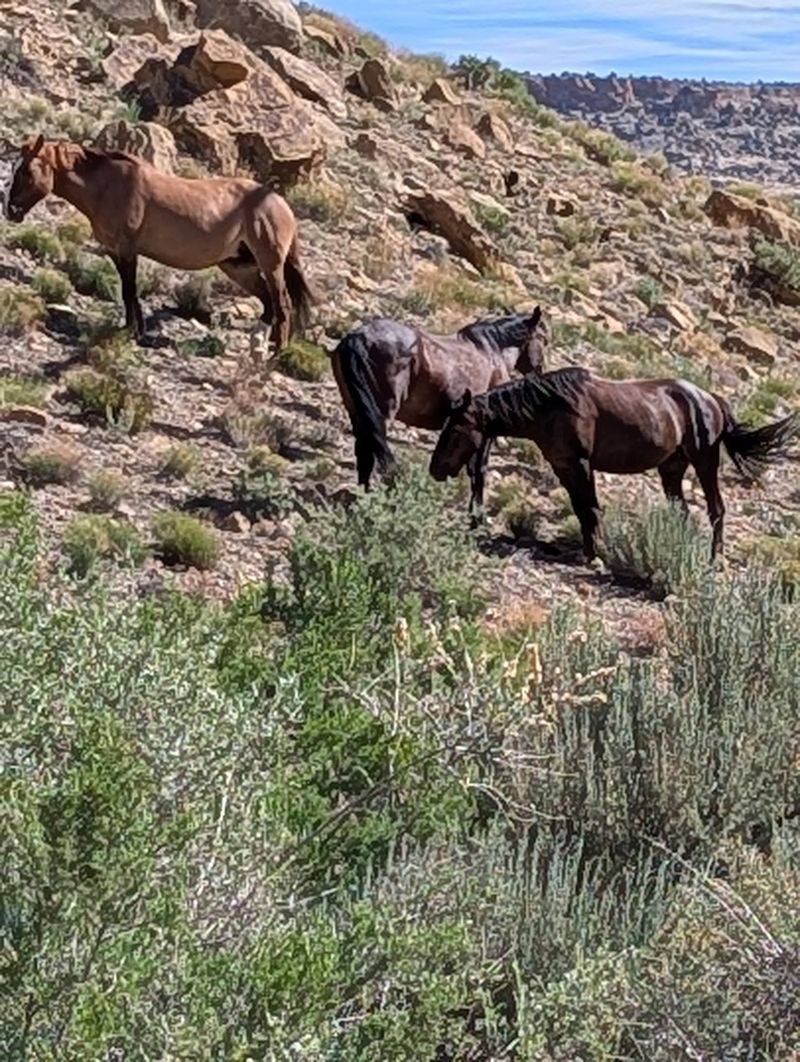
Coat colors run wide. Bays, sorrels, grays, blacks, and the occasional pinto or roan all roam these hills. Spotting a blaze on a face or white socks on legs helps tell individuals apart.
Behavior is worth watching more than snapping a quick photo. Stallions sometimes rear up and squeal at rivals, while mares nip at youngsters who wander too far. A band will often line up single file when moving, with the lead mare out front and the stallion pushing from behind.
Give them room. Federal law protects these animals, and getting too close can stress them or spark a defensive kick. Binoculars or a zoom lens let you see swishing tails and twitching ears without changing how the horses act. Stay at least a few hundred feet away, keep voices low, and let them decide where to wander next.
Fissure Arch, Coal Seams, and Other Surprises
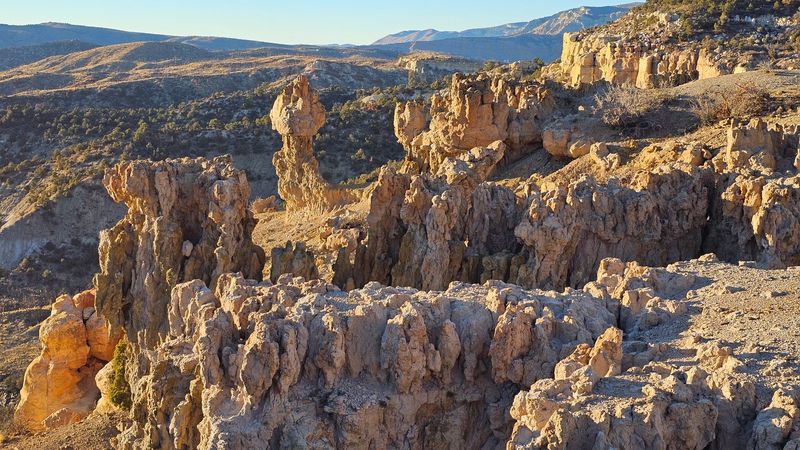
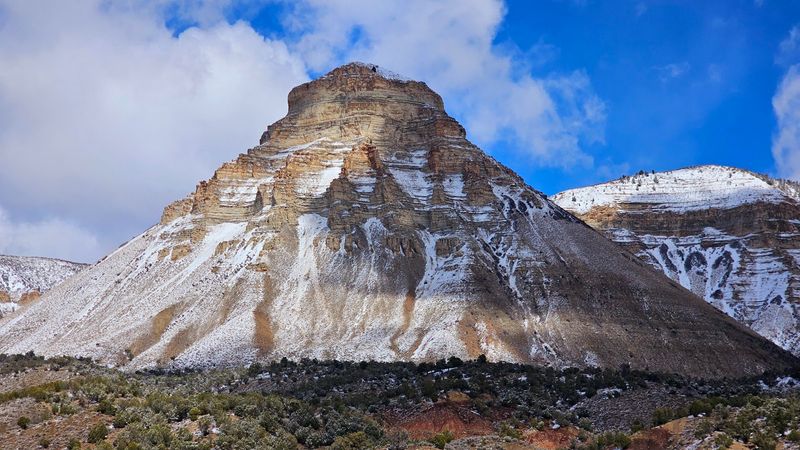
Horses grab the headlines, but the range hides plenty of smaller rewards for curious explorers. Tucked behind Mount Garfield, the flat-topped peak towering over Palisade, sits a feature called Fissure Arch. It is a slim opening in the rock that rewards anyone willing to scramble a bit off the main routes.
Mount Garfield itself works as a landmark. Its steep gray face is easy to spot from Interstate 70, and the back side connects to trails that climb toward the top of the Book Cliffs. From up there, the entire Grand Valley spreads out, with Grand Junction, Fruita, and Palisade lined up like toy towns.
Back down low, the washes carry their own surprises. Coal layers peek out from banks, and old signs of mining days hint at a busier past. Kids especially love spotting the shiny black streaks and guessing how deep they go.
Wildlife goes way beyond horses. Mule deer slip through juniper stands at dawn, and lizards dart across sun-warmed rocks by midmorning. Hawks and golden eagles ride warm air currents above the cliffs, while chukar partridges cluck from rocky slopes.
Tracks tell stories too. Fresh hoofprints in damp sand, piles of horse manure called stud piles, and scuffed dirt where horses rolled all show recent activity. Stallions build those manure piles on purpose to mark territory, so a big one usually means a band lives nearby.
Evening adds one last bonus. The sunset view from the top of the cliffs ranks among the best in western Colorado, with the valley lights flickering on below as the sky fades from orange to deep purple.
How Volunteers and the BLM Keep the Herd Wild
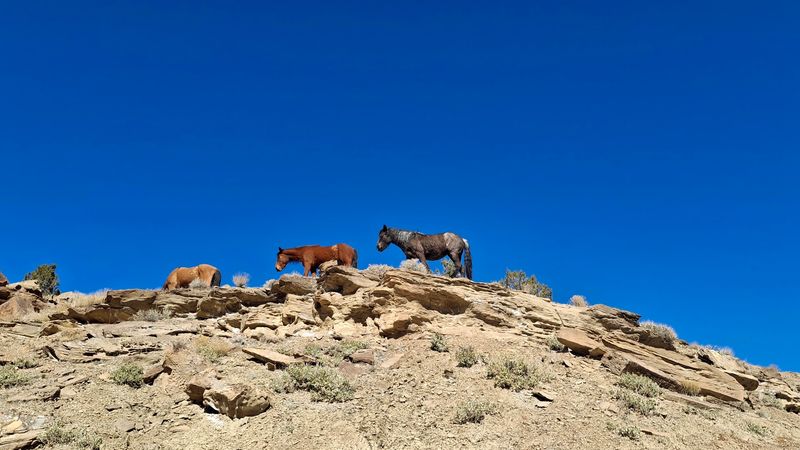
Back in 1974, this patch of desert became one of the first areas in the nation officially set aside for wild horses. That decision came just a few years after the Wild Free-Roaming Horses and Burros Act of 1971 gave mustangs federal protection. Ever since, the Little Book Cliffs herd has been a test case for managing wild animals on public land.
Balance is the tricky part. Horses have few natural predators here, so their numbers can grow fast. Too many horses means too little grass and water, which hurts the land and the herd itself.
To keep things in check, the Bureau of Land Management sets a target population range. Over the years, managers have used fertility control darts on mares to slow births. When the herd grows too big anyway, some horses are gathered and offered for adoption to new owners.
Local people play a huge role. A volunteer group called Friends of the Mustangs has worked alongside the BLM for decades, hauling water, fixing fences on the outer boundary, and tracking individual horses. Their careful records help managers know which mares have foaled and how bands are shifting.
Roundups stir strong feelings. Some people want the horses left completely alone, while others worry about overgrazing and range damage. Both sides care about the animals, which keeps public conversation lively in Grand Junction and beyond.
Knowing this history changes how a sighting looks. A mare grazing on a hillside might have a name, a family tree, and years of notes written about her. Each horse spotted is part of a long-running local effort to keep wild animals living freely, right next to a growing city.
Boots, Saddles, or Four Wheels: Picking Your Ride
Sedans and the Book Cliffs do not get along. Many people learn this the hard way, rolling up in a rental car and finishing the trip on foot. Picking the right way to travel shapes the whole day.
Hiking is the most flexible choice. Trails are signed and fairly easy to follow, and plenty of side routes let you build your own loop. Some visitors spot horses within a mile or two, especially on trails starting from the Coal Canyon area.
Walking the creek beds deeper into the canyons offers a quieter experience. Soft sand slows your pace, so plan for slower miles than on a hard path. Good hiking shoes with ankle support help on loose rock.
Four-wheel drive vehicles open up more ground. The main routes include rough sections, steep drops into washes, and tight spots where brush scrapes paint.
A high-clearance jeep or truck handles them best, and UTVs and side-by-sides are popular too, though rules about where motorized vehicles can travel vary by area, so check posted signs.
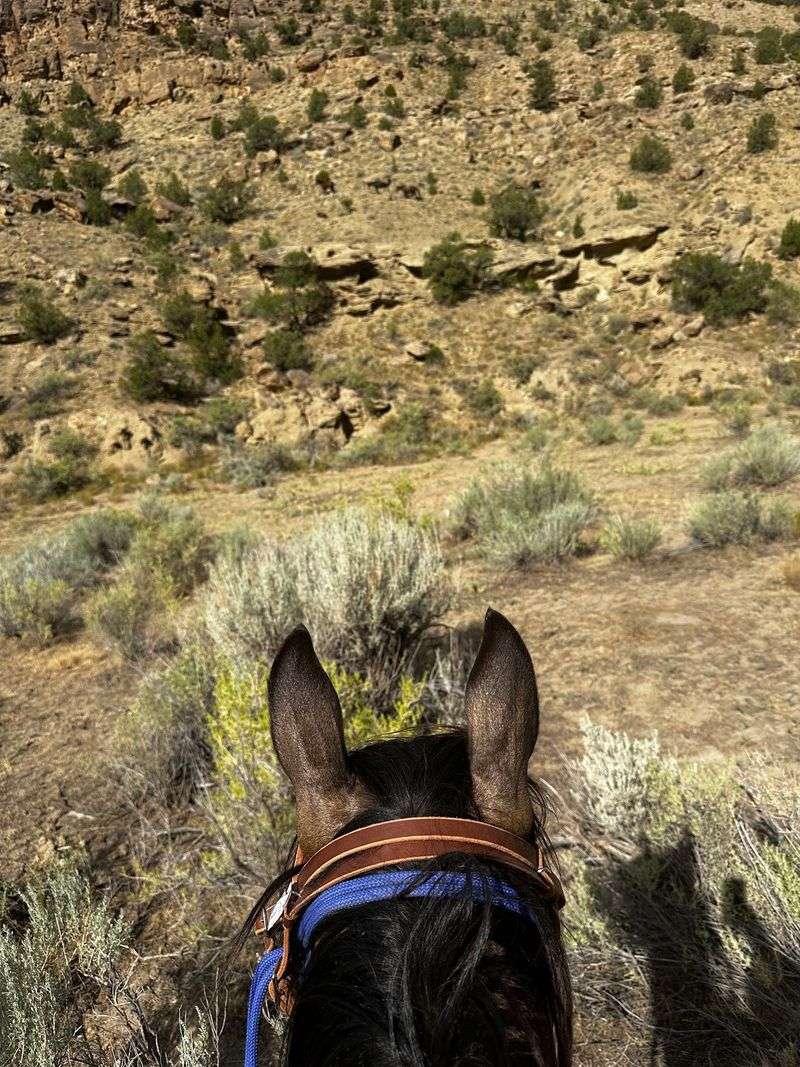
Horseback riding is allowed, and riding beside wild horses sounds like a dream. Real life is messier. Wild stallions may react to a domestic horse, and rocky, steep trails can rattle a nervous mount, so only experienced riders on calm, trail-tested horses should try it.
Mountain bikers also use parts of the area, though sand can bog tires down. Whatever the method, stay on established routes.
Driving off-trail crushes the plants the horses depend on, and fresh tire scars can last for years in dry desert soil. Pick a pace that lets you stop often, scan the slopes, and listen for hooves on rock.
Colorado Desert Timing: Seasons, Heat, and Flash Floods
Spring is the sweet spot. March through May brings cooler temperatures, fresh green grass, and new foals trailing their mothers. Horses often graze lower on the slopes this time of year, which makes them easier to find.
Fall runs a close second. Cottonwoods along the washes turn yellow, mornings feel crisp, and afternoons stay pleasant. Light hits the cliffs at a lower angle, adding deep shadows that make photos pop.
Summer is a different beast. Temperatures in this part of western Colorado regularly climb into the 90s, and the rock throws heat back at you. Horses tend to retreat into shade or higher ground during midday, so early morning trips work much better.
Water is non-negotiable. There are no drinking fountains or shops inside the range, so pack more than seems necessary, plus salty snacks and sun protection. A wide-brim hat and light, long sleeves beat sunscreen alone.
Rain changes everything fast. Many routes run straight through canyon bottoms, and a summer thunderstorm miles away can send a wall of muddy water down a wash. Clay soil turns slick and sticky when wet, trapping tires and making roads impassable.
Watch the sky and the forecast before heading out. If clouds build over the cliffs in the afternoon, leave the washes and head for higher ground. Avoid driving in after heavy rain, since washouts can erase sections of road overnight.
Winter is quiet and sometimes beautiful, with a dusting of snow on the red rock. Roads can freeze or turn muddy during thaws, though, so short hikes near trailheads make more sense than deep backcountry drives in the cold months.
Finding the Trailheads Without Getting Lost
Typing the range into a phone map and hitting go is a classic mistake. The pin can drop you onto rough four-wheel drive territory far from the access points most people want. Cell signal also fades quickly once you leave town, so download offline maps before departure.
Several main entrances serve the range. The Coal Canyon trailhead, reached from the Cameo exit off Interstate 70 east of Palisade, is a favorite for hikers hoping to spot horses. That road passes near a shooting range, so expect to hear gunfire and stay on the route.
Other access points come in from the Grand Junction and Palisade side, including routes near Indian Park and Main Canyon. Each one leads into different parts of the range with different road conditions. Picking one before leaving home saves hours of backtracking.
Stop by the BLM Grand Junction Field Office during business hours for paper maps and current road reports. Staff can share which roads are washed out and where horses were seen recently. A printed map is far more reliable than a phone with no bars.
Plan for a long day. Reaching the horses can take hours of hiking or slow driving, and some trips end without a single sighting. Pack a spare tire, extra fuel, food, and water, and tell someone your plan.
Bring the right mindset too. The range rewards patience more than speed. Even on days when only hoofprints and manure piles show up, the canyons, coal-striped walls, and wide valley views make the effort pay off.
And on lucky mornings, a whole band might trot across the wash right in front of you, kicking up dust in the low sun.
Share this story