Moonlight Diner brings the golden age of American roadside dining back to life with gleaming chrome, neon lights, cozy booths, and a menu full of classic comfort food just minutes from Denver International Airport. Inspired by the iconic diners of the 1950s, this retro Colorado favorite serves hearty breakfasts, stacked burgers, creamy milkshakes, and all-day diner classics in a setting that feels delightfully frozen in time.
Its convenient location makes it a popular stop for travelers and locals alike, but it’s the nostalgic atmosphere that keeps people coming back. If you’re craving an old-fashioned diner experience, Moonlight Diner is well worth pulling over for.
Chrome, Neon, and a Front Door That Sets the Tone
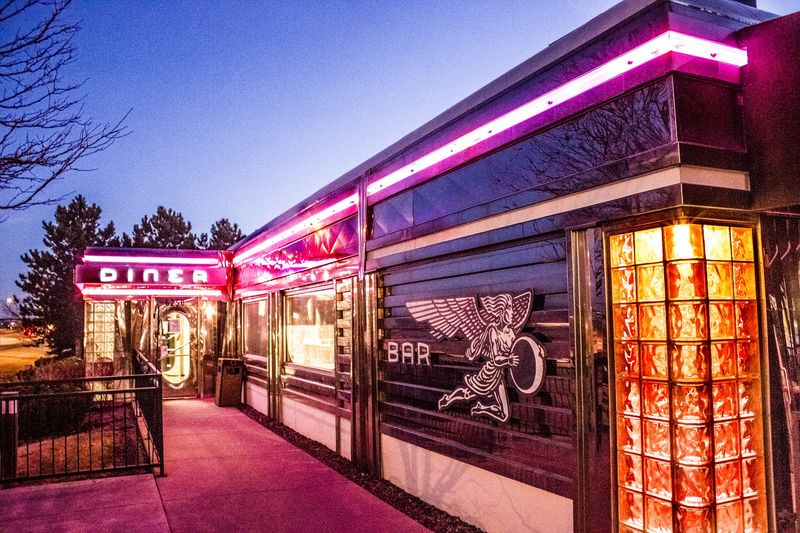
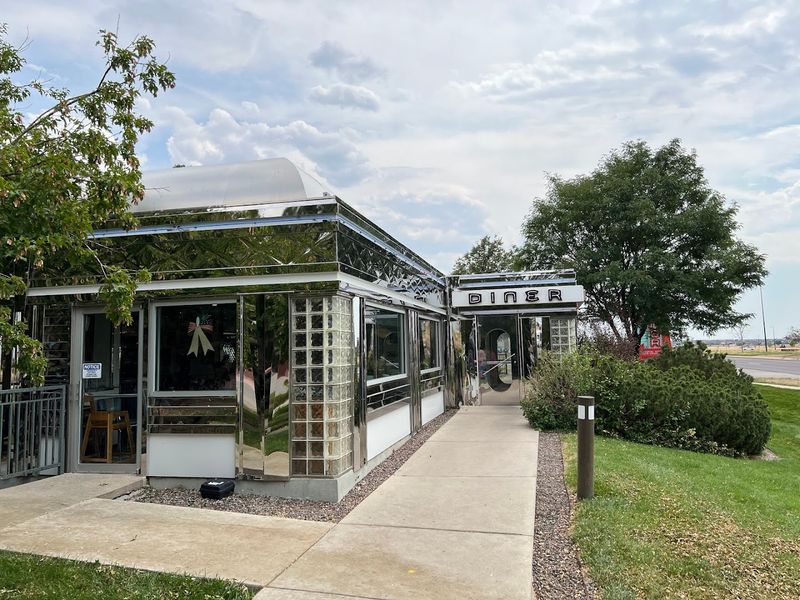
Moonlight Diner announces itself before you even reach the parking lot. The building leans hard into classic American diner styling, with shiny metal surfaces, a bold sign, and the kind of curbside presence that reads instantly from Tower Road.
Near the airport, where so much architecture is built for function first, that visual confidence lands like a welcome interruption.
The entrance matters here. Several diners trade on nostalgia once you are seated, but this place starts the story at the door, which helps explain why it catches travelers who may have intended to grab something quick elsewhere.
Across from nearby hotels and just beyond the flow of airport traffic, it gives the roadside strip a flash of personality that breaks up the usual sameness.
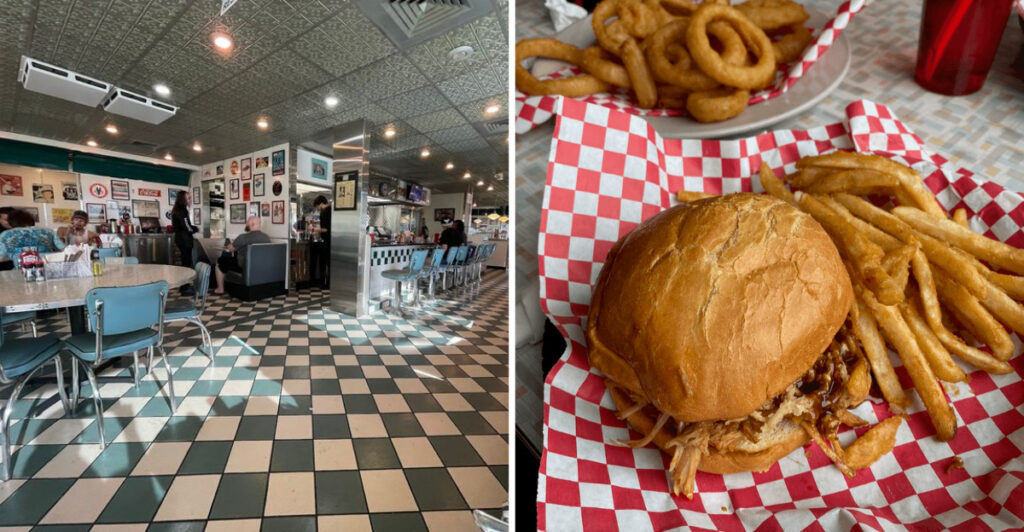
Inside, the retro cues continue without turning cartoonish. Counter seating, booths, period-style decor, and wall art create the recognizable diner grammar people expect, yet the room also reads as active and practical rather than frozen in time.
You can picture an early breakfast crowd, a lunch rush, and a late afternoon table stretching out over milkshakes without the space ever losing its core identity.
That is where Moonlight Diner gets its first big win. It does not rely on a vague old-time concept or a few decorative props dropped into a generic restaurant shell.
The look is integrated into the whole experience, making the place instantly legible: this is where you go for hearty plates, a little visual fun, and a break from airport blandness. Even before the menu opens, the setting has already done real work.
The Menu Reads Like a Comfort Food Power Move
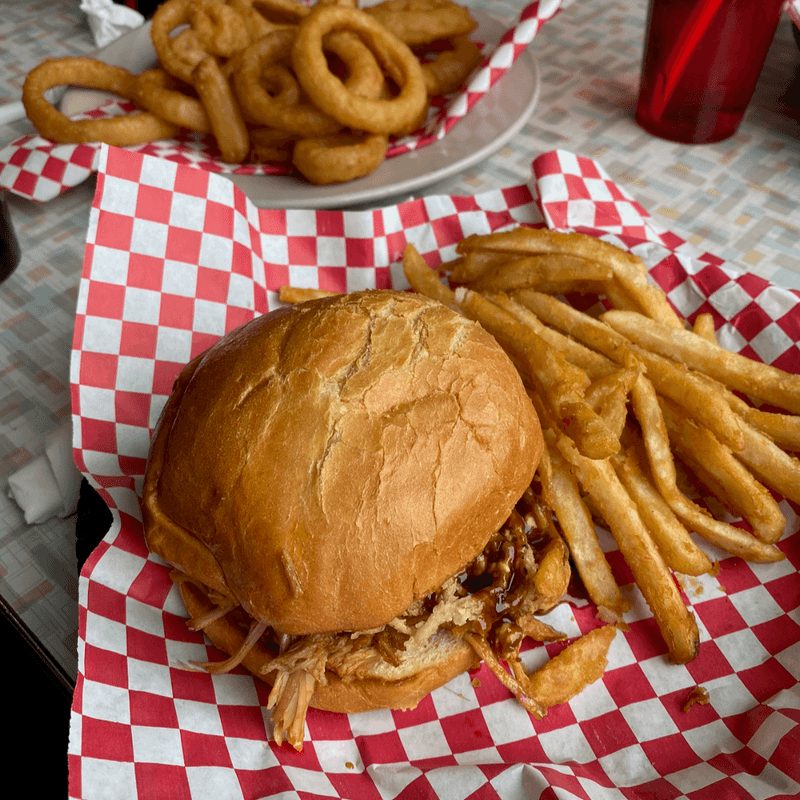
The menu at Moonlight Diner is built for indecision in the best possible way. Breakfast plates, burgers, barbecue, sandwiches, shakes, and diner staples all crowd the field, which means the table can split in wildly different directions without anyone settling for a backup choice.
That range is a major part of the place’s appeal, especially in an airport-adjacent location where travel groups rarely want the same thing.
Breakfast appears to be one of the anchors. Omelets, pancakes, chicken and waffles, breakfast sandwiches, hash-heavy plates, and chicken fried steak show up again and again in the diner’s orbit, suggesting a kitchen that understands the pull of all-day morning food.
For plenty of travelers, that flexibility matters more than trendiness, because a pre-flight meal, an after-check-in bite, and a late brunch craving all ask for different kinds of comfort.
Then the menu veers into the heartier side of the spectrum. Burgers get attention here, including more playful combinations like a Frito pie chili cheeseburger, while barbecue adds another layer that separates Moonlight from a basic breakfast counter.
A smoker out back has been noted as more than decorative, and that detail changes expectations right away because it signals the kitchen is reaching beyond standard griddle fare.
The overall effect is abundance without total chaos. Instead of feeling like a novelty menu that tries to do everything, it reads more like a roadside American playbook tuned for appetite, speed, and variety.
If you are the kind of diner who wants cinnamon rolls, hot sauce, brisket, pancakes, or a thick burger depending on the hour, this place makes that broad promise part of the identity rather than an afterthought.
Why the Big Portions Actually Make Sense Here
At Moonlight Diner, generous portions are not just a bragging point. They fit the location, the crowd, and the kind of restaurant this is trying to be.
Near the airport and surrounded by hotels, the diner often serves people starting a long day, ending one, or stopping between logistics, and those diners are usually not looking for tiny, polished plates with decorative restraint.
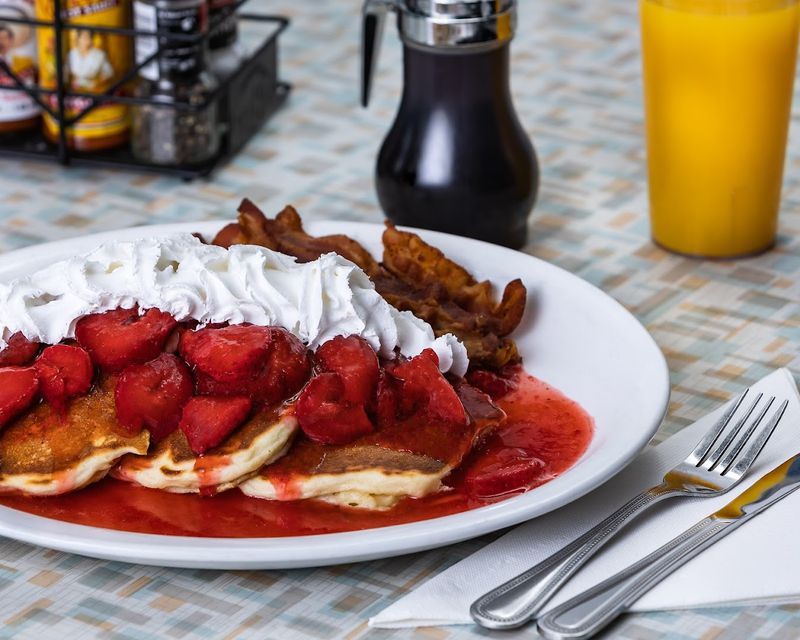
That scale shows up across very different orders. A breakfast sandwich can run large enough to defeat an appetite early, chicken and waffles arrive with substance instead of delicate styling, and burger plates are built to satisfy people who came in genuinely hungry.
Even sides seem to matter, whether it is mashed potatoes and gravy, seasoned fries, tots, beans, or the kind of pancake stack that changes a light meal into a real commitment.
Large portions can sometimes feel lazy, as if size is covering for blandness. Here, the better interpretation is that abundance is part of the diner contract, and when it connects with hot food and quick service, it supports the whole old-school rhythm of the place.
You slide into a booth expecting comfort to be visible, not abstract, and a properly full plate is one of the clearest ways to deliver it.
There is also a practical upside. If you are staying nearby, arriving late, or heading out early the next day, a meal with enough heft to carry you for hours is far more useful than a clever but fleeting dish.
Moonlight Diner seems to understand that its guests are often hungry in a real-world way, not a curated social-media way, and the plate sizes reflect that grounded read of what diners actually want at this address.
Colorado Convenience Without the Chain-Restaurant Drift
One of the smartest things about Moonlight Diner is where it sits in the daily geography of Denver travel. The restaurant is close enough to the airport to be useful, yet removed enough from the terminal zone to avoid feeling like an annex of it.
That slight separation gives the place breathing room, and it is a big reason the diner comes across as a destination rather than a fallback.
Tower Road is lined with the infrastructure of movement: hotels, parking lots, airport traffic, and the usual lineup of familiar brands.
In that landscape, an independent-looking diner with a strong visual identity instantly has an advantage because it offers relief from chain sameness without asking for a major detour.
If you landed hungry, checked into a nearby room, or need one reliable meal before getting back on the road, the location works with minimal planning.
This Colorado setting also shapes the mood in subtler ways. There are references to open western views in the broader area, and even without turning the diner into a scenic stop, the surrounding space feels less compressed than the dense commercial strips near many major airports.
You get a little sky, a little road, and a restaurant that looks like it belongs to the American highway tradition instead of the airport food ecosystem.
That makes Moonlight Diner especially appealing for travelers who want local character without logistical friction. It is not buried deep in a neighborhood requiring a strategic expedition, and it is not trapped inside a sterile corridor of interchangeable convenience.
The sweet spot is right there: close to where people already are, easy to reach, and distinct enough that the meal feels tied to place rather than simply squeezed between arrivals and departures.
A Dining Room Built for Motion, Not Just Nostalgia
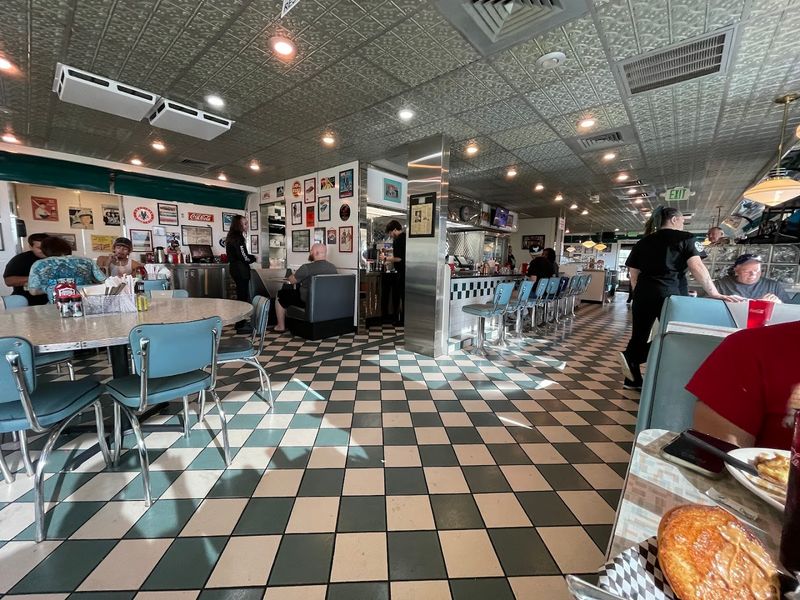
Moonlight Diner is not designed as a museum piece. The retro decor may draw the eye first, but the layout tells you how the restaurant really operates.
There is counter seating for solo diners and quick meals, booths for families or road-trip groups, table seating for standard service, a separate bar area, and even a covered patio, which gives the place a wider social range than the typical nostalgia-driven diner.
That flexibility matters because the crowd around this location is mixed by nature. Airport travelers, hotel guests, truck drivers, nearby workers, families, and locals do not all dine in the same rhythm, and a one-note room would struggle to serve them well.
Moonlight’s setup appears to anticipate that variety, letting the restaurant shift from an easy breakfast stop to a more lingering lunch or casual dinner without forcing every party into the same experience.
Cleanliness and pace also seem central to how the room functions. Even when busy, the diner has been noted as fast-moving rather than chaotic, which suggests a space organized for turnover without losing basic comfort.
That balance is harder to pull off than it sounds, because retro restaurants can sometimes lean so hard into visual clutter that they sacrifice flow, but here the energy seems directed outward toward service rather than inward toward display.
The result is a diner that earns its theme through usability. You do not get the sense of a pretty shell covering a confused operation.
Instead, the room supports the kind of meal people actually need in this corridor: quick when necessary, relaxed when possible, and versatile enough for a shake at the counter, a family breakfast in a booth, or a casual drink and bite after a long day of travel.
The Sweet Spot: Shakes, Cinnamon Rolls, and Extra Details
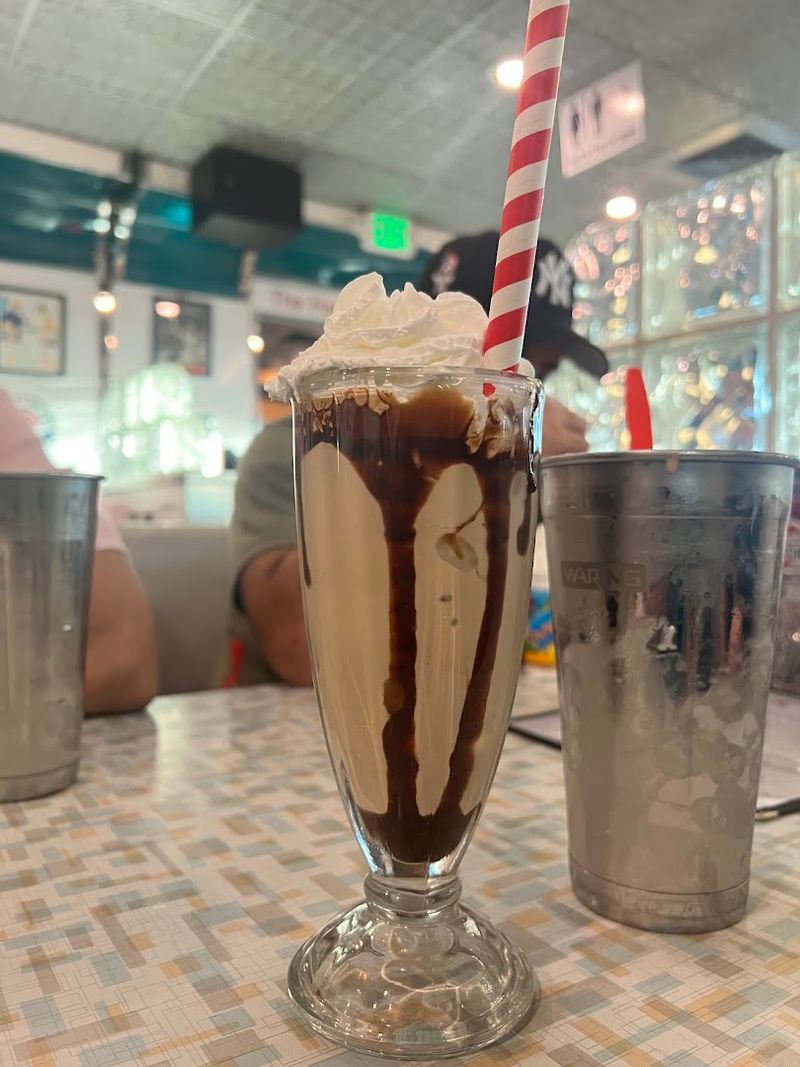
Moonlight Diner gets extra traction from the details that pull a meal beyond basic utility. A place can serve eggs, burgers, and fries all day long, but the memorable edge often comes from the items that spark a specific craving before you even sit down.
Here, that secondary layer seems to include giant shakes, cinnamon rolls, house hot sauces, and side choices with enough personality to break the usual diner script.
The shakes sound especially important to the restaurant’s identity. A big diner milkshake is visual theater as much as dessert, and in a room already shaped by chrome-and-neon nostalgia, that matters.
It reinforces the playful side of the experience, giving the table something that looks indulgent, photographs well, and still belongs naturally inside the broader comfort-food lineup.
Cinnamon rolls add a different kind of draw. Unlike a flashy shake, a good cinnamon roll works as both a sit-down treat and a takeout move for later, which is ideal in a hotel-and-airport corridor where diners are often planning around tomorrow morning as much as tonight’s meal.
The same practical charm applies to bottled sauces sold to go, since they extend the restaurant’s identity into a small, portable souvenir without pushing merch too hard.
These extras matter because they round out the diner’s personality. Moonlight is not operating as a one-note nostalgia set where every memorable element begins and ends with decor.
It gives you a few edible signature moments too, whether that means a banana-forward shake, chili cheese tots, a spicy sauce, or a pastry box riding back to the hotel. In a crowded comfort-food category, those tangible hooks help sharpen the restaurant into something easier to seek out again.
Best Time to Go and How to Play the Stop Right
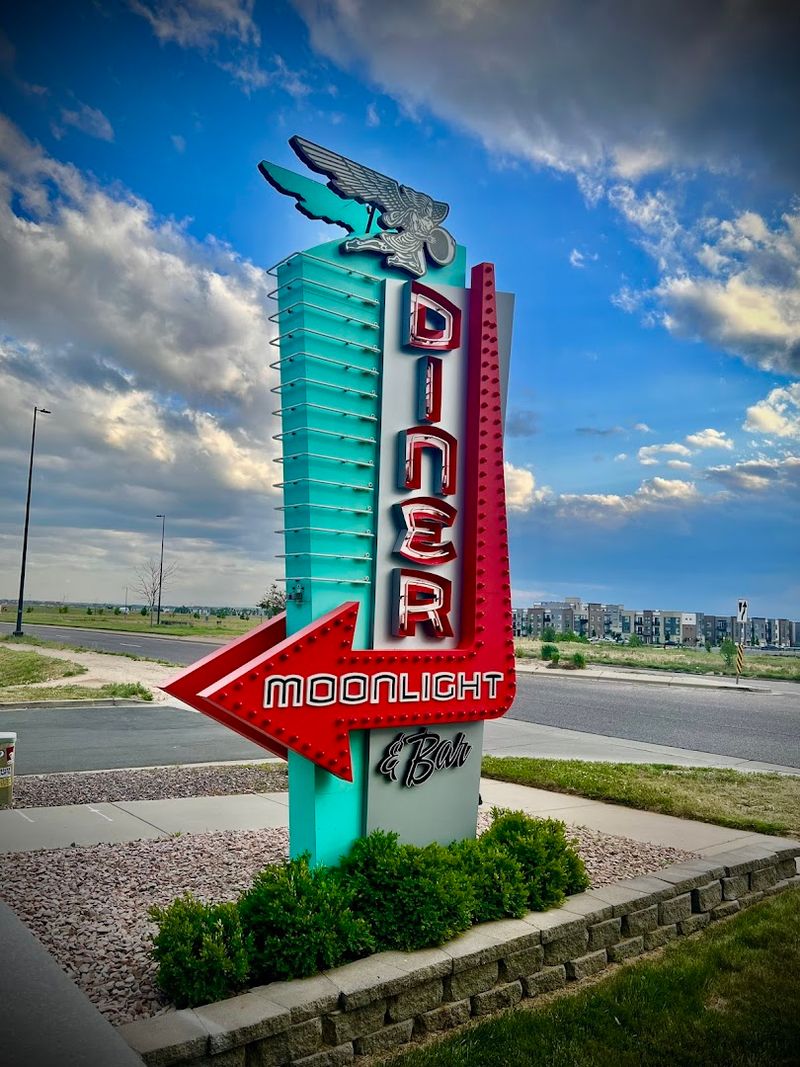
Moonlight Diner keeps steady daily hours, opening at 7 AM and running until 9 PM through the week, which makes planning unusually simple.
That schedule covers the core diner occasions without trying to be an all-night spot: breakfast before departures, lunch between errands, late afternoon comfort food, and an easy dinner for travelers who do not want another anonymous meal near the airport.
In practical terms, the place fits neatly into real itineraries. If timing matters, morning is probably the most classic play. A retro diner naturally suits coffee, eggs, pancakes, and the soft hum of a room waking up, and being close to airport hotels gives breakfast an even stronger purpose here.
For many people, this is the meal that can turn a rushed travel day into something more grounded, especially when the alternative is eating inside an airport queue.
Lunch and early dinner make sense for a different reason. That is when the wider menu can open up, letting barbecue, burgers, fries, sandwiches, and richer diner plates compete with breakfast favorites rather than replace them.
If your group is split between sweet, savory, and seriously hungry, those middle hours likely offer the broadest freedom to order exactly what sounds right without overthinking the stop.
The smartest approach is simple: arrive ready to choose decisively, especially if the room is busy, and lean into what the diner does naturally well instead of trying to force a light, minimalist meal out of it. This is a place for appetite, not restraint.
Whether you are crossing Tower Road from a hotel, detouring after landing, or grabbing one last Denver meal before heading out, Moonlight works best when treated as a full stop rather than a rushed backup plan.
Why This Denver Diner Lands Harder Than a Theme Restaurant
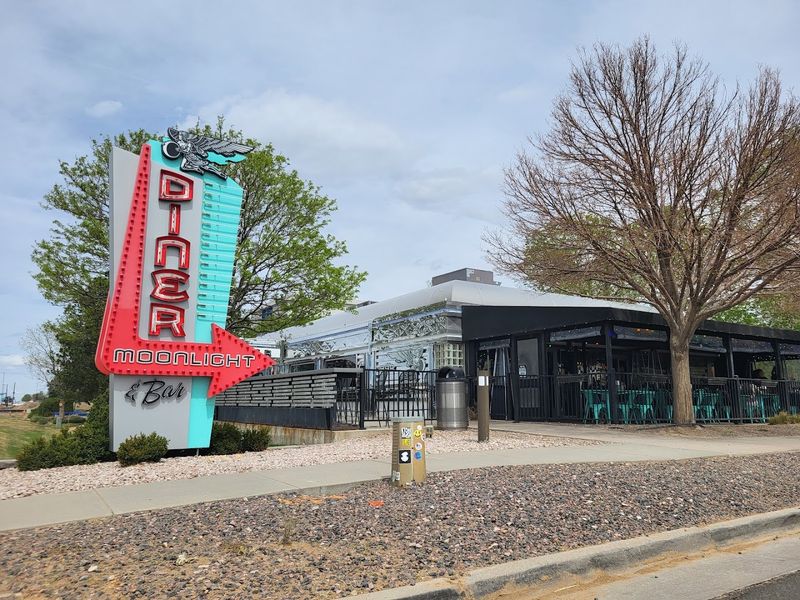
Plenty of restaurants use retro styling as a shortcut to personality. Moonlight Diner stands out because the concept appears to connect with the food, the room, and the location instead of sitting on top of them like costume jewelry.
You are not just looking at chrome and old-school references while eating a forgettable meal in a generic box; the whole operation seems aimed at delivering a full diner experience people can actually use.
That distinction matters more in this part of Denver than it might elsewhere. Near a major airport, convenience often beats character, and many places survive by being merely available.
Moonlight pushes beyond that baseline. It gives travelers and locals a setting with visual conviction, a menu broad enough to satisfy different cravings, and enough practical ease that the stop does not require a complicated plan or extra patience.
There is also a grounded quality to the appeal. This is not the sort of place that needs a myth built around it, and it does not need exaggerated language to justify attention.
The strongest case for the diner is concrete: recognizable retro design, substantial comfort food, multiple seating formats, daily hours that are easy to remember, and a location that catches people exactly when they want a reliable, personality-filled meal.
In the end, Moonlight Diner works because it threads an increasingly rare needle. It is visually fun without becoming gimmicky, broad in menu without feeling random, and convenient without dissolving into chain-restaurant anonymity.
For anyone passing through this stretch of Denver, that combination is unusually effective. The place offers a brief step out of transit mode and into something warmer, fuller, and far more memorable than the roadside norm.
Share this story