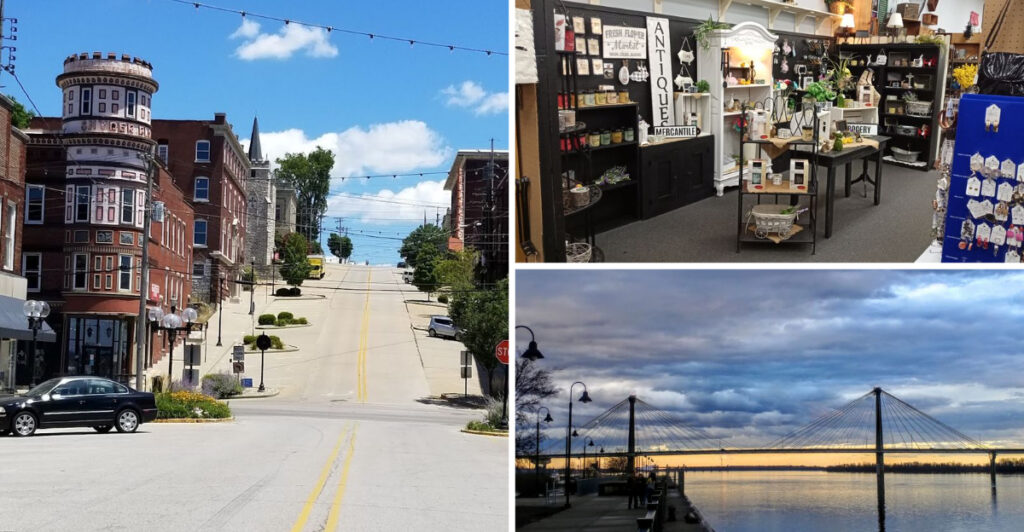
Alton is one of Illinois’ most rewarding antique-shopping destinations, pairing a historic Mississippi River setting with a downtown filled with antique stores, vintage boutiques, architectural landmarks, and locally owned shops. The city’s walkable streets invite visitors to spend hours browsing everything from antique furniture and collectibles to artwork, books, and one-of-a-kind treasures before stopping at nearby cafés or riverfront restaurants.
Beyond the shopping, Alton’s rich history and scenic bluff-top views make every visit feel like more than a simple day trip. If you’re searching for a charming Illinois town with character around every corner, Alton belongs on your travel list.
Broadway Sets the Tone Fast
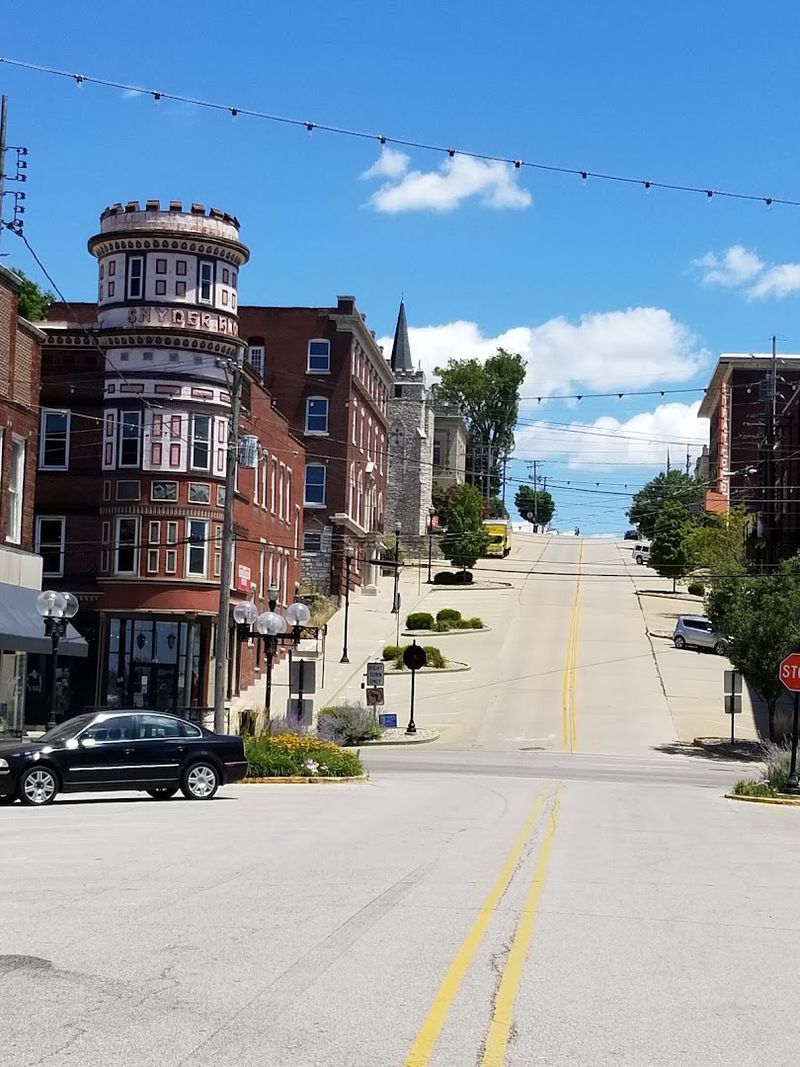
Alton announces itself before you even start shopping. The streets tilt, the brick buildings rise close to the sidewalk, and Broadway carries that sturdy old commercial look that instantly tells you this was built for real trade, not themed nostalgia.
Instead of one polished retail strip, you get a layered downtown where antique hunting fits naturally into the architecture.
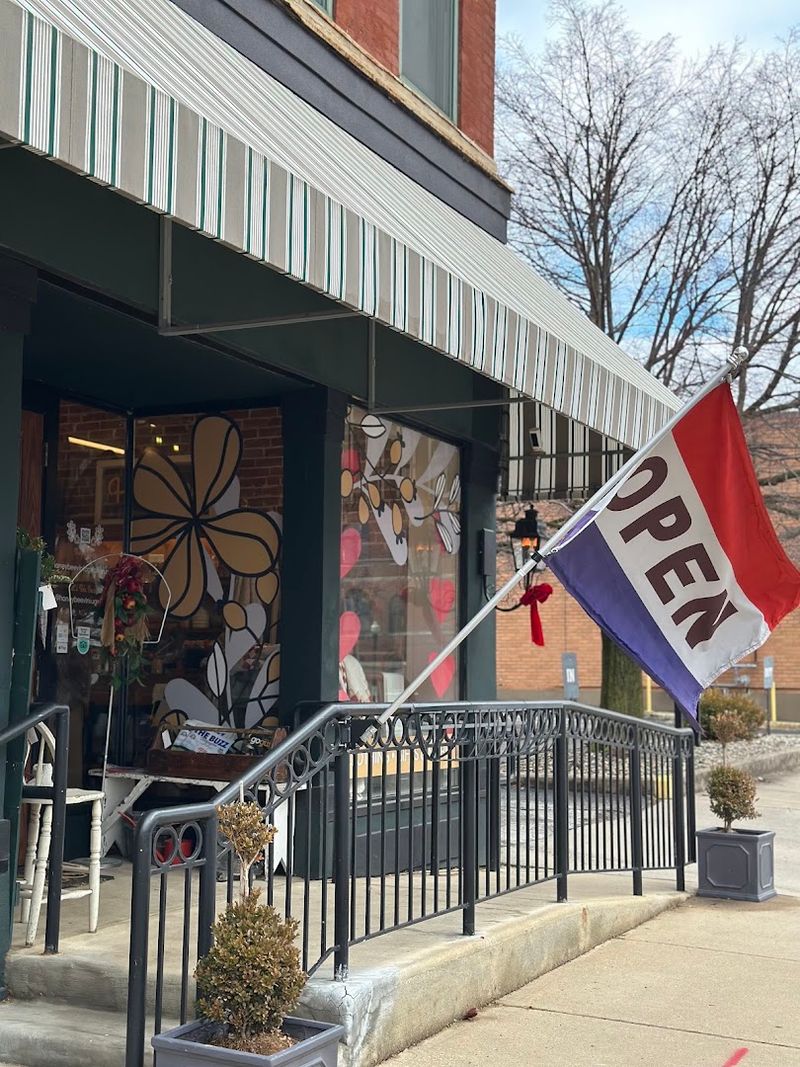
That setup matters because the district works as a walk, not a single stop. Storefront windows mix furniture, lighting, framed prints, glassware, and odd little objects that can derail your schedule in the best possible way.
Even when you are headed somewhere specific, the next display tends to pull your eyes sideways. There is also a visual contrast that keeps the area lively.
One block can feel stately and old-bank solid, while the next shifts into a looser mix of corner entries, painted signs, upstairs windows, and buildings that show their age without apology.
Alton does not smooth over its rough edges, and that gives the browsing experience more character than a district that has been over-restored. For a day trip, that first stretch through downtown is where the pace gets set.
You stop looking for a checklist and start paying attention to details such as transom glass, worn thresholds, and the way different shops stage their finds near the entrance. Before long, the town has quietly moved you into treasure-hunt mode, which is exactly where Alton is strongest.
Why the Antique Crawl Lasts Longer Than You Planned
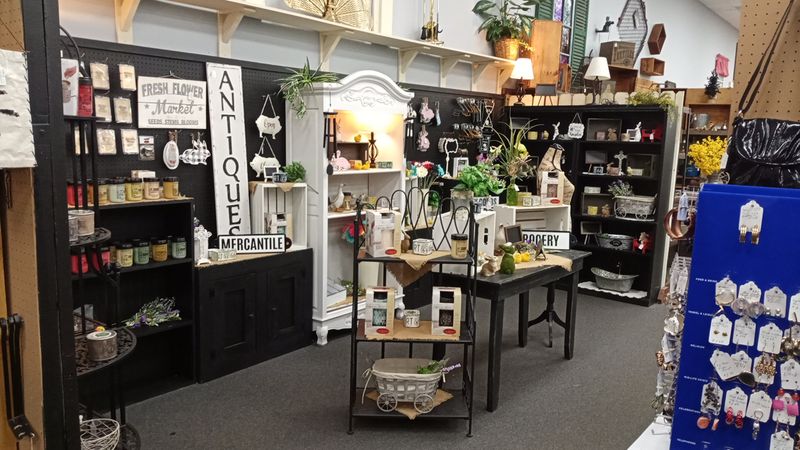
The smartest thing about Alton’s antique district is that it resists quick scanning. These are the kinds of spaces where a chair is never just a chair, because it sits beside a stack of old maps, under a brass lamp, across from a cabinet full of glassware and small mechanical curiosities.
You may come in hunting one category and leave mentally rearranging a whole room. That slow-down effect is the real draw. Larger pieces pull attention first, but the district rewards anyone willing to crouch, open a drawer, check the lower shelves, or circle back after spotting something from another angle.
In a town with this much historic fabric, antiques do not feel disconnected from the surroundings. They echo the buildings around them.
Pricing and inventory can shift widely from shop to shop, which keeps the day from feeling repetitive. One stop might lean architectural and substantial, another may turn playful with kitchenware, postcards, barware, clocks, and compact collectibles that are easy to carry.
The variety gives you a practical reason to keep walking instead of deciding that one store told you the whole story.
This is also where Alton beats the rushed mall mindset. The district invites you to browse with patience, pause for a coffee or lunch, and then resume with sharper eyes.
Because the stores are part of a connected downtown rather than isolated destinations, the hours stretch naturally. By midafternoon, you are not filling time. The district is still giving you new corners, new textures, and one more reason to stay out longer.
Between the Cases and Corners, Details Do the Heavy Lifting
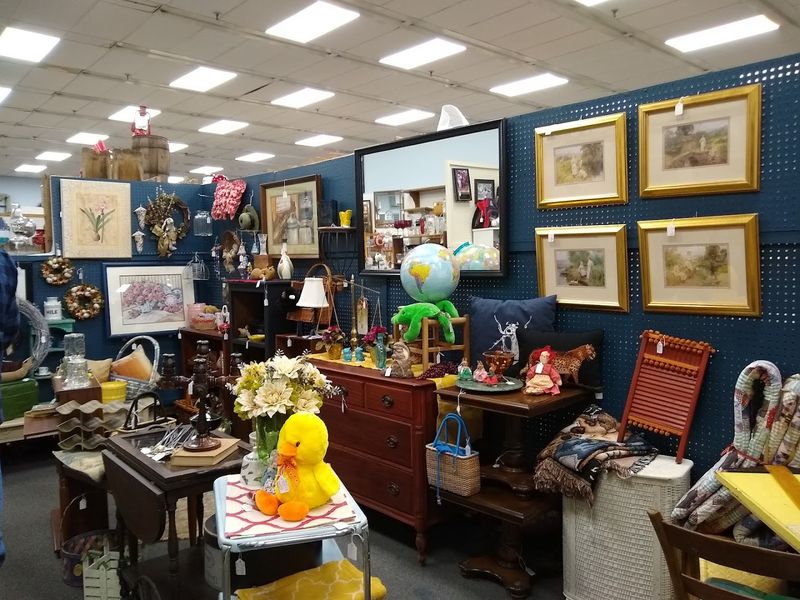
Big antique centers can overwhelm when every booth blurs into the next, but Alton benefits from a more varied downtown rhythm. Smaller storefronts, mixed-use buildings, and different display styles create natural breaks for your eyes.
That makes the district easier to enjoy over several hours, especially if you prefer searching slowly instead of speed-walking aisle after aisle.
Look closely and the best moments tend to happen on a small scale. A tray of hotel silver, a stack of regional advertising tins, a school map with softened folds, or a set of old bottles catching window light can stop you as effectively as any large armoire.
These compact finds give the district its texture because they connect ordinary daily life to the larger age of the town.
Even the shop interiors add to the experience. Original floors, narrow stairs, pressed-tin ceilings, old brick walls, and slightly uneven rooms remind you that these businesses occupy structures with their own timelines.
When antiques sit inside spaces that already carry history, the merchandise reads differently. The setting sharpens your attention and makes the hunt feel more grounded.
That is why Alton works best when you leave a little room for detours. A block that looked quiet from the curb can hide a deep interior, a tucked-away case, or an upstairs room that changes the whole stop.
In practical terms, this means comfortable shoes and an unhurried schedule. In experience terms, it means the district keeps unfolding through small discoveries instead of one loud, obvious reveal.
Alton, Illinois Brings the River Town Backdrop

Plenty of towns have antiques. Fewer pair them with a setting as visually distinct as Alton’s. Here, the Mississippi River, steep bluffs, and old urban grid create a backdrop that changes how the district lands on you.
Shopping feels tied to a place with movement, geography, and working history rather than a neatly sealed downtown bubble.
You notice that in the elevation shifts and street views. A short drive or walk can take you from dense storefront stretches to broader glimpses of river-town scale, where the built environment starts talking to the landscape around it.
That relationship gives Alton extra depth. The district is not an isolated attraction dropped into town. It grows out of the town’s older bones.
The connection also makes breaks between shops more interesting. Step outside with a coffee, and you are not just resetting for the next round of browsing.
You are in a city shaped by trade routes, hillside streets, and the kind of architecture that developed before convenience was the only goal.
That context adds weight to the antiques because the surrounding blocks already suggest long use, changing eras, and practical endurance. For you, the benefit is simple. A full day in Alton never depends on nonstop buying.
The scenery and street layout give the outing variety, so the hours can include strolling, peeking into side streets, and noticing how the district sits within a much larger river-town identity. By the time you head back toward Broadway, the shopping has become part of a wider place experience, not the entire story.
The Historic Core Gives Every Find More Context
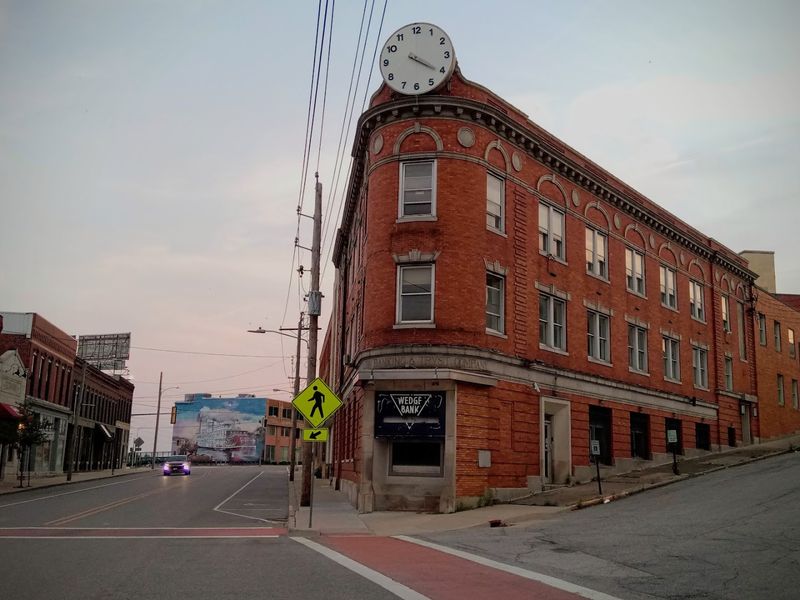
Alton’s antique appeal gets stronger once you read the district as part of the town’s broader historic character. The older commercial blocks, substantial masonry, and layered streetscapes suggest a city that developed through real economic cycles, not a place assembled to imitate the past.
That distinction changes the mood. The antiques here do not sit in a vacuum. As you move through downtown, architecture keeps supplying context. Tall windows, decorative brickwork, recessed doorways, and long-standing storefront proportions create a visual frame around every stop.
Even when a shop specializes in small collectibles rather than major furniture, the building itself contributes half the charm. Browsing becomes part retail outing, part street-level study of how older American downtowns still function.
Alton also benefits from being old in a way that still shows its seams. You may notice a facade with fresh paint beside one that looks a little weathered, or a tidy display near a stairway worn by decades of traffic.
That mix keeps the area from feeling too precious. It reads as used, adapted, and lived in, which suits an antique district far better than spotless uniformity ever could.
If you enjoy places where the setting deepens the merchandise, this is where Alton starts pulling ahead. A vintage mirror or cabinet has more presence when you picture the generations of homes, businesses, and river-town routines that surrounded objects like it.
Without making a museum of itself, downtown gives your shopping day a historical undercurrent. The district gains gravity, but it keeps enough looseness to stay fun.
How to Plan the Day So the District Opens Up
Alton is easiest to enjoy when you plan for a full, flexible day instead of trying to squeeze the district into a quick stop. Start earlier than lunch if possible, because antique browsing rewards fresh attention and the first pass through downtown is when you notice the most.
Morning also gives you time to get familiar with the district before it becomes busier. Break the district into phases rather than treating it like one continuous march. Use the first round to get a feel for storefronts and inventory styles, then pause for a meal before revisiting the places that deserve a longer look.
This approach helps with decision-making, especially if a larger purchase needs a second thought or you simply want to compare prices and quality across several stops.
Practical details matter here. Wear shoes that can handle uneven sidewalks, old floors, and the occasional stairway.
Leave room in your vehicle if you are seriously shopping, and carry measurements for any furniture or framed pieces you hope to find. Antique districts become much more fun when you are prepared to act on a discovery instead of guessing whether it will fit through a doorway later.
Timing your breaks well can also make the day feel richer. Step out between shops, look up at the buildings, and let the river-town setting reset your eyes before the next round of cabinets and cases.
By late afternoon, the district often reads differently than it did in the morning. Displays catch new light, your search gets more focused, and the whole town starts rewarding patience over haste.
Why Alton Stands Out in a State Full of Day Trips
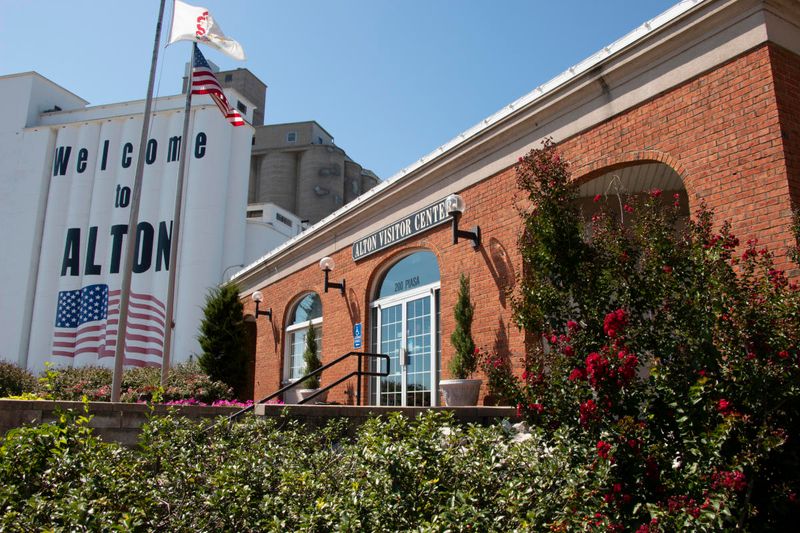
Illinois has no shortage of day-trip towns, yet Alton separates itself by combining antique browsing with a setting that has real topography, visible age, and a strong sense of place. The district is not oversized, but that is part of its advantage.
You can cover meaningful ground on foot, keep discovering different types of inventory, and still have enough time to absorb the town around it.
That balance is harder to find than it sounds. Some shopping districts are pleasant but generic, while some historic towns look compelling and then run out of things to do after an hour.
Alton avoids both problems. The antiques give you a clear mission, and the river-town environment keeps the outing from collapsing into a simple transaction.
Even pauses between purchases have visual interest. There is also an appealing lack of overstatement in the experience. Alton does not need flashy branding or staged quaintness to make the day work.
Its strength comes from sturdy buildings, layered streets, and the simple pleasure of moving from one old storefront to the next with enough time to notice what is in the windows and what is happening above them. The town trusts its own material.
That is the reason planning a whole day around the antique district makes sense rather than sounding ambitious. Alton offers enough variety to sustain curiosity, enough historic character to keep the setting active, and enough downtown walkability to make browsing enjoyable instead of tiring.
When a place can turn shopping into a broader river-town experience, it has moved beyond errand territory. Alton does exactly that.
Share this story