Not every waterfall in the Smokies requires boots, backpacks, or hours of hiking to enjoy. The Sinks sits right along the roadside near Gatlinburg, offering a powerful cascade that literally stops traffic.
What makes this spot even more fascinating is that it wasn’t carved by nature over millions of years—it was accidentally created by loggers using dynamite in the late 1800s, and the result is one of Tennessee’s most unusual and accessible waterfalls.
The Roadside View That Stops Drivers in Their Tracks
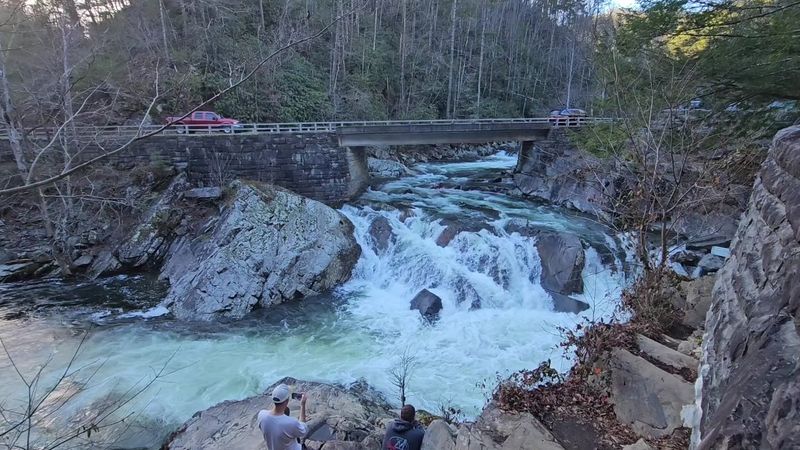
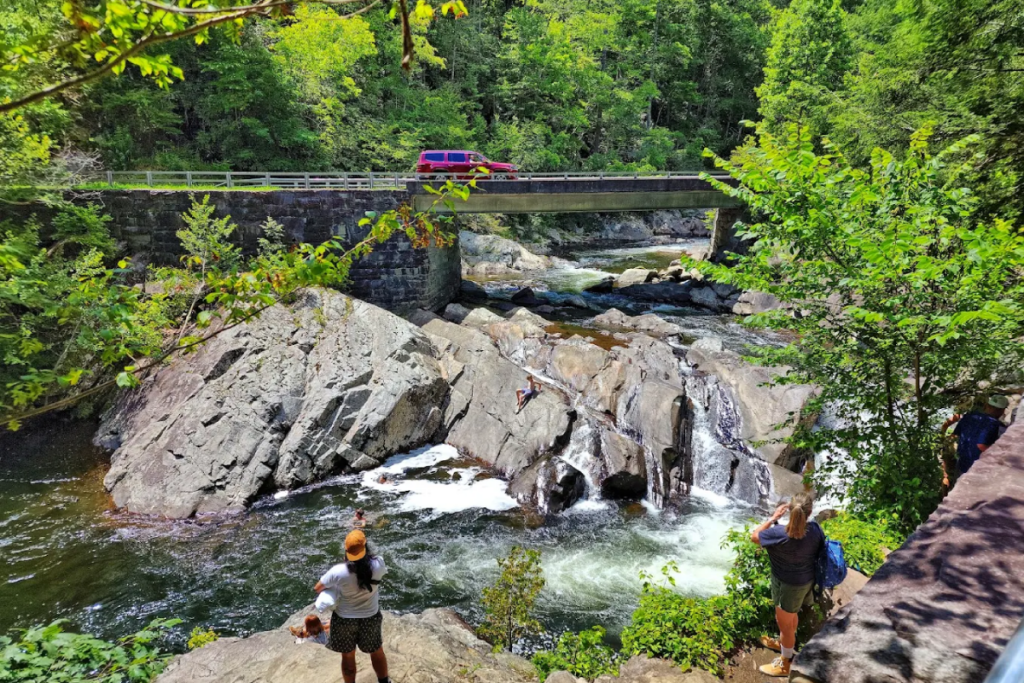
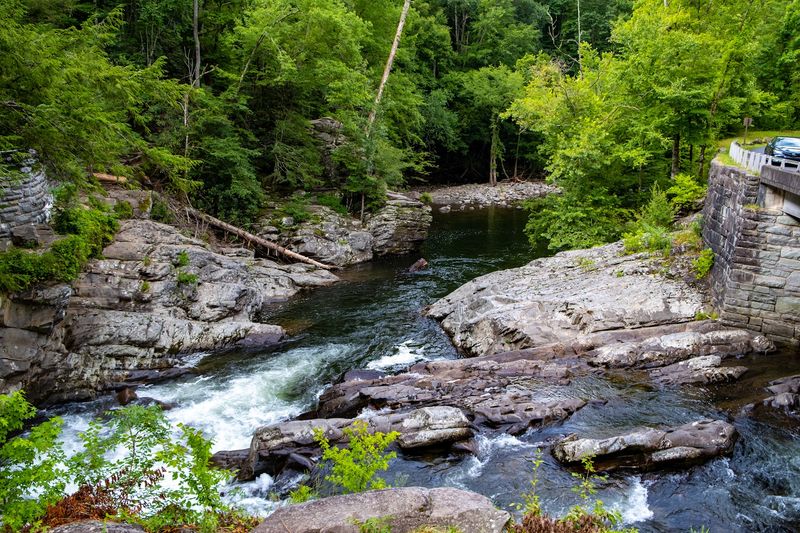
Driving along the Little River Road between Gatlinburg and Townsend, you’ll spot The Sinks before you even realize you’re looking for it. The sound hits first—a low, rushing roar that cuts through the hum of your engine and makes passengers crane their necks toward the windows. Then you see it: whitewater tumbling over rocks and plunging into a churning pool below, all framed by dense forest and accessible from a small roadside parking area.
What sets this waterfall apart from others in the Smokies is how visible it is from the road itself. You don’t need to commit to a trail or wonder if the payoff will be worth the effort. The Sinks announces itself boldly, and within seconds of parking, you’re standing at an overlook watching thousands of gallons of water crash downward every minute.
The parking lot fills up fast, especially on weekends and during peak tourist seasons. Spots are limited, and the narrow road doesn’t leave much room for maneuvering larger vehicles. But the quick turnaround time works in your favor—most visitors snap a few photos and move on within fifteen minutes, so patience usually pays off if you circle back.
Even from your car, the view is striking. Families with young kids, elderly travelers, and anyone with mobility concerns can enjoy this waterfall without stepping onto uneven terrain. It’s one of the few places in the national park where accessibility doesn’t mean sacrificing scenery.
The Sinks delivers drama without demanding effort, which is exactly why it stops so many drivers in their tracks. One glance at that frothing cascade, and you understand why people pull over mid-drive just to witness it.
The Sinks Is One of the Smokies’ Most Unusual Waterfalls
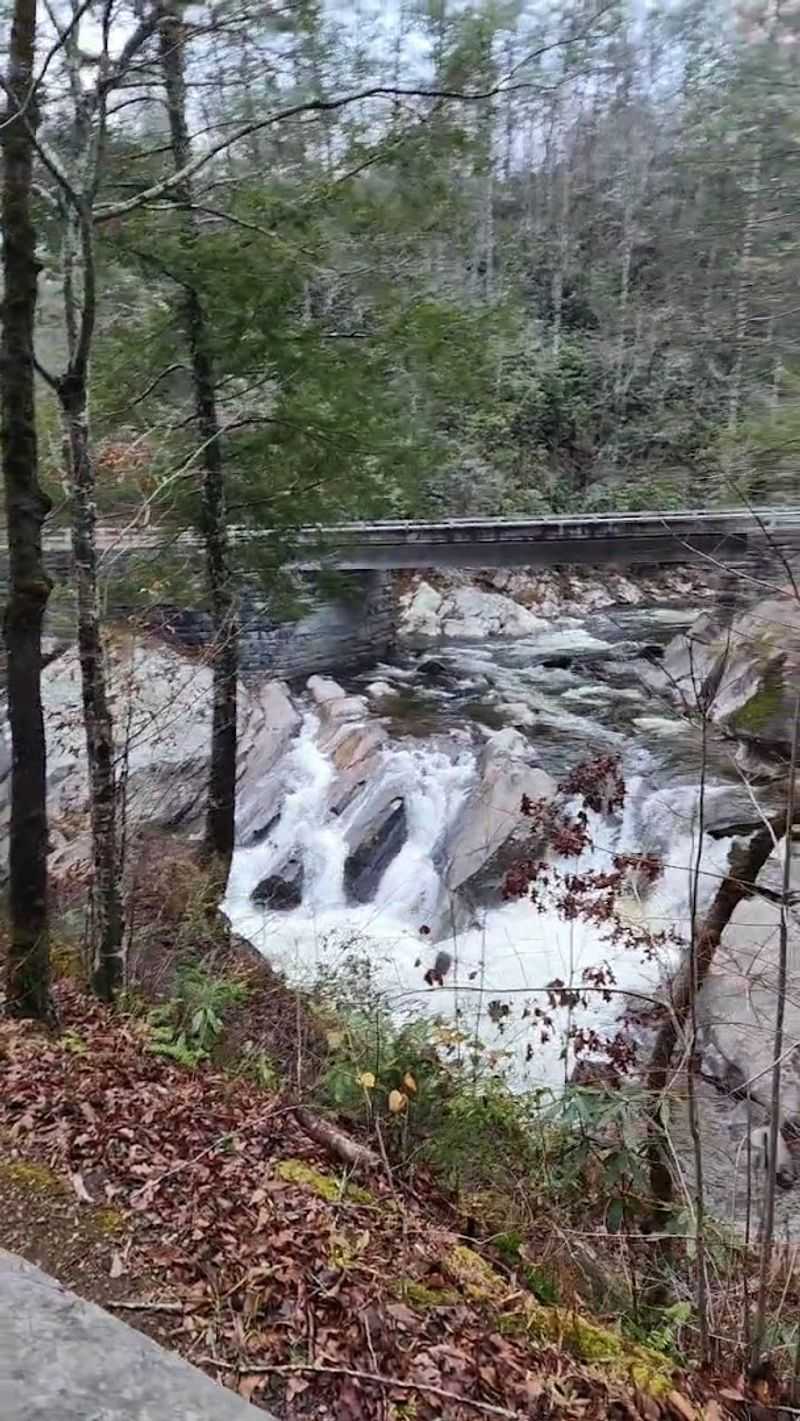
Most waterfalls in the Smokies formed naturally over thousands of years as water slowly carved through rock. The Sinks didn’t follow that timeline. Instead of a gradual geological process, this cascade appeared suddenly after a violent human intervention during the logging boom of the late 1800s.
That alone makes it stand out among Tennessee’s countless waterfalls—it’s a man-made accident that nature quickly claimed as its own.
The waterfall itself isn’t exceptionally tall, measuring around 15 feet in height. But what it lacks in vertical drama, it makes up for in raw power and volume. Water doesn’t just fall here—it crashes, churns, and disappears into a swirling pool that gives the site its name.
The base of the falls features a deep chasm where the current creates a powerful whirlpool effect, pulling water downward with enough force to be genuinely dangerous.
Unlike gentler cascades where visitors can wade and play, The Sinks commands respect. The National Park Service warns against entering the water due to strong undercurrents and the unpredictable nature of the hydraulics. Several drownings have occurred here over the years, a sobering reminder that beauty and danger often share the same space in wild places.
Another unusual feature is how the waterfall sits right at road level. Most Smoky Mountain waterfalls require either an uphill or downhill hike to reach. The Sinks is essentially at eye level from the parking area, offering an intimate perspective that feels almost too easy given the spectacle you’re witnessing.
Its accidental origin, dangerous undercurrents, and roadside accessibility combine to create a waterfall experience unlike any other in the region. The Sinks proves that sometimes the most memorable places are the ones that weren’t supposed to exist at all.
The Wild Logging-Era Accident Behind the Waterfall
Back in the late 1800s, logging companies ruled the Smoky Mountains. Massive trees were felled by the thousands, and rivers became highways for transporting timber downstream to sawmills. The Little River served as one of these liquid roads, with logs floating along the current toward their destination.
But rivers don’t always cooperate, and sometimes logs would pile up, creating jams that stopped the entire operation cold.
One particularly stubborn log jam formed near what is now The Sinks. Workers tried everything to break it up—manual labor, tools, sheer determination—but nothing worked. The jam grew larger and more stubborn, backing up the river and threatening the entire logging schedule.
Time meant money, and the company couldn’t afford the delay.
So they made a decision that sounds reckless by modern standards: blow it up. Loggers planted dynamite at the jam site and detonated the explosives, hoping to scatter the logs and restore the river’s flow. The blast worked—too well, actually.
The explosion didn’t just clear the jam; it shattered the underlying rock and completely redirected the river’s course.
Water that had previously flowed smoothly through the area suddenly found a new path, one that sent it plummeting over a newly created ledge. The force of the blast had carved out a deep basin below, and the redirected current began carving it even deeper. Within a short time, the accidental waterfall became a permanent feature of the landscape.
The loggers probably didn’t stick around to admire their handiwork. They got their river flowing again and moved on to the next job. But their explosive solution left behind one of Tennessee’s most distinctive waterfalls, a reminder that human interference in nature doesn’t always go according to plan—and sometimes creates something unexpectedly beautiful in the process.
The Power of the Rapids and the Deep Chasm Below
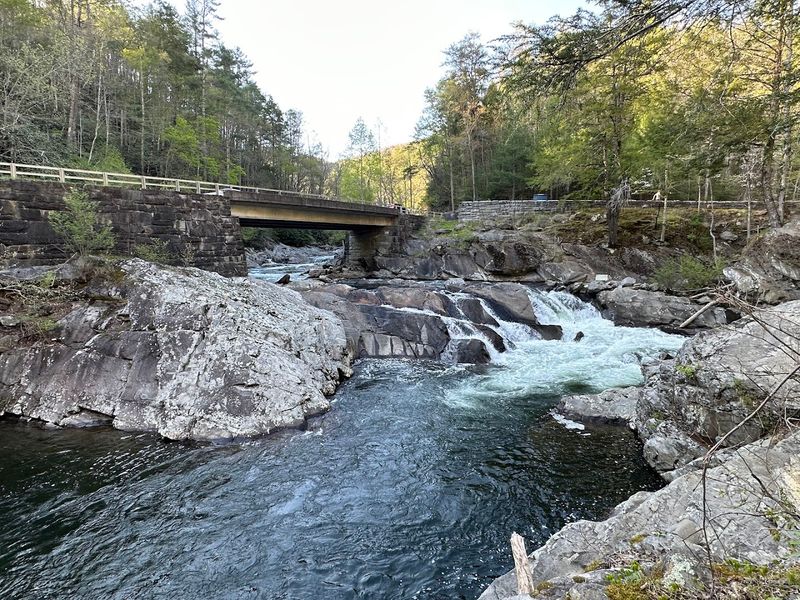
Standing at the overlook, you can feel the vibration of The Sinks before you fully process what you’re seeing. The water doesn’t politely tumble—it attacks the rocks with relentless energy, creating a constant roar that drowns out conversation. Spray kicks up from the impact zone, catching sunlight and creating fleeting rainbows when conditions align just right.
The rapids above the falls are equally impressive. Water accelerates as it approaches the drop, gaining speed and momentum until it launches over the edge in a frothy white sheet. During spring runoff or after heavy rains, the volume increases dramatically, and the entire scene becomes even more intense.
The Little River funnels its full force through this narrow channel, creating a hydraulic display that feels almost violent in its power.
Below the falls, the chasm tells its own story. The basin has been carved deep into the bedrock by decades of constant pounding from falling water. This depression creates the whirlpool effect that gives The Sinks its name—water spirals downward before being pulled back into the current and continuing downstream.
The depth of this pool is difficult to judge from above, but it’s significant enough that the water takes on a darker, more ominous color compared to the lighter shallows nearby.
Warning signs posted around the area aren’t exaggerating the danger. The hydraulics at the base of the falls create what kayakers call a “keeper”—a recirculating current that can trap objects and people beneath the surface. Several fatalities have occurred here over the years when swimmers underestimated the strength of these forces.
Even experienced swimmers who ignore the warnings and jump from nearby rocks into deeper pools downstream need to understand the risks. The current pulls strongly, and what looks calm on the surface can hide powerful underwater forces. The Sinks is breathtaking to observe, but it demands respect and distance rather than interaction.
You Don’t Need a Hike to See It
Accessibility is where The Sinks truly shines compared to most Smoky Mountain waterfalls. Laurel Falls requires a 2.6-mile round trip. Grotto Falls demands a mile-and-a-half trek each way.
Rainbow Falls sits at the end of a strenuous 5.4-mile journey. The Sinks? It’s about 50 steps from your car door to a prime viewing spot, and those steps are on relatively level ground.
For elderly visitors, families with small children, or anyone with mobility challenges, this kind of accessibility is rare in the Smokies. The national park contains incredible scenery, but much of it hides behind miles of trail that not everyone can manage. The Sinks breaks that pattern, offering genuine natural drama without requiring physical endurance or special equipment.
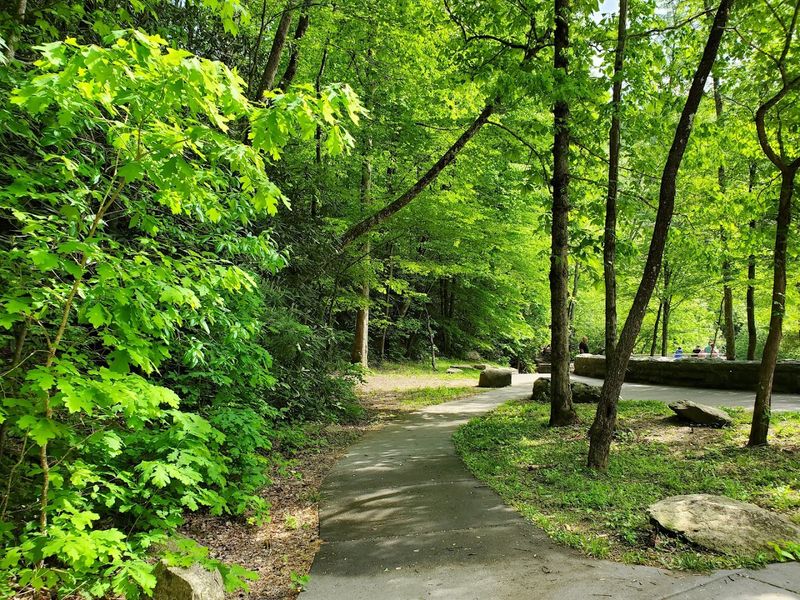
The main viewing area sits right beside the parking lot, with a short stone pathway leading to an overlook where you can safely watch the falls. There’s no scrambling over roots, no steep inclines, and no wondering if you packed enough water for the return trip. You simply park, walk a few dozen feet, and you’re there.
Some visitors do choose to explore further. A trail leads upstream along the Little River, and stone steps climb to an upper viewpoint that offers a different perspective on the cascade. But these options are exactly that—optional.
The primary experience doesn’t depend on them. You can absolutely enjoy The Sinks, take photos, feel the mist, and hear the roar without breaking a sweat.
This ease of access also makes The Sinks perfect for road trip itineraries where time is limited. You can stop, experience a legitimate waterfall, and be back on the road in under 20 minutes if needed. That efficiency doesn’t diminish the experience—it just makes it available to more people.
Sometimes the best adventures are the ones that don’t require you to earn them through exhaustion.
What to Know Before Visiting This Gatlinburg-Area Stop
Before you add The Sinks to your Gatlinburg itinerary, know that parking can be frustrating. The lot holds maybe 15 to 20 vehicles at most, and it fills up fast, especially between late morning and early afternoon. The narrow road doesn’t allow for much creative parking, and larger RVs or trucks will struggle to maneuver in and out.
Arriving early in the morning or later in the evening improves your chances of snagging a spot without circling repeatedly.
You’ll also need a parking tag to visit. The Great Smoky Mountains National Park requires either a day pass or an annual pass displayed on your dashboard. You can purchase these at visitor centers before entering the park or at staffed entrance stations.
Don’t skip this step—rangers do check, and a ticket for parking without a pass costs more than just buying the pass in the first place.
The site gets busy on weekends and holidays, which means you’ll likely be sharing the overlook with other visitors. If you’re hoping for solitude or that perfect unobstructed photo, weekday visits work better. Early mornings also offer softer light for photography and fewer crowds competing for the best viewing angles.
Despite all the warning signs about dangerous currents, some people still attempt to swim or jump from rocks near the falls. Don’t be one of them. The currents are legitimately hazardous, and multiple deaths have occurred here over the years.
Enjoy the view from the designated overlook areas and save your swimming for safer spots elsewhere in the park.
Cell service can be spotty in this area, so don’t rely on your phone for navigation. Download offline maps or carry a physical map of the park. The Sinks is located along Little River Road between Gatlinburg and Townsend, roughly 12 miles from Sugarlands Visitor Center.
The drive itself is scenic, winding alongside the river through dense forest, so allow extra time to enjoy the journey and not just the destination.
Why This Accidental Tennessee Waterfall Is Worth Pulling Over For
In a national park famous for requiring effort to reach its best features, The Sinks stands out as a rare gift of convenience. You get the full sensory experience—the sound, the mist, the visual drama—without sacrificing an afternoon or testing your endurance. That combination of accessibility and genuine natural power makes it worth every second of the stop, even if parking requires a bit of patience.
The accidental origin story adds another layer of interest that typical waterfalls can’t match. Knowing that this cascade exists because of a logging mishap rather than millions of years of erosion gives you something to think about beyond just the pretty view. It’s a tangible reminder of how humans and nature intersect in unexpected ways, sometimes creating beauty from chaos and carelessness.
For families traveling with young children or elderly relatives, The Sinks offers an inclusive experience that doesn’t leave anyone behind in the parking lot. Grandparents who can’t tackle steep trails can stand beside grandchildren at the overlook, sharing the same moment and the same wonder. That kind of accessibility matters more than people sometimes realize when planning trips to the Smokies.
Even if you’re just passing through on your way to somewhere else, The Sinks deserves a detour. It won’t consume your schedule or demand resources you don’t have. It simply exists right there beside the road, powerful and beautiful and completely accidental, waiting for you to pull over and witness what happens when nature reclaims a human mistake and turns it into something worth remembering.
Share this story