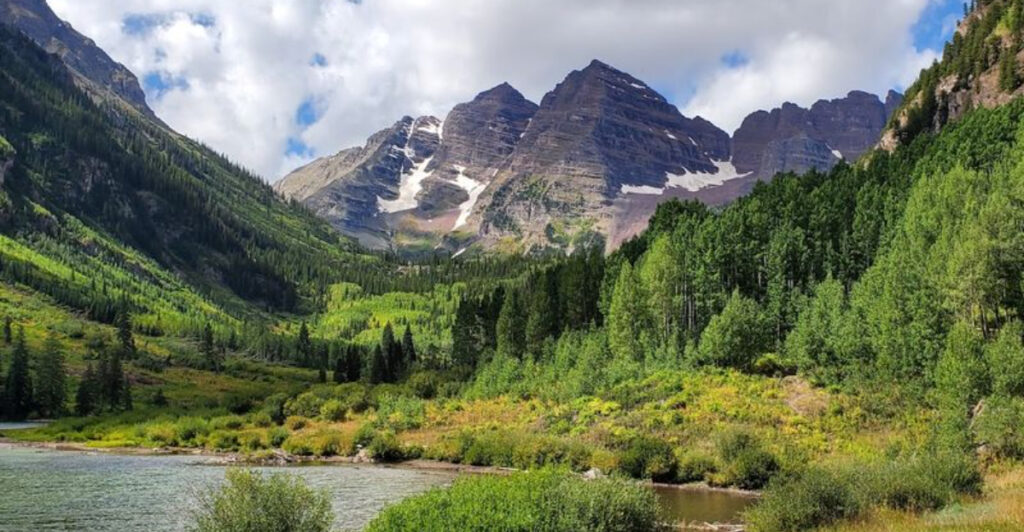
There are scenic drives, and then there are roads that make you pull over again and again just to take it all in. The journey to the Maroon Bells Scenic Area outside Aspen is one of those rare Colorado experiences, where every winding mile reveals another breathtaking view of towering peaks, shimmering alpine lakes, and forests that seem to glow in the changing mountain light.
By the time the iconic Maroon Bells come into full view, it feels less like arriving at a destination and more like stepping into a landscape painting. If you’re searching for one of Colorado’s most unforgettable drives, this belongs at the top of your list.
The Reveal at Maroon Lake
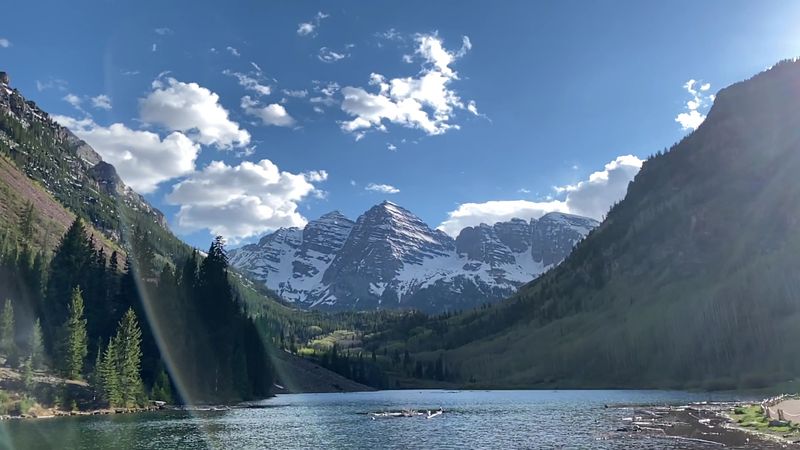
The approach to Maroon Bells Scenic Area is almost theatrical. The road narrows your attention, the forest thickens, and then the view opens with Maroon Lake in front and the paired peaks rising behind it like a backdrop painted in mineral reds, charcoal, and violet.
That first look works because the landscape is arranged with unusual precision, from the calm waterline to the steep faces above. It feels like the scenery reveals itself at exactly the right moment instead of all at once.
At lake level, the composition gets even sharper. The shoreline bends gently, the trees frame the basin without blocking it, and the water often reflects enough detail to make the mountains look doubled.
Early light adds the extra layer most people chase, especially when the peaks pick up a warm glow while the lower ground stays cool and blue. Even after the initial wow moment, the view keeps rewarding a slower look as changing light subtly reshapes the scene.
What keeps this landscape from feeling overly polished is the roughness around the edges. You notice fallen logs, wet stones, wind movement in the reeds, and the shifting ripples that break the perfect mirror for a second at a time.
That contrast between iconic beauty and small natural disorder gives the place more depth than a standard scenic overlook. It feels wild enough to remain believable rather than picture-perfect.
You do not need a long hike to understand why this area became one of Colorado’s signature views. Even the easier loop near the lake puts you close to the textures that photos flatten, including the sound of water entering the basin and the changing color bands on the rock.
It is a view built on scale, but it lands through details, and that is exactly why the opening scene stays with you long after you leave.
Why the Peaks Look So Unbelievably Vivid
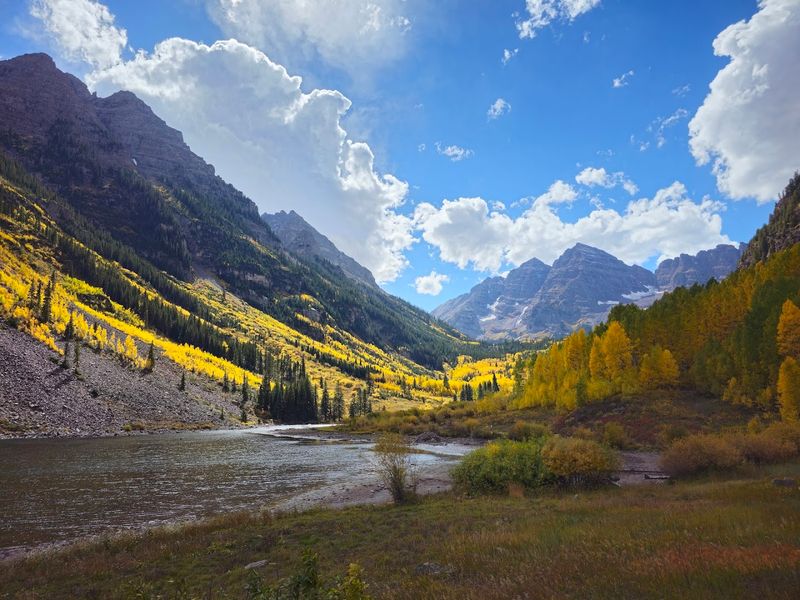
The mountains here do not read as plain gray the way many alpine peaks do. The Bells carry bands of reddish and purplish tones that shift throughout the day, which is part of why the whole basin can seem almost unreal in photographs.
When light hits those steep faces at an angle, the rock color becomes the star rather than just the shape of the summit. The result is a landscape that changes personality from hour to hour without the mountains themselves ever moving.
That visual intensity is tied to the area’s layered geology and to the way the valley presents it so cleanly. You are not peeking through heavy development or a cluttered skyline.
The peaks rise directly above water, trees, and open air, so every color change registers clearly, especially during sunrise, sunset, and peak fall when gold aspens create strong contrast below. The broad, open basin gives the mountains enough space to dominate the horizon without competing for attention.
The setting also helps the mountains perform. Because the basin is broad and the lake sits low in front, you can read the full face of the Bells instead of catching only fragments through forest.
That makes even small weather shifts feel dramatic, whether clouds drag shadows across the rock or a thin veil of morning haze softens the edges for a few minutes. Even a passing breeze can change the reflections enough to make the entire scene feel different.
If you arrive expecting a single postcard angle, the color story is the detail to watch. Move a little, wait a little, and the same peaks can swing from dusty rose to deep plum to muted brown depending on cloud cover and time of day.
Maroon Bells rewards patience more than speed, and the mountains prove it without needing any extra explanation from a signboard.
Beyond the Photo Stop: Trails That Change the Experience
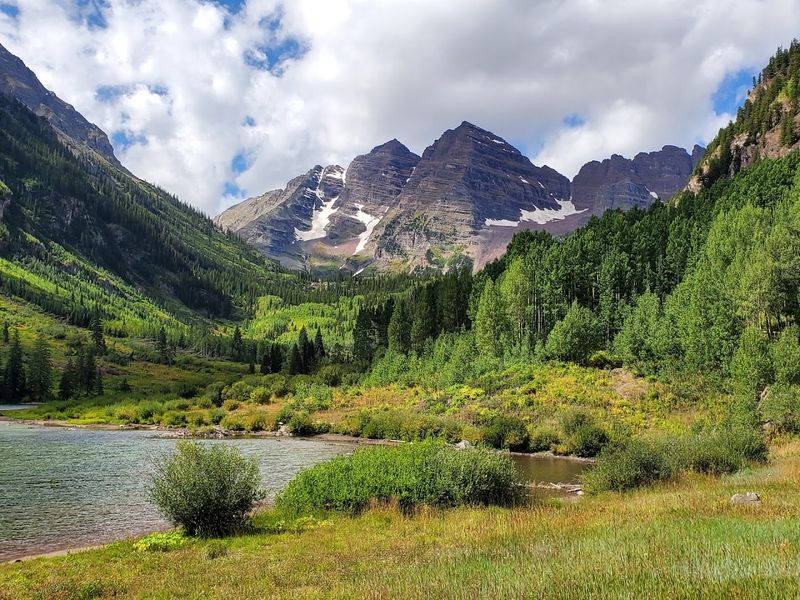
It is easy to treat Maroon Bells as a quick scenic stop, but the area changes character once you leave the main viewpoint. The nearby loops around the lake offer a gentler introduction, while longer routes begin to pull you into thicker forest, rockier ground, and a more active relationship with the landscape.
Instead of standing before the view, you start moving inside it. The famous peaks remain in sight for a while, but gradually the surrounding forest and streams begin to share the spotlight.
The shorter walking options make this place unusually approachable for mixed groups. You can get broad mountain views, stream crossings, and shoreline angles without committing to a major backcountry day.
That accessibility is a big part of the area’s appeal, especially if you want a high-reward outing that still leaves room for lunch in Aspen or another stop later. Families, casual walkers, and photographers can all enjoy the scenery without feeling pressured into a strenuous hike.
Go farther and the terrain becomes more textured. Rocks underfoot demand attention, the sounds of water and wind become more noticeable, and the basin begins to feel less like a famous overlook and more like functioning mountain habitat.
In season, you may notice berry patches, busy creeks, wildflowers, and evidence of beaver activity near wet areas, all of which add life beyond the headline view. Every extra stretch of trail reveals another small detail that many visitors miss from the main viewing area.
The practical takeaway is simple. Choose your trail based on the day you actually want, not the one you think you should want.
Maroon Bells works equally well whether you are after an easy loop with world-class scenery or a longer walk that trades the immediate crowd for more forest, more elevation, and more chances to notice the landscape in motion.
Colorado’s Most Photographed View – And Why It Still Holds Up
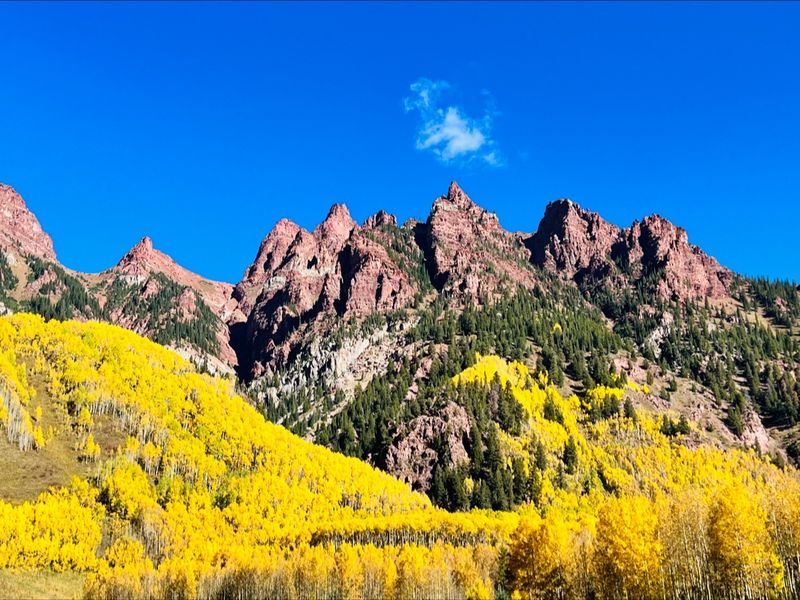
Places with famous views sometimes shrink in person. Maroon Bells does the opposite because the camera usually captures only the cleanest central composition, not the wider sensory field around it.
On site, you get the cold air drifting off the water, the hush between shuttle arrivals, the creek noise nearby, and the changing edge details that keep the scene from turning static. The famous reflection is only part of what makes standing here feel so memorable.
The popularity makes sense the second you see the lake and peaks line up. There is symmetry without stiffness, color without excess, and a front-facing mountain profile that reads instantly even to someone who has never studied Colorado landscapes before.
Add fall aspens or early morning alpenglow, and the image practically arranges itself. It is the kind of composition that feels familiar from photographs while still managing to exceed expectations in person.
Yet the place earns more than surface-level admiration because it continues to offer variation after the first few minutes. Clouds move quickly, reflections sharpen and blur, and different points along the path reveal new balances between water, trees, and rock.
Even busy conditions do not erase the setting’s strength because the basin is visually compelling from multiple angles, not just one designated photo deck. A slight shift in weather or light can make the entire landscape feel newly discovered.
If you are wondering whether a heavily photographed landmark can still surprise you, this one can. The trick is to treat the classic shot as an opening note rather than the whole performance.
Stand still longer than planned, walk the edges of the loop, and watch how the light edits the mountains in real time. That is when the famous view becomes a complete experience instead of simply another item checked off a travel list.
The Smart Way In: Shuttles, Timing, and Access Rules
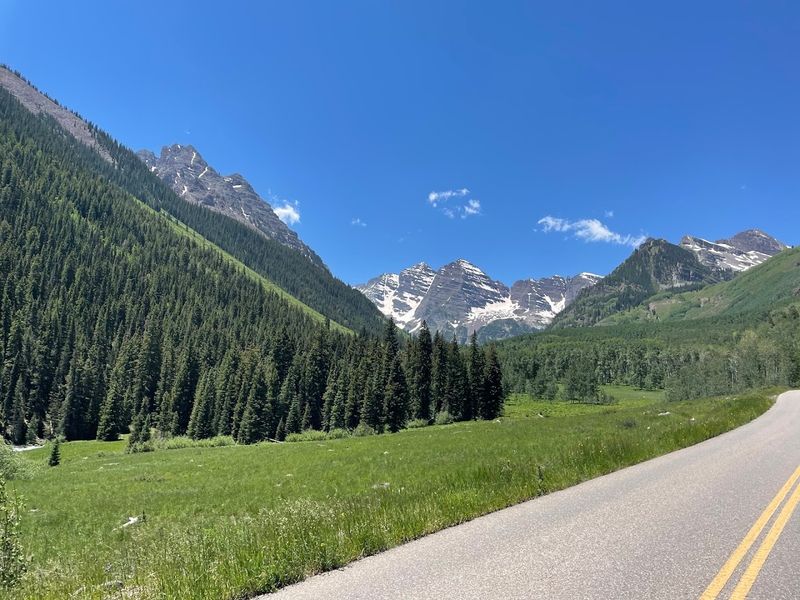
Maroon Bells Scenic Area is beautiful partly because access is carefully managed, and that matters before you ever lace up your boots. During the restricted driving season, private vehicles are not allowed in the middle of the day, so many visitors arrive by shuttle.
That system can feel like an extra step, but it helps protect a landscape that would quickly become overwhelmed by constant traffic. The result is a quieter, more enjoyable experience once you finally reach the lake.
If you are planning a visit, timing is not a side detail here. Early morning and later evening often follow different vehicle access rules, while daytime visits usually revolve around shuttle schedules and advance reservations.
The smoothest experience comes from treating transportation as part of the trip rather than an inconvenience at the end of the road. Checking current access rules before leaving Aspen can save both time and unnecessary frustration.
There is also a practical rhythm to the area once you arrive. Short loops near the lake are straightforward, but longer walks call for water, layers, sturdy footwear, and realistic expectations about mountain weather.
Conditions can change quickly, and the area’s popularity means a little advance planning buys you far more peace than trying to improvise in one of Colorado’s busiest scenic destinations. Giving yourself extra time also makes it easier to enjoy the landscape without feeling rushed.
One more point deserves emphasis: stay on the marked trails. The ropes, signs, and boundaries are there to protect fragile shoreline, wetlands, and alpine meadows that would deteriorate quickly under heavy foot traffic.
You can still enjoy spectacular views without stepping over barriers or cutting across sensitive ground for a better photo. Maroon Bells remains one of Colorado’s most remarkable landscapes because visitors are encouraged to experience it responsibly, helping preserve the scenery for everyone who follows.
When to Go for the Best Light, Color, and Space
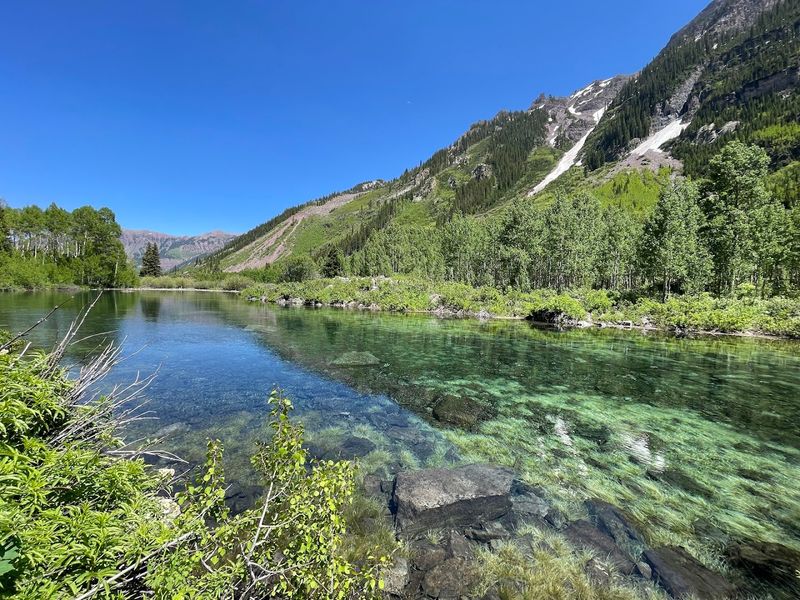
Timing changes everything at Maroon Bells, and not just in the obvious seasonal way. Sunrise is prized for good reason, since the peaks can catch warm alpenglow while the lake stays cool and reflective.
That contrast gives the basin a layered look that is far richer than flat midday light. Early mornings also tend to feel quieter, allowing the scenery to take center stage before the busiest part of the day begins.
Summer brings easy access, green forests, active trails, and a lively shoreline scene, which makes it a practical choice if you want the classic experience without cold-weather complications. Fall, on the other hand, transforms the surrounding aspens into brilliant shades of gold, creating dramatic contrast against the darker mountain faces.
It is one of the strongest natural color displays in Colorado, so larger crowds are simply part of the experience during peak foliage season. Weather also shapes the visit more than many first-time travelers expect.
A clear morning produces crisp reflections and sharply defined ridgelines, but passing clouds can be just as rewarding as they drift across the peaks, constantly changing the light and color of the landscape.
Even a moody day can feel spectacular if you appreciate shifting mountain weather instead of expecting perfect postcard conditions. The scenery rarely looks exactly the same twice. The best strategy is to match your visit to your priorities.
If your goal is glowing color, calm water, and the quietest atmosphere, arriving early is hard to beat. If you prefer warmer temperatures, longer daylight, and more flexibility in your schedule, a summer daytime visit may suit you better despite the extra visitors.
Maroon Bells does not offer one perfect moment for everyone. Instead, it offers several remarkable versions of the same landscape, each revealing something a little different.
Why This Aspen Landscape Stands Apart
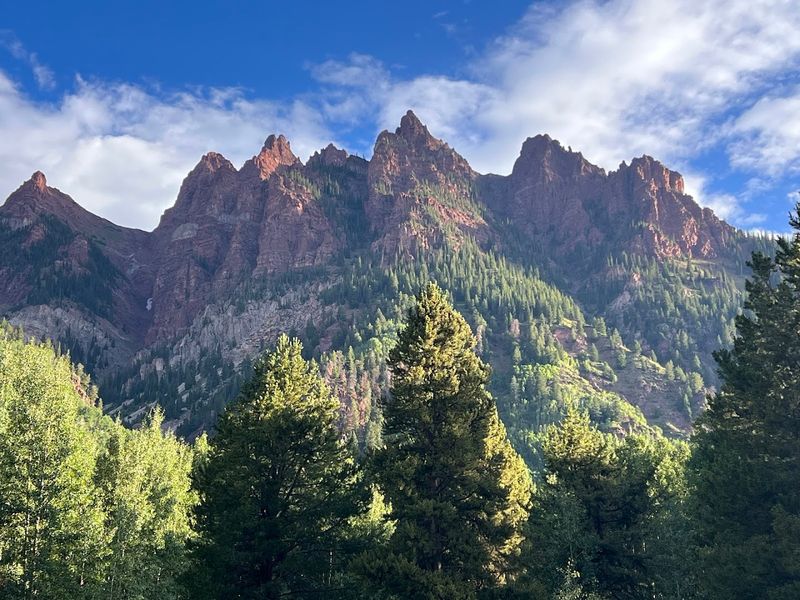
Some scenic areas impress through sheer scale, while others work through intimacy. Maroon Bells Scenic Area manages both at once, which is a rarer combination than it sounds.
You get towering alpine architecture overhead, but the experience is anchored by small, readable details at ground level such as the inlet stream, the lakeshore vegetation, and the close framing of trees. The result is a landscape that feels just as rewarding when you slow down as it does at first glance.
That dual quality makes the place unusually flexible. It works for someone chasing a bucket-list Colorado image, for a family wanting an easy loop with enormous payoff, and for hikers using the area as the start of a longer day.
Very few destinations balance broad accessibility with such a strong sense of alpine drama. No matter how you choose to experience it, the scenery never feels one-dimensional.
The managed access also contributes to the area’s distinct character. Because private vehicles are limited during busy periods, the basin is spared the constant traffic that can diminish a famous natural landmark.
You notice more birdsong, more moving water, and more of the landscape’s natural rhythm once the road noise fades and the mountains reclaim the scene. That quieter atmosphere makes the entire visit feel more immersive.
In the end, Maroon Bells stands apart because it is not relying on a single trick. The famous reflection is unforgettable, but so are the trails, the shifting light, the seasonal color changes, and the way the basin gradually reveals itself instead of showing everything at once.
You arrive for the postcard view, then realize the real attraction is the complete landscape surrounding it. That is why this stop near Aspen remains one of Colorado’s most memorable destinations long after the first wow moment passes.
Share this story