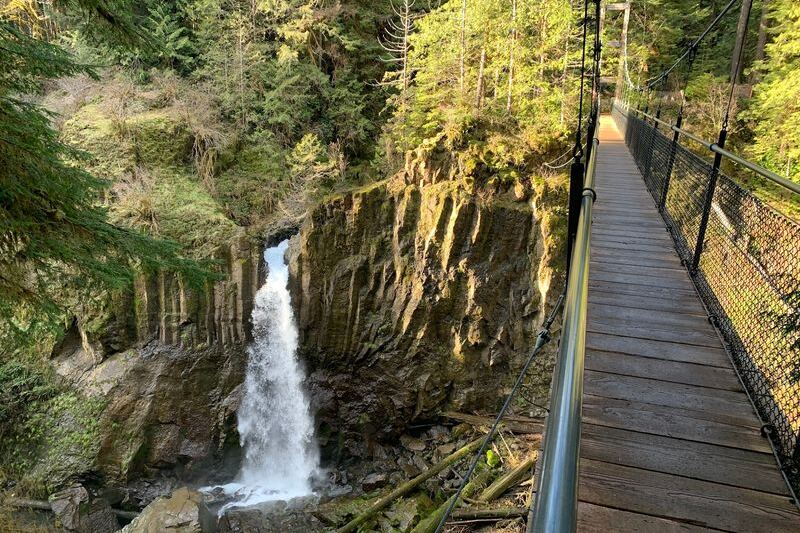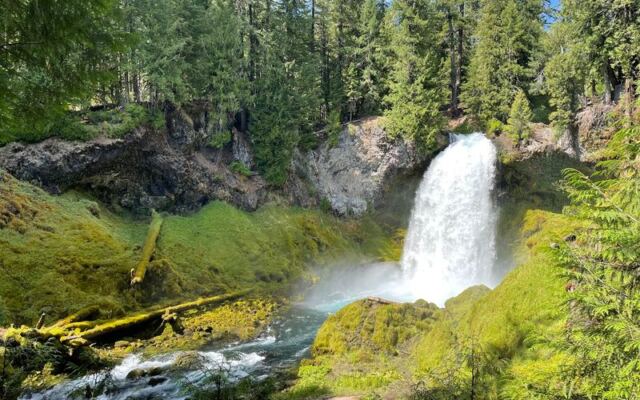
Two waterfalls, one river, and a trail so easy that some hikers skip their boots entirely. That is the promise tucked into the forest of the Oregon Cascades, and it delivers. The McKenzie River does the heavy lifting here, pouring over two big drops connected by a path that hugs the bank.
Short walkers can see both falls and head back in about three miles. Bigger appetites can push it into a longer loop with real elevation. Parking is tight, amenities are thin, and snow can linger into late spring, so a little planning pays off.
Keep reading for the route options, the best stretches of trail, the quirks of the season, and the practical notes that help a day trip go smoothly instead of sideways.
Where the Loop Begins
Every good adventure needs a starting line, and this one is the Waterfalls Loop Trailhead in Sisters, OR 97759. The area falls under the Willamette National Forest, where the U.S. Forest Service manages the Sahalie and Koosah Falls recreation site.
The trail is listed as a hiking area, and its main characters are the McKenzie River and two named waterfalls.
Sahalie Falls and Koosah Falls sit along the same stretch of river, linked by a path that runs close to the water. Carmen Reservoir also ties into the route, giving the loop its northern anchor.
The trail is a day-trip favorite for folks coming from Eugene or Springfield. It sits far enough out to feel like a getaway, yet the trail itself asks for very little in the way of skill.
Small trailhead, big reward. The hike earns a 4.9-star reputation across dozens of write-ups, and nearly every one circles back to the same two highlights.
The rest of this guide walks through those falls, the route choices, and the details worth knowing before the car keys come out.
A River With Two Big Moments
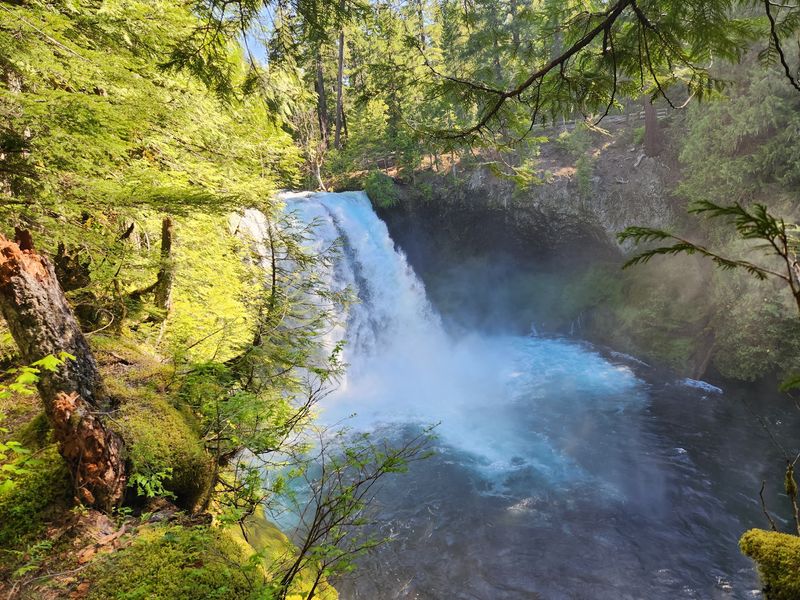
Some rivers meander. The McKenzie prefers drama, dropping twice in quick succession along this stretch of the Cascades.
The loop exists because of that geography. Sahalie Falls and Koosah Falls are close enough to visit in one outing, and the trail connects them with views of the river most of the way.
Between Koosah and Sahalie, the path stays tight to the water. The remainder of the loop slips deeper into the woods, trading river views for forest scenery.
That split gives the hike two personalities in one afternoon. One half feels like a riverside stroll, while the other half feels like a proper forest outing.
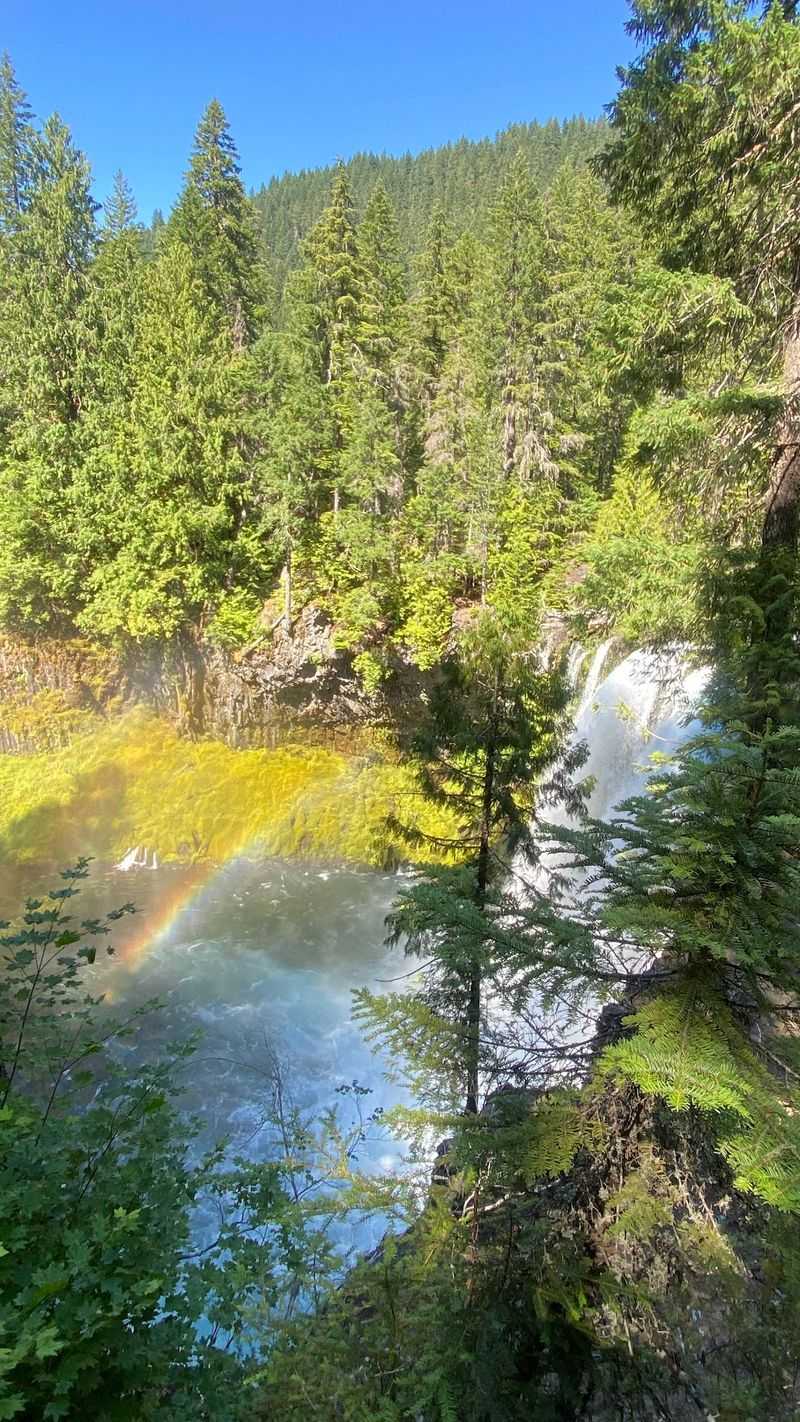
Hikers often point to the water itself as the surprise. It shows up as an intense blue, with blue-green pools that add color between the drops.
The scenery holds steady throughout, which explains why so many call it one of the best hikes in the region. A river that performs this well rarely needs much help from the trail builders.
Koosah Falls Steals Hearts
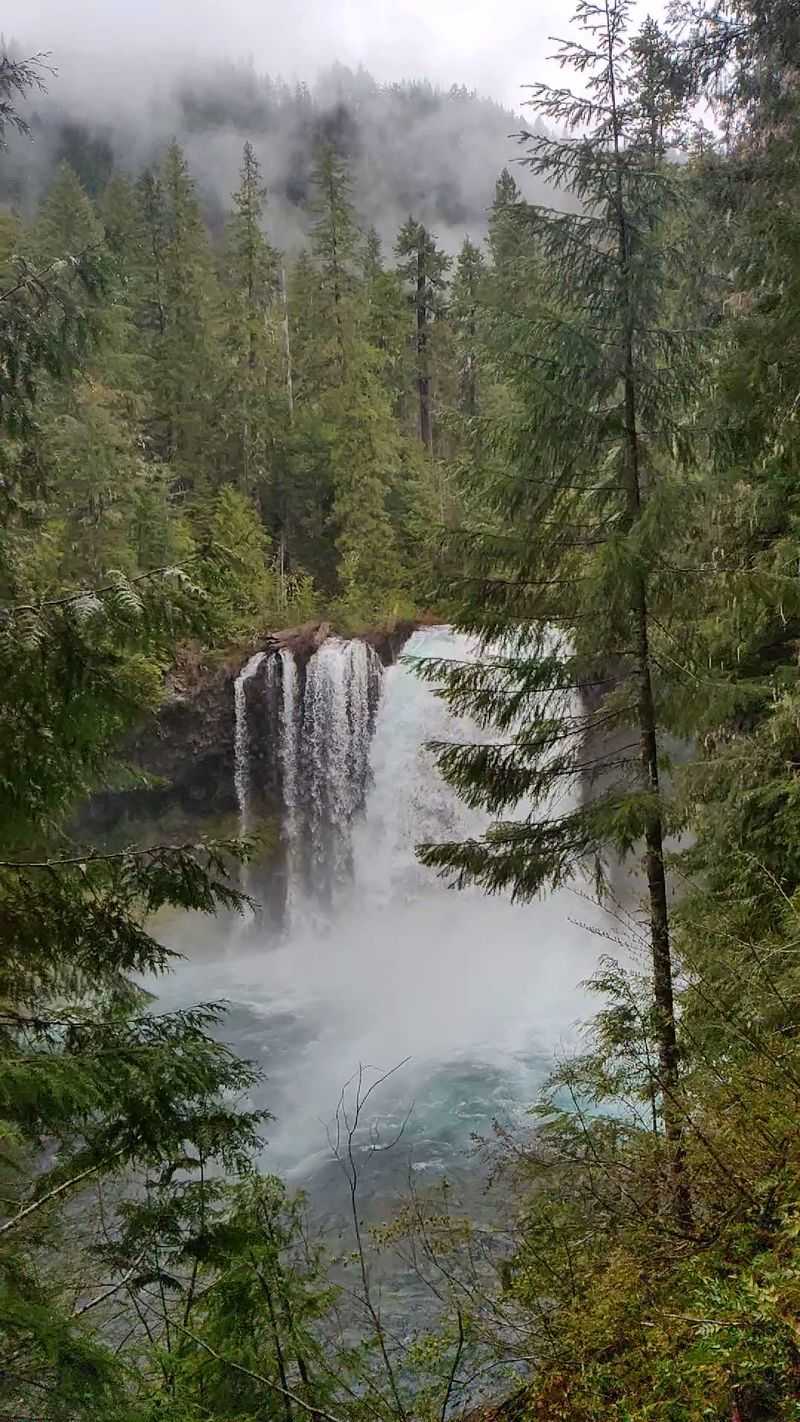
Plenty of people arrive for the pair and leave talking about just one. Koosah Falls has earned a spot on more than a few all-time favorite lists.
The falls also serve as the main parking point for the shorter version of the hike. That makes Koosah the first impression for many, and it tends to make a strong one.
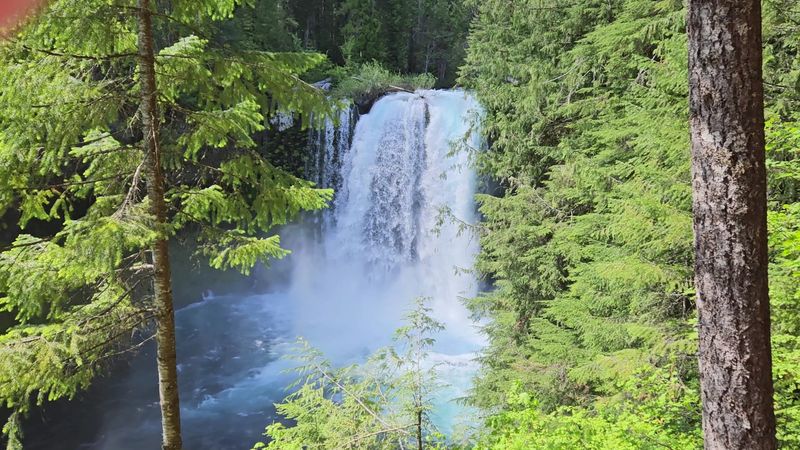
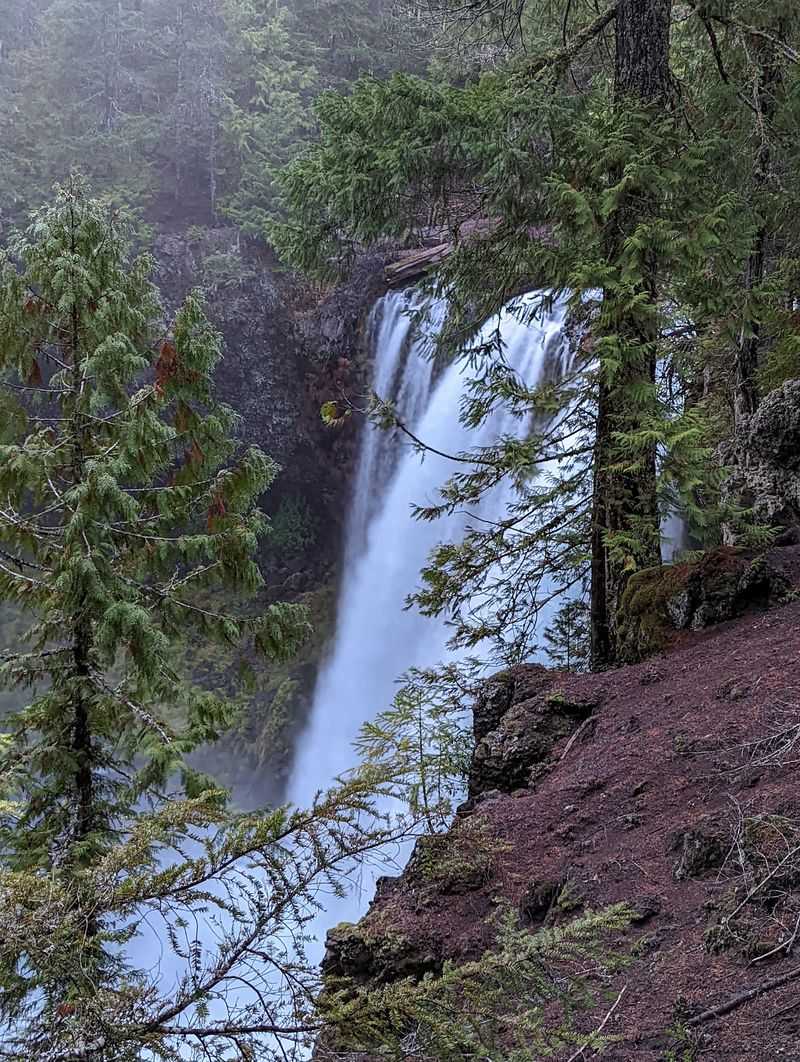
The volume of water is the headline. Hikers describe so much water moving with so much force that the scene feels genuinely inspiring.
Spring brings the falls to full strength, when snowmelt feeds the river. Timing a visit for that season means seeing Koosah at its most energetic.
Because the trail follows the river on both sides, hikers can view the falls from more than one angle. That is a nice bonus for anyone who likes to compare perspectives.
Bring patience at the parking area, since spaces fill quickly. Koosah is worth the wait, and the trail north begins right from its doorstep.
Sahalie Falls and the Upstream Payoff
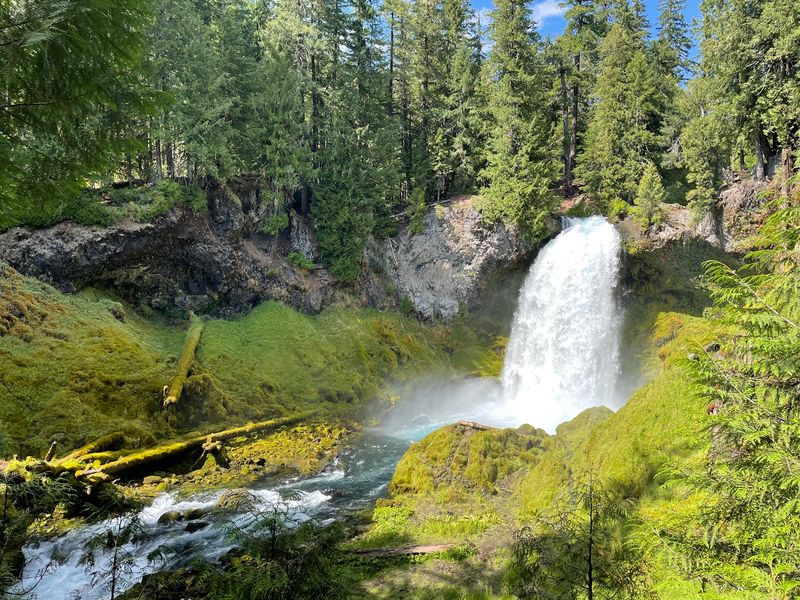
Head upriver from Koosah and the trail delivers its second act. Sahalie Falls waits at the other end of the riverside stretch.
Both falls draw the word spectacular from hikers, so there is no consolation prize here. The two are equals in the eyes of most people who make the walk.
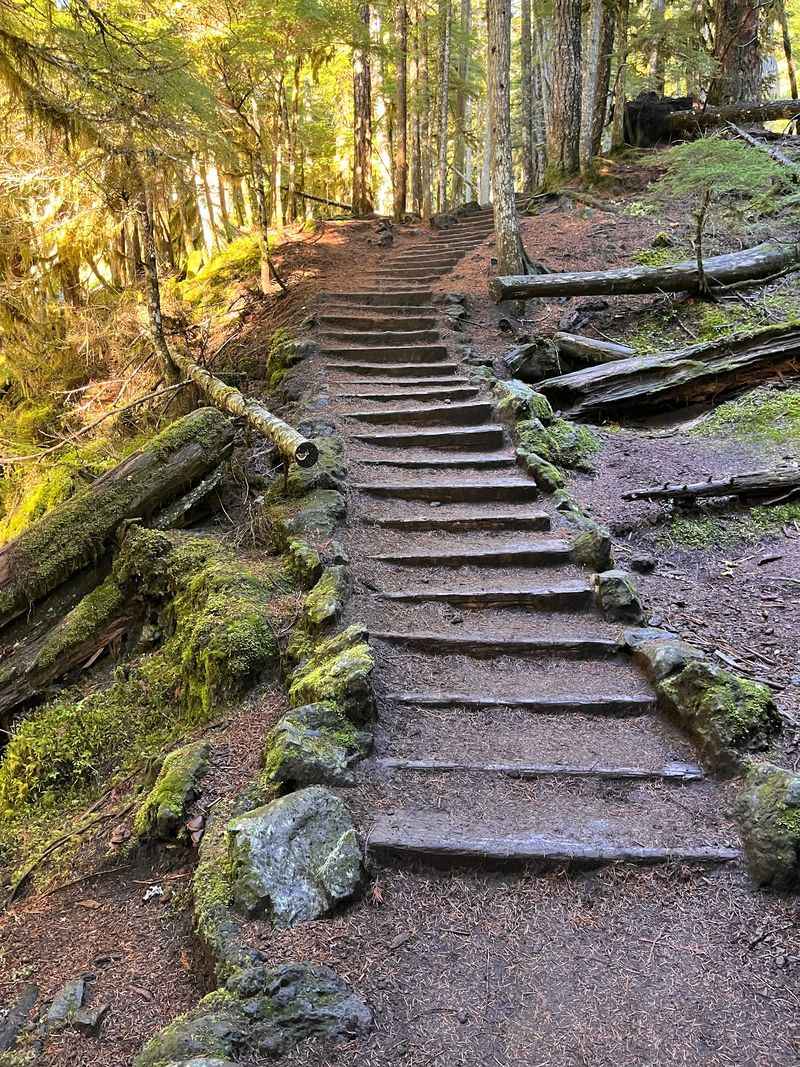
The trail between them climbs gently going north. The change is so gradual, with only a few exceptions, that many barely register the uphill.
A series of steps and stairs appears just past the first falls. Anyone with tired knees should plan for that short section.
Sahalie also hosts an unexpected sideshow on occasion. Slackliners sometimes set up above the first falls, balancing on a line high over the river.
That kind of moment cannot be scheduled, but it makes for a memorable story. The falls alone already make the short climb a smart investment of energy.
Short Walk or Full Loop
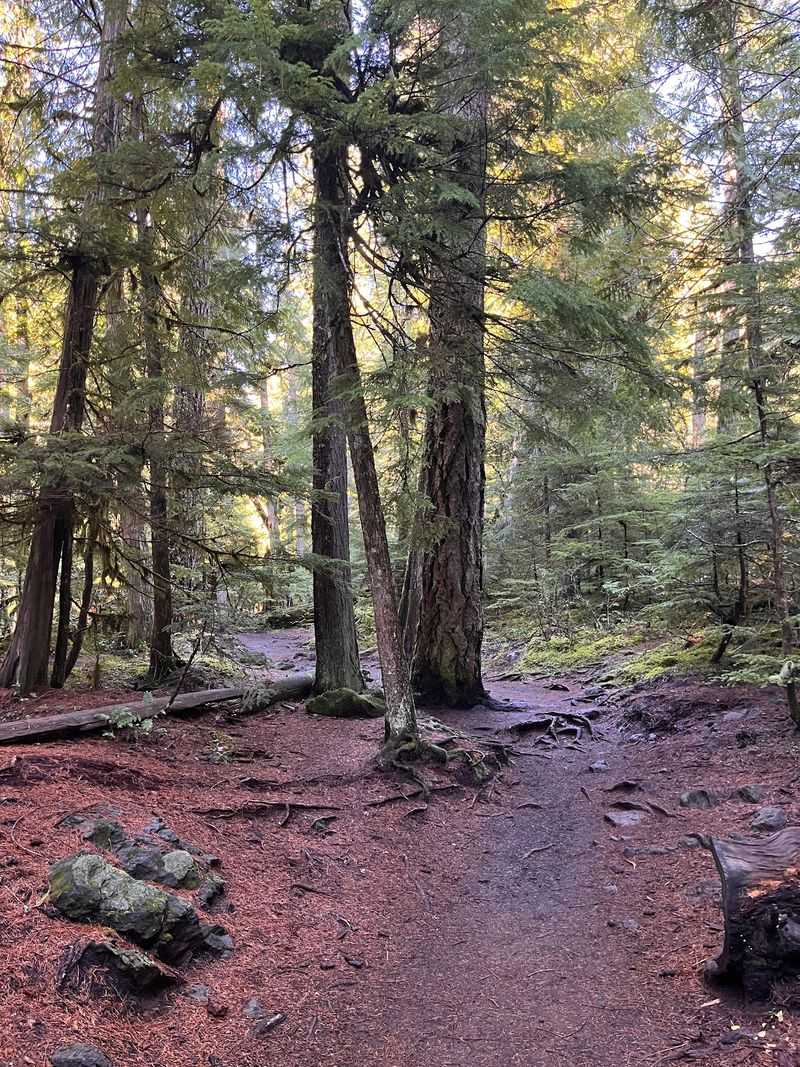
Choose your own adventure, minus the paperback. The route bends to fit almost any energy level.
The quick version starts at Koosah Falls and covers about 1.5 miles north to the McKenzie River Trail junction. From there, hikers can turn around for a round trip of roughly three miles.
Some keep it even shorter. A two-mile walk between the falls still delivers the headline scenery, and plenty of hikers call that plenty.
The full loop is a different animal. It runs about 7.3 miles with a little over 1,700 feet of elevation gain.
Hikers who take the long route describe it as doable for most people. The trail stays easy to follow and green, with wildflowers in season.
Deciding on the spot is common, too. More than one group has planned the loop, then happily settled for both waterfalls and a stroll back to the car, and nobody seems to regret either choice.
The Wilder Return Path
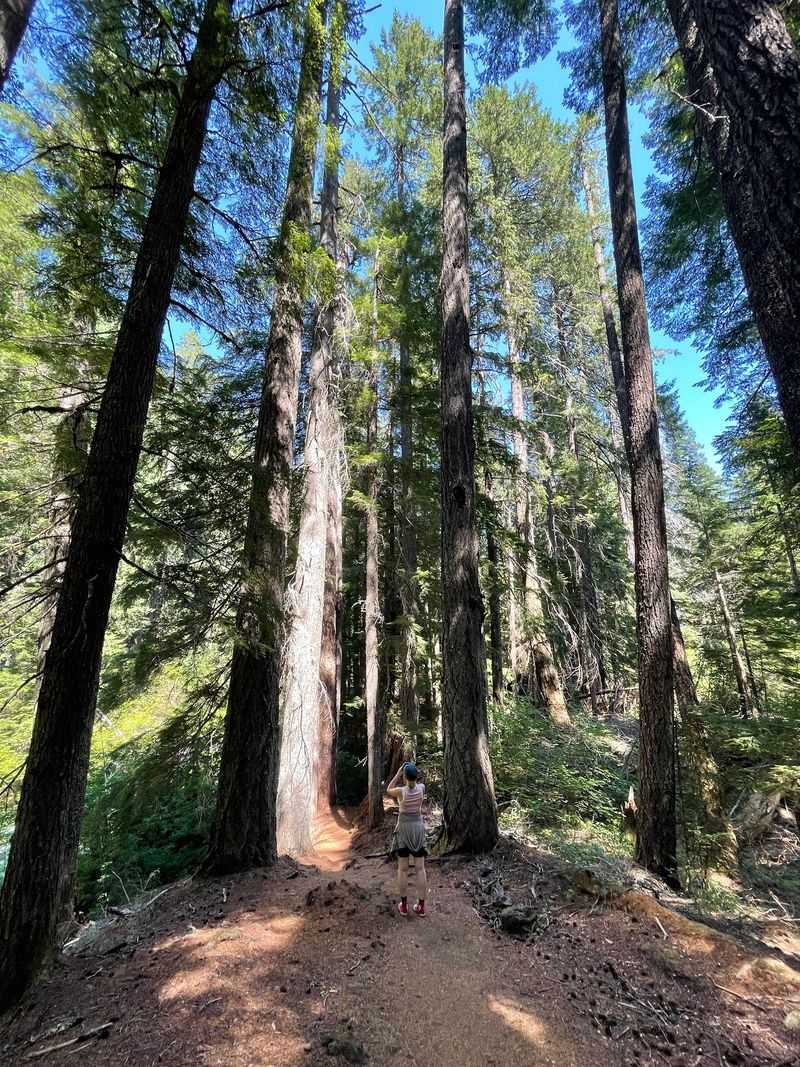
Not every trail stays polished from start to finish. The return side of this loop has a rougher personality.
Hikers note that the return trail is much more primitive than the main path. Some treat the whole thing as an out-and-back for that reason.
That does not make the return side a bad idea. It simply suits people who want a bit more adventure walk and a little less groomed footing.
The main trail, by comparison, is well worn and clearly marked by use. Losing the way on that side would take real effort.
A smart approach is to scout a few hundred feet of the return path before committing. If it looks like more than the day calls for, turning back is perfectly reasonable.
The woods on this side offer a quieter stretch away from the river. It is a fine reward for hikers who like their trails with a bit of character.
Blue Pools and River Color
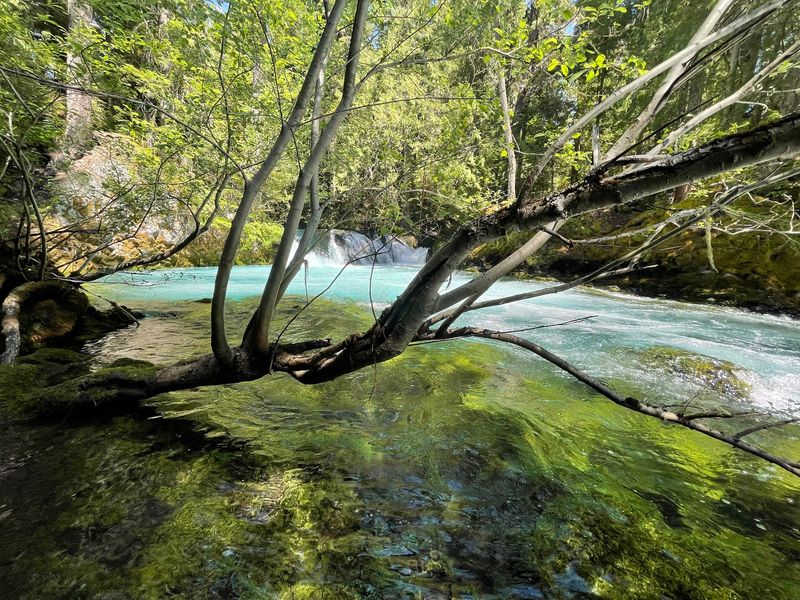
Color is the quiet star of this hike. The water runs an incredible blue, and the river collects in blue-green pools along the way.
Hikers frequently describe the water as stunningly clear. That clarity makes the river worth watching even between the two falls.
Blue pools at the south end were closed for restoration at one point. Checking current conditions before visiting is a good habit.
Some hikers prefer this route to the separate hike out to the well-known Blue Pool. The waterfall loop offers color plus two big drops, which feels like a better bargain.
Restoration closures are a reminder that these places need care. Staying on trail helps the banks and pools hold up for the next group.
Respecting the river is part of the deal. A little restraint today keeps the scenery intact for years, and that is a trade Oregonians tend to support.
An Easy Trail for Almost Everyone
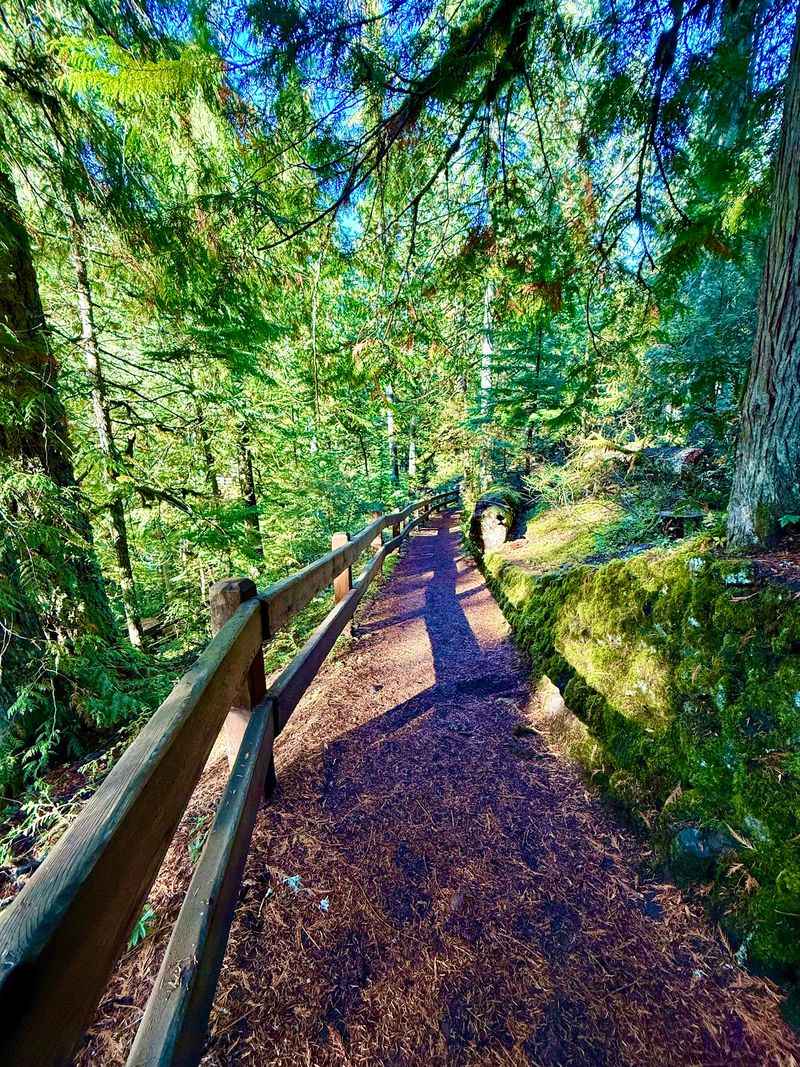
Good news for anyone who considers the couch a training plan. The core trail between the falls is famously mild.
Families, kids, and dogs all fit in here. The trail gets steady praise as friendly for every member of the household.
Some hikers say regular shoes work fine on the main stretch. The well-worn path rarely demands technical gear.
Those who admit they are not exactly in peak shape still call it an easy, serene outing. That kind of honesty is reassuring for first-timers.
The trail also works as a stretch break on a longer road trip. A short walk to one waterfall can reset a long day of driving.
Picnic spots along the river add another reason to linger. Pack a lunch, find a spot by the water, and the outing turns into a relaxed half-day without much effort.
Seasons, Snow, and Smart Timing
Mountain trails keep their own calendar. This one holds snow until late spring, which can catch unprepared hikers off guard.
A practical move is checking recent photos and trail updates before heading out. Conditions can shift a lot from one month to the next.
Spring earns repeated mentions as a strong time to go. The falls run with force, and the trail turns green with wildflowers.
Construction work has also closed the trailhead and the Carmen Reservoir area at times. When that happens, the full loop is off the table.
The Forest Service page for Sahalie and Koosah Falls is the best place to confirm access. A quick look can save a long drive.
Flexibility helps here. If the loop is closed, the short falls walk often remains a solid backup, so the trip rarely becomes a total loss.
Hours, Parking, and Practical Notes
Plan the clock before the hike. Listed hours run Monday through Friday from 10 AM to 4:30 PM, with Saturday and Sunday shown as closed.
Those hours can change with the season, so the Forest Service website is worth a check. Its page for Sahalie and Koosah Falls carries the latest information.
Parking is the main headache. The lot at Koosah Falls is small, with limited spots that fill quickly.
Amenities are minimal, so bring water, snacks, and anything else needed for the day. Self-sufficiency keeps the outing comfortable.
The trail is well worn and easy to follow, and footwear needs are modest on the main path. Sturdier shoes still make sense for the full loop and the primitive return side.
Arriving early in the open window helps with parking. That small effort usually pays off with a calmer start on the trail.
Why the Trail Earns a Return Trip
Some outings fade from memory by Tuesday. This one tends to stick around.
Two waterfalls, a clear blue river, and a trail that welcomes nearly everyone make a strong combination. Add flexible distances, and the hike fits a lazy afternoon or a full-day push.
Many describe it as one of the best hikes in the region. Others simply say they would happily come back.
Places like this are part of what makes everyday Oregon life feel rich without a big price tag. A day on public land asks for gas money, a packed lunch, and a little planning.
Treating the trail kindly helps keep it that way. Stay on the path, respect restoration closures, and leave the riverbanks as found.
Check the hours, watch for snow, and grab that parking spot early. The McKenzie River will handle the rest, two falls at a time.
Share this story