At the bend where South Main Street crosses Brainerd Lake, Cranbury does something sneaky. One minute, you’re in central New Jersey, with Route 130 and the Turnpike not exactly worlds away.
The next, you’re looking over still water, old railings, mature trees, and a Main Street that seems wildly uninterested in rushing you along. The lake itself started as a mill pond in the 1700s, and somehow that practical little beginning still sets the pace today.
Cranbury is not flashy. It is not trying to become the next overhyped weekend escape with matching tote bags and impossible brunch reservations.
That is the point. This is a town where the prettiest views are ordinary ones: a bench by the dam, a historic inn still serving dinner, a walk for ice cream that does not require a parking strategy.
It feels less like running away and more like remembering you were allowed to slow down.
Cranbury Feels Like the New Jersey Town Time Forgot
Spend a few minutes on Main Street and you start to understand why Cranbury gets under people’s skin in the best way. It is not pretending to be old.
It simply is. The township says most of the village was entered on the New Jersey Register of Historic Places in 1979 and the National Register of Historic Places in 1980, with the nomination calling Cranbury “the best preserved 19th century village in Middlesex County.” That is a big sentence for a small place, but it fits.
What makes it special is that the preservation never feels frozen. People still live in those houses.
Kids still pass by the old buildings. Someone is probably walking a dog past a home that has seen more New Jersey drama than most reality shows.
Cranbury’s roots go back to the late 1600s, with the first recorded evidence of buildings appearing in a 1698 deed. Even the spelling has a local twist: old maps used “Cranberry,” but the town and brook became “Cranbury” in 1869, after Reverend Joseph G.
Symmes pushed for the “bury” ending. That little spelling change says a lot.
Cranbury has always been close to everything, but it has never seemed too eager to blend in. It keeps its own rhythm, its own look, and its own sense of proportion.
There are towns that brag about charm because they have three planters and a mural. Cranbury has an entire village core that makes you instinctively walk slower, look up from your phone, and wonder why more places did not hang onto this much character.
Main Street Is the Kind of Place You Wish Still Existed Everywhere
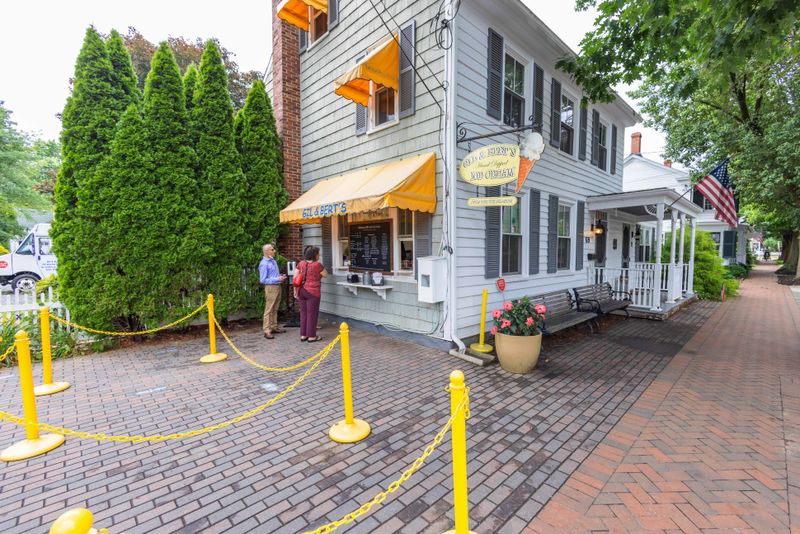
A good Main Street does not need to shout. Cranbury’s mostly just nods, points you toward something worth noticing, and lets you figure it out.
North Main and South Main run through the heart of town with the confidence of a place that has been useful for centuries. In the 1700s, Cranbury sat along a major route between New York and Philadelphia, a practical stopping point where stagecoaches could change horses and travelers could find food and lodging.
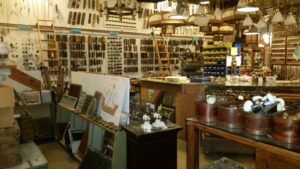
Today, the traffic is different, but the street still feels like the center of gravity. You can browse the Cranbury Bookworm, a used-book shop that the Academy of American Poets says has been in business since 1974 and offers more than 100,000 titles.
That is not a “cute little shelf by the register” situation. That is a place where you go in for one paperback and come out questioning whether your home needs another bookcase.
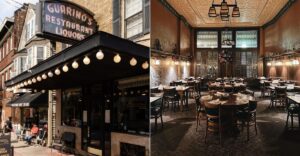
A few doors away, daily life keeps happening in refreshingly normal ways. Teddy’s Restaurant sits at 49 North Main Street and opens early enough for actual breakfast people, with posted hours beginning at 6 a.m.
Monday through Friday and 7 a.m. on weekends. That is the magic of Cranbury’s Main Street.
It is pretty, yes, but it is not precious. It has restaurants, shops, banks, sidewalks, and the occasional person crossing the street like they are not being hunted by a deadline.
Nothing about it feels manufactured for a brochure. It works because it is still being used.
The History Here Lives in the Homes, Inns, and Sidewalks
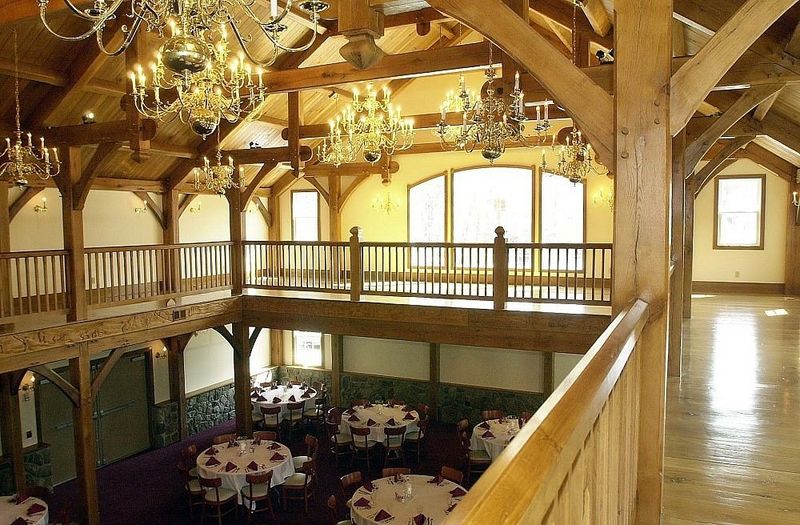
Some towns keep history behind glass. Cranbury lets it sit beside you at lunch.
The Cranbury Inn is the obvious example, and for good reason. The inn is part of the historic district and on the National Register, and its own history notes the building’s long life through tavern rooms, weddings by the fireplace, old innkeeper quarters, a former telegraph office, and even a 6,000-square-foot dance pavilion that opened in 1926.
That is not background décor. That is layers.
The deeper you look, the more Cranbury turns into one of those places where a simple walk becomes a very casual history lesson. George Washington and his staff were in Cranbury on June 26, 1778, as decisions were being made around the Battle of Monmouth, and Lafayette and Alexander Hamilton had quartered at the Stites House on South Main Street the day before.
Even the sidewalks seem to know something. The town’s houses and public buildings tell different chapters, from early inns and churches to the Old Schoolhouse, which now serves municipal purposes after starting life as a school.
The Cranbury Museum at 4 Park Place East adds another layer, especially if you catch it during its Sunday 1 p.m. to 4 p.m. hours. The museum building began as a two-room house probably built in 1834, and during its restoration, details like wide pine floorboards, wavy glass panes, a cooking fireplace, and rough plaster walls were preserved.
That is what makes Cranbury feel lived-in instead of staged. The past is not sealed off. It is underfoot, across the street, and occasionally serving roast turkey.
Brainerd Lake Gives the Town Its Quiet, Dreamy Heart
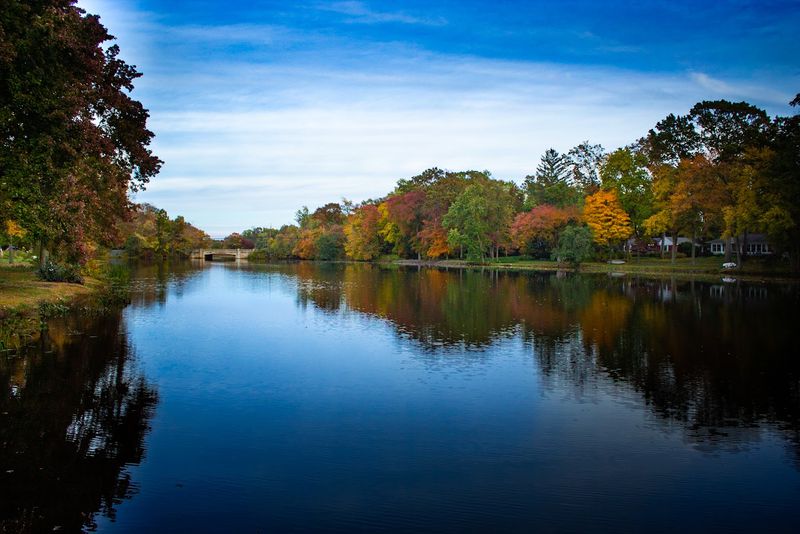
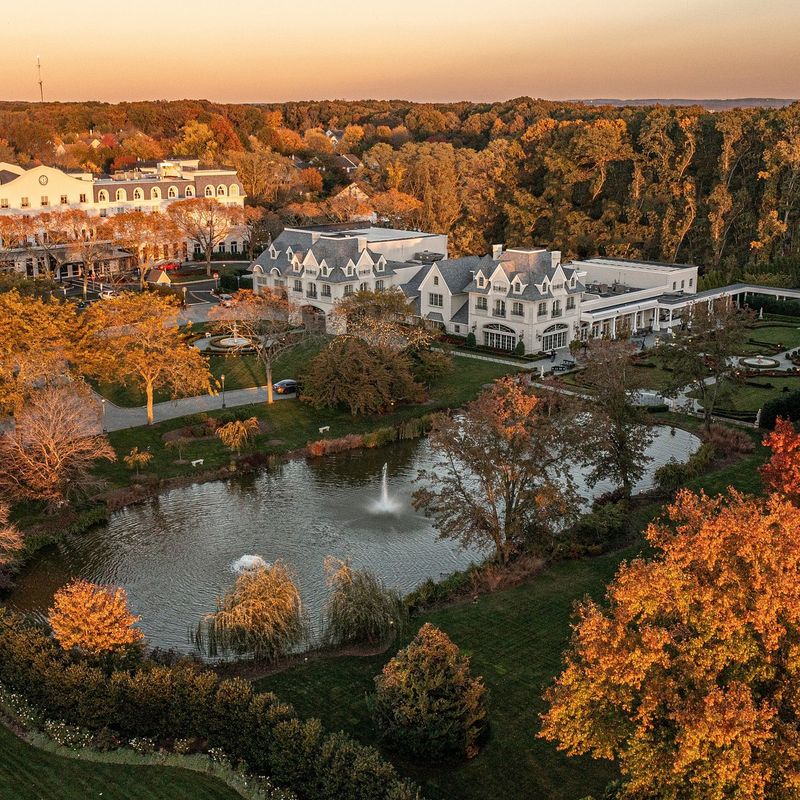
Stand by the dam long enough and Cranbury’s whole personality starts to make sense. Brainerd Lake is not enormous, and that is part of its charm.
The New Jersey Historic Preservation Office describes it as an approximately 12-acre manmade lake created when Cranbury Brook was dammed in 1736. Its first life was practical: a mill pond that powered a gristmill and later a sawmill.
Over time, the workhorse became the view. Main Street crosses near the western end, where benches, railings, the arched Brainerd Lake sign, and a fieldstone water fountain give the spot a wonderfully old-fashioned sense of occasion without making a big fuss about it.
The township notes that Brainerd Dam has benches with scenic vistas of the lake, plus a fountain originally presented by the Women’s Christian Temperance Union, which had the very specific goal of encouraging water over alcohol near saloons. New Jersey history really does come with plot twists.
The lake was officially named Brainerd Lake in 1905 after David Brainerd, the Presbyterian missionary associated with Cranbury in the mid-1700s. On the north shore, Village Park adds the everyday-life piece.
The township describes it as 19 acres with 750 feet of lakefront, a gazebo, playground areas, athletic facilities, and walking access from nearby streets. That is why the lake matters.
It is not just something to photograph. It is where the town breathes.
A quick stop at the bench, a slow loop through the park, a glance at the water before dinner—small things, but they are the sort of small things that change the temperature of a day.
Local Shops and Restaurants Make It Easy to Slow Down
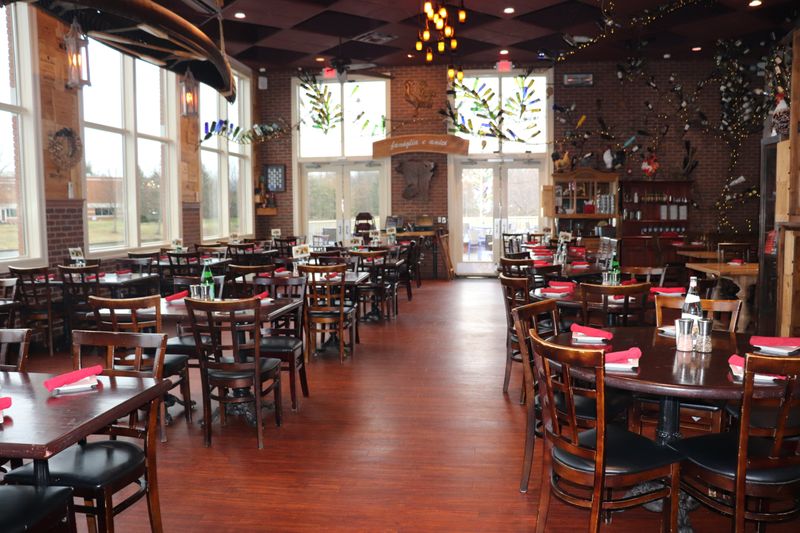
The best meals in Cranbury are the ones that do not require a spreadsheet, a valet stand, or a 90-minute debate over where everyone can park. Start simple.
Teddy’s Restaurant on North Main gives the town that classic breakfast-and-lunch anchor every good small town needs, with hours that stretch into dinner on weekdays and close earlier on weekends. Cranbury Pizza, at 55 North Main Street, keeps it equally straightforward with posted hours from 11 a.m. to 10 p.m.
Monday through Saturday and noon to 9 p.m. Sunday.
It is the kind of place that understands pizza is sometimes dinner, sometimes a snack, and sometimes the only reasonable answer after a long day. For a sit-down meal with a heavier dose of history, The Cranbury Inn still leans into comfort.
Its current menu includes the Inn’s roast turkey with homemade stuffing, Yukon gold mashed potatoes, roasted vegetables, gravy, and cranberry sauce, along with dishes like roast duck finished with cranberry relish and a warm chocolate brownie sundae. Then there is Gil & Bert’s Ice Cream at 69 North Main, the kind of walk-up stop that makes warm evenings feel properly finished.
Its posted menu lists flavors like Mint on Main, Strawberry Fields, Sea Salt Caramel Truffle, Gimme S’mores, Main Street Coffee, Summer Peach, and Cookie Monster. Kids cups are listed at $3.75, regular cups at $5.25, and waffle cone upgrades at $1, which is exactly the level of detail a serious ice cream decision deserves.
Cranbury’s food scene is not about chasing trends. It is about having enough good, familiar choices within reach that staying put starts to feel like the better plan.
Cranbury Is Small-Town Living Without Feeling Cut Off
The trick Cranbury pulls off is that it feels tucked away without actually being remote. Princeton is about 9 miles away by car, which means university energy, museums, restaurants, and train access are close enough to use without swallowing Cranbury whole.
That distance matters. A town can feel peaceful for about five minutes if every errand turns into an expedition.
Cranbury avoids that. You get the quieter streets and historic village center, but you are still in central New Jersey, with major roads, employers, and neighboring towns nearby.
The township has also worked hard to keep the edges from turning into a blur. Cranbury says more than 2,000 acres have been placed in permanently preserved farmland, and hundreds of additional acres have been preserved as open space.
Its parks and open-space system includes more than 230 acres west of Route 130, while Cranbury Brook Preserve alone totals just over 50 acres of wooded land and open grassland with trails for walking, bird watching, fishing, cross-country skiing, and general wandering around like a person who has remembered fresh air exists.
That combination is the reason Cranbury feels like a fresh start instead of an escape hatch.
It has enough history to feel rooted, enough nature to soften the edges, enough local business to give daily life texture, and enough access to keep you from feeling stranded. The town does not ask you to leave modern life behind.
It simply makes a strong case for letting it stop bossing you around.
Share this story