A heron lifting off from Splitrock Reservoir looks almost too calm for New Jersey. No hurry, no drama, no honking Parkway energy, just long gray wings skimming above water that can sit so still in the morning it mirrors every tree on the shoreline.
That is the first thing that makes this Morris County reservoir feel different. You reach it by bumping along Split Rock Road, close enough to Rockaway Township, Boonton, Kinnelon, and Denville to feel convenient, yet tucked away enough that your phone may start acting shy.
At roughly 625 acres, Splitrock is not a backyard pond pretending to be wild. It has rocky banks, wooded coves, quiet stretches made for kayaks, and just enough rules to keep the place from turning into a floating circus.
Bring your own boat, bring patience for the gravel road, and bring the good coffee.
Why Splitrock Reservoir Feels Like A Wilderness Escape
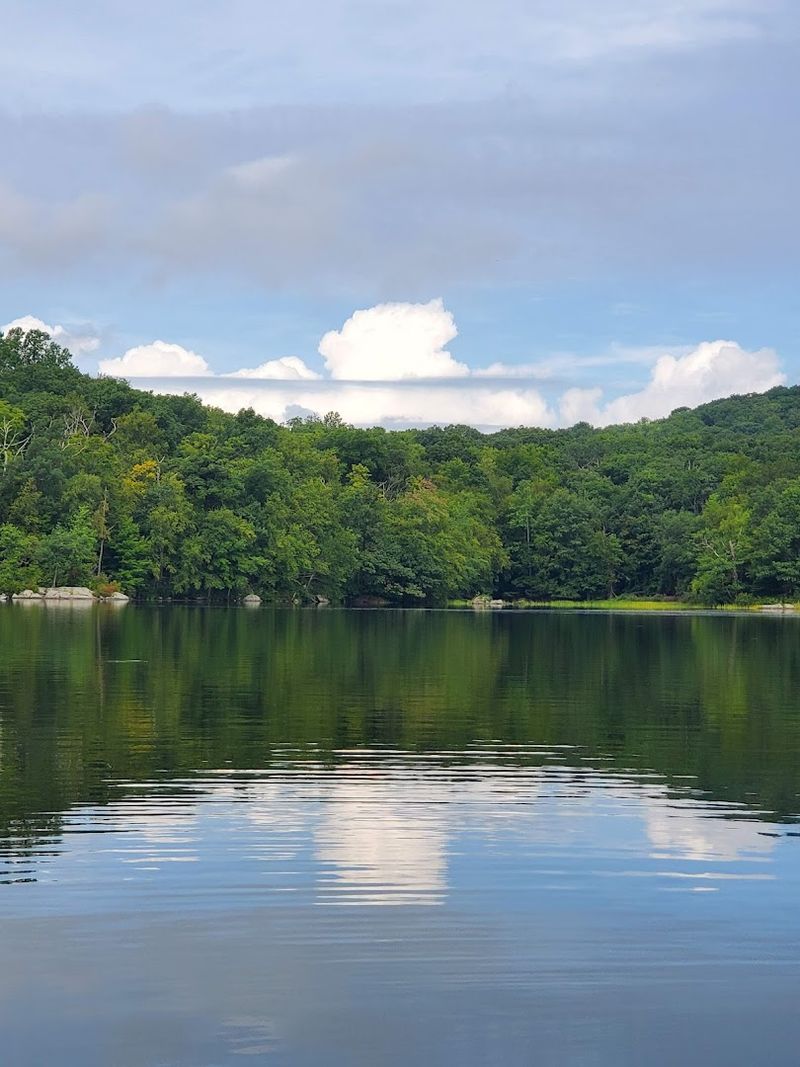
The first surprise is how quickly the suburbs disappear. One minute you are driving through the familiar North Jersey mix of traffic lights, diners, and wooded hills behind shopping plazas, and the next you are looking at a reservoir that feels like it belongs much farther north.
Splitrock Reservoir sits in the New Jersey Highlands, bordered by protected forest connected to Farny State Park and Wildcat Ridge Wildlife Management Area, which gives it a rugged buffer from the usual noise. You are not paddling behind rows of lake houses, passing backyard fire pits, or weaving around someone’s inflatable unicorn.
Much of the shoreline is undeveloped, rocky, and thick with trees, so the view from the water stays refreshingly unpolished. That is a big part of its appeal.
Splitrock does not perform for visitors. It simply exists in that low-key, quietly impressive way North Jersey does when it decides to stop being underestimated.
The access is limited too, and that matters. Kayakers use the public launch area near the dam, and the rules are pretty clear: car-top boats only, no gas-powered motors, no swimming, and no shoreline fishing.
That might sound strict, but those limits help preserve the whole mood of the place. Without big motors or beach-day chaos, the reservoir keeps a hush that is hard to find on more developed lakes.
You hear paddles dipping, birds calling, maybe a fishing boat moving slowly with an electric motor. Even on a weekend, there are pockets where the world seems to narrow down to water, stone, and trees.
For a place not far from Route 80, that is a small miracle with a gravel parking lot.
The Glassy Morning Paddle That Makes The Early Wake-Up Worth It
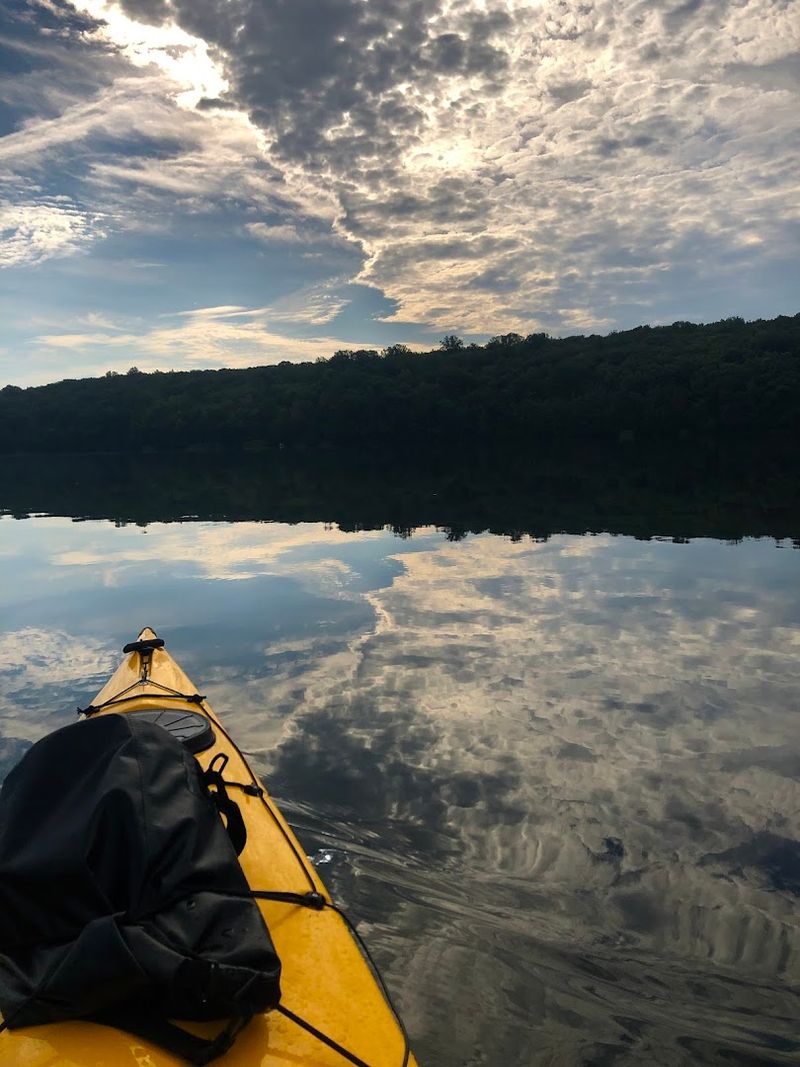
Before the wind gets any ideas, the water at Splitrock can look polished. Early morning is when the reservoir does its best impression of a mirror, with the tree line reflected so clearly that the whole place feels doubled.
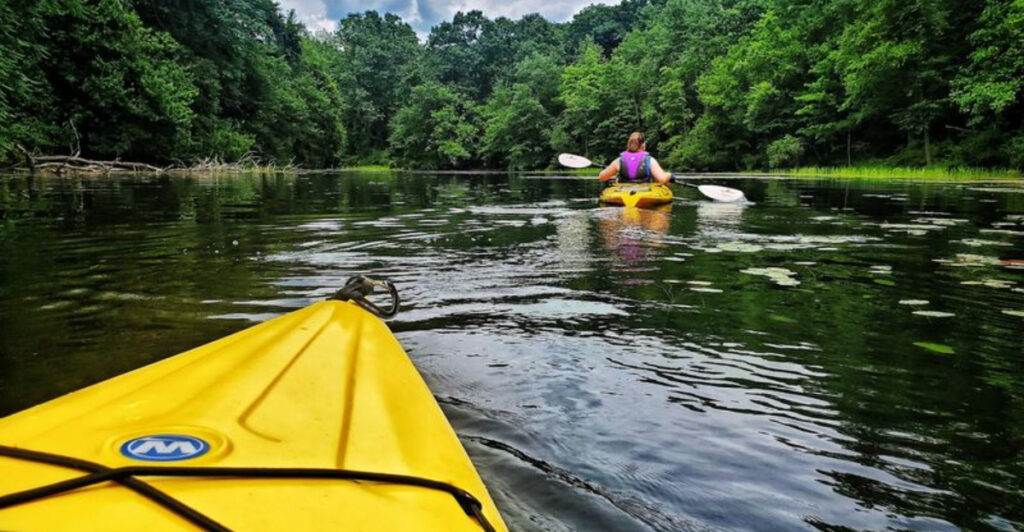
It is also the time when the launch feels most peaceful, before the small parking area fills and before the day’s first wave of paddlers starts unloading straps, paddles, life jackets, and “I thought you packed the dry bag” conversations. The public boat launch is off Split Rock Road near the dam, and it is very much a bring-your-own-boat situation.
There is no big rental hut, no snack stand, and no cheerful attendant selling sunscreen at a markup. You arrive, unload your kayak or canoe, carry it down, and get yourself onto the water like a grown-up with outdoor intentions.
Once you push off, the reservoir opens gradually. Its long, narrow shape makes it especially satisfying for kayakers because you can hug the shoreline, explore coves, or settle into a longer paddle without feeling like you are just looping around a round lake.
The western shoreline is especially rocky and rugged, while the coves offer calmer pockets where the water seems to hold its breath. If you start early enough, you may get long stretches where your paddle is the loudest thing around.
That is also when the light is best, sliding across the water and catching the tops of the trees before the day turns bright and flat. Bring a thermos, not because you need it for survival, but because sipping coffee from a kayak while the reservoir is still glassy feels like a tiny act of local genius.
The early wake-up may sting at first, but by the time you are drifting past the first quiet cove, you will be annoyingly proud of yourself.
Herons, Quiet Coves, And Wildlife Along The Shoreline
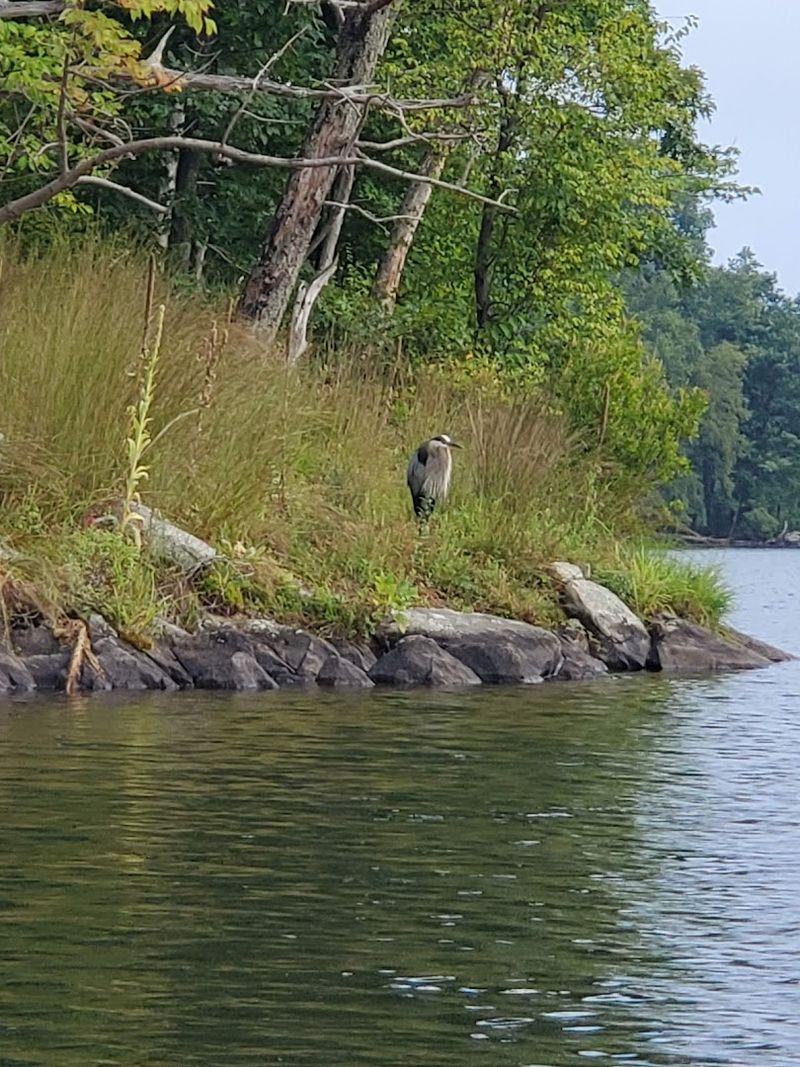
A great blue heron has the energy of a creature that knows it was here before your kayak rack and will be here after it. Spot one standing near the edge of Splitrock Reservoir and you will probably slow your paddle without meaning to.
They are tall, still, and slightly prehistoric-looking, usually posted near shallow edges where fish make the mistake of being visible. Then, when they decide you have come close enough, they rise with those wide, deliberate wings and glide across the water like they are late for a meeting only they understand.
Herons are not the only wildlife that gives the reservoir its personality. The surrounding woods are part of a rich Highlands habitat where birders may also watch for hawks, owls, woodpeckers, and songbirds, depending on the season and time of day.
Along the shoreline, turtles often claim sunny logs with the confidence of retired locals on a boardwalk bench. Fish ripple near the edges, especially in the quieter coves, and anglers come for species such as bass, pickerel, perch, crappie, bluegill, and sunfish.
Because shoreline fishing is not allowed, most fishing happens from boats, which keeps the banks quieter for wildlife and paddlers alike. The coves are where you notice the smaller things.
Out in the open water, the reservoir feels broad and scenic. Tucked closer to shore, it becomes more intimate.
You see the roots gripping the banks, the leaves caught in still corners, the shadow of a bird passing over the surface. This is also black bear country in the broader Morris County Highlands, so treat snacks with respect.
Keep food sealed, pack out every wrapper, and do not leave anything tempting around the launch area. The herons may look elegant, but nature is still nature, and your granola bar is not emotionally prepared for that responsibility.
What Kayakers Should Know Before Launching
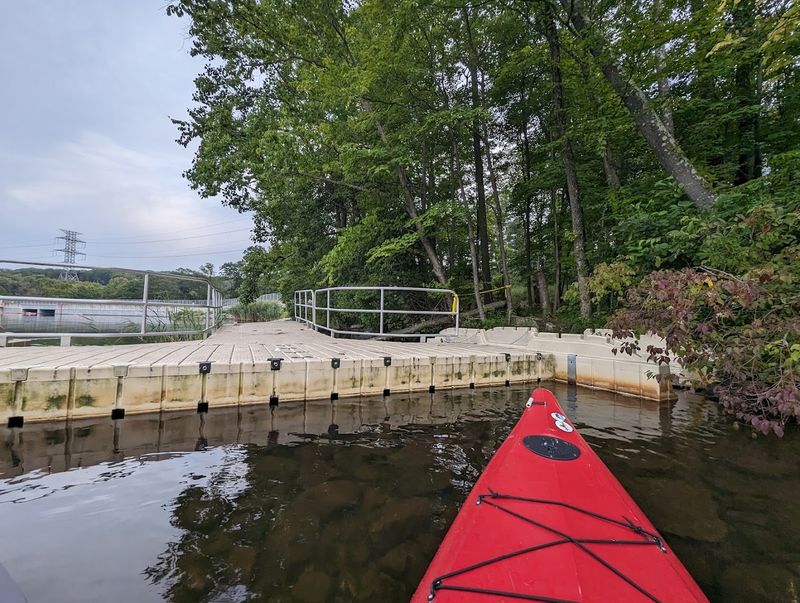
Here is the unglamorous truth that will save your morning: Splitrock is not the place to improvise. The reservoir rewards people who plan even a little.
Access is from the public parking and launch area near the dam, and that lot is limited. On a nice weekend, especially in summer or early fall, it can fill early.
Parking along Split Rock Road is not a clever backup plan; it is a good way to return from your paddle with a ticket-themed souvenir. Arriving early is not just about prettier water.
It is also about actually having somewhere legal to leave your car. The road in is another detail worth knowing.
Split Rock Road is unpaved in stretches, and while most regular cars can manage it in normal conditions, it is still a gravel road with bumps, curves, and the occasional moment where you become very aware of the kayak strapped above your head. Drive slowly and give yourself more time than your GPS suggests.
Once you are at the launch, the rules are straightforward. Car-top boats are permitted, which means kayaks and canoes are the main stars here.
Gas-powered motors are prohibited, and that is one reason the reservoir feels so peaceful from water level. Paddleboards and swimming are not allowed, largely because Splitrock is part of a drinking-water system.
That can be disappointing if you are picturing a casual dip after paddling, but it is also part of why the water and shoreline stay so calm and protected. Bring a properly fitted personal flotation device, water, sunscreen, bug spray, and a dry bag for your phone and keys.
Do not count on rentals, bathrooms, concessions, or a ranger magically appearing with whatever you forgot. Splitrock is gorgeous, but it is not full-service.
That is the deal: less convenience, more quiet. Most paddlers who love it would not trade that bargain.
The Rocky Highlands Scenery That Makes Every Turn Feel New
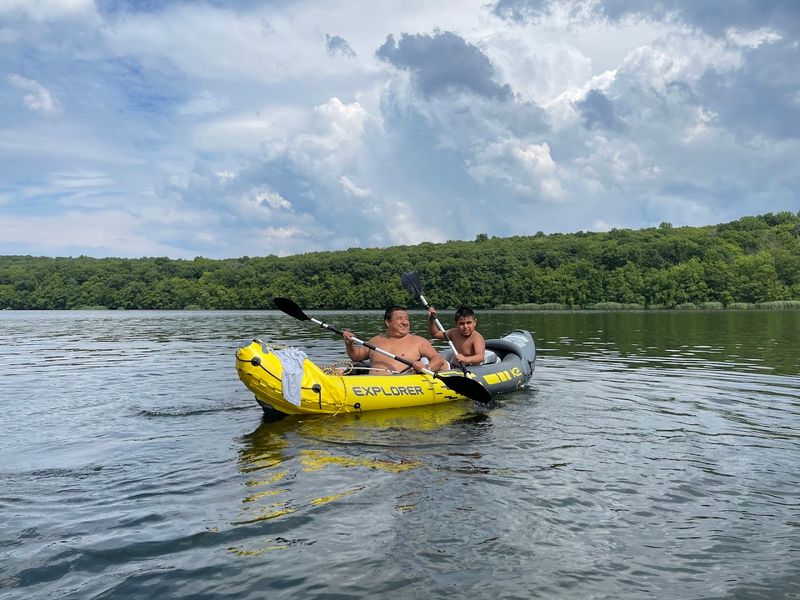
The landscape around Splitrock has texture. This is not soft, sandy, lazy-lake scenery.
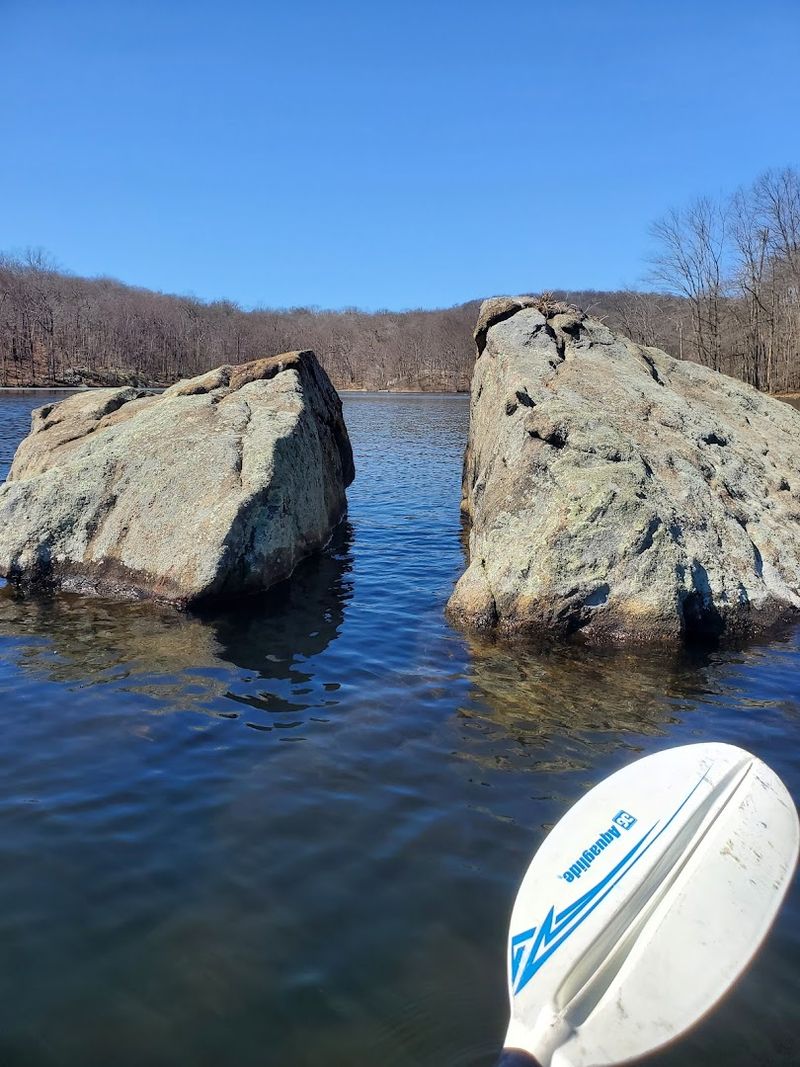
It is classic New Jersey Highlands terrain, with rocky edges, wooded slopes, uneven trails, and stone outcrops that make the reservoir feel older and tougher than its peaceful surface suggests. From a kayak, that ruggedness keeps the paddle interesting.
One stretch gives you a clean view across open water. Another pulls you close to a shaded bank where trees lean over the surface.
A few minutes later, you are passing exposed rock that catches the light differently depending on the hour. The reservoir’s long shape helps too.
Because it runs for several miles rather than spreading out like a bowl, each turn shifts the view just enough to keep you curious. You do not have to be an expert paddler to enjoy it, but you do need to respect the distance.
The farther you explore from the launch, the farther you have to paddle back, and the wind can make that return feel a lot more athletic than the dreamy outbound trip. The surrounding area also has serious hiking options for people who want to make the day more ambitious.
Trails around Splitrock, Farny State Park, and nearby Wildcat Ridge are rocky, rooty, and often more demanding than casual walkers expect. The Splitrock Reservoir Loop, for example, has a reputation as a challenging hike, with rough terrain and views that make hikers work for their reward.
If you are paddling first, be honest about your legs before adding a long hike afterward. A short walk near the area may be plenty.
What makes the scenery special is that it still feels a little rough around the edges. Splitrock has not been smoothed into a postcard version of nature.
It is rocky, wooded, moody, and occasionally inconvenient, which is exactly why the view from the water feels earned.
How To Turn Your Paddle Into A Full Morris County Day Trip
The smartest Splitrock day starts early and ends with food. That is not official policy, just local common sense.
Paddle while the reservoir is calm, load up before the parking lot gets too chaotic, then point the car toward one of the nearby Morris County towns that know how to feed people who have spent the morning pretending they are rugged. Boonton is a natural first stop, especially if coffee is still part of your personality after the paddle.
Boonton Coffee Co. on Main Street is a popular option for a real cup instead of gas-station regret, and downtown Boonton gives you enough shops and sidewalks to stretch out before heading home. Denville is another strong choice, particularly if breakfast or lunch sounds like the true purpose of exercise.
Carver’s in Denville is the kind of place where homemade bread, eggs, corned beef hash, pancakes, and unapologetically filling plates make sense after a morning on the water. If you want something more flexible, Denville’s downtown has plenty within a short walk, from coffee to sandwiches to casual sit-down spots.
Rockaway and Mountain Lakes are also close, so you are not locked into one post-paddle plan. If you still have outdoor energy, Pyramid Mountain Natural Historic Area is nearby and famous for Tripod Rock, a massive glacial erratic balanced in a way that looks like New Jersey hired a set designer.
Turkey Mountain offers a shorter hiking option, while Mahlon Dickerson Reservation gives you a bigger, woodier place to roam. Just remember that kayaking plus hiking plus a heavy lunch can turn even the most enthusiastic day-tripper into a passenger-seat napper.
The best version of Splitrock may be simple: quiet water in the morning, a decent meal afterward, and the satisfying sight of a kayak drying on the roof while Morris County rolls by outside the window.
Share this story