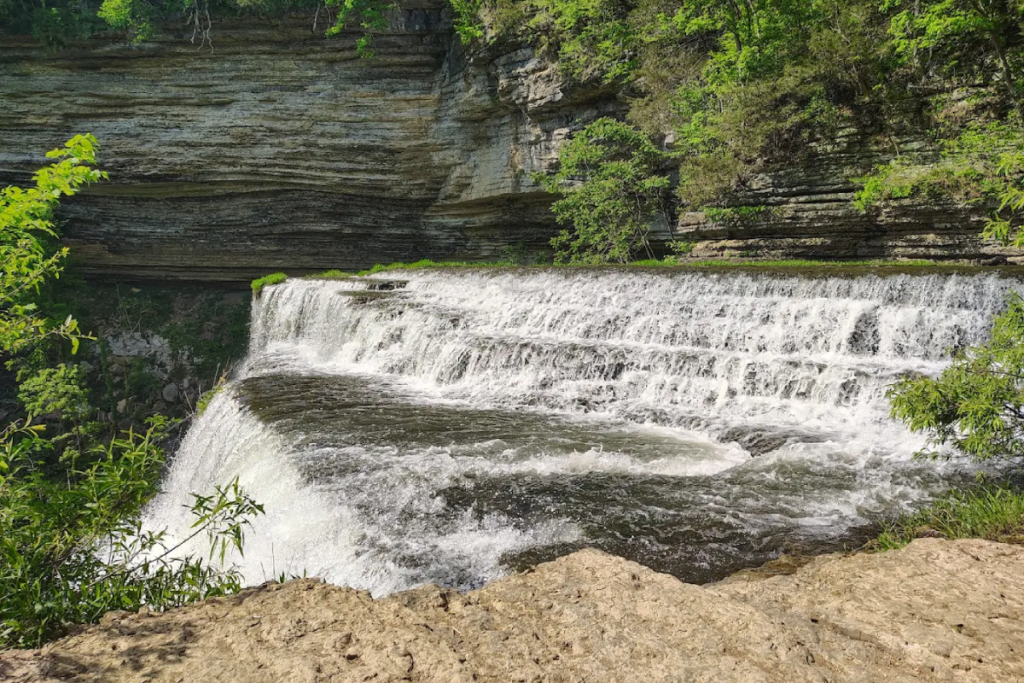
Tucked away in the heart of Tennessee, Falling Water River doesn’t just flow through Burgess Falls State Park—it puts on a show. This powerful waterway carves its way through limestone and rock, creating not one, but four distinct waterfalls that cascade down a rugged gorge. Each drop offers its own character, from gentle tumbles to a roaring 136-foot plunge that rivals some of the most dramatic waterfalls in the Southeast.
Whether you’re chasing adventure or just looking for a peaceful escape into nature, this river delivers something truly special.
A Tennessee River With a Waterfall Surprise Around Every Bend
Most rivers just flow. Falling Water River performs. As it winds through Burgess Falls State Park, this energetic waterway drops in elevation in dramatic fashion, creating a series of cascades that catch hikers off guard in the best possible way.
You’re walking along a peaceful trail, listening to birds and rustling leaves, when suddenly the sound of rushing water fills the air.
The river doesn’t announce itself with fanfare. Instead, it reveals each waterfall gradually as you make your way along the trail system. One moment you’re strolling through hardwood forest, the next you’re standing at an overlook watching thousands of gallons of water tumble over ancient rock formations.
It’s the kind of surprise that makes you stop, pull out your phone, and immediately start snapping photos.
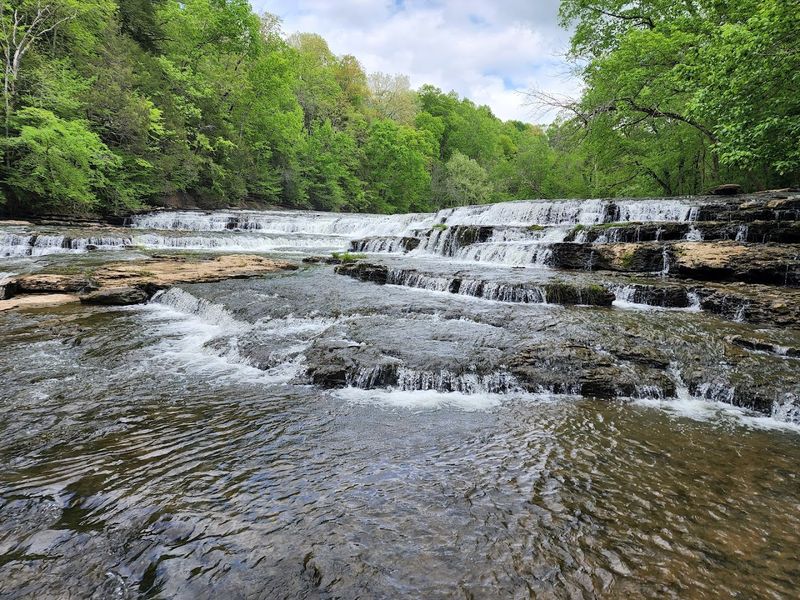
What makes Falling Water River special isn’t just the number of waterfalls—it’s how each one feels completely different from the last. The upper falls are wide and gentle, spreading across the riverbed like liquid lace. Move downstream and the character changes entirely.
The water narrows, gains speed, and crashes down with increasing force. By the time you reach the final drop, you’re witnessing a full-blown spectacle.
The river itself originates in the Cumberland Plateau, gathering strength as it flows toward the Caney Fork River. Along the way, it cuts through layers of limestone and shale that have been sitting here for millions of years. That geological history is written into every ledge, every pool, and every cascade.
You’re not just looking at pretty waterfalls—you’re seeing the earth’s story told in water and stone.
Why Falling Water River Is One of the Park’s Most Scenic Features
Burgess Falls State Park has plenty going for it—hiking trails, picnic areas, wildlife—but Falling Water River is undeniably the star attraction. The river transforms an ordinary state park visit into something memorable. It’s the reason people drive from Nashville, Knoxville, and beyond to spend a day exploring this corner of Middle Tennessee.
The scenic value here isn’t manufactured or enhanced. There are no viewing platforms built purely for Instagram moments, no artificial landscaping to make things prettier. What you see is raw nature doing its thing, and that authenticity resonates with visitors.
The river carves through a steep-sided gorge lined with hemlock, oak, and maple trees that put on a spectacular color show every fall.
Water quality plays a big role in the river’s visual appeal too. Falling Water River runs clear most of the year, allowing you to see straight down to the rocky bottom in calmer sections. When sunlight filters through the tree canopy and hits the water just right, the whole scene practically glows.
The gorge itself adds drama to every view. Steep limestone walls rise on both sides of the river, creating a natural corridor that frames each waterfall perfectly. Moss and ferns cling to the rock faces, adding texture and color to the landscape.
During wet seasons, you’ll spot dozens of tiny seeps and springs trickling down the canyon walls, feeding the main river and creating miniature waterfalls of their own.
Meet the Four Waterfalls Formed by Falling Water River
Falling Water River doesn’t do anything halfway. As it drops through Burgess Falls State Park, it creates four distinct waterfalls, each with its own personality and charm. Think of them as siblings—related, but each one unique in height, width, and character.
Together, they form one of Tennessee’s most impressive waterfall collections in a single location.
The first waterfall greets you early on the trail. It’s a broad, gentle cascade that spreads across the river’s width, tumbling over layered rock shelves. This one sets the tone but doesn’t steal the show.
It’s more of a warm-up act, getting you excited for what’s ahead while offering a peaceful spot to pause and enjoy the sound of moving water.
Waterfall number two picks up the pace. The river narrows here, concentrating its power into a faster, more forceful drop. You’ll notice the sound changes—less gentle splashing, more serious rumbling.
The pool at the base churns with whitewater, and mist rises into the air on humid days. This is where the river starts showing off its muscle.
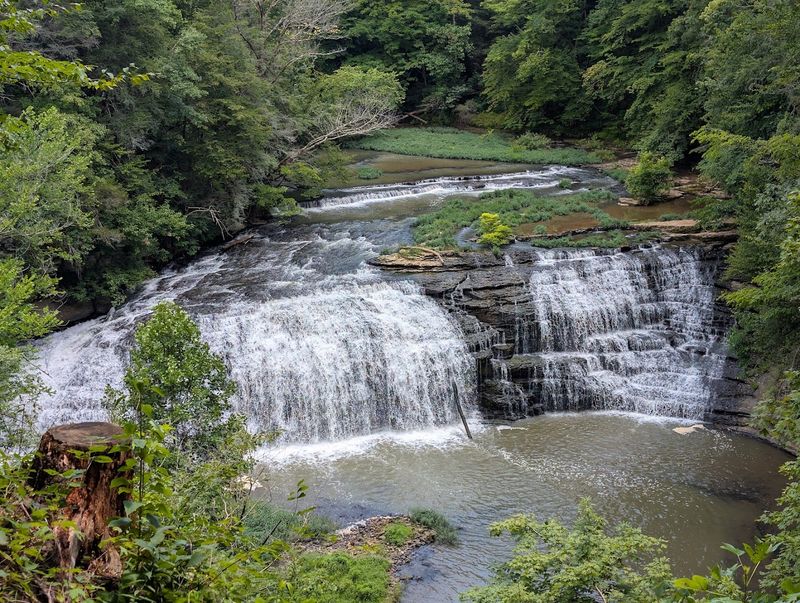
The third waterfall continues the escalation. By now, the gorge has deepened considerably, and you’re looking down at the river from higher vantage points. This cascade drops over a series of ledges, creating a stair-step effect that’s mesmerizing to watch.
Water bounces and splashes from one level to the next, each impact sending up spray that catches the light.
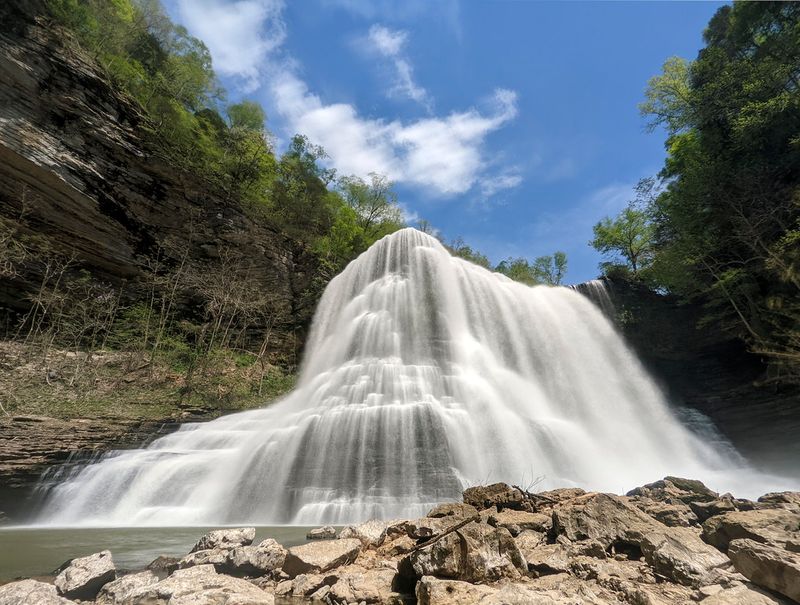
Then comes the grand finale—Burgess Falls itself. At 136 feet, this towering plunge dwarfs everything that came before it. The river launches off a massive cliff and freefalls into a deep pool below, creating a thunderous roar you can hear long before you see it.
The Main Showstopper: Burgess Falls and Its Dramatic Drop
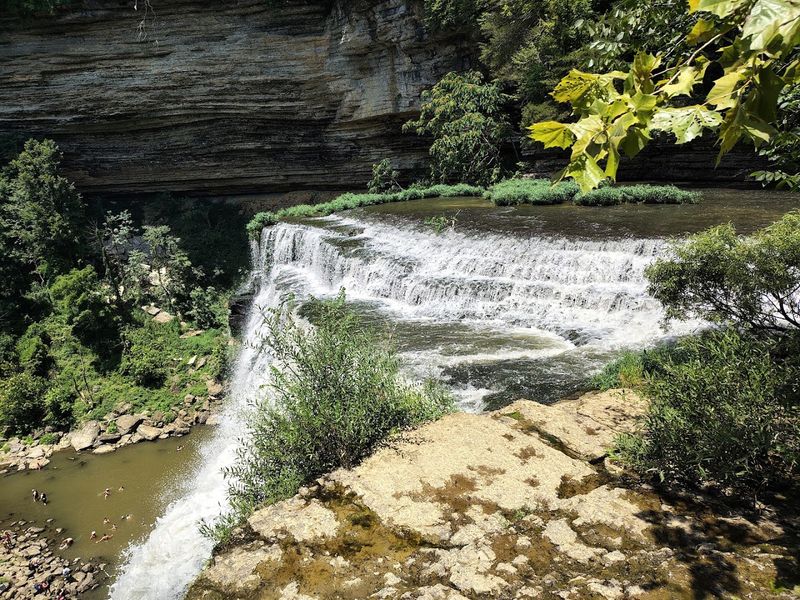
Everything you’ve seen along the trail has been building to this moment. Burgess Falls is the reason most people make the trek to this state park, and it absolutely delivers on the hype. When you first catch sight of it from the main overlook, the scale hits you immediately—this isn’t some cute little cascade.
This is a legitimate, powerful waterfall that commands respect.
The 136-foot drop happens in one clean plunge. Unlike the earlier waterfalls that tumble over multiple ledges, Burgess Falls commits fully to the fall. The river gathers at the cliff edge, pauses for just a heartbeat, then launches into the open air.
Gravity takes over and the water accelerates downward, crashing into the pool below with enough force to create a perpetual cloud of mist.
The gorge walls frame the falls perfectly, rising high on both sides and creating an amphitheater effect. Sound bounces off the rock faces, amplifying the roar of falling water until it fills the entire canyon. On busy weekends, you’ll find crowds gathered at the overlook, but everyone tends to fall quiet when they first see it.
The falls have that effect—they demand a moment of appreciation.
Geologically speaking, Burgess Falls exists because of a resistant cap rock layer sitting on top of softer stone. As the softer material erodes away beneath it, the harder rock layer hangs on, creating the sheer drop. Over thousands of years, the waterfall has slowly migrated upstream, carving the gorge deeper and longer.
The process continues today, though at a pace too slow for us to notice during a single visit.
Easy Trails, Big Views, and Plenty of Photo-Worthy Stops
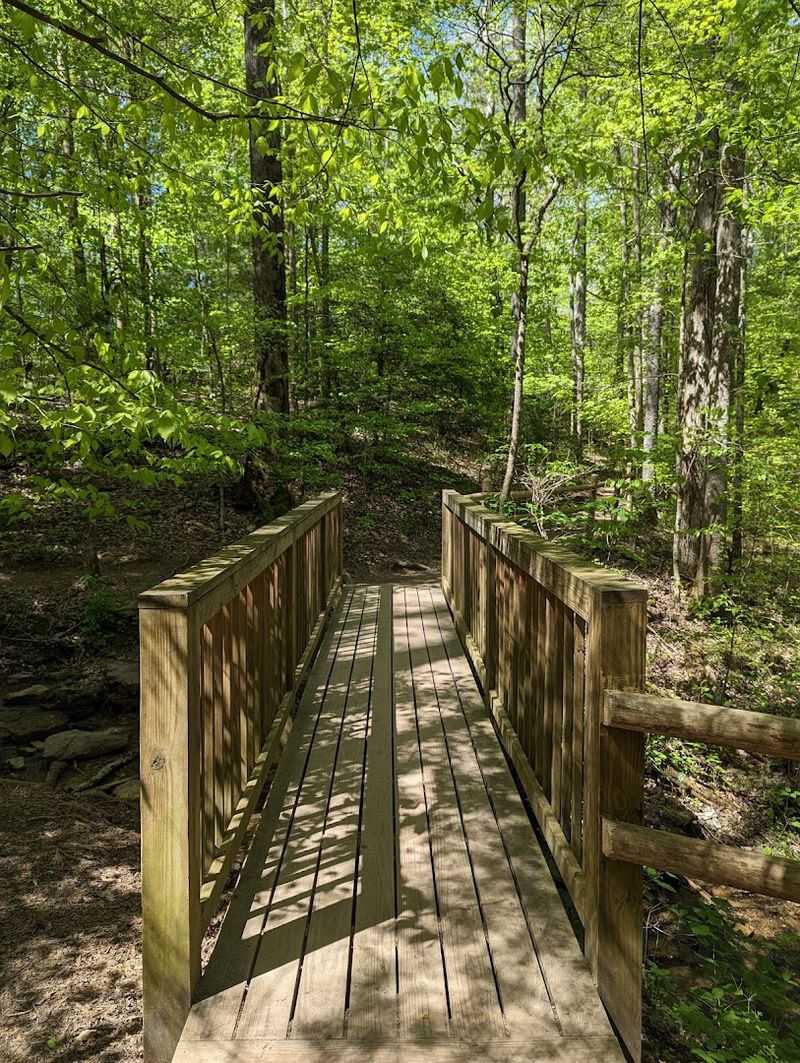
Good news for anyone who wants to see these waterfalls without training for a marathon first—the trails at Burgess Falls State Park are surprisingly manageable. The main route to all four waterfalls stretches about 1.5 miles one way, following the river downstream through mostly shaded forest. It’s rated moderate, mainly because of some elevation changes and rocky sections, but most reasonably fit visitors handle it just fine.
The trail design is smart. Instead of one long slog followed by a quick payoff, the path delivers rewards throughout the journey. You’ll encounter viewing platforms and overlooks spaced at regular intervals, each one offering a different perspective on the river and waterfalls.
This setup gives you natural break points where you can rest, hydrate, and soak in the scenery without feeling like you’re slacking off.
Late afternoon brings warm golden tones that make everything glow. Bring a camera with a decent zoom lens and you’ll capture shots that rival professional nature photography.
The final section down to the main overlook for Burgess Falls involves a steeper descent with stairs and switchbacks. Your knees will feel it on the way back up, but the view from the bottom platform makes every step worthwhile. You’re standing at river level here, close enough to feel the mist on your face and hear the full power of the falls.
It’s an immersive experience that beats looking down from a distant viewpoint.
The Best Time to Visit This Waterfall-Filled Tennessee State Park
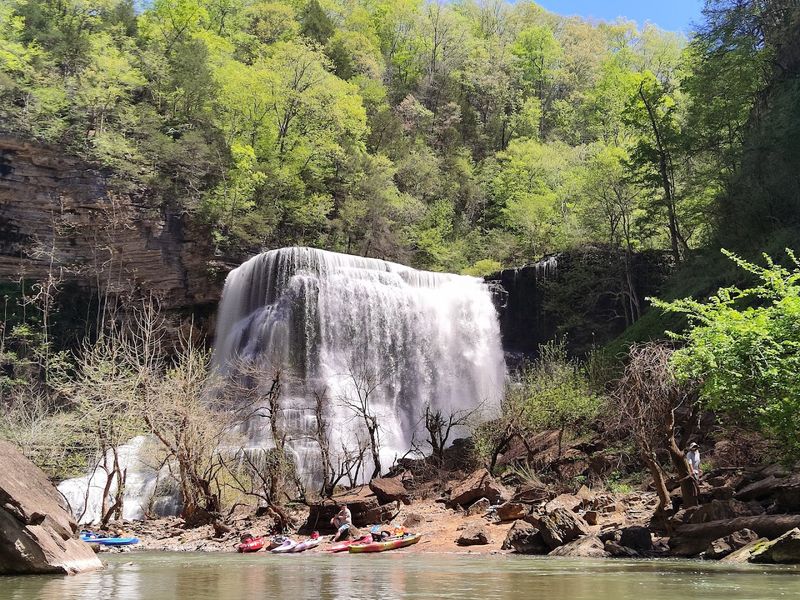
Timing your visit to Burgess Falls State Park can make the difference between a good experience and an unforgettable one. The park is open year-round, but each season brings a completely different vibe to Falling Water River and its waterfalls. Understanding what to expect helps you plan accordingly and avoid crowds when possible.
Spring delivers the most dramatic water flow. Winter snow melts and spring rains swell the river, sending maximum volume over each waterfall. Burgess Falls becomes an absolute beast during this time, with water crashing down in thick white torrents.
The downside? Trails can be muddy and slippery, so wear boots with good traction. The upside? Wildflowers bloom throughout the gorge, adding splashes of color to the green forest backdrop.
Summer brings the crowds. Families on vacation, tourists passing through Tennessee, and locals looking to escape the heat all converge on the park during June, July, and August. Water levels drop compared to spring, but the falls still flow beautifully.
Arrive early—like before 9 a.m.—if you want the trails and overlooks mostly to yourself. Weekdays are significantly less busy than weekends.
Fall is arguably the most photogenic season. The hardwood forest surrounding Falling Water River explodes into autumn color, with maples turning brilliant red and orange while oaks shift to deep burgundy and gold. The contrast between colorful foliage and white rushing water is stunning.
Water flow is typically moderate in fall, and temperatures are comfortable for hiking. October weekends can still draw crowds, but they’re manageable.
Winter offers solitude and a unique beauty. Most visitors stay away when temperatures drop, meaning you might have the entire trail system to yourself. Ice forms along the edges of waterfalls and on cliff faces, creating intricate frozen sculptures.
Just be prepared for potentially hazardous conditions and check weather forecasts before heading out.
Why This Hidden Gem Belongs on Every Tennessee Bucket List
Tennessee doesn’t exactly suffer from a shortage of beautiful places. Great Smoky Mountains National Park dominates the eastern part of the state, Chattanooga offers stunning river gorges, and Nashville has become a major destination for reasons that have nothing to do with nature. Yet somehow, Burgess Falls State Park and Falling Water River manage to fly under the radar for many visitors.
That’s changing, but this place still qualifies as a hidden gem compared to more famous Tennessee attractions.
What sets it apart is the concentration of natural beauty in a relatively small area. You don’t need to hike ten miles or drive for hours between scenic stops. Everything is right here—four waterfalls, a dramatic gorge, clear flowing water, and abundant wildlife all packed into a compact park that you can explore in a half-day or full-day visit.
That efficiency makes it perfect for people with limited time or those who want maximum scenic payoff without extreme effort.
The park also delivers authentic Tennessee landscape and geology. You’re seeing the Cumberland Plateau in its natural state, with native plants, exposed rock layers that tell millions of years of history, and a river system that’s been carving this gorge since long before humans arrived.
Accessibility is another major factor. Burgess Falls State Park sits just off Interstate 40, making it an easy detour for anyone traveling across Tennessee. You can visit on a whim without extensive planning or special permits.
The park charges no entrance fee, parking is free, and facilities are well-maintained. This combination of convenience, beauty, and value is hard to beat.