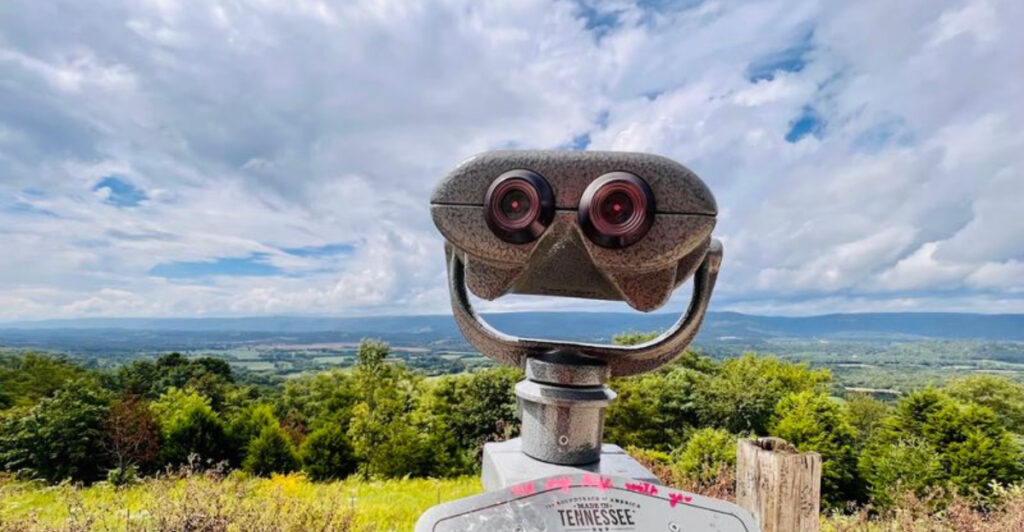
Driving along TN-111 between Dunlap and Chattanooga gives you one of those moments where you actually want to pull over and just stare. The Sequatchie Valley Overlook sits high on the Cumberland Plateau, offering sweeping views of a massive valley carved by ancient geological forces. Whether you’re a local who’s driven past it a hundred times or a visitor exploring Tennessee’s backroads, this scenic stop delivers the kind of vista that makes you reach for your camera and forget about whatever podcast you were listening to.
A Valley Carved By Time And Geology
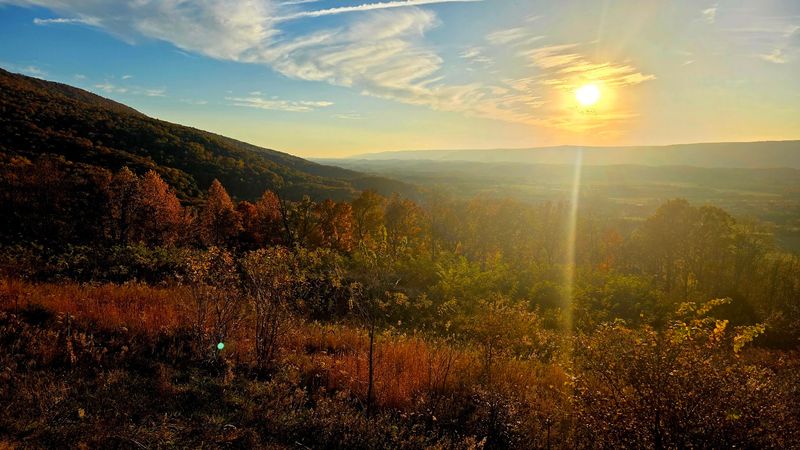
The Sequatchie Valley stretches out below the overlook like a giant ruler laid across the landscape. This isn’t just any pretty valley. Geologists get genuinely excited about this place because it’s a textbook example of an anticline valley, formed when layers of rock folded upward millions of years ago and then eroded away to create this long, narrow trough.
Standing at the overlook, you can see for miles in both directions along the valley floor. The mountains on either side rise up like natural walls, creating a corridor that runs roughly northeast to southwest for about 150 miles. On clear days, the view seems to go on forever, with farmland, forests, and tiny communities dotting the valley below.
What makes this spot particularly special is the elevation change. You’re perched about 1,000 feet above the valley floor, giving you a bird’s-eye perspective that reveals the sheer scale of this geological wonder. The informational placard at the site breaks down the science in terms that won’t make your eyes glaze over.
Different seasons paint the valley in completely different palettes. Fall brings an explosion of reds, oranges, and golds as the hardwood forests put on their annual show. Spring offers fresh greens and wildflowers.
Even winter has its charm, with bare trees revealing the valley’s contours more clearly.
Photographers love this place because the lighting changes throughout the day. Morning fog sometimes fills the valley like a river of clouds. Late afternoon sun casts long shadows that emphasize every ridge and hollow.
Storm chasers occasionally stop here to watch weather systems roll through the valley, creating dramatic cloud formations.
The overlook itself is well-maintained with plenty of parking space. It’s designed for quick stops, but many visitors end up lingering longer than planned once they take in the view.
Accessibility Features That Actually Matter
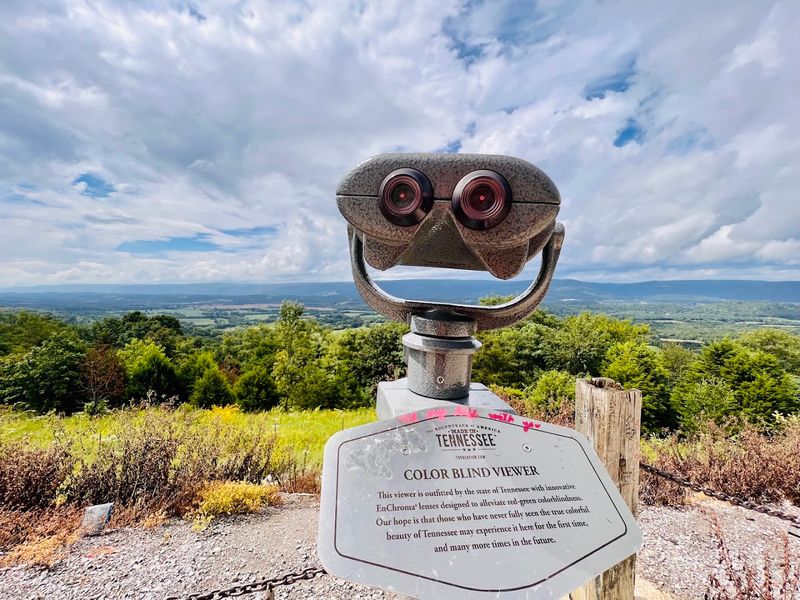
Here’s something you don’t see at every roadside overlook: binoculars specifically designed for people with color vision deficiency. The Sequatchie Valley Overlook has installed EnChroma viewing devices that help colorblind visitors experience the full spectrum of colors in the landscape. It’s a small touch that makes a huge difference for roughly 8% of men and 0.5% of women who have some form of color blindness.
These aren’t your typical coin-operated tourist binoculars. The EnChroma technology uses special filters to enhance color perception, allowing people who normally struggle to distinguish between certain colors to see reds, greens, and other hues more vividly. Visitors consistently mention this feature in reviews, often with genuine appreciation for the thoughtfulness.
The overlook’s layout is straightforward and easy to navigate. The parking lot is paved and level, with enough space for RVs, trucks pulling trailers, and regular vehicles. There’s no complicated trail system or steep climbs required to reach the viewpoint.
Trash cans are strategically placed throughout the area, making it easy to keep the site clean. Pet waste stations provide bags and disposal bins for visitors traveling with dogs. The area is open enough that pets can stretch their legs safely while remaining on leash.
One practical consideration: the overlook is only accessible when traveling southbound on TN-111 from Dunlap toward Chattanooga. There’s no northbound access, so if you’re heading the opposite direction, you’ll need to plan accordingly. Some visitors miss this detail and end up disappointed when they can’t stop on their return trip.
The site operates on limited hours, typically 9 AM to 4 PM on weekdays, and is closed on weekends. These hours can catch people off guard, so it’s worth checking before making a special trip.
The Love Lock Chain Tradition
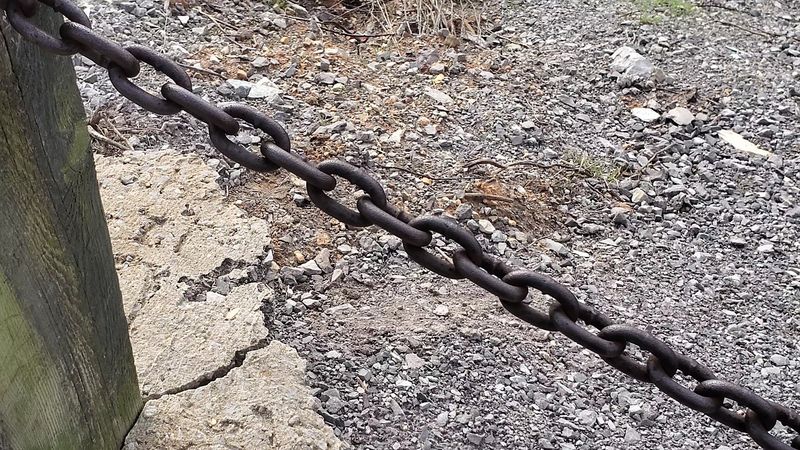
Somewhere along the way, visitors started bringing padlocks to the Sequatchie Valley Overlook and attaching them to a chain, creating an unofficial love lock tradition. If you’ve been to Paris or other European cities, you’ve probably seen similar displays on bridges. This Tennessee version has its own low-key charm.
The practice isn’t officially sanctioned or promoted, but it’s become part of the overlook’s character. Couples attach locks with their initials or dates, then toss the keys into the valley below as a symbolic gesture of permanent commitment. Some locks have messages written on them in permanent marker.
Others are simple hardware store padlocks with no decoration at all.
Whether you find this romantic or slightly cheesy probably depends on your personality. But there’s something genuinely sweet about seeing dozens of locks from people who wanted to mark their relationship in this particular spot. It adds a human element to what could otherwise be just another scenic pulloff.
The chain itself has grown considerably as more people add their locks. It’s become a minor attraction within the attraction, with visitors spending time reading the names and dates on existing locks before deciding where to add their own. Some people bring fancy engraved locks purchased specifically for the occasion.
Others grab whatever they could find at the last minute.
From a practical standpoint, bringing a lock is entirely optional. You don’t need to participate in this tradition to enjoy the overlook. But if you’re the type who likes these kinds of gestures, it’s an option.
Just make sure you actually want that lock to stay there permanently, because retrieving it would require some serious climbing skills.
The tradition also serves as a conversation starter among visitors, creating impromptu interactions between strangers who might otherwise just snap photos and leave.
Strategic Stop For Road Trippers
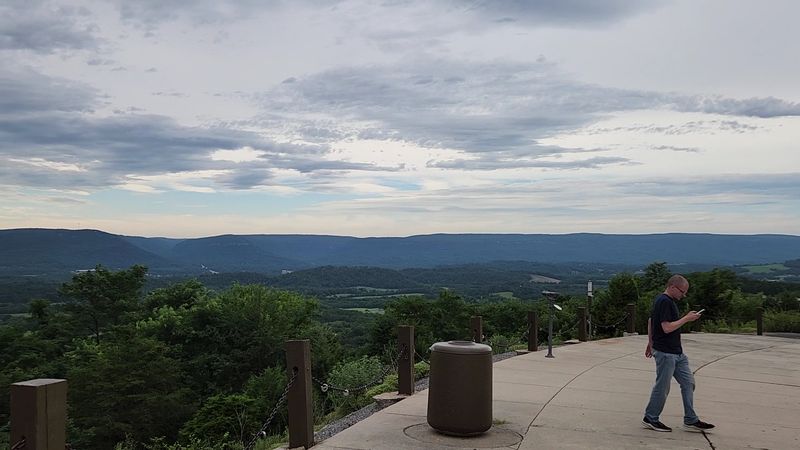
TN-111 between Dunlap and Chattanooga isn’t just a route from point A to point B. It’s a legitimate scenic drive that winds through the Cumberland Plateau, offering elevation changes and mountain views that make the journey part of the destination. The Sequatchie Valley Overlook serves as the perfect midpoint break on this stretch.
The road itself climbs and descends through terrain that feels more dramatic than much of Tennessee. You’ll navigate curves and grades that remind you this state has legitimate mountain geography, not just rolling hills. The overlook appears after a particularly scenic section, giving drivers a reason to stop and actually appreciate what they’ve been driving through.
For people hauling trailers, RVs, or just needing to give their brakes a rest after the descent, the overlook provides a safe place to pull off. The parking area is generous enough that you won’t feel cramped even when several vehicles are present. Easy on-and-off access means you can merge back into traffic without stress.
Many travelers use this stop strategically. It’s far enough from both Dunlap and Chattanooga that it breaks up the drive nicely. Families with kids appreciate having a place where everyone can get out, move around, and burn off some energy before getting back in the car.
Pet owners value the space for dogs to relieve themselves and sniff around.
The overlook also serves as an impromptu meeting point. Motorcycle groups sometimes use it as a gathering spot. Car clubs occasionally stop here during organized drives.
Solo travelers find it reassuring to have other people around rather than pulling off at some random unmarked spot.
Cell service is generally reliable at the overlook, which matters more than it should when you’re traveling through rural areas. It’s a good spot to check directions, respond to messages, or post photos without worrying about connectivity.
Seasonal Transformations Worth Timing
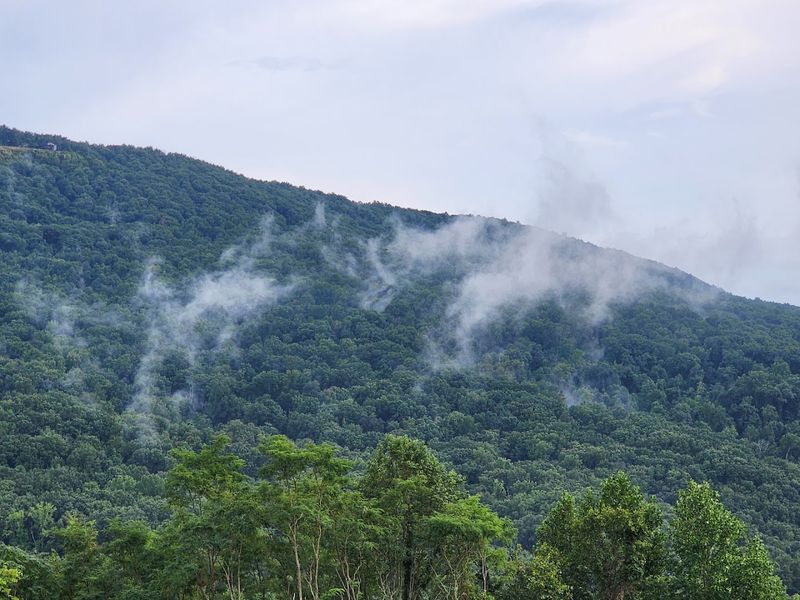
Visit the Sequatchie Valley Overlook in October, and you’ll understand why people plan entire trips around fall foliage. The hardwood forests covering the valley and surrounding mountains explode into color, creating a patchwork of reds, oranges, yellows, and lingering greens that looks almost unreal. Peak color typically hits mid-to-late October, though exact timing shifts based on weather patterns.
Fall brings the biggest crowds, and for good reason. The view transforms into something that belongs on a calendar or postcard. Photographers arrive early to catch morning light, when the sun hits the valley at angles that make the colors practically glow.
Even people who normally couldn’t care less about leaves find themselves impressed.
Spring offers a different but equally compelling show. The valley greens up gradually as trees leaf out, wildflowers bloom, and everything looks fresh and renewed. The mountains seem to soften as bare branches fill in.
Spring also tends to bring more dramatic weather, with storm systems creating interesting cloud formations and occasional fog that fills the valley.
Summer means lush, full greenery and the longest daylight hours for visiting. The valley floor shows its agricultural side more clearly, with crops growing and farmland visible between forest patches. Heat can make the overlook less comfortable during midday, but early morning or evening visits work well.
Winter strips away the leaves and reveals the valley’s bones. You can see the underlying topography more clearly without all that foliage in the way. Snow occasionally dusts the mountains, creating a completely different aesthetic.
Winter also means fewer visitors, giving you a better chance of having the place to yourself.
Weather watching becomes its own form of entertainment at the overlook. Storms moving through the valley create dramatic displays of clouds, light, and shadow. Some visitors specifically time their stops to catch these systems.
Photography Opportunities Beyond The Obvious
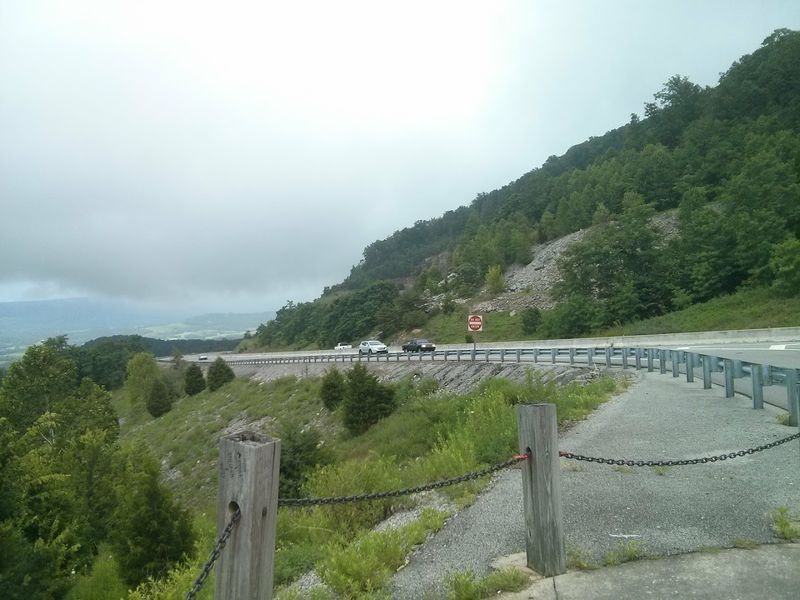
Sure, everyone takes the same wide-angle shot of the valley from the main viewing area. That’s the obvious photo, and there’s nothing wrong with it. But the Sequatchie Valley Overlook offers more interesting compositions if you look beyond the first frame that presents itself.
Golden hour transforms this place completely. About an hour before sunset, the light takes on a warm quality that makes everything look better. Shadows lengthen across the valley floor, giving depth and dimension to features that look flat in harsh midday sun.
The mountains on the opposite side of the valley catch the last direct light while the valley floor falls into shadow, creating natural contrast.
Sunrise works even better for serious photographers, mainly because you’ll have the place to yourself. Morning fog sometimes pools in the valley, creating layers of mist that add mystery and depth to compositions. As the sun rises, it burns off the fog gradually, giving you multiple different scenes without changing position.
Detail shots work well here too. The informational placard makes an interesting foreground element. The love lock chain provides texture and human interest.
Even the binoculars can become part of a composition that tells a story about the place rather than just documenting the view.
Vertical compositions capture the elevation change more effectively than horizontal frames. Shooting down into the valley emphasizes the height and drama of your vantage point. Including foreground elements like rocks or vegetation gives viewers a sense of scale and depth.
Storm photography attracts dedicated shooters who monitor weather patterns and time their visits to catch dramatic cloud formations. The valley creates its own weather effects sometimes, with clouds building up along the ridges or fog moving through like a slow-motion river.
Long exposure photography during blue hour can create moody, atmospheric images that look completely different from typical daylight shots. Just bring a tripod, because you’ll need it.
Practical Details That Save Frustration
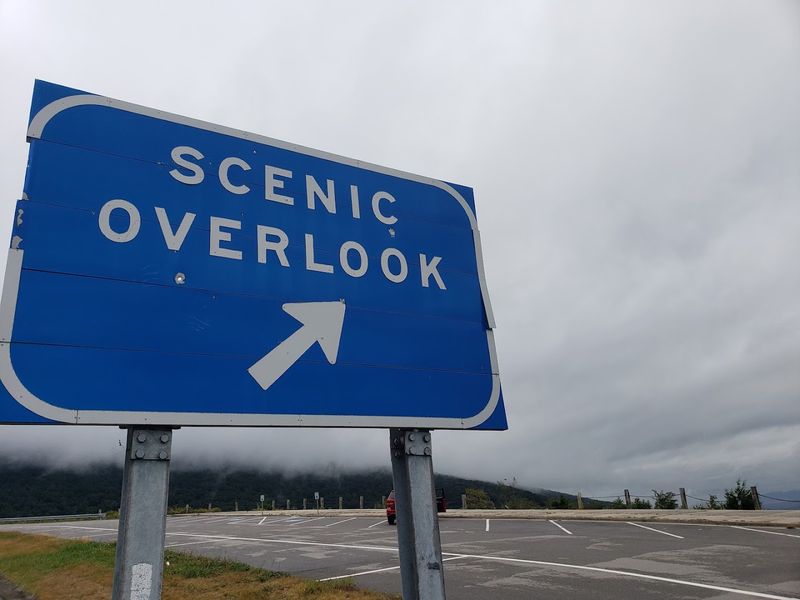
The Sequatchie Valley Overlook operates on weekday hours only, typically 9 AM to 4 PM Monday through Friday, and stays closed on weekends. This schedule confuses visitors who assume a roadside scenic overlook would be accessible anytime. The gates close outside these hours, so weekend warriors and after-hours travelers miss out unless they adjust their plans.
Access is southbound-only on TN-111, meaning you can only reach the overlook when traveling from Dunlap toward Chattanooga. Northbound traffic has no way to enter. This one-way access catches people off guard regularly, based on visitor reviews.
If you’re making a loop or planning to stop on your return trip, you’ll need to factor this limitation into your route.
Parking fills up during peak times, especially fall weekends when the foliage peaks. The lot accommodates a decent number of vehicles, including large ones, but popular days can mean waiting for a spot or finding the lot completely full. Arriving early or visiting on weekdays increases your chances of easy parking.
The site includes no picnic tables or benches, which surprises some visitors expecting a more developed rest area. It’s designed for quick stops and photo opportunities rather than extended stays with meals. If you’re planning to eat, you’ll be standing or sitting in your vehicle.
Cell service generally works well at the overlook, allowing you to share photos or check directions without frustration. This reliability matters when you’re in a relatively remote mountain area where connectivity can be spotty.
Trash cans are provided and well-maintained, though some visitors still litter despite the available bins. Taking your trash with you if the cans are full helps keep the site pleasant for everyone. The same goes for pet waste, even though disposal stations are provided.
The nearest facilities with restrooms and food are in Dunlap or further down the mountain toward Chattanooga. Plan accordingly, especially if you’re traveling with kids or have limited bladder patience.
Share this story