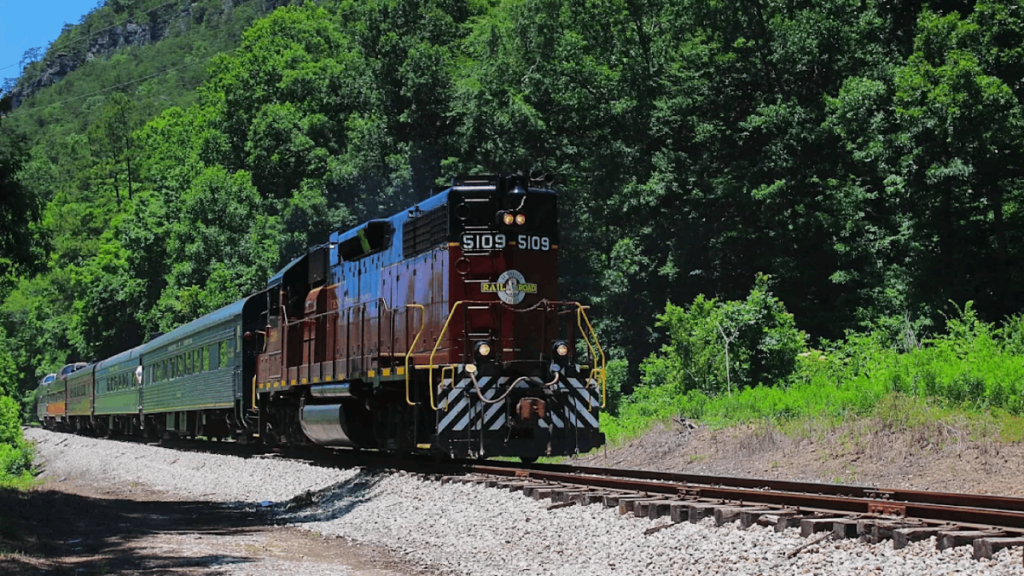
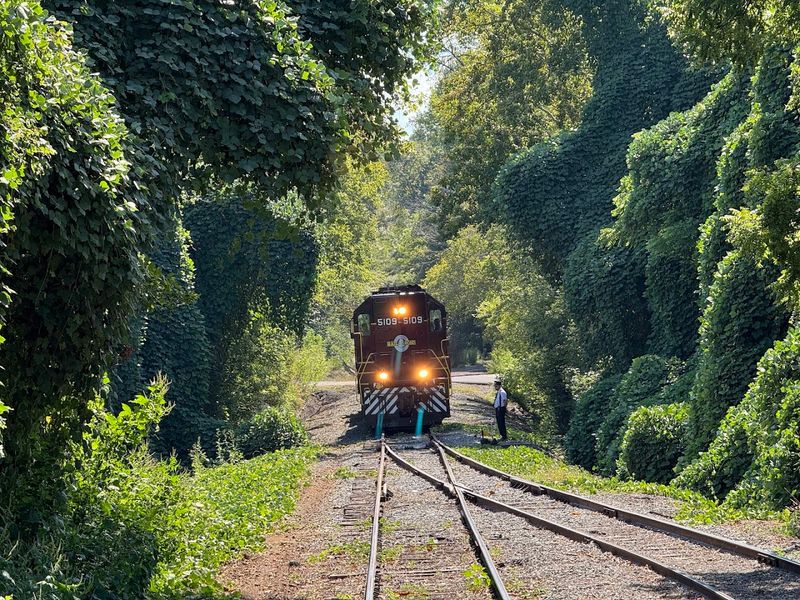
Tennessee’s Hiwassee River Scenic Railroad offers something you won’t find anywhere else in the state: a front-row seat to mountain landscapes, river gorges, and forest views that are impossible to reach by car. Operating out of a quiet depot in Delano, this vintage train winds through the Cherokee National Forest on tracks built over a century ago.
Whether you’re chasing fall colors or just looking for a peaceful escape, the ride delivers scenery that feels like stepping into a postcard—without ever leaving your comfortable seat.
This Tennessee Train Ride Is One of the Most Scenic Ways to See the State
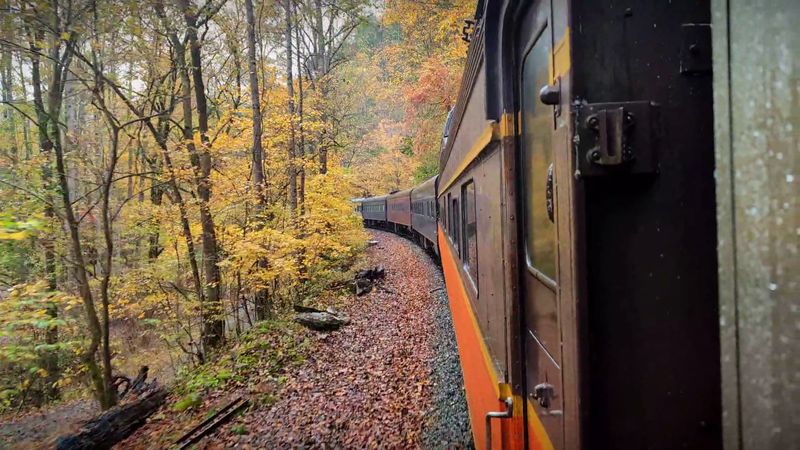
Most people drive through Tennessee and miss half the beauty. Roads can only take you so far, but a train? A train rolls right into the heart of places cars can’t reach.
The Hiwassee River Scenic Railroad isn’t just transportation—it’s a moving observation deck. You’ll glide past towering ridges, dense hardwood forests, and a river that cuts deep into the landscape. The tracks hug cliffs and cross trestles that feel like they’re floating over water.
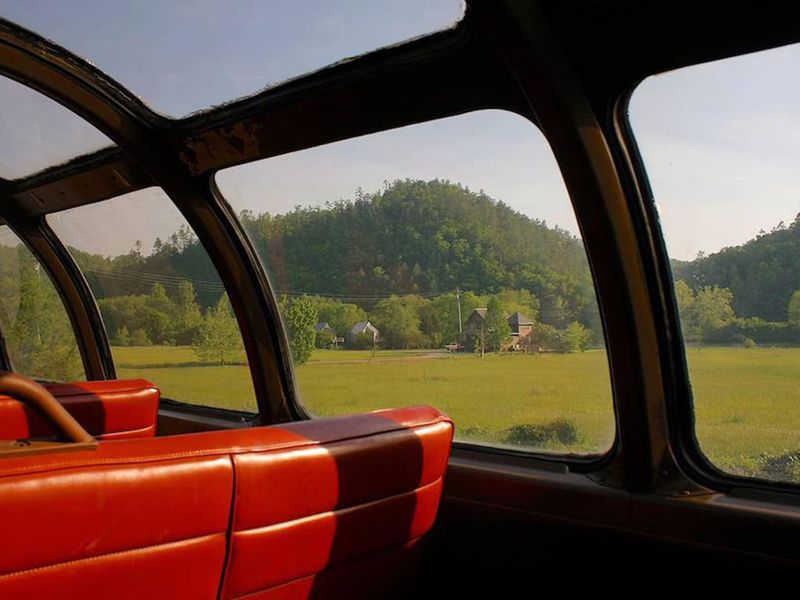
Passengers ride in restored vintage cars, some with dome-top observation sections that let you see the canopy overhead and the gorge below. The train moves at a relaxed pace, which means you actually have time to soak it all in instead of blurring past at highway speed.
What makes this ride stand out is access. These views exist only along the railroad corridor. There are no hiking trails that parallel this route, no scenic overlooks where you can pull off and snap a photo.
The narration adds context too. Conductors share stories about the railroad’s history, the engineering marvels that made these tracks possible, and the wildlife that calls the gorge home. You’ll learn why certain curves exist, how workers carved passages through solid rock, and what life was like when trains were the only way in or out of these mountains.
Families, solo travelers, and groups all find something to love here. It’s comfortable enough for older passengers but engaging enough to hold kids’ attention. No rushing, no traffic—just Tennessee unfolding outside your window in a way that feels both timeless and rare.
The Hiwassee River Scenic Railroad Starts in Quiet Delano
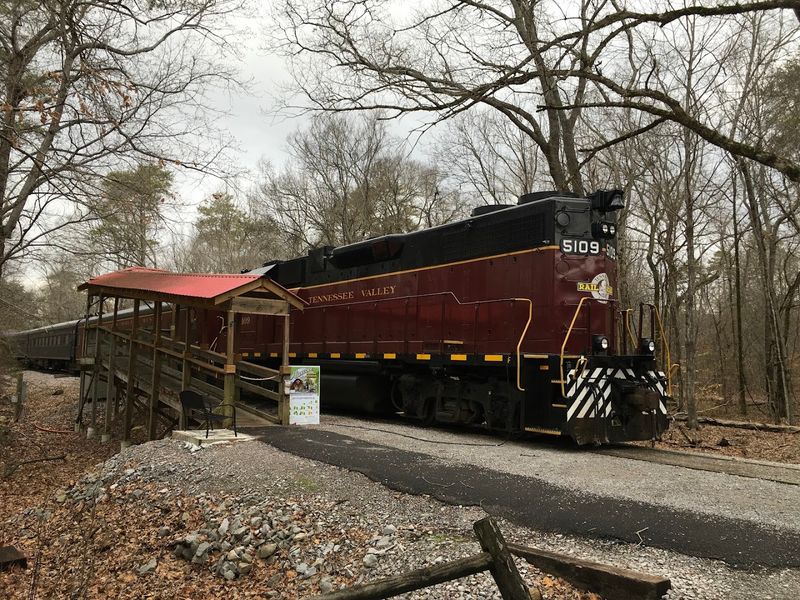
Delano isn’t the kind of town you stumble into by accident. Tucked along US-411 in Southeast Tennessee, it’s a blink-and-you’ll-miss-it spot with more trees than traffic lights. But for train lovers, it’s the gateway to one of the state’s most memorable rides.
The depot sits at 9406 US-411, a straightforward address that belies the adventure waiting just beyond the platform. Parking is easy, and the whole setup feels refreshingly low-key. No sprawling tourist complex, no overwhelming crowds—just a simple station where the focus stays on the train and the journey ahead.
Operating hours are limited, which adds to the charm. The railroad runs Friday through Sunday, with Thursday added during peak seasons. Monday through Wednesday, the place goes quiet, giving the vintage equipment and crew a well-earned rest.
Arriving early is smart. Check-in opens about 30 minutes before departure, giving you time to pick up tickets, browse the small gift shop, and claim your seat without feeling rushed. The staff here are friendly in that genuine way that comes from people who genuinely love what they do.
Delano’s location makes it a perfect starting point. You’re already in the foothills, surrounded by the kind of rolling terrain that hints at bigger mountains ahead. The town itself doesn’t have much in the way of dining or attractions, so plan accordingly.
Some visitors grab breakfast in nearby Etowah before heading to the depot, while others pack snacks for the journey. Either way, once that whistle blows and the train starts moving, you’ll understand why people drive from all over to board in this unassuming little corner of Tennessee.
The Route Winds Through River Gorges, Forests, and Mountain Views
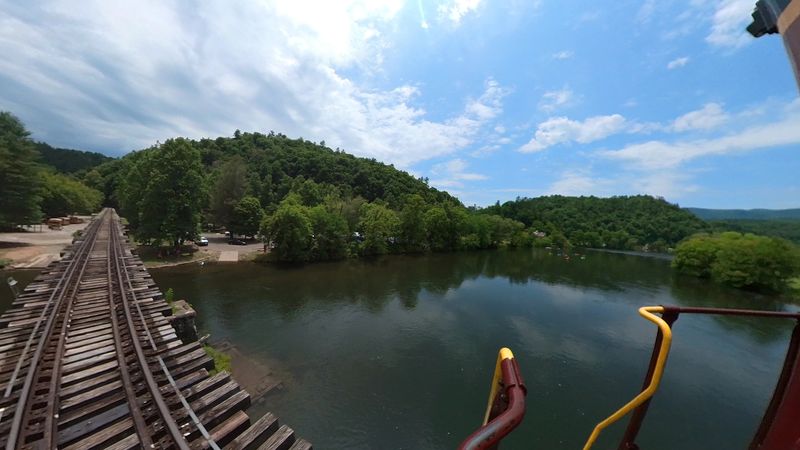
The moment the train leaves Delano, the landscape starts its slow transformation. What begins as gentle farmland quickly gives way to something wilder, more dramatic. You’re entering the Cherokee National Forest, and the difference is immediate.
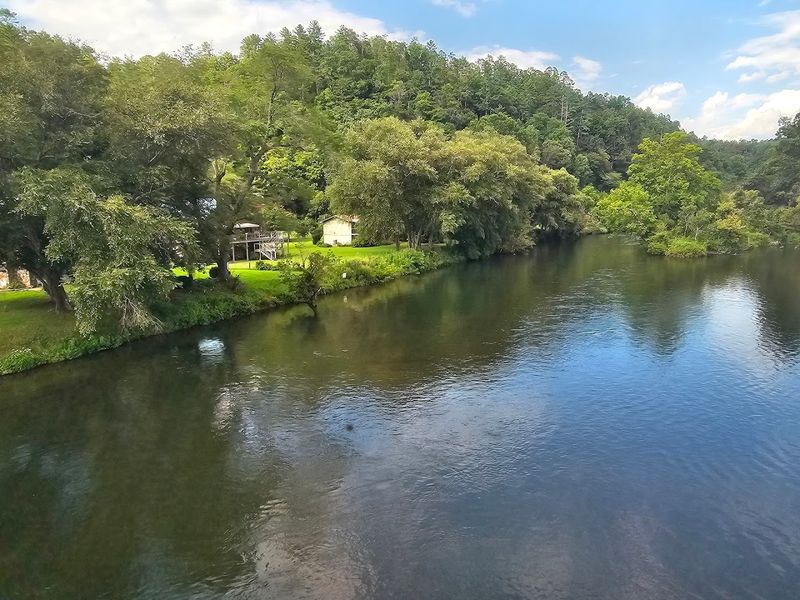
The Hiwassee River becomes your constant companion. Sometimes it’s a calm ribbon of green-blue water reflecting the sky. Other times, especially after rain, it churns and tumbles over rocks with enough force to send up mist.
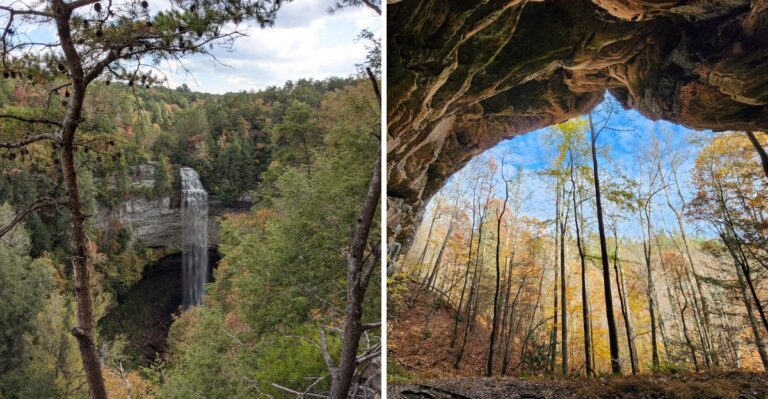
The gorge itself is the real showstopper. Steep ridges rise on both sides of the tracks, covered in dense stands of oak, hickory, and pine. In spring and summer, the green is so thick it feels almost tropical.
But fall? Fall is when this route earns its reputation. The hardwoods explode into reds, oranges, and golds that seem almost too vivid to be real. The contrast against the evergreens creates layers of color that shift with every curve of the track.
The train doesn’t rush. It can’t—the route is too winding, the terrain too challenging. That slow pace works in your favor.
You have time to watch a heron lift off from the riverbank, to spot the play of light on water, to notice how the forest changes as you gain elevation.
There are moments when the gorge narrows and you’re sandwiched between rock walls and rushing water. Other stretches open up to reveal sweeping mountain vistas that stretch for miles. The variety keeps every segment of the journey interesting.
No two sections look quite the same, and passengers often find themselves moving from window to window, trying to catch every angle.
Why the Famous Hiwassee Loop Makes This Ride So Unforgettable
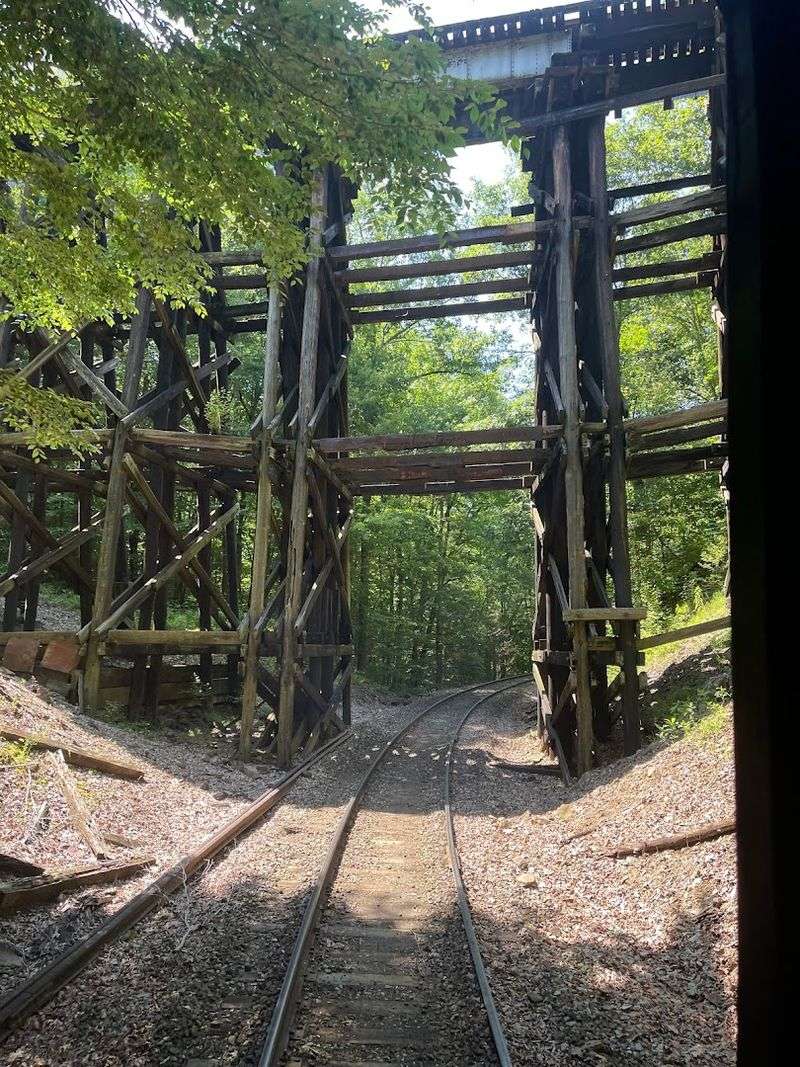
Engineering marvels don’t always announce themselves with fanfare. Sometimes they sneak up on you, and by the time you realize what’s happening, you’re already in the middle of something remarkable. That’s the Hiwassee Loop.
Built in the early 1900s, this section of track solves a problem that stumped engineers for years: how to gain elevation in terrain too steep for a standard grade. The solution was elegant—create a giant spiral that loops the train back over itself, climbing as it goes.
As you ride through it, the experience is subtle at first. The train enters a curve that keeps curving. You start to notice landmarks reappearing from different angles.
Then comes the moment when you look out the window and see your own train—the cars ahead or behind you—on a different section of track either above or below where you’re sitting.
The loop is so gradual that you don’t feel like you’re going in circles, yet somehow you’ve gained significant elevation without the train straining up a steep incline.
The conductor’s narration during this section is worth paying attention to. You’ll learn about the workers who carved this route through solid rock, the challenges they faced, and why this particular loop is considered one of the finest examples of mountain railroad engineering in the Southeast.
Seeing the effort required to keep this century-old marvel operational adds another layer of appreciation to the experience.
What You’ll See From the Train Along the Way
Railroad journeys are about more than just the big landmarks. Sure, the loop and the gorge steal the spotlight, but it’s the smaller moments that often stick with you longest. A deer browsing at the forest edge. An abandoned homestead slowly being reclaimed by vines. The way afternoon light slants through the trees and turns everything golden.
Wildlife sightings are common, especially if you take an early departure. Herons and egrets fish along the riverbanks. Hawks circle overhead, riding thermals above the ridges.
If you’re lucky, you might spot a black bear, though they tend to keep their distance from the noisy train.
The Hiwassee River itself changes personality throughout the journey. In some stretches, it’s broad and placid, perfect for kayakers and fishermen. In others, it narrows and accelerates, crashing over boulders in white-water rapids that kayakers dream about.
The color shifts too, from deep green in shaded pools to bright turquoise where the sun hits shallow rapids.
Human history layers itself into the landscape. You’ll pass old railroad infrastructure—water towers, signal houses, sections of abandoned track. There are remnants of the communities that once thrived along this route when trains were the primary connection to the outside world.
The conductor points out sites where depots once stood, where logging operations loaded timber, where tiny post offices served mountain families.
The observation dome cars offer the best vantage points. The curved glass gives you nearly 360-degree views, and being elevated above the standard car roof means you can see over the treetops in some sections. These seats book up fast, especially during fall color season, but even the standard coaches have large windows that frame the scenery beautifully.
The Best Time to Ride for Fall Color, River Views, and Photo-Worthy Scenery
Timing can make or break a scenic train ride. Show up during a drought and the river might be a trickle. Visit too early in the fall and the leaves are still green. Too late and they’re already on the ground. Getting it right takes a little planning.
Fall is the obvious champion. October typically delivers peak color, though the exact timing shifts by a week or two depending on the year’s weather patterns. Early October often catches the high elevations at their most vibrant, while late October brings the lower elevations into full color.
The railroad’s schedule expands during this season, with more frequent departures to handle the crowds.
But don’t sleep on spring. Late April and May bring a different kind of beauty—wildflowers carpet the forest floor, dogwoods and redbuds add splashes of white and pink, and everything has that fresh, just-washed look that comes after winter. The river runs higher in spring too, fed by mountain snowmelt and spring rains, which makes the water features more dramatic.
Summer offers its own advantages. The forest is at its greenest, creating a lush tunnel effect in some sections. Temperatures stay comfortable inside the air-conditioned cars even when it’s sweltering outside.
Summer also means longer days, so the light stays good throughout the journey. Afternoon departures can catch beautiful late-day light on the return trip.
Weather wildcards happen. Rain can actually enhance the experience—mist rising from the gorge, water streaming down rock faces, the forest taking on moody, atmospheric tones. Just be aware that some of the older dome cars have been known to develop leaks during heavy downpours.
What to Know Before Booking This Tennessee Railroad Adventure
A little preparation goes a long way toward making this trip smooth and enjoyable. Start with ticket options. The railroad offers different classes, from standard coach to premium dome seating.
Dome cars cost more but provide those panoramic views that make photos pop. Crown class offers extra comfort for longer journeys, which matters when you’re sitting for four to five hours.
Speaking of time, understand what you’re committing to. The Hiwassee Loop ride runs about four hours round-trip. The longer journey to Copper Hill extends that to six or seven hours, including a stop in town for lunch and exploring.
These aren’t quick jaunts—bring patience and a relaxed mindset.
Food and drink policies are passenger-friendly. You’re welcome to bring your own snacks and meals. The train does have a small snack bar selling drinks, chips, and other basics, but the selection is limited.
Many passengers pack coolers with sandwiches and drinks. Just remember there’s no refrigeration, so plan accordingly for warm-weather rides.
Restrooms exist on the train, though they’re vintage railroad facilities—functional but not spacious or luxurious. The depot itself has limited facilities, and reviewers note that portable toilets supplement the available options. Plan a bathroom stop before you arrive if you’re driving any distance.
Accessibility is better than you might expect for a vintage railroad. Staff help passengers with mobility aids board, and there’s space to store walkers and canes. The train moves slowly and smoothly enough that walking between cars is manageable for most people, though you are on a moving platform.
Book ahead, especially for fall weekends. Popular dates sell out weeks in advance. Check the website for seasonal schedules since operating days vary throughout the year.
And yes, they offer ticket insurance—worth considering if your travel plans might change.
Share this story