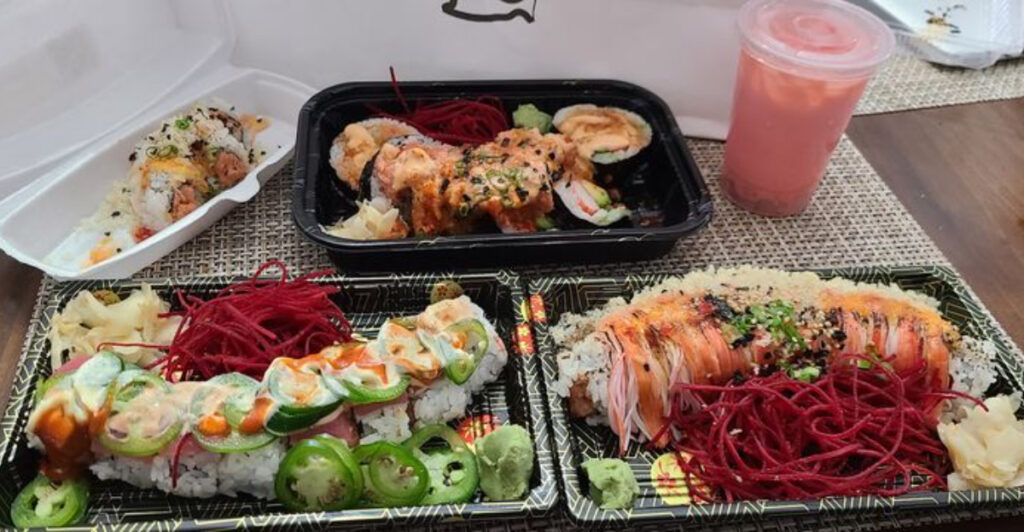
The first clue that Kenko Sushi is not an ordinary strip-mall restaurant is written all over the walls—literally. Colorful Post-it notes left by happy customers crowd the dining room, while plates of elaborate sushi rolls arrive beneath zigzags of spicy mayo, teriyaki sauce, crunchy toppings, and bright slices of fish.
Outside, the setting at 261 Comly Road in Lincoln Park could hardly be more everyday. Inside, this little Japanese fusion spot has built the kind of following that restaurants in far flashier neighborhoods would love to have.
Kenko has appeared four times on Yelp’s list of America’s Top 100 Places to Eat, drawing attention well beyond Morris County without losing its friendly neighborhood personality.
The restaurant opens only Wednesday through Saturday, limits how many orders its kitchen accepts, and serves customers on a first-come, first-served basis.
That may require a little planning, but one look at the menu explains why people happily work around the schedule.
A Strip Mall Surprise
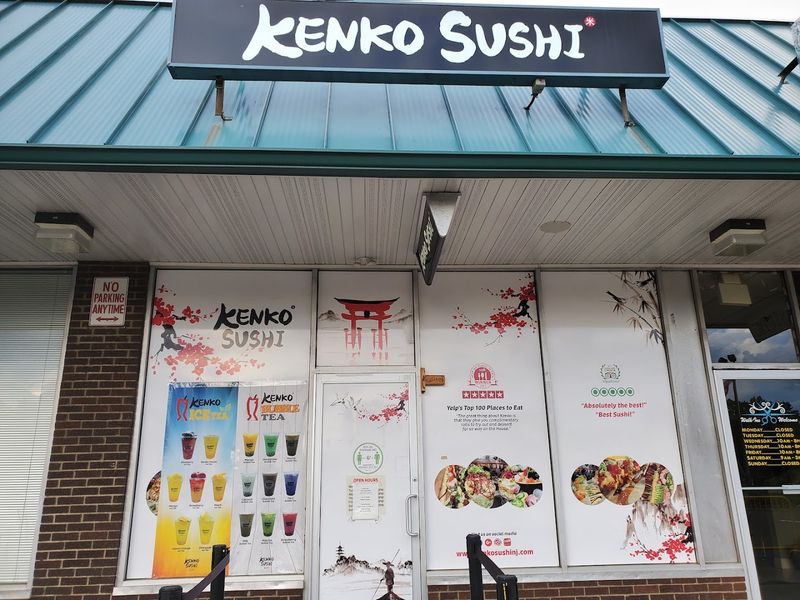
Drive along Comly Road and Suite 3 does not announce itself with a dramatic entrance, glowing downtown skyline, or fashionable address. Kenko sits in a modest commercial plaza in Lincoln Park, a small Morris County borough where an errand run can quickly turn into an unexpectedly memorable lunch.
The restaurant has operated here since around 2014, building its reputation from one unassuming location rather than expanding into a chain. In fact, Kenko makes a point of noting that this is its only location.
That feels fitting. Much of the restaurant’s charm comes from how personal and slightly unconventional the whole operation remains.
Dine-in tables and takeout are available, but reservations are not part of the equation. Seating is first come, first served, and the restaurant currently opens just four days a week.
Store hours run from 11:30 a.m. to 9 p.m. Wednesday through Saturday, while the kitchen generally stops accepting orders at 8 p.m.
Kenko also warns that cooking hours can change once the kitchen reaches the limited number of orders it can prepare properly in a day. That is not the slickest business model in town, but it reveals the priorities.
The crew would rather cap production than rush through another stack of tickets. Takeout customers order through Kenko’s website or app instead of calling, and popular time slots can fill early, especially on weekends.
Orders may be placed as far as a week ahead, which is useful when a Friday-night sushi craving is already on the calendar. All of this could feel fussy at a restaurant trading mostly on hype.
At Kenko, it feels more like a tiny kitchen protecting the standards that made it famous in the first place.
The Yelp Buzz That Went National
Plenty of restaurants receive one burst of online attention and spend the next decade mentioning it. Kenko’s recognition has been harder to dismiss as a lucky break.
When the Lincoln Park restaurant reached No. 65 on Yelp’s Top 100 Places to Eat in the United States for 2024, it marked the fourth time Kenko had appeared on the national list. That repeat performance matters more than any single ranking.
The Top 100 covers restaurants across every category, so a small New Jersey sushi shop was not merely competing against nearby Japanese restaurants. It was being considered alongside barbecue joints, bakeries, cafés, tasting-menu destinations, and neighborhood institutions from around the country.
Kenko’s inclusion also reflects the enthusiasm of ordinary diners rather than a dining room designed to impress anonymous inspectors. Customers praise generous portions, carefully assembled rolls, fresh fish, creative combinations, and service that feels unusually thoughtful.
The restaurant has been collecting that kind of loyalty since its early years, with a 2017 Top 100 badge still displayed among the honors on its website. By 2024, the recognition had become a pattern.
Manager YooJin Lee has said that some customers visit once, twice, or even three times in a week—particularly impressive when Kenko is open only four days. That kind of repeat business explains how a restaurant in a quiet suburban strip mall reaches a national audience.
People do not return that often because a roll photographed well once. They return because the kitchen delivers the same careful cuts, bold sauces, substantial portions, and familiar welcome on the next visit too.
National rankings may introduce Kenko to newcomers, but regulars are the reason its reputation has lasted.
Fresh Fish That Raises the Bar
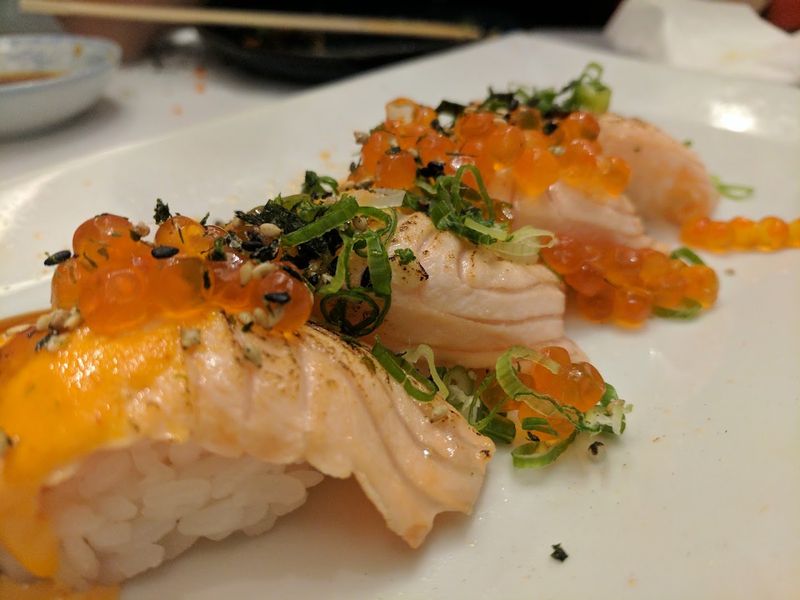
Freshness is the point where no amount of clever naming or decorative sauce can rescue mediocre sushi. Kenko’s specialty rolls may be playful, but the restaurant’s reputation rests on what is underneath all that crunch and spicy mayo.
The menu repeatedly combines salmon, tuna, yellowtail, white fish, red snapper, and masago with ingredients that are richer, hotter, or crispier. For those combinations to work, the fish needs a clean flavor and tender texture strong enough to remain noticeable.
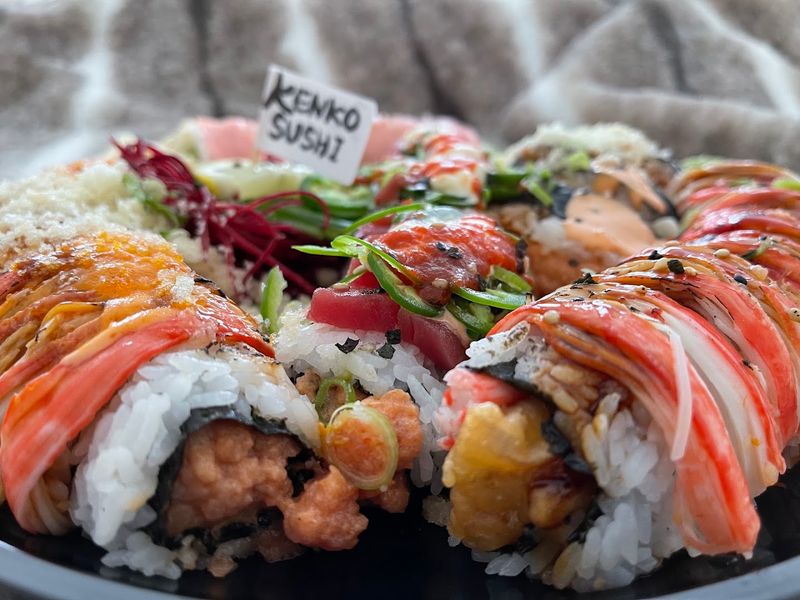
The Kenko Special is a good example. It starts with spicy tuna and adds salmon, tuna, white fish, crab meat, masago, and spicy mayo, packing several seafood flavors into one substantial roll.
Hamachi Dream keeps its focus tighter, pairing spicy yellowtail and cucumber with more yellowtail, scallion, masago, and spicy mayo. Devil’s Ride takes spicy tuna and cucumber, then tops them with seared salmon and a trio of spicy mayo, teriyaki, and sweet chili sauce.
These are busy combinations, but they are not built to disguise what is inside. The fresh fish provides the cool, clean counterweight that prevents each bite from becoming a blur of sweetness and heat.
Kenko describes its food as fresh, high-quality Japanese fusion, and regulars consistently single out the fish as one of the restaurant’s defining strengths. Even customers who generally stick to familiar choices can taste the difference in a basic salmon, tuna, or yellowtail roll, where there are fewer toppings competing for attention.
That is the quiet trick behind Kenko’s oversized menu. The dramatic specialty rolls earn the photographs, but the underlying seafood quality is what makes the experience feel like more than a novelty.
There is plenty of sauce here, yet the fish never feels like an afterthought.
Rolls With Real Personality
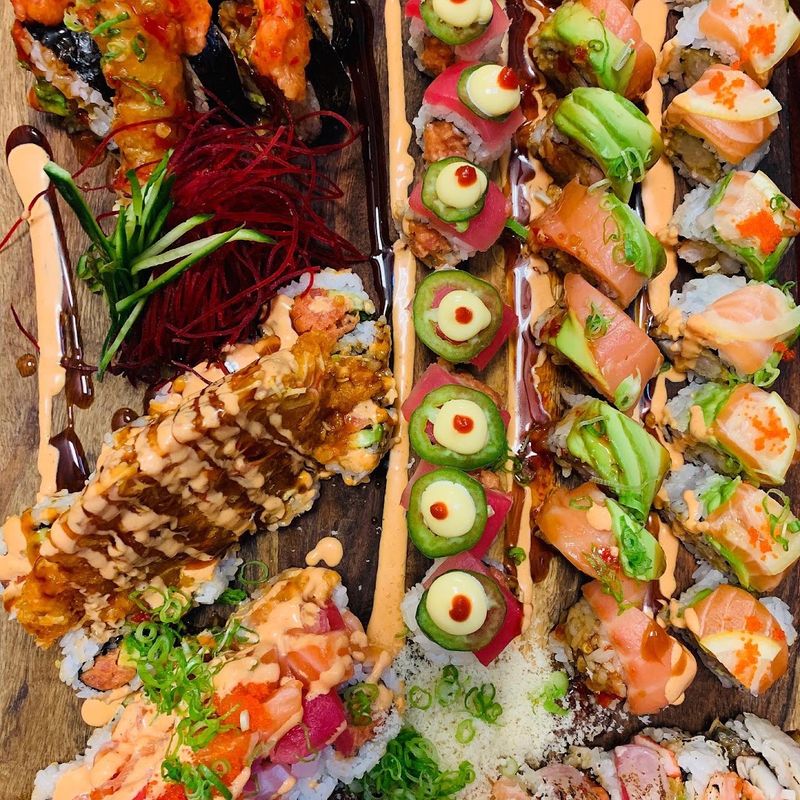
The names alone make Kenko’s specialty-roll menu entertaining to browse. There is a Heart Breaker, Monster, Devil’s Ride, Black Tiger, Kiss of Fire, Red Dragon, Irish Special, Dancing After Fire, and something called Crunch & Crunchy, which leaves very little mystery about its main attraction.
The local celebrity, however, is the Lincoln Park roll. Priced at $13.95 on the current online menu, it layers shrimp tempura, crab, and avocado with spicy tuna, then finishes the whole arrangement with teriyaki sauce and spicy mayo.
It is rich, crisp, creamy, spicy, and sweet in the same bite—the sort of roll made for diners who believe restraint is occasionally overrated. Godzilla, also listed at $13.95, skips the tempura but keeps the volume turned up.
Spicy tuna and avocado form the base, while crab, scallion, crunchy topping, teriyaki, and spicy mayo pile on top. The Kenko Special costs $14.95 and leans more heavily into seafood, combining spicy tuna with salmon, tuna, white fish, crab meat, masago, and spicy mayo.
Those who like a little heat can try Heart Breaker, which adds tuna, jalapeño, mayonnaise, and sriracha over spicy tuna. The Fantastic roll lives up to its confident name with eel, avocado, cucumber, crab meat, seared tuna, shrimp, salmon, and three different sauces.
Despite the lengthy ingredient lists, the presentation does not look careless. Rolls are sliced precisely and arranged so the toppings remain visible, often arriving as colorful platters built for sharing.
Prices for many specialty rolls fall between roughly $12 and $15, making it possible for a table to order several contrasting combinations without turning dinner into a major occasion. The only real difficulty is agreeing on which gloriously over-the-top name gets the final spot.
The Little Extras People Remember
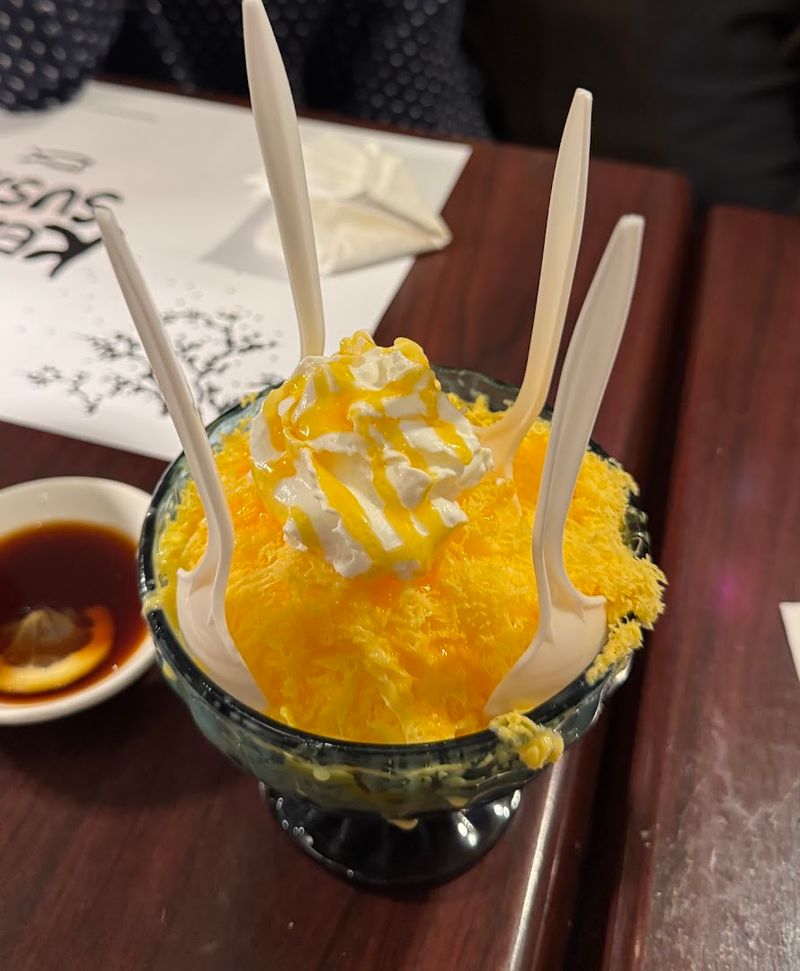
A small bowl arriving before dinner and a cool mango treat appearing afterward may not sound revolutionary, but these are the details people remember. Kenko has become known for adding little extras that make a casual sushi meal feel more personal.
Miso soup is included with qualifying combinations and platters, including the K2 combo of two regular rolls and the K4 combo of two specialty rolls. The current online menu lists the K2 at $11.95 and the K4 at $22.95, each with a bowl of miso.
An additional bowl costs $1.50. The soup is simple and comforting—the sort of warm, savory beginning that resets the appetite before the first platter arrives.
Mango shaved ice has developed an even bigger following among longtime customers. Diners frequently describe receiving the light, fruity dessert as a complimentary finish, especially after a dine-in meal.
It cools everything down after rolls layered with jalapeño, Korean hot sauce, sriracha, spicy tuna, and sweet chili sauce, ending dinner on a bright note rather than a heavy one.
Complimentary items can depend on the order, service, and availability, so the shaved ice is best treated as a welcome surprise rather than an ironclad guarantee.
That unpredictability is part of what makes it feel genuinely generous. Kenko does not need to deliver an elaborate dessert course to leave a strong final impression.
A spoonful of icy mango sweetness does the job nicely. Drinks receive similar attention.
The restaurant advertises 17 varieties of bubble tea, all described as gluten-free and lactose-free, along with 11 flavors of caffeine-free iced tea made with real fruit syrup.
These extras widen the appeal for families and groups, but more importantly, they reinforce the feeling that Kenko wants guests to leave well-fed, refreshed, and slightly spoiled.
Why Regulars Keep Returning
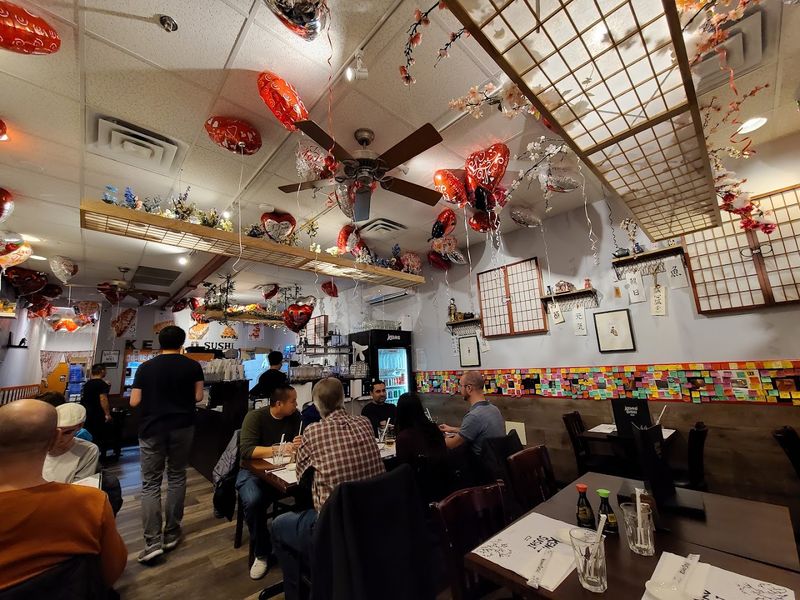
Before Kenko became a nationally recognized restaurant, it became somebody’s neighborhood sushi place. The evidence covers the dining-room walls in brightly colored squares.
Customers have left messages, thank-yous, drawings, inside jokes, and small declarations of affection on Post-it notes, creating décor that could never be ordered from a restaurant-supply catalog.
Each note adds another voice to the room, turning the compact space into a record of birthdays, family meals, first visits, and regular Friday-night orders.
That homemade personality fits the service. Staff members are often praised for patiently explaining rolls, helping newcomers navigate the unusually deep menu, and remembering the preferences of returning customers.
The friendliness matters because Kenko’s ordering system is more structured than most neighborhood restaurants. Phone orders are not accepted.
Online orders can hit capacity. Weekend pickups may run a little late when several customers select the same time.
The restaurant closes three days a week and operates on a first-come, first-served basis when it is open. Yet customers continue adapting to the rules because the experience rarely feels anonymous.
The limitations are not there to manufacture exclusivity; they reflect what a small crew can prepare without letting quality slide. There is something refreshingly honest about that.
Kenko is not pretending to be a polished Manhattan omakase counter, nor is it trying to become a high-volume sushi chain. It remains one compact restaurant in a Lincoln Park shopping plaza, serving generously loaded fusion rolls, carefully handled fish, warm miso soup, and the occasional icy mango finale.
The national awards explain how newcomers find it. The crowded Post-it walls explain why so many of them become regulars.
Share this story