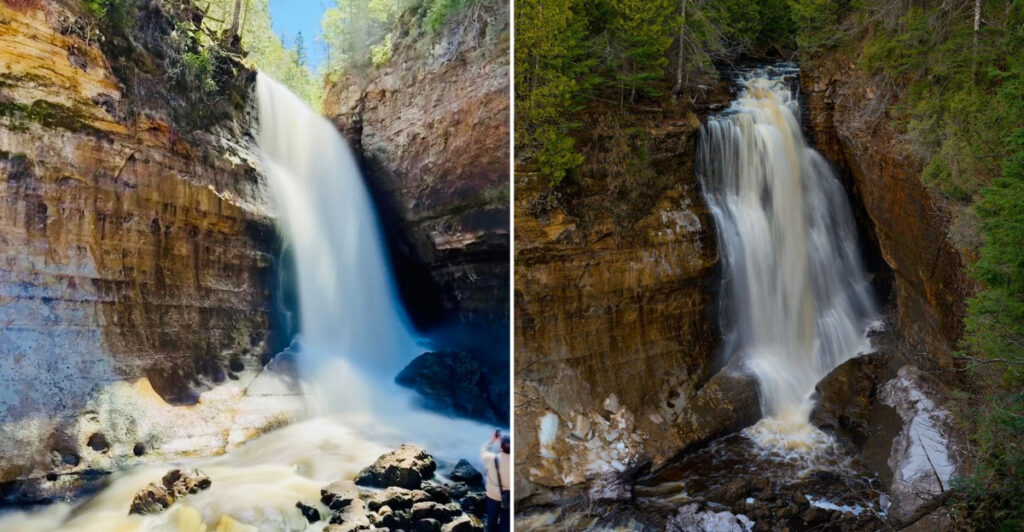
Some waterfalls make you work all day for the view. Miners Falls gives Michigan travelers a serious payoff in just over a mile.
Hidden inside Pictured Rocks National Lakeshore near Munising, this Upper Peninsula favorite drops roughly 40 feet along the Miners River, crashing into the gorge with enough force to send a cool mist through the trees before you even reach the overlook. The trail is short, scenic, and approachable, but the reward feels far bigger than the distance suggests.
For anyone chasing waterfall drama without committing to a long hike, Miners Falls is one of those Michigan stops that proves a quick walk can still end with something unforgettable.
The First Look That Catches You Off Guard
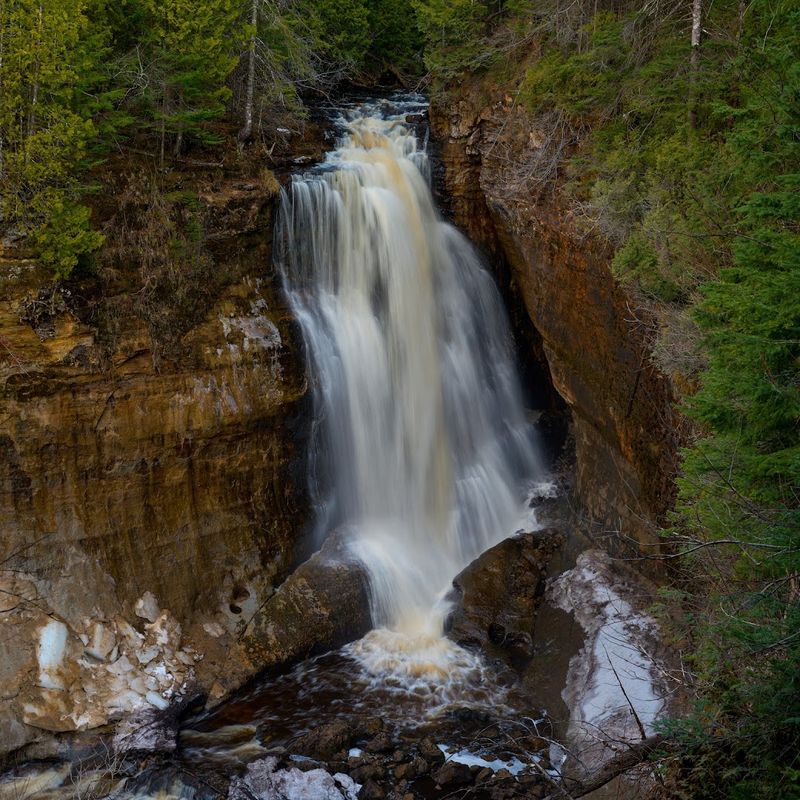
Nothing quite prepares you for the moment Miners Falls comes into view. After a gentle 0.6-mile walk through tall hardwoods and pine, the roar of the water arrives before the falls do, building anticipation with every step.
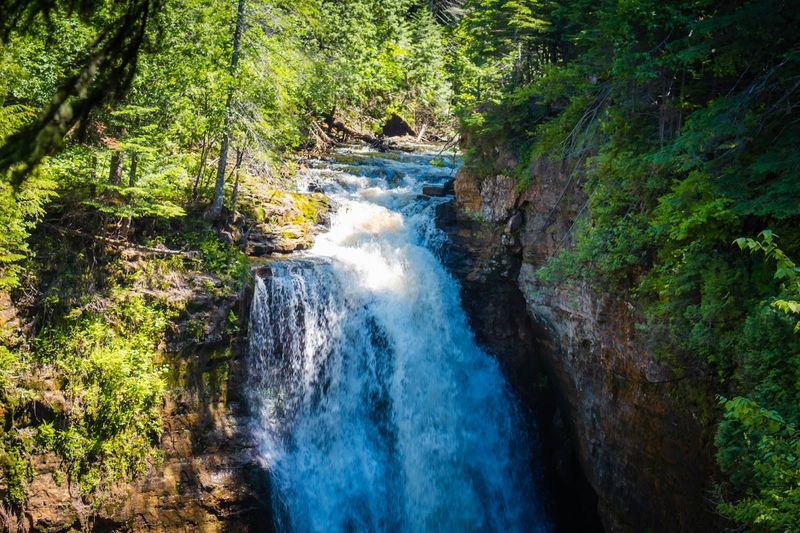
Then the trees part, the wooden boardwalk appears, and suddenly you’re standing across from a wall of white water tumbling 40 feet down layered rock.
The scale of it surprises most people. Miners Falls isn’t a trickle or a slow cascade — it’s a forceful, wide curtain of water that fills the gorge with sound and mist.
On a warm summer afternoon, that cool spray hits your skin like a reward. The surrounding forest frames the falls perfectly, keeping the scene wild and unmanicured.
Two overlook platforms sit side by side at the end of the trail. The upper platform offers a partial view through the tree canopy, which is fine but limited.
The lower platform, reached by descending a set of stairs, delivers the full picture — the complete drop, the churning base, and the dark rocky walls of the gorge on either side.
From the lower deck, the falls feel close enough to touch. The mist drifts across the platform in waves, especially after recent rainfall when the Miners River runs heavy and fast.
Early morning visits tend to offer softer light filtering through the trees, which makes the water look almost silver against the dark stone.
This first encounter with Miners Falls tends to anchor the entire Pictured Rocks experience. Even among the dramatic painted cliffs and sweeping Lake Superior views nearby, the falls hold their own as a singular, powerful moment on Michigan’s Upper Peninsula.
Inside the Geology Beneath the Drop
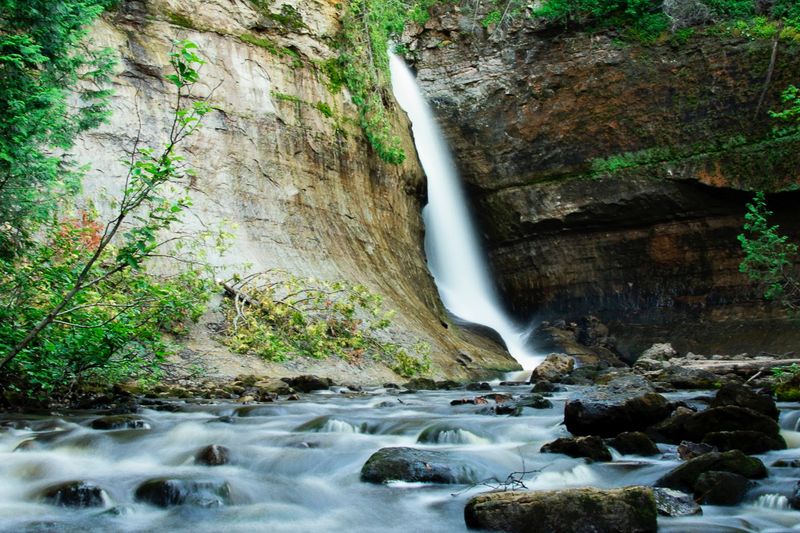
The rock at Miners Falls isn’t just a backdrop — it’s the whole story. The falls exist because the Miners River reaches a hard shelf of ancient sandstone and simply runs out of ground.
That abrupt edge, carved over thousands of years of erosion, is what sends the water airborne in such a dramatic, unbroken drop.
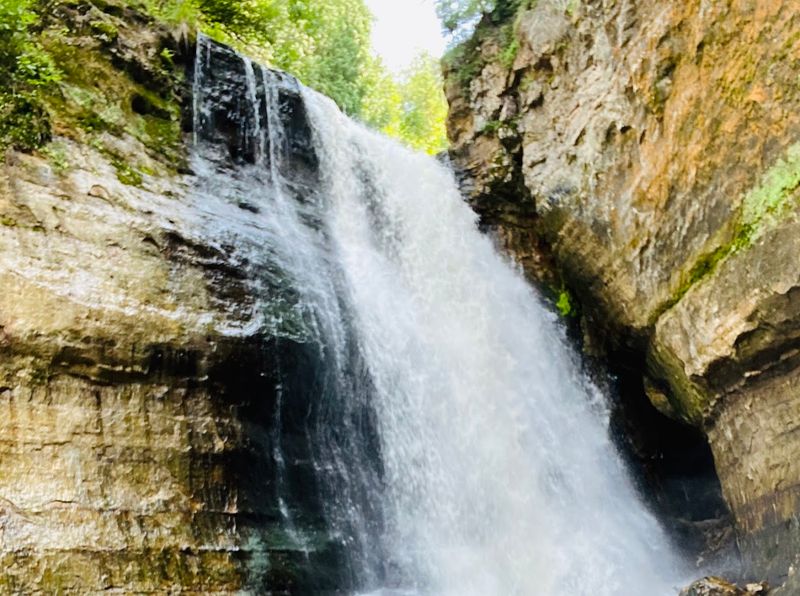
The gorge walls expose layers of Precambrian sandstone, the same geological formation responsible for the iconic painted cliffs of Pictured Rocks. Streaks of iron oxide, manganese, and other minerals stain the rock in shades of rust, tan, and dark gray.
Up close, those layers look almost like pages in a book, each one representing a different period of ancient lakebed sediment compressed into stone.
Water has been shaping this gorge for a very long time. The pool at the base of the falls is carved into bedrock, deepened over centuries by the constant force of the falling water and the rocks it carries downstream.
That plunge pool is visible from the lower overlook, dark and churning even in drier months.
For visitors willing to make the steep, unofficial scramble down to the base — which involves navigating tree roots, loose rock, and a short rock face with a carved foot step — the geology becomes even more dramatic. Standing at the bottom, the gorge walls rise on both sides, and the scale of what water can do to solid stone over millennia becomes completely clear.
This geological foundation is also why the falls run strong well into summer. The sandstone shelf and surrounding watershed hold moisture effectively, feeding the Miners River even when rainfall has been light.
That consistency is part of what makes this spot a reliable destination across the warmer months.
The Trail That Almost Anyone Can Handle
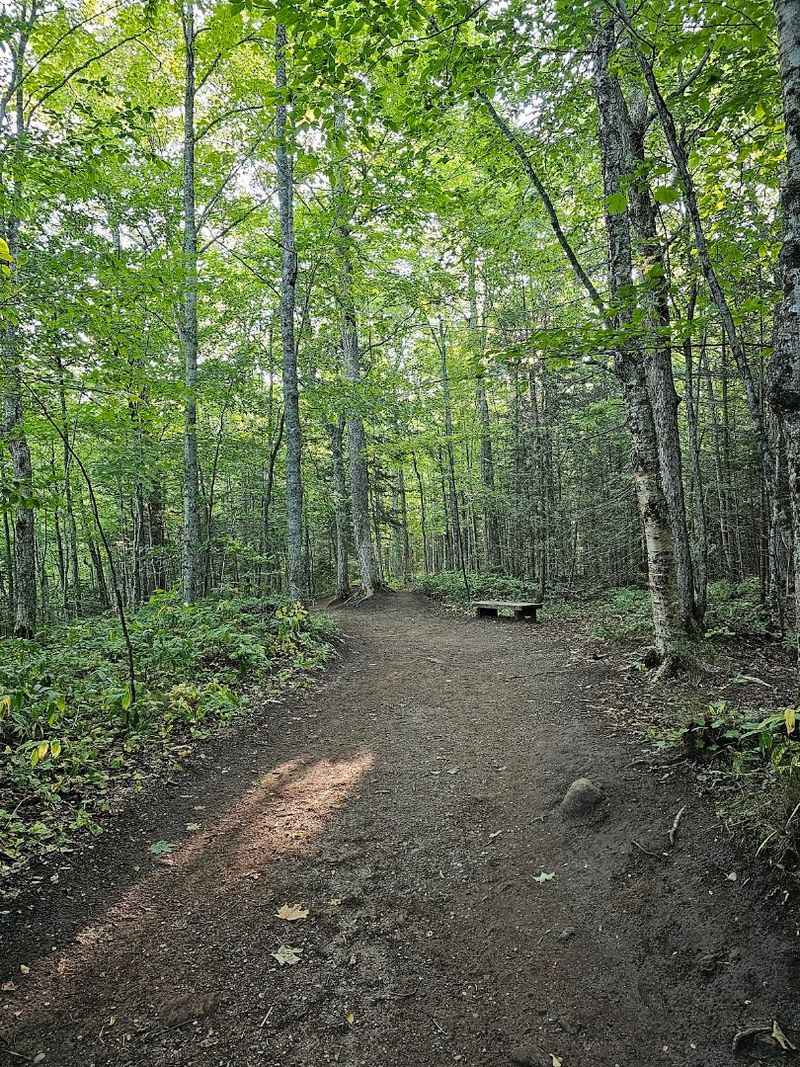
Accessibility is one of Miners Falls’ strongest qualities, and it’s something that sets it apart from many Upper Peninsula waterfall hikes. The main trail runs 0.6 miles from the parking area to the overlook platforms, covering mostly flat to gently rolling terrain on a wide, well-maintained dirt and gravel path.
Families with young children have completed this trail easily, and one account even notes doing it at 28 weeks pregnant with a 2- and 4-year-old in tow.
The path winds through a beautiful northern Michigan forest of birch, maple, and towering conifers. Sunlight filters through the canopy in patches, and the trail stays cool even on warmer days because of the shade coverage.
A few rolling dips mark the route, but nothing steep enough to slow most hikers down significantly.
The only real physical challenge comes at the very end. A set of roughly 50 to 72 steps — accounts vary slightly — descends to the lower viewing platform where the best views are.
Those steps are wooden and well-built, but they do require some effort, especially on the return climb. For most able-bodied visitors, the round trip takes between 30 and 45 minutes at a comfortable pace.
Older hikers have noted completing the full loop in about 1.5 hours without feeling rushed. The trail is largely considered accessible for a wide range of fitness levels, with only the final staircase and the optional steep scramble to the falls base pushing beyond easy territory.
The parking area holds around 30 vehicles and includes two pit toilets, though no running water is available on site. Arriving early on busy weekends helps secure a spot, as the lot fills quickly during peak summer months when Pictured Rocks draws large crowds to Alger County.
Michigan’s Upper Peninsula Sets the Season
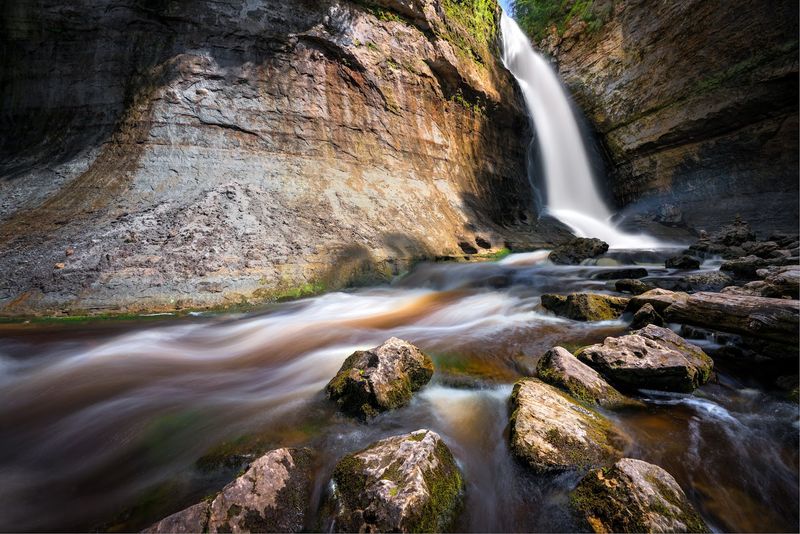
Timing a visit to Miners Falls makes a real difference in what you experience. Each season brings a completely different character to the falls, and knowing what to expect ahead of time helps set the right expectations for the trip.
Spring is widely considered the peak season for sheer water volume and raw power.
May and June deliver the most dramatic flows, when snowmelt from Michigan’s Upper Peninsula wilderness pours into the Miners River watershed. The falls roar during these months, throwing mist far enough to dampen the overlook platforms and soak anyone standing close.
The surrounding forest is a vivid green, the air smells like wet earth and pine, and the whole scene feels almost theatrical in its intensity.
Late summer still produces a solid flow, which surprises some visitors who expect the falls to slow significantly by August. The sandstone watershed holds water well, keeping the river active even after weeks without heavy rain.
One review specifically notes visiting at the end of summer and finding the falls still running strong — a reliable reassurance for those planning fall trips.
September and October bring the fall color transformation to the surrounding forest. The birch and maple trees lining the trail shift into deep golds and fiery reds, creating a contrast against the white water that makes for some of the most photographable conditions of the year.
The falls are busy on fall weekends, with parking sometimes overflowing onto the access road.
Winter visits are possible but require serious preparation. Ice builds up on the stairs and the scramble path to the base becomes genuinely dangerous without proper traction gear.
The frozen falls are striking in appearance, but standard hiking boots won’t cut it — experienced winter hikers with microspikes or crampons are far better positioned to enjoy the site safely.
Getting Down to the Base — The Unofficial Descent
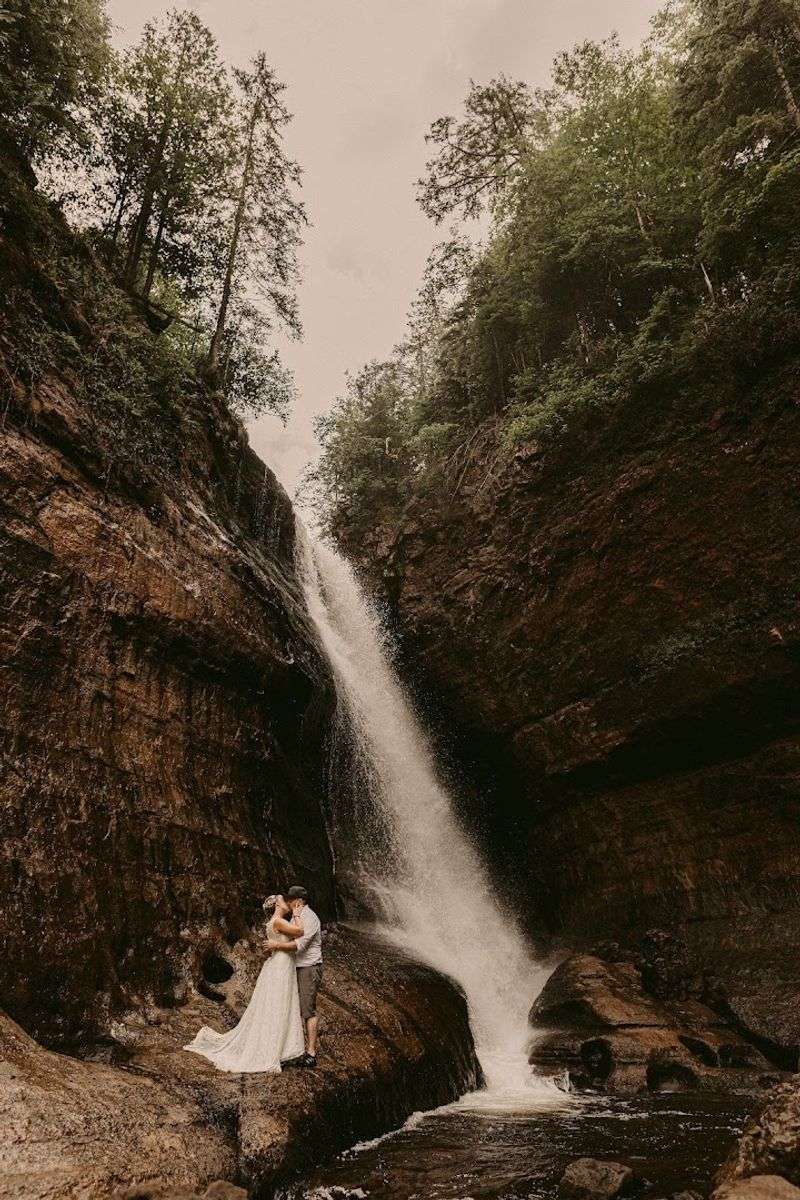
The two overlook platforms at Miners Falls are excellent, but a portion of visitors push further — past the boardwalk, down a steep and rugged unofficial path that leads all the way to the base of the falls. This descent is a different experience entirely, and it demands more than the main trail does.
The path down involves navigating exposed tree roots, loose rock, and at least one section where a roughly four-foot rock face must be scaled. A foot step has been carved into the stone to help with footing, but children will need assistance here.
Natural ropes and roots along the way serve as improvised handrails, and most physically capable adults can manage the descent with careful footing and a bit of patience.
At the bottom, the scale of the falls shifts dramatically. From the overlook platforms, Miners Falls looks impressive but somewhat distant.
Standing at the base, the full 40-foot drop towers directly overhead, the sound becomes almost overwhelming, and the mist is constant. The plunge pool churns with energy, and the dark gorge walls close in on both sides, creating a sense of complete immersion in the landscape.
Not everyone makes it down, and that’s perfectly reasonable. On a busy weekend, the lower platform overlook can get crowded, but the base itself tends to thin out quickly because of the challenging terrain.
One visitor noted getting three uninterrupted minutes at the base for clear photographs simply because the scramble deterred most of the crowd.
The climb back up is the harder half of the equation. Those who underestimate it tend to feel it in their legs the next morning.
Good grip shoes, dry conditions, and a steady pace make the return manageable — but flip-flops or wet footwear are a bad idea on this particular stretch of trail.
Where Miners Falls Fits Inside Pictured Rocks
Miners Falls doesn’t exist in isolation — it sits within one of the most visually diverse national lakeshores in the entire country. Pictured Rocks National Lakeshore stretches roughly 42 miles along Lake Superior’s southern shoreline in Alger County, and Miners Falls occupies a spot near the western end of the park, close to the town of Munising.
The falls share a corridor with several other popular destinations. Miners Castle, one of the most photographed rock formations in the Upper Peninsula, is accessible from the same general area.
Miners Beach, a stunning stretch of Lake Superior shoreline, sits nearby as well. This clustering of attractions makes the western end of Pictured Rocks a logical base for a full day of exploration.
Most visitors to the park combine Miners Falls with at least one or two other stops in the same trip. The trail to the falls begins off Miners Castle Road, and the drive itself passes through dense boreal forest that feels genuinely remote despite being a short distance from Munising.
The town serves as the primary gateway to Pictured Rocks, offering lodging, food, and gear for outdoor travelers.
The national lakeshore draws significant visitor numbers annually, and Miners Falls consistently ranks among the most-visited individual sites within the park. Its combination of short trail distance, dramatic payoff, and accessibility across age groups makes it a natural anchor stop for families, solo hikers, and photographers alike.
Being inside a federally managed national lakeshore means the trail and overlook infrastructure are maintained to a solid standard. The boardwalk platforms are regularly updated, the path is cleared after storm events, and the parking area — while modest in size — is well-organized.
The pit toilets at the trailhead are basic but functional, which matters on a busy summer weekend.
Why This Waterfall Earns Its Reputation
A 4.9-star rating across more than 400 reviews is not a coincidence. Miners Falls earns that reputation through a specific combination of qualities that are genuinely hard to find in a single location: a short, manageable trail, a dramatic waterfall that performs consistently across seasons, and viewing infrastructure that puts visitors in direct visual contact with the falls rather than at a frustrating distance.
The lower overlook platform is the centerpiece of the experience. Positioned across the gorge from the falls, it frames the full 40-foot drop with clean sightlines and close enough proximity that the mist reaches the platform on high-flow days.
That physical connection to the water — the sound, the spray, the movement — is what separates this overlook from scenic viewpoints that feel removed from their subject.
Photographers find the site particularly rewarding. The gorge orientation provides natural framing, the falls are wide enough to fill a frame without needing a wide-angle lens, and the surrounding forest adds depth and color depending on the season.
Early morning light hits the falls at a favorable angle, and overcast days produce even, shadow-free exposure across the water.
For families, the trail’s approachability is the main draw. A hike that a 70-year-old can complete comfortably, that children can handle without distress, and that still delivers a genuinely impressive natural landmark at the end is a rare combination in any park setting.
Miners Falls manages all of that without feeling like a compromise.
The waterfall also benefits from its position inside a protected national lakeshore. There’s no commercial development at the trailhead, no noise beyond the forest and the falls, and no infrastructure that competes with the landscape.
What you get at Miners Falls is exactly what the Upper Peninsula promises — wild, quiet, and completely worth the drive.
Share this story