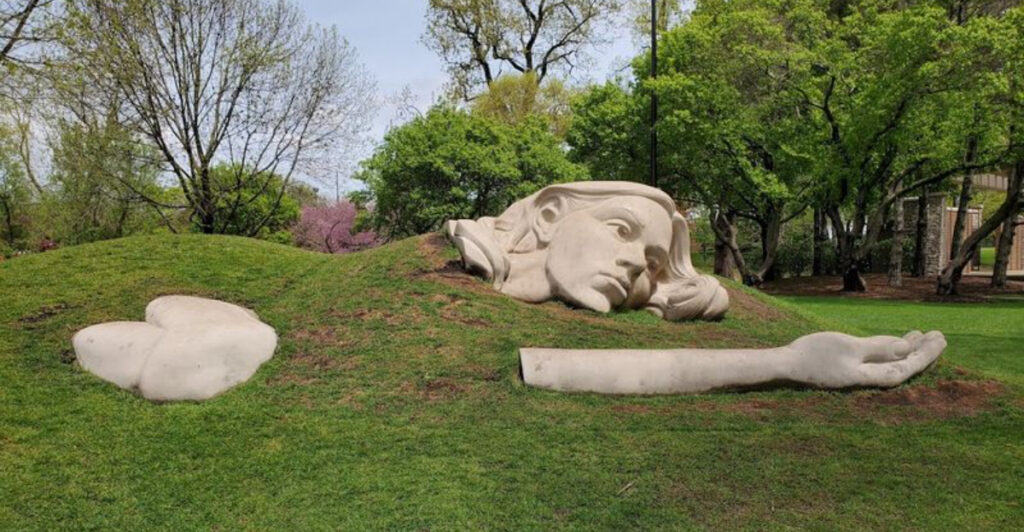
Schaumburg Sculpture Park is one of Illinois’ most overlooked outdoor art destinations, combining large-scale sculptures, landscaped walking paths, peaceful ponds, and open green space into an experience that feels both relaxing and inspiring. Located in the heart of Schaumburg, this free public park invites visitors to explore striking contemporary artworks at their own pace while enjoying a scenic setting that’s perfect for an afternoon stroll.
Every sculpture offers a different perspective, making each visit feel a little like wandering through a living art gallery. If you’re searching for a unique Illinois hidden gem, Schaumburg Sculpture Park deserves a spot on your travel list.
A Park That Changes the Pace in Seconds
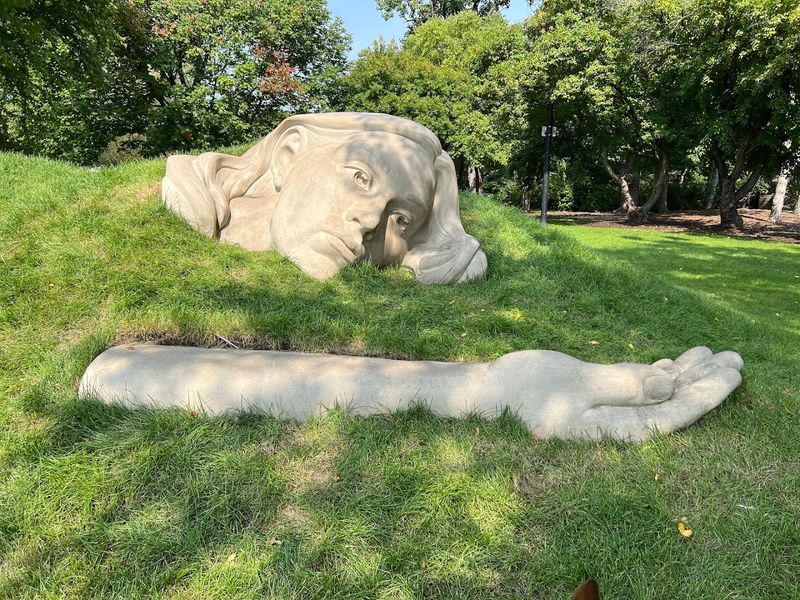
The surprise at Schaumburg Sculpture Park starts before any single artwork takes over the scene. You arrive expecting a neighborhood park, maybe a quick loop, and then the layout begins redirecting your eyes outward.
Open grass, sculptural silhouettes, pockets of trees, and bits of water break up the space so your attention keeps moving. That shifting visual rhythm is the hook.
Instead of placing everything in one compact garden, the park spreads its pieces along walkable routes, which makes the art feel discovered rather than presented.
A tall form in the distance reads one way from far off, then changes character as you get closer and notice edges, cutouts, texture, or the way the surface reacts to light.
The setting matters just as much as the objects. Schaumburg is heavily suburban, so this kind of quiet visual detour lands differently here than it would in a dense downtown plaza filled with traffic and distractions.
The park gives the sculptures enough room to breathe, and that generous spacing turns even a short visit into a sequence of little reveals.
You also notice how quickly street noise falls away once the walk begins. Trees and open ground soften the surrounding neighborhood, and the result is less like entering a formal museum campus and more like crossing into a calm pocket where observation becomes the main activity.
Even the paved path contributes to that mood, because it keeps the route easy without feeling overly prescribed.
That combination is why the place reads so well on a first lap. It is approachable, free, and unpretentious, yet visually active from the start.
Before you have read a plaque or searched for a specific piece, the park has already changed how you look at the landscape around you.
Where Contemporary Sculpture Meets Midwest Green Space
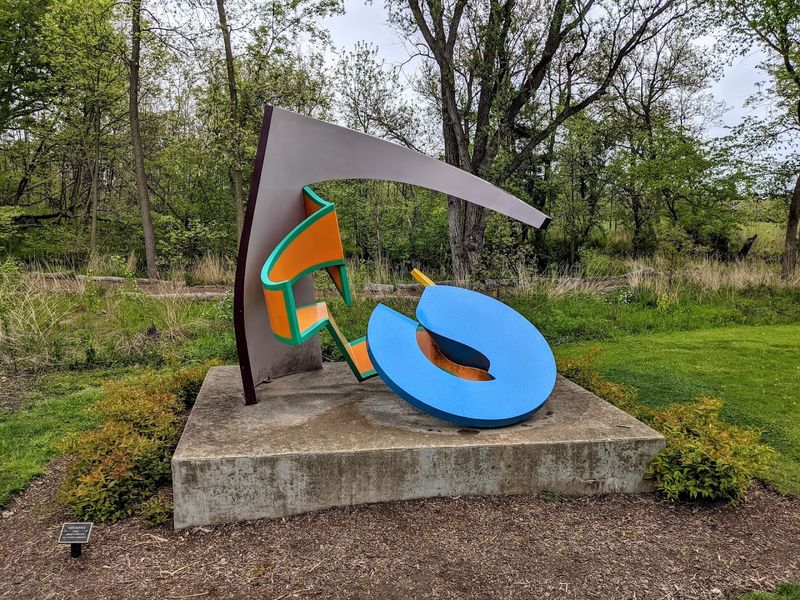
One of the most interesting things about Schaumburg Sculpture Park is the character of the collection itself. The works often lean abstract, structural, or quietly symbolic, so the experience is less about reading one obvious message and more about circling an object until its logic starts opening up.
In a suburban park, that kind of art creates a sharp and welcome contrast. Several pieces in the park are associated with artists from Nordic countries, and that influence gives the collection a distinct tone.
Instead of crowd-pleasing spectacle, you get forms that often rely on balance, material, mass, negative space, and restraint.
Steel, wood, concrete, and stone do a lot of the talking here, and the park lets those materials interact with wind, sunlight, clouds, and seasons.
This is where the title of the place begins making sense on a deeper level. The sculptures can read like fragments of thoughts pulled into physical form, sometimes geometric, sometimes figurative, sometimes hovering between those categories.
You are not being handed one clean interpretation, which keeps the walk active even when the path itself is easy.
That curatorial mood also separates the park from more decorative public art settings. These works are not simply dropped beside a sidewalk as civic ornaments.
They are given enough breathing room that you can study proportion, shadow, and how each piece shifts against prairie grasses, open sky, or the line of nearby trees.
For anyone who enjoys art that asks for a second look, Schaumburg offers more than a quick photo stop. The collection invites close looking without becoming intimidating.
Even if you know nothing about sculpture beforehand, the park makes comparison easy: one piece feels severe, another playful, another almost meditative, and the route keeps those differences in motion.
The Best Details Are Not the Loudest Ones
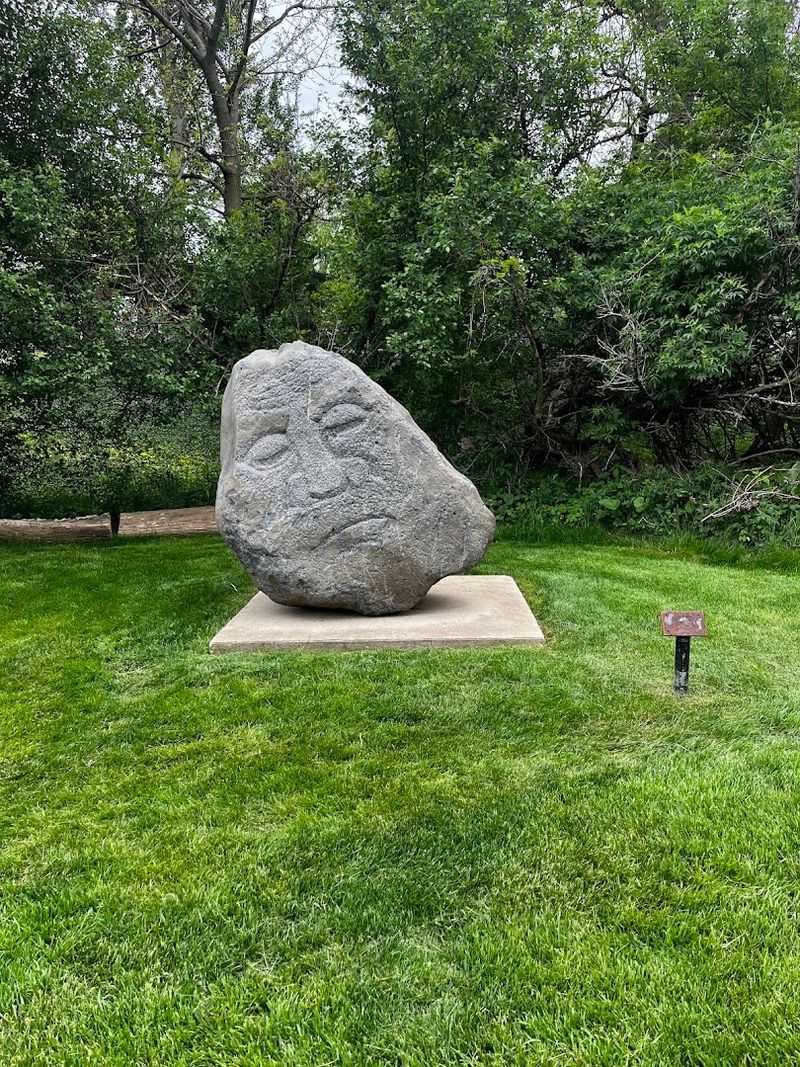
Schaumburg Sculpture Park works best when you stop scanning only for the biggest object on the horizon. The quieter details do a surprising amount of the heavy lifting.
A rough concrete surface, the seam in a metal join, a hollow opening that frames trees behind it, or the angle of a sculpture casting shadow across the pavement can change the entire read of a piece.
That close-looking habit turns the walk into a series of visual edits. From one side, a sculpture may seem heavy and blocklike.
Move ten feet, and suddenly negative space opens through the center, light pours in, and the work becomes more about absence than mass. The park rewards that kind of side-stepping curiosity better than places where everything is packed too tightly together.
The surrounding landscape adds another layer of detail many people miss on a quick pass. Prairie plantings, lawn edges, tree cover, and the water nearby create different backdrops, so the same sculpture can look crisp and graphic in one direction, then softer and almost camouflaged in another.
Seasonal changes likely sharpen that effect even more, especially in early morning or near sunset. There are also little practical surprises embedded in the experience. The path is easy enough for a casual walk, but the artworks break up the route so it never feels like exercise wearing an art costume.
If you like taking photos, this matters, because you are constantly getting clean sight lines without having to fight dense crowds or visual clutter.
Spend an extra few minutes at each stop and the park becomes much more than a collection of objects in grass. It starts functioning like a study in perspective.
The richest moments here often come from slowing down just enough to notice how a sculpture edits the space around it.
A Schaumburg, Illinois Shortcut to Solitude
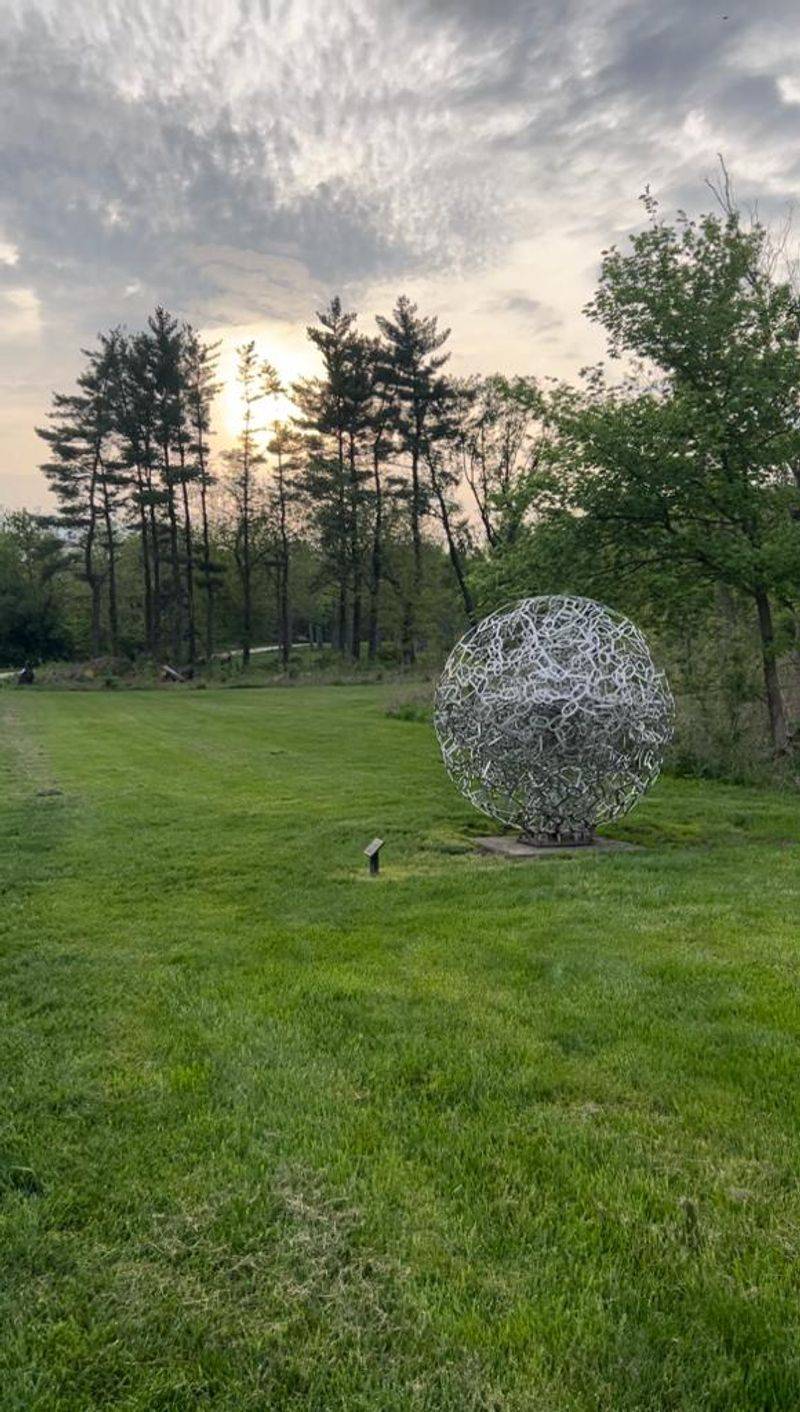
For a place surrounded by suburban development, Schaumburg Sculpture Park has an unusually calm temperament. The park sits in a village setting, yet once you are on the paths, the mood shifts away from errands, parking lots, and daily rush.
That contrast is a big part of the appeal, especially if you want somewhere low-pressure that still gives your brain something interesting to do.
The quiet is not the empty, remote kind. It is a lived-in quiet, the sort created by walkers, occasional dog owners, nearby trees, and open land that softens sound instead of amplifying it.
You may still sense the surrounding community at the edges, but the route keeps pulling your attention back to sculpture, water, sky, and the next bend in the path.
That balance makes the park useful in more ways than one. It can work as an art outing, a decompression walk, an easy family detour, or a place to stretch out an afternoon with a picnic before or after the loop.
Because it is open around the clock, the setting also lends itself to different moods throughout the day, from bright morning clarity to warmer evening light.
There is a practical side to this calm too. A flashy destination often comes with crowds, rigid pacing, and the pressure to maximize every minute.
Here, the park offers room to wander without that performance. You can pause, double back, skip ahead, or settle onto the grass and let the art remain part of the background for a while.
That understated flexibility is rare. Schaumburg Sculpture Park does not demand a grand itinerary to be satisfying.
It gives you enough structure to feel purposeful and enough openness to feel restorative, which is why it functions so well as a local reset hidden inside ordinary suburban geography.
How to Walk It Without Missing the Good Stuff
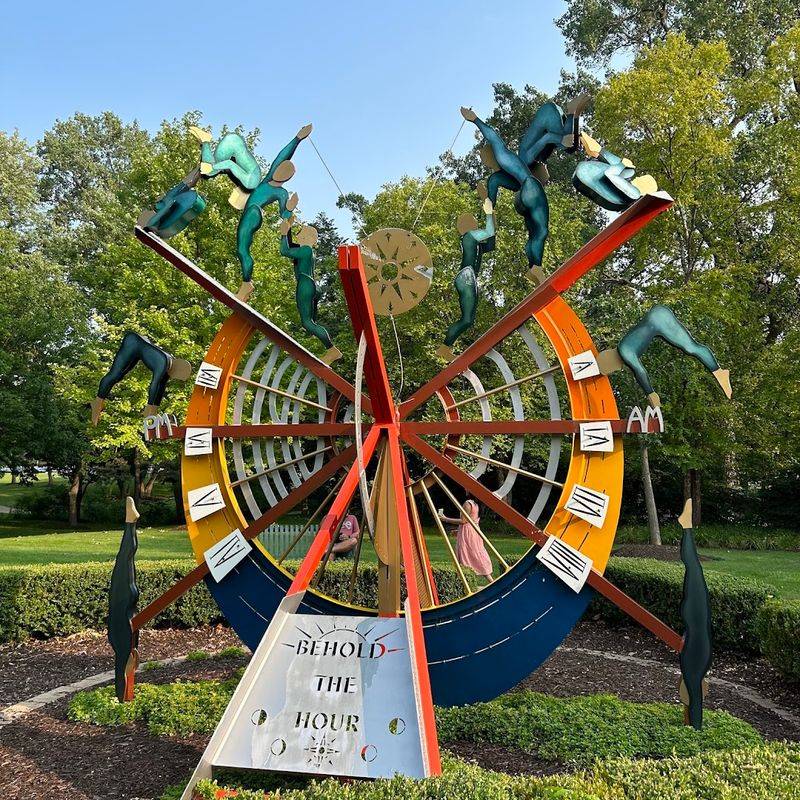
The smartest way to approach Schaumburg Sculpture Park is to treat it less like a straight trail and more like a loose visual circuit.
The paths are easy, but the route can feel a little fragmented in spots, especially if you assume everything unfolds in one perfect loop. A more attentive pace pays off, because some pieces sit in areas that are easier to overlook on a casual pass.
Start with the paved main path and let the larger works establish the rhythm of the place. That route is the most accessible and gives you the clearest sense of how the sculptures are spaced across lawns and near the water.
Once that orientation clicks, branching into the surrounding sections makes more sense than trying to decode the full layout from the entrance.
This matters because wayfinding has been a sticking point for some visitors, particularly when trying to locate every last piece. The park is enjoyable even if you do not complete a perfect sweep, but if you are determined to see everything, allow extra time for a little backtracking.
Areas near adjacent buildings and outer edges can require more attention than the central stretch. There is also a woodland component that shifts the feel of the outing. It is not the same as the paved sculpture route, and depending on conditions, it may be less suited for strollers or wheelchairs.
If accessibility is your priority, staying focused on the main path first is the better call, then deciding whether the side trail fits your visit.
The best strategy is simple: do one steady lap, then revisit the pieces that caught your eye most. That second look usually improves the experience.
Instead of racing to check off every sculpture, you end up understanding the park’s layout and seeing more of the art in the process.
Morning, Golden Hour, and the Case for Coming Prepared
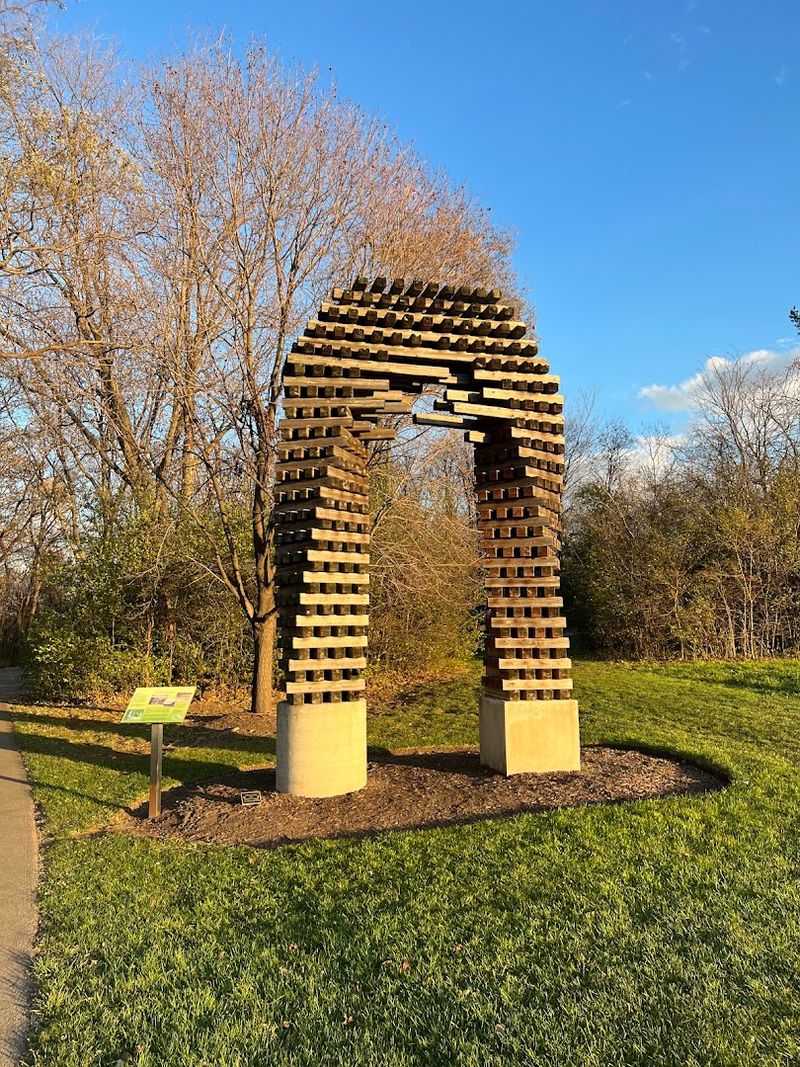
Timing changes Schaumburg Sculpture Park more than you might expect. Because the artwork sits outdoors with plenty of open sky around it, light becomes part of the collection.
Midday can give you crisp lines and stronger contrast, but early morning and late evening bring out the softer side of the place, when long shadows stretch across the path and surfaces pick up warmer color.
Golden hour is especially effective here. Metal, stone, and concrete suddenly look less severe, and the spacing between sculptures starts reading almost cinematically as one piece catches light while another drops into silhouette.
If you enjoy photography, those transitions matter, since the park’s openness makes it easier to frame artworks cleanly without a dense visual mess behind them.
Morning has its own advantage. The paths are calmer, temperatures are often easier, and the park’s quiet character becomes even more noticeable before the day fully ramps up.
If your goal is to move slowly and read the works without distraction, that first part of the day is hard to beat. A little preparation also improves the visit. Bug spray is a smart idea in warmer months, particularly around greener sections and water.
Comfortable walking shoes make sense even though the route is not strenuous, and if you want to linger, bringing water or planning a simple picnic can turn a short art stop into a more relaxed outing.
The nice part is that the park does not require much else. There is no admission pressure, no complicated checklist, and no need to build an entire day around it.
Choose good light, give yourself enough time to wander, and let the conditions do some of the curating. Outdoor sculpture always changes with weather and season, and this park uses that to its advantage.
Why This Park Works Better Than a Bigger, Flashier Attraction
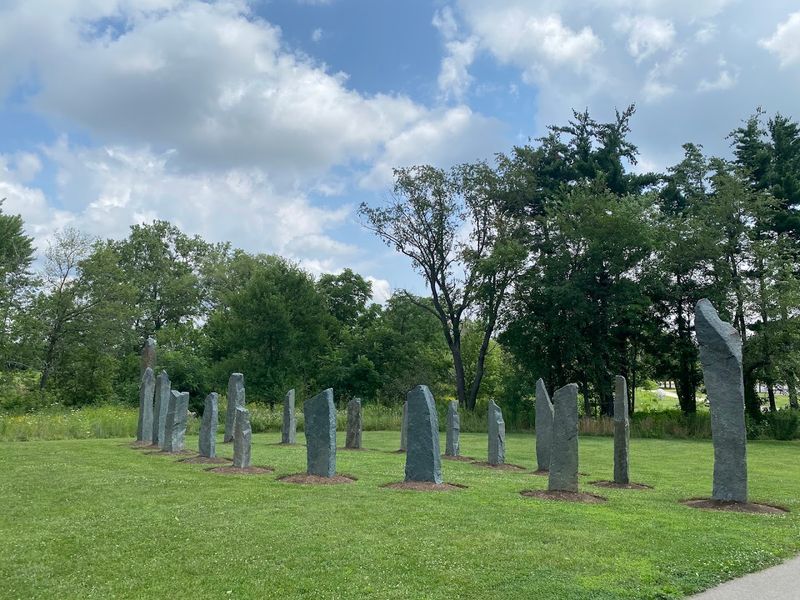
Schaumburg Sculpture Park will not overwhelm you with scale, and that is exactly why it succeeds. In an era of attractions built to dominate social feeds, this park operates on a more controlled frequency.
It offers a compact but layered encounter with public art, one that fits naturally into real life instead of demanding a full production around the visit.
That smaller footprint sharpens the experience rather than shrinking it. You can walk the park in under a couple of hours, yet the collection still gives you enough variation to stay engaged.
Large forms grab your eye first, but the real payoff comes from noticing relationships between materials, spacing, landscape, and the changing pace of the path.
The setting also helps the art avoid becoming too polished or overly ceremonial. This is not a fenced sculpture garden cut off from ordinary surroundings.
It sits within a functioning community, which makes the encounter more accessible and a little stranger in the best way. Abstract works rising out of lawns and near trails in suburban Illinois carry a productive tension that many major attractions lose.
There is practical value in that understatement too. Free access, open hours, easy walking, and room to pause without a crowd all lower the barrier to entry.
You do not need expert knowledge, advanced planning, or a big budget to have a rewarding time here. You only need curiosity and enough patience to look twice.
That is why the park stands out. It trusts art to hold attention without turning every piece into an event, and it lets the landscape do part of the storytelling.
For travelers, locals, and anyone tired of overhyped stops, Schaumburg Sculpture Park offers a cleaner proposition: a thoughtful walk, a quiet setting, and a series of works that keep opening up the longer you stay with them.
Share this story