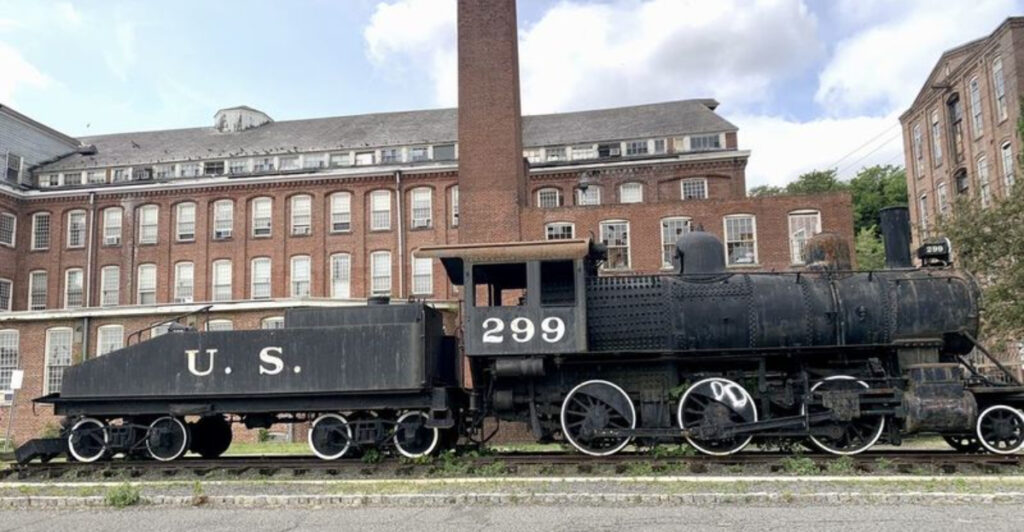
A black steam locomotive waits outside a brick factory in Paterson, looking less like a museum piece and more like it might rumble back to work at any moment. Step indoors and the surprises get bigger.
There are silk looms crowded with wooden spools, gleaming Colt revolvers, powerful aircraft engines and even a full-scale replica of an early submarine. This is the Paterson Museum, where the city’s manufacturing history has been gathered into one wonderfully overwhelming collection.
The setting is part of the experience, too. Since 1982, the museum has occupied the former erecting shop of Rogers Locomotive and Machine Works, only a short walk from the Great Falls that powered Paterson’s rise.
Exhibits reach far beyond factory machinery, exploring geology, Indigenous history, immigration, public safety and local cultural figures. It is the rare museum where locomotives, minerals and baseball history all make sense under the same roof—and where a quick visit can easily become an entire afternoon.
Small Objects Quietly Tell the Human Side

Paterson’s Big Origin Story Still Fills the Galleries
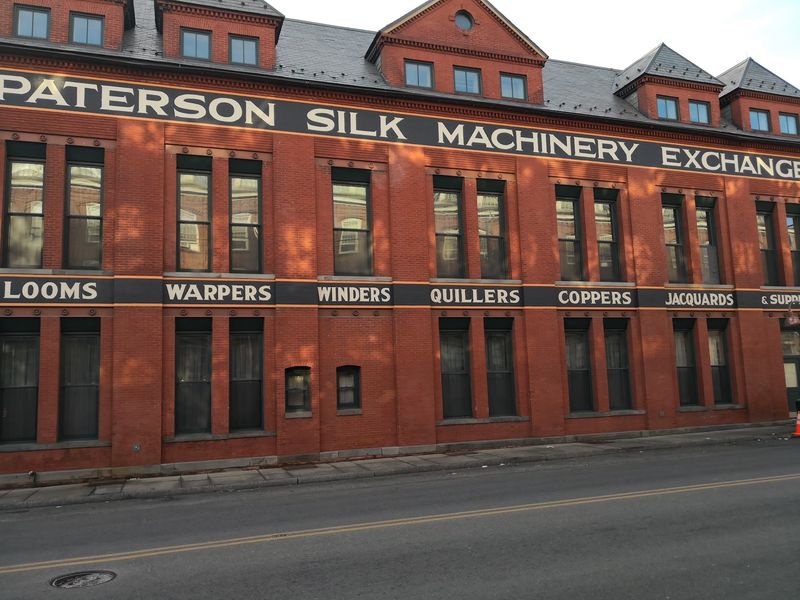
Paterson was not a city that simply happened to attract factories. It was deliberately created as an ambitious experiment in American manufacturing.
In 1791, Alexander Hamilton helped establish the Society for Establishing Useful Manufactures, commonly shortened to S.U.M. The organization purchased 700 acres around the Great Falls the following year, betting that the Passaic River could provide the power needed to build a new industrial economy.
The location was practical as well as dramatic. Paterson sat between New York and Philadelphia, close to major markets, financial backing and ports where a growing immigrant workforce was arriving.
A system of raceways carried water from above the falls to mills positioned at different elevations. Because the water passed through multiple levels, its power could be reused by more than one factory.
The system drove waterwheels and turbines before eventually helping generate electricity. Inside the museum, maps, machinery and historical displays turn that big idea into something visitors can follow.
Paterson made cotton, wool, paper, silk, firearms, locomotives, aircraft engines, cables and an astonishing range of industrial equipment. Those products traveled far beyond North Jersey, helping build railroads, dig the Panama Canal and support the country during wartime.
The exhibits also make room for the workers behind the machinery. Immigrants from Europe and later arrivals from the American South, Latin America and elsewhere shaped the city’s neighborhoods while supplying the labor that kept its mills operating.
Paterson’s industrial success came with difficult working conditions, labor disputes and major strikes, including the six-month silk strike of 1913. That complicated history gives the museum real weight.
It is not merely celebrating a collection of impressive machines. It is explaining how one waterfall, one bold economic plan and generations of workers helped launch the American Industrial Revolution.
A Real Factory Setting Makes the Past Feel Closer
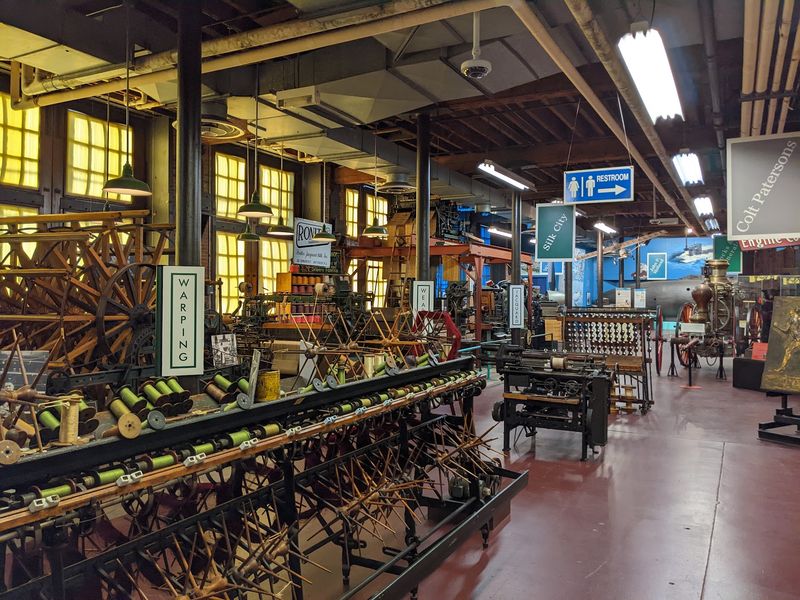
Long rows of windows, thick brick walls and sturdy structural beams immediately reveal that this building was designed for much heavier work than displaying artifacts.
The museum has occupied the restored erecting shop of Rogers Locomotive and Machine Works since 1982, placing Paterson’s industrial collection inside one of the very spaces where that history unfolded.
An erecting shop was where locomotive components came together and finished engines took shape, so the building needed enormous open areas and enough strength to handle tons of machinery. That original scale now gives the exhibits room to breathe.
Large engines and manufacturing equipment do not feel squeezed into a conventional gallery; they look at home. The location also marks a major step in the museum’s own history.
The institution began in 1925 in an assembly room at the Danforth Memorial Library, initially displaying natural history specimens donated by local residents. Its growing collection moved to the carriage house of former Paterson mayor Nathan Barnert in 1927.
Within a few years, the museum had developed one of New Jersey’s largest mineral collections, while donations connected to the city’s factories continued to expand its industrial holdings. Eventually, those artifacts needed a setting that could accommodate their size and explain their context.
The Rogers complex delivered both. Outside, Locomotive No. 299 establishes the mood before visitors reach the entrance.
Inside, factory floors that once echoed with metalwork now hold looms, engines, tools and vehicles produced by the industries surrounding the Great Falls. The museum stands at 2 Market Street in the Great Falls Historic District, close enough to pair the exhibits with a look at the water source that powered the city.
Seeing the falls and the factory in the same outing makes Paterson’s history unusually easy to understand. One supplied the energy, the other turned that energy into machines that traveled around the world.
Silk Looms Bring Silk City Back to Life
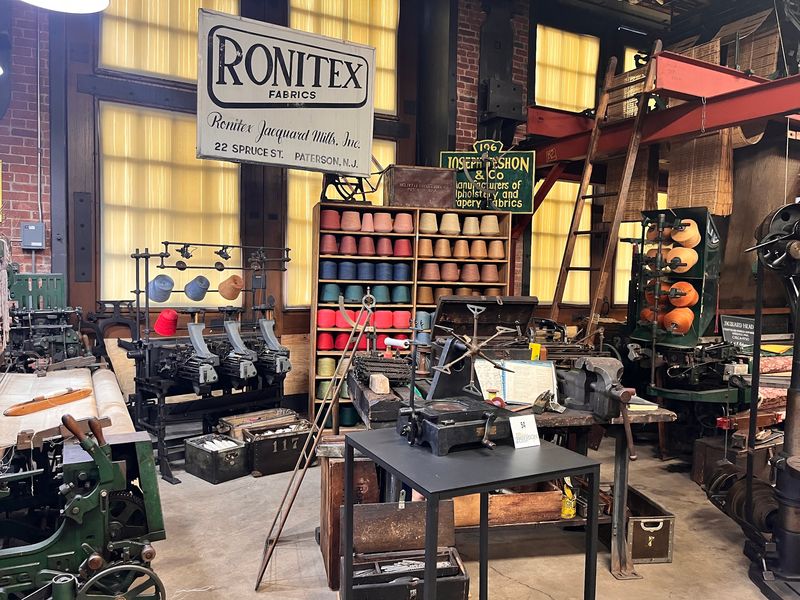
Wooden spools line up in precise rows while warpers, winders and looms fill the gallery with a dense maze of rollers, frames and thread guides. Even while standing silent, the machinery hints at how noisy and demanding a Paterson silk mill must have been.
The city became known as Silk City during the late 19th century, when its textile industry grew from a local business into a national powerhouse. By the 1890s, nearly half of the silk processed in the United States passed through this city of fewer than nine square miles.
Raw silk arrived by rail, moved through specialized factories and left as ribbon, fabric, thread and other finished goods. The museum’s equipment breaks that process into understandable stages.
A warper arranged threads at the proper length and tension. Winders transferred silk onto spools or bobbins.
Looms interlaced those threads into fabric, sometimes producing elaborate patterns that required extraordinary precision. These were not machines someone could operate casually after a quick demonstration.
Mill employees needed patience, coordination and a sharp eye for problems that might ruin valuable material. The exhibits also point toward the human cost behind Paterson’s elegant finished silk.
Long shifts, low wages and unsafe conditions created friction between workers and factory owners. In 1835, more than 2,000 workers, many of them children, joined a strike seeking relief from a 13-hour, six-day workweek.
Decades later, the 1913 Paterson Silk Strike drew roughly 20,000 workers into a bitter labor struggle that lasted about six months. Though it failed to win their demands, the strike focused national attention on mill conditions and became an important chapter in American labor history.
That background changes the way the machinery looks. The looms are beautiful examples of mechanical ingenuity, but they are also reminders of the skilled immigrants and working families whose days were governed by their relentless pace.
Paterson’s famous nickname was earned one strand at a time.
The Submarine Replica Steals Attention Fast
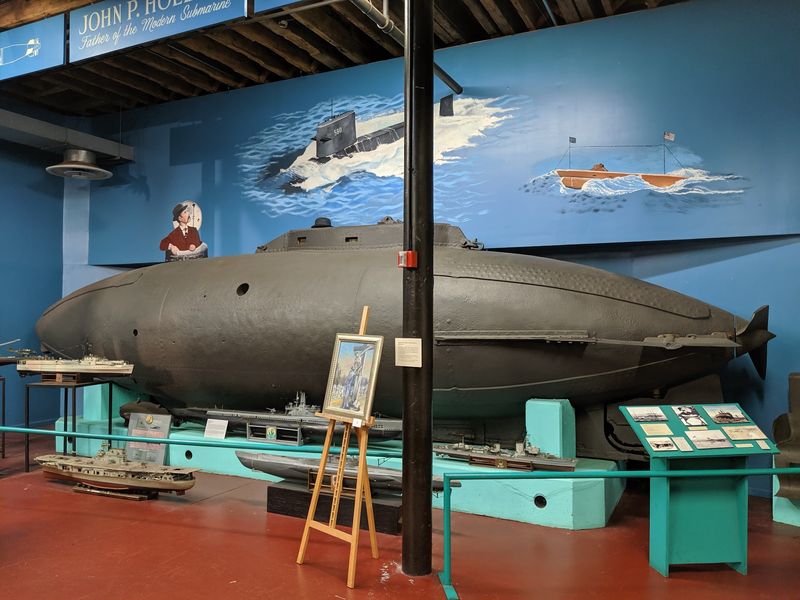
Few museum turns are as unexpectedly fun as rounding a corner and finding a submarine indoors. The vessel represents the work of John Philip Holland, the Irish-born inventor widely credited with developing the first practical modern submarine.
Holland settled in Paterson in the 1870s and worked as a teacher while refining designs for an underwater craft that could be controlled effectively rather than merely sink and resurface.
His early experiments attracted financial support from the Fenian Brotherhood, an Irish revolutionary organization that imagined submarines being used against British naval power.
One of his early vessels became known as the Fenian Ram, and its story feels like something pulled from an adventure novel. The craft was built at the Delamater Iron Works in New York, then brought to the waters near Paterson for testing.
Holland continued improving his designs through years of technical setbacks, funding troubles and skepticism. His later submarine, Holland VI, proved successful enough that the United States Navy purchased it in 1900 and commissioned it as USS Holland.
That decision helped establish the basic direction of modern submarine development. The museum’s full-scale replica of Holland I, his small experimental craft from the late 1870s, makes the achievement much easier to appreciate.
Its cramped dimensions reveal just how daring those early trials were. There was no roomy control center, polished technology or comfortable crew compartment—only a narrow metal vessel built around a revolutionary idea.
Displays surrounding it explain the principles, personalities and persistence involved in turning that idea into a workable machine. Paterson is often associated with products made in tremendous quantities, but Holland’s story highlights a different kind of industrial legacy.
This was also a city where inventors could find skilled machinists, specialized workshops and a culture that took mechanical experimentation seriously. The replica may look modest beside the museum’s larger engines, yet it represents an invention that transformed naval history around the world.
Locomotives and Revolvers Show Off Industrial Muscle
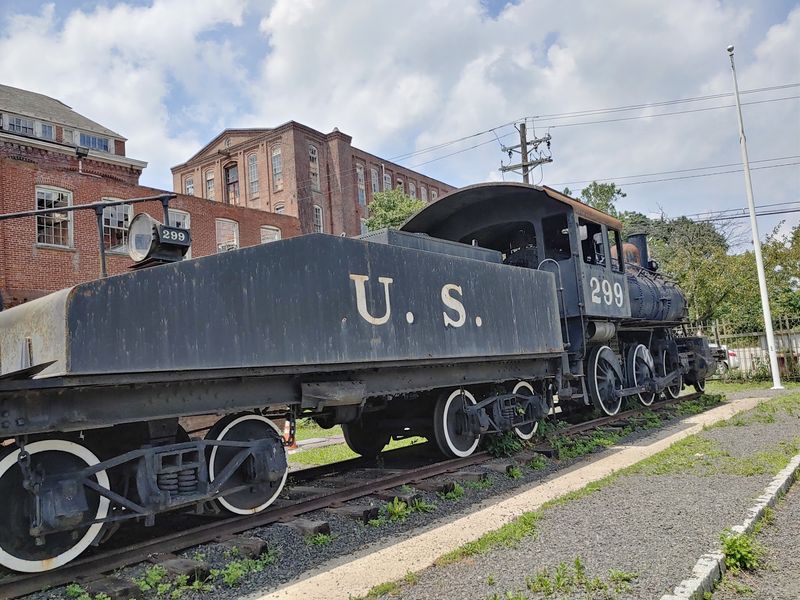
In the 19th century, the name Rogers appeared on locomotives hauling passengers and freight across the United States and overseas. Rogers Locomotive and Machine Works operated in Paterson from 1832 until 1923, producing more than 6,000 steam locomotives during its long run.
Its engines helped connect an expanding nation, and one of the company’s best-known locomotives, the General, became famous for its role in the Civil War’s Great Locomotive Chase. Rogers was not alone.
Cooke Locomotive and Machine Works, Grant Locomotive Works and other manufacturers made Paterson one of the world’s important centers of railroad production.
The museum’s locomotive exhibits convey the sheer physical confidence of that industry through massive wheels, heavy metal components, technical models, photographs and the imposing engine stationed outside.
Paterson-built locomotives hauled high-priority silk shipments, worked on major construction projects and traveled to rail systems around the globe. A smaller object nearby tells an equally consequential story.
Samuel Colt opened his Patent Arms Manufacturing Company in Paterson in 1836, producing revolving firearms at a factory along the Passaic River. His first commercial revolvers became known as Colt Patersons.
Their rotating cylinder allowed several shots to be fired before reloading, a major mechanical advance despite the company’s early financial struggles. The Paterson operation closed in 1842, but Colt later found lasting success in Connecticut, and the revolver developed here became an important part of firearms history.
Museum examples allow visitors to examine the craftsmanship and compact mechanics behind the invention without losing sight of its complicated influence. Together, the locomotive and firearm exhibits demonstrate Paterson’s remarkable manufacturing range.
One product weighed many tons and crossed continents on steel rails; the other could fit in a holster. Both depended on precision machining, skilled labor and entrepreneurs willing to test unfamiliar technology.
That combination repeatedly turned Paterson factories into places where ambitious ideas became real objects.
More Than Machines, the Collection Keeps Expanding the Story
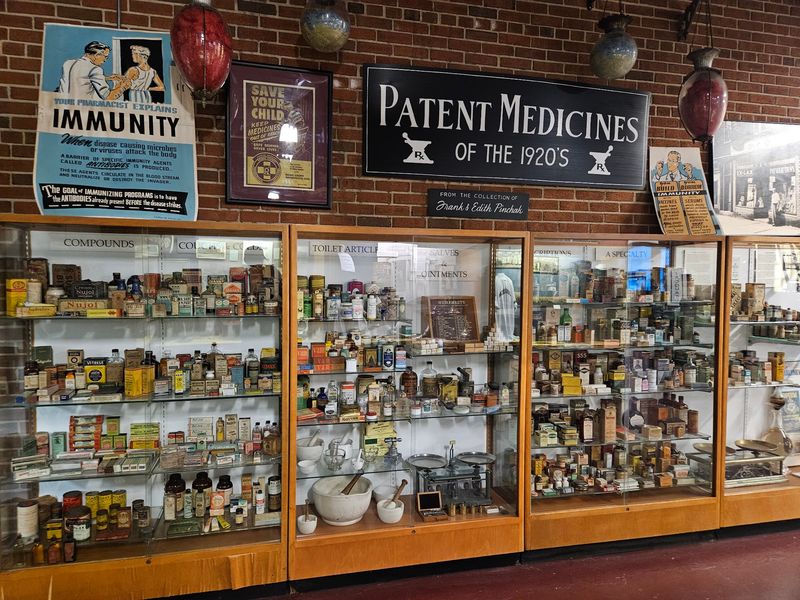
Just when the visit appears to have settled into a rhythm of gears, pistons and factory equipment, the museum changes direction.
Display cases sparkle with crystals and mineral specimens, fossils introduce a timeline far older than Paterson’s mills, and exhibits on the Lenape place human history in the region long before Alexander Hamilton arrived.
This breadth reflects the institution’s beginnings as a natural history collection in 1925. Local donations formed its earliest displays, and the mineral holdings soon became one of the largest collections of their kind in New Jersey.
Today, rocks and minerals remain a major part of the museum rather than an afterthought, connecting the city’s industrial story to the physical landscape beneath it. The surrounding Watchung geology, the Passaic River and the dramatic drop at the Great Falls all helped determine why industry developed here in the first place.
Cultural displays stretch the story forward in other directions. Visitors can learn about Paterson-born comedian Lou Costello, whose partnership with Bud Abbott made him one of the country’s best-known entertainers.
Baseball history appears through Larry Doby, the Paterson-raised star who became the first Black player in the American League when he joined the Cleveland Indians in 1947. Public-safety exhibits preserve firefighting equipment, including ornate machinery that looks as carefully decorated as it was sturdily built.
Displays on Wright Aeronautical explore another enormous Paterson industry. During World War II, Curtiss-Wright employed more than 50,000 local workers and produced 77,554 aircraft engines in the city, more than half of the company’s nationwide wartime output.
Other galleries examine healthcare, veterans, the Okonite cable company and the Society for Establishing Useful Manufactures. The variety could feel random in a less thoughtful museum, but here it builds a fuller portrait of Paterson.
Factories shaped the city, yet they were never its entire identity. The minerals, inventions, entertainers, athletes, immigrants and workers all belong to the same sprawling story, which is precisely why seeing everything properly takes more than a hurried afternoon.
Share this story