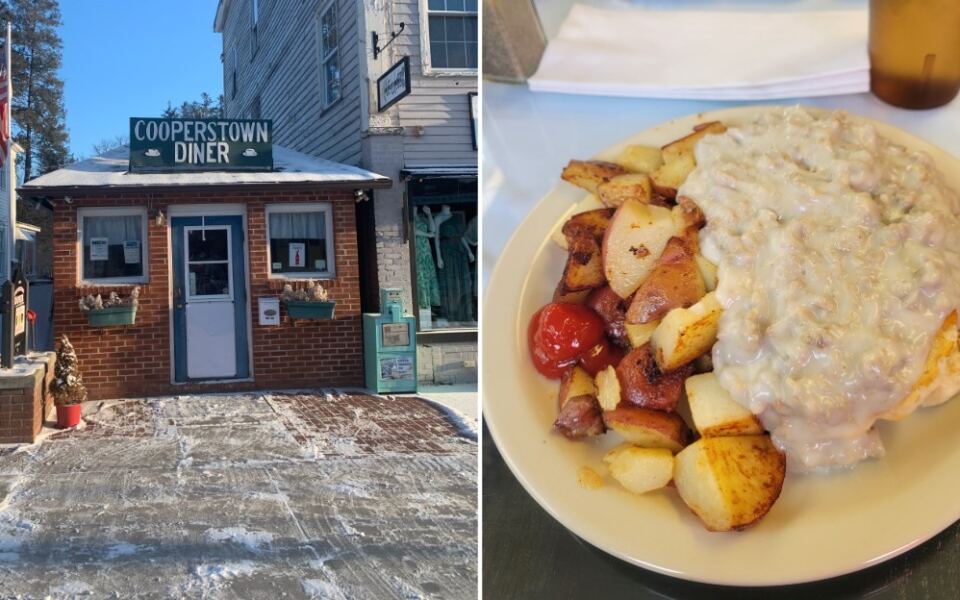
Some breakfast spots are so small that you could walk past them three times before noticing the door. One of them sits on a busy main street in Cooperstown, wedged between taller buildings and still serving plates the way it reportedly did about a century ago.
There is no sleek kiosk, no app, and no giant dining room, just a counter, a few tables, and a short-order kitchen that keeps going from 7 in the morning until 2 in the afternoon. Keep reading to learn where this tiny place hides, why people gladly wait outside for a seat, and what to know before you go.
1. A Half Address on Main Street
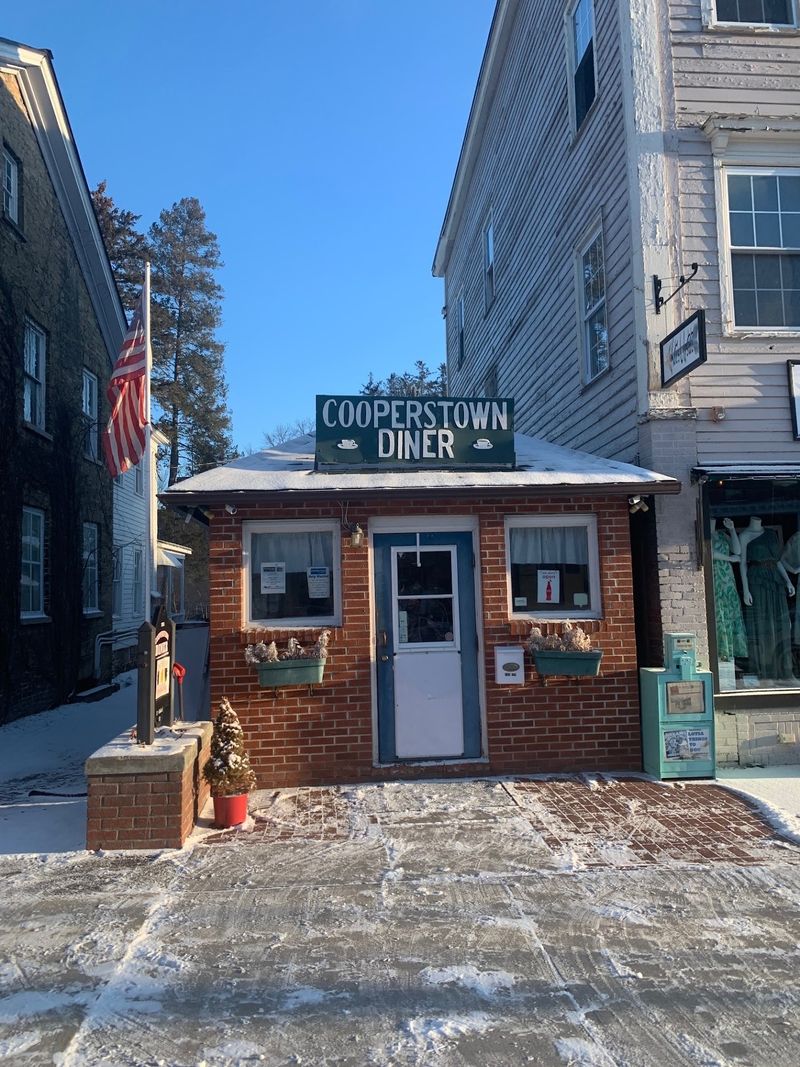
Blink at the wrong moment and the whole building slips out of view.
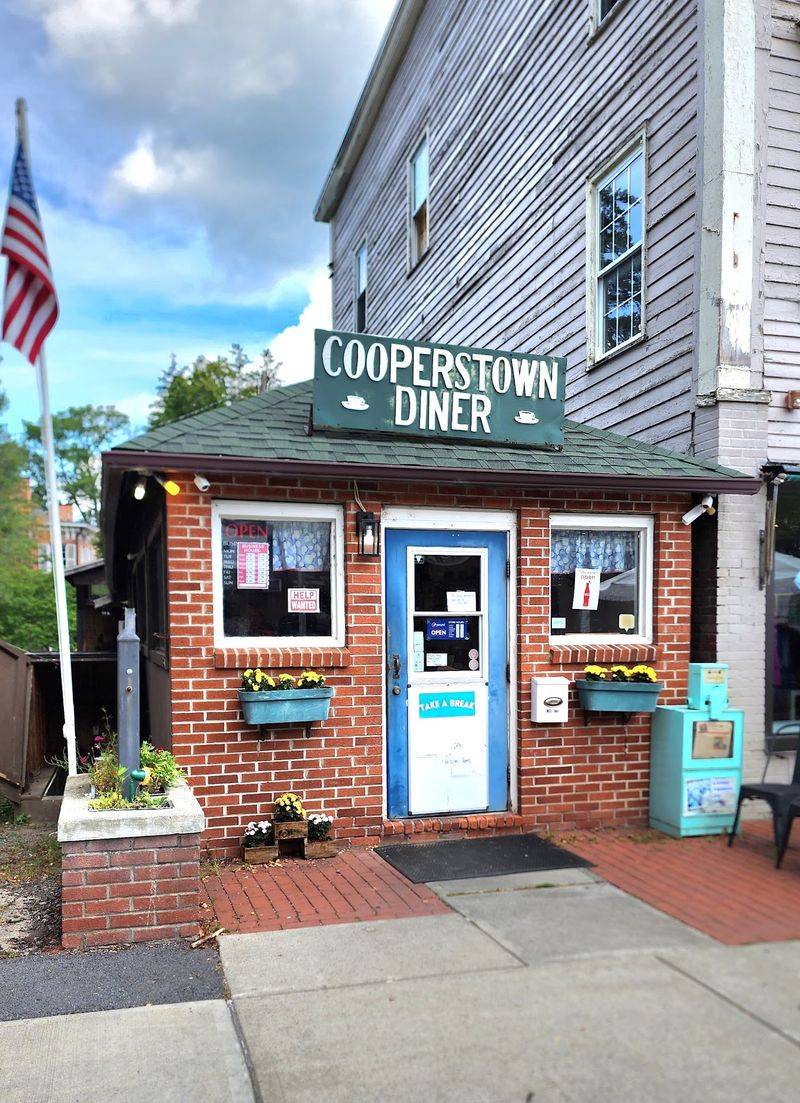
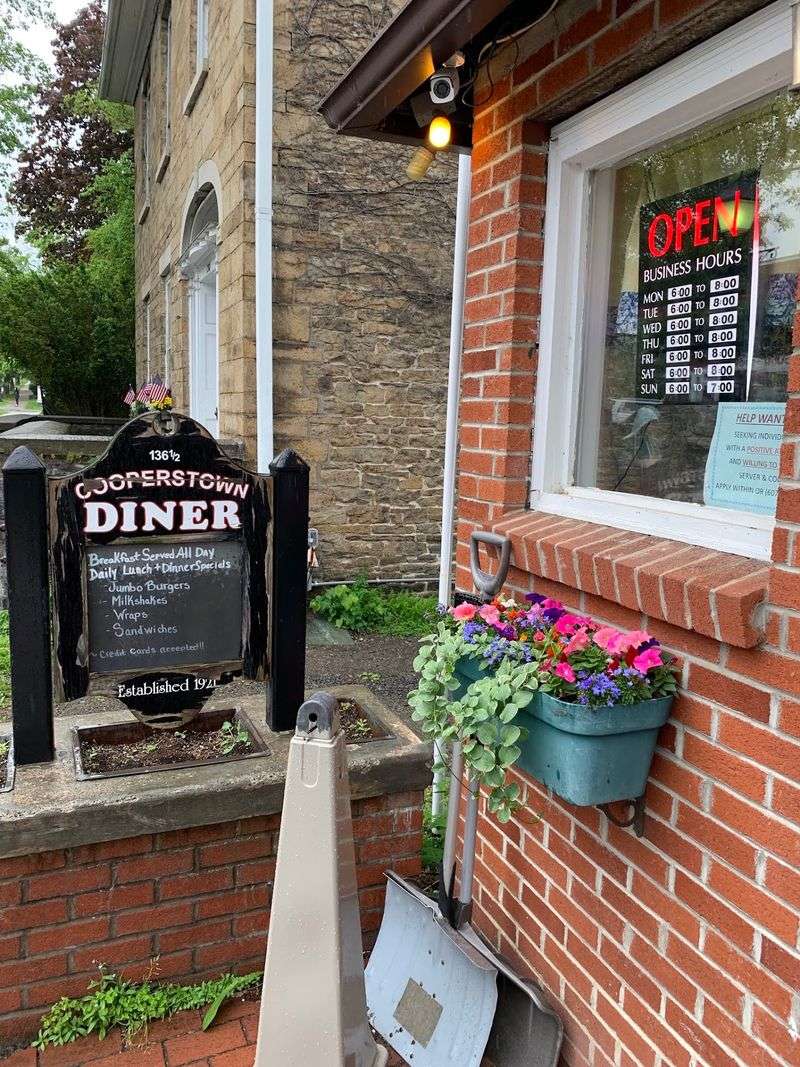
Cooperstown Diner sits at 136 Main St, Cooperstown, NY 13326, in the heart of the village in Upstate New York. Some locals and longtime fans even point out the quirky 136 1/2 listing, which suits a storefront this slim.
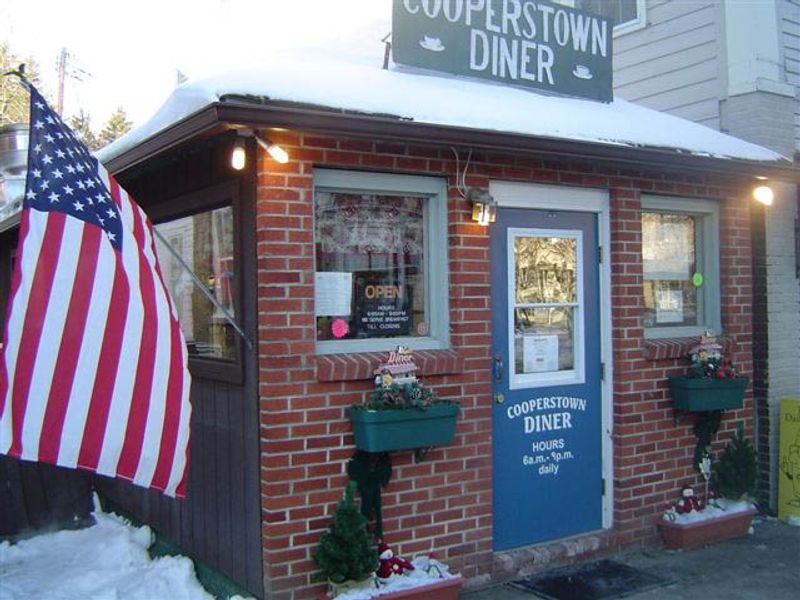
The diner is easy to miss because the neighboring buildings tower over it. Its front is narrow, its sign is modest, and it does not try to compete with the larger shops nearby.
That modest look is part of the appeal. The village draws crowds for baseball, the lake, and weekend markets, yet this little room keeps doing what it has always done.
It is a diner in the plainest and proudest sense of the word. The kitchen turns out all-American comfort food, all-day breakfasts, and lunch plates for anyone willing to squeeze inside.
Main Street in Cooperstown has plenty of polished storefronts. Few of them can claim this much history packed into so little space, and the next section explains just how far back that story reportedly goes.
2. Roughly a Century Behind the Counter
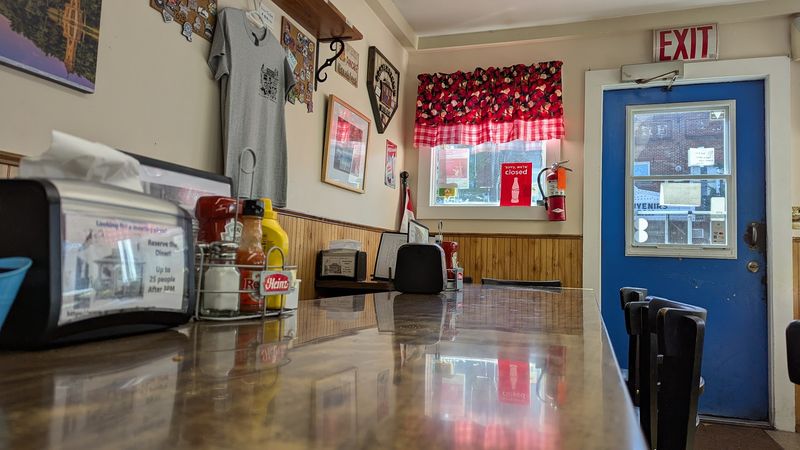
Nearly one hundred years is a long time for any business, and longer still for one this small.
The diner is often described as an old-school spot that has stood the test of time for close to a century. Its founding is reportedly traced back to the early 1920s, which places it among the longer-running breakfast counters in the region.
Exact details of who ran it in each decade are not something the public record here spells out. What does come through clearly is a reputation built on continuity rather than reinvention.
Guests regularly call it an icon of Cooperstown. Others mention that the place has a genuinely interesting history, the kind people like to chat about while waiting for their order.
In a time when so many towns have traded their counters for drive-thrus and self-checkout screens, that matters. A single narrow room on Main Street has outlasted plenty of trends simply by staying open and staying small.
Longevity is not glamorous. Still, it says a lot when a village keeps returning to the same doorway, generation after generation, for a plate of breakfast.
3. The Pancake Question
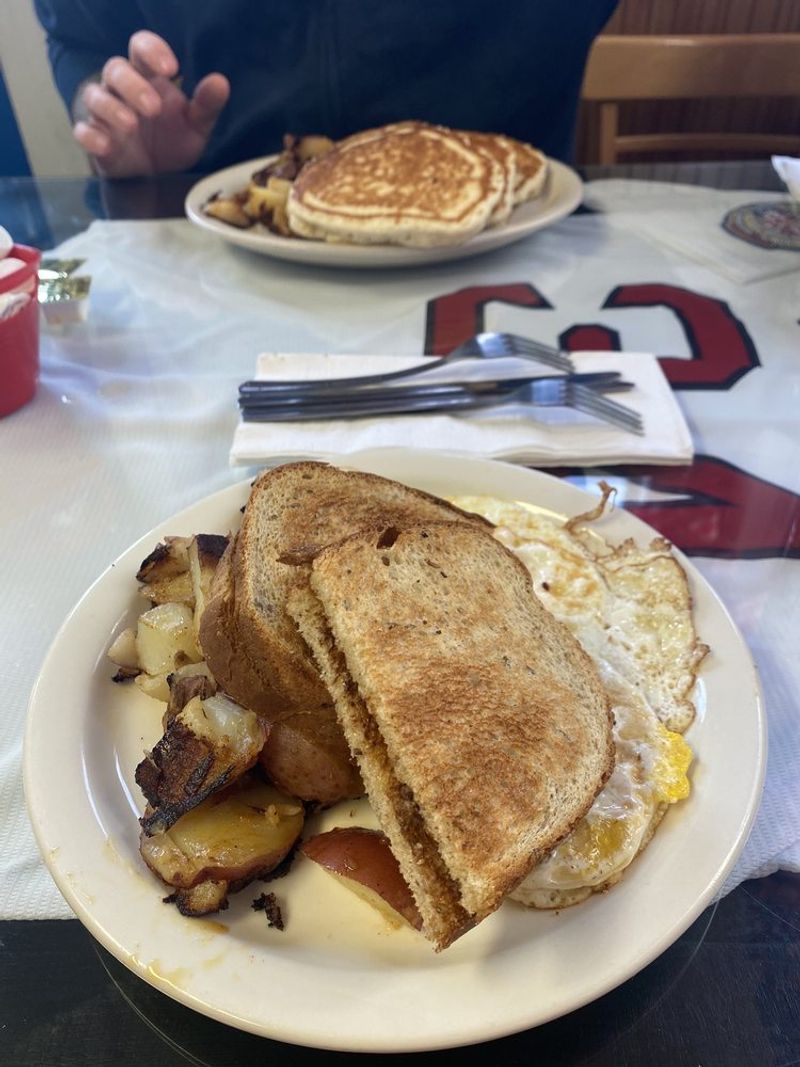
Pancakes and diners go together like a counter and a stool.
At this Cooperstown landmark, pancakes are part of the all-day breakfast lineup that has long kept the griddle busy. Folks who grab a seat near the kitchen sometimes hear the cook working through stacks and eggs during the morning rush.
Is it truly the same recipe from the 1920s? That claim is hard to verify, and the diner itself does not publish a detailed recipe history.
What can be said is that the menu leans traditional. Breakfast here follows the classic diner playbook instead of chasing trends, which is exactly why the pancakes fit the legend so well.
Some newer touches have appeared over the years, with options like quiche and avocado toast showing up on the menu. Even so, the core of the morning menu still reads like something a grandparent would recognize.
One guest said the cooking reminded them of meals made by their mother and grandmother. For a short stack served in a room this old, that might be the best compliment a griddle can earn.
4. Twenty-Five Seats and Not One More
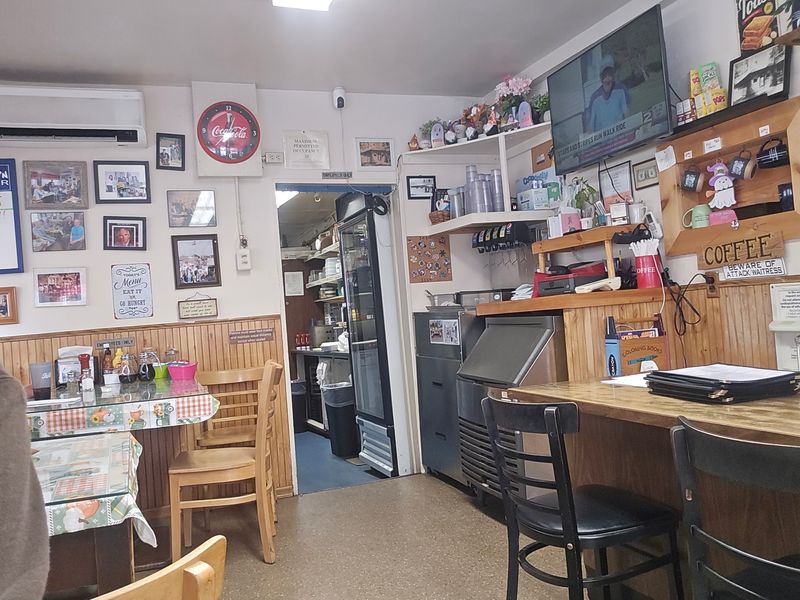
Space is the first thing everyone notices, and the second, and probably the third.
The dining room is famously tiny. On the left side sit four tables for four, and a long, thin counter runs down the right side of the room.
The counter holds about ten people. Altogether, the diner seats roughly 25 guests at a time, which explains why it fills up so fast.
Some call it the tiniest diner they have ever visited. Others use the phrase hole-in-the-wall, and they mean it with real affection.
That small footprint shapes everything. Tables turn over steadily, strangers sit elbow to elbow at the counter, and conversations drift across the room without much effort.
Groups larger than four may need a little patience or a willingness to split up. Solo diners and couples often have the best luck, since counter seats open up more often than full tables.
The owner has acknowledged that it is a very challenging space to work in. Yet those cramped quarters are a big reason the place feels like a time capsule instead of a showroom.
5. A Two-Person Engine Room
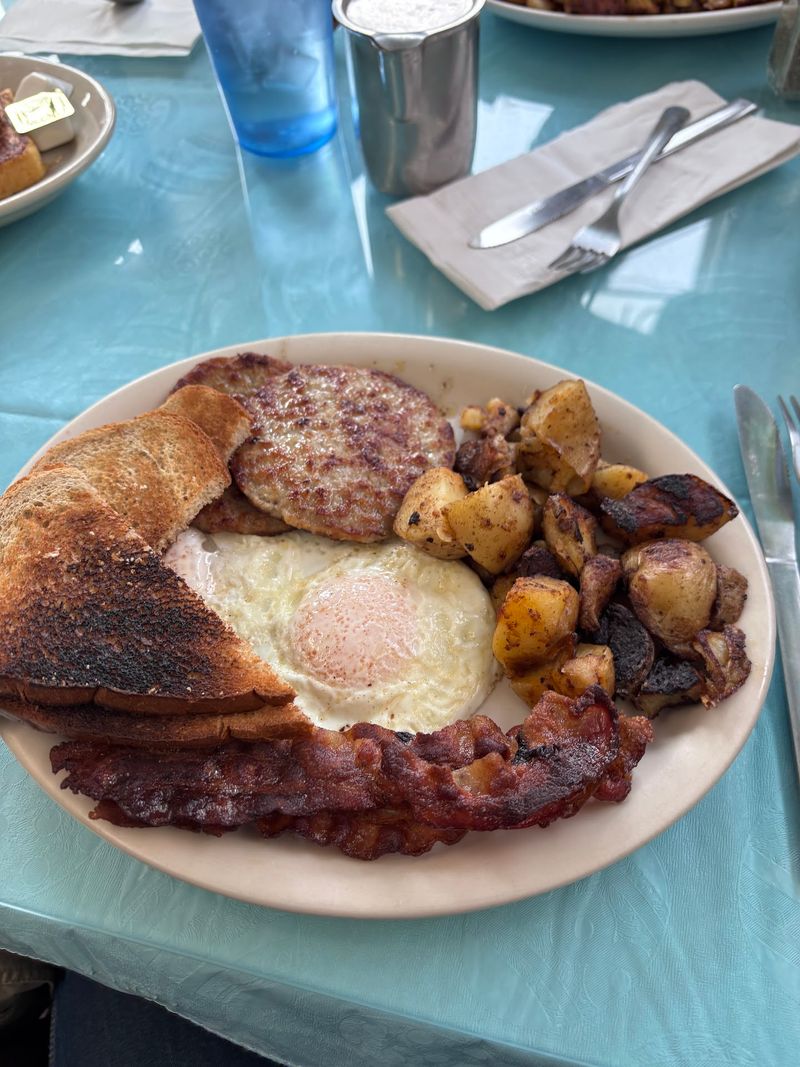
Behind the busy room, there is often just one cook in the kitchen.
Out front, a single server usually handles the floor. That one person takes orders, refills coffee, buses tables, and delivers plates, all at the same time.
People who have watched it happen are often impressed. One server was described as fast and efficient during a packed rush, juggling every task without missing much.
Of course, a two-person team has limits. When every seat is taken, the kitchen may move at its own pace, and some guests note that things can run a bit slow.
That is simply the reality of a classic diner with a skeleton crew. There is no back line of cooks or a team of hosts waiting to step in.
Staff names that come up warmly over the years include Jennifer and Austin, both praised for being welcoming and attentive. Moments like those remind people that a small crew can still make a big impression.
Watching the whole operation run on so few hands is part of the show. It is old-fashioned hustle, done in plain view, one plate at a time.
6. Breakfast Without a Curfew
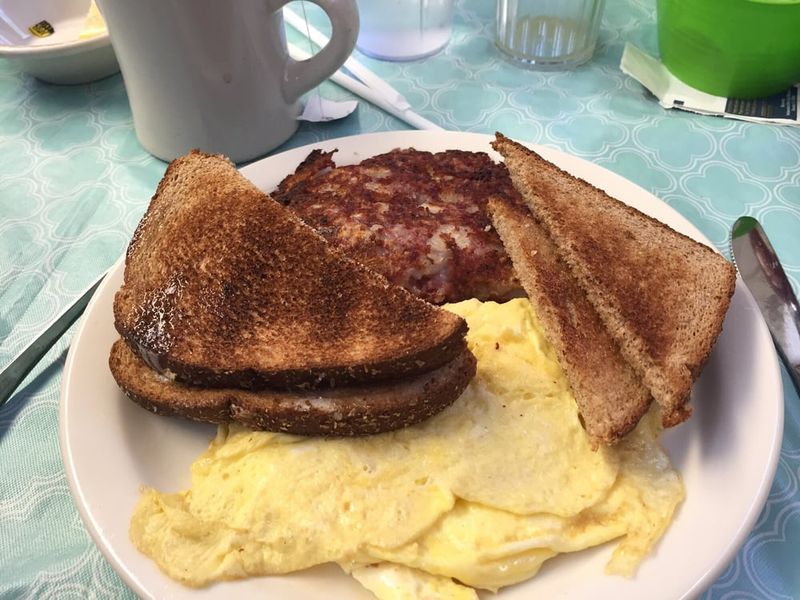
Late risers, rejoice.
Breakfast is served all day here, which in diner terms means right up until the doors close at 2 PM. Nobody needs to rush in at dawn just to get a morning plate.
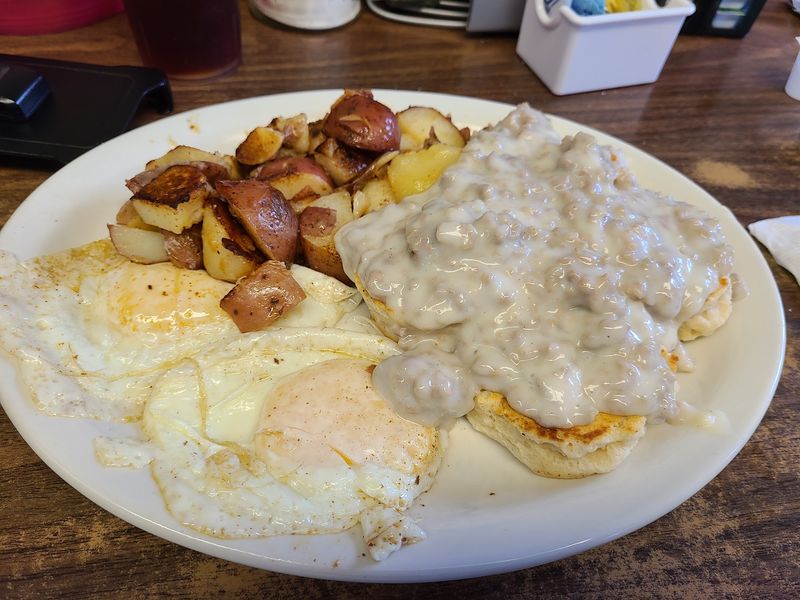
The full breakfast with all the trimmings gets plenty of love. Eggs come out cooked the way they are ordered, toast shows up on many plates, and refills on coffee keep tables lingering a little longer.
Families who spend the morning at the Saturday farmers market often stop by for a late breakfast afterward. Baseball travelers do the same between games or before heading to the Hall of Fame.
Portions are described as well sized rather than overwhelming. Several guests mention leaving full without feeling like they needed a nap in the car.
That flexibility is a quiet kind of generosity. A diner that lets you order pancakes at 1 PM is a diner that understands vacation schedules and lazy Sundays.
Breakfast at lunchtime may sound like a small perk. In a busy tourist village, it can be the detail that saves the whole day.
7. Specials, Burgers and the Lunch Crowd
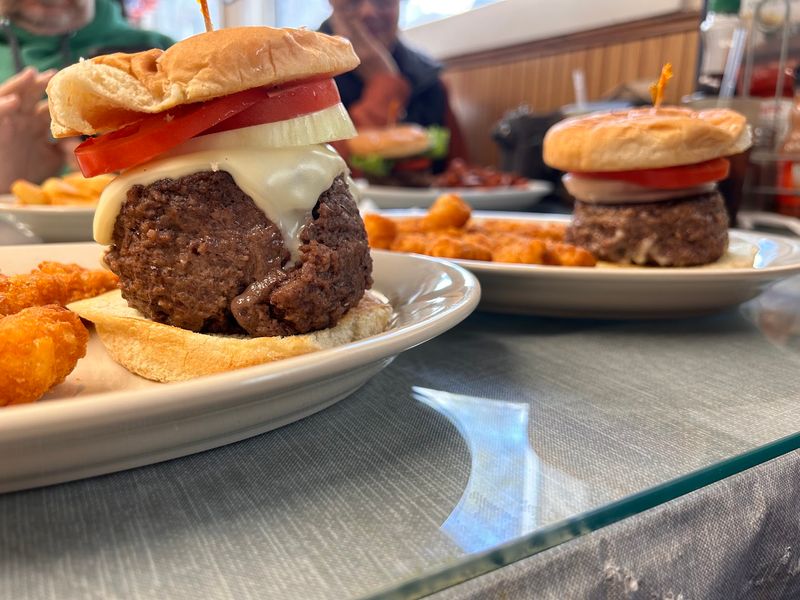
Not everyone comes for the griddle.
Alongside the regular menu, the diner offers daily specials. These rotate, so returning guests often find something new to consider beside the familiar favorites.
Lunch leans hearty. The diner is well known for its jumbo burgers, which get mentioned almost as often as the breakfast plates.
Sandwiches, wraps, and soups also appear on the lineup. Some days bring a fish fry, which has long been a favorite tradition in many Upstate diners.
Takeout is available too. A few guests grab a bag to go and head toward Otsego Lake, which is a pleasant way to enjoy a diner meal with a view.
Opinions on any single dish vary, as they do at every diner. What stays steady is the comfort-food focus, with no fancy plating or fussy descriptions.
The menu feels like it was written for hungry people rather than for photographs. In a village full of shops and souvenirs, that straightforward approach stands out in its own unassuming way.
8. Prices That Stay on Solid Ground
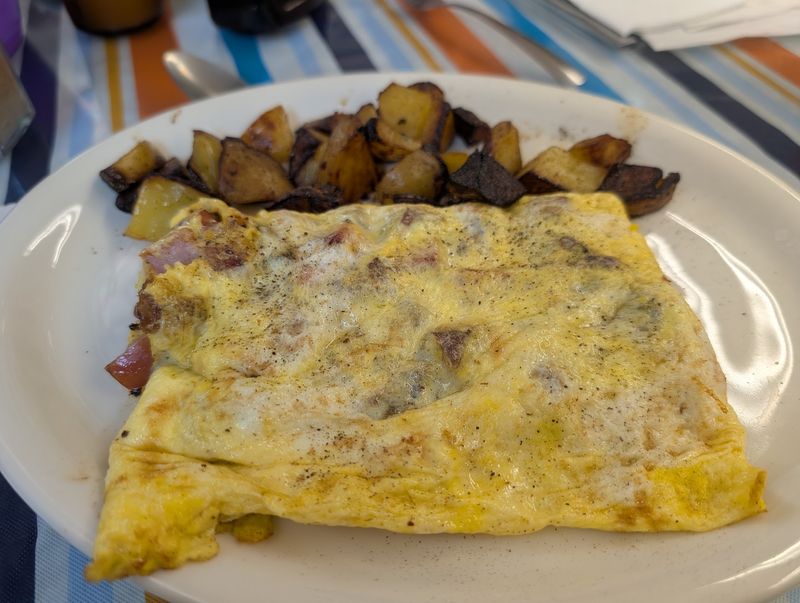
Tourist towns can be tough on the wallet.
Cooperstown welcomes huge summer crowds, and many places price accordingly. This diner generally lands in the $10 to $20 range per person, which feels fair for a sit-down meal in a busy village.
The owner has said that keeping prices low is a priority, even in such a demanding space. That kind of commitment is becoming rare in places that see heavy seasonal traffic.
Guests frequently call the prices reasonable or decent. Some point out that the value is especially noticeable given the tourist-centered setting around it.
Coffee refills add to the sense of value. So do portions that leave people satisfied without inflated add-ons.
Nothing here is marketed as premium or exclusive. It is a working diner, priced like one, which is exactly what many New Yorkers miss about the old days.
For a family on a baseball trip, those savings add up quickly. Breakfast for four can stay sensible, leaving more room in the budget for Hall of Fame tickets and souvenirs.
9. The Restroom Route Through the Kitchen
Here is a detail most guidebooks skip.
The diner has just one small restroom, and getting there means walking right through the kitchen. Many first-timers are surprised, and plenty end up laughing about it later.
One guest joked that it was the first time they had ever reached the ladies room by passing the cook. Another said the trip let them hear breakfast being made up close.
It is a quirk born from the building itself. A room this narrow, built so long ago, simply does not have space for a separate hallway.
Some people say it makes them feel like family. After all, few restaurants let customers pass behind the line.
Facilities are basic, so it helps to set expectations. This is a vintage space, and it shows its age in ways a modern chain never would.
For many, that walk through the kitchen becomes a favorite story to tell back home. It is hard to forget a meal where the path to the restroom doubles as a behind-the-scenes tour.
10. Counter Talk and Goat Cheese Stories
Sit at the counter long enough and someone will probably start a conversation.
That is how small-town diners have always worked, and this one is no exception. With strangers sitting shoulder to shoulder, chatting with locals comes almost naturally.
One memorable exchange involved a regular whose wife raises six goats. She reportedly makes cheeses, candles, and soaps under the name Little Elk Creek Soaps and Cheeses.
Stories like that are the real side dish here. They give out-of-towners a glimpse of everyday life in Otsego County beyond the baseball crowds.
Guests have also mentioned friendly chats with the owner. Those small conversations add a personal layer that larger restaurants rarely offer.
The diner even runs an online shop through its website, a modern touch for such an old-fashioned spot. It lets fans take a little piece of the place home after they leave.
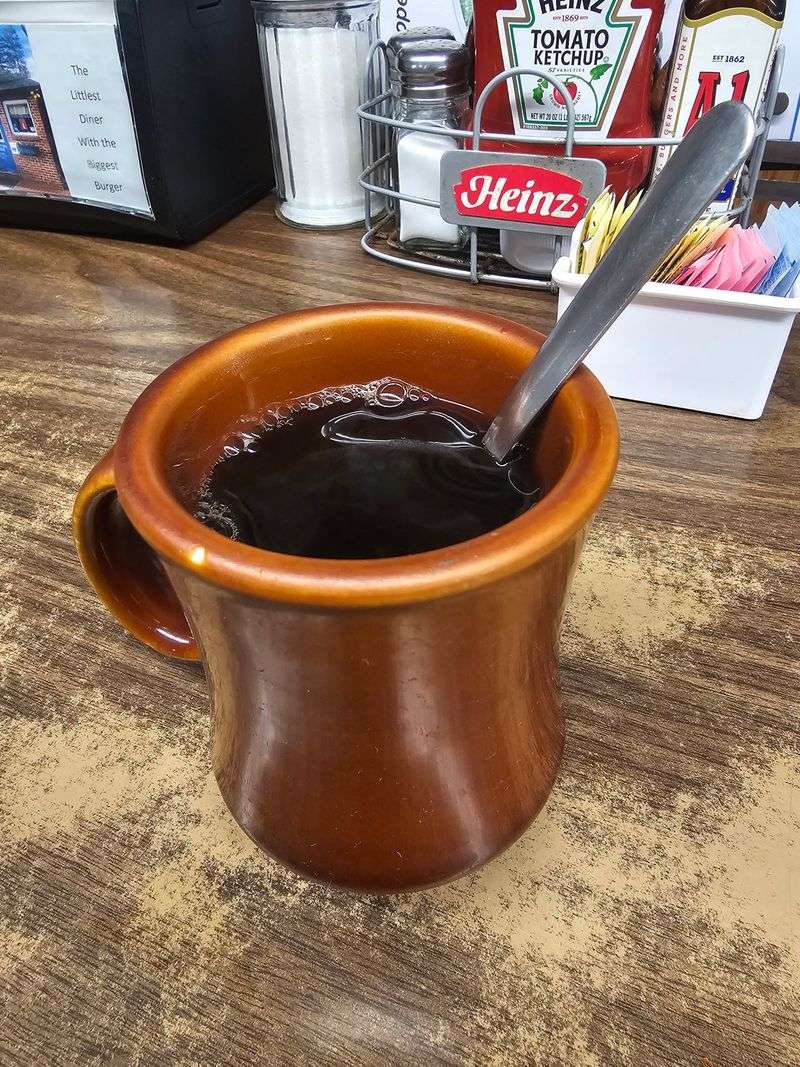
Counter seats may be cramped, but they are also the best seats in the house for connection. The coffee keeps coming, and so do the stories.
11. Fuel for Baseball Weekends
Baseball season changes everything in Cooperstown.
The village is home to the National Baseball Hall of Fame, and youth tournaments at nearby complexes like Dreams Park bring in families, coaches, and umpires all summer long. Many of them find their way to this little diner on Main Street.
One traveler who came along for a tournament called the diner the highlight of the entire trip. That guest even returned for a second meal before driving home.
Families often plan their stop around games or museum visits. A late breakfast after the Saturday farmers market is another popular routine.
The diner sits close to the action, so it is easy to walk over from other downtown attractions. That convenience helps explain the crowds during peak weeks.
Of course, the baseball rush means the room fills quickly. Some longtime area residents admit they used to skip the village in summer just to avoid the traffic.
Plan around the busy stretch and the payoff is real. A plate of pancakes before the first pitch is a tradition many baseball families gladly repeat.
12. Patience, Wait Lists and Staff Moods
Lines are part of the deal.
When the diner is full, staff usually take a head count and ask parties to wait outside until a table opens. With only about 25 seats, that wait can stretch during peak hours.
Many guests insist the wait is worth it. A common piece of advice is simple: if there is a line, just wait.
Service experiences, however, can vary. Many people describe warm, attentive servers, while some recent guests have reported curt or unwelcoming moments during busy shifts.
The owner has responded to some complaints by pointing guests toward other places in the village. It is a candid approach, and it signals that this is a local diner first and foremost.
Going in with realistic expectations helps. A tiny room, a single server, and a heavy tourist crowd can test anyone’s patience on both sides of the counter.
Kindness and a little flexibility tend to pay off. Arrive calm, order clearly, and the classic diner experience usually unfolds just as it has for decades.
13. Hours, Timing and Takeout Tips
Timing can make or break a visit.
The diner opens at 7 AM and closes at 2 PM every day of the week, Monday through Sunday. There is no dinner service, so plan for breakfast or an early lunch.
Early mornings tend to offer the best shot at a seat. Late breakfast hours, especially on summer weekends, are when the line usually builds.
Arriving close to closing can also mean a shorter wait. One guest who ordered takeout near the end of the day found the process quick and easy.
Takeout is a smart option for anyone heading to the lake or a ballfield. A few mentions of outdoor seating also suggest a little extra room on the right day.
Small groups have the easiest time. Larger parties should expect a longer wait or consider splitting between the counter and a table.
The diner’s website lists more details and links to its online shop. A quick look before heading out can save time, and saved time on vacation is worth a lot.
14. Why the Little Diner Still Matters
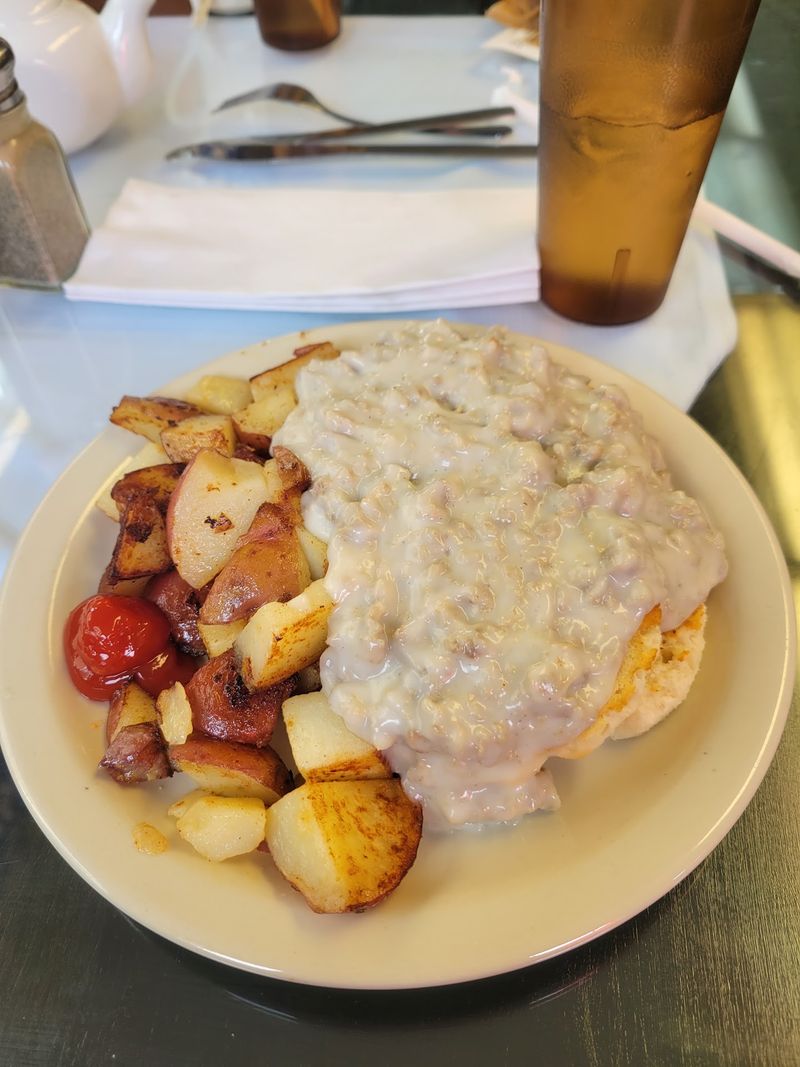
Some places survive because they change everything. This one has survived by changing very little.
For roughly a century, the narrow room on Main Street has kept serving all-day breakfast, comfort food, and plenty of coffee. The seats are few, the crew is tiny, and the restroom is through the kitchen, yet people keep lining up.
It is not perfect. Waits can be long, service can be uneven, and the space is tight enough to test anyone’s elbows.
Still, that imperfection is part of its honesty. Nothing here is designed to impress, and the prices stay grounded even in a busy tourist village.
For New Yorkers who miss the old corner counters of their childhood, it offers proof that those places still exist. The pancakes, the stools, and the small talk all feel like something worth protecting.
So set the alarm, bring some patience, and grab a counter seat if one opens up. A century-old griddle is waiting, and it has clearly not lost its appetite for feeding Cooperstown.
Share this story