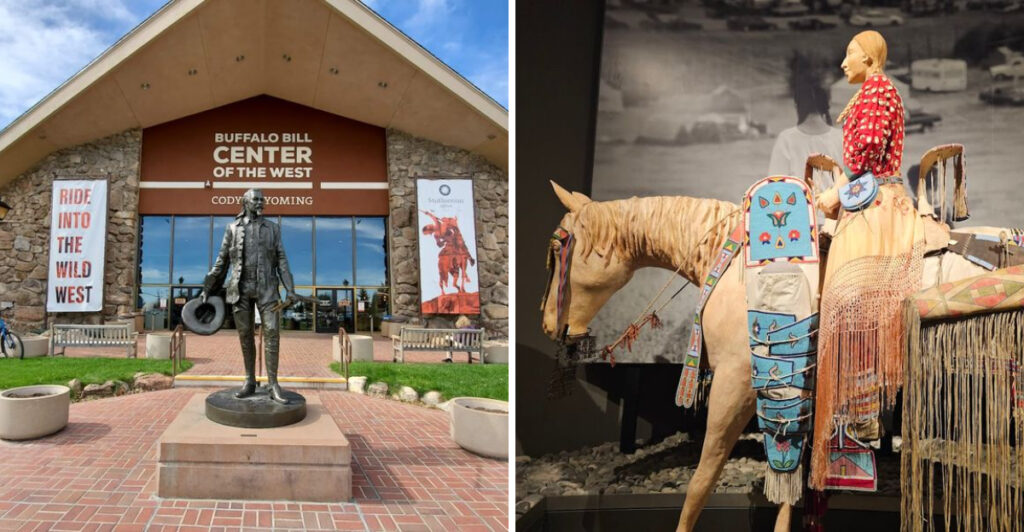
If you want a Western town that feels rooted in real history instead of staged nostalgia, Cody, Wyoming, delivers the moment you arrive. Founded by Buffalo Bill Cody and still shaped by frontier stories, this place blends museums, mountain views, rodeo nights, and old boardwalk charm in a way that feels surprisingly alive.
You are not just looking at the past here – you are walking through it, hearing it, and sometimes even cheering for it from the grandstands. From landmark museums to scenic drives leading toward Yellowstone, Cody makes cowboy heritage feel present tense.
1. Buffalo Bill Center of the West
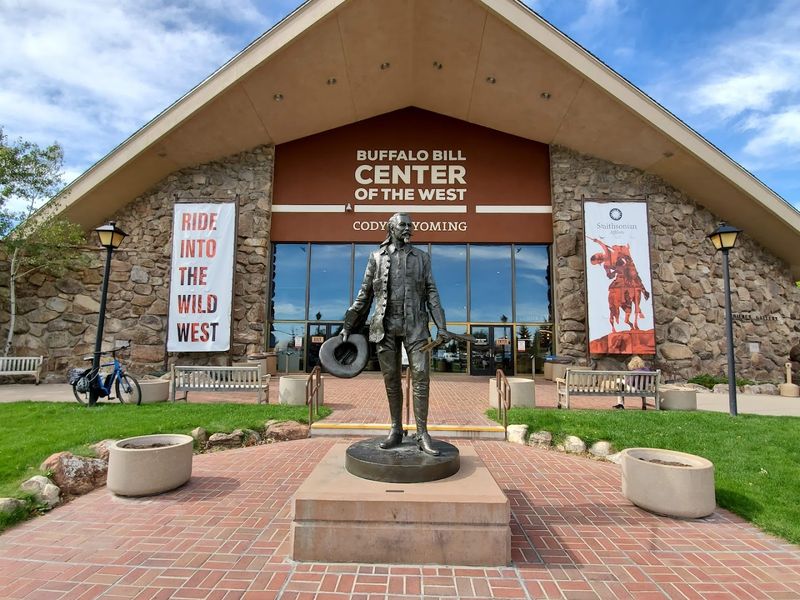
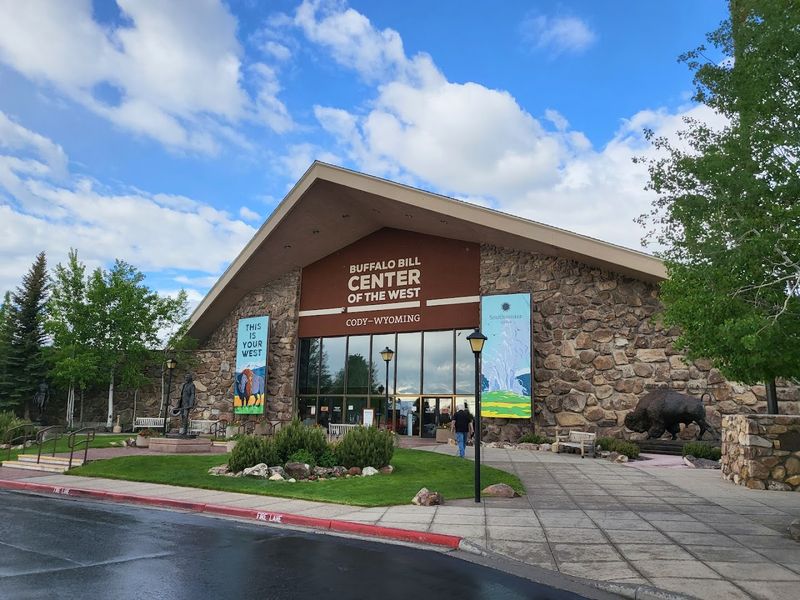
If there is one place in Cody that immediately shows you how seriously this town honors its past, it is the Buffalo Bill Center of the West.
This large museum complex is not some dusty stop you rush through in an hour.
It feels more like the cultural heart of Cody, where the American West is interpreted with depth, care, and a lot of visual impact.
What makes it especially memorable is the scale.
You are not visiting a single museum, but a group of museums gathered under one roof, each exploring a different side of Western life, history, art, people, and wildlife.
That means every turn reveals something new, and the experience never feels repetitive.
I love how the center balances legend with context.
Buffalo Bill is here, of course, but so are stories about landscapes, Native cultures, firearms, art, and the complicated forces that shaped the region.
You leave with a broader understanding of Cody itself, not just one famous name attached to it.
For first-time visitors, this is the smartest place to begin because it frames everything else you will see around town.
After spending time here, the rodeo, old cabins, mountain roads, and downtown character all make more sense.
Cody starts to feel less like a theme and more like a living place with layers.
2. Buffalo Bill Museum
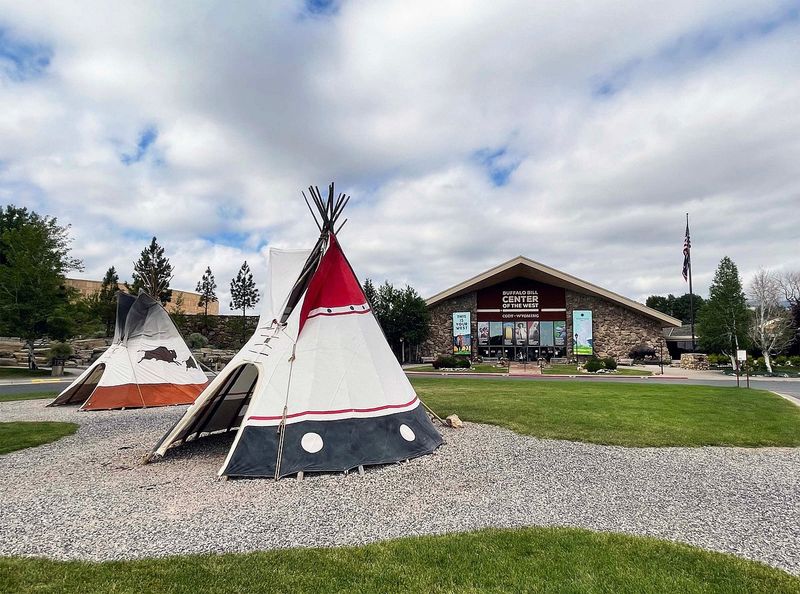
Inside the Buffalo Bill Center of the West, the Buffalo Bill Museum gives you the clearest look at the man whose name still shapes this town.
William F. Cody was a showman, scout, entrepreneur, and mythmaking force, and the exhibits do a good job showing both the legend and the person.
That balance matters because Cody the town is deeply tied to his identity.
What kept me engaged was how multimedia displays help tell the story without making it feel overly polished or shallow.
You can follow his life from frontier beginnings to international celebrity, while also seeing how his Wild West image influenced how many people imagined the American West.
It is fascinating to realize how much of Western iconography passed through his public persona.
The museum also helps explain why Cody, Wyoming, exists in the form it does today.
This is not just a place that borrowed a famous name for branding.
Buffalo Bill actively helped shape the town, and that legacy still echoes in its streets, institutions, and tourism identity.
If you arrive in Cody wondering whether the cowboy atmosphere is real or curated, this museum gives you the answer.
It shows how performance, history, ambition, and place all blended together here.
By the time you walk out, the town feels more personal, and its roots feel far more tangible.
3. Draper Natural History Museum
Cody is not only about cowboys and frontier legends, and the Draper Natural History Museum proves that quickly.
This museum focuses on the Greater Yellowstone ecosystem, giving you a richer understanding of the land that surrounds Cody and defines so much of its character.
The exhibits connect wildlife, geography, seasons, and elevation in ways that make the region feel dynamic instead of static.
I appreciate how immersive the displays can feel.
Rather than presenting nature as a background detail, the museum shows it as an active force that shaped settlement, travel, survival, and daily life in northwest Wyoming.
You begin to see why this landscape creates such a distinct identity for the town.
There is also something useful about visiting this museum before heading out on a scenic drive or toward Yellowstone.
It gives you visual and ecological context for the big skies, rugged slopes, and animal habitats you may encounter beyond town.
Suddenly, those views are not just pretty; they are meaningful.
For travelers who think they are only coming to Cody for Western history, this stop expands the story in the best way.
The town sits within a dramatic natural setting, and that setting is part of the experience.
The Draper Natural History Museum helps you feel the relationship between people and place, which is really essential to understanding Cody at all.
4. Old Trail Town
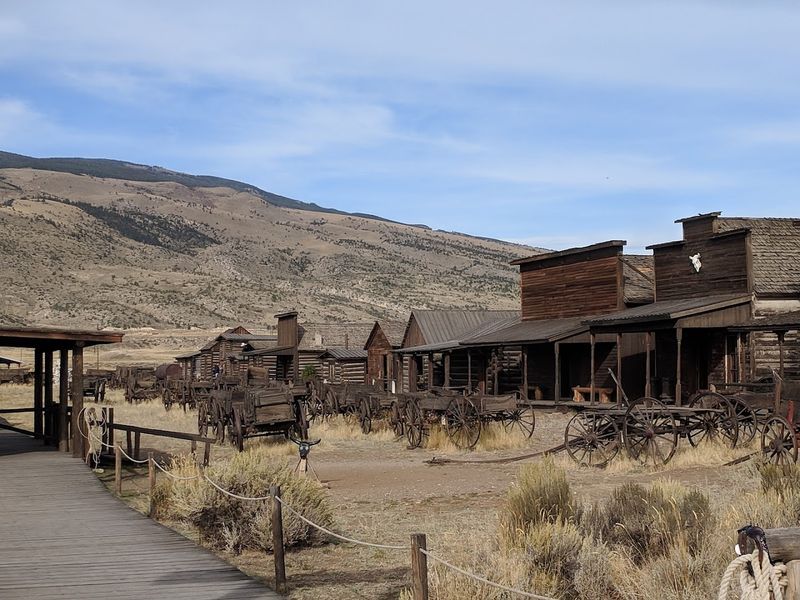
Old Trail Town gives you one of the most direct, atmospheric glimpses into frontier life in Cody.
This re-created historic site brings together genuine 1800s log cabins and Western structures, creating a setting that feels far more vivid than a traditional display case.
Walking among the weathered buildings, you can almost imagine the noise, grit, and uncertainty of early settlement.
What makes the place work is its physical immediacy.
Instead of reading about frontier architecture, you stand beside rough-hewn walls, peer into simple interiors, and move through a small cluster of structures that suggest how practical and unforgiving daily life once was.
The saloon and cabins anchor the experience with exactly the kind of details many visitors hope to find in Wyoming.
I like that Old Trail Town does not try to sanitize the past into something too neat.
The buildings feel rugged, and that roughness is part of the appeal.
Cody’s historic identity becomes easier to understand when you see the kinds of spaces that defined the era.
This is the sort of attraction that helps cowboy history come to life because it engages your imagination through place, not just facts.
You are not hearing abstract stories about the West.
You are moving through a preserved environment that makes those stories feel grounded, local, and distinctly tied to Cody itself.
5. Cody Nite Rodeo
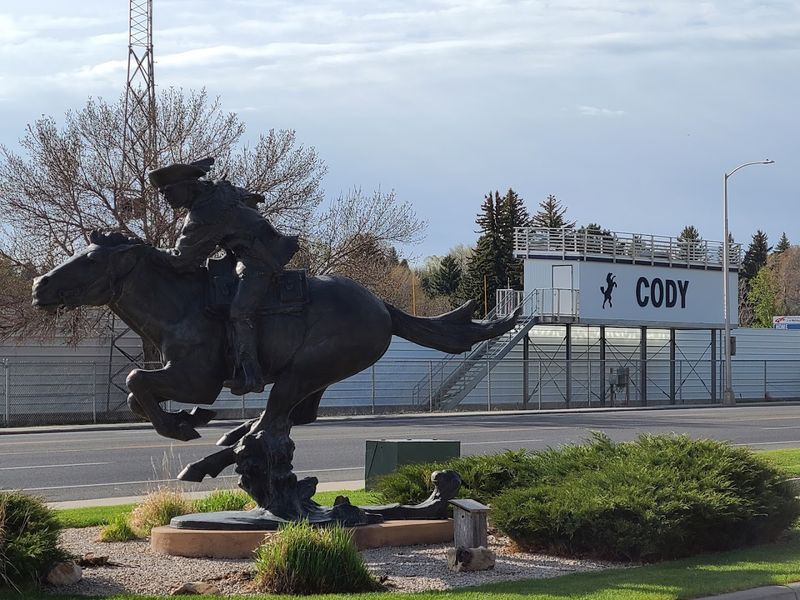
If you want proof that Cody’s cowboy identity is still active, not just remembered, the Cody Nite Rodeo is the place to go.
This is where the town’s Western spirit shifts from museum interpretation to live action, with riders, animals, dust, applause, and the kind of energy you feel in your chest.
It is lively, local, and easy to understand even if you have never attended a rodeo before.
What stands out most is that the experience feels woven into the town rather than staged only for outsiders.
Cody embraces rodeo as part of its ongoing culture, and that authenticity comes through in the atmosphere.
You are not just watching a performance of the West, you are seeing one of the traditions that still gives the town its rhythm.
I think this is where many visitors finally connect the dots between history and the present day.
The same values associated with cowboy life – skill, grit, horsemanship, confidence, and spectacle – still have a visible place here.
That continuity is exactly what makes Cody different from destinations that only preserve Western imagery on storefront signs.
Even if you spend your day in museums and historic sites, the rodeo adds the living soundtrack.
It brings motion and personality to everything you have learned earlier.
By the end of the evening, Cody feels less like a chapter in history and more like a community still speaking its original language.
6. Sheridan Avenue Downtown
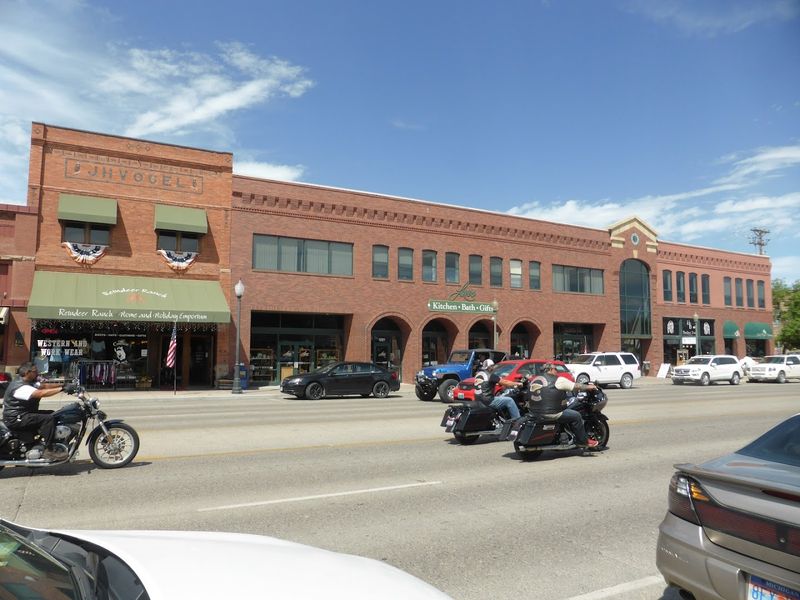
Downtown Cody, especially along Sheridan Avenue, gives you a more everyday view of the town’s personality.
This is where historic character and modern local life meet, with storefronts, Western-style details, and a pace that invites you to slow down rather than rush through.
It is one of the best places to feel how Cody carries its heritage into ordinary daily life.
I enjoy downtown because it does not rely on a single attraction to make its point.
The boardwalk feel, brick facades, signs, and local businesses all contribute to an unmistakably Western atmosphere without feeling artificial.
You can wander, browse, and simply observe how the town presents itself to residents and visitors alike.
There is also something important about seeing history embedded in a working main street.
Museums tell you what happened, but downtown shows you what endured.
Cody’s visual identity still reflects the frontier story that built it, and that continuity helps the town feel cohesive.
For travelers, this area can be the bridge between bigger headline stops.
You might spend a morning at a museum, an afternoon on a scenic drive, and then return here to take in the local mood.
That combination works because downtown Cody is not filler – it is part of the story.
It shows how cowboy history can survive not only in exhibits and events, but in the look and pulse of a town itself.
7. Buffalo Bill Scenic Byway
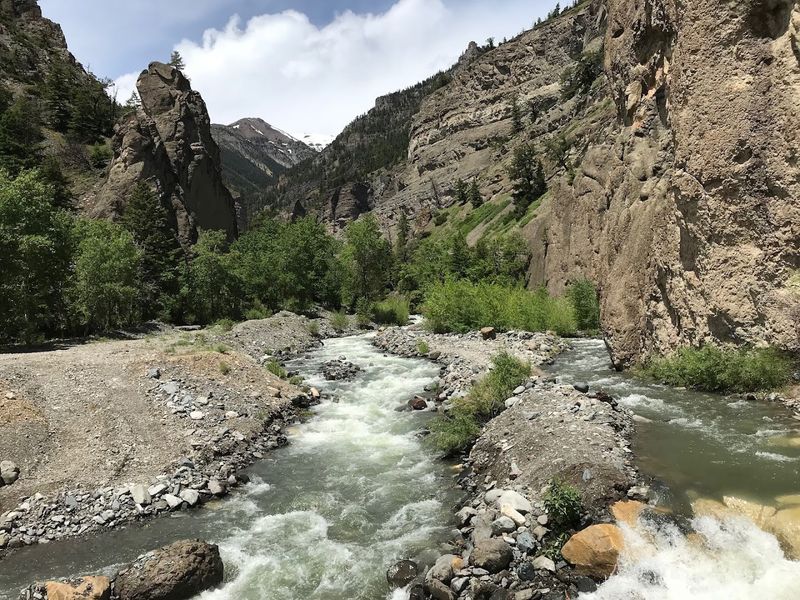
The Buffalo Bill Scenic Byway is one of the most rewarding ways to understand Cody beyond its downtown core.
Stretching west from town toward Yellowstone, this route passes dramatic cliffs, open views, and rugged terrain that make the surrounding landscape feel inseparable from Cody’s identity.
It is not just a road out of town; it is part of the story the town tells.
Driving it helps you see why Cody developed where it did and why the Western imagination clings so strongly to this region.
The scenery feels bold and cinematic, but it also feels practical, as if every ridge and canyon once mattered to travel, survival, and settlement.
The land is beautiful, yet it carries a certain toughness that matches the history told in town.
I think this byway is especially powerful after visiting Cody’s museums.
Once you have learned about Buffalo Bill, wildlife, frontier life, and regional culture, the views gain depth.
The cliffs and valleys stop being generic postcard scenery and start feeling like the real setting behind the myths.
Even if your larger trip includes Yellowstone, this stretch deserves attention in its own right because it belongs to Cody’s identity.
The town is a gateway, yes, but it is also a destination rooted in the landscapes around it.
The byway ties everything together, giving you a final reminder that Western history always happened somewhere tangible and immense.
8. Buffalo Bill Dam and Visitor Center
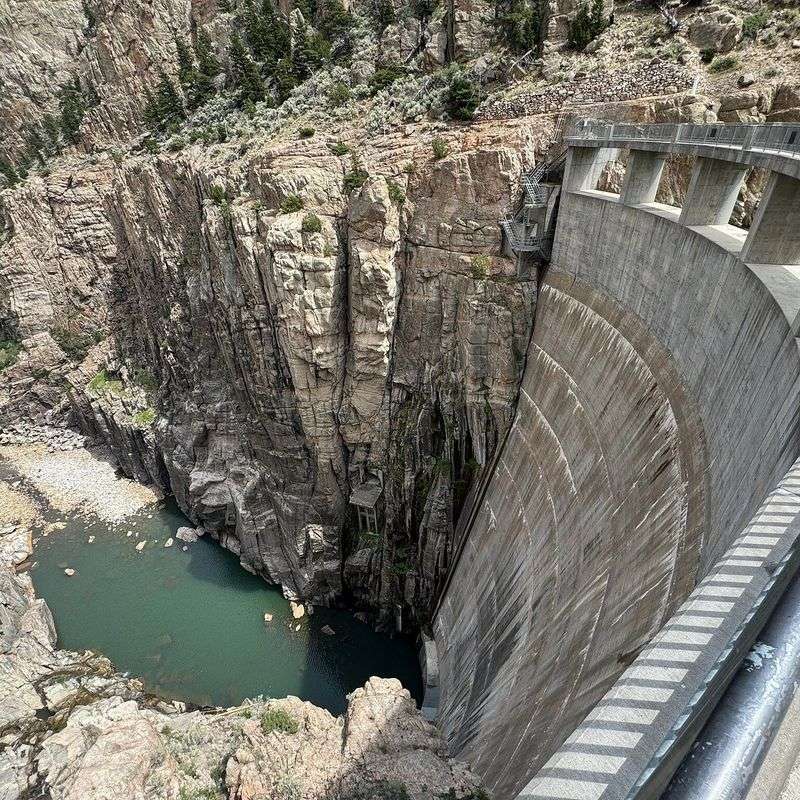
The Buffalo Bill Dam and Visitor Center add another layer to Cody’s story by showing how ambition and engineering helped shape the region.
While the town is often associated with frontier heritage and cowboy culture, this landmark reveals a more infrastructural side of Western history.
It reminds you that building the modern West required more than legend – it required water control, planning, and bold construction.
Standing near the dam, you get a strong sense of scale.
The canyon setting is dramatic on its own, but the structure intensifies that feeling by showing what people decided to build within such a formidable landscape.
There is something distinctly Western about that mix of natural grandeur and human determination.
I like this stop because it broadens the definition of what counts as local history.
Cody is not frozen in the era of log cabins and saddles.
It also participated in the larger transformation of the American West through infrastructure that affected settlement, agriculture, and regional development.
For visitors, the dam works well as a contrast to the museums and historic sites in town.
You can spend the morning thinking about frontier life and the afternoon looking at a landmark that points toward modernization.
Both belong to Cody’s identity.
Together, they show a place that honors its cowboy past while also acknowledging the practical systems that helped the surrounding region evolve.
9. Plains Indian Museum
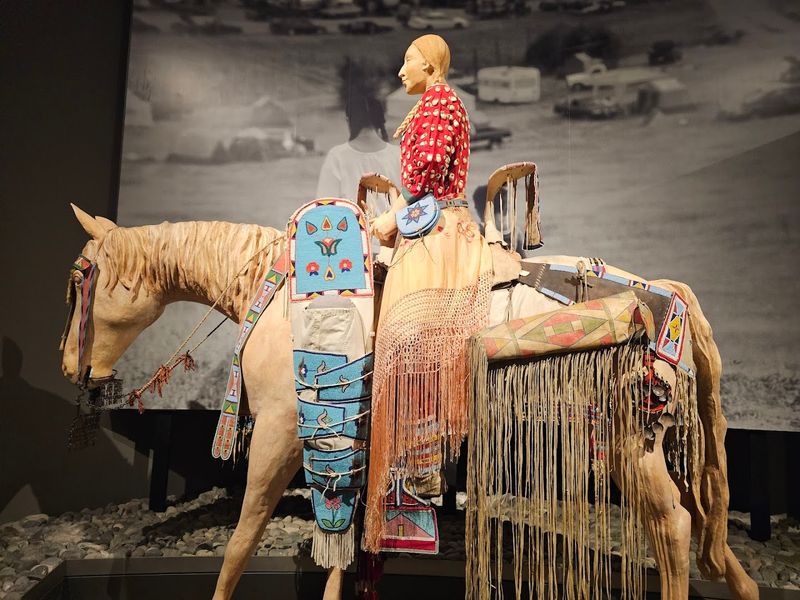
The Plains Indian Museum is an essential stop if you want a fuller, more honest understanding of Cody and the surrounding West.
Located within the Buffalo Bill Center of the West, it focuses on Plains Indian cultures with exhibits that add depth, beauty, and perspective to the town’s broader historical narrative.
Without this context, any version of Cody’s story would feel incomplete.
What I value most here is the way the museum expands the conversation beyond the usual frontier myths.
The American West was never shaped by one kind of person or one kind of experience, and these galleries help make that clear.
Artifacts, regalia, and interpretive displays show cultural richness while grounding the region in human stories that long predate the town itself.
This museum also changes how you think about other places in Cody.
After visiting, the landscapes, routes, and historic sites around town carry a deeper sense of continuity and complexity.
You start recognizing that the story of the West includes encounter, conflict, tradition, resilience, and adaptation, not only cowboy legend.
For anyone visiting Cody, this stop is important because it adds perspective and balance.
It does not erase the town’s Buffalo Bill identity, but it places that identity within a wider regional history.
That makes everything else you see in Cody feel more meaningful, more grounded, and much closer to the truth of the place.
Share this story