Your phone can wait. Tennessee’s mountains are calling, and they’re offering something your screen never could: fresh air, rushing waterfalls, and views that stretch for miles.
From the misty peaks of the Smokies to the rugged gorges of South Cumberland, these trails prove that the best adventures happen when you power down and step outside. Whether you’re chasing waterfalls or summit views, these ten paths will remind you why nature beats Netflix every single time.
1. Alum Cave Trail – Great Smoky Mountains National Park
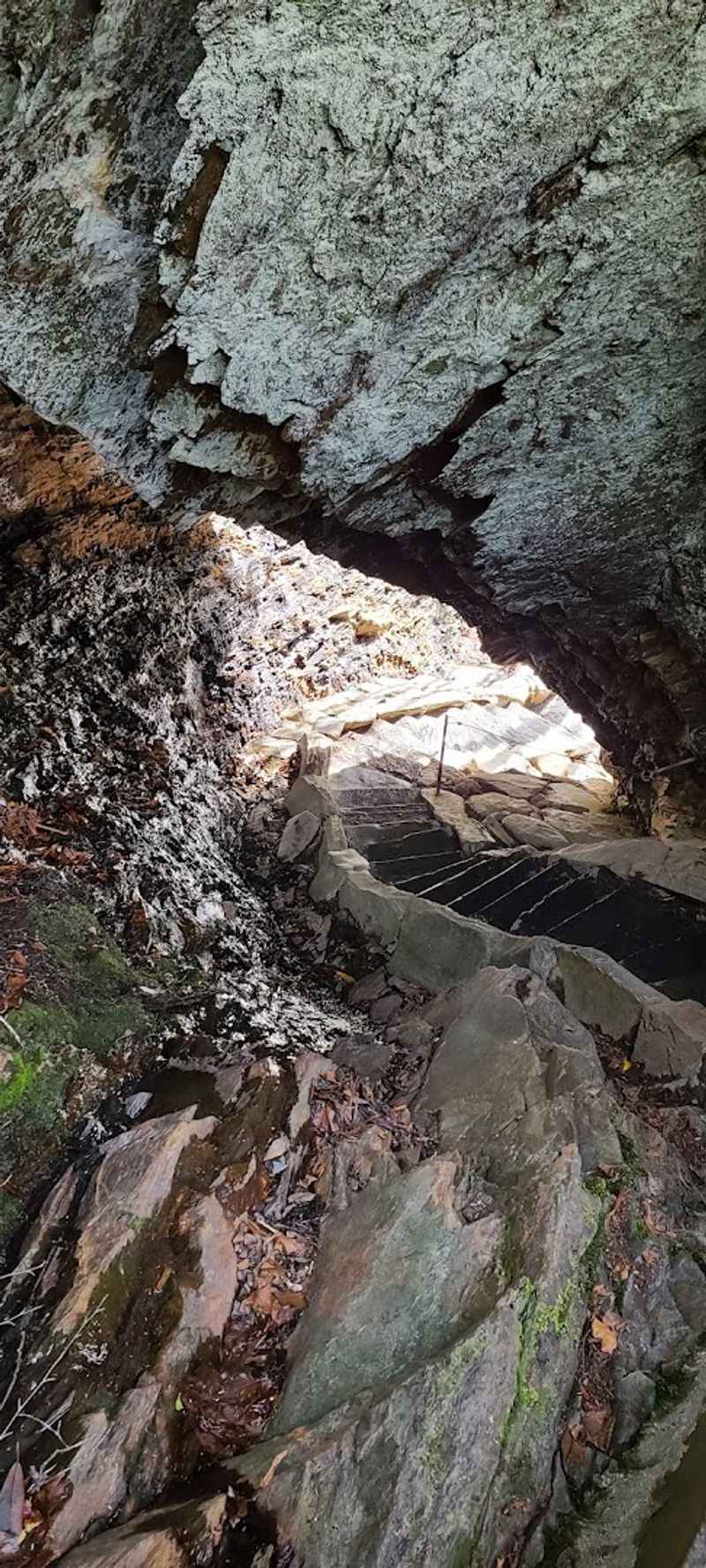
Starting from Newfound Gap Road, this trail wastes no time showing off. Within the first mile, you’ll cross footbridges over Alum Cave Creek and walk beneath Arch Rock, a natural tunnel carved through solid stone.
The forest here feels ancient, with hemlock and rhododendron creating a canopy that filters sunlight into soft green shadows.
Around the 2.3-mile mark, you reach the namesake Alum Cave Bluffs, which isn’t actually a cave but a massive concave cliff that juts out like nature’s overhang. It’s a popular turnaround spot for families, offering shelter from rain and a perfect lunch perch with mountain views stretching across the valley below.
The trail climbs steadily, gaining about 1,400 feet over five miles if you push to the bluffs. Roots and rocks make the path uneven in spots, so watch your footing, especially after rain when everything gets slippery.
Early mornings bring fewer crowds and better wildlife sightings.
Pack water and snacks because there’s no potable water along the way. The elevation gain is real, but the payoff comes in layers: waterfalls, geological wonders, and that satisfying feeling of earning every vista through your own two feet.
2. Rainbow Falls Trail – Great Smoky Mountains National Park
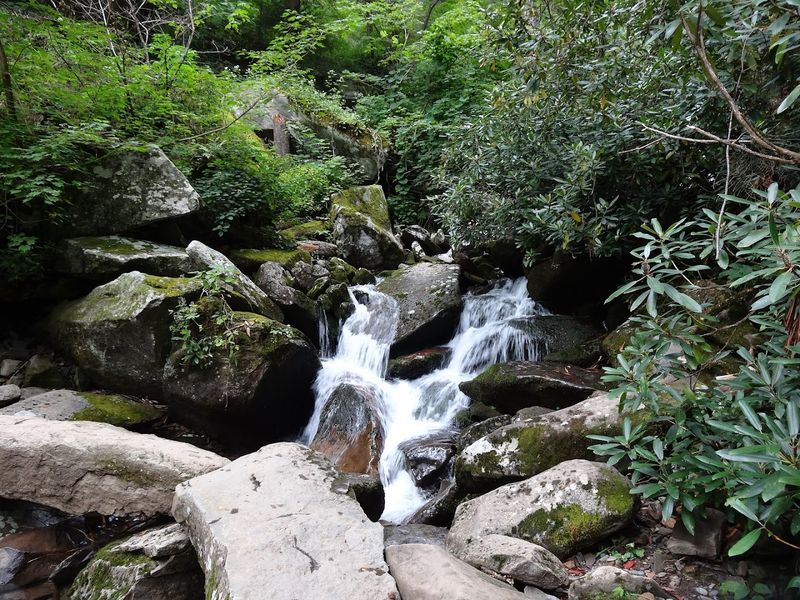
Water tumbles 80 feet down a rocky face on this trail, and when the sun hits just right, you’ll understand the name immediately. Rainbows dance in the mist during late morning hours, creating a natural light show that no filter can improve.
The falls are the star attraction, but the journey there offers plenty of its own rewards.
The trail follows LeConte Creek upward through old-growth forest, where massive tulip poplars tower overhead. You’ll gain roughly 1,500 feet over 2.7 miles, which translates to a solid workout without being punishing.
The sound of rushing water accompanies most of the hike, growing louder as you approach the main event.
Rocky sections require some scrambling, and exposed roots demand attention, especially on the descent when gravity works against you. Mist from the falls creates slick conditions near the base, so tread carefully if you venture close for photos.
Spring runoff makes the falls most impressive, though summer’s lower flow lets you appreciate the rock formations behind the curtain of water. Bring a light jacket because temperatures drop near the falls, and that mist feels refreshing until you stop moving.
The return trip goes faster, but your knees will remember every downhill step.
3. Abrams Falls Trail – Great Smoky Mountains National Park
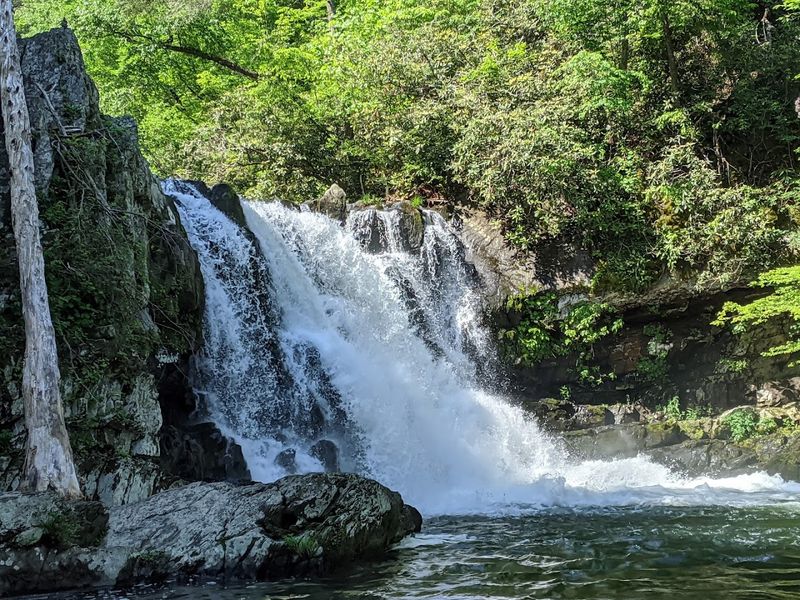
Volume matters more than height here. Abrams Falls drops only 20 feet, but the sheer amount of water pouring over that ledge creates a thunderous display that reverberates through the gorge.
The pool below looks inviting, but swimming is prohibited due to dangerous currents that have claimed lives over the years.
The five-mile round trip follows Abrams Creek through Cades Cove, offering relatively gentle terrain compared to other Smokies trails. You’ll cross footbridges, walk along bluffs above the creek, and pass through pine forests that smell like summer camp.
Spring wildflowers carpet the forest floor, while fall brings vibrant foliage that rivals any postcard.
Expect company, especially on weekends, since this trail’s moderate difficulty attracts families and casual hikers. The path can get muddy after rain, and some sections require hopping across tributary streams on strategically placed rocks.
Wildlife sightings are common. Deer browse near the trailhead, and if you’re lucky, you might spot river otters playing in the creek.
Black bears occasionally make appearances, so keep your distance and make noise as you hike. The falls themselves provide the perfect midpoint rest stop before you retrace your steps back through the forest to the parking area.
4. Charlies Bunion Trail – Great Smoky Mountains National Park
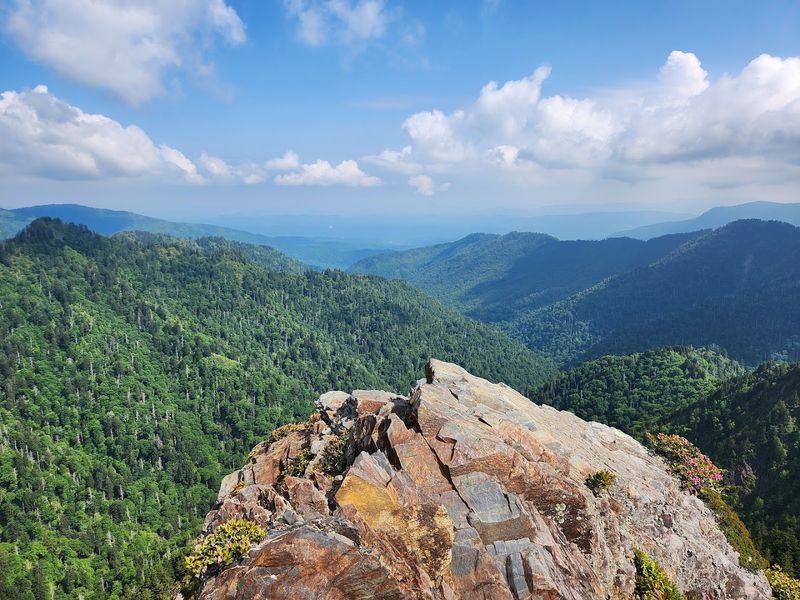
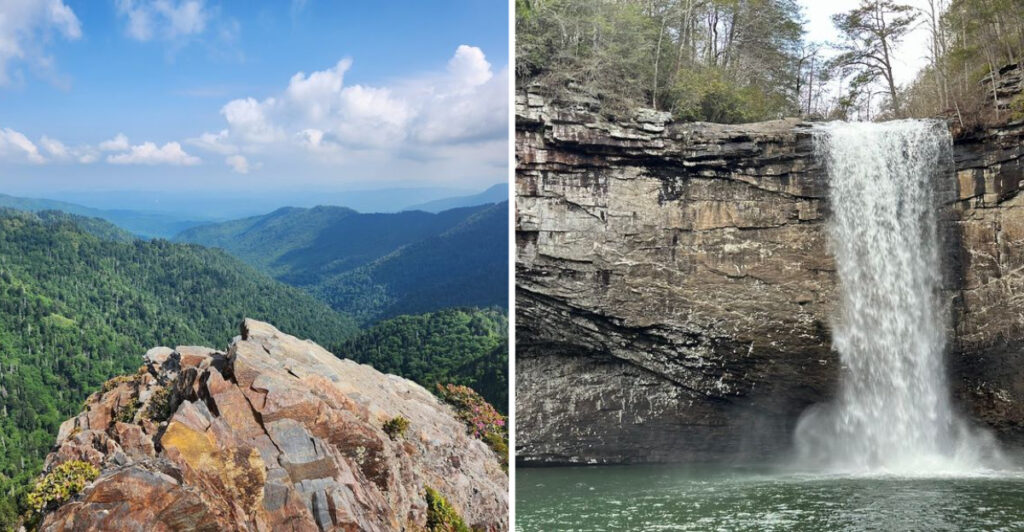
A 1925 wildfire stripped this rocky promontory bare, and a massive rainstorm two years later washed away the topsoil, leaving the exposed rock formation that a hiker supposedly compared to a bunion on his hiking companion Charlie’s foot. The name stuck, and now thousands trek here annually for views that make the climb worthwhile.
Starting from Newfound Gap, the trail follows the Appalachian Trail for four miles, gaining about 1,600 feet along the way. The path winds through spruce-fir forest that feels more like Canada than Tennessee, with moss-covered rocks and twisted trees shaped by harsh mountain weather.
Views open up gradually, teasing you with glimpses before the full reveal at the Bunion itself. The rocky outcrop juts out like nature’s observation deck, with nothing but air between you and the valleys thousands of feet below.
On clear days, you can see Mount LeConte, Greenbrier Pinnacle, and waves of mountains rolling toward the horizon.
Wind whips across the exposed rock, so bring layers even on warm days. The elevation means temperatures run cooler than the lowlands, and afternoon clouds often roll in, obscuring views and making the rocks treacherously slick.
Morning hikes offer the best visibility and fewer crowds fighting for photo spots on the narrow ledge.
5. Mount Le Conte via Alum Cave Trail – Great Smoky Mountains National Park

Climbing to the third-highest peak in the Smokies isn’t casual, but the 11-mile round trip delivers everything Tennessee mountains have to offer. You’ll follow Alum Cave Trail for the first 2.3 miles, then continue climbing another 2,400 feet through increasingly rugged terrain where cable handrails bolted into rock faces help hikers navigate exposed sections.
The final push involves scrambling over roots and rocks, with steep drop-offs that demand attention and respect. Fog and ice make conditions dangerous during shoulder seasons, turning what’s challenging into genuinely hazardous.
Check weather forecasts and start early because afternoon thunderstorms frequently build over the summit.
LeConte Lodge sits just below the peak, the only indoor lodging within the park accessible solely by trail. Reservations book months in advance, but day hikers can still summit and claim bragging rights.
Multiple peaks crown Le Conte’s massive bulk, with Cliff Tops offering the most dramatic views.
Pack more food and water than seems necessary because this hike takes most people six to eight hours, and there’s no bailout option once you commit. Your legs will protest the descent, which pounds knees and tests ankle stability on loose rocks.
But standing on that summit, watching clouds drift through valleys below, makes every burning muscle worthwhile. This trail separates casual hikers from serious mountain lovers.
6. Fiery Gizzard Trail – South Cumberland State Park
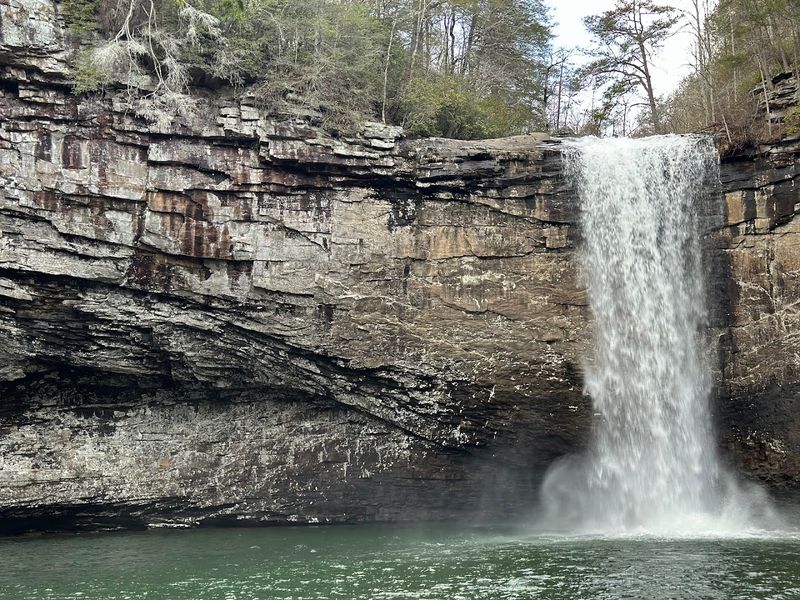
The name alone promises adventure, and this trail delivers with an intensity that surprises first-timers. Stretching nearly 13 miles one-way through the Cumberland Plateau, Fiery Gizzard earns its reputation as one of Tennessee’s toughest and most rewarding hikes.
Waterfalls, rock formations, and steep gorges create a constantly changing landscape that never lets you settle into autopilot.
Most hikers tackle shorter sections rather than the full distance, with the southern portion from Grundy Forest to Foster Falls offering the greatest concentration of highlights. You’ll scramble over boulders, navigate narrow passages between rock walls, and cross streams that range from ankle-deep trickles to thigh-high challenges depending on recent rainfall.
Foster Falls drops 60 feet into a swimming hole that’s earned legendary status among locals who brave the cold water on summer afternoons. Raven Point juts out above the gorge, providing views that justify the climb required to reach it.
The trail demands good footwear because loose rocks and wet roots create constant slip hazards.
Elevation changes total over 2,000 feet, spread across relentless ups and downs that test endurance. Blazes can be tricky to follow in sections, so download a trail map before you lose cell service.
This isn’t a beginner trail, but experienced hikers will find it unforgettable.
7. Stone Door Trail – South Cumberland State Park
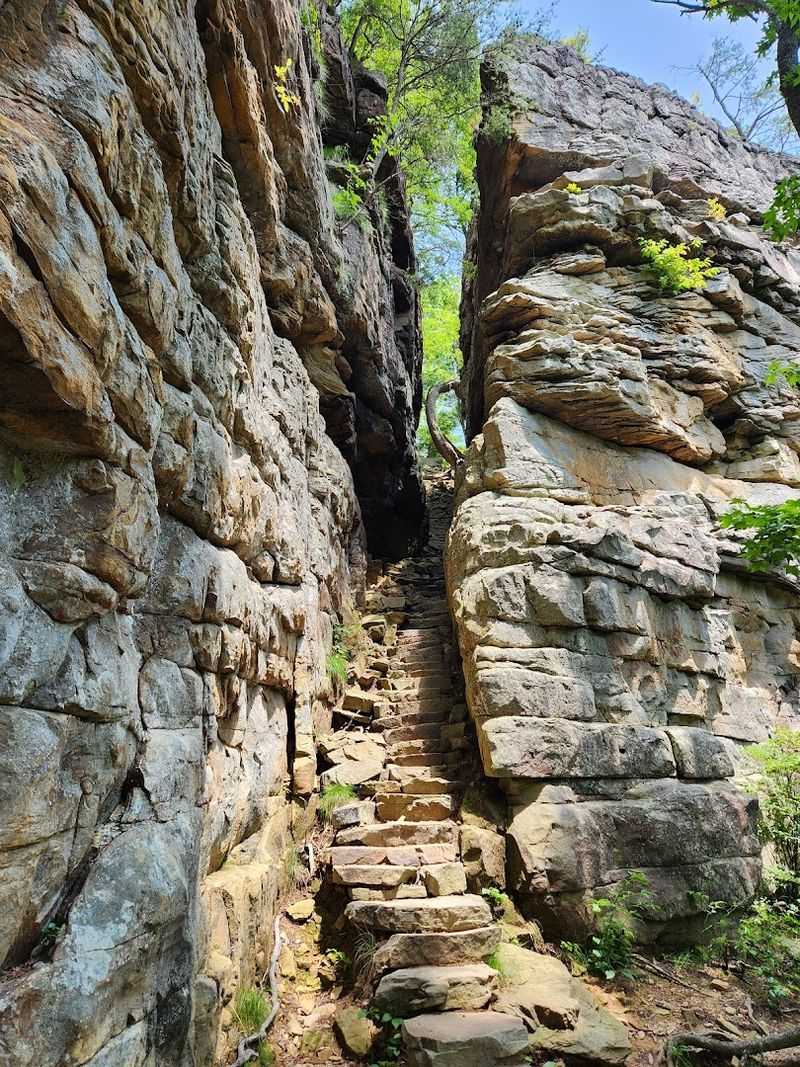
A massive crack splits the cliff face, creating a natural doorway ten feet wide that opens onto a jaw-dropping overlook. Walking through that stone passage feels like entering another world, stepping from enclosed forest into exposed sky where the Big Creek Gulf spreads out 800 feet below your boots.
The trail itself runs less than two miles round trip, making it perfect for families or anyone wanting maximum payoff with minimal mileage. You’ll descend gently through mixed hardwood forest, following a well-maintained path that requires attention but not technical skills.
Interpretive signs explain the geology and ecology, though most people skip the reading in their rush to reach the Door.
The overlook beyond the Stone Door offers vertigo-inducing views across the gorge, with rock outcrops providing natural seating for those brave enough to dangle their legs over the edge. Fall colors transform the valley into a patchwork quilt of reds, oranges, and yellows that photographers dream about.
Crowds gather here on nice weekends because word has spread about this accessible wonder. Sunrise visits beat the masses and offer soft light that makes the gorge glow.
The short distance means you can easily combine this with other South Cumberland trails, creating a full day of exploration without repeating scenery.
8. Virgin Falls Trail – Virgin Falls State Natural Area
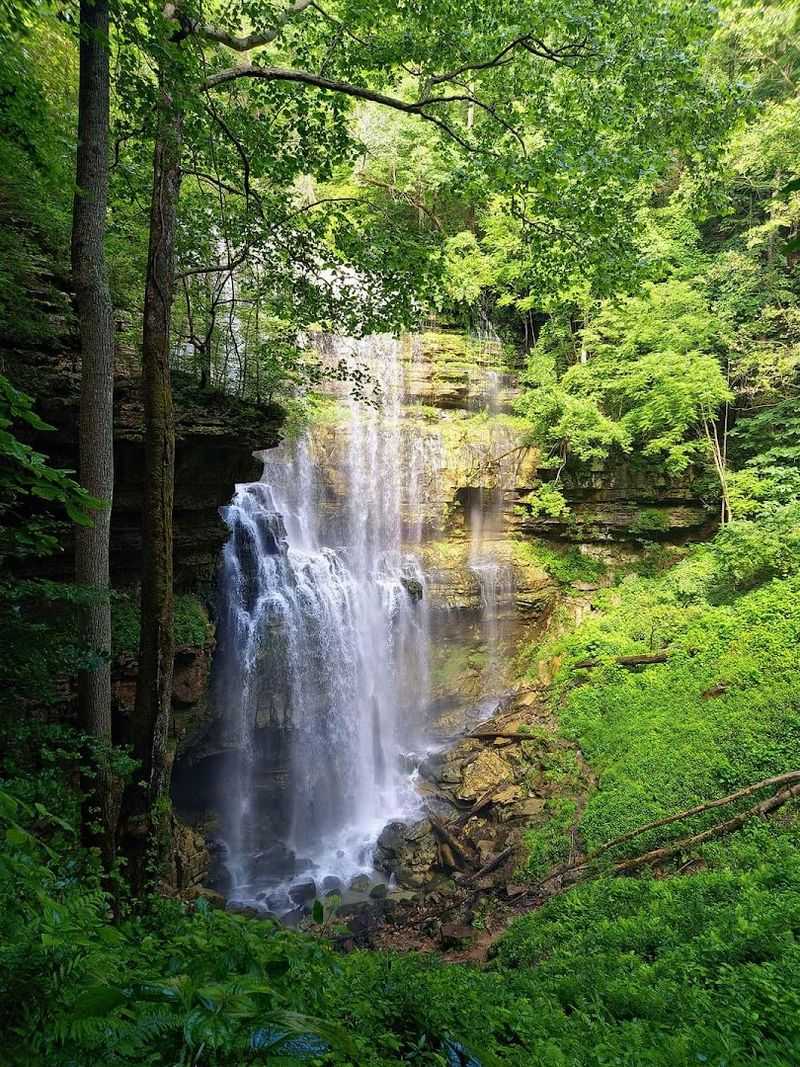
Water does something impossible here. Virgin Falls emerges from an underground cave, drops 110 feet through open air, then vanishes into a sinkhole at its base, never seeing daylight again.
This geological oddity makes the eight-mile round trip feel like a journey to a hidden world where normal rules don’t apply.
The trail crosses streams, climbs ridges, and passes multiple smaller waterfalls before reaching the main attraction. Big Laurel Falls and Big Branch Falls serve as worthy appetizers, each impressive enough to anchor their own hikes.
The path requires creek crossings that can be tricky during high water, so check conditions before committing.
Virgin Falls sits in a natural amphitheater, with the stream literally flowing out of the cave mouth above before plunging into the void. You can walk behind the falls, feeling the mist and hearing the roar echo off rock walls.
The sinkhole swallows every drop, sending the water back underground to who-knows-where.
This trail demands a full day, with most hikers spending five to seven hours completing the loop. Pack lunch and plenty of water because there’s no potable source along the way.
The isolation means you might have the falls to yourself, a rare treat in an era when every scenic spot gets Instagrammed to death. Solitude still exists in Tennessee’s backcountry.
9. Savage Gulf North Rim Trail – Savage Gulf State Park
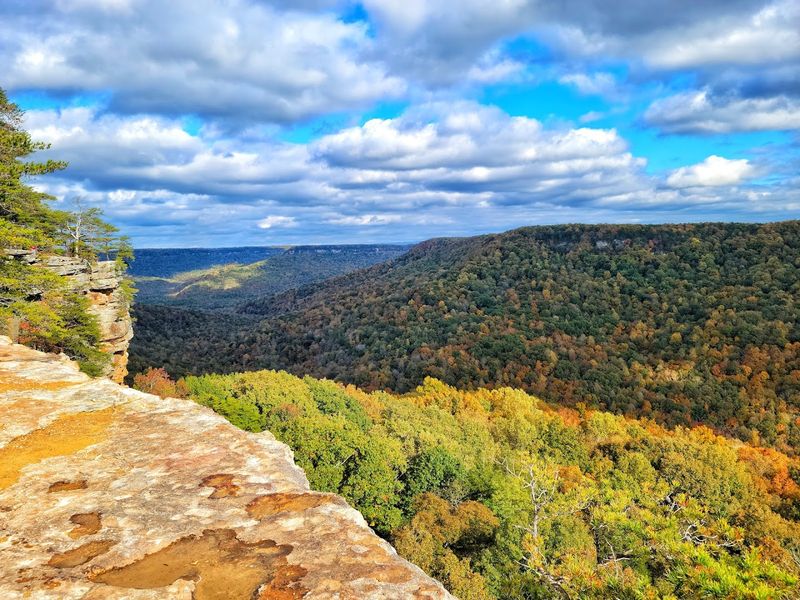
Walking the rim of a 700-foot-deep gorge focuses the mind wonderfully. This trail follows the edge of Savage Gulf for roughly five miles, offering overlook after overlook where the forest floor simply disappears into empty space.
Each viewpoint provides a slightly different perspective on the massive chasm carved by centuries of water and weather.
The path stays relatively level, a rarity in Tennessee’s mountainous terrain, making it accessible to hikers who want drama without brutal climbs. You’ll weave between sandstone boulders, duck under rock overhangs, and walk through mountain laurel thickets that bloom spectacularly in late spring.
Savage Falls drops into the gulf near the trail’s midpoint, visible from a side spur that adds minimal distance. The waterfall seems to leap off the cliff edge, free-falling until it crashes into the rocks far below.
During dry periods, the falls reduce to a trickle, but the overlook remains impressive regardless of water flow.
Fall transforms the gulf into a sea of color, with the canopy below creating a tapestry that shifts daily as different species peak and fade. Bring binoculars for hawk-watching because raptors ride thermals rising from the gorge, soaring at eye level while you stand on solid ground.
The return journey retraces your steps, but somehow the views look completely different walking the opposite direction.
10. Twin Arches Loop Trail – Big South Fork National River & Recreation Area
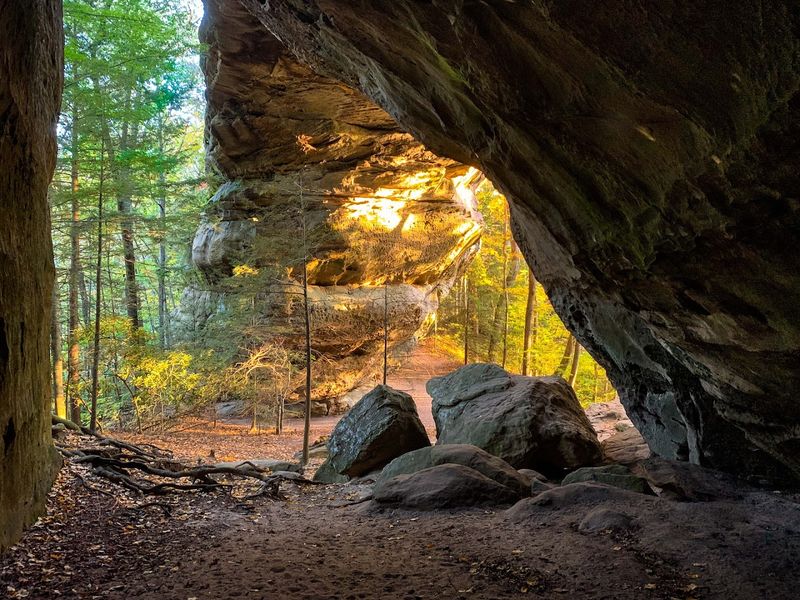
Two of the largest natural arches in the eastern United States sit less than a quarter-mile apart, connected by a loop trail that feels like walking through a geology textbook. The North Arch spans 93 feet, while the South Arch stretches 135 feet, both carved from solid sandstone by millennia of erosion that continues today at a pace measured in centuries.
The 4.6-mile loop starts from the Charit Creek Lodge trailhead, descending into a protected cove where these giants hide. You’ll pass through oak-hickory forest, cross small streams, and navigate rocky sections that require watching your footing.
The trail splits, allowing you to visit either arch first, though most people tackle the North Arch initially.
Standing beneath these formations humbles you. The rock ceiling soars overhead, supported by nothing but physics and time, creating a natural cathedral that makes you whisper despite being miles from civilization.
Light filters through the arches differently depending on time of day, with morning sun illuminating the North Arch most dramatically.
Photographers camp here overnight, chasing the perfect shot as light and shadow transform the scene hourly. Day hikers can complete the loop in three to four hours, including time to explore both arches thoroughly.
The isolation means wildlife encounters happen regularly, with deer, turkeys, and occasional black bears sharing this protected landscape. These arches have stood for thousands of years, patiently waiting for you to discover them.
Share this story