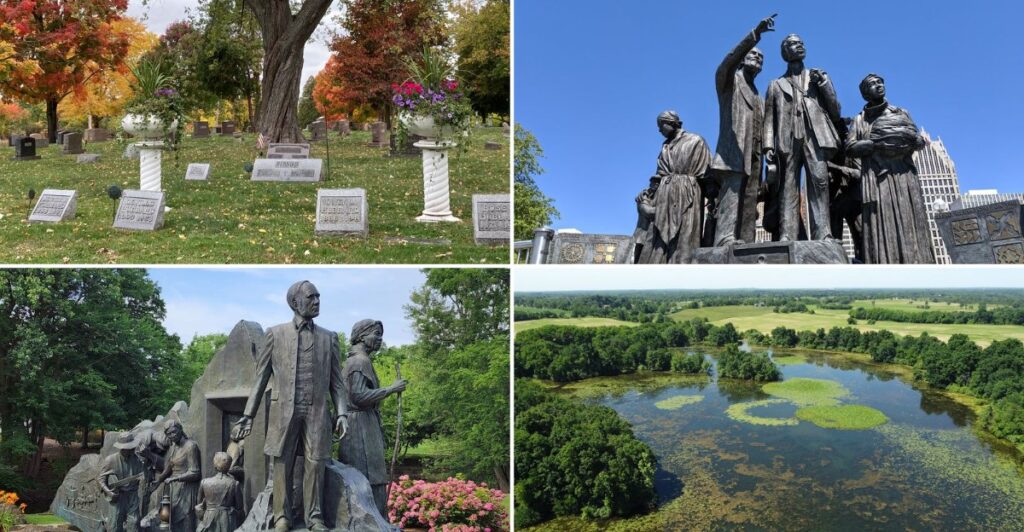
History feels much harder to overlook when the places tied to it are still standing, marked, or remembered in plain sight. Across Michigan, Underground Railroad stops connect churches, homes, memorials, cemeteries, markers, and landscapes with the courage of freedom seekers and the people who risked helping them.
The appeal comes from seeing how a major national story moved through real communities, quiet corners, city streets, and everyday places that still carry meaning. A visit can turn textbook history into something more personal, visible, and deeply felt.
For anyone looking to understand Michigan’s role in the fight for freedom, these landmarks deserve careful attention.
1. Oakridge Cemetery, Marshall
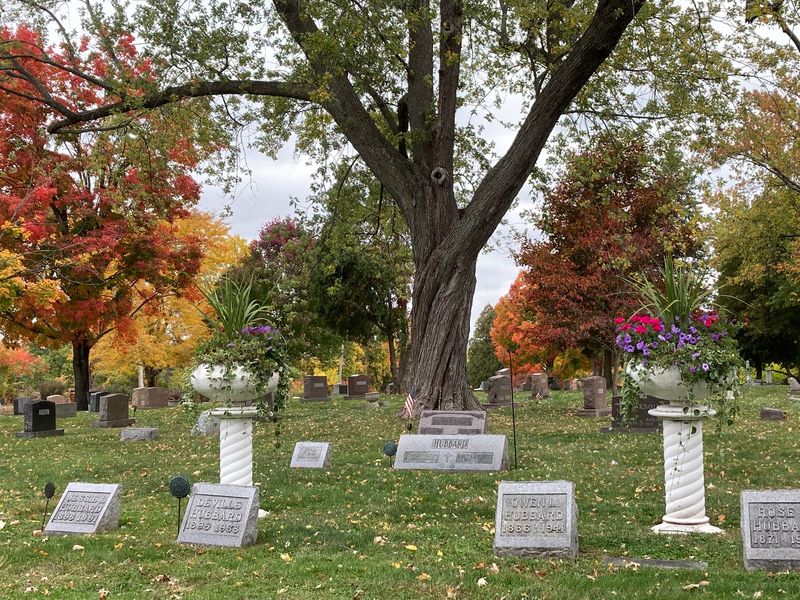
Quiet places can tell loud stories, and Oakridge Cemetery in Marshall proves it. A walk here brings you into a setting where memory, local history, and the long fight for freedom meet in a direct and personal way.
Marshall is often linked with important abolitionist history, so the cemetery works best when you treat it as part of a bigger story instead of a stand-alone stop. You are not coming for flashy exhibits.
You are coming for context, names, dates, and the chance to slow down and think about the people who lived during a dangerous and divided time.
If you visit, give yourself enough time to read markers carefully and notice how the landscape is arranged. Older cemeteries often reveal community values through family plots, memorial styles, and the wording carved into stone.
Even small details can help you picture the social world of nineteenth-century Michigan.
Bringing a little background knowledge helps a lot here. Before you go, look up Marshall’s role in antislavery work so the site feels richer once you arrive.
Then, as you move through the grounds, you can connect broad history to a real location instead of trying to decode everything on the spot.
This stop also pairs well with nearby historic sites in town. That combination can turn a short cemetery visit into a fuller history outing with streets, buildings, and stories that support one another.
Wear comfortable shoes, keep your phone handy for note-taking, and expect a quieter experience than you would get at a museum.
For many travelers, Oakridge Cemetery is a place to reflect rather than rush. The setting encourages careful attention, and that is exactly the right pace for a subject shaped by bravery, secrecy, risk, and the hope of reaching freedom.
2. Second Baptist Church, Detroit
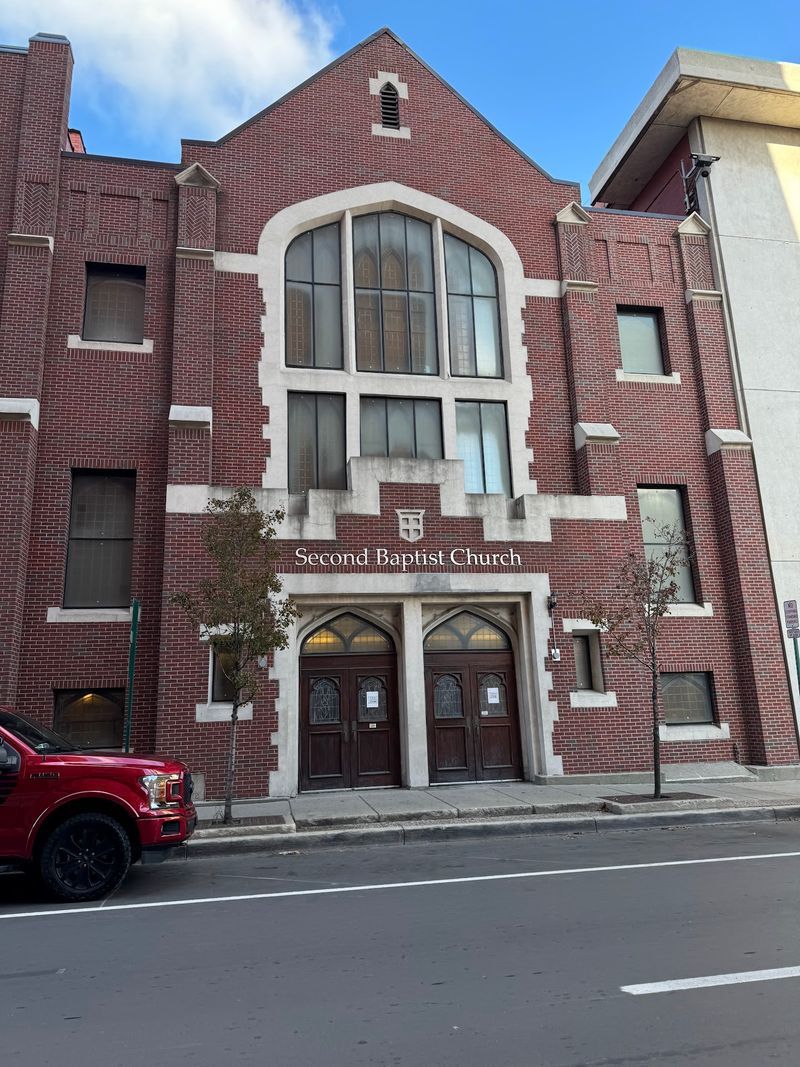
Right in Detroit, Second Baptist Church brings Underground Railroad history into a city setting that still feels active and lived in. The building is tied to one of the most important kinds of places in freedom history, a church that offered leadership, community, and moral force.
You can approach this stop on two levels at once. First, it is a religious and community landmark.
Second, it helps explain how cities played a major role in routes toward safety, especially in a border region connected to Canada. That mix makes the visit more dynamic than a simple look at an old structure.
Architecture matters here, but so does the bigger picture. Stand back and notice the church as part of the surrounding neighborhood, not as an isolated monument.
Urban freedom stories often depended on networks, trusted people, and quick decisions, so a city church can help you imagine movement, urgency, and cooperation.
If you are building a Detroit history day, this stop fits easily with riverfront sites and other landmarks tied to Black history. That kind of route makes the church feel even more meaningful because you can trace how geography shaped options for escape and assistance.
The closer you get to the river story, the clearer the stakes become.
Before visiting, check current access details, since active churches may have limited touring hours or special event schedules. Even if you only view the exterior, take time to read any available signs and look for reliable local interpretation online.
A short preparation step can turn a quick stop into a much stronger learning experience.
Second Baptist Church stands out because it links faith, resistance, and community action in one place. You leave with a better sense that the Underground Railroad was not only about travel routes.
It also depended on organized people who created spaces of trust under constant pressure.
3. Milo Barnes Park Underground Railroad Marker, Vandalia
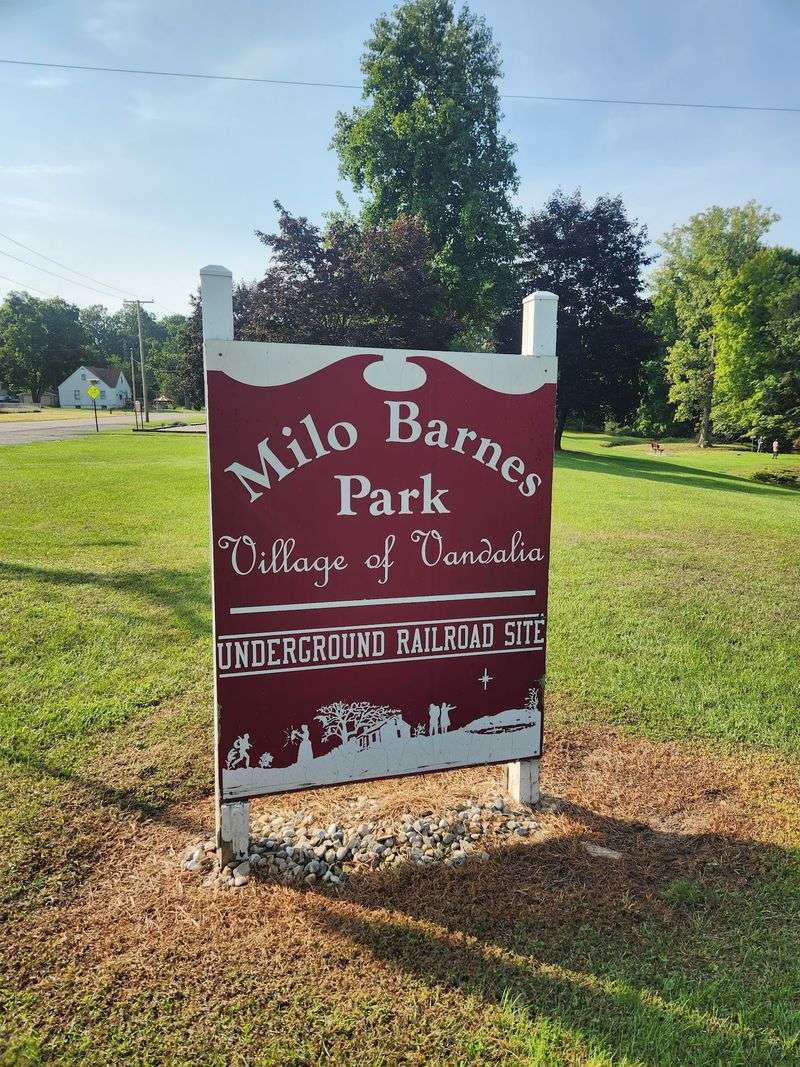
Small parks do not always make huge promises, and that is part of the charm at Milo Barnes Park in Vandalia. The Underground Railroad marker here gives you a focused stop where one sign can open the door to a much larger regional story.
Markers ask you to do a little work, in the best way. Instead of walking through room after room of exhibits, you gather clues from a compact piece of interpretation and then connect those clues to the landscape around you.
That makes this stop especially good for travelers who enjoy imagining how local roads, farms, and homes may have fit into wider networks.
Vandalia sits in an area often associated with Underground Railroad history, so the marker can serve as a starting point rather than the whole lesson. Read slowly.
Look at nearby surroundings. Ask yourself why this community mattered, who may have moved through it, and how local residents could have shaped events in quiet but important ways.
Families with kids may find this stop easy to manage because it is simple, open, and not overloaded with information. You can turn the visit into a short history challenge by having everyone pick out one fact, one question, and one detail they want to learn more about later.
That keeps the visit active instead of passive.
Pairing the marker with another nearby site in Vandalia makes the experience much stronger. When you see more than one place connected to the same topic, local history starts to click.
A marker becomes proof that the story reached beyond famous cities and into smaller communities too.
Bring water, check weather, and plan for a brief stop with real value. Milo Barnes Park is not about spectacle.
It is about orientation, curiosity, and the reminder that freedom history often survives through simple signs placed in ordinary spaces that still carry extraordinary meaning today.
4. Watkins Lake State Park and County Preserve, Manchester/Brooklyn Area
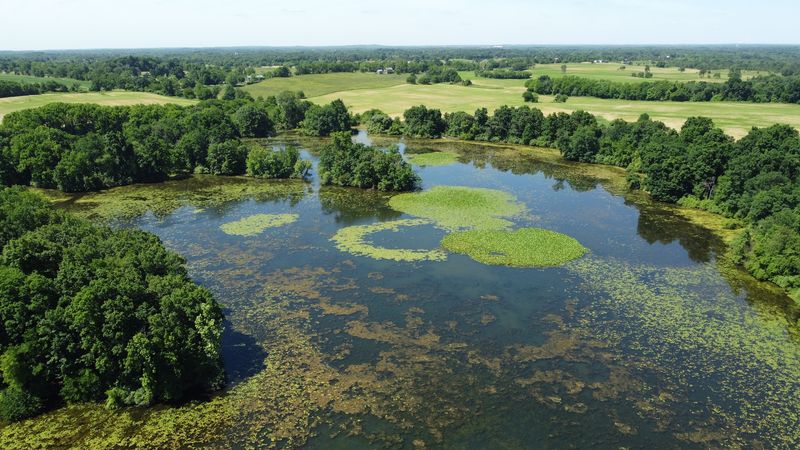
Not every freedom-trail stop sits on a city block or beside a formal monument. Watkins Lake State Park and County Preserve adds a different mood to the journey, with open land and trails that invite you to think about movement, distance, and the challenge of traveling through unfamiliar ground.
Nature can sharpen history in surprising ways. When you are out on a path with changing terrain, shifting light, and long views, the subject becomes less abstract.
You start to picture how land itself could shape choices, timing, and risk. That makes this stop useful for people who learn best by placing history in a real physical environment.
You should not expect the preserve to function like a traditional indoor history site. Instead, it works as a landscape stop, one that supports broader Underground Railroad interpretation in southern Michigan.
Going in with that mindset helps. Wear trail-friendly shoes, bring water, and allow for a visit that mixes walking with reflection.
The Manchester and Brooklyn area gives this place extra interest because regional connections matter. Freedom routes were not a single line on a map.
They were made of linked communities, roads, natural features, and trusted contacts. A preserve can help you see how geography may have affected those links, even when the site itself is quiet and open.
Photographers may enjoy this stop because the scenery changes through the day and across seasons. Morning mist, summer green, autumn color, or winter openness can each shape how the story lands in your mind.
A landscape with room to think can be every bit as memorable as a house museum.
Plan this one as part of a layered day trip rather than a solo history destination. Combined with nearby towns and other trail sites, Watkins Lake broadens the experience.
It reminds you that the Underground Railroad was not only built inside buildings. It also moved across ground, through weather, and over miles that demanded nerve and endurance.
5. Gateway To Freedom International Memorial, Detroit
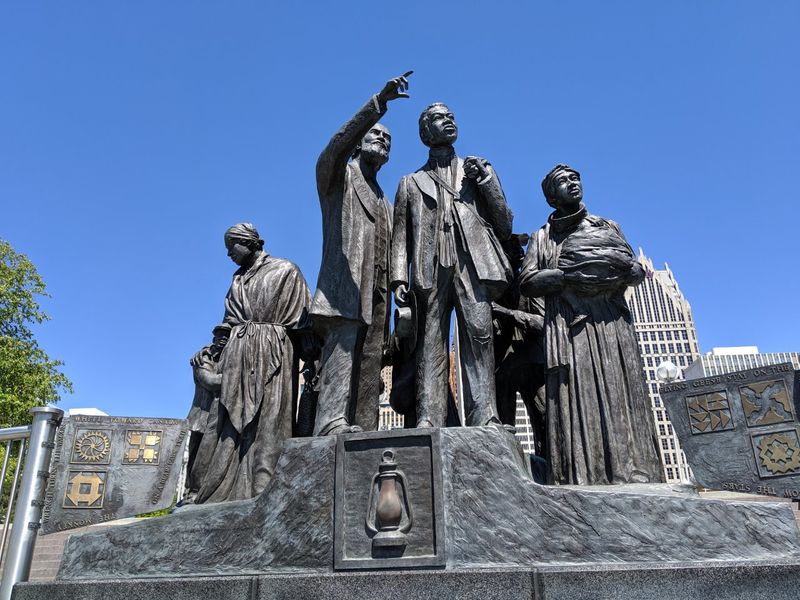
Detroit knows how to stage a powerful river story, and the Gateway To Freedom International Memorial uses that setting well. Here, the idea of crossing into safety becomes easier to picture because the geography is right in front of you.
A memorial like this works quickly on the imagination. You are looking at public art, but you are also looking at a border landscape that mattered deeply in the fight for freedom.
That combination gives the stop strong emotional and visual impact without needing a long visit.
Spend a few extra minutes taking in the river itself. Water can look calm, even ordinary, yet border crossings carried enormous danger and hope.
Seeing the memorial near that real-world backdrop helps you understand why Detroit held such an important place in Underground Railroad history and why the final stretch of a journey could still be full of uncertainty.
This is a smart stop for first-time visitors because it is accessible and easy to connect with other Detroit landmarks. You can fold it into a riverfront walk, a Black history itinerary, or a broader architecture and public art day.
That flexibility makes it useful even if your schedule is tight.
For the best experience, visit when you can linger rather than rush through for a quick photo. Read every bit of on-site text, look at the figures or design elements carefully, and think about who the memorial asks you to remember.
Public monuments often reveal more when you stand with them for a while instead of treating them as background scenery.
The memorial also works well for conversations with kids or teens. It gives you a concrete place to discuss borders, bravery, and why reaching one side of a river could change everything.
In a city full of major sights, Gateway To Freedom stands out by tying art, location, and history together in one clear and memorable moment.
6. Stephen Bogue House, Cassopolis
House museums can be tricky, but the Stephen Bogue House in Cassopolis has the kind of name that makes you pause and ask who lived here, what happened here, and why the place still matters. That curiosity is exactly the right way to enter a site tied to Underground Railroad history.
A historic home brings the story down to human scale. Large movements and major causes are important, yet a single house can show how freedom work may have depended on ordinary rooms, private decisions, and steady local support.
You start to picture conversations around tables, arrivals after dark, and the constant need for trust.
Cassopolis is a strong setting for this kind of stop because smaller towns often reveal how broad the network really was. The Underground Railroad was not only a big-city story.
Places like this suggest the importance of regional relationships and the role that individual households may have played within them.
If tours or access are limited, the exterior and surrounding neighborhood can still offer a useful sense of place. Notice the scale of the home, its street presence, and how it sits within the town.
Architecture will not answer every question, but it can help you think about privacy, visibility, and the rhythms of daily life in another century.
Before going, check whether local historical groups offer seasonal programming or special events. Smaller sites sometimes come alive through guided interpretation, and a knowledgeable local voice can add nuance that signs alone cannot provide.
Even a short guided stop may give you names, timelines, and connections that stick in your mind much longer.
The Stephen Bogue House rewards visitors who like layered history rather than flashy presentation. You are dealing with a place that invites thoughtful attention.
In that way, it matches the Underground Railroad itself, a history shaped not by noise and spectacle, but by choices made carefully, quietly, and with serious courage.
7. Underground Railroad Sculpture, Battle Creek
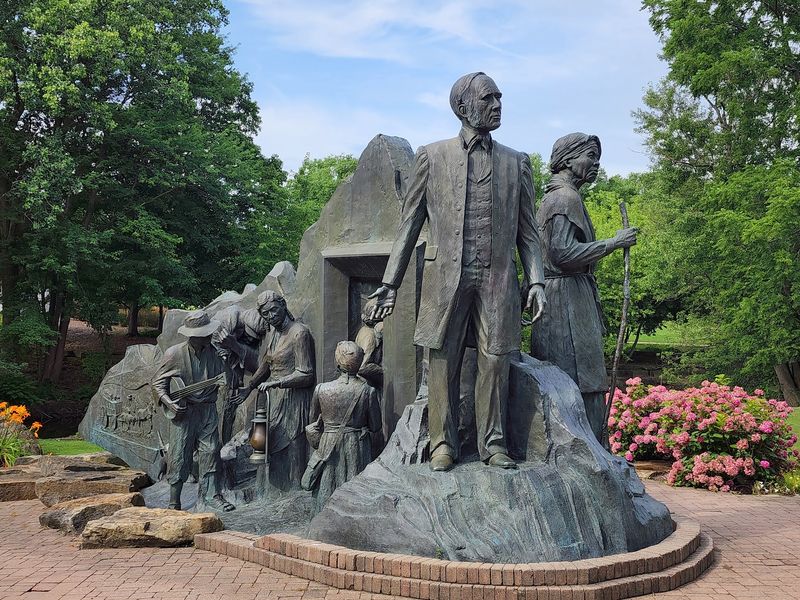
Battle Creek adds an artistic angle to the trail with its Underground Railroad Sculpture. Public sculpture can do a lot in a small space, especially when it turns history into shapes, figures, and movement you can read almost instantly.
That speed matters. Some sites ask for deep study, while others hit you with one strong image and let the meaning build from there.
A sculpture often does both. At first glance, you get the visual message.
Then, as you circle it and notice details, the story grows more layered.
This stop works especially well for travelers who like urban exploring with a side of history. You can weave it into a downtown walk, grab a meal nearby, and still come away with a meaningful connection to the past.
Public art has a way of meeting people where they already are, which makes it useful for families or mixed-interest groups.
Try looking at the piece from more than one angle. Artists often build in motion, tension, or symbolic elements that only become clear when you shift your position.
That slow walk around the sculpture can spark good questions about who is represented, what emotions are emphasized, and how a community chooses to remember a difficult chapter of history.
Battle Creek has broader abolition and reform associations, so the sculpture makes more sense when you see it as one part of a larger local story. Even if you only have a short time, reading nearby text or checking local history resources before arriving can sharpen the experience right away.
Best of all, this stop is easy to fit into a practical travel day. There is no need for a major time commitment to get something real from it.
The Underground Railroad Sculpture offers a direct, visual reminder that memory can live outdoors in public view, asking you to stop, look closely, and carry the story onward.
8. Elmwood Cemetery, Detroit
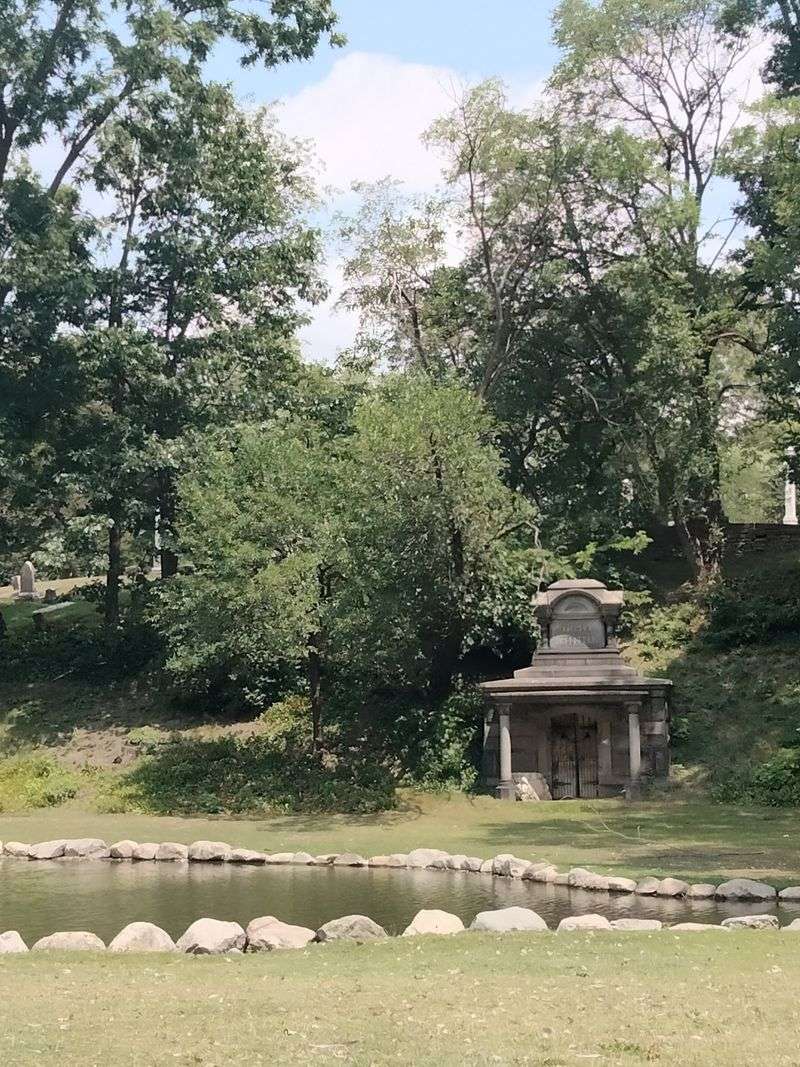
Elmwood Cemetery has the kind of layered city history that can change your pace in minutes. One moment you are in Detroit traffic, and the next you are in a broad historic landscape where names on stone hint at bigger stories of community, conflict, reform, and remembrance.
For an Underground Railroad themed trip, this cemetery offers a reflective counterpoint to churches, houses, and public memorials. Cemeteries are not always direct storytelling spaces, but they can connect you to important eras and people in a grounded, personal way.
They ask you to pay attention rather than hurry from point to point.
The scale of Elmwood is part of its appeal. Larger historic cemeteries often feel almost like outdoor archives, with changing sections, varied monument styles, and signs of how a city grew over time.
As you move through the grounds, you can think about Detroit as a place shaped by migration, activism, faith communities, and border history.
Because it is a large site, a little planning helps. Check maps in advance, know which areas or memorials you most want to see, and wear shoes suited for a fair amount of walking.
If you arrive without a plan, the cemetery can still be rewarding, but a few minutes of preparation makes the visit much smoother.
This stop is also a good choice for travelers who enjoy quiet observation. Look at dates, symbols, and family groupings.
Notice how memory is organized in space. Those details may not tell the full Underground Railroad story by themselves, yet they help place that history inside a real human community instead of a distant chapter in a book.
Elmwood Cemetery leaves room for thought, and that is its strength. You come away with a deeper sense that freedom history was lived by individuals with families, beliefs, and local ties.
In a city packed with landmarks, this one speaks softly, but it has plenty to say.
9. Dr. Nathan Thomas Underground Railroad House, Schoolcraft
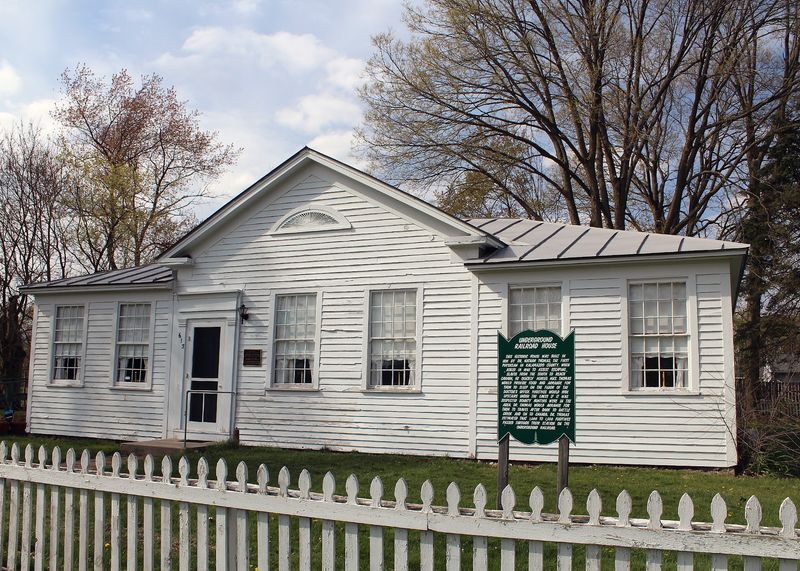
Here is the stop many history fans circle first. The Dr. Nathan Thomas Underground Railroad House in Schoolcraft gives you a direct connection to a home strongly associated with antislavery action, and that clarity makes it one of the most approachable places on the trail.
Historic houses can sometimes feel distant, but this one lends itself to practical imagination. You can think about doors opening, plans being made, meals shared, and difficult choices unfolding in ordinary domestic space.
That contrast is powerful. A regular home becomes the setting for uncommon courage.
If the house is open for tours, take full advantage of guided interpretation. House museums often reveal their best details through stories about routines, room use, and local networks.
Those details matter because the Underground Railroad depended on small actions adding up, not only dramatic moments. A guide can help turn furniture, floorplans, and family history into a clearer picture.
Schoolcraft also gives the site a quieter village setting, which can help you focus. Without big-city noise, the scale of the place stands out.
You are reminded that major national conflicts touched small Michigan communities in direct ways. That idea can be especially striking for younger visitors who assume important history only happened in famous locations.
Plan enough time to read exhibits closely if they are available, and do not rush the grounds. Exterior views, pathways, and outbuildings can all add context.
Ask about seasonal events too, since living history days or special programs may offer added depth without making the visit complicated.
The house works so well because it balances accessibility with seriousness. You do not need expert background to understand why the site matters, yet there is enough depth to keep history buffs interested.
On a trail filled with markers and memorials, this stop gives you the strong, concrete experience of standing at a place where difficult choices may have become real.
10. James E. Bonine Carriage House, Vandalia
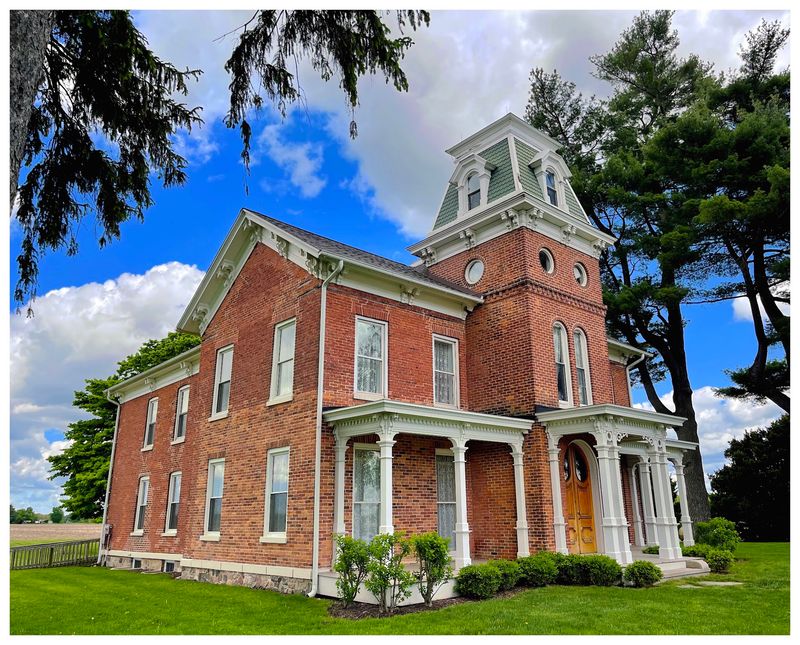
A carriage house is not the first place many people picture when they think about freedom history, and that surprise gives the James E. Bonine Carriage House real appeal.
It shifts your attention away from grand landmarks and toward the working spaces that supported everyday life.
That matters because the Underground Railroad relied on practical environments as much as symbolic ones. Outbuildings, yards, roads, and service areas can spark useful questions about concealment, movement, storage, and timing.
Even when a site does not answer every question directly, it can help you think more carefully about how help may have happened on the ground.
Vandalia is especially interesting for this kind of stop because it encourages a cluster approach. Seeing the carriage house along with other local Underground Railroad related sites creates momentum.
One place gives you a clue. The next place gives you another.
Soon the town begins to read like a connected map instead of a collection of separate addresses.
Pay attention to scale when you visit. Carriage houses were built for function, so their layout and position can tell you a lot about movement through a property.
Look at entry points, surrounding open space, and how the structure relates to nearby buildings. Those visual details can lead to thoughtful questions without drifting into guesswork.
This stop is also handy for travelers who prefer short visits with a strong theme. You do not need a whole afternoon to get something meaningful here, especially if you arrive with a little background on Vandalia’s local history.
A compact site can still carry major interpretive weight when it fits into a broader trail experience.
The James E. Bonine Carriage House rounds out the list nicely because it reminds you that history is not only preserved in formal parlors and public squares.
Sometimes it lingers around workspaces, side buildings, and the practical edges of a property, where daily routines and risky acts may have crossed paths.