Ginkgo Petrified Forest State Park in central Washington looks understated at first glance, then quickly turns into one of the state’s most fascinating landscape surprises. Just minutes from Interstate 90, the park combines ancient petrified wood, towering basalt cliffs, and sweeping Columbia River views into a setting that feels strangely timeless once you start exploring.
Polished slices of fossilized trees reveal colors and textures that seem almost impossible to believe came from wood millions of years old. The contrast between quiet desert scenery and dramatic geological history gives the whole place a memorable atmosphere. If you want a Washington stop that blends science, scenery, and genuine wow factor, this park absolutely deserves the detour.
Where the Desert Rim Drops Into the Columbia
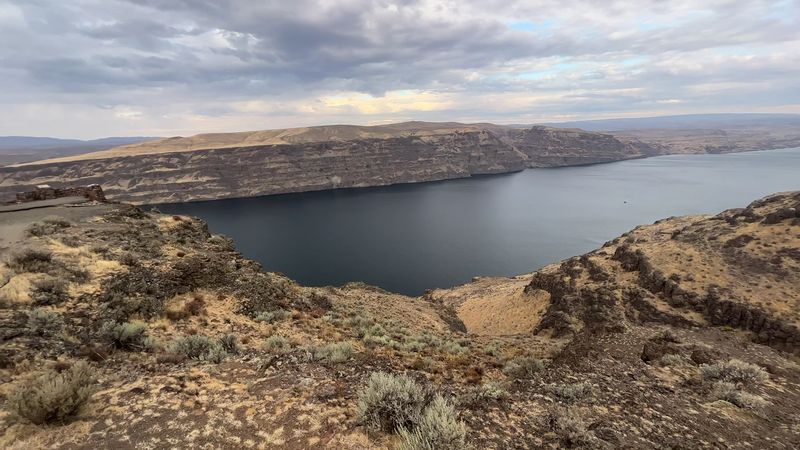
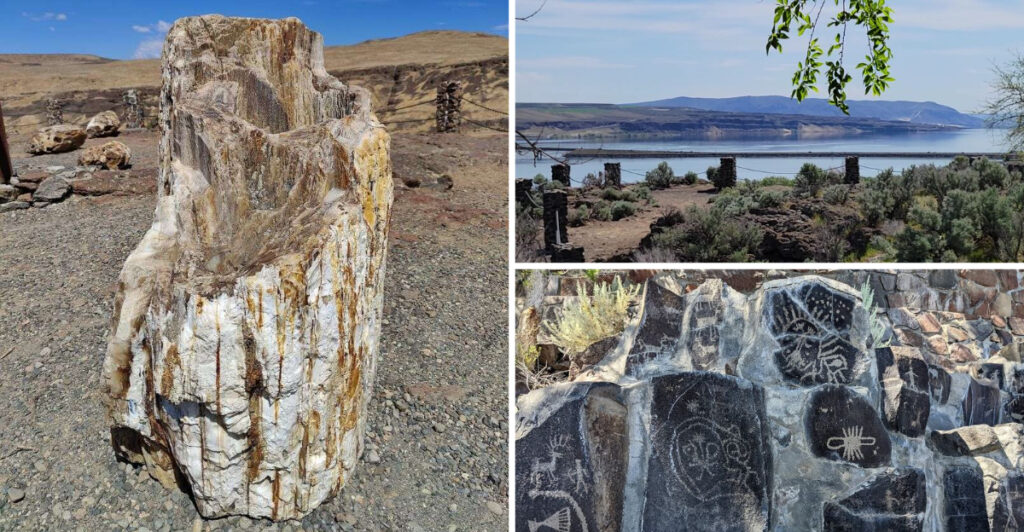
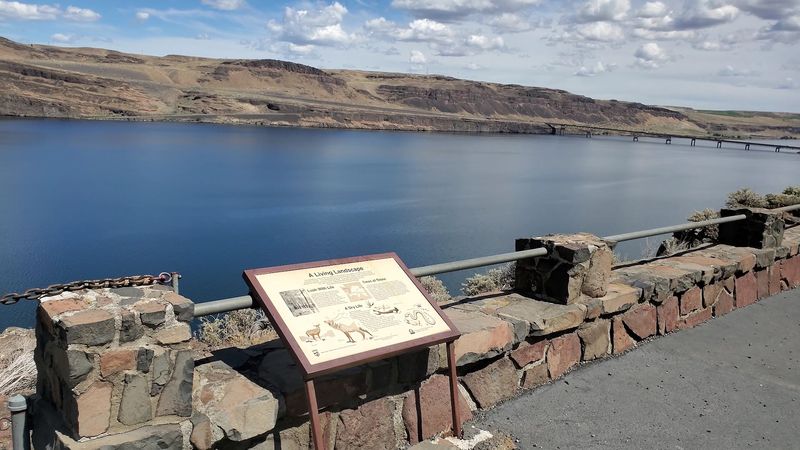
The surprise here starts with the setting. You leave the highway, climb a short distance, and suddenly stand above a huge sweep of river, coulee walls, and tan open country that looks more like a film set than a roadside stop in Washington.
The land is spare, windy, and sharply textured, with basalt edges and pale soil catching the light in different bands.
That contrast is a big part of the appeal. Forest is in the name, yet the first thing you notice is not a dense grove but an exposed landscape where deep time is written into cliffs, slopes, and scattered rock.
The openness works in the park’s favor because your eye can travel far, from the ridge top all the way down toward the Columbia.
Near the interpretive center, overlooks make it easy to pause and absorb the scale without committing to a long outing.
You get broad views quickly, which is ideal if this is a stop during a cross state drive, but the scenery is strong enough to reward a slower visit too. Wind often moves through the ridge, and that extra motion gives the place a lively edge.
Nothing here tries too hard. The color palette stays simple – rust, sage, charcoal, river blue – and that restraint makes the details stand out more clearly.
A cracked slope, a distant wall of columnar rock, or a narrow ribbon of water becomes its own event when the landscape around it stays clean and uncluttered.
If you arrive expecting a single display case and a quick photo, the view alone resets those expectations. This park introduces itself with scale, dryness, and silence, then lets the ancient wood explain the rest.
Before you even step inside, you already understand that this is not a decorative stop but a place shaped by enormous forces.
Ancient Wood That Looks Almost Too Beautiful to Be Real
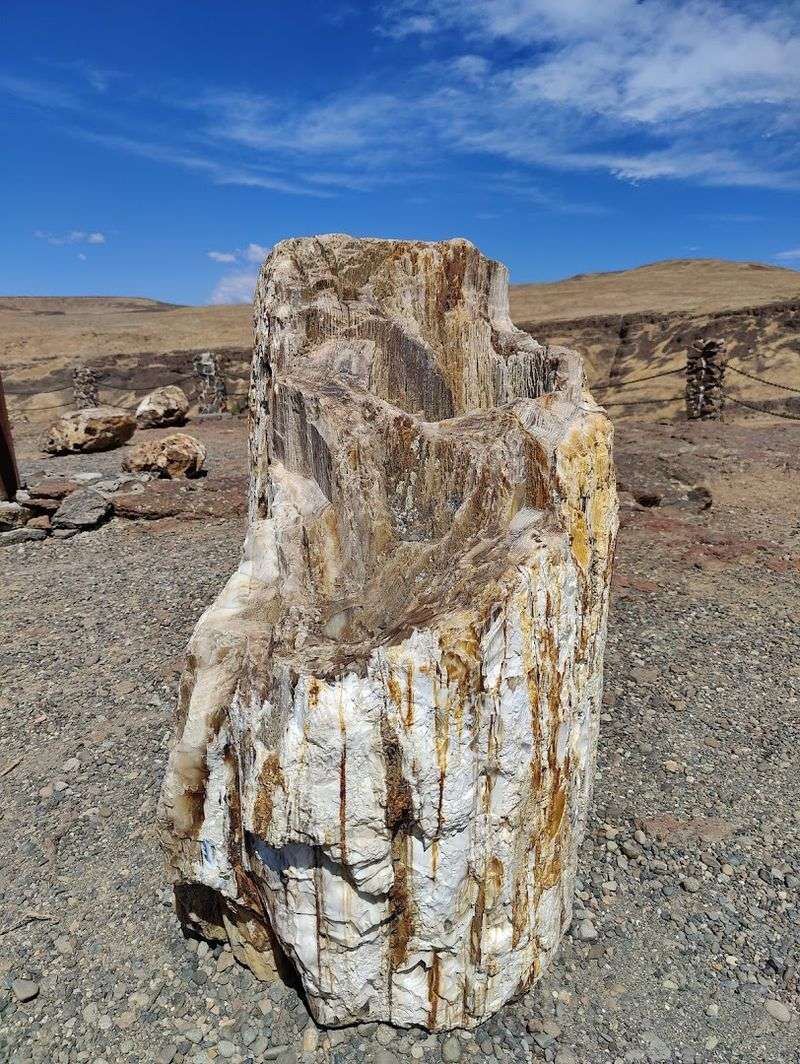
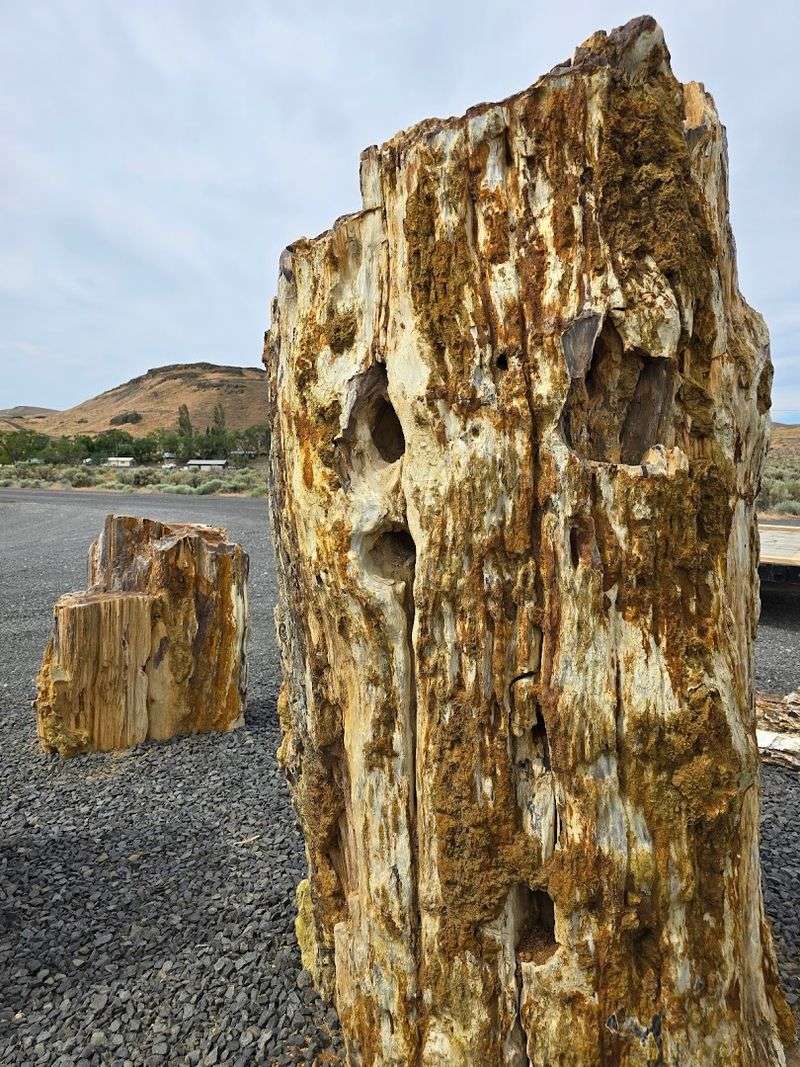
The headline attraction is the petrified wood, and it delivers in a way that feels both scientific and strangely artistic. Inside the interpretive center, cut sections and preserved pieces reveal grain, rings, bark texture, and mineral color with a level of detail that can stop you mid sentence.
Some specimens look like wood at first glance, then slowly register as stone with impossible patience behind it.
That double take is the whole magic of the collection. You are looking at trees, but you are also looking at geology, chemistry, burial, pressure, and time stacked into a single object.
The polished cross sections are especially compelling because they turn ancient plant life into patterns you can study like maps, each line and color shift holding a clue to a much older landscape.
Ginkgo is the name people remember, but the broader display matters just as much. The park is known for multiple types of petrified wood, and that variety adds depth to the visit because you are not staring at one repeated specimen over and over.
Instead, you get a richer sense that this area preserves a whole botanical story rather than a single fossil curiosity.
The exhibits work best when you move slowly. A quick walk through shows you impressive objects, but an extra few minutes lets the details sink in: the glossy mineral surfaces, the surprisingly crisp bark impressions, the visual difference between rough exterior pieces and neatly cut faces.
Kids can latch onto the wow factor, while adults tend to linger over how improbable the preservation seems. This is also where the park becomes more than a scenic overlook.
The petrified wood gives the place a clear identity, turning the dramatic setting outside into evidence of an ancient world rather than just a pretty view. You leave the gallery with the rare feeling that stone can be as expressive as any living forest.
The Small Museum That Sharpens Everything You See
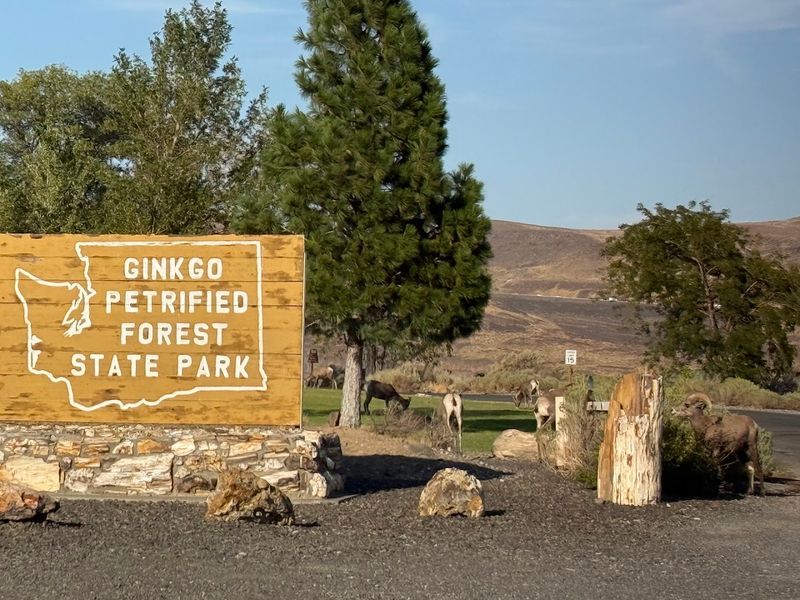
Some state park museums function as a side note. Here, the interpretive center is the piece that pulls the whole visit into focus, especially if you arrive knowing only that petrified wood is involved.
The displays connect the exposed terrain outside to the deep history under your feet, so the park reads less like a random scenic stop and more like a tightly edited story about landscape change.
The room is not overwhelming, and that is a strength. You can move through it without fatigue, absorb the basic geologic sequence, and still have enough attention left to go outside and notice the land differently.
Informational panels, specimens, and visual aids give just enough structure to help you understand why this stretch of central Washington matters.
That balance makes the center useful for all kinds of travelers. If you are on a long drive, it adds meaning without demanding half a day.
If you are already interested in fossils or regional geology, it provides context for the collection and helps explain how a place that looks dry and open today once supported very different plant life.
Another advantage is pacing. The park offers instant scenery, but the museum slows you down in a good way, turning your attention from distance and scale to process and detail.
After a few minutes inside, the basalt layers outside appear less like scenic backdrop and more like active evidence of what transformed this region over immense stretches of time.
That shift is why the interpretive center matters so much. It does not compete with the outdoor setting; it sharpens it.
By the time you step back into the bright air, the overlook, the trails, and even the scattered stone on the ground carry more meaning, which is exactly what a well done small museum should accomplish.
A Short Walk With Big Payoff in Washington
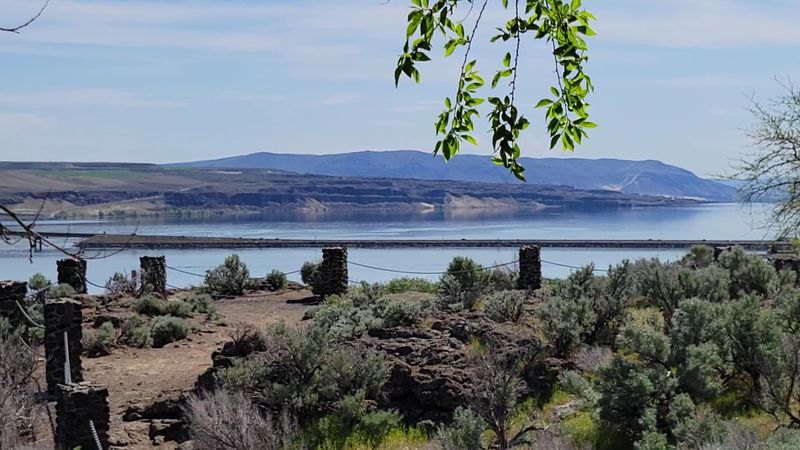
This park is especially satisfying because the effort-to-reward ratio is excellent. You do not need an all day hike, special gear, or a backcountry mindset to get a memorable experience here.
Short paths, overlooks, and interpretive stops let you build a visit that matches your schedule, whether you have twenty minutes or a relaxed afternoon.
The walking is generally approachable, which opens the park to more people than a strenuous destination would. Paved sections and easy paths make it possible to stretch your legs after a highway drive without turning the stop into a logistical project.
Families, road trippers, and anyone wanting scenery without a major climb can get a lot from the site. Along the trails, the mood changes subtly as you move away from the building.
The overlook experience is broad and panoramic, while the outdoor displays feel more specific, pulling your attention to individual specimens, rock textures, and the shape of the ground. That shift keeps the visit from blending into one long scenic glance.
You may also notice how quickly the park toggles between educational and cinematic. One moment you are reading a marker or inspecting petrified wood, and the next you are staring across layered cliffs toward the river with almost no visual clutter in the frame.
That rhythm is a big reason the place works so well for fast scanners and curious wanderers at the same time. If timing is tight, this is still a smart stop. You can see the view, learn something concrete, and be back on the road without rushing through a giant site.
If you have longer, the same landscape rewards a slower pace, especially when the light changes and the basalt, brush, and water start showing off different colors.
Petroglyphs and the Park’s Quieter Layer of Discovery
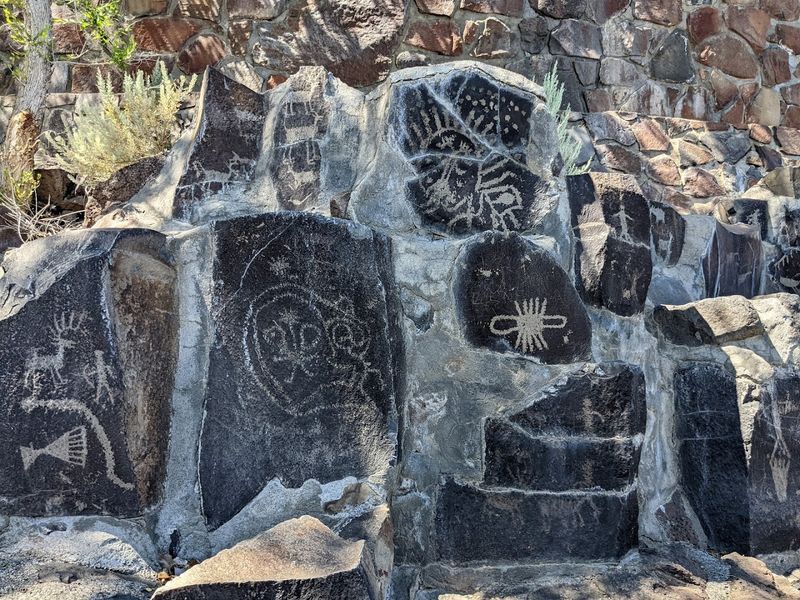
One of the park’s most interesting turns comes from a feature many people do not expect to find here: petroglyphs.
Their presence changes the visit from a geology stop into something broader, reminding you that this ridge above the Columbia is not only ancient in a natural sense but also connected to human history in a visible, immediate way. The effect is grounding rather than flashy.
Set near the interpretive area, the petroglyph display adds a different rhythm to the park. The petrified wood points your attention toward vanished forests and immense spans of geological change, while the carved stone asks you to think about people, movement, and cultural memory tied to this landscape.
Those two narratives sit side by side without competing. That matters because the park could have been easy to reduce to one big fossil headline. Instead, the petroglyphs broaden the scope and keep the visit from becoming one note.
You move from river views to stone wood to carved imagery, and each stop changes the questions you ask about the place.
The display also suits the setting. The surrounding terrain is open and stark enough that details carry more weight, and carved forms in stone feel especially powerful against that backdrop. Nothing is buried beneath heavy visual noise, so even a short pause can leave a strong impression.
If you are planning time here, do not skip this part in a rush to get back on the highway. It is one of the park’s best examples of how a compact site can still offer layered experiences.
You arrive for petrified wood, then leave remembering a fuller landscape where geology, river country, and human traces all remain visible at once.
How to Time Your Stop for the Best Experience
Because the park sits so close to Interstate 90, timing can shape the visit more than you might expect. Showing up when the interpretive center is open gives you the fullest version of the experience, since the exhibits provide context that the outdoor scenery alone cannot fully deliver.
According to the current posted schedule, the center operates Thursday through Sunday from 10 AM to 5 PM, with closures Monday through Wednesday.
That practical detail matters if you are crossing the state and deciding whether to stop now or later. The overlooks and outdoor areas still offer visual payoff, but the museum adds the specimens and explanations that make the landscape click.
If the goal is a complete visit rather than a quick leg stretch, aim for open hours. Light is another factor worth considering. The terrain is dry, exposed, and wide open, so sun angle changes the park dramatically without changing the actual route.
Morning can feel crisp and clear, while later light tends to deepen the color in the basalt, soften the slopes, and make the Columbia shimmer more strongly from the ridge.
Wind is common enough that it deserves a mention. Even on a pleasant day, the overlook can feel brisk, so a light layer is smart if you want to linger outside.
Water and sun protection also make sense, especially in warmer months, because shade is limited and the landscape reflects heat in a very direct way.
If you are planning this as a break in a long drive, give it more time than a gas station stop and less than a major hiking destination.
That middle ground is exactly where the park shines. It is easy to access, easy to understand, and much more memorable when you give it enough room to unfold.
Why This Vantage Stop Stays With You
Some roadside attractions survive on novelty alone. Ginkgo Petrified Forest State Park stands out because it layers novelty with real substance, giving you unusual specimens, strong scenery, and a compact lesson in Washington geology all in one stop.
The place is easy to reach, but it does not feel disposable once you are there. The name suggests trees, yet the surrounding country is dry, rocky, and expansive, with river views and basalt walls doing most of the visual work.
Then the petrified wood steps in and bridges that gap, turning the stark setting into proof that this landscape has changed on a scale far beyond everyday imagination.
Few places preserve this wide variety of petrified wood in such an accessible setting, which is part of what makes Ginkgo so remarkable beyond Washington alone.
The park does not just display fossilized trees – it preserves evidence of an ancient ecosystem transformed across millions of years.
The park also resists the trap of being only educational or only scenic. If you want a quick panoramic pull off, it delivers.
If you want exhibits, outdoor interpretation, and a better grasp of how central Washington was shaped, it delivers that too without demanding huge effort. That combination is rare.
Plenty of places are beautiful but vague, and plenty of places are informative but visually flat. Here, the ridge top views, the museum specimens, the short trails, and the petroglyph display all reinforce one another, so the visit gains momentum instead of feeling fragmented.
In practical terms, this is one of the smartest stops on this stretch of I-90. In memorable terms, it is a reminder that Washington holds landscapes far stranger than the evergreen stereotype suggests.
You come for petrified wood, and you leave with a sharper sense of the Columbia corridor, the power of geologic change, and the pleasure of finding a park that uses every minute of your attention well.
Share this story