Ancient cliff dwellings are often associated with faraway destinations, but one of the world’s most extraordinary archaeological sites is right here in Colorado. Mesa Verde National Park preserves hundreds of ancestral Puebloan dwellings built into towering sandstone cliffs, offering an unforgettable glimpse into a civilization that flourished more than 700 years ago.
Beyond the remarkably preserved structures, visitors are treated to sweeping canyon vistas, scenic drives, and a deeper understanding of the people who called this remarkable landscape home. Whether you’re fascinated by history, archaeology, or breathtaking scenery, Mesa Verde delivers an experience that rivals some of the world’s most celebrated ancient sites.
The View That Rewrites Your Colorado Expectations
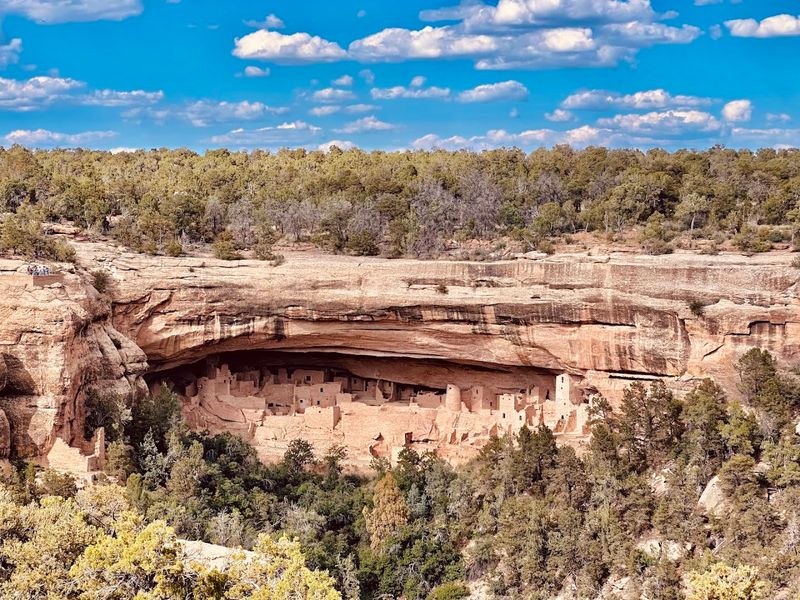
The road into Mesa Verde does not ease you in with small hints. It rises, bends, and suddenly opens onto a broad world of mesas, canyons, and broken cliff lines that look more like a film set than a standard Colorado park.
If your mental picture of the state is snow peaks, ski towns, and evergreen valleys, this landscape resets the whole frame within minutes.
Up here, the air is dry, the vegetation is low and aromatic, and the horizon seems arranged in shelves. Pinyon and juniper spread across the tablelands, while the canyon walls cut down in clean bands of tan, rust, and shadow.
The contrast is the first jolt: open sky above, deeply folded terrain below, and hidden architecture tucked into the rock where you would least expect a village to survive for centuries.
That visual setup matters before you even reach the famous dwellings. Mesa Verde is not impressive because one ruin appears at the end of a trail.
It works because the entire park teaches you to scan the cliffs differently, to notice alcoves, ledges, routes, and water sources, and to understand why these protected spaces mattered.
Even the overlooks do more than provide pretty stops for photos. They let you read the land the way a settlement story requires – where the sun hits, where shade gathers, how distance protects, and how stone can become shelter.
By the time you step out at the first major viewpoint, Colorado no longer feels like a backup option to some overseas archaeological trip. It feels like its own astonishing chapter, written directly into the canyon wall.
Cliff Palace Is the Showstopper, but Not in a Theme-Park Way
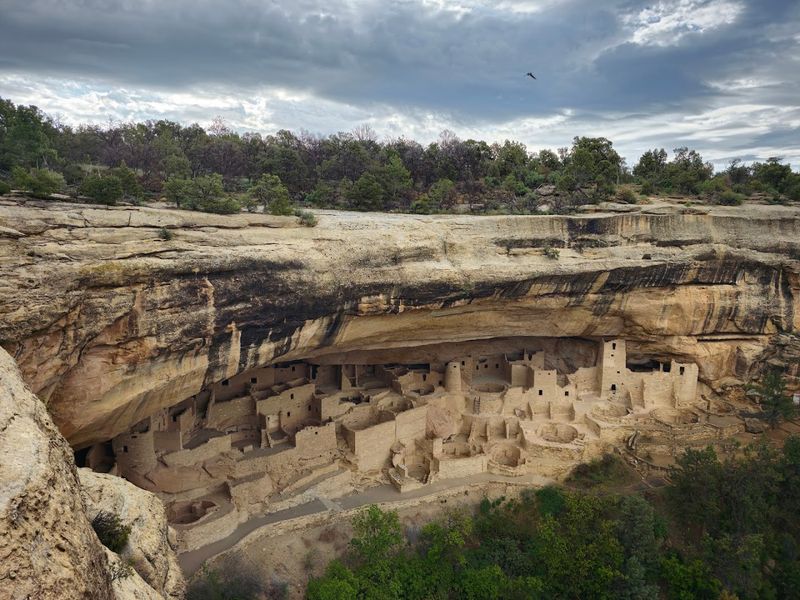
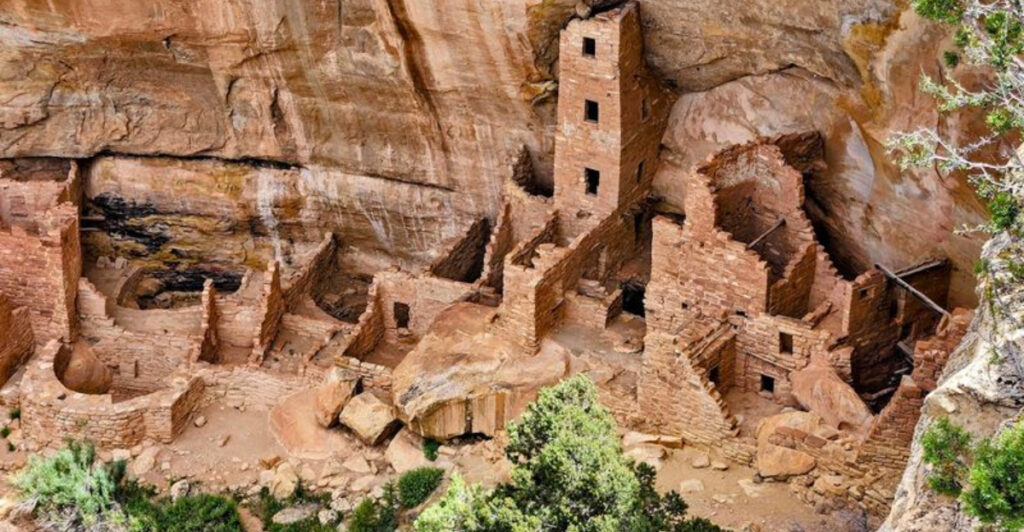
Cliff Palace gets the headline treatment, and for once the hype is pointed in the right direction. The site occupies a huge recessed alcove, with stacked stone rooms and round kivas arranged so naturally beneath the overhang that the settlement appears to grow out of the cliff itself.
It is large, intricate, and startlingly complete from a distance, yet the real impact comes from how intelligently it uses every fold of stone.
This is not the kind of landmark that relies on one dramatic angle and then fades once you look closer. As you study the masonry, the towers, the room blocks, and the shape of the alcove, the settlement becomes more legible instead of less.
You begin to see planning rather than picturesque ruin, and that shift changes the whole experience. The architecture carries a strange mix of delicacy and durability.
Small openings, carefully placed walls, and circular ceremonial spaces create visual rhythm across the cliff face, while the overhanging rock makes the community seem sheltered without ever looking hidden away.
It is easy to understand why Cliff Palace anchors so many Mesa Verde itineraries, because it turns archaeology into something spatial and immediate rather than abstract.
Just as important, the setting prevents the place from becoming overproduced or theatrical. You are still dealing with distance, elevation, stone, and a canyon environment that controls the pace of attention.
That grounding keeps Cliff Palace from feeling like a museum piece dropped into nature for effect. Instead, it reads as evidence of people who understood this landscape at a level most modern travelers only begin to grasp after standing quietly in front of those walls for a while.
Balconies, Ladders, and the Physical Logic of the Place
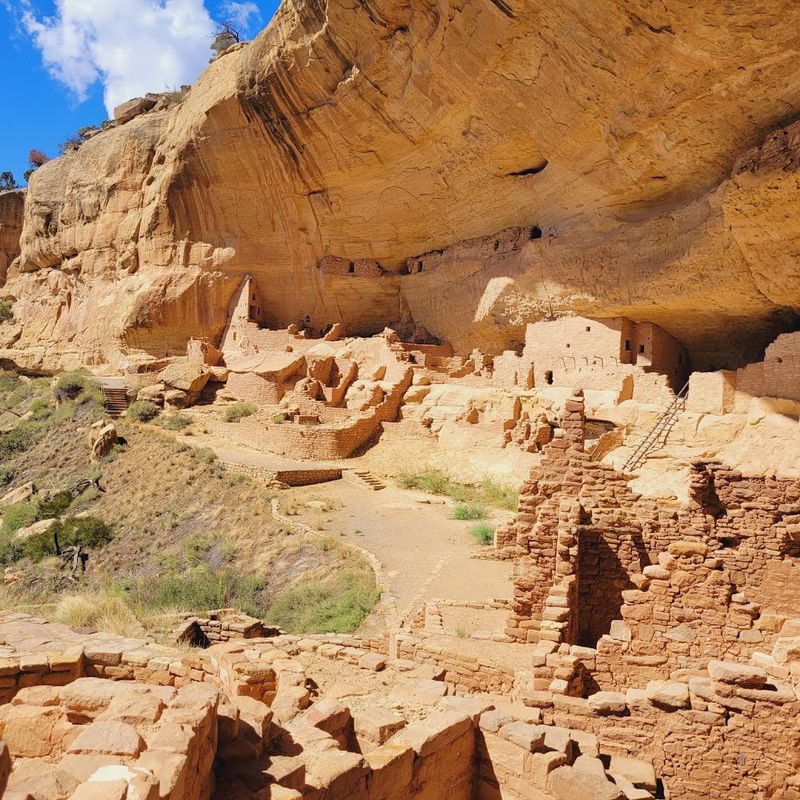
One of Mesa Verde’s smartest surprises is that the park is not only visual. On ranger-guided tours of sites like Balcony House, it becomes physical in a very specific, controlled way, and that changes how the ancient dwellings register in your body.
Ladders, stone steps, narrow passageways, and cliff-side routes turn movement into part of the lesson instead of leaving everything at overlook distance.
That active dimension matters because the settlements were never designed for detached observation. They were entered, climbed, navigated, and inhabited through a network of vertical choices and tight circulation spaces.
When you encounter those transitions yourself, even briefly, the architecture stops being a flat postcard and starts making practical sense.
Balcony House often captures this energy best, because the route can involve ladders and more confined access than many travelers expect from a national park visit. Suddenly the ledges feel narrower, the stone textures sharper, and the protection of the alcove more meaningful.
Rather than producing cheap adrenaline, the physical approach clarifies how defense, shelter, community layout, and terrain worked together.
You do not need the experience to be extreme for it to be effective. In fact, Mesa Verde works precisely because the movement is measured, not theatrical, and tied directly to the landscape you are trying to understand.
Every rung, handhold, and stair segment makes the park more legible. Instead of absorbing information from signs alone, you test the scale of walls, the angle of access, the exposure of openings, and the practical challenge of daily circulation.
That tactile layer gives Mesa Verde an advantage over many archaeological sites, because the place can still teach through your feet, your balance, and your sense of space.
A Human Story Written by Ancestral Pueblo Builders
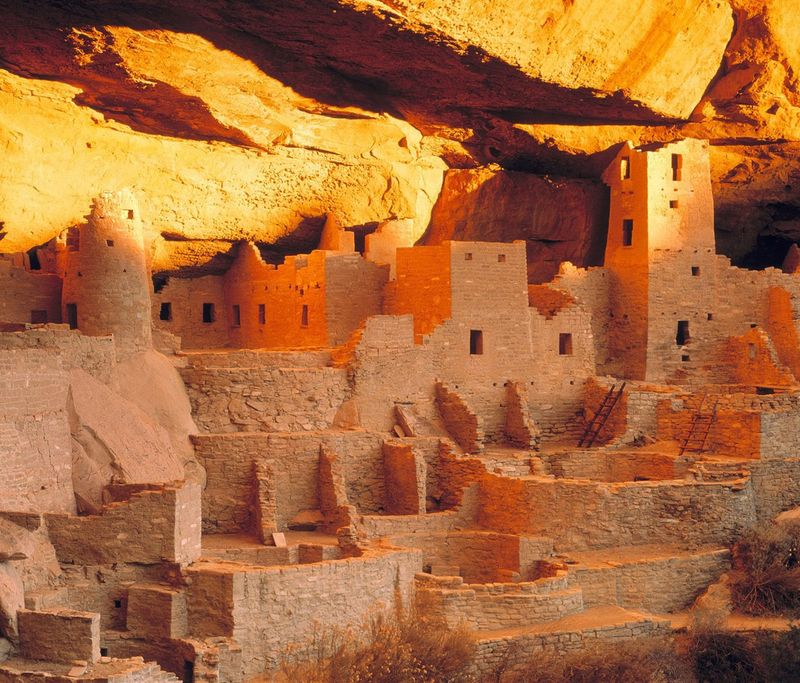
The strongest reason Mesa Verde rises above simple sightseeing is the human scale of the story. These dwellings were not isolated curiosities placed in cliffs for modern fascination.
They were built by Ancestral Pueblo people whose communities developed agriculture, architecture, storage systems, ceremonial spaces, and social organization in a demanding environment that required skill, adaptation, and deep knowledge of place.
You can sense that intelligence in the details before reading much interpretation. Room blocks align tightly within alcoves, masonry patterns reveal craft, and kivas introduce a ceremonial dimension that broadens the conversation beyond shelter alone.
This was community planning under exact conditions, with every wall and opening responding to terrain, climate, and collective life.
Responsible travel here means resisting the urge to flatten the park into a vanished mystery. Mesa Verde is archaeological, but it is also connected to living Native communities whose ancestral ties continue to matter.
That context changes the tone of a visit in the best way, moving attention away from treasure-hunt curiosity and toward respect for continuity, ingenuity, and cultural depth.
The park’s power grows when you hold both timescales together. On one level, you are looking at structures that have endured in stone alcoves for centuries.
On another, you are encountering evidence of ordinary and ceremonial rhythms – cooking, storing food, gathering, climbing, building, teaching, and adapting season after season. Those traces make the site more intimate than many oversized historic attractions.
Mesa Verde does not need exaggerated myth to command attention. Its walls, plazas, and kivas already tell a sharper story: people created durable, sophisticated places here, and the landscape still carries their decisions with remarkable clarity.
Where Colorado Light Does Half the Storytelling
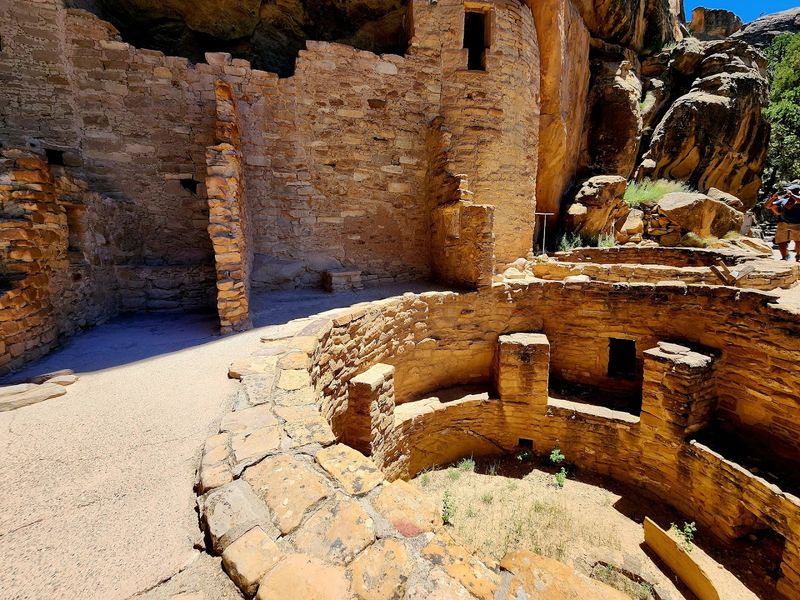
Timing changes Mesa Verde more than many first-time visitors expect. Midday can flatten some of the canyon depth, while early and late light carve the cliffs into stronger layers, pulling out the shape of alcoves and the rough grain of masonry.
The park becomes more readable when shadows start doing real work. That is especially true at overlooks, where the canyons can seem broad and distant until angled light sharpens every fold. Stone turns warmer, recesses deepen, and the dwellings begin to separate visually from the surrounding wall.
Instead of blending into the cliff as a pale pattern, they emerge with clearer edges and a stronger sense of placement.
The high-desert atmosphere adds another layer. Wind moves through the trees with a dry hiss, the sky often looks unusually expansive, and colors stay restrained enough that small shifts become dramatic.
Rust, cream, muted green, and blue dominate the palette, so when sunlight catches a tower or brightens the underside of an alcove, your eye goes there immediately.
If you want the park at its most cinematic, aim for the hours when the landscape starts stretching its shadows. The architecture looks more dimensional, the mesas gain contour, and the distance between overlooks and cliff dwellings feels less like empty space and more like part of the composition.
This is also when the contrast between open plateau and protected recess becomes clearest, which helps the settlements make intuitive sense. Good timing will not replace solid planning or access reservations, but it can elevate everything from casual viewpoints to major sites.
At Mesa Verde, light is not just scenery. It is a guide, revealing how sandstone, shelter, and human construction fit together across the face of the canyon.
How to See Mesa Verde Without Rushing Past the Good Parts
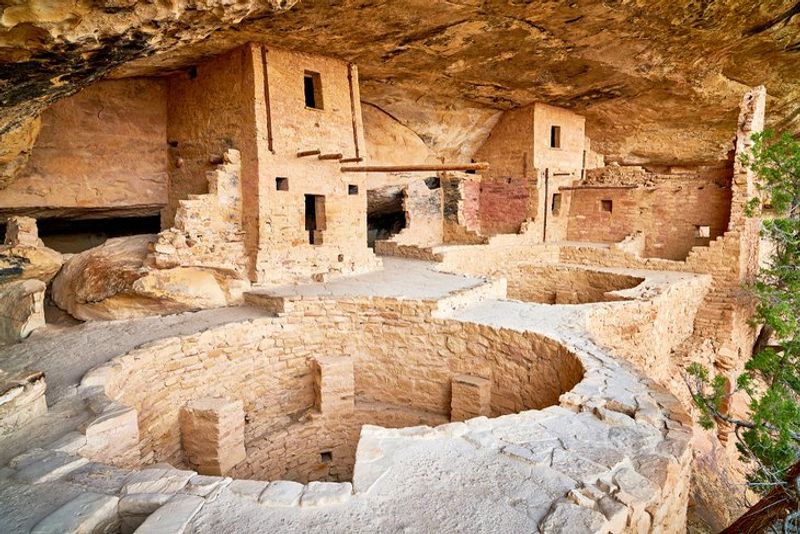
Mesa Verde rewards pacing more than speed. The park covers a large area, the roads take time, and the most dramatic experiences are spread between overlooks, short walks, museums, and ranger-led access to key dwellings.
Treating it like a single quick stop usually means missing the way the landscape gradually explains the architecture.
A better approach is to build the day in layers. Start with broad views to understand the mesa-and-canyon geography, then move toward the signature cliff dwellings once your eye has adjusted to the terrain.
That sequence turns the ruins from isolated spectacles into answers to questions the land has already raised. It also helps to leave space between major stops.
Mesa Verde is full of moments that work because you are not hurrying past them – a sudden alcove visible from a turnout, a short path that reveals a wider canyon angle, a museum exhibit that clarifies how villages shifted over time.
The park’s rhythm is cumulative, and the strongest days here build insight one viewpoint at a time. Practical planning improves the experience without draining the spontaneity out of it. Check which cliff dwellings require ranger-guided tours or advance reservations, as availability varies by season.
If you are traveling with anyone unsure about ladders or tighter spaces, choose routes accordingly rather than forcing every famous stop into the schedule. The goal is not to conquer a checklist.
It is to understand why this place matters, while still having enough energy to notice the quieter details that many travelers skip. When Mesa Verde is given time, the drive, the overlooks, and the dwellings begin to connect into one coherent landscape story.
Why Mesa Verde Beats the Overseas Comparison Game
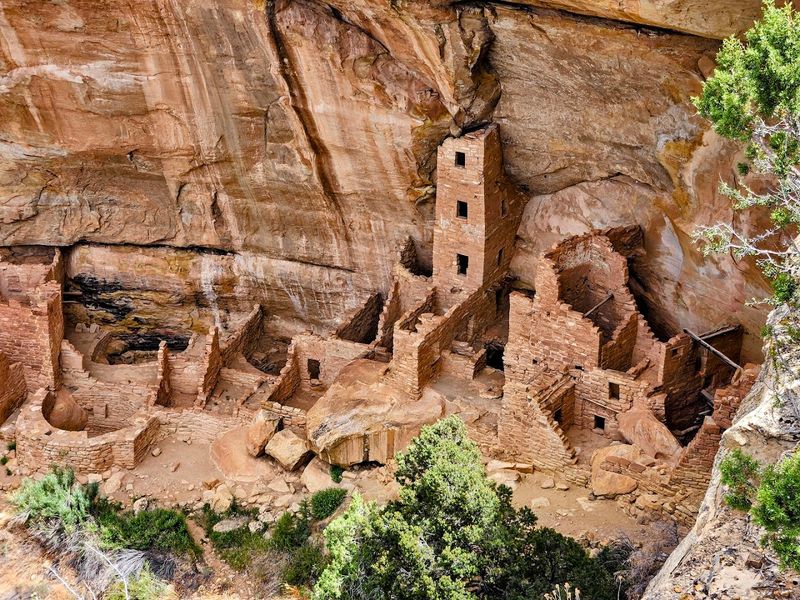
Comparing Mesa Verde to famous archaeological sites abroad makes for a catchy headline, but the park wins on its own terms. You are not getting a copy of somewhere else.
You are getting a distinctly North American cultural landscape where high-desert ecology, canyon topography, and Ancestral Pueblo architecture combine in a way that is specific, legible, and deeply rooted in the Southwest.
That distinction matters because travel hype often trains people to chase distance instead of depth. Mesa Verde offers depth in abundance.
The park gives you geological drama, architectural sophistication, visible settlement strategy, and a strong interpretive framework, all in a setting that remains rugged enough to keep the story connected to the land. It also delivers a rarer kind of surprise. Plenty of destinations are known for being impressive before you arrive.
Mesa Verde catches many travelers off guard because the scale of the dwellings, the power of the alcoves, and the complexity of the park do not fully register until you are standing above a canyon rim or tracing a wall line beneath an overhang. The revelation is part of the experience.
So if the question is why travel to Peru when Colorado has ancient cliff dwellings, the sharper answer is this: you do not need a substitute, and you do not need a consolation prize. Mesa Verde is neither.
It is a major archaeological destination with its own visual language, cultural weight, and landscape logic. The cliff villages are extraordinary, but so is the broader setting that frames them.
By the end of a well-planned visit, the comparison game starts to feel unnecessary. Colorado is offering its own masterpiece here, built from stone, shadow, altitude, and human ingenuity, and it stands firmly enough that it never needs to borrow grandeur from anywhere else.
Share this story