Gold figures glow beneath richly painted panels on the third floor of a Newark museum, but this is not simply an elaborate display assembled to look impressive. The Tibetan Buddhist altar before you is a genuine sacred space, created by a Tibetan artist and formally consecrated by the 14th Dalai Lama in 1990.
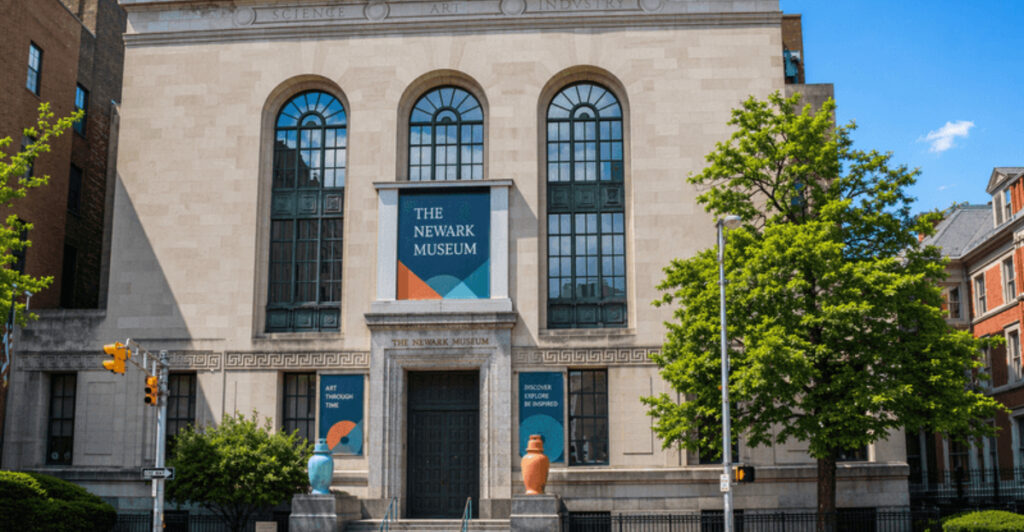
That would be enough to make the trip memorable, yet the altar occupies only one corner of the enormous Newark Museum of Art. New Jersey’s largest fine art museum cares for more than 300,000 artworks, cultural objects, scientific specimens, and natural-history treasures across a 3.1-acre campus.
A visit can take you from Himalayan religious art to Hudson River School landscapes, African sculpture, a Gilded Age mansion, rare minerals, and a planetarium without leaving Washington Street. It is the kind of place where planning to “look around for an hour” has a funny way of becoming an entire afternoon.
The Newark Museum of Art Holds More Than 300,000 Treasures
Long before sprawling cultural campuses became fashionable, librarian and museum pioneer John Cotton Dana had a rather bold idea for Newark. He believed museums should be useful, welcoming places where ordinary people could encounter art, science, design, and objects from around the world.
Working with local collectors, business leaders, and public officials, Dana established the museum in 1909 at the Newark Public Library. Its early holdings included several thousand Japanese artworks acquired from Newark pharmacist George T.
Rockwell, setting an international tone that still shapes the institution today. The museum now stewards more than 300,000 objects, giving it the 12th-largest museum collection in the United States.
That number includes much more than paintings hanging quietly on white walls. Approximately 170,000 objects belong to the science and natural-history holdings, ranging from seashells and minerals to animal specimens and a mastodon skeleton.
The American art collection adds more than 12,000 paintings, sculptures, works on paper, and multimedia pieces dating from the 18th century to the present.
Visitors may encounter Hudson River School landscapes, folk art, Colonial portraiture, modernism, and works by artists including Helen Frankenthaler, Carmen Herrera, Norman Lewis, and Mickalene Thomas.
All of this fits within a campus that includes the main galleries, historic buildings, a garden, and science attractions. The scale is impressive, but the museum rarely feels like it is trying to overwhelm you with numbers.
Its strength is the way those hundreds of thousands of objects are arranged into approachable stories about creativity, belief, identity, nature, and life in Newark. One gallery may reward careful looking, while the next practically dares you to follow your curiosity through the nearest doorway.
A Sacred Tibetan Altar Sits at the Heart of the Asian Galleries
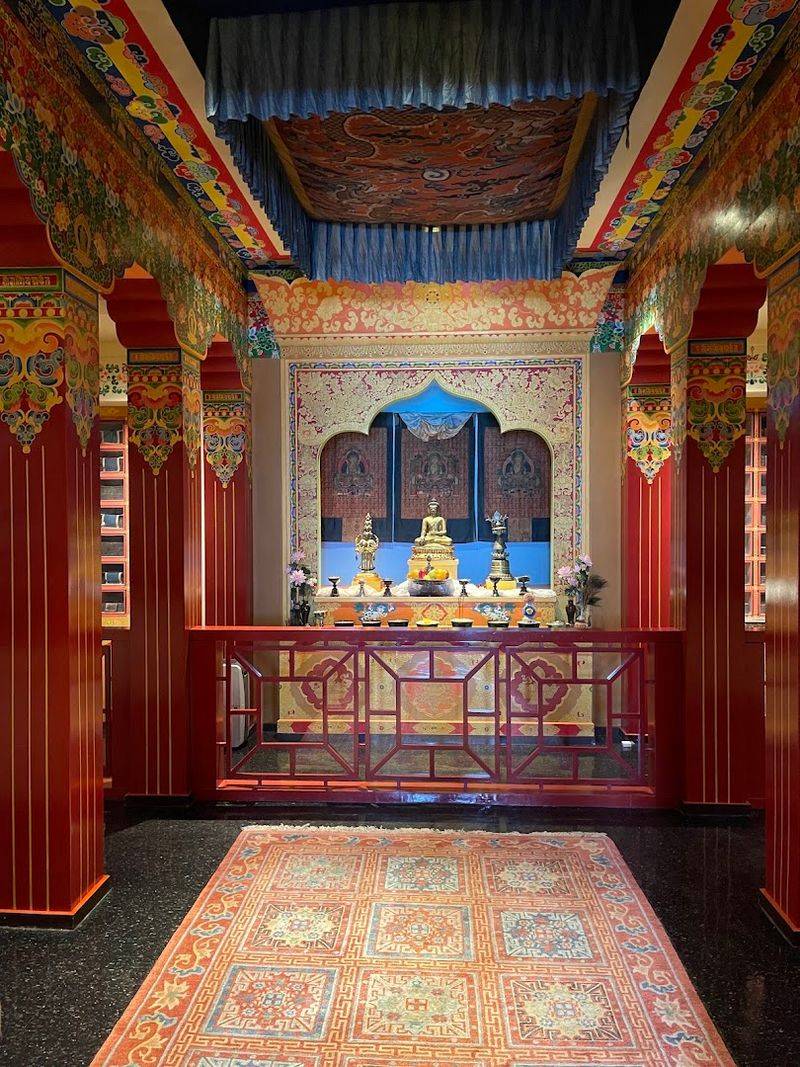
Take the elevator or stairs to the third floor of the North Wing, and the museum’s personality changes almost immediately. The Arts of Global Asia galleries draw from a collection of nearly 30,000 objects, with works connected to Japan, China, Korea, South Asia, Southeast Asia, and the Himalayas.
At the center is the Tibetan Buddhist altar, surrounded by devotional objects and visual details that encourage visitors to slow down rather than rush past. In Tibetan Buddhist practice, an altar is not merely a decorative arrangement.
It is designed as a sacred setting for images representing the Buddha and his teachings, a focus for ritual, contemplation, and offerings made in devotion to enlightenment. That purpose gives the Newark installation a presence quite different from an ordinary museum display.
Its sculptures, paintings, architectural elements, and ceremonial arrangement belong to a living religious tradition, even while being preserved inside an American art institution. The altar also anchors what the museum describes as North America’s largest Tibetan art collection.
Newark began exhibiting Tibetan objects in 1911, and the holdings eventually grew to include thousands of pieces spanning roughly the 11th through the 21st centuries. That long relationship helps explain why the altar does not feel tacked onto the galleries as an exotic showpiece.
It is part of more than a century of collecting, scholarship, exhibitions, and collaboration with Tibetan artists and religious authorities. The wider Asian galleries place it within themes such as heroes, nature, and transcendence, connecting objects from different cultures without flattening their individual meanings.
There is also a Community Lab used for demonstrations, workshops, participatory activities, and collaborative projects. Still, the altar remains the room’s undeniable center of gravity.
Even visitors who know little about Tibetan Buddhism tend to recognize that they have entered a place deserving more than a quick photograph and a passing glance.
Tibetan Artist Phuntsok Dorje Created the Remarkable Altar
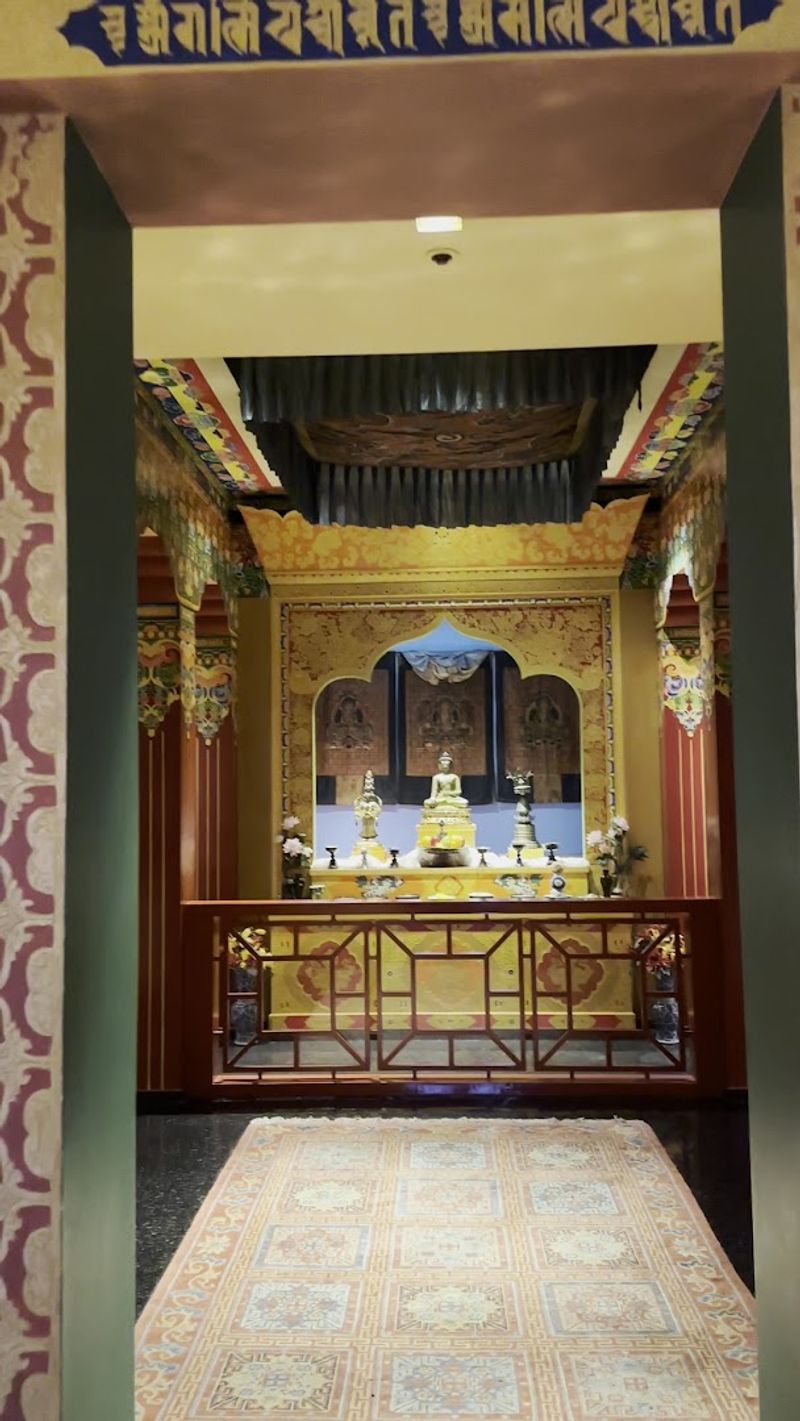
This altar’s modern story began with a problem the museum took seriously. Newark had displayed a Tibetan-style altar since 1935, but that earlier version had been built by American artists working on a special museum assignment.
Decades later, the institution set out to replace it with something created through direct Tibetan knowledge, craftsmanship, and religious consultation. The new altar became part of a major initiative called Tibet, the Living Tradition, which ran from 1988 through 1991.
Phuntsok Dorje, a Tibetan artist trained at Rumtek Monastery in Sikkim, came to Newark as an artist-in-residence during 1989 and 1990. He did not simply arrive with a finished structure ready to be placed behind glass.
Dorje worked alongside museum staff, Tibetan consultants, scholars, and other collaborators to design and construct the installation within the galleries. That process matters because nearly every element of a traditional Buddhist altar carries meaning.
The placement of images, the relationship between figures, the painted ornament, and the space reserved for offerings all contribute to its religious function. Dorje’s training allowed the museum to move beyond surface-level imitation and create an altar rooted in the practices it represents.
The result also connected Newark’s historical Tibetan holdings with contemporary Tibetan cultural knowledge rather than treating the collection as something frozen in the past.
Dorje returned in 1999 to paint the entrance during a later reinstallation connected with the exhibition From the Sacred Realm, further developing the setting visitors see today.
Knowing his role makes the workmanship even more compelling. The altar is beautiful, certainly, but beauty is only part of its purpose.
It is also the result of years of planning, collaboration, artistic labor, and careful decisions about how a sacred tradition could be respectfully presented in a public museum. That backstory turns the installation from an eye-catching gallery centerpiece into something far more layered and human.
The Dalai Lama Consecrated the Altar During His 1990 Visit
In 1990, the newly completed altar crossed an important line between expertly made artwork and active sacred space. His Holiness the 14th Dalai Lama visited the Newark museum and formally consecrated it, continuing an unusually close relationship between the institution and Tibetan Buddhist culture.
Consecration is more substantial than a ceremonial ribbon cutting or an honorary blessing added for prestige. Within Tibetan Buddhist tradition, the ritual prepares and activates an altar for its religious purpose, recognizing the images and objects it contains as part of a sacred environment.
That distinction explains why the installation has such significance. Visitors are not looking at a museum decorator’s interpretation of a Himalayan shrine.
They are standing before an altar created with Tibetan guidance and ritually consecrated by one of the world’s best-known Buddhist leaders. The 1990 ceremony also represented a major moment in a relationship that had already lasted nearly 80 years.
The museum’s first exhibition of Tibetan material took place in 1911, when comparatively few American institutions were presenting Tibetan art in depth.
Over the following decades, Newark continued collecting secular and religious works, eventually building a Tibetan collection recognized for both its size and unusually broad range.
The altar gave those objects a meaningful context, showing how sculpture, painting, ritual implements, textiles, and other works could function together rather than as isolated masterpieces in separate cases. Its consecration strengthened that connection between the historical collection and living practice.
You do not need to understand every figure or symbol to appreciate the moment represented here.
The story is clear enough on its own: a museum in downtown Newark spent years working with an artist, scholars, and Tibetan advisers to create the setting properly, and the Dalai Lama came to New Jersey to complete its transformation into a sacred place.
That is not the sort of detail most people expect to discover behind a museum doorway on Washington Street.
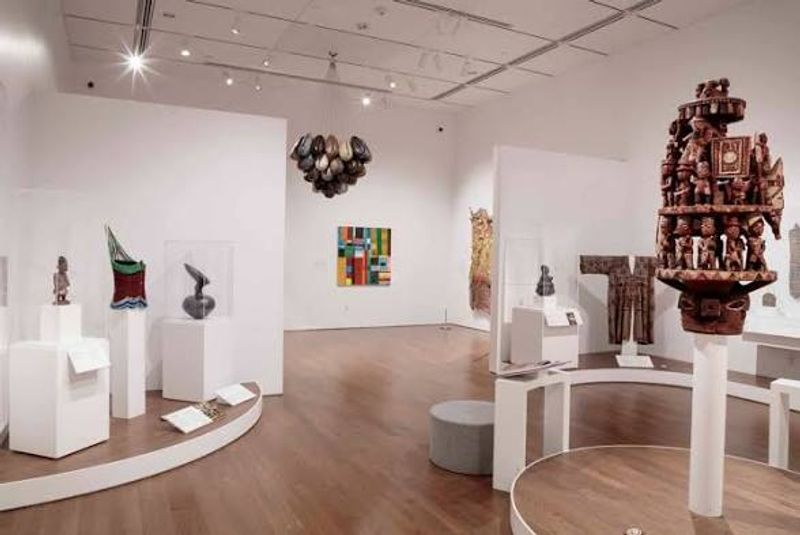
Global Art Collections Turn Every Floor Into a New Adventure
Leave the altar behind, and the museum quickly proves that its international reach extends far beyond one celebrated gallery.
Its Arts of Global Africa collection dates to 1917 and now includes roughly 7,000 objects, making it one of the earliest and most comprehensive African collections assembled by an American museum.
Masks, sculpture, clothing, jewelry, textiles, photography, paintings, household objects, and new media represent artistic traditions from across the continent and its global communities. The museum is particularly strong in North African material, Yoruba art, textiles, and modern and contemporary work.
Elsewhere, the Arts of the Americas collection contains more than 4,500 objects spanning North, Central, and South America, from Alaska to Argentina and from pre-Columbian cultures to living artists.
Indigenous North American art is a major strength, including ceramics, stone objects, clothing, beadwork, baskets, and textiles.
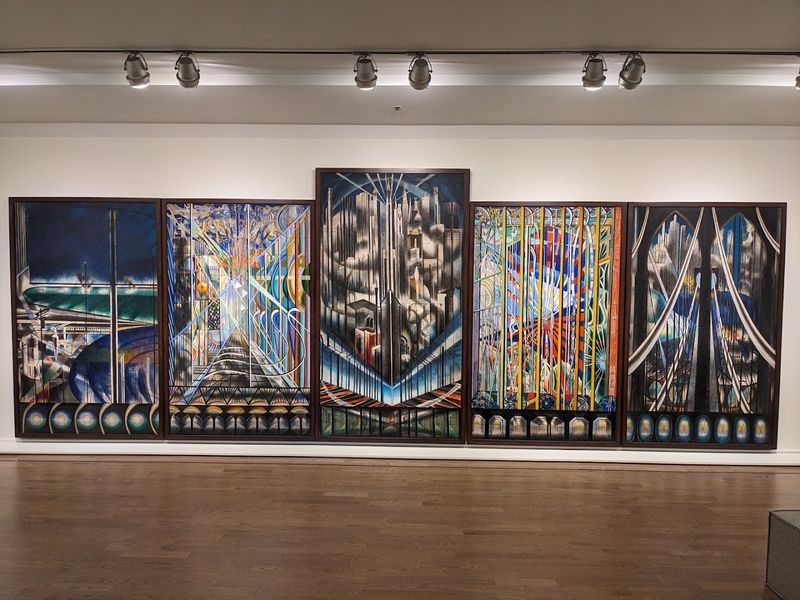
Then there is the American art collection, where the familiar story of American painting expands in several directions.
Colonial portraits and grand landscapes appear alongside folk art, African American art, modernism, multimedia installations, and contemporary work by artists with local and international connections.
The museum began building its African American art collection in 1929 with Henry Ossawa Tanner’s The Good Shepherd, decades before many institutions treated the field as a serious collecting priority. This variety keeps a visit from settling into a predictable rhythm.
You might spend ten quiet minutes with a landscape, turn a corner toward a glittering contemporary piece, and then find yourself studying an object made for ceremony or daily life centuries earlier.
The museum’s original belief that art should be global, useful, and accessible still comes through in those transitions.
Rather than presenting one narrow version of art history, it lets Newark’s own international character echo through the galleries. The pleasure is in following whatever catches your attention next, even when it was not part of the original plan.
The Ballantine House and Planetarium Make This More Than an Art Museum
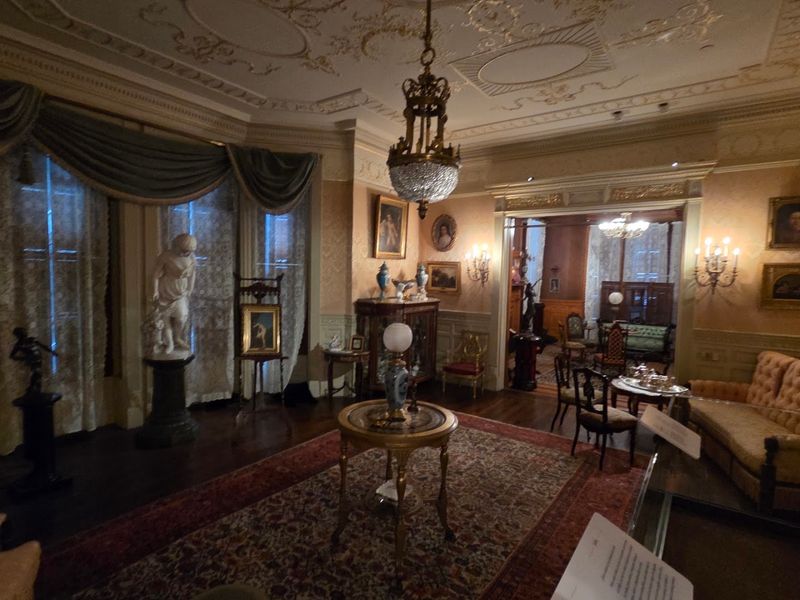
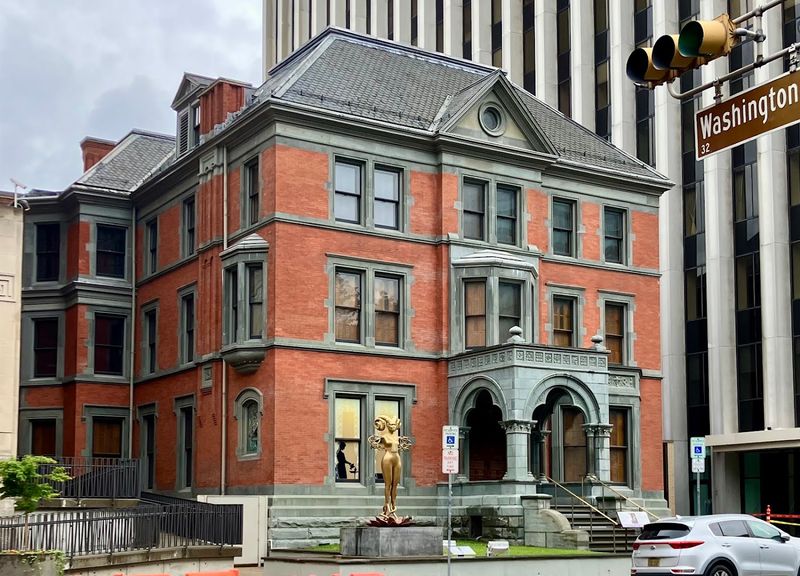
Just when you think you have figured out what kind of museum this is, a 27-room Victorian mansion and New Jersey’s first planetarium complicate the answer. The Ballantine House was completed in 1885 for Jeannette and John Ballantine, members of Newark’s prominent brewing family.
Architect George Edward Harney designed the three-story brick and sandstone residence, while Newark craftspeople supplied the skilled labor and decorative work.
Now attached to the museum complex, the National Historic Landmark contains restored rooms, historical objects, contemporary art, interactive displays, and exhibitions examining the people who built, maintained, and lived in the house.
A major restoration completed between 2021 and 2023 refreshed its interior and exterior while expanding the stories told inside. Visitors can explore Made in Newark, a Listening Lounge devoted to the city’s musical history, and installations addressing subjects including Black women in 19th-century Newark.
Back in the main building, the Alice and Leonard Dreyfuss Planetarium provides an entirely different change of pace. Opened in 1954 as New Jersey’s first planetarium, the 50-seat theater presents programs about stars, planets, spaceflight, and astronomy beneath a full dome.
The museum itself is located at 49 Washington Street and is currently open Thursday through Sunday from noon to 5 p.m. General museum admission is $10 for adults and $8 for children, seniors age 65 and older, teachers, and students with identification.
Advance reservations are required, and construction has temporarily removed on-site parking, so nearby garages or metered spaces are the practical options. Planetarium programs require separate tickets, and schedules change throughout the year.
Together, the mansion, science collection, historic schoolhouse, garden, and planetarium make the campus feel less like one enormous gallery and more like several distinctly Newark experiences sharing the same address.
Share this story