Michigan is full of surprises, and most people only think of the Great Lakes when they picture the state. But tucked between small towns, forests, and shorelines are places so strange and stunning that they almost feel made up.
From ancient underground springs to fairy-tale castles, this state has a wild, hidden side that most visitors never get to see. Get ready, because these nine spots are about to completely change how you think about Michigan.
1. Kitch-iti-kipi / The Big Spring — Manistique
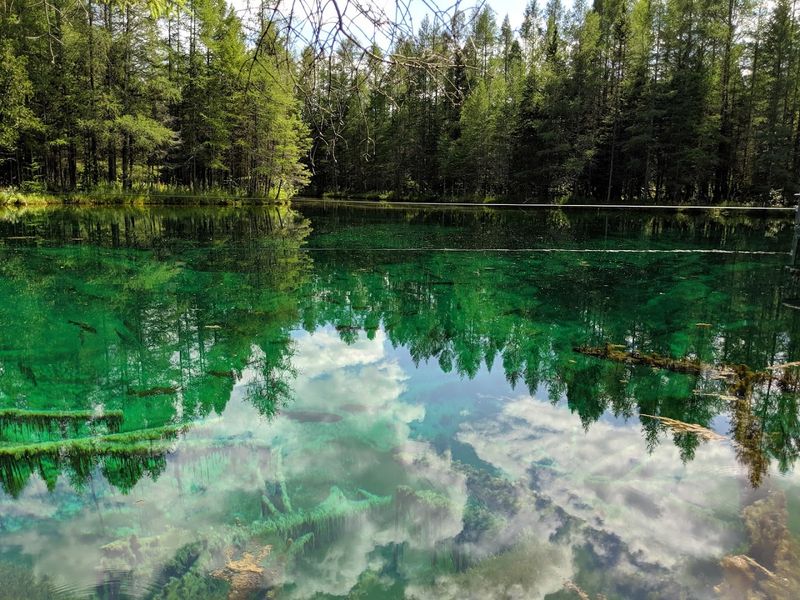
Picture water so clear you can see every pebble, every fish, and every ancient log resting on the bottom — and the spring that holds all of it never freezes, even in the dead of a Michigan winter. That is Kitch-iti-kipi, also known as the Big Spring, and it sits inside Palms Book State Park just outside Manistique in the Upper Peninsula.
At roughly 200 feet wide and 40 feet deep, it is Michigan’s largest natural freshwater spring, pumping out about 10,000 gallons of crystal-clear water every single minute.
The water maintains a steady temperature of around 45 degrees Fahrenheit year-round, which is part of why it stays ice-free even when everything around it is buried in snow. Visitors hop onto a self-operated observation raft — yes, you pull yourself across using a cable — and float directly over the spring to peer down into that impossibly blue-green water.
It feels like staring through a giant aquarium window set into the earth.
The name Kitch-iti-kipi comes from the Ojibwe language, and the spring holds deep cultural significance for Native American communities in the region. According to Ojibwe legend, the spring was a place of reflection and spiritual connection, and honestly, standing above it today, that feeling still lingers.
Huge brown trout drift lazily beneath the raft, completely unbothered by the people gawking above them.
Getting there requires a short walk through a forested area, which only adds to the sense of discovery. There is a small day-use fee to enter the state park, but the experience is worth every penny.
If you have never been, add this one to your Michigan bucket list immediately — it genuinely looks like something out of a nature documentary, not the Midwest.
2. Helmer Castle — Jackson
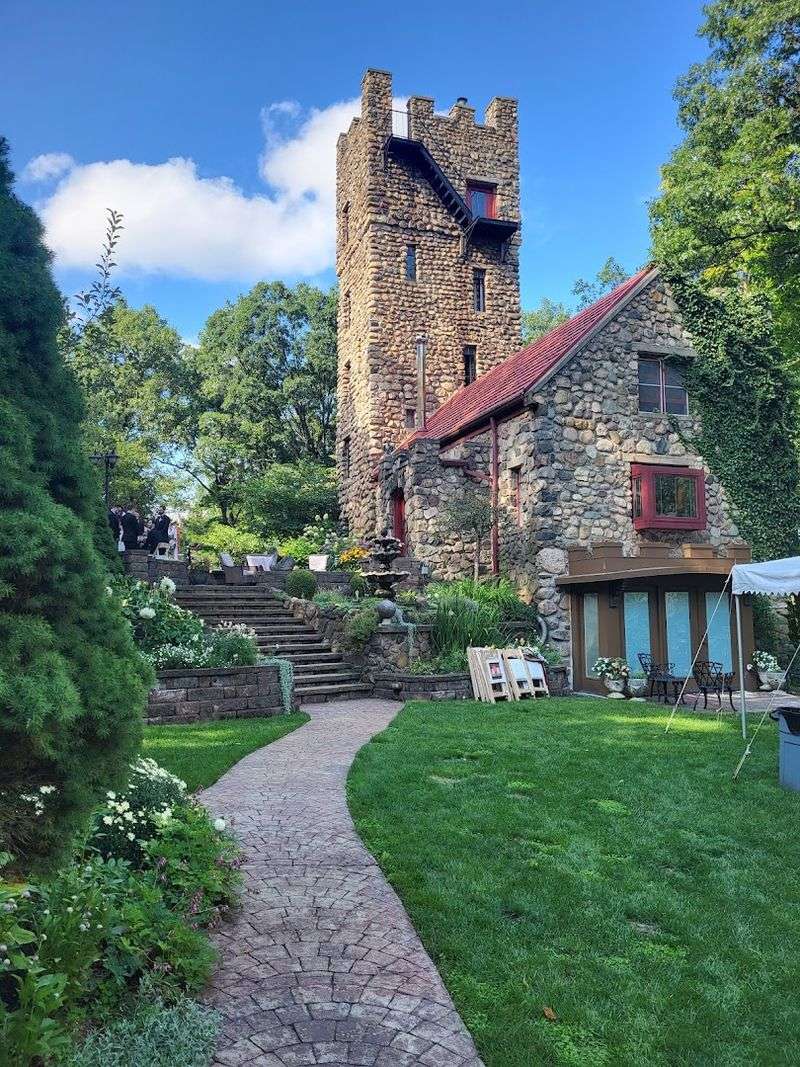
Most people drive through Jackson without ever knowing there is a full-on castle hiding in plain sight. Helmer Castle is a massive, turreted stone mansion that looks like it was lifted straight out of medieval Europe and quietly dropped into a Michigan neighborhood.
Built in the late 1800s, the structure features the kind of dramatic stonework and towering design that makes you do an actual double-take the first time you see it.
The castle was originally built by Clemens Helmer, a German immigrant who clearly had big architectural ambitions. The building’s design drew on European Romanesque influences, giving it that heavy, fortress-like quality that still turns heads today.
Over the decades it has served various purposes, shifting hands and uses as the city around it changed, but the structure itself has remained a striking fixture in Jackson’s architectural landscape.
What makes Helmer Castle feel so surreal is the contrast — you are driving through a regular American town, and then suddenly there it is, looming behind the trees like something your brain has to process twice. It is not a tourist attraction in the traditional sense, which actually makes stumbling upon it feel even more unexpected.
The building has that rare quality of feeling genuinely out of place in the best possible way.
Local history enthusiasts have long championed the castle as one of Jackson’s most underappreciated landmarks. If you are into architecture or just love finding weird and wonderful things in small Michigan cities, this one delivers.
Snap photos from the street and take a moment to appreciate the sheer audacity of building a European-style castle in mid-Michigan. It is exactly the kind of discovery that makes exploring this state so endlessly rewarding.
3. Turnip Rock — Port Austin
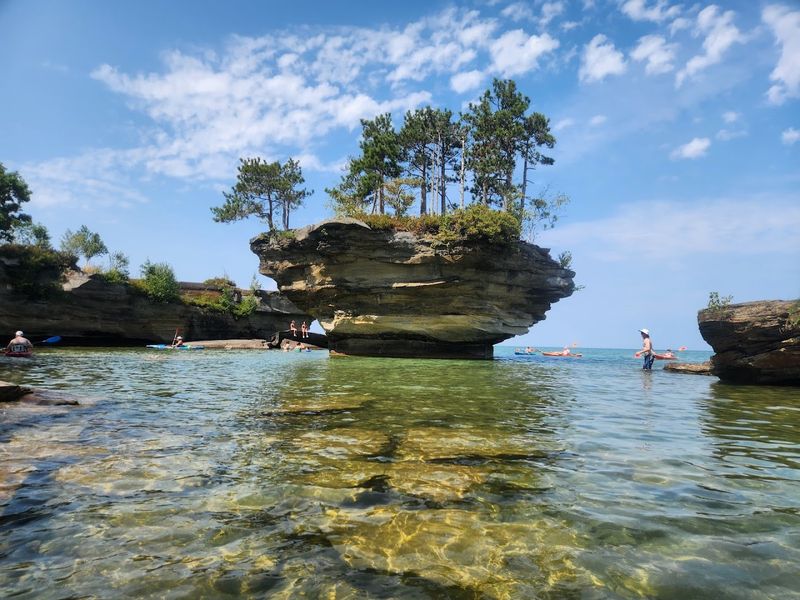
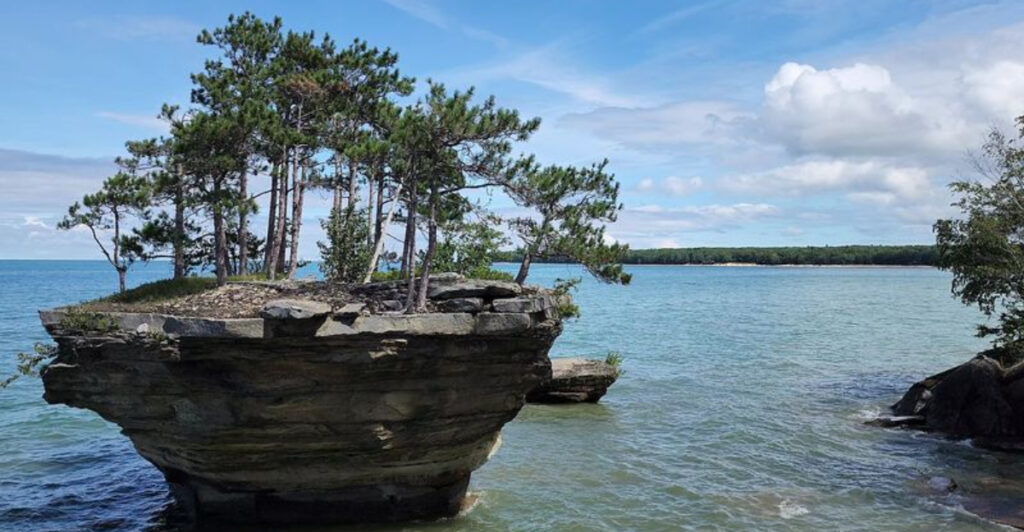
Turnip Rock might be the most photographed natural landmark in Michigan that most people outside the state have never heard of. Jutting up from the waters of Lake Huron near Port Austin on the tip of the Thumb Peninsula, this bizarre rock formation is shaped almost exactly like an upside-down turnip — narrow at the base, wider at the top, and somehow sprouting a cluster of trees up there like a tiny floating forest.
The only way to reach it is by water. Kayakers and paddleboarders make the roughly four-mile round-trip journey from Port Austin to get up close, and the paddle itself is gorgeous — hugging the rocky shoreline of Lake Huron with views that shift around every bend.
Several local outfitters in Port Austin rent kayaks and offer guided tours, making it accessible even for people who have never paddled before.
The rock sits in an area known for its dramatic limestone formations, a geological feature carved out by thousands of years of wave action and erosion along the Lake Huron shoreline. Turnip Rock is the most dramatic result of that process, but the surrounding area is dotted with smaller arches, caves, and sculpted cliffs that make the whole paddling route feel like an adventure.
Early morning trips are especially magical — the water is calmer, the light is soft, and you often have the whole stretch practically to yourself.
Port Austin itself is a charming small town worth spending some time in before or after your paddle. Good food, friendly locals, and that laid-back Thumb Peninsula energy make it a perfect base for the trip.
Turnip Rock is one of those places that genuinely looks fake in photos — and somehow even more unreal when you are floating right next to it.
4. The Fairy Forest of Grass Lake Village — Grass Lake
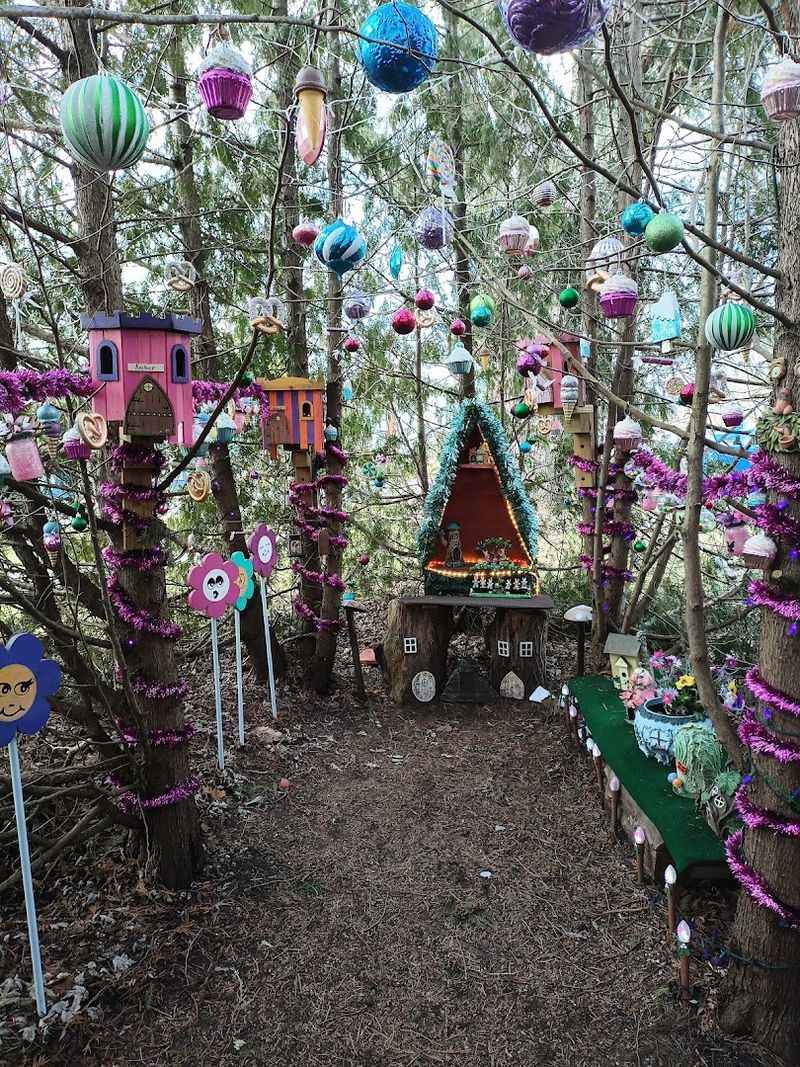
Somewhere between a community art project and an actual fairy tale, the Fairy Forest of Grass Lake Village is one of the sweetest surprises in all of Michigan. Tucked into a wooded area near the village, this enchanted little trail is filled with handcrafted fairy houses, tiny doors built into tree trunks, miniature gardens, and all sorts of whimsical details that have been added and expanded by community members over time.
It has a grassroots, built-with-love quality that no theme park could ever replicate.
Kids absolutely lose their minds here — but honestly, so do adults. There is something genuinely moving about walking through a forest where people have taken the time to create tiny, intricate worlds tucked between tree roots and mossy rocks.
Every visit reveals something new, because the community keeps adding to it, and the forest itself changes with the seasons. A fairy door that blends into autumn leaves looks completely different in a blanket of winter snow.
The trail is free to visit and open to the public, which makes it one of those hidden Michigan gems that feels almost too good to be true. Grass Lake is a small community in Jackson County, not exactly on most travel radar, but the Fairy Forest has been quietly drawing visitors who leave genuinely charmed.
Bring a camera with a macro setting if you have one — the tiny details reward close-up photography in a big way.
Whether you are bringing little ones who still believe in magic or you simply appreciate creative community spaces, the Fairy Forest delivers a rare kind of joy. It reminds you that not every magical place needs a ticket booth or a parking fee.
Sometimes the best spots are the ones a small town built purely out of love.
5. Miners Castle — Munising
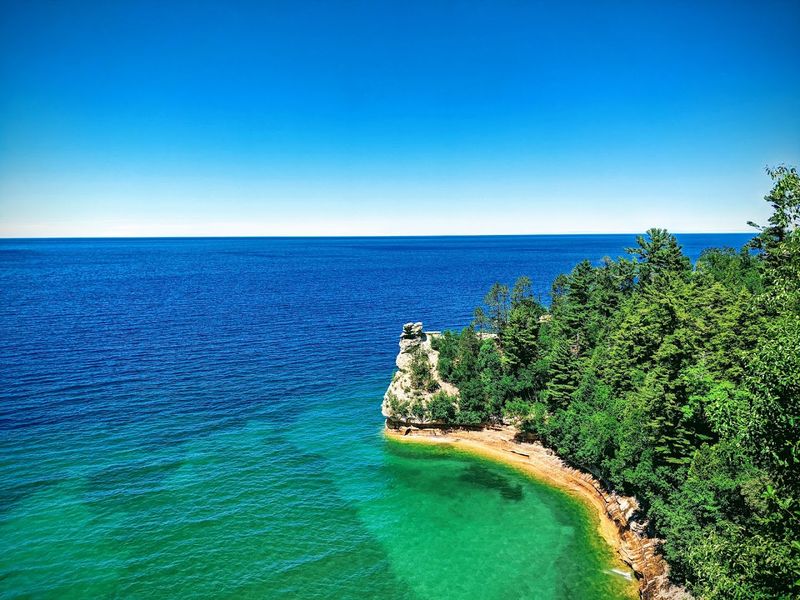
Standing at the edge of Miners Castle, looking out over Lake Superior’s almost impossibly blue water, it is hard to believe you are still in Michigan and not somewhere along the coast of Ireland or Iceland. This towering sandstone rock formation at Pictured Rocks National Lakeshore rises dramatically above the lake, its twin turrets shaped by centuries of erosion into something that genuinely resembles a medieval fortress wall.
It is one of the most iconic viewpoints in the entire Upper Peninsula.
Pictured Rocks gets its name from the vivid streaks of color that run through the sandstone cliffs — deep reds, oranges, and greens caused by mineral deposits leaching through the rock over thousands of years. Miners Castle is the most accessible and most dramatic section of those cliffs, reachable via a short trail from a well-maintained parking area.
The viewing platform at the end puts you right at the edge, with nothing between you and a straight-down drop to the crystal-clear water below.
The area around Miners Castle is packed with other things worth exploring. Miners Beach is a short walk away and offers some of the clearest freshwater swimming you will find anywhere in the Great Lakes.
Miners Falls, another nearby stop, drops about 40 feet through a forested gorge and is easily one of the most photogenic waterfalls in the UP. You could easily spend a full day in this one corner of Pictured Rocks without running out of things to see.
Munising itself is a great base camp for exploring the area, with food, lodging, and boat tour operators that take visitors along the full length of the painted cliffs by water. But even if you only have a couple of hours, Miners Castle alone makes the drive to the UP completely worth it.
6. Charlevoix Mushroom Houses — Charlevoix
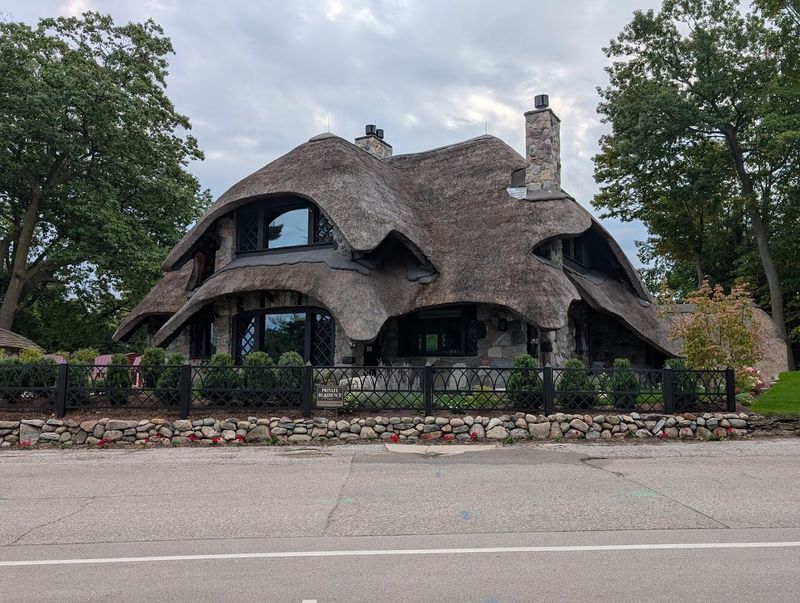
Earl Young was an architect who clearly played by his own rules. In the early to mid-1900s, he designed and built a series of homes in Charlevoix that look less like residential buildings and more like something out of a Brothers Grimm illustration.
Known locally as the Mushroom Houses — or sometimes the Hobbit Houses — these structures feature sweeping, curved rooflines, rough-hewn boulders, and organic shapes that make them look like they grew out of the ground rather than being built on it.
Young had no formal architectural training, which might be exactly why his work looks so unlike anything else. He sourced massive boulders from the Lake Michigan shoreline and used them as foundational and decorative elements, giving each home a raw, earthy character that modern construction simply cannot replicate.
The rooflines undulate like waves, the windows are irregular, and the whole effect is that of a neighborhood that exists slightly outside of normal reality.
There are roughly two dozen of these homes scattered across Charlevoix, concentrated in a few walkable neighborhoods near downtown. A self-guided walking tour is the best way to see them — grab a map from the local chamber of commerce or find one online before you go.
Most of the homes are still privately owned and occupied, so the experience is very much a walk-by situation rather than a tour-inside one. But even from the sidewalk, they are absolutely jaw-dropping.
Charlevoix itself is a gorgeous northern Michigan town perched between Lake Michigan and Lake Charlevoix, so pairing a mushroom house walk with a waterfront lunch makes for a near-perfect day. Young’s legacy has earned serious recognition from architectural historians, and once you see his work in person, you will completely understand why.
7. Ocqueoc Falls — Ocqueoc Township / near Millersburg
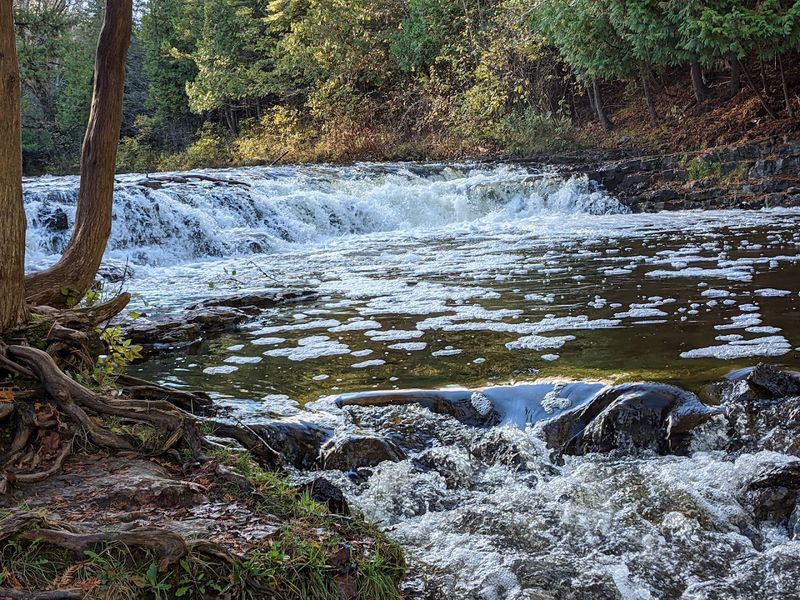
Ocqueoc Falls holds the title of the largest waterfall on the Lower Peninsula of Michigan, which sounds impressive until you actually see it and realize it is nothing like what you might picture when you hear the word waterfall. There are no dramatic vertical drops here.
Instead, the Ocqueoc River spills over a series of wide, flat limestone ledges in a long, gentle cascade that looks more like a natural water park than a traditional falls. And that is exactly what makes it so special.
People wade right in. Families set up in the shallow, clear water and let kids splash around on the smooth rock shelves while the current flows over their feet.
The water is cold and clean, filtered through limestone and flowing through a quiet forest setting that feels genuinely remote even though the parking area is not far away. On a hot summer Saturday, this place has a real community-gathering energy — locals know about it, and they come back every year.
The surrounding Ocqueoc Falls Bicentennial Pathway offers several miles of hiking trails through the northern Michigan forest, making it easy to turn a waterfall visit into a half-day outdoor adventure. The trails wind through a mix of pine and hardwood forest, crossing the river in a few places and offering quiet, shaded walking even in the heat of summer.
Wildlife sightings are common along the path, especially early in the morning.
Because it sits well off the main tourist circuit near Millersburg in Presque Isle County, Ocqueoc Falls rarely gets the crowds it deserves. That is a genuine gift for anyone willing to make the drive.
Pack a picnic, bring water shoes, and plan to stay longer than you think you will — this one has a way of holding you there.
8. The Canadian Lakes Castle — Canadian Lakes
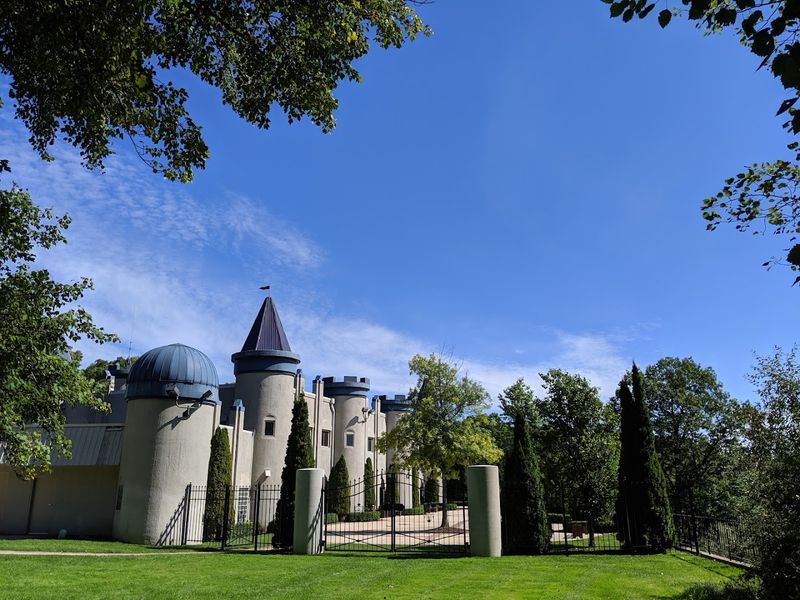
Canadian Lakes is already one of Michigan’s more under-the-radar resort communities, but buried within this private lake development in Mecosta County is something that stops first-time visitors cold: a full-scale stone castle that looks like it was teleported directly from the English countryside. The Canadian Lakes Castle is a privately owned estate that combines European architectural grandeur with the quiet, wooded atmosphere of mid-Michigan in a way that genuinely makes no visual sense — and that is a huge part of its appeal.
The structure features towers, arched windows, heavy stonework, and the kind of scale that makes you feel small standing next to it. It is the sort of building that demands a second look, and then a third, as your brain tries to reconcile the architecture with the zip code.
Unlike some of the more famous Michigan curiosities, this one does not have a big tourist infrastructure around it, which gives it a raw, almost accidental quality that is hard to find.
Because Canadian Lakes is a private resort community, access to certain areas may be limited depending on whether you are a resident or guest. Visiting the area generally requires some planning, but people who have made the trip report that even catching a glimpse of the castle from accessible roads is worth the effort.
It is the kind of place that rewards the curious traveler who does a little homework before heading out.
Mecosta County itself is a genuinely lovely part of Michigan’s lower half, filled with lakes, rivers, and small-town character that most outsiders overlook entirely. Pairing a drive through Canadian Lakes with some time on the Muskegon River or a stop at one of the area’s quieter lakefront spots makes for a surprisingly full and rewarding day in a part of the state that rarely gets its due.
9. Fayette Historic State Park — Garden
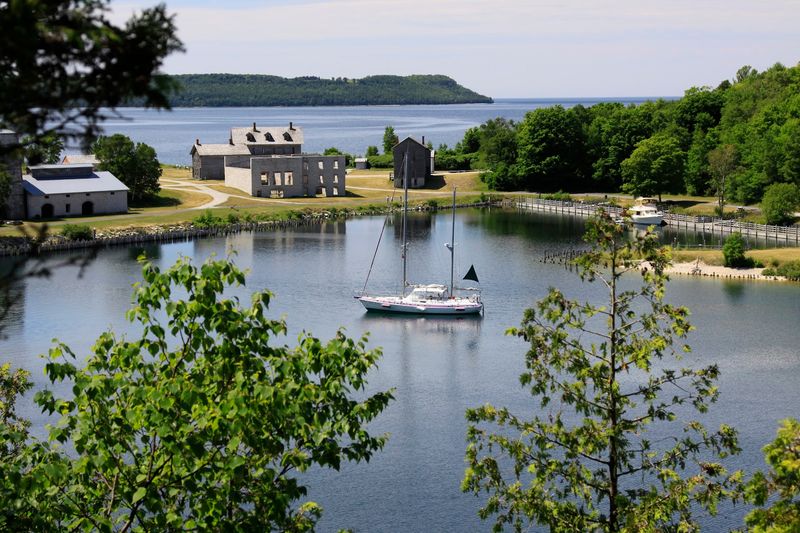
Fayette looks like a ghost town that time forgot to fully erase. Perched on a dramatic limestone bluff overlooking Big Bay de Noc on the Garden Peninsula, this remarkably well-preserved 19th-century industrial village was once a booming iron-smelting operation.
Today it stands as one of the most atmospheric historic sites in the entire Great Lakes region — a cluster of white limestone buildings, silent furnaces, and empty structures arranged around a harbor so beautiful it barely seems real.
The town of Fayette operated from 1867 to 1891, producing pig iron that was shipped across the Great Lakes to industrial centers further east. At its peak, several hundred workers and their families lived here, and the town had everything a working community needed — a hotel, company store, doctor’s office, and rows of worker housing.
When the iron industry collapsed and the operation shut down, the town was essentially abandoned in place, leaving behind a snapshot of 19th-century industrial life that has been carefully preserved ever since.
Walking through Fayette today feels genuinely cinematic. The limestone buildings glow warm in afternoon light, the harbor below reflects the sky in shades of green and blue, and the surrounding bluffs frame the whole scene like a natural amphitheater.
The state park includes a visitor center with exhibits explaining the history, and guided tours are available during the summer season to bring the site’s story to life.
The Garden Peninsula is one of those Upper Peninsula destinations that takes real commitment to reach, but the reward is proportional to the effort. Fayette is not just a historic site — it is a mood, a place where history and landscape combine into something that stays with you long after you drive away.
Few places in Michigan carry this much quiet, haunting beauty.
Share this story