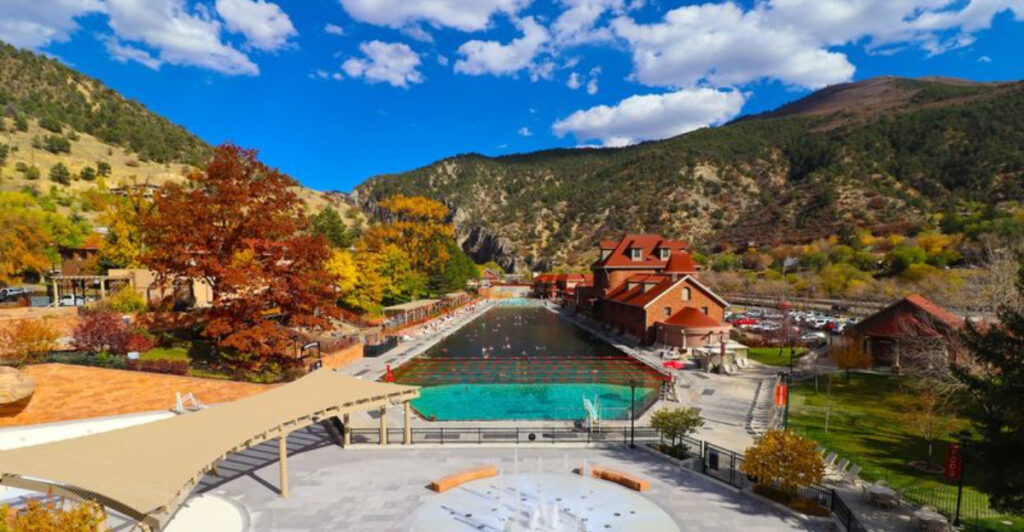
The moment you arrive in Glenwood Springs, it becomes clear this is no ordinary mountain town. Home to the world’s largest mineral hot springs pool, this iconic Colorado destination pairs soothing geothermal waters with a spectacular canyon setting that turns a simple soak into an unforgettable experience.
Beyond the famous pool, visitors will find scenic riverfront trails, historic resort charm, outdoor adventure, and dramatic Rocky Mountain scenery that keeps the town buzzing year-round. Whether you’re planning a relaxing getaway or a road trip through western Colorado, Glenwood Springs offers a combination of natural wonder and timeless appeal that’s difficult to match anywhere else.
A Pool So Big It Resets Your Sense of Scale
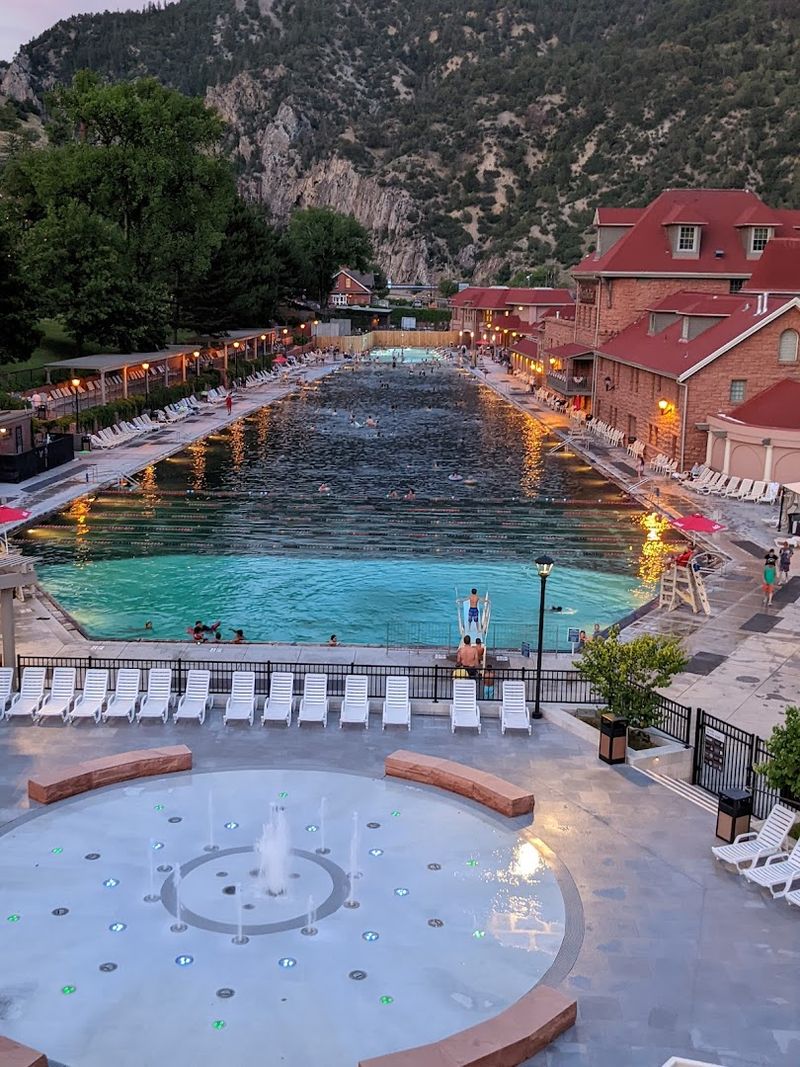
The first shock in Glenwood Springs is scale. You arrive expecting a quaint mountain soak, then suddenly there is a huge sheet of mineral water spreading across the property like a small lake with lane lines, deck chairs, and steam drifting upward.
Set against steep canyon walls and the busy corridor of town, the pool looks almost improbable, as if a grand old resort postcard has been enlarged and dropped into present-day Colorado.
It immediately feels much bigger than most people imagine when they hear the words “hot springs.” That oversized footprint changes the whole experience.
Instead of squeezing into a tucked-away rock basin, you get room to move, room to float, and room to watch the mountain light shift across the surface while families, lap swimmers, and relaxed soakers all find their own rhythm. The place reads less like a tiny spa retreat and more like a civic landmark built around warm mineral water.
Even when the pool is busy, there is enough space for different kinds of visitors to settle into the experience without feeling crowded. The visual contrast is part of the thrill.
Mineral-rich steam lifts into crisp alpine air, while beyond the pool edge you catch roads, rooftops, and the folds of surrounding slopes, reminding you that Glenwood Springs developed where recreation and rugged geography constantly overlap. Nothing about it feels isolated from the town.
Instead, the mountains and the community seem to frame the entire setting together. That openness also explains why the pool has such broad appeal.
You do not need to be a wellness enthusiast to appreciate it, and you do not need a luxury-minded agenda either. The attraction works on simple, immediate terms: warm water, dramatic scenery, and enough space to make the experience feel welcoming, energetic, and completely unlike the intimate hot springs most travelers expect.
Why the Mineral Water Is the Headliner
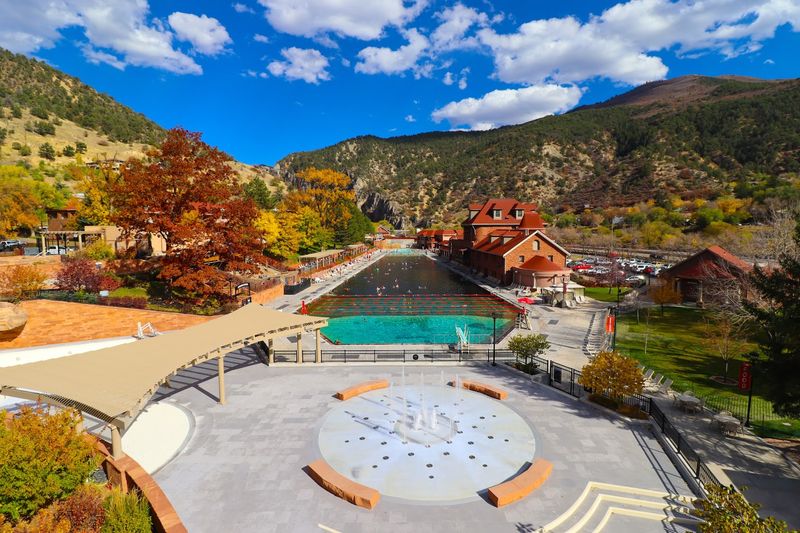
For all the attention the giant pool gets, the real star is the water itself. Glenwood Springs is known for geothermal mineral water, and that matters because the place is built around soaking rather than spectacle alone.
The warm water gives the enormous setting a calming center, turning a busy resort scene into something slower and more physical. It is the one element that ties every visit together, no matter how you spend the day.
You notice it in layers. First comes the temperature difference between mountain air and the pool, then the soft mineral scent that tells you this is not a standard heated aquatic center, then the way people settle in rather than constantly move on.
The pool can hold activity, but the water encourages lingering. That creates an unusual blend of energy and ease.
Children splash in one section, lap swimmers carve their lanes, and adults drift toward spaces where conversation drops to a lower volume and shoulders begin to unclench. Because the water is the point, not an accessory, the whole complex feels oriented around immersion rather than decoration.
There is also something refreshing about how straightforward the experience is. No theatrical cave theming, no forced mystique, no need to overexplain why soaking in naturally heated mineral water has drawn people to places like this for generations.
In Glenwood Springs, the appeal arrives directly through your skin. The experience feels authentic without trying too hard.
That tactile quality separates it from scenic attractions you mainly photograph. Here, the signature experience is bodily and immediate: heat, buoyancy, open sky, and steam softening the edges of the surrounding canyon.
Even before you start thinking about history, architecture, or town layout, the water has already done the work of making Glenwood Springs memorable on its own terms.
Colorado Drama on Every Side of the Deck
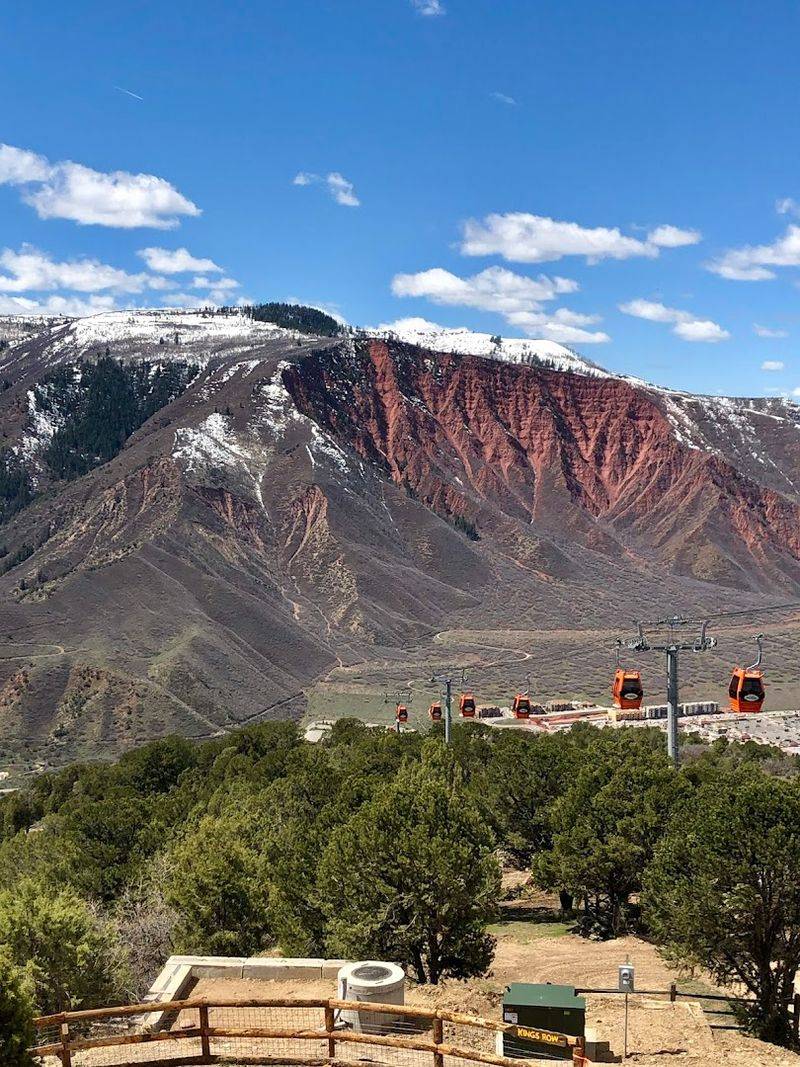
Plenty of hot springs destinations have nice views. Glenwood Springs has geography that crowds the frame. The town sits where mountain slopes, river corridors, and canyon routes converge, so even a simple walk around the pool deck comes with a backdrop that looks unusually muscular for such a relaxed activity.
The landscape never lets you forget where you are. Rocky walls rise abruptly beyond developed areas, and the White River National Forest surrounds the broader region with the kind of terrain that makes roads feel earned rather than casually placed.
Instead of a resort detached from its environment, Glenwood Springs reads as a settlement negotiated directly with topography.
That gives the hot springs more visual force. Steam against cool air is one thing, but steam framed by layered rock, bright sky, and mountain contours is another.
The setting sharpens every familiar detail, from rows of lounge chairs to the shine on the water, because the scenery adds scale and contrast without swallowing the human side of the place.
Look beyond the pool complex and the rest of Glenwood Springs keeps reinforcing that relationship. The Colorado River corridor, nearby canyon passages, and the abrupt transitions between downtown streets and wild-looking slopes make the town feel compressed in an exciting way.
You are never far from infrastructure, yet you are also never far from terrain that appears large, rough, and geologically in charge. That constant interplay is one of the town’s biggest strengths. A soak here does not happen in a vacuum.
It happens within a vivid mountain setting that turns relaxation into something more cinematic, where the biggest pool in town shares the stage with the rock walls, shifting weather, and sense of vertical drama that Colorado does especially well.
The Old Resort Soul Beneath the Steam
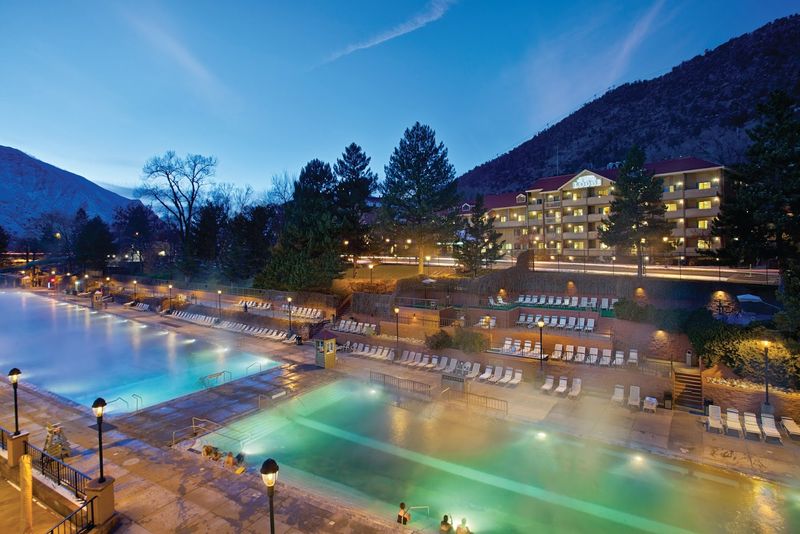
Glenwood Springs does not come across as a trendy wellness invention. It has the deeper, older energy of a place that has been organized around hot water for a long time.
That matters because the town’s identity is not pasted on for modern tourism; it has roots in the kind of resort culture that once turned mineral springs into social anchors as much as recreational ones.
You can sense that legacy in the built environment around the hot springs area. The scale feels intentional, almost civic, as though the pool was meant to be seen and shared rather than hidden behind exclusivity.
Even when the scene is lively, there is a formality underneath it, a reminder that soaking here has long been part of the town’s public face.
That historical undertone gives Glenwood Springs more character than a generic aquatic destination. The pool is not simply large; it belongs to a longer story about why this mountain town developed where it did and how geothermal water became central to its reputation.
The springs are inseparable from local identity. Step away from the water and that continuity continues through the compact town setting.
Streets, businesses, and public spaces all seem to acknowledge that the springs are the main event without making the place one-dimensional.
Glenwood Springs still functions as a lived-in Colorado community, but one with a very specific thermal signature running through it.
The result is a destination with texture. You get the immediate pleasure of warm mineral water, yet you also get a stronger sense of place than many resort towns deliver.
Steam, architecture, and history overlap here in a way that makes the experience feel established rather than manufactured, which is a big reason Glenwood Springs carries more weight than its modest size might suggest.
Beyond the Pool: Caves, Canyon Walls, and Turquoise Water
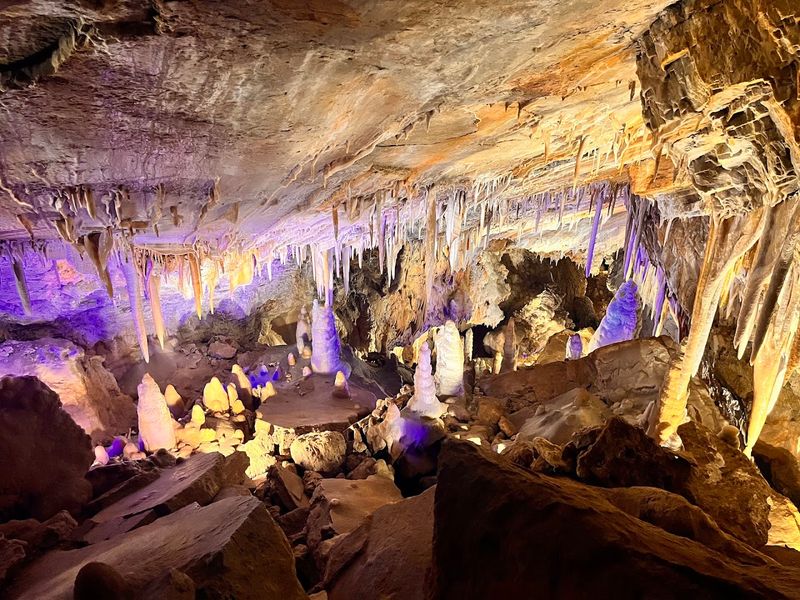
The giant pool may be the headline, but Glenwood Springs gains range from everything clustered around it. Within the same mountain setting, you have access to canyon scenery, notable cave systems, and the kind of vivid blue water that makes nearby Hanging Lake famous in photographs.
That variety keeps the town from flattening into a one-note soaking stop. Start with the terrain itself. Glenwood Canyon brings a wilder edge to the area, with steep walls, river movement, and a corridor that feels geologically compressed and visually intense.
Even when you are not deep into an outing, the surrounding landforms make everyday movement through town feel tied to something larger and rougher.
Then there is the underground side of Glenwood Springs. Glenwood Caverns adds a completely different texture to the local experience, shifting attention from open-sky steam to enclosed rock formations and deep time.
Nearby, the adventure park introduces a more kinetic mood, layering rides and elevated views onto the same mountainous setting.
That mix is useful if your travel style gets restless. A long soak can be the center of the day, but not the whole day, and Glenwood Springs supports that beautifully.
You can spend the morning in warm mineral water, pivot to scenic exploration or cave-focused curiosity, then circle back to town without feeling like you are commuting between unrelated attractions.
Most importantly, the extras do not compete with the hot springs. They broaden the town’s personality.
Glenwood Springs works because the pool, canyon, caverns, forested surroundings, and river context all belong to one compact destination, giving you a place that can handle relaxation, spectacle, and outdoor momentum without diluting its core identity.
How to Time Your Soak for the Best Version of Glenwood Springs
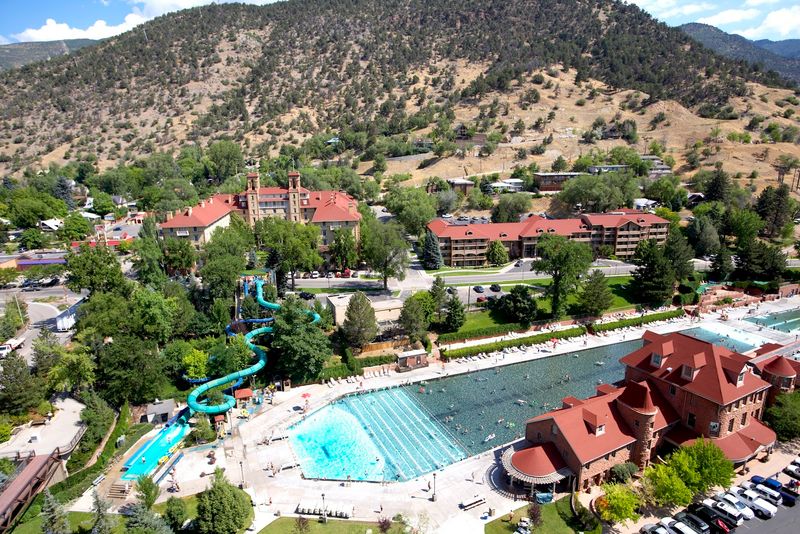
Timing changes Glenwood Springs more than first-time visitors often expect. Because the hot springs sit in an open mountain setting, light, temperature, and crowd rhythm all shape the pool’s personality throughout the day.
The biggest payoff usually comes when you treat the soak as an experience with its own ideal window rather than a filler between other plans.
Morning has a clean, sharp appeal. Cooler air makes the steam more dramatic, the mountains look especially crisp, and the water reads as a stronger visual contrast against the day’s early light.
If you like the idea of settling into warmth before the town fully ramps up, this is the moment that tends to deliver the most striking atmosphere.
Later in the day, the mood shifts toward social energy. More movement on the deck, more activity in the water, and a stronger sense of Glenwood Springs as a shared destination all become part of the scene.
That can be fun if you want momentum, but it is a different version of the place from the calmer early hours. Season also matters in obvious but enjoyable ways.
Cool-weather soaking heightens the temperature contrast and makes every curl of steam feel theatrical, while warmer months let you pair the pool more easily with walks, scenic drives, and other outdoor stops around town. Either way, the mountain backdrop remains central.
The smartest approach is simple: build your day around the water instead of squeezing the water around your day. Glenwood Springs rewards a little intention.
Arrive when the air helps the steam, give yourself enough time to settle in, and let the pool set the pace before you head toward caves, canyon views, or the rest of this surprisingly layered Colorado town.
Why This Colorado Town Hits Harder Than a Typical Resort Stop
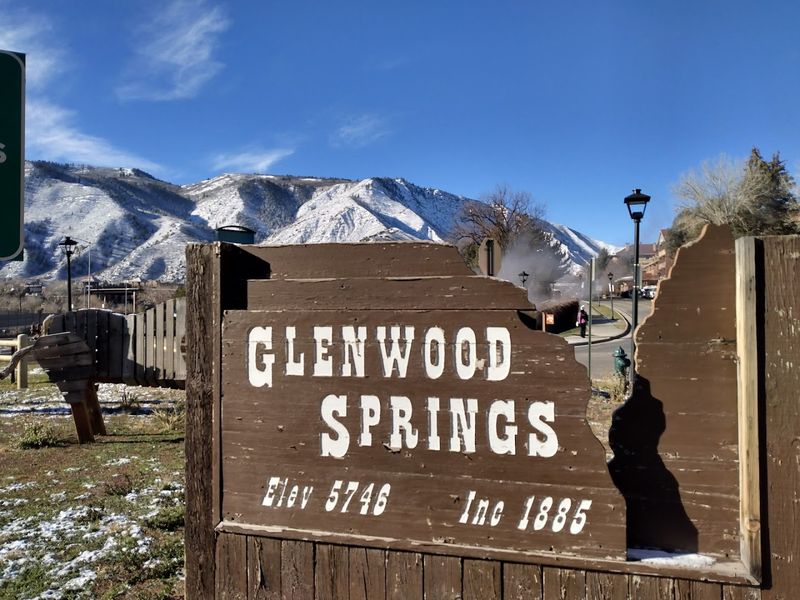
Some destinations are easy to enjoy and easy to forget. Glenwood Springs is not built that way. Its appeal comes from a combination that is difficult to imitate: a truly oversized hot springs pool, a compact mountain town setting, and surrounding geography dramatic enough to keep the experience visually charged long after the novelty of warm water should have worn off.
The town also avoids a common resort-town problem. It does not seem engineered around a single polished fantasy.
Instead, it presents itself with a mix of old-school hot springs culture, active outdoor access, practical streets, and a mountain backdrop that remains slightly rugged even when you are doing something as leisurely as floating in geothermal water.
That complexity gives Glenwood Springs more editorial interest than places that rely on one perfect view or one carefully branded amenity. The pool is enormous, yes, but it is the context that elevates it.
You are soaking in a town tied to rivers, canyon passages, forested slopes, cave systems, and a long-standing thermal identity that still defines the place.
It also helps that the experience is readable right away. You do not need special expertise, advanced planning, or a niche hobby to understand why Glenwood Springs matters.
The minute you see steam rising from that vast pool beneath Colorado mountain walls, the logic snaps into focus.
That is the sharpest takeaway. Glenwood Springs turns a simple promise, hot mineral water in a beautiful place, into something much more striking through scale, setting, and local character.
For travelers expecting just another pleasant soak, the town delivers a correction almost instantly: this is one of Colorado’s most surprising destination experiences, and it earns that reputation in plain sight.
Share this story