A tiny bronze George Washington stands more than 150 feet above Trenton, forever pointing toward the street where American artillery once changed the course of the Revolution.
Farther south, visitors can climb into the spotting gallery of a concrete tower built to watch for enemy warships.
New Jersey’s skyline is dotted with places where history comes with a serious view. Some require a few hundred spiral steps; others let the landscape do the lifting, placing memorials on mountaintops, waterfronts, and coastal bluffs.
From lighthouse galleries overlooking restless inlets to a six-story elephant with an ocean-facing howdah, these landmarks prove that observation decks need not be ordinary.
The reward might be three states spread beneath you, the Manhattan skyline framed between steel walls, or migrating birds cruising past at eye level.
Bring comfortable shoes, check tower access before leaving home, and prepare to see the Garden State from a much more interesting angle.
1. High Point Monument – Wantage
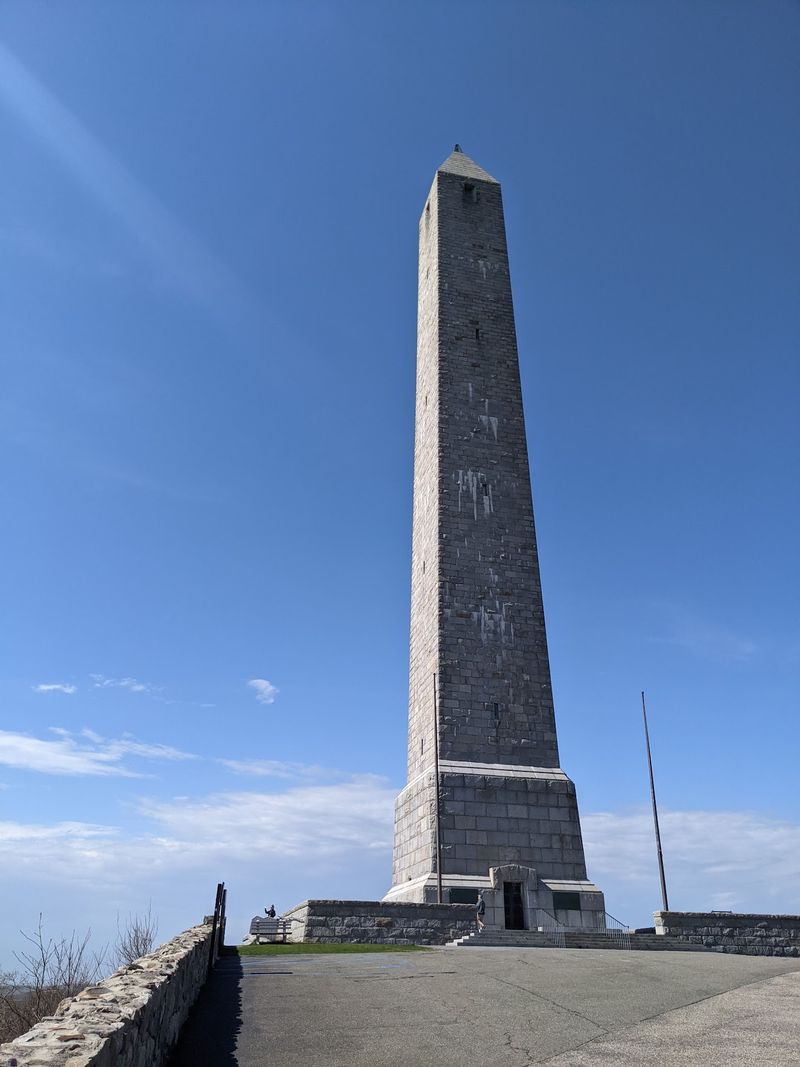
New Jersey does not ease into its grandest overlook. It puts a 220-foot granite obelisk on the state’s highest summit and lets the surrounding mountains roll toward three different states.
High Point Monument rises 1,803 feet above sea level in Sussex County, where its clean vertical silhouette can be spotted long before visitors reach the top of High Point State Park.
Dedicated in 1930, the structure honors New Jersey veterans of all wars and was designed in the tradition of ancient commemorative monuments.
The views begin at ground level, with the Delaware River valley, Pocono Mountains, Catskills, and Wallkill River countryside filling the horizon. When interior access is offered, visitors can climb the monument’s long staircase to an enclosed observation level.
It is a demanding trip upward, but the windows at the top turn the landscape into a living relief map. Autumn delivers the loudest color, although clear winter days often produce the sharpest long-distance visibility.
Those who would rather skip the stairs still get an impressive panorama from the summit grounds and nearby paths. The monument operates on a seasonal or limited schedule, so confirm access before making the drive.
Even when the interior is closed, this remains one of New Jersey’s finest combinations of bold architecture, military remembrance, and scenery that seems to keep unfolding.
2. Trenton Battle Monument – Trenton
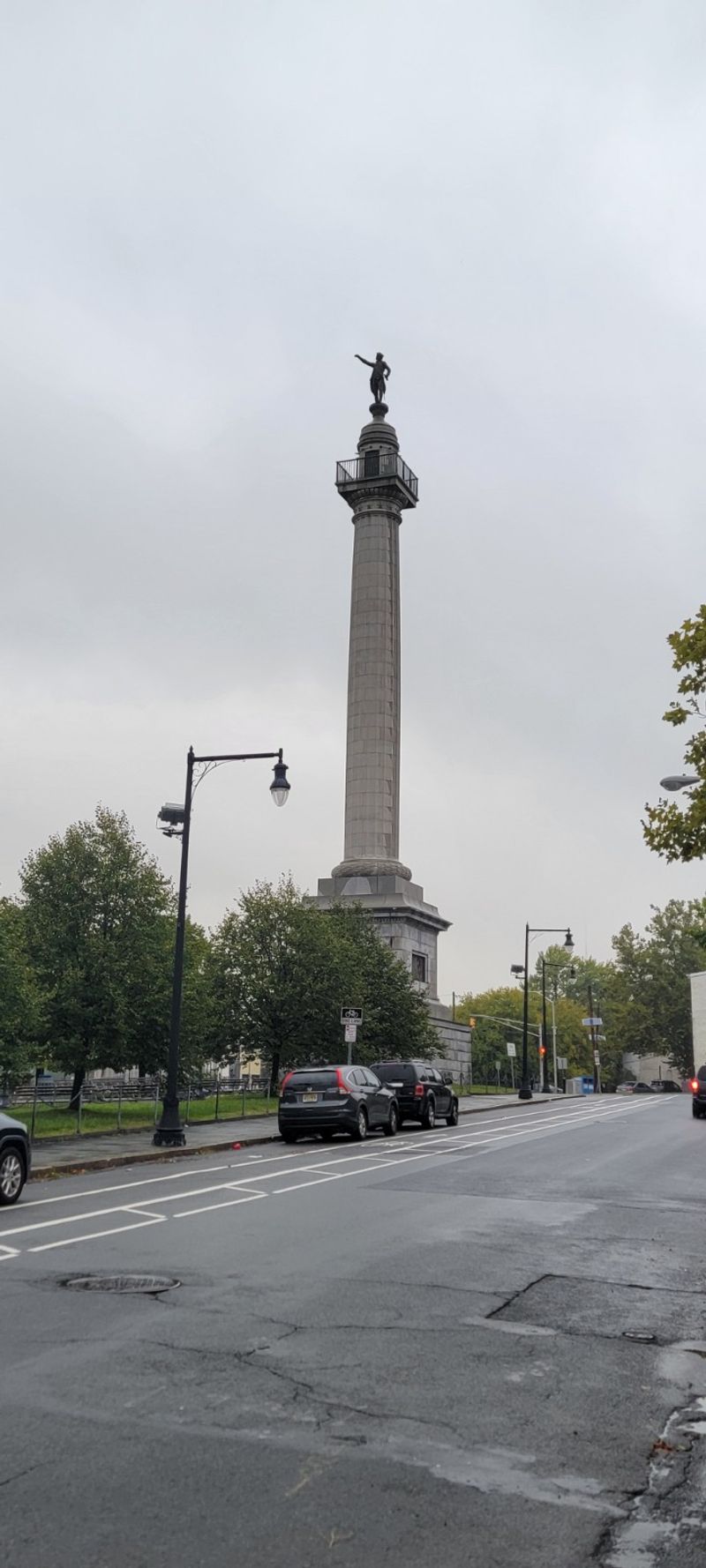
George Washington is still directing traffic at the place where his artillery once aimed down the streets of Trenton. His bronze figure crowns this 148-foot granite column at the city’s historic Five Points intersection, marking the American victory on December 26, 1776.
The monument stands near the ground occupied by Continental artillery during the Battle of Trenton, when Washington’s exhausted army surprised the Hessian garrison after its famous Delaware River crossing.
Dedicated in 1893, the structure resembles a monumental Roman column, complete with bronze reliefs showing key moments from the campaign.
An elevator was built inside to carry visitors to an observation chamber beneath Washington’s statue. When the interior is open, the windows provide an unusual overhead look at Trenton’s street grid and the Delaware River corridor beyond it.
That elevated perspective makes the history click: the streets below were not an abstract battlefield but the actual routes along which soldiers advanced and retreated. Access to the observation level can be limited, making it wise to check the schedule before arriving.
Even from the plaza, the monument commands attention, especially when viewed straight up from its massive stone base. Pair it with the nearby Old Barracks Museum and the State House for a compact day devoted to New Jersey’s Revolutionary story—and one especially determined statue of Washington.
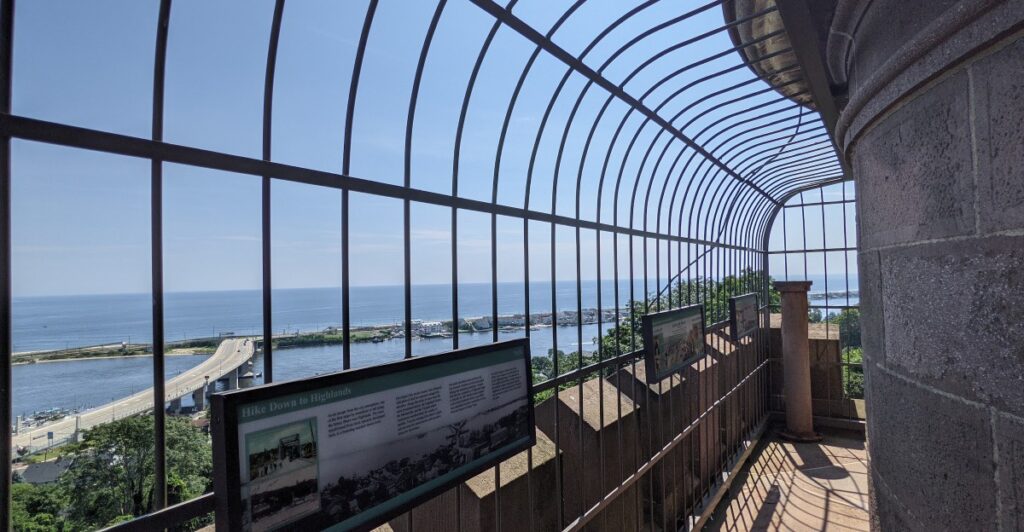
3. Navesink Twin Lights – Highlands
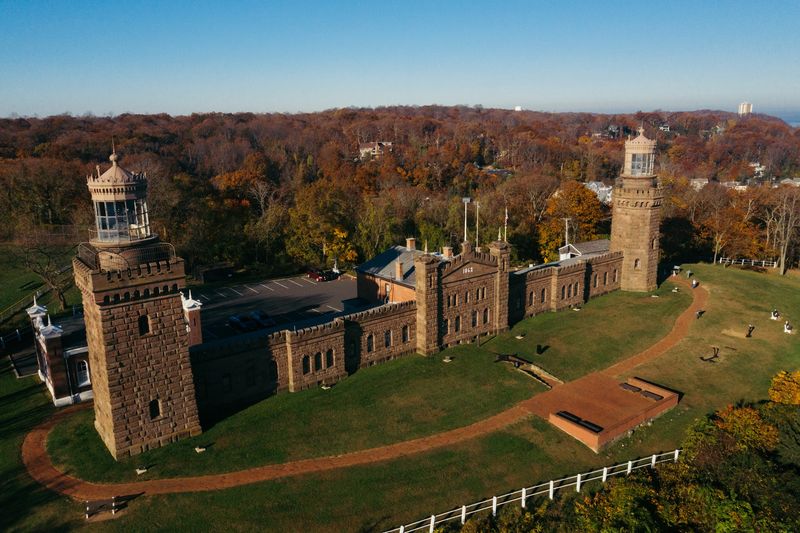
Two mismatched towers connected by a fortresslike brownstone building make this Highlands landmark look more like a coastal castle than a conventional lighthouse. That visual drama is only the beginning.
Set about 200 feet above sea level on the Navesink Highlands, Twin Lights overlooks Sandy Hook, Raritan Bay, the Atlantic Ocean, and the approach to New York Harbor. The current structure was completed in 1862, replacing an earlier station that had guided ships toward the harbor since 1828.
Its paired beacons allowed sailors to distinguish the site from other lights along the coast, while later experiments here helped advance lighthouse technology. Visitors can explore museum exhibits inside the keeper’s quarters and climb the North Tower when it is open.
The staircase is relatively manageable compared with New Jersey’s tallest lighthouses, yet the payoff is every bit as satisfying. From the upper level, Sandy Hook appears almost maplike below, with waterways, beaches, and distant skylines stretching across the view.
The spacious grounds also offer excellent sightlines for anyone who does not want to climb. Admission is generally free, and parking is available on site, making this an easy addition to a Highlands or Sandy Hook outing.
Go on a crisp, low-humidity day if possible; the horizon rewards clear weather, and ships entering the harbor add movement to the panorama.
4. Absecon Lighthouse – Atlantic City
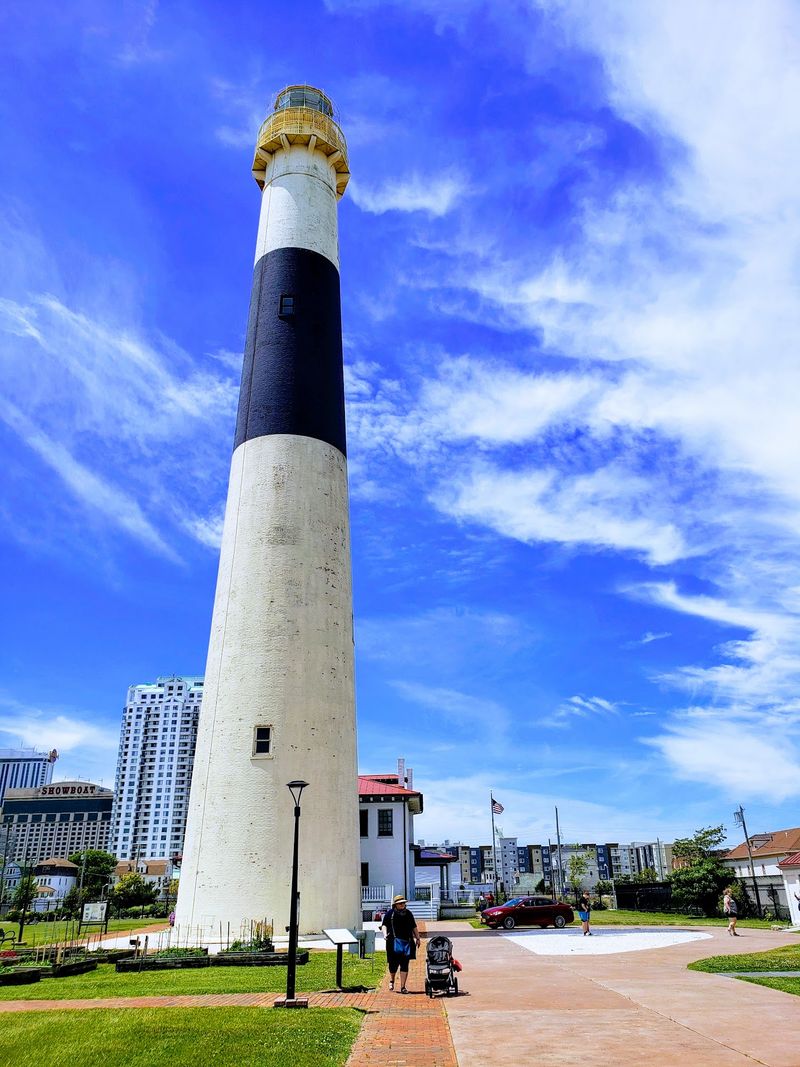
Atlantic City looks completely different from 228 steps up. Instead of casino entrances, traffic, and boardwalk crowds, visitors see the city’s towers rising beside a broad sweep of ocean and inlet.
Absecon Lighthouse has been providing that perspective since it was first illuminated in 1857. At 171 feet, it is New Jersey’s tallest lighthouse and one of the tallest masonry lighthouses in the country.
The climb follows a cast-iron spiral staircase to the watch room, with landings available for strategic pauses and respectable claims that you were merely studying the architecture.
At the top, the original first-order Fresnel lens remains in place, an impressive piece of 19th-century engineering made in France specifically for the tower.
Although the lighthouse was decommissioned as an official navigational aid in 1933, its lens is still illuminated for visitors to enjoy. The view combines Atlantic City’s modern skyline with the water, beaches, and lower-rise Inlet neighborhood surrounding the property.
Back on the ground, the reconstructed keeper’s house contains exhibits, while the old oil house explains how the lens worked. There is a fee to climb, and hours change seasonally, so checking ahead is sensible.
Come early on a warm day—the enclosed staircase can feel much longer when the afternoon heat settles inside the brick tower.
5. Barnegat Lighthouse – Barnegat Light
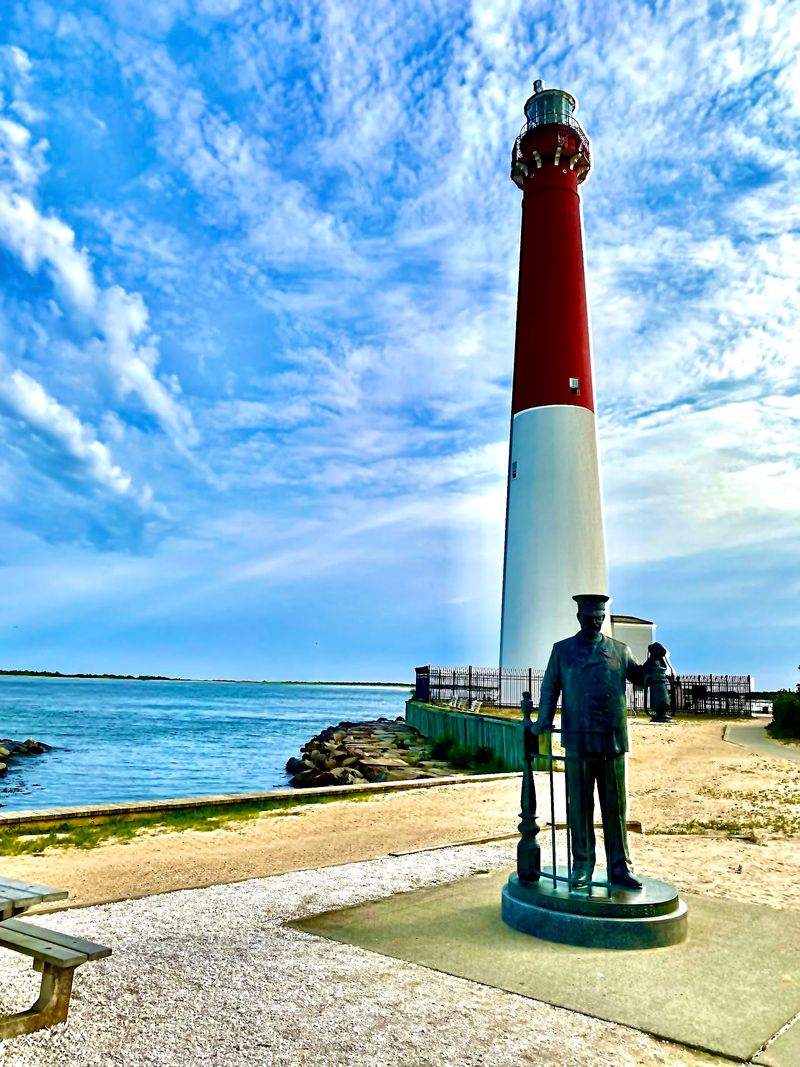
Old Barney’s red-and-white tower rises at the northern tip of Long Beach Island, where Barnegat Bay squeezes through a restless inlet to meet the Atlantic. The location is as important as the structure itself.
Strong currents, shoals, and shifting sand once made this passage especially dangerous for ships, leading to the construction of the present lighthouse in 1859. It was designed under the direction of George G.
Meade, the Army engineer who later commanded Union forces at Gettysburg. The journey to the gallery involves 217 steps, spiraling upward inside the 172-foot tower.
Windows and landings break up the climb, but the real relief arrives outside at the top. From there, visitors can trace the rock jetty into the water, look south along Long Beach Island, and scan the dunes and bay shoreline of Island Beach State Park across the inlet.
Fishing boats and pleasure craft passing below provide a useful sense of just how high the gallery sits. The lighthouse anchors Barnegat Lighthouse State Park, which also includes a maritime forest trail, picnic tables, fishing access, and waterfront paths.
Tower access may depend on weather, staffing, and seasonal schedules, though the park and exterior remain worthwhile on their own. Wind is practically part of the admission price, so secure loose hats before stepping onto the gallery and enjoy one of the Shore’s boldest panoramas.
6. Cape May Lighthouse – Cape May Point
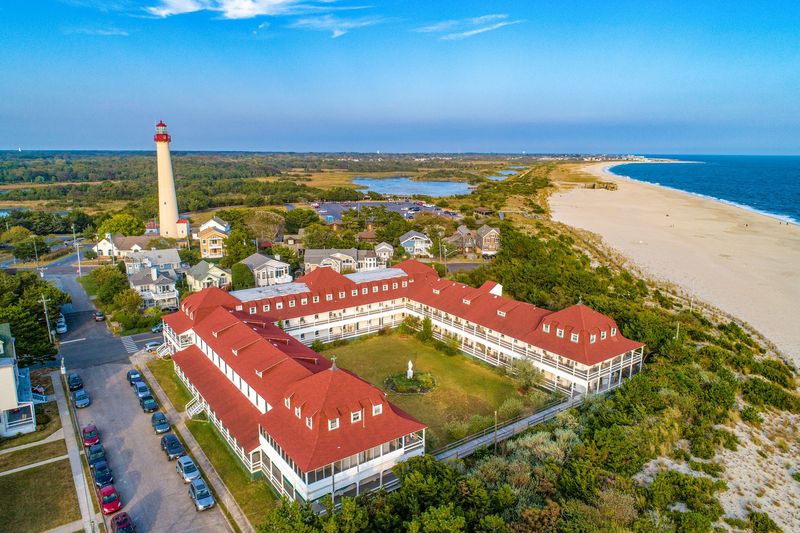
The last few turns of the cast-iron staircase deliver quick flashes of blue through narrow windows, teasing the view before visitors finally emerge onto the gallery. After 199 spiral steps, Cape May Lighthouse opens onto a panorama where the Delaware Bay and Atlantic Ocean meet at the southern tip of New Jersey.
Built in 1859, the cream-colored tower is the third documented lighthouse at Cape May Point; the sites of its predecessors have been claimed by shoreline erosion. The current beacon remains an active aid to navigation, flashing every 15 seconds and reaching miles out to sea.
From the watch gallery, the surrounding landscape is wonderfully varied. Cape May Point State Park’s ponds, trails, dunes, and coastal forest spread below, while the rooftops of Cape May Point gather nearby.
Ships may appear on the bay horizon, and during migration seasons, hawks and other birds sometimes pass surprisingly close to the tower. Interpretive panels positioned at the landings give climbers both a history lesson and an excellent excuse to catch their breath.
The grounds and nearby nature center can be explored without climbing, and free parking is available within the state park. Admission is charged for the tower, with hours varying throughout the year.
For a more unusual perspective, watch for scheduled evening climbs held around full moons, new moons, and select special events.
7. World War II Lookout Tower – Cape May
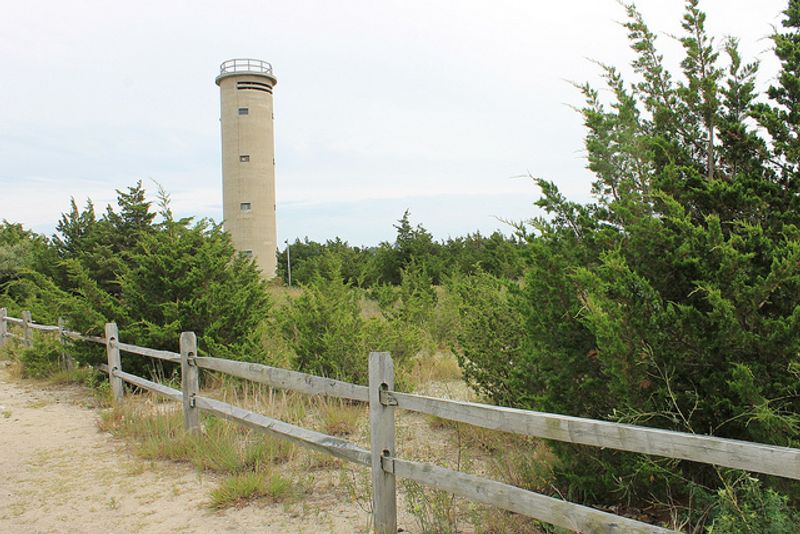
This narrow concrete cylinder was built for a grim purpose: spotting enemy vessels and helping coastal artillery crews aim enormous guns across the Delaware Bay.
Fire Control Tower No. 23 went up in 1942 as part of the Harbor Defense of the Delaware, a network protecting the bay, nearby military facilities, and the route toward Philadelphia.
It is now New Jersey’s last freestanding World War II lookout tower open to visitors. Inside, exhibits occupy several levels on the way to the sixth-floor spotting gallery.
The climb is far shorter than a lighthouse ascent, and pauses reveal photographs, equipment, and accounts of the people who watched the coast during wartime. At the top, the narrow observation windows frame Cape May’s shoreline much as they did for military observers more than 80 years ago.
Today, the scene is peaceful: dunes, treetops, the nearby Cape May Lighthouse, and water stretching toward Delaware. A Wall of Honor displays photographs of local World War II veterans, giving the site a personal dimension beyond military machinery and strategy.
Outside, an accessible boardwalk crosses the dunes to the entrance, and an eternal-flame sculpture stands near the tower. Parking is available across Sunset Boulevard.
The attraction follows a seasonal schedule and closes during severe weather, so verify hours before heading out. Combination admission with Cape May Lighthouse is often available for visitors planning to climb both.
8. Lucy the Elephant – Margate City
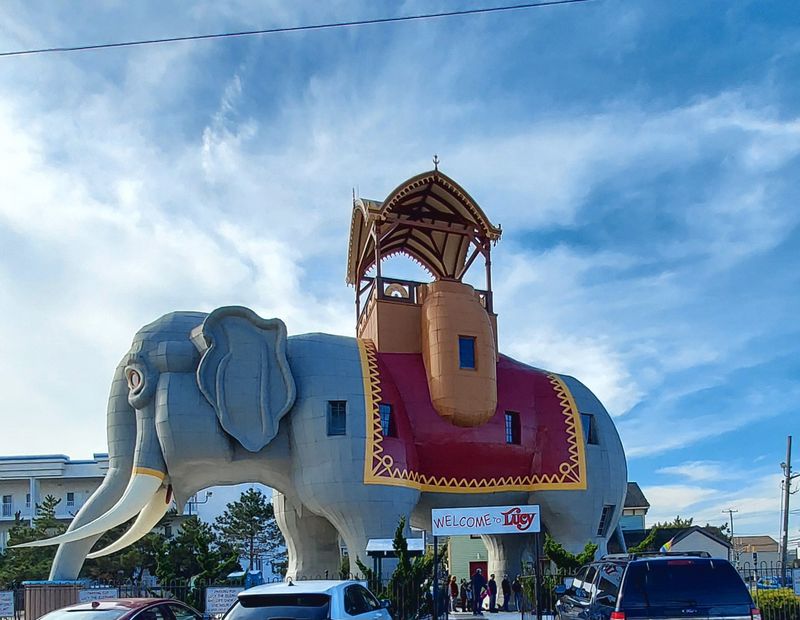
Only at the Jersey Shore can an observation deck sit on the back of a 65-foot wooden elephant. Lucy has watched over Margate since 1881, when developer James V.
Lafferty created the enormous novelty building to attract attention to local real estate. The strategy worked rather well: more than 140 years later, she remains impossible to ignore.
Guided tours enter through one of Lucy’s legs and continue into her barrel-shaped interior, where photographs and displays explain her unlikely careers as an attraction, gathering place, and briefly even a tavern.
A spiral staircase leads higher through the structure before reaching the howdah, the canopied carriage perched across her back.
From this elevated platform, visitors can look over Margate’s rooftops, beach, and Atlantic Ocean while standing atop one of America’s oldest surviving roadside attractions. Small windows inside also offer amusingly framed peeks through Lucy’s eyes.
Her continued existence is its own triumph: a community campaign saved the deteriorating elephant from demolition and moved her to the present beachfront site in 1970. Tours require admission and operate on a set schedule, with advance booking helpful during busy Shore weekends.
Lucy is not the tallest landmark on this list, nor the most solemn, but she easily wins for personality. Few panoramas begin with a walk through an elephant’s belly.
9. Mount Mitchill 9/11 Memorial – Atlantic Highlands
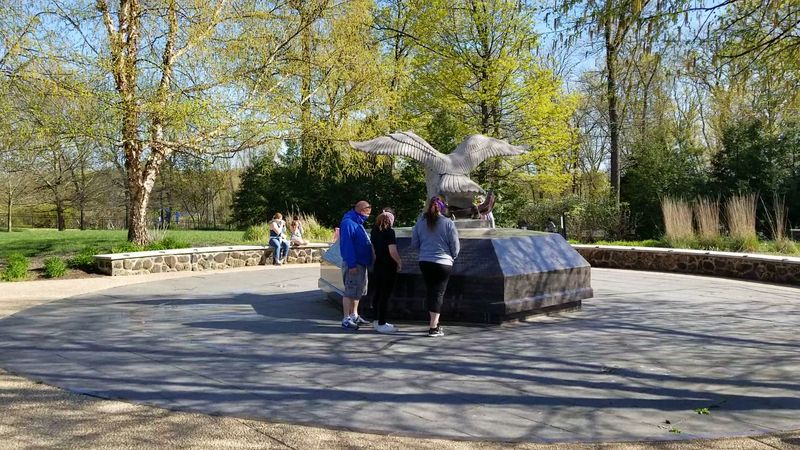
At 266 feet above sea level, this Atlantic Highlands overlook lets visitors see Sandy Hook curling into the water, ferries crossing the bay, and Manhattan rising beyond the horizon. The broad view is beautiful, but it carries added weight at the site’s 9/11 memorial.
Mount Mitchill honors 147 people connected to Monmouth County who died in the terrorist attacks of September 11, 2001. A timeline walkway recounts the events of that morning as it approaches a black granite memorial bearing the victims’ names, ages, and hometowns.
At its center, an eagle sculpted from pale stone rises while holding a steel beam recovered from the World Trade Center. The New York skyline remains visible from the overlook, creating a direct and deeply affecting connection between the memorial and the place where the towers once stood.
Unlike the stair-heavy destinations on this list, the panorama requires no strenuous climb. Visitors can drive to the 12-acre park, park close to the viewpoint, and follow paved paths through the grounds.
Benches invite a slower visit, while a playground sits elsewhere on the property for families. The overlook opens year-round, although closing times shift seasonally.
Clear mornings usually offer the cleanest skyline views, while late afternoon brings warmer light across Sandy Hook Bay. This is a place to linger quietly rather than rush through, allowing the landscape and memorial to speak together.
10. Empty Sky Memorial – Jersey City
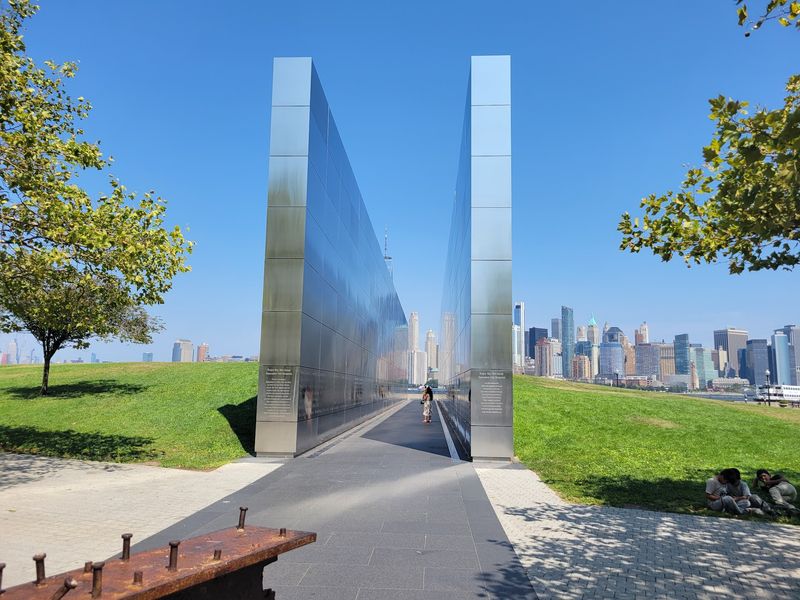
Two stainless-steel walls create a corridor aimed precisely at the place where the World Trade Center towers once stood. Walking between them is the defining experience at Empty Sky, New Jersey’s official memorial to residents who lost their lives on September 11, 2001.
Located at the end of Liberty State Park’s peninsula in Jersey City, the memorial was dedicated on the attack’s tenth anniversary. Its parallel walls rise 30 feet and extend 210 feet, matching the width of one side of the former towers.
Names are etched into the brushed metal at hand level, encouraging visitors to move slowly and recognize the individual lives behind the scale of the tragedy. The design deliberately leaves the sky open above, while the Manhattan skyline fills the view ahead.
On clear days, the Empire State Building, Lower Manhattan, New York Harbor, and passing ferries form a wide urban panorama. Turn around and the scene expands again, with Ellis Island and the Statue of Liberty close by across the water.
No tower climb or admission ticket is required; the power comes from the alignment of architecture, landscape, and absence. Liberty State Park has parking, waterfront paths, lawns, and ferry access nearby, making the memorial easy to include in a longer visit.
Sunrise brings quieter paths, while evening light reflects dramatically from the steel surfaces and skyline beyond.
Share this story