Some parks make you earn the view with three miles of roots, switchbacks, and the gradual realization that you brought the wrong shoes. These New Jersey parks are much kinder.
At several of them, you can shut the car door and be staring at a waterfall, lighthouse, Revolutionary War landmark, skyline, or mountain panorama just minutes later. That does not make them lesser destinations.
In some cases, the easy access is exactly what makes them so useful: they work for spontaneous detours, multigenerational outings, quick photo stops, and those afternoons when you want scenery without converting the day into an expedition. The list stretches from the Palisades above the Hudson to Cape May and Long Beach Island, with gardens, battlefields, and one enormous urban waterfall in between.
Bring walking shoes if you want to explore farther, but at these ten New Jersey parks, the headline attraction does not make you work very hard to find it.
1. Paterson Great Falls National Historical Park, Paterson: Big Water, Short Walk
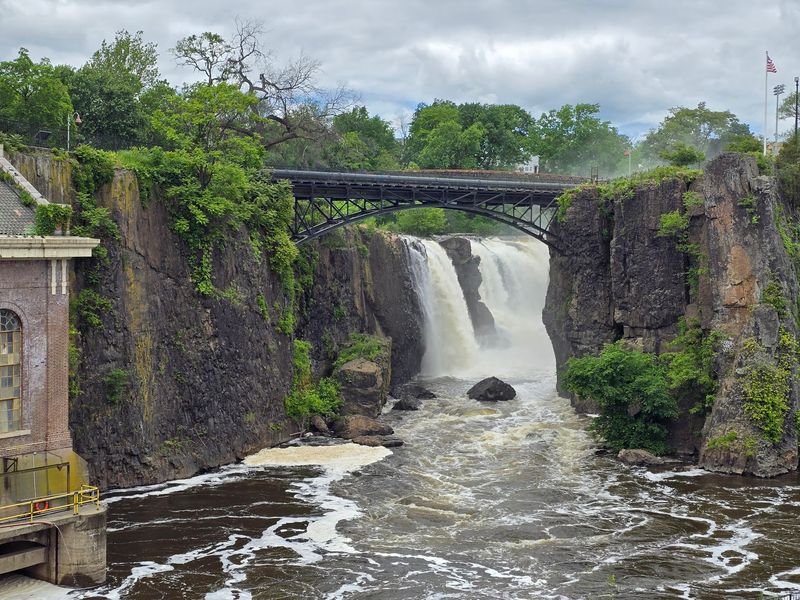
Few parking lots in New Jersey deliver a first impression quite like the one on McBride Avenue Extension. Leave the car at Overlook Park, walk a short distance toward the railings, and the Passaic River suddenly drops 77 feet into a dark basalt chasm in the middle of Paterson.
The waterfall is big enough to drown out conversation when the river is running hard, yet the surrounding brick mills, bridges, and industrial structures make the scene look completely unlike a mountain waterfall. That collision of nature and city is the reason this stop works so well.
You can easily spend longer here tracing Paterson’s industrial history, including the raceway system that helped power the manufacturing city envisioned by Alexander Hamilton in the 1790s, but you do not need a long walking itinerary to understand why the falls matter. The main overlook is right beside the primary visitor parking area, making this one of the state’s best high-reward, low-effort park stops.
There is no entrance fee, and the grounds are generally best visited between sunrise and sunset. The one catch is parking: the Overlook Park lot is relatively small and can fill quickly on weekends and event days, so an early arrival is smart if you want the easiest possible visit.
2. High Point State Park, Sussex: Head Straight for the Summit
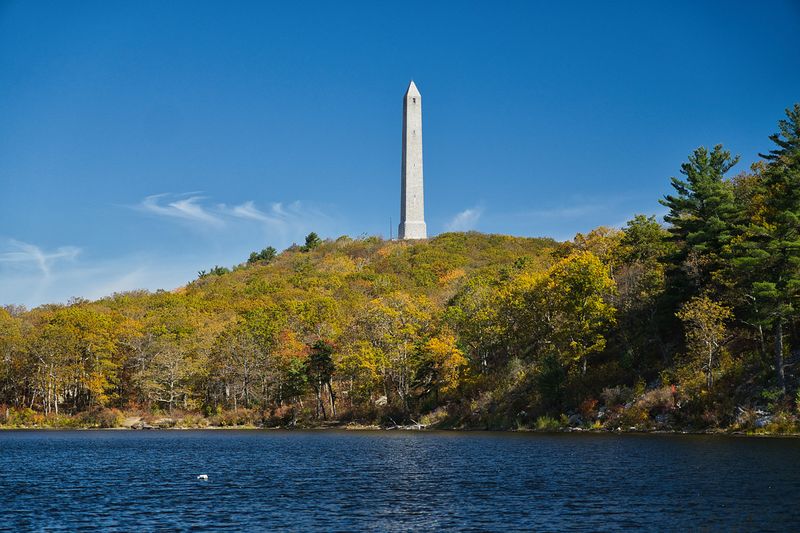
You can hike for hours in the far northwestern corner of New Jersey, but you absolutely do not have to in order to reach the state’s highest point. The main park road at High Point State Park climbs all the way to the parking area near the New Jersey Veterans’ Memorial, putting the 220-foot monument and a sweeping three-state panorama within a short uphill walk of your car.
At 1,803 feet above sea level, this is the highest elevation in New Jersey, and on a clear day the view stretches across parts of New Jersey, Pennsylvania, and New York. The monument itself gives the stop a sense of scale before you even start looking outward.
If the interior is open, there are 291 steps to reach the top, but climbing them is optional; the surroundings already provide broad mountain views from ground level, and the park specifically notes that visitors can enjoy scenery from the monument parking area itself. That makes High Point unusually friendly to anyone who wants the North Jersey mountain experience without committing to one of the park’s longer rocky trails.
Summer vehicle entrance fees apply from Memorial Day weekend through Labor Day, with different weekday and weekend rates, while the rest of the year is generally free. Road and monument access can also change with winter weather, so colder-season visits deserve a quick conditions check before driving up.
3. Washington Rock State Park, Green Brook: A Small Stop With a Wide View
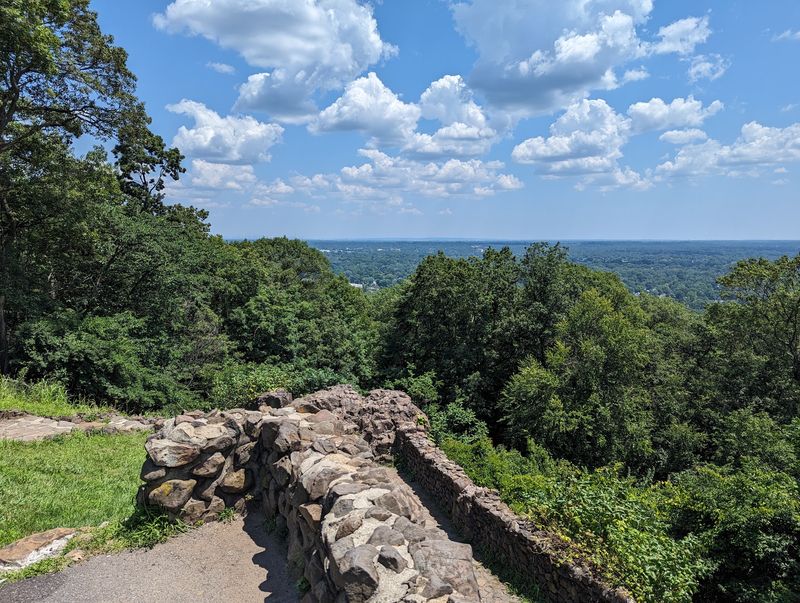
This tiny park proves that acreage and payoff have very little to do with each other. The main attraction is a natural rock outcrop on the Watchung Mountains where George Washington observed British troop movements in June 1777, and the overlook sits just beyond the park’s parking area rather than at the end of a long trail.
From here, Washington reportedly had a roughly 30-mile view across the valley while General William Howe’s forces maneuvered toward Westfield. More than two centuries later, the exact military situation has changed considerably, but the usefulness of the viewpoint is still obvious the second you walk up to it.
This is not the place to come expecting an all-day roster of activities. Washington Rock works better as a sharp, memorable stop: park, walk to the overlook, take in the broad view, read the historic markers, and linger for as long as the weather deserves.
Because the park is compact, it is also particularly easy to combine with another outing in the Watchung area instead of planning an entire day around it. There is no entrance fee, and the park is open daily from sunrise to sunset.
If you are building a list specifically around impressive things located close to the car, Washington Rock may be the purest example of the idea: the whole reason to visit is practically waiting for you when you arrive.
4. Palisades Interstate Park, State Line Lookout, Alpine: Cliff Views Without the Climb
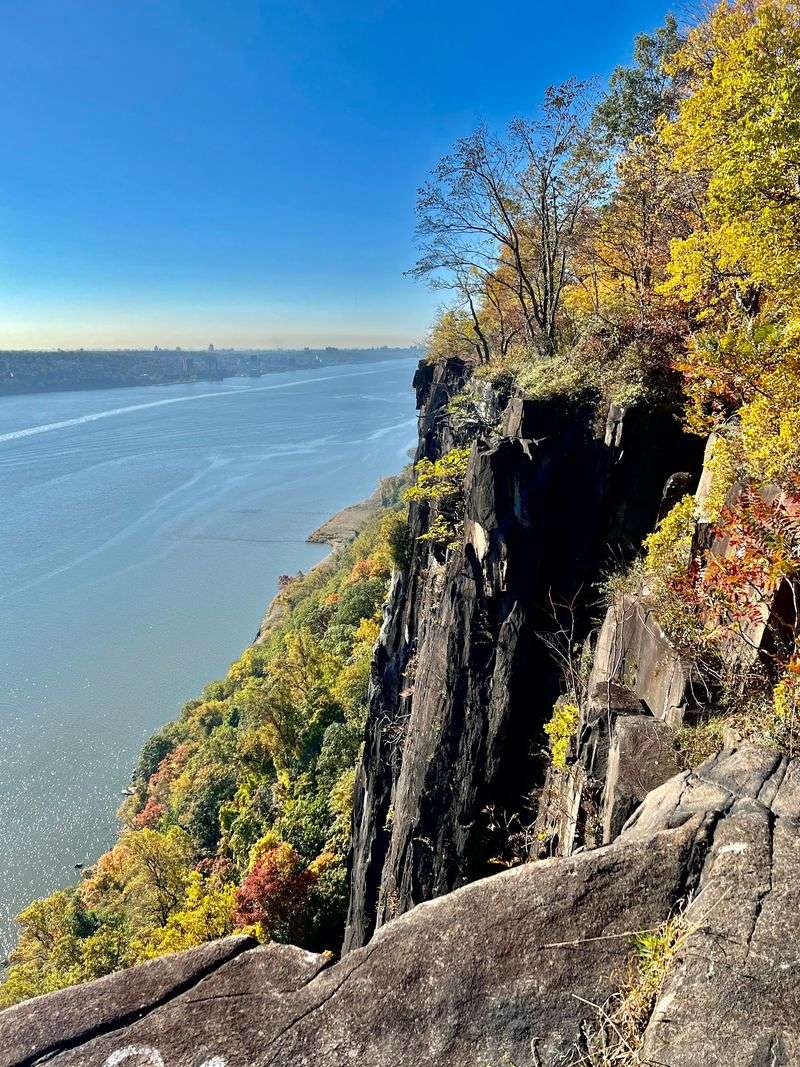
Here is a useful bit of North Jersey geography: you can reach one of the highest points along the Palisades cliffs without hiking up from the Hudson River. State Line Lookout has its own access from the northbound Palisades Interstate Parkway in Alpine, and once you park, three separate lookout areas are clustered around the site.
Point Lookout reaches roughly 520 feet in elevation, the highest point on the Palisades, with the Hudson River far below and wooded cliffs stretching north and south. The scene changes dramatically with the season.
Fall brings the obvious foliage show, winter opens up long-distance views through bare trees, and clear spring mornings can make the river look almost unnaturally far below the cliff edge. You could use this as the starting point for a serious hike, but that would almost miss the premise here: the overlook is already the destination.
There is even a cafe and restrooms at the site, so a quick scenic stop does not require much logistical creativity. Parking is metered year-round at State Line Lookout, currently charged by the hour, with weekday and weekend rates differing.
For anyone driving the Palisades Interstate Parkway, this is the kind of exit worth taking even when hiking was never part of the day’s plan.
5. Fort Lee Historic Park, Fort Lee: Bridge Drama Meets Revolutionary History
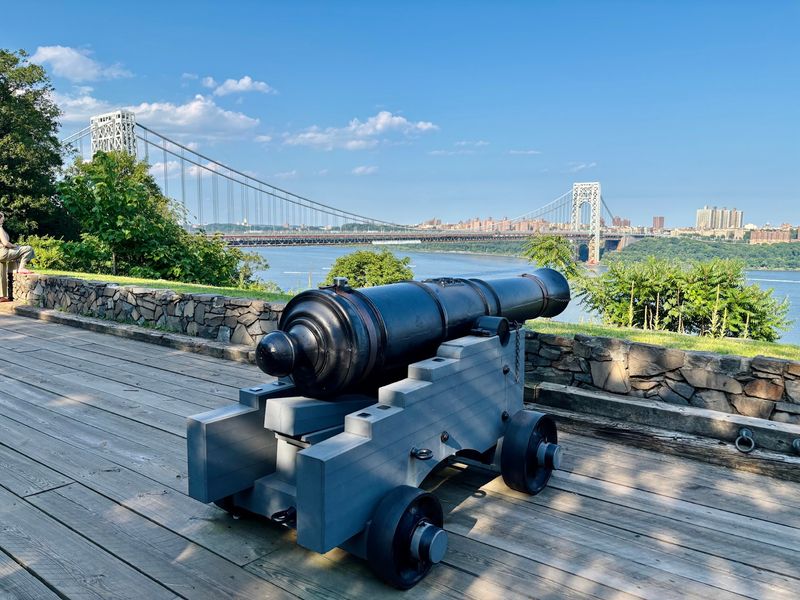
The George Washington Bridge is so familiar that it is easy to forget how dramatic it looks from the right angle. Fort Lee Historic Park provides one of those angles almost immediately.
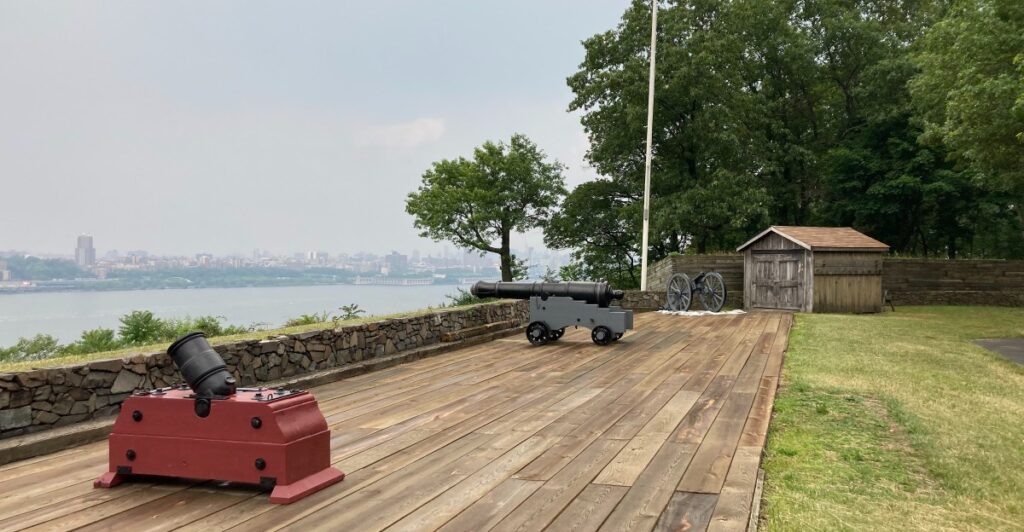
From the parking area and nearby northern overlooks, you get a close, elevated view of the bridge stretching across the Hudson toward Manhattan, with Upper Manhattan rising behind it. The park sits directly south of the bridge on top of the Palisades, so there is no long approach hike between the car and the main scenery.
The bonus is that this is more than a viewpoint. Fort Lee played a major role during the Revolutionary War, and the park includes a visitor center and a reconstructed military encampment that help explain what happened here during the 1776 New York campaign.
That combination makes it especially good for groups with mixed interests: one person can be focused on history, another on skyline photography, and somebody else can simply enjoy watching traffic cross one of the busiest bridges in the region. The grounds are open year-round, although hours change seasonally, and parking is metered throughout the year.
Longer Palisades hikes are available if you want to keep moving, but they are not required. The best visual reward at Fort Lee is already sitting near the top of the cliffs, which is exactly where the parking lot leaves you.
6. Liberty State Park, Jersey City: Park Near the Waterfront Payoff
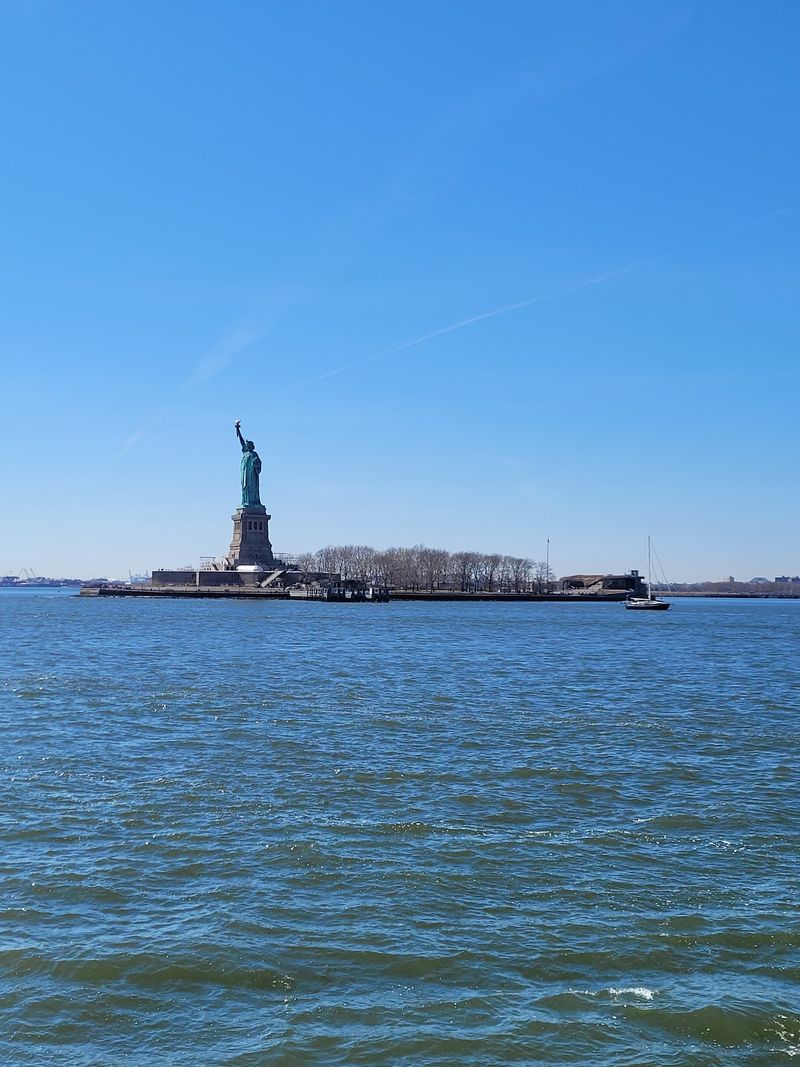
Sometimes the easiest way to appreciate Manhattan is to stay in New Jersey. Liberty State Park gives you that advantage on a grand scale, with the skyline, Ellis Island, and the Statue of Liberty spread across the harbor from a waterfront park that is designed for easy access rather than wilderness trekking.
If your priority is the biggest visual payoff for the least walking, aim for the northern end of the park near the Empty Sky 9/11 Memorial. The official park map shows a dedicated parking area beside the memorial, meaning you can go from car to one of Liberty State Park’s most powerful locations without crossing the park’s full two-mile waterfront promenade.
Empty Sky itself consists of two 210-foot stainless-steel walls rising 30 feet on either side of a bluestone path. The walls frame the space where the World Trade Center once stood and carry the names of 750 people with New Jersey connections who were killed on September 11, 2001.
From there, you can continue toward the waterfront for those postcard-level harbor views or make a longer outing of the promenade and historic Central Railroad of New Jersey Terminal. Entrance to the park is free, and the gates are generally open from early morning until late evening.
It is a huge park, but you can experience one of its strongest moments almost immediately.
7. Cape May Point State Park, Cape May Point: Lighthouse Views Right Away
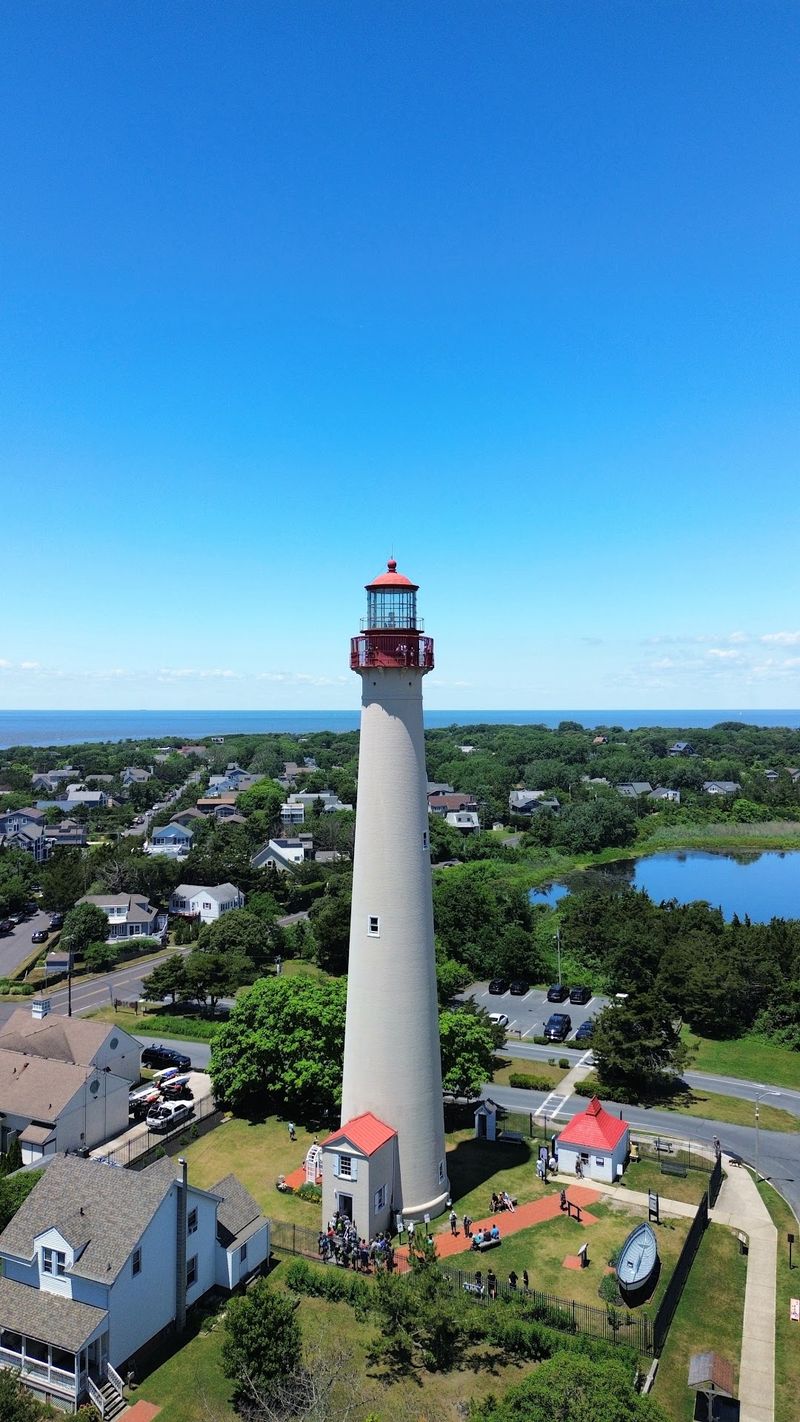
A 157-foot lighthouse rising above coastal marshes is difficult to miss, which is exactly why Cape May Point State Park belongs on this list. The Cape May Lighthouse stands beside the main visitor area rather than hidden somewhere beyond miles of dunes, so the park starts delivering before you have had time to wonder whether you parked in the right place.
Built in 1859, the current lighthouse is the third documented beacon at Cape May Point and remains an active aid to navigation. If you want the full experience, the climb involves 199 cast-iron spiral staircase steps inside the tower, with additional steps bringing the total from ground level to the top to 217.
From the watch gallery, the Delaware Bay, Atlantic Ocean, Cape May Point, and surrounding wetlands spread out below. But the lighthouse is still impressive from ground level, which matters for anyone who has no interest in climbing a tall spiral staircase.
The surrounding 244-acre state park is also one of North America’s best-known birding locations, especially during fall migration, and includes ponds, dunes, freshwater meadows, forest, and beach. There is no state-park entrance fee, although climbing the lighthouse requires paid admission and operating schedules can vary.
Even a short visit, however, gives you lighthouse views, coastal scenery, and excellent birding possibilities without a long walk from the car.
8. Barnegat Lighthouse State Park, Barnegat Light: Old Barney Without the Stair Workout
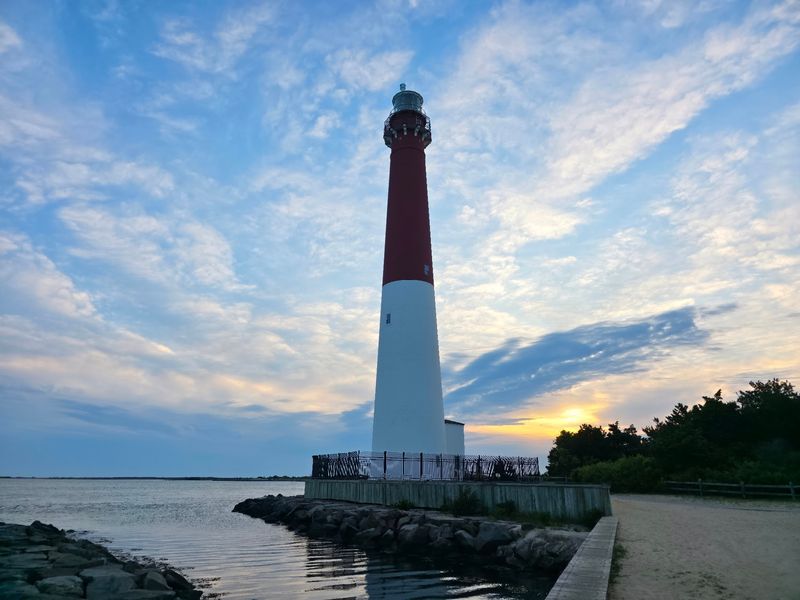
At the northern tip of Long Beach Island, the road basically runs out at a lighthouse. That makes Barnegat Lighthouse State Park almost comically well suited to this list.
The red-and-white tower known as Old Barney rises just beyond the parking area, with Barnegat Inlet, the bay, and the edge of the Atlantic close enough that you can hear gulls and boat traffic before you have walked very far. Unlike coastal parks where reaching the landmark involves crossing long stretches of sand, the central attraction here is immediate.
Visitors who want the elevated version can climb the lighthouse when it is open, with panoramic views over Barnegat Bay, Long Beach Island, and Island Beach from the top. Seasonal lighthouse fees are modest, while admission to the state park itself is free.
Staying at ground level is hardly a consolation prize, either. The paved areas around the lighthouse, the inlet views, nearby interpretive facilities, and short maritime-forest trail make it easy to shape the stop around your energy level.
Anglers often line the jetty, boats move through the inlet, and the lighthouse dominates nearly every angle around the park. Go early on summer weekends if you want the easiest parking experience; Barnegat Light gets far busier once beach traffic fills Long Beach Island.
For a destination that feels unmistakably Jersey Shore without requiring a beach-day commitment, this is hard to beat.
9. Deep Cut Gardens, Middletown: Flowers Before You Break a Sweat
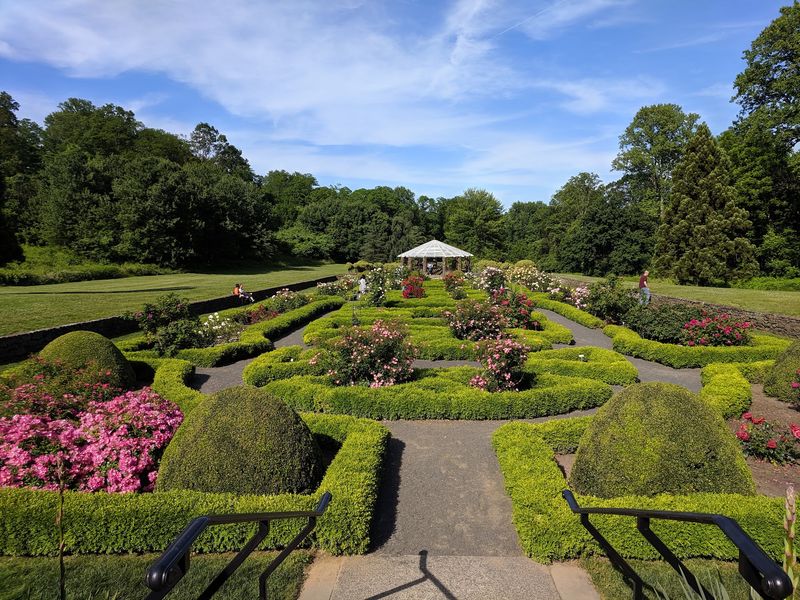
You do not need to walk through 50 acres of woods before anything interesting happens at Deep Cut Gardens. The good stuff starts around the horticultural center and formal garden area, where carefully arranged beds, greenhouses, paths, and seasonal displays make the park feel more like a public garden than a traditional recreation area.
The 54-acre property in Middletown is designed as what the county calls a living catalog of cultivated and native plants, so there is something to examine even if your gardening knowledge begins and ends with remembering to water the basil. The centerpiece for many visitors is the renovated parterre, which contains 52 rose varieties and more than 180 bushes.
That alone makes late spring and early summer particularly rewarding, although the gardens are deliberately planted to change throughout the year rather than peak for a single weekend. Because the main landscaped areas sit close to visitor parking, you can keep the outing short and still see the feature that makes Deep Cut distinctive.
There are longer paths for anyone who wants to wander, plus a greenhouse that is generally open during park hours. The park opens at 8 a.m. and closes at dusk year-round, and pets are not permitted, an important detail if your usual park companion has four legs.
It is quiet, manageable, and proof that an easy-access park does not have to revolve around a giant overlook.
10. Monmouth Battlefield State Park, Manalapan: History Starts Near the Visitor Center
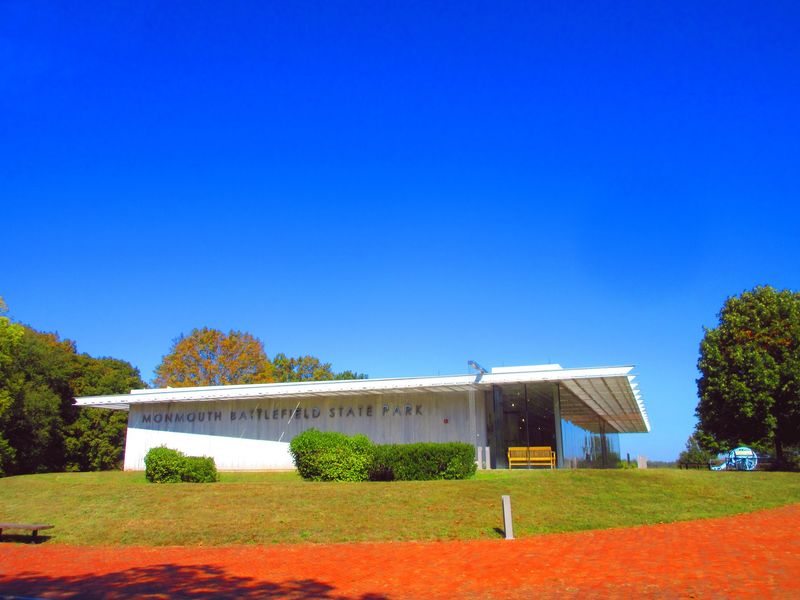
A battlefield can be difficult to visualize when the important event happened nearly 250 years ago. Monmouth Battlefield makes the job easier because the landscape itself is still the attraction.
From the visitor center area on Route 33, broad fields and rolling ground open almost immediately in front of you, giving a surprisingly clear sense of the terrain where Continental and British forces fought one of the largest battles of the Revolutionary War on June 28, 1778. The fighting included a roughly three-hour cannonade, described by the park as the war’s largest field artillery duel, before the British ultimately withdrew.
You can hike deeper into the battlefield, but you do not need to cover miles to make the stop worthwhile. The visitor center and nearby interpretive areas give context first, while additional battlefield views can be reached from parking areas along Route 522 and Wemrock Road.
Restored fences, lanes, farm fields, and historic structures help preserve the sense of a working 18th-century landscape rather than a manicured monument plaza. The park is also free to enter, and the visitor center is generally open daily during daytime hours.
This is the place on the list for people who prefer history to waterfalls or skyline views. Park near the visitor center, step outside, and one of New Jersey’s most important Revolutionary War landscapes is already spread in front of you.
Share this story