On the edge of a bluff above the Mississippi River in Minneapolis, a building of steel and brick looks like it got tangled up mid-dance and decided to stay that way. Students walk past it on their way to class.
Out-of-towners fly in just to stand in front of it. Inside, there is a giant glass fish, a famous pop art mural, a corner where anyone can make a collage, and a balcony with a skyline view that many people miss entirely.
Admission costs nothing at all. The whole place can be explored in an hour or two, which makes it ideal for a lunch break or a slow Saturday.
Keep reading to learn what makes this campus museum so special, which details are easy to overlook, and how to handle the parking puzzle before you go.
A Riverside Landmark on Campus
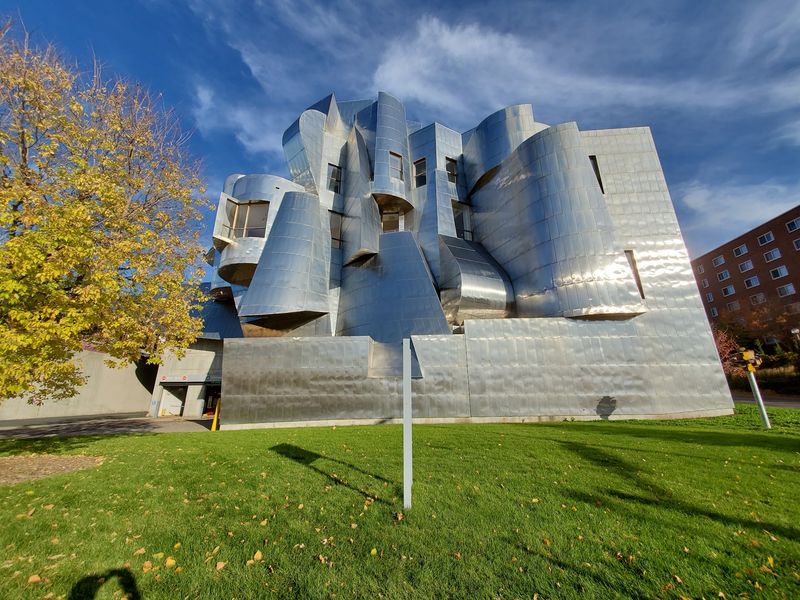
Some museums hide behind plain walls, but this one practically waves at anyone crossing the river.
The Weisman Art Museum sits at 333 E River Rd, Minneapolis, MN 55455, on the University of Minnesota campus in the United States.
The building perches near the Mississippi River, right beside a pedestrian bridge that links the campus to the rest of the city. Its main entrance faces Bruininks Hall, so the layout favors people arriving on foot.
Inside, the focus is on American and contemporary paintings, along with an impressive ceramics collection. That mix gives the museum a personality that feels both rooted and current.
Size matters here too, in a good way. The exhibits mostly fill a single main floor, so the experience stays focused rather than overwhelming.
That compact footprint is a big part of the charm. A visit fits easily between errands, campus tours, or a stroll across the bridge.
Plenty of people come for the art and leave talking about the building, which is exactly where the next chapter of the story begins.
Frank Gehry’s Shiny Calling Card
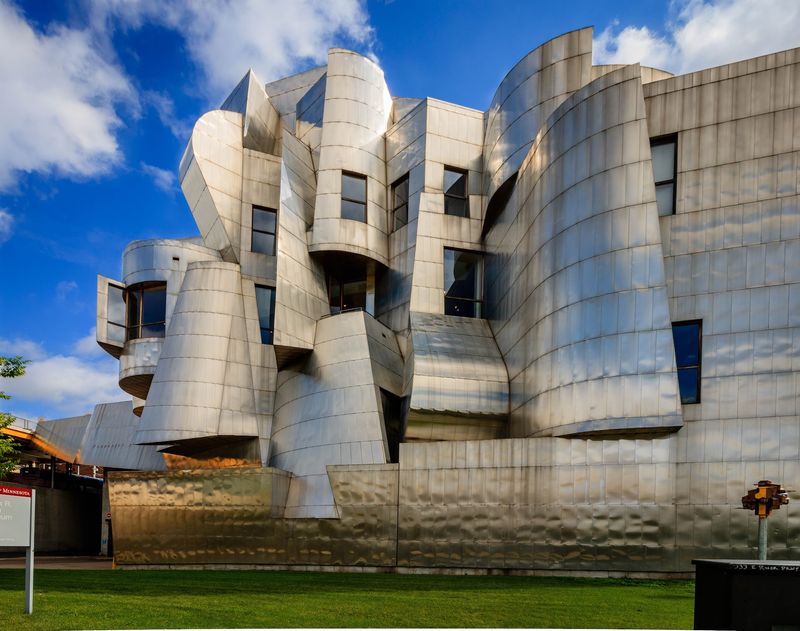
Architecture fans tend to speak one name when they see this place: Frank Gehry.
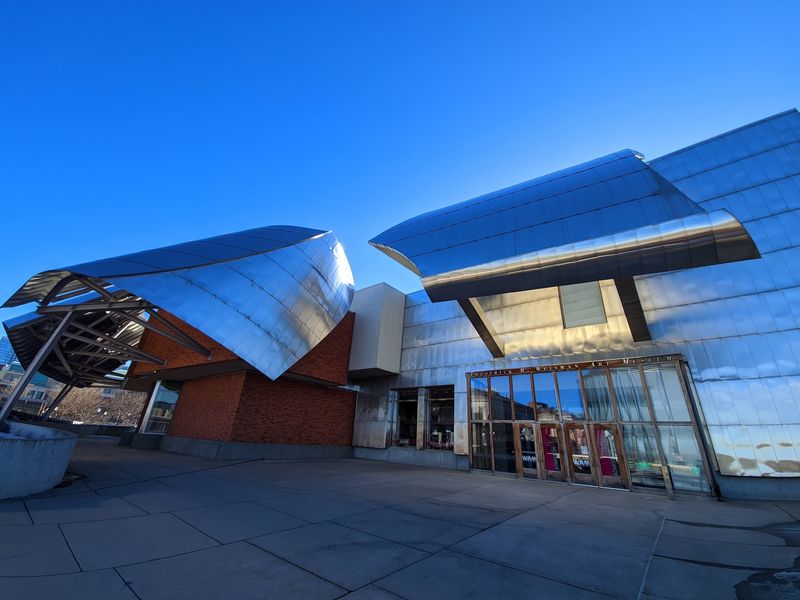
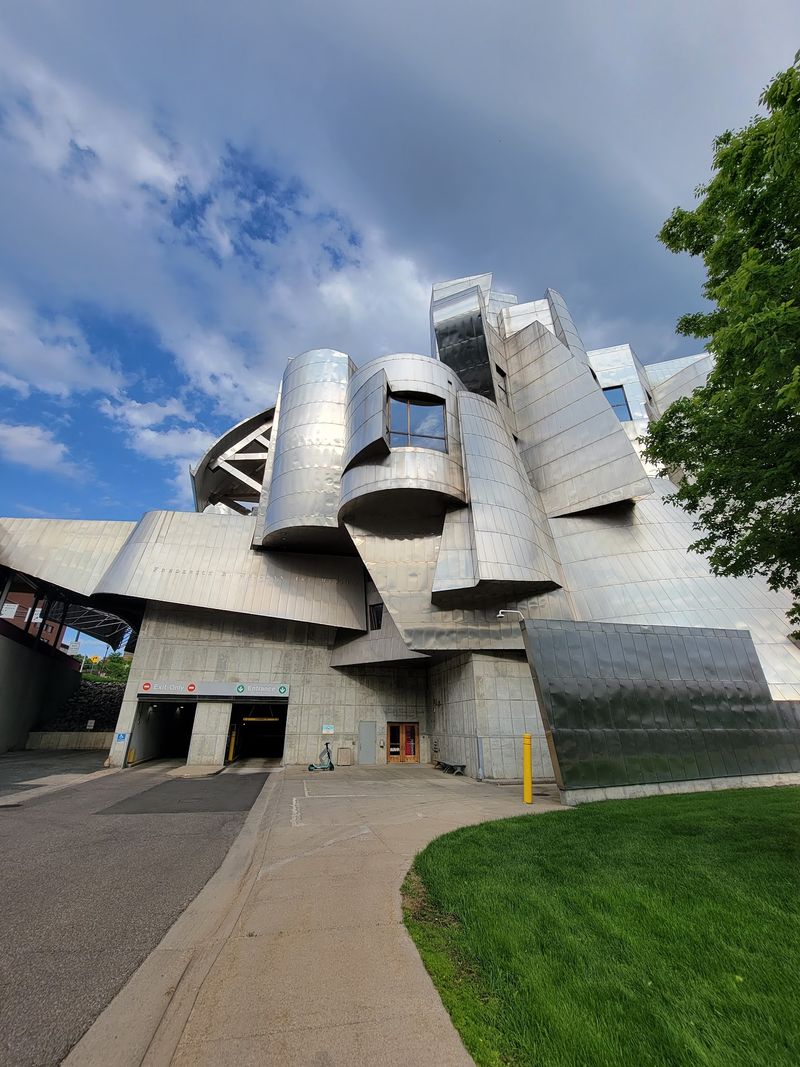
The famous architect designed the building, and it stands as one of the most unusual structures in the Twin Cities. The facade combines gleaming metal cladding with glass and brick, folding and tilting in ways that defy the usual box shape.
Design lovers describe it as a deconstructionist piece worth studying up close. The details reward patience, especially where the metal panels meet at sharp angles.
Photos only capture part of it. The building really needs to be seen from several angles, both from a distance and right up next to it, to understand its scale.
Some architecture buffs point out that the dramatic exterior raises questions about how the shapes influence the rooms inside. That debate is part of the fun.
Even people who admit they are not big museum fans find themselves drawn in by the structure. More than a few say the building itself is the main attraction.
Not bad for a museum that started as a campus project and became a destination of its own.
Best Angles From the Bridge and Riverfront

Finding the right spot to admire a Gehry building is a sport in itself.
Many people agree that the Washington Avenue Bridge offers one of the best views. From there, the full sweep of the metallic facade comes into focus above the riverbank.
The riverfront entrance is another favorite angle. The building shows off its most dramatic side facing the water.
Getting a clear look is not always easy, though. Some architecture fans note that the surroundings make it tricky to observe the whole structure from certain spots.
A walk around the exterior before heading inside helps. The interior then gives a completely different perspective on the same design.
Photographers love the setting for good reason. The river, the pedestrian bridge, and the museum together create a frame worth a few extra minutes.
Bring comfortable shoes, because the best shots usually require a little wandering.
The Lichtenstein Welcome and the Glass Fish
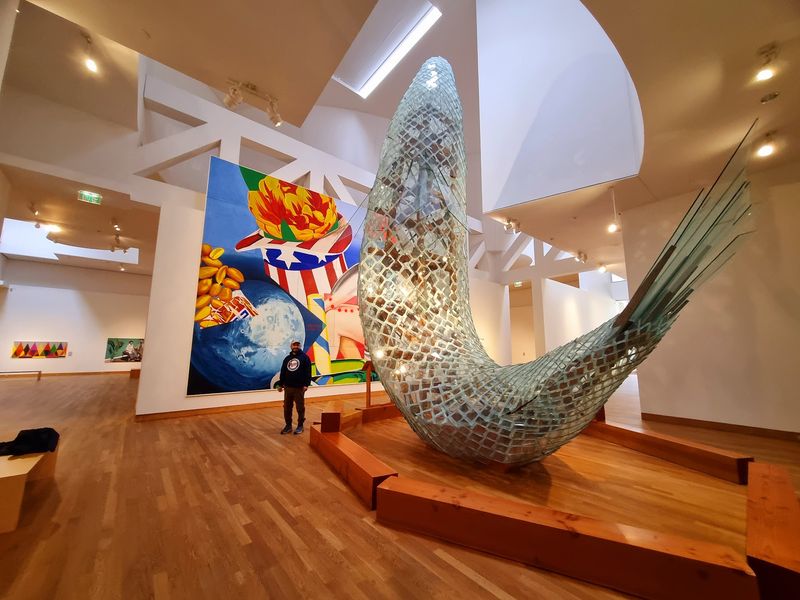
Few museum lobbies come with a piece of World’s Fair history, but this one does.
A Roy Lichtenstein mural greets guests near the entrance. The work originally came from the 1964 World’s Fair in Queens, New York.
Fans of pop art have traveled from far away just to see it in person. Its bold style sets an upbeat tone for the galleries beyond.
Then there is the fish. A tall standing glass fish created by Frank Gehry is one of the museum’s most talked-about pieces.
Gehry had a long fascination with fish forms, and this sculpture connects nicely to the building that surrounds it. Seeing the architect’s work both outside and inside adds a fun layer to the visit.
Together, these two pieces make strong first impressions. They also hint that the collection is more thoughtful than its size suggests.
Consider them the opening act, with plenty more waiting down the hall.
Galleries With Real Range
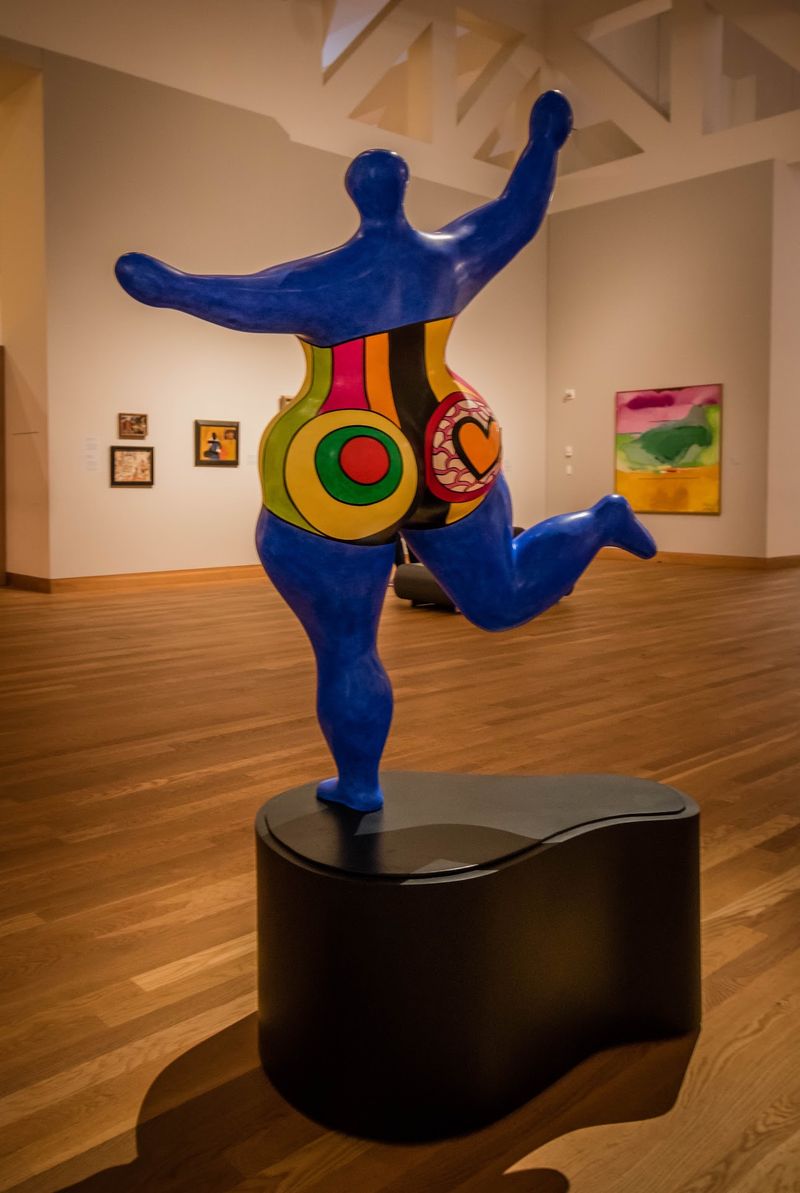
Small does not mean shallow, and the galleries prove it.
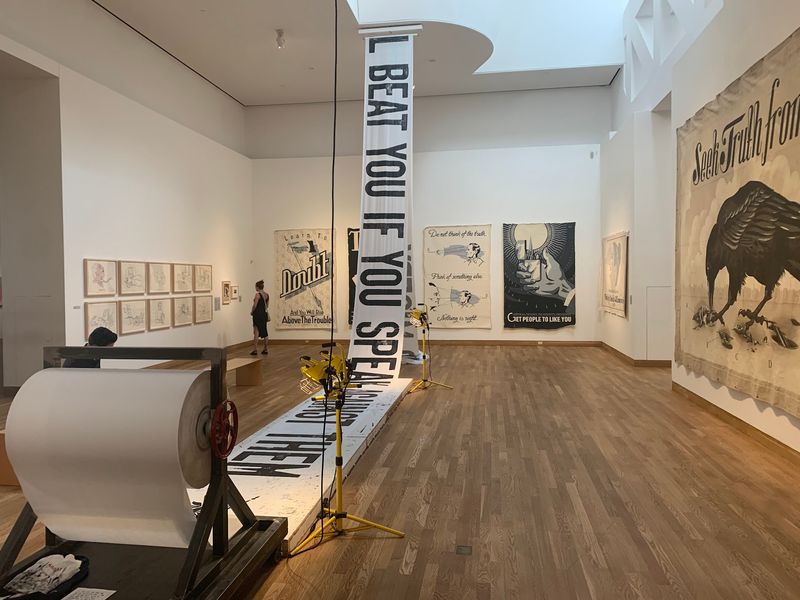
The collection features American and contemporary paintings, ceramics, and a strong group of expressionist works. Local and national artists share the walls, giving the museum a regional flavor alongside big names.
Exhibits change regularly, often with the school semester. That rotation means a return trip can feel brand new.
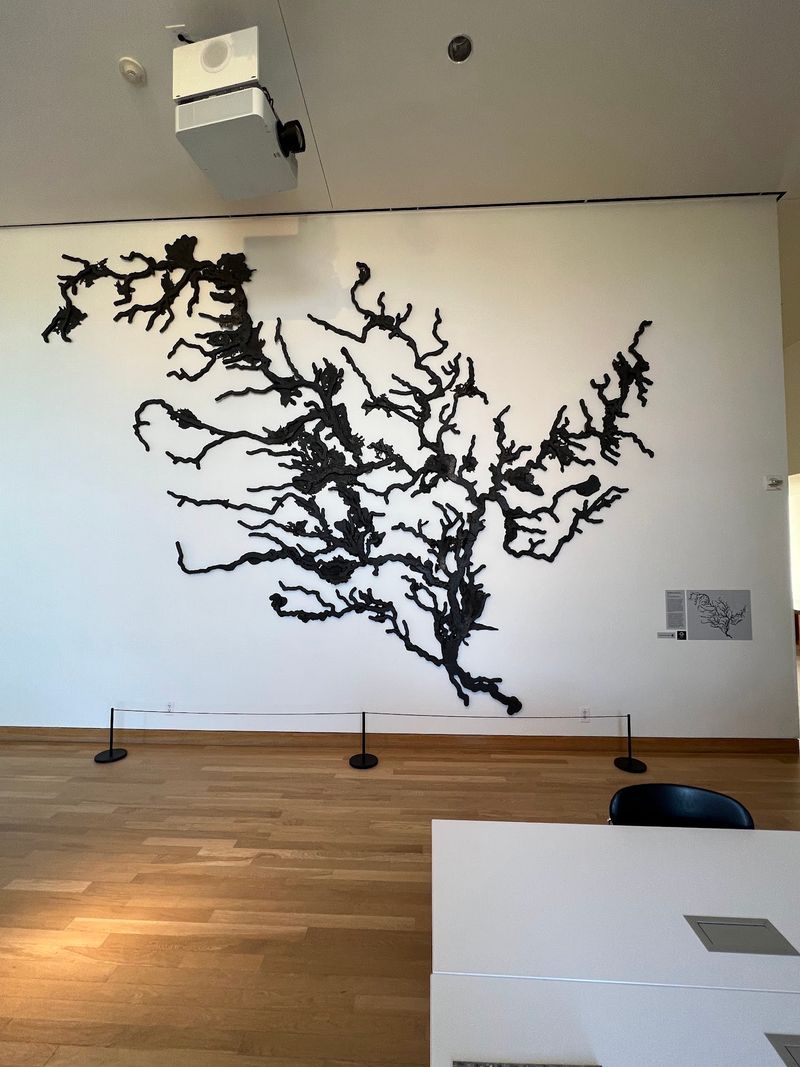
Past shows have ranged widely. A porcelain exhibition, a room devoted to algae, and a cities concept exhibit with a map of the downtown Minneapolis skyway system have all appeared.
Subject matter swings from serious topics like incarceration and partition to lighthearted, colorful pieces. The variety keeps things lively.
One installation invites guests into an apartment setting where leaning near the doors reveals what is happening inside. Small surprises like that reward curiosity.
The curation earns frequent praise for its intention and care behind each display. It is clear someone thought hard about what goes where.
Not every gallery is open on every day, so a quick check of the website before heading over is smart.
A Hands-On Corner for Makers
Crafters, take note. This museum does not just ask people to look at art, it lets them make some too.
A cute little make-your-own-art studio sits within the space. Guests can sit down and create a collage while they explore.
Families find it especially handy. Kids get a chance to put their own ideas on paper after seeing the galleries.
Adults enjoy it just as much. A few minutes of cutting and arranging can be a fun break from walking and viewing.
The activity fits the museum’s relaxed style well. Nothing feels stuffy or off limits about getting creative here.
For Minnesota makers looking for inspiration, the combination is hard to beat. Study ceramics and paintings, then try a few ideas right on site.
Who knows, that collage might end up on the fridge as the most personal souvenir of the day.
Skylights, Patios, and a Secret Balcony

The best view in the building is hiding near a restroom, and that is not a joke.
On the second floor, an open-air balcony offers a sweeping look at the Minneapolis skyline. Plenty of guests stumble onto it by accident.
A patio and courtyard also provide great views of the city. They make natural stopping points between galleries.
Inside, skylights bring plenty of daylight into the exhibition rooms. Certain windows were planned to frame specific views outside.
There is even a bright space designed simply for sitting. It works as a calm rest stop during a busy day.
Conference attendees have used the museum as a quiet break between sessions. The setting lends itself to a slower pace.
Wedding couples love these spots too. The museum hosts events, and the skyline backdrop makes for memorable photos.
Make a point of seeking out the balcony, because skipping it would be a missed opportunity.
Free Admission and a Friendly Gift Shop
Here is a price tag everyone can love: zero dollars.
Admission is always free. The museum runs on donations, and many people feel a contribution is well worth it.
That open door makes spontaneous visits easy. Students, families, and travelers can drop in without planning a budget.
The gift shop deserves a look on the way out. Shelves hold candles, art pieces, and other items suited for keepsakes or presents.
Staff members earn praise for being friendly and helpful. They will also hold bags while guests explore the galleries.
A few house rules apply. Water bottles go to the front desk, and backpacks must be worn on the front or left with staff.
Knowing those policies ahead of time saves a reminder at the door. It keeps the visit smooth from start to finish.
Free art, helpful people, and a shop full of thoughtful finds make a strong combination.
Hours, Parking, and Timing Tips
A little planning goes a long way here, mostly because of the calendar and the car.
The museum is open Wednesday through Friday from 10 AM to 5 PM. Saturday and Sunday hours run from 11 AM to 5 PM, and it is closed on Monday and Tuesday.
Those limited hours catch some people off guard. Double-check before setting out.
Parking can be the trickiest part. There is a garage beneath the building, but during busy campus periods it may fill up or be reserved for university staff.
When the museum garage is full, other University of Minnesota ramps sit within a few minutes’ walk. Street parking works for shorter stops.
Walking in is often the easiest choice. The pedestrian bridge connects the area to downtown Minneapolis.
Plan on 30 minutes to two hours inside. Weekends and the start of the school year tend to be busier on campus.
Getting the logistics right means more time for the good stuff.
Why the Weisman Earns a Spot on the List
Short visits rarely deliver this much variety.
In a single compact floor, guests get a Gehry-designed building, a Lichtenstein mural, a glass fish, rotating exhibits, and a spot to make a collage. Add a hidden balcony and free admission, and the case is pretty strong.
The museum suits many kinds of people. Architecture fans, crafters, families, students, and travelers on a tight schedule all find something worthwhile.
It also pairs nicely with a broader outing. The University of Minnesota campus is beautiful to explore, and the bridge leads straight toward downtown.
Those wanting a huge museum might find it smaller than other big Minneapolis institutions. For many, though, that manageable size is the selling point.
Timing matters, since some galleries close between shows. Checking the website first helps avoid an off day.
Come for the shiny steel, stay for the thoughtful art, and leave with a few new ideas for your next creative project.
Share this story