When autumn arrives in Tennessee, the state’s forests and mountains come alive with activity. Black bears fatten up before winter, migrating birds pass through by the thousands, and deer become more visible as they move through cooler air.
Fall is one of the best times to spot wildlife on the trail, and Tennessee offers some incredible places to watch it all unfold.
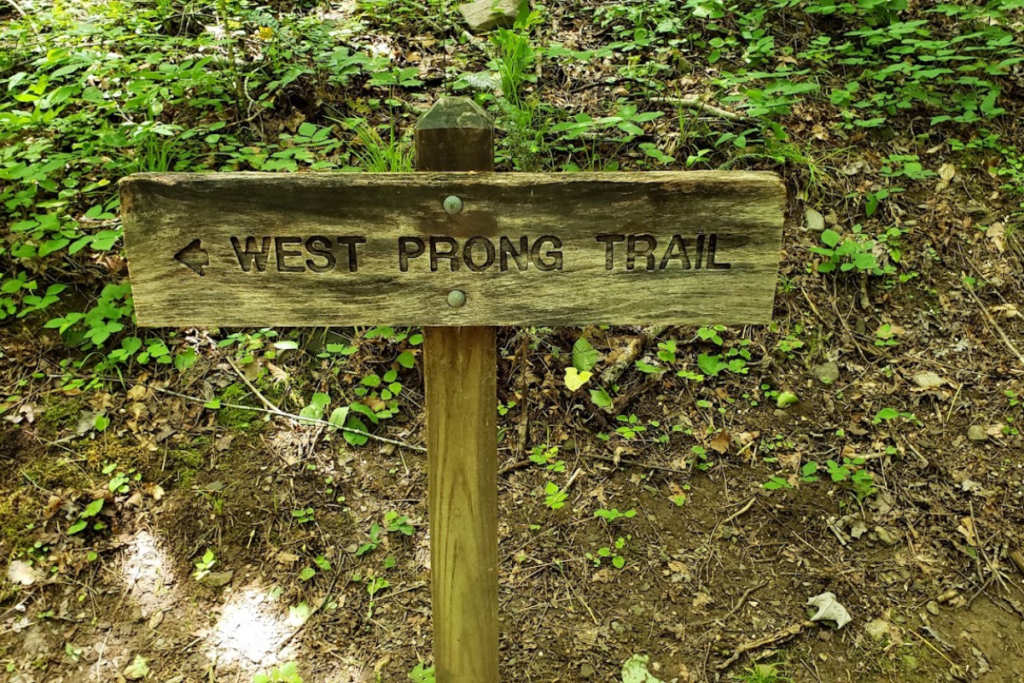
1. West Prong Trail, Great Smoky Mountains National Park
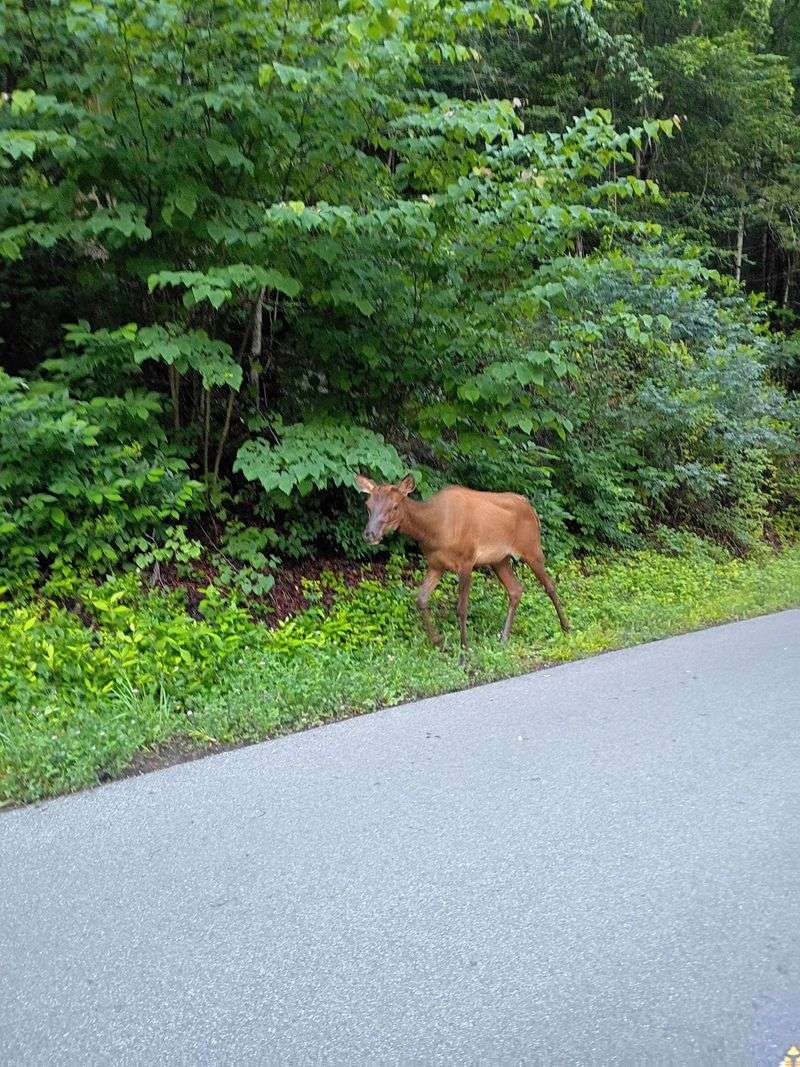
Black bears don’t mess around when fall hits the Smokies. They’re on a mission to pack on pounds before winter, and West Prong Trail runs straight through prime feeding territory.
The National Park Service lists this trail as one where hikers regularly encounter deer, black bears, and wild hogs, making it a hotspot for wildlife watchers who know what they’re doing.
The trail follows an old railroad bed along the West Prong of the Little Pigeon River, winding through dense hardwood forest that explodes with color in October. Bears love this habitat because it offers acorns, berries, and other high-calorie foods they need to survive hibernation.
You might also spot white-tailed deer grazing near the water or catch sight of wild hogs rooting through the underbrush.
This isn’t a zoo. Wildlife sightings are never guaranteed, but fall increases your odds dramatically.
Bears are more active during daylight hours in autumn, and cooler temperatures mean animals move around more freely.
If you’re planning to hike here, carry bear spray and make noise as you walk. The Park Service requires you to stay at least 50 yards from bears and elk, and 150 feet is even better.
Never approach wildlife for photos, no matter how cute or calm they seem.
West Prong Trail is moderately easy, making it accessible for families and casual hikers who want a real shot at seeing Smokies wildlife without committing to a grueling trek. The trailhead sits near Tremont, a quieter entrance to the park compared to Gatlinburg or Cades Cove. That means fewer crowds and a better chance of spotting animals undisturbed.
Fall mornings are your best bet. Get there early, move quietly, and keep your eyes open. Wildlife doesn’t wait around for stragglers.
2. Abrams Falls Trail, Cades Cove
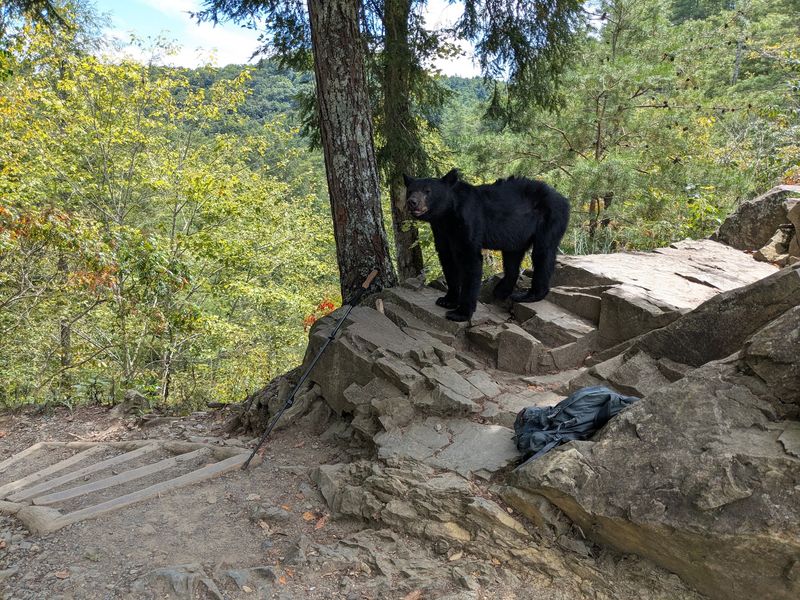
Cades Cove is legendary for wildlife, and Abrams Falls Trail delivers one of the best hikes in the area. The trail starts from the Cades Cove Loop Road, which alone is worth the trip for animal sightings.
Deer, wild turkeys, coyotes, and black bears roam the valley regularly, and fall brings peak activity as bears search for food before denning up.
The hike itself is five miles round trip, leading you through mixed forest to a stunning 20-foot waterfall. It’s not the tallest cascade in the Smokies, but the volume of water crashing into the pool below makes it one of the most impressive.
Along the way, you’ll cross streams, walk through groves of towering trees, and pass through habitat that supports a huge variety of wildlife.
Bears are especially active here in autumn. Acorns and other mast crops ripen in September and October, drawing bears out of the high country and into lower elevations where food is abundant.
You might also see white-tailed deer moving through the forest or hear wild turkeys calling from the underbrush.
Abrams Falls Trail can get crowded, especially on weekends. If you want the best chance of spotting wildlife, go early in the morning or later in the afternoon when fewer people are around.
Animals tend to avoid heavily trafficked areas during peak hours, but they come back out once the crowds thin.
Bring plenty of water and wear sturdy shoes. The trail includes some rocky sections and creek crossings that can be slippery, especially after rain.
Bear spray is a smart idea, and so is making noise as you hike. The last thing you want is to surprise a bear on a narrow trail.
Cades Cove’s combination of open valley and dense forest creates perfect conditions for wildlife, and Abrams Falls Trail puts you right in the middle of it.
3. Schoolhouse Gap Trail, Townsend and Cades Cove Area
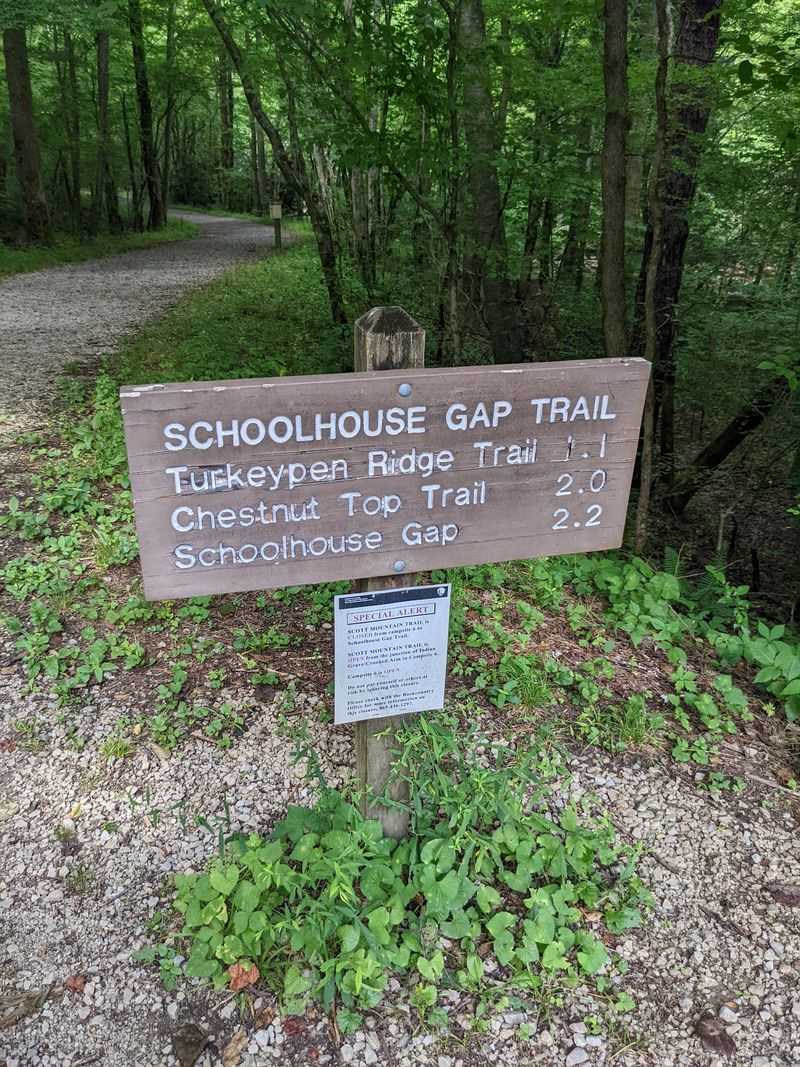
Most people skip Schoolhouse Gap Trail on their way to more famous Smokies destinations, which is exactly why it’s worth your time. This quieter path offers a mix of forest, streamside habitat, and a marshy birding area near Turkeypen Ridge Trail.
The National Park Service specifically recommends it for seasonal wildlife viewing, and fall delivers on that promise.
Birds are the big draw here. Migratory species pass through the Smokies in waves during autumn, and the marshy sections near Turkeypen Ridge attract warblers, thrushes, and other songbirds stopping to refuel.
You might also spot woodpeckers, nuthatches, and blue jays moving through the hardwood canopy as they prepare for winter.
Black bears are active in the surrounding forest too. The trail sits close enough to Cades Cove that bear sightings are always possible, especially in October when they’re feeding heavily.
Deer and wild turkeys also use this area, and the quieter atmosphere means animals are less spooked by human activity.
Schoolhouse Gap Trail is about four miles one way, running from Laurel Creek Road to Cades Cove Loop Road. It’s a moderate hike with some elevation gain, but nothing too intense.
The trailhead near Laurel Creek Road is less crowded than most Smokies starting points, so you’ll have more solitude and a better chance of seeing wildlife undisturbed.
Bring binoculars if you’re into birdwatching. Fall migration is one of the best times to spot species you won’t see any other time of year, and the marshy areas along this trail concentrate birds in ways that make them easier to observe.
Early morning is prime time for both birds and mammals, so plan accordingly. This trail doesn’t get the attention it deserves, which is good news for anyone who wants a genuine wildlife experience without fighting crowds.
4. Cove Hardwood Nature Trail, Cades Cove
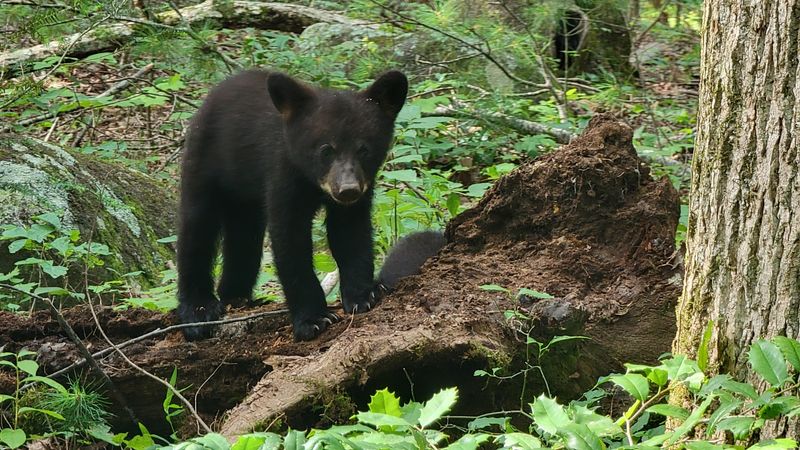
Sometimes the best wildlife hikes are the shortest ones. Cove Hardwood Nature Trail is less than a mile long, but it packs a serious punch for animal sightings.
The National Park Service specifically recommends this trail for autumn hikes, and Cades Cove’s reputation as one of the Smokies’ top wildlife-viewing areas backs that up.
The loop starts from the Cades Cove Picnic Area and winds through mature hardwood forest. Towering oaks, maples, and hickories create a canopy that lights up with color in October, and the forest floor is thick with understory plants that provide cover for deer, turkeys, and smaller mammals.
Black bears use this area regularly, especially in fall when acorns and other mast crops ripen. Deer are almost guaranteed here. White-tailed deer thrive in Cades Cove, and the open valley combined with nearby forest creates ideal habitat.
You’ll often see them browsing near the edges of the trail, particularly early in the morning or late in the afternoon. Wild turkeys are also common, and their distinctive gobbling calls echo through the woods in autumn.
Bears are the wild card. Cades Cove is one of the best places in the Smokies to spot black bears, and fall brings peak activity as they fatten up before winter.
Cove Hardwood Nature Trail runs through prime bear habitat, so always stay alert and make noise as you walk. Never approach a bear, even if it seems calm or uninterested.
The trail is easy and family-friendly, making it a great choice for hikers who want wildlife opportunities without committing to a long trek. The loop is well-maintained and clearly marked, and interpretive signs along the way explain the ecology of the Cades Cove area.
Short doesn’t mean boring. This trail delivers big on wildlife, especially in fall.
5. Rich Mountain Loop, Cades Cove
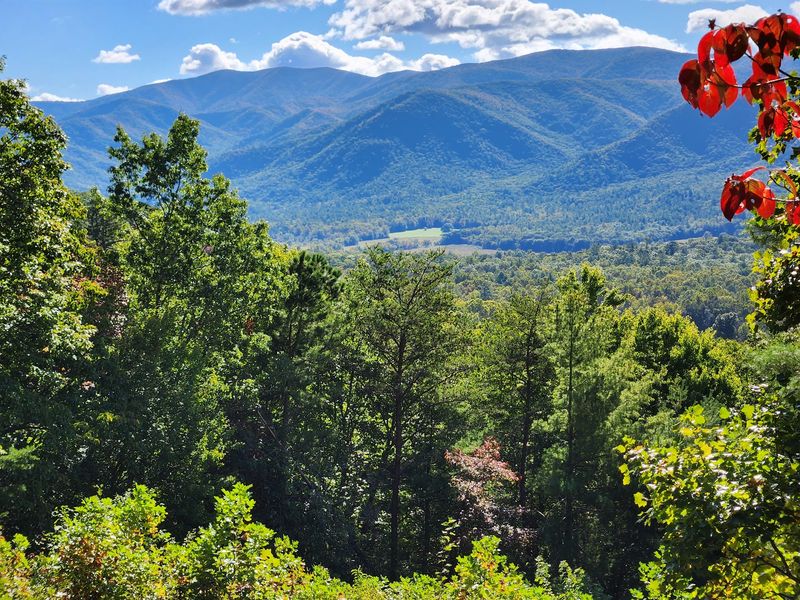
Rich Mountain Loop is one of those hikes that rewards effort with variety. The trail climbs from the wildlife-rich Cades Cove valley into surrounding hardwood forest, covering about eight miles of terrain that shifts from open meadows to dense woods.
That elevation change means you’ll pass through different habitats, each supporting its own mix of animals.
Deer are everywhere in Cades Cove, and Rich Mountain Loop gives you front-row access. White-tailed deer graze in the valley during early morning and late afternoon, and you’ll often spot them moving between the meadows and forest edge.
Wild turkeys are common too, and their flocks can be surprisingly large in autumn as young birds stick close to their mothers.
Black bears are the main event. The National Park Service recognizes Cades Cove as one of the park’s prime wildlife-viewing locations, and fall is when bears become most visible.
They move down from higher elevations to feed on acorns, hickory nuts, and other calorie-dense foods before winter. The forested sections of Rich Mountain Loop run straight through prime bear habitat, so stay alert and carry bear spray.
The loop can be hiked in either direction, but most people start from the Cades Cove Loop Road and climb up to Rich Mountain. The ascent is steady but manageable, and the views from higher elevations are worth the effort.
You’ll look out over the Cove below, with its patchwork of fields and forests stretching toward the mountains beyond.
This trail sees fewer hikers than some of the more famous Cades Cove routes, which means less noise and more chances to spot wildlife. Animals avoid heavily trafficked areas during peak hours, but quieter trails like this one let you experience the Smokies in a more natural state.
Rich Mountain Loop is a commitment, but it delivers on wildlife, scenery, and solitude.
6. Little River, Cucumber Gap, Jakes Creek Loop, Elkmont
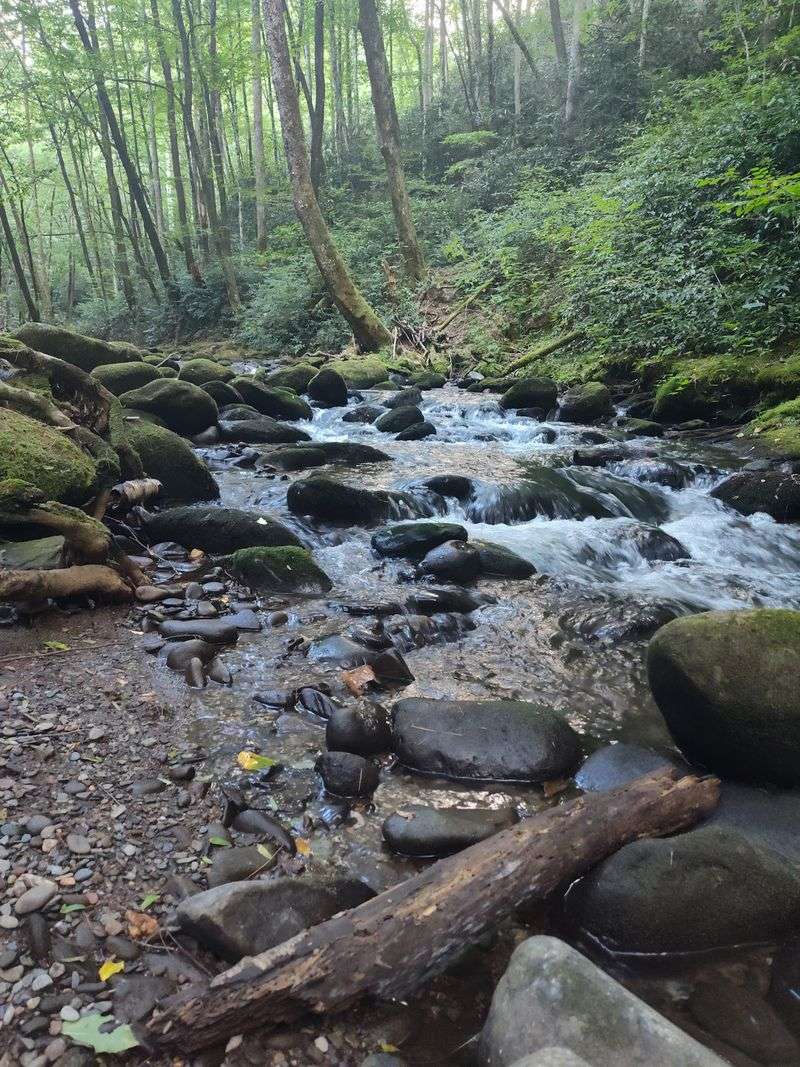
Elkmont is one of the Smokies’ hidden gems, and this loop trail is a standout for fall hiking. The National Park Service highlights it as a scenic autumn hike, and its forested setting overlaps prime black bear habitat at a time when bears are feeding intensively ahead of winter.
The loop covers about five miles, combining three trails into one satisfying circuit.
The route starts near the Elkmont Campground and follows Little River before climbing through dense hardwood forest. Water is a constant companion on this hike, with streams cascading down the mountainside and the river rumbling below.
That combination of water and forest creates perfect conditions for wildlife, from salamanders and frogs to larger mammals like deer and bears.
Black bears are especially active here in fall. Acorns ripen in September and October, drawing bears out of the backcountry and into lower elevations where oak trees are abundant.
The Smokies are home to around 1,500 black bears, and Elkmont sits squarely in their territory. You might see a bear foraging along the trail or catch sight of one moving through the underbrush.
Deer are common too. White-tailed deer thrive in the mixed forest around Elkmont, and they’re more visible in fall as cooler temperatures encourage them to move around during daylight hours.
You might also spot wild turkeys, woodpeckers, and other birds as they prepare for winter or pass through on migration.
This loop is moderately challenging, with some elevation gain and rocky sections that require good footing. Bring plenty of water and wear sturdy shoes.
Bear spray is a smart precaution, and so is making noise as you hike. Surprising a bear on a narrow trail is a situation you want to avoid.
Elkmont offers a quieter Smokies experience compared to Gatlinburg or Cades Cove, and this loop is a great way to experience fall wildlife without fighting crowds.
7. Porters Creek Trail, Gatlinburg
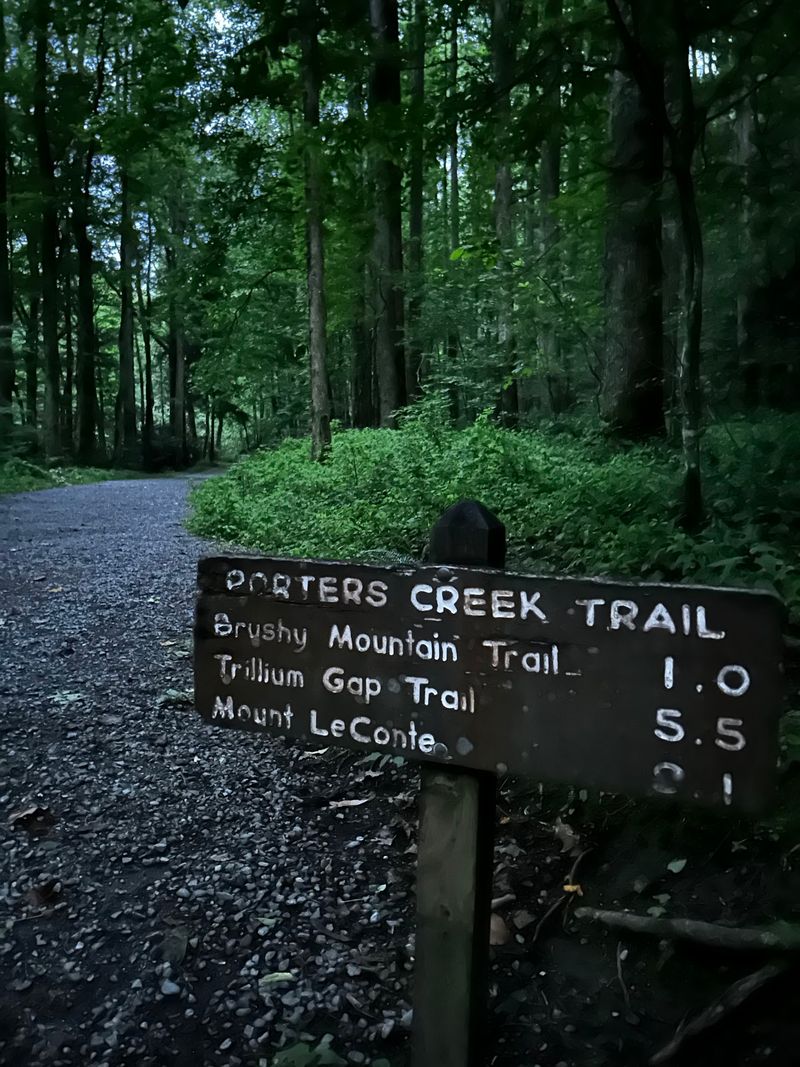
Porters Creek Trail is another National Park Service recommendation for autumn hiking, and it’s easy to see why. The trail runs through dense Smokies forest where black bears are active and fall colors peak in mid-October.
It’s about four miles round trip to the end of the maintained trail, with options to continue deeper into the backcountry if you’re feeling adventurous.
The trailhead sits near the Greenbrier entrance to the park, a quieter access point compared to Gatlinburg’s main tourist areas. That means fewer people and a better chance of spotting wildlife undisturbed.
The trail follows Porters Creek upstream, passing through old-growth forest with massive hemlocks and tulip poplars that tower overhead.
Bears are the big draw here. Fall is when they’re most active, feeding heavily to build fat reserves before winter.
Porters Creek Trail runs through prime bear habitat, with plenty of acorns, berries, and other foods that bears need. Sightings are never guaranteed, but fall increases your odds, and the dense forest means you need to stay alert at all times.
Deer and wild turkeys also use this area. White-tailed deer are common in the Smokies, and they’re more visible in fall as they prepare for the rut. Wild turkeys roam the forest floor in flocks, and their distinctive tracks and droppings are easy to spot along the trail.
Porters Creek Trail also offers some cultural history. You’ll pass old homesites and a historic cemetery, remnants of the families who lived in these mountains before the park was established.
It’s a reminder that the Smokies weren’t always wilderness, and the forest you’re walking through is actually recovering from decades of human use.
This trail is moderately easy, making it accessible for most hikers. The stream crossings can be tricky after rain, so watch your footing.
Bear spray is a good idea, and so is hiking with a friend. Wildlife awareness is always important, but it’s especially critical in fall when bears are most active.
8. Walden Ridge Trail, Mount Roosevelt WMA
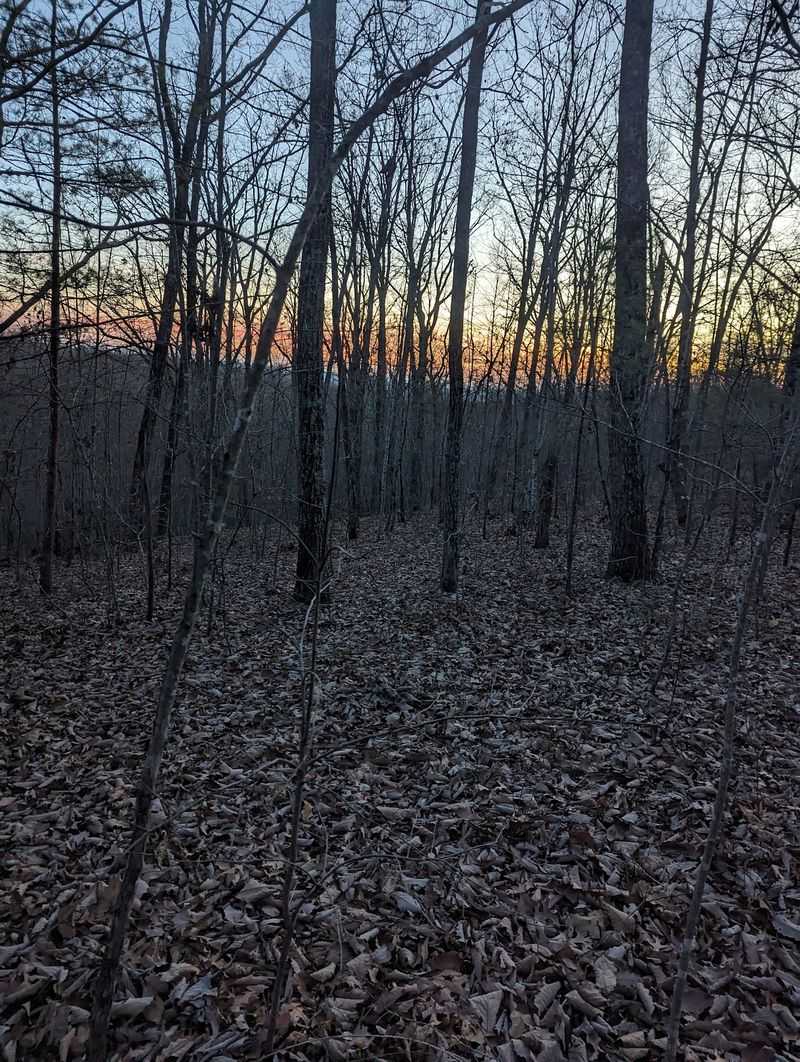
Mount Roosevelt WMA is famous for fall migration, and Walden Ridge Trail puts you right in the middle of the action. This spot is specifically known for red-tailed hawks, broad-winged hawks, blue jays, flickers, vultures, songbirds, and even migrating monarch butterflies passing through the area.
A spur from the overlook connects with Walden Ridge Trail, giving you access to some of the best wildlife watching in East Tennessee.
Hawk migration is the main event. Every fall, thousands of raptors funnel through the Tennessee Valley as they head south for winter.
Mount Roosevelt sits on a ridge that acts as a natural flyway, concentrating hawks and other birds in ways that make them easy to observe. September and October are peak months, with broad-winged hawks often passing through in large groups called kettles.
Blue jays are another highlight. These bold, noisy birds migrate in huge numbers during fall, and Mount Roosevelt is one of the best places in Tennessee to witness the spectacle.
You’ll see them flying over the ridge in waves, their distinctive blue and white plumage flashing against the autumn sky. Songbirds migrate through too, including warblers, thrushes, and sparrows stopping to refuel on their way south.
Monarch butterflies add another layer of magic. These delicate insects travel thousands of miles from Canada to Mexico, and they pass through Tennessee in late September and early October.
Mount Roosevelt’s ridgeline provides a natural migration corridor, and you’ll often see monarchs fluttering past as they ride the thermals south.
Walden Ridge Trail itself is a moderate hike with some elevation gain. The trail runs along the ridgeline, offering sweeping views of the valley below and plenty of opportunities to spot migrating wildlife.
Bring binoculars and a camera, and plan to spend some time at the overlook watching the sky. Fall migration is unpredictable, but when conditions are right, the show is unforgettable.
9. Will Skelton Greenway, Knoxville
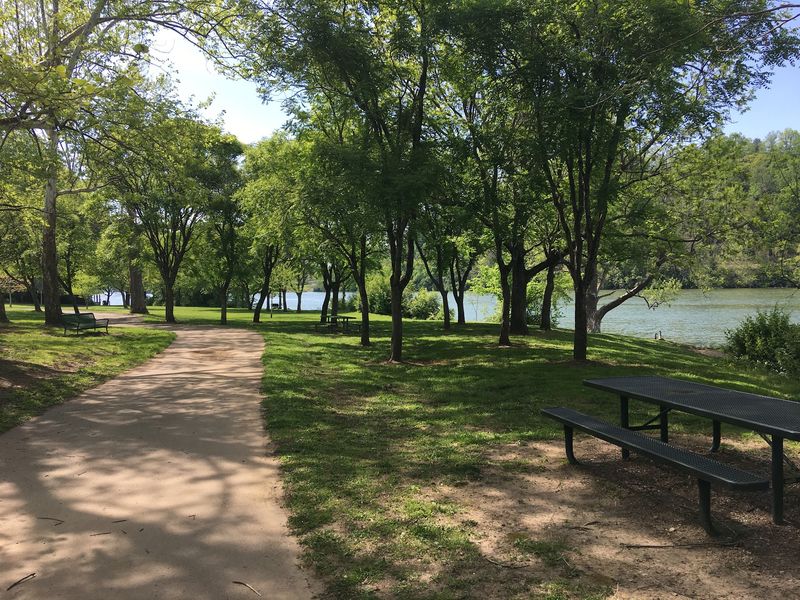
Not every great wildlife trail requires a trip to the mountains. Will Skelton Greenway in Knoxville offers excellent wildlife viewing right in the city, with deer, wild turkeys, and strong songbird migration making it a solid choice for fall outings.
The greenway runs for several miles along the Tennessee River, providing easy access for hikers, runners, and cyclists who want a quick nature fix without leaving town.
Deer are surprisingly common here. White-tailed deer have adapted well to urban environments, and the greenway’s mix of forest, fields, and water creates ideal habitat.
You’ll often spot them grazing near the trail, especially early in the morning or late in the afternoon when they’re most active. They’re less skittish than their backcountry cousins, but they’re still wild animals and deserve respect.
Wild turkeys are another highlight. These big birds roam the greenway in flocks, and their distinctive gobbling calls echo through the trees in fall.
Turkeys are most visible in open areas where they forage for acorns, seeds, and insects. They can be surprisingly bold, so keep your distance and let them go about their business.
Songbird migration is the real treat. Fall brings waves of warblers, thrushes, sparrows, and other species passing through Knoxville on their way south.
The greenway’s riverside habitat attracts these birds in numbers, and the trees along the trail provide cover and food as they refuel for the journey ahead. Bring binoculars and a field guide, and take your time scanning the branches for movement.
Will Skelton Greenway is paved and mostly flat, making it accessible for all ages and fitness levels. It’s also dog-friendly, though you’ll need to keep your pet on a leash to avoid disturbing wildlife.
The trail gets busy on weekends, so early mornings are your best bet for serious wildlife watching.
Urban trails like this one prove you don’t need wilderness to experience nature. Sometimes the best wildlife is right in your backyard.
10. Finley Cane, Bote Mountain, Lead Cove Loop, Near Cades Cove
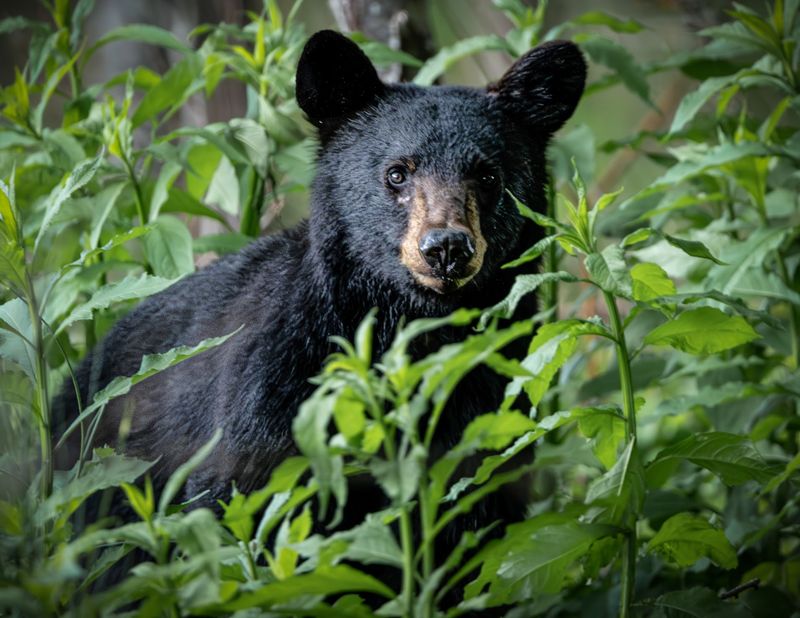
Finley Cane, Bote Mountain, Lead Cove Loop is a mouthful to say, but it’s a fantastic hike for fall wildlife. This 6.9-mile loop passes through several elevations and mixed hardwood habitats just minutes from Cades Cove.
The National Park Service specifically recommends it for fall scenery, and its proximity to Cades Cove puts hikers in one of the Smokies’ most wildlife-rich areas.
The loop starts near the Cades Cove Picnic Area and climbs steadily through dense forest. You’ll pass through groves of oak, hickory, and maple that explode with color in October, and the understory is thick with rhododendron and mountain laurel.
This mix of habitats supports a wide variety of wildlife, from black bears and deer to smaller mammals like raccoons and squirrels.
Black bears are especially active here in fall. The loop runs through prime bear habitat at a time when they’re feeding heavily before winter.
Acorns and other mast crops ripen in September and October, drawing bears out of the high country and into lower elevations where food is abundant. You might see a bear foraging along the trail or catch sight of one moving through the underbrush.
Deer are common too. White-tailed deer thrive in the Cades Cove area, and the loop’s varied terrain gives you multiple chances to spot them.
Wild turkeys also use this area, and their flocks can be surprisingly large in autumn as young birds stick close to their mothers.
This loop is moderately challenging, with steady elevation gain and some rocky sections that require good footing. Bring plenty of water and wear sturdy shoes.
Bear spray is a smart precaution, and so is making noise as you hike. The last thing you want is to surprise a bear on a narrow trail.
Finley Cane, Bote Mountain, Lead Cove Loop doesn’t get the attention of some other Cades Cove trails, but that’s good news for anyone seeking solitude and wildlife. Fall is the perfect time to experience it.
Share this story