Pennsylvania is filled with places where the past still feels surprisingly close, from broken dams and empty prison halls to abandoned roads, historic tunnels, forgotten towns, and factory ruins. Each destination offers a glimpse into a different chapter of the state’s history, telling stories of hard work, industrial growth, natural disasters, and communities that changed with time. Visiting these sites is more than just exploring abandoned places—it is an opportunity to better understand the people and events that helped shape Pennsylvania.
Some of these locations are easy to visit, with walking trails, interpretive signs, and preserved landmarks, while others remain quiet, remote, and surrounded by an air of mystery. They appeal to history enthusiasts, photographers, hikers, and anyone who enjoys discovering places with fascinating backstories. Whether you are interested in local legends, forgotten landmarks, or unique road trip destinations, these abandoned Pennsylvania sites offer a memorable journey through the state’s rich and often overlooked past.
1. Austin Dam Memorial Site, Austin
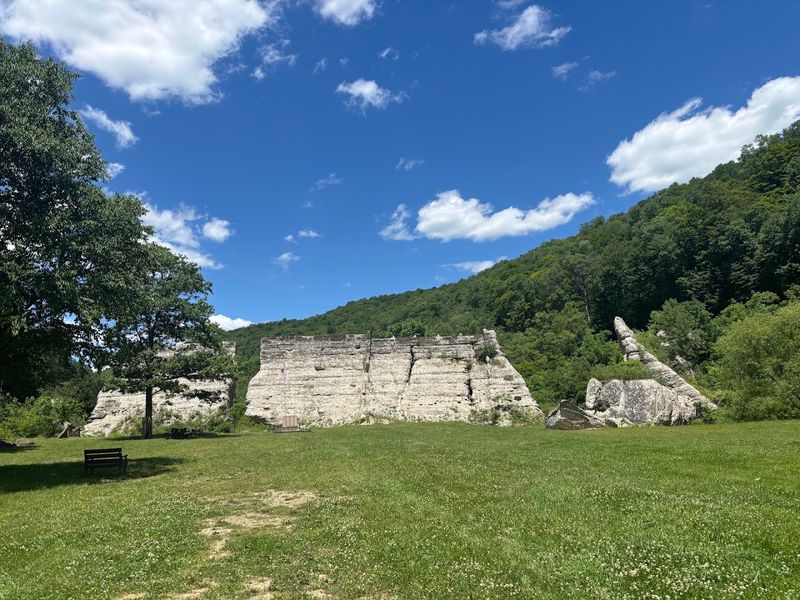
Few places in Pennsylvania feel as haunting and powerful as the remains of Austin Dam.
The giant concrete wall once promised progress for the lumber town nearby, but a terrible collapse in 1911 changed everything in only minutes.
Today, the memorial site blends history, sorrow, and natural beauty in a way that stays with visitors long after they leave.
Walking around the ruins, you can still see huge broken sections of the dam scattered across the stream valley.
Signs help explain the flood that rushed through Austin and killed dozens of people, making the site more than just a photo stop.
It becomes a lesson about industry, engineering, and how quickly life could change in early Pennsylvania mill towns.
Bring sturdy shoes, because the ground can be uneven near rocks and old concrete pieces.
A camera is a smart idea too, especially in fall when the colorful trees frame the gray ruins and make the scene look even more dramatic.
Families with older kids often find this site interesting because it mixes outdoor exploring with a true local story.
Quiet moments are what make this place special.
Stand still for a minute, listen to the water, and imagine the force that once tore through the valley.
If you visit respectfully and take time to read the memorial information, Austin Dam offers one of the most unforgettable abandoned places in Pennsylvania, not because it is flashy, but because it shows how history can remain written on the land itself.
2. Kinzua Bridge State Park, Mount Jewett
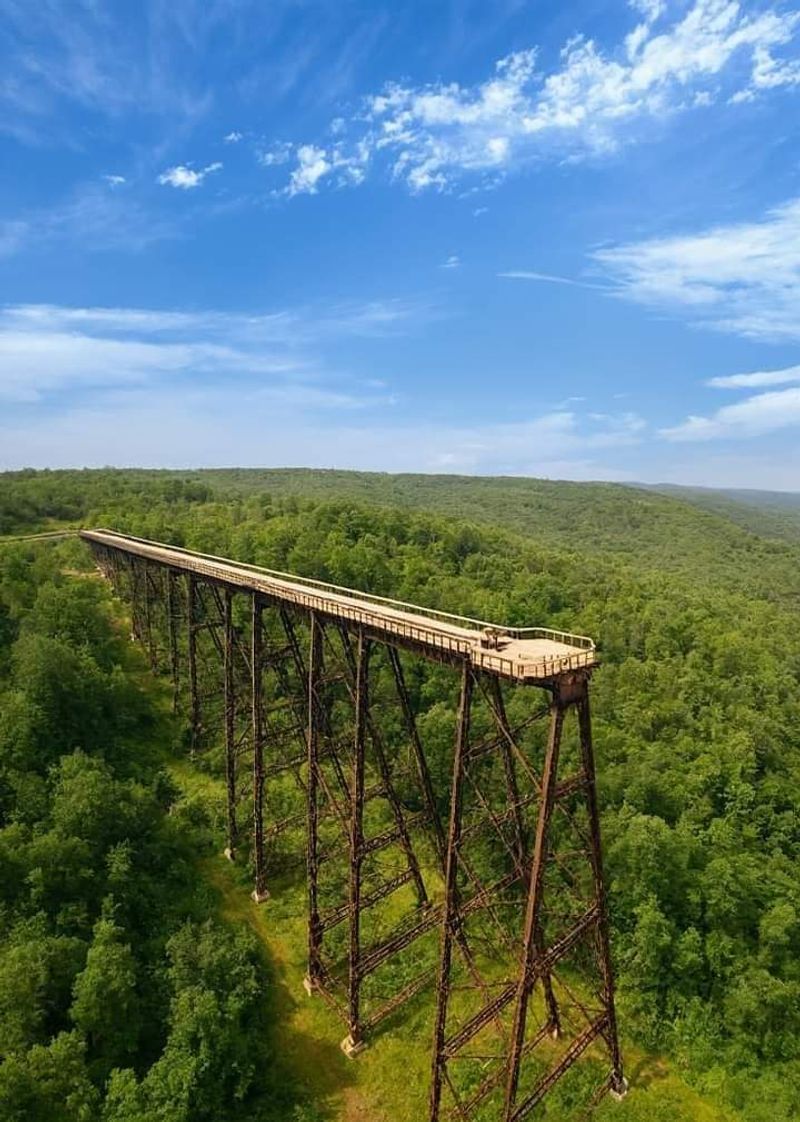
High above a forested valley, the broken remains of Kinzua Bridge look almost unreal.
What was once one of the tallest and longest railroad bridges in the world now stands partly shattered after a tornado struck in 2003.
That mix of strength and damage gives the park a powerful feeling that is hard to forget.
The site is easy to visit, which makes it a great choice for people who want an abandoned landmark without a hard hike.
A skywalk lets you look out over the valley and see the twisted steel towers lying below, where nature has slowly worked its way around the wreckage.
The visitor center adds useful background about the railroad era, the bridge design, and the storm that changed the site forever.
Good walking shoes and a jacket are helpful, especially when the weather turns cool on the overlook.
Photographers often come early or late in the day for softer light, while history fans enjoy seeing how an industrial giant became a public park.
If you are traveling with kids, the dramatic view usually keeps them interested much better than a regular museum stop.
There is something striking about seeing a famous bridge in two different states at once, standing and fallen.
Kinzua is not just a ruin, and it is not just a scenic overlook either.
It shows how Pennsylvania can preserve the past while still making it meaningful for modern visitors, turning a damaged railroad landmark into one of the state’s most memorable places to explore, learn from, and quietly admire.
3. Pithole City, Pleasantville Area
Boomtown stories rarely get stranger than Pithole City.
In the 1860s, oil made this place explode with people, money, hotels, and noise, but the excitement faded fast when production dropped.
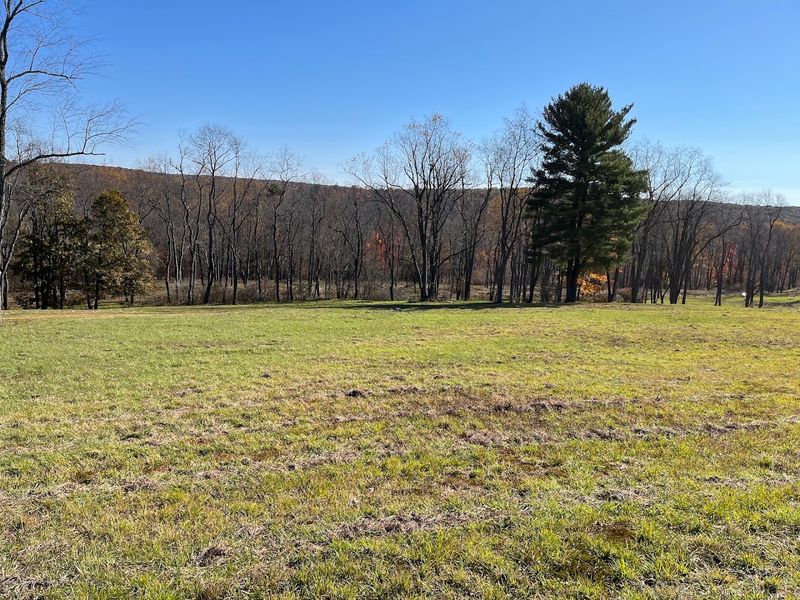
What remains now is mostly open land, markers, and imagination, which somehow makes the ghost of the town feel even stronger.
Instead of crumbling buildings, visitors explore the outline of a vanished community.
Interpretive signs show where streets, businesses, and homes once stood, helping you picture a place that grew quickly and disappeared almost as fast.
That unusual setup makes Pithole different from many abandoned sites in Pennsylvania, because the real adventure is learning to read the landscape.
A visit here works best if you slow down and pay attention to the details.
Bring water, wear comfortable shoes, and give yourself time to walk the grounds without rushing.
Reading the history before you go can help too, since the more you know about the oil rush, the easier it is to imagine stagecoaches, muddy roads, crowded hotels, and the wild hopes that built the town.
There is a quiet sadness here, but also a sense of wonder.
Pithole City reminds people that success can be sudden and temporary, especially in places built around one resource.
For students, families, and history lovers, it offers a simple but memorable way to connect with Pennsylvania’s oil heritage.
You may not see towering ruins, yet the empty space tells a big story about ambition, risk, and the surprising speed with which an entire town can rise and then disappear.
4. Alvira Bunkers, Allenwood Area / State Game Lands 252
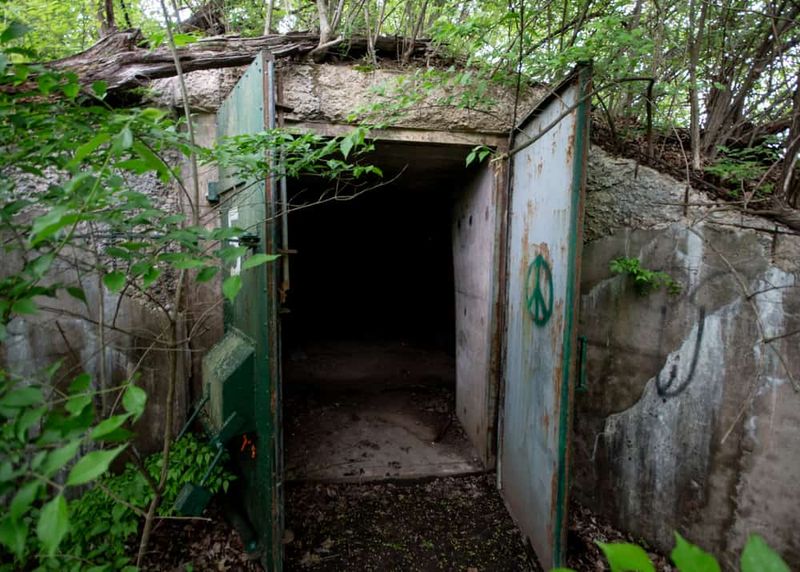
Scattered through the woods like giant concrete shells, the Alvira Bunkers have a strange and unforgettable look.
They were built after the government took over farmland during World War II, and many families had to leave their homes behind.
That history gives the site an uneasy feeling, even before you notice the long rows of bunker doors disappearing into the trees.
Today, hikers and curious explorers come to State Game Lands 252 to see these old storage bunkers up close.
Some are covered in moss, some have graffiti, and all of them seem a little out of place against the peaceful forest backdrop.
The contrast is part of what makes Alvira so interesting, because it feels like nature and military history are sharing the same space.
Planning matters here.
Wear boots if the ground is muddy, check rules for the game lands, and be aware of hunting seasons before visiting.
Cell service may not always be dependable, so going with a friend and carrying water is a smart move, especially if you want to wander farther from the parking area.
Alvira is not polished or museum-like, and that roughness is exactly the point.
It offers a glimpse of wartime change, forced relocation, and the hidden leftovers of a major national effort that touched rural Pennsylvania.
Some visitors come for photography, others for exercise, and many simply enjoy finding a place that feels both open and secret at the same time.
If you like abandoned sites that reward curiosity, the bunkers provide a memorable mix of eerie views, local history, and the kind of quiet you can only find deep among the trees.
5. Eastern State Penitentiary, Philadelphia
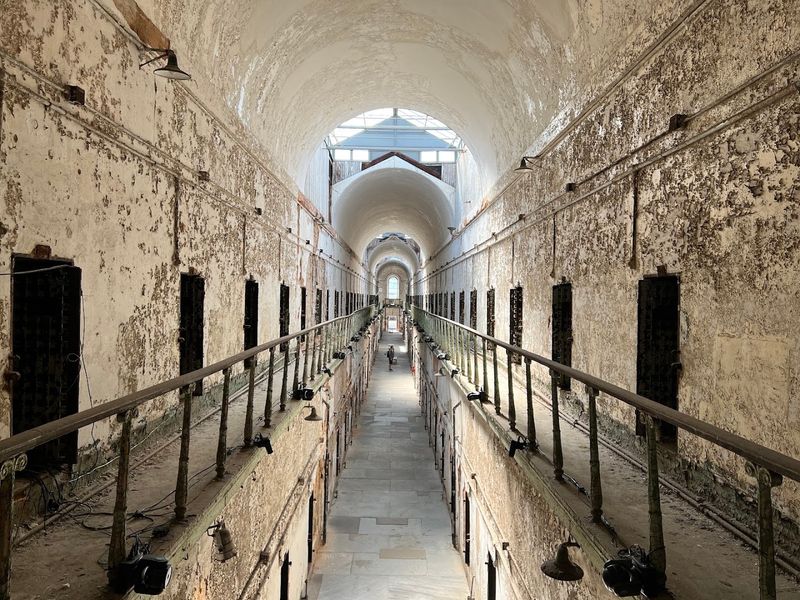
Cold stone walls, empty cells, and long shadowy hallways give Eastern State Penitentiary a mood that is hard to shake.
Opened in the 1800s, it was once one of the most famous prisons in the world and shaped prison design far beyond Pennsylvania.
Now, its decaying corridors let visitors step into a place where history feels close enough to touch.
Unlike some abandoned sites that are mostly outdoor ruins, this one offers a fuller experience with preserved cell blocks, exhibits, and audio tours.
You can see how prisoners lived, learn about the strict system of isolation, and understand why the prison became both famous and controversial.
The building itself does much of the storytelling, with cracked plaster, rusting bars, and sunlight falling through broken roof sections.
Because it is in Philadelphia, Eastern State is one of the easiest abandoned places on this list to reach.
Buy tickets ahead of time if you can, wear comfortable shoes, and give yourself enough time to explore more than one cell block.
If spooky settings make you nervous, going during the daytime helps, though many people enjoy the eerie feeling that comes with the silence.
What makes this site stand out is the way it combines big ideas with personal stories.
You are not just looking at an old prison, you are thinking about punishment, reform, and the lives that moved through those cells.
For travelers who want abandoned Pennsylvania places with strong history, rich detail, and a setting that leaves a real impression, Eastern State Penitentiary is one of the most powerful stops you can make.
6. Concrete City, Nanticoke
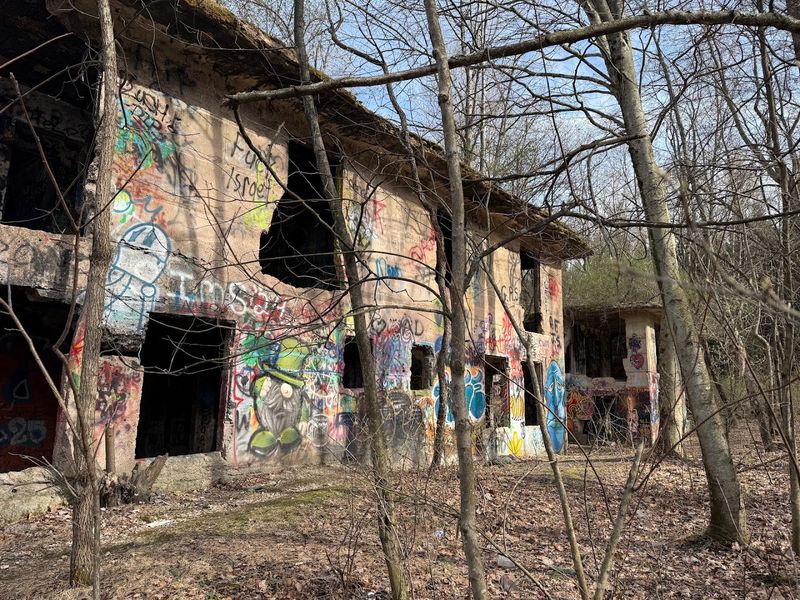
Rows of empty concrete houses make Concrete City feel like a movie set that time forgot.
Built in the early 1900s for coal workers, the neighborhood was meant to be modern and practical, yet it never became the lasting community people hoped for.
Today, the shell-like homes stand as one of the strangest abandoned places in Pennsylvania.
Walking through the site, you can see how unusual the design still looks.
The homes were made from poured concrete, which was a bold idea at the time, and their repeated shapes create an eerie pattern across the landscape.
Graffiti, broken openings, and overgrown areas add to the ghost town mood, but the site also says a lot about labor history and company housing.
Caution is especially important here.
The structures are old, damaged, and not safe for climbing, so it is best to admire them from a respectful distance.
Wear sturdy shoes, stay aware of your footing, and visit during daylight when it is easier to move around and take in the details without rushing.
Concrete City is memorable because it shows a different side of Pennsylvania’s industrial past.
Instead of giant furnaces or rail lines, you get a neighborhood experiment that faded away and left behind a very unusual set of ruins.
People who enjoy architecture, local history, or offbeat travel stops often find it fascinating.
Even if you only stay for a short visit, the repeating gray houses and quiet streets can leave a strong impression, reminding you how communities tied to coal could rise, struggle, and slowly empty out while their buildings remained staring back at the future.
7. Staple Bend Tunnel, Near Mineral Point And Johnstown
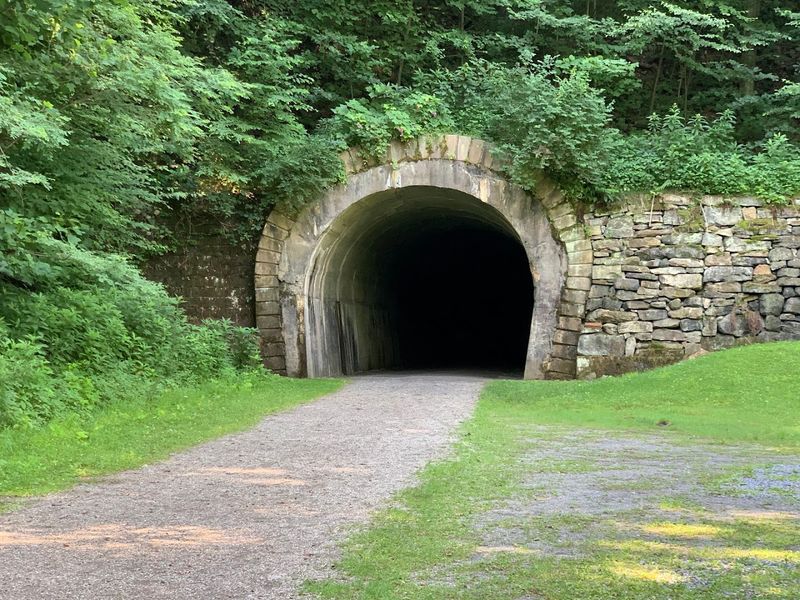
Tucked along a trail in the woods, Staple Bend Tunnel feels like a hidden doorway into early railroad history.
Built in the 1830s, it was the first railroad tunnel in the United States, which makes it far more than just an old passage through a hillside.
Reaching it on foot adds a little adventure and makes the discovery even more satisfying.
The walk to the tunnel is part of the appeal.
Trees, streams, and a peaceful path lead you toward the stone portal, and when it finally appears, the structure looks both simple and impressive.
Unlike larger industrial ruins, Staple Bend has a quiet charm, showing how much effort went into transportation projects long before modern machines changed the work.
Comfortable shoes are a must, especially after rain when the trail can be wet or uneven.
Bringing a flashlight is helpful if you want a better look inside, though many visitors enjoy just standing near the entrance and taking photos of the cool stonework.
Because the area is scenic as well as historic, it works nicely for families, hikers, and anyone who likes mixing exercise with local exploration.
What gives the tunnel its special pull is the way it connects nature and engineering.
Birds, leaves, and running water now surround a structure that once represented progress and movement across Pennsylvania.
It is not flashy, and that is part of its appeal.
Staple Bend Tunnel rewards patient visitors who enjoy places with texture, atmosphere, and a story that reaches back to the earliest days of American rail travel.
For a quieter abandoned destination, it offers a refreshing change from darker sites while still delivering a strong sense of history.
8. Abandoned Pennsylvania Turnpike, Near Breezewood And Waterfall
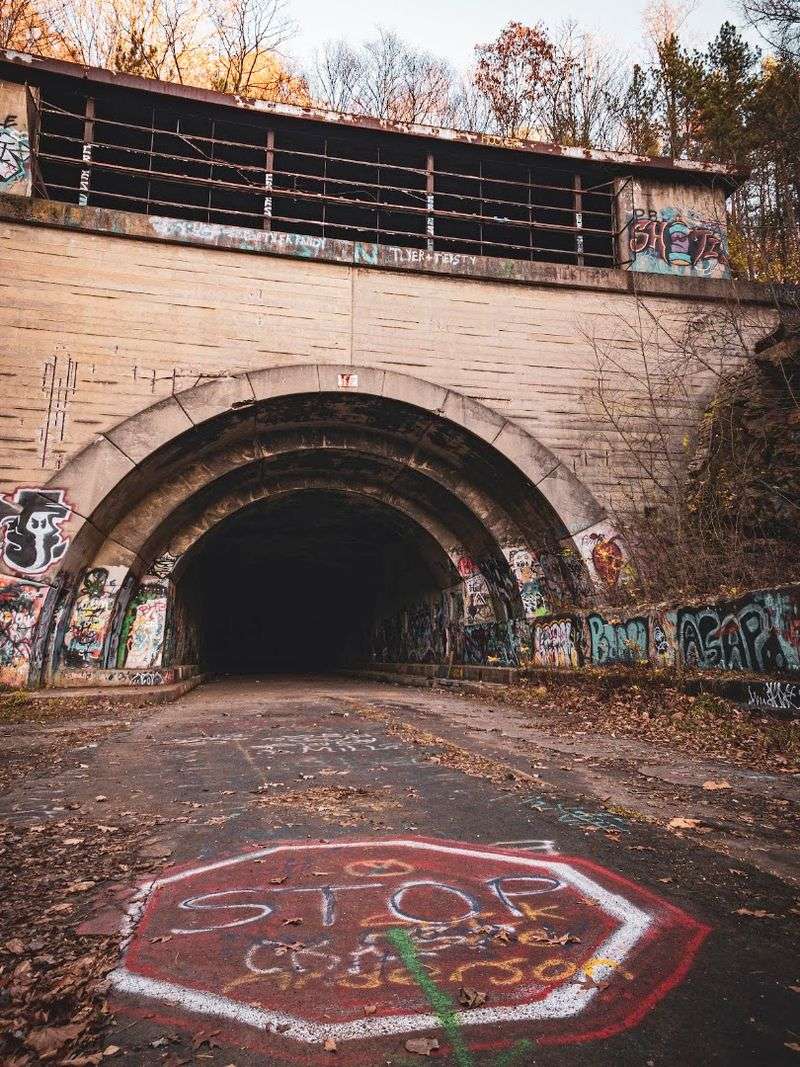
A stretch of empty highway running through the woods sounds almost impossible, yet that is exactly what the Abandoned Pennsylvania Turnpike offers.
Once part of a major travel route, this section was bypassed decades ago, leaving behind long pavement, tunnel entrances, and a rare chance to walk where cars used to speed by.
It feels part road trip, part time capsule, and part adventure movie.
Many people come for the tunnels, especially Sideling Hill and Rays Hill, where darkness, dripping water, and cool air create an unforgettable atmosphere.
Graffiti covers many surfaces, and the huge scale of the road makes the silence even stranger.
Because the path is long and mostly open, the site also attracts cyclists and hikers who want an unusual outdoor experience in south central Pennsylvania.
Preparation matters more here than at a small roadside stop.
Bring water, snacks, and lights if you plan to enter a tunnel, and wear shoes that can handle a lot of walking.
Since distances can be longer than expected, checking your route before arriving helps you decide whether you want a shorter visit or a bigger exploration day.
The abandoned turnpike stands out because it lets people experience infrastructure in a completely different way.
Roads are usually rushed through and barely noticed, but here you can study every crack, echo, and curve.
That slower pace reveals how massive the project was and how quickly human spaces can change once they are no longer needed.
For people looking for one of Pennsylvania’s most unusual abandoned places, this forgotten highway is hard to beat, offering history, exercise, and a weirdly peaceful trip through a landscape built for motion but left to stillness.
9. Ghost Town Trail, Cambria And Indiana Counties
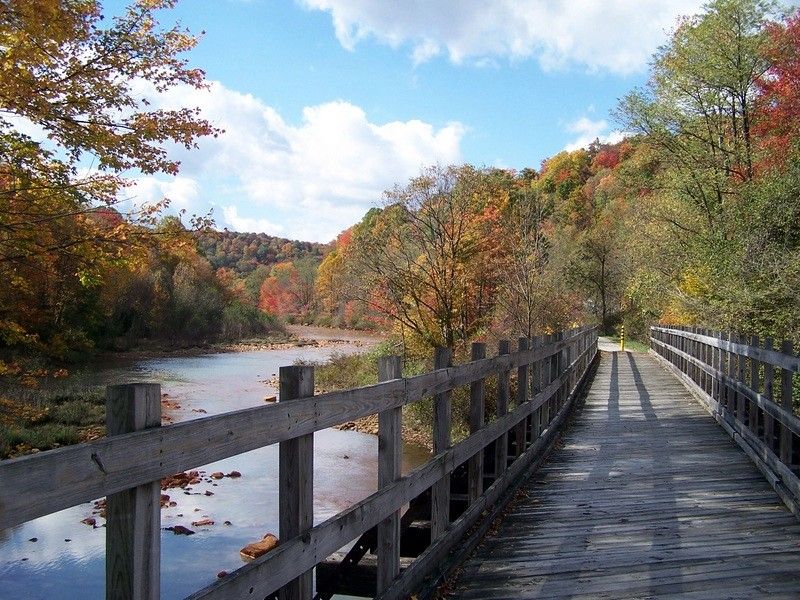
The name alone is enough to spark curiosity, and Ghost Town Trail lives up to it in a smart, scenic way.
Stretching through Cambria and Indiana Counties, this rail trail passes old coal and coke sites, small communities, and traces of places that once depended on industry for survival.
It feels less like one abandoned stop and more like a moving tour through forgotten stories.
Riding or walking the trail gives you a chance to notice how deeply industry shaped western Pennsylvania.
Along the route, you may spot old foundations, restored features, mining history signs, and landscapes where busy company towns once stood.
The trail is easier and friendlier than many rough exploration sites, which makes it a strong choice for families, casual cyclists, and anyone who wants history without a difficult climb.
Pack for a longer outing if you want the best experience.
Water, sunscreen, snacks, and a bike repair kit can make a big difference, especially during warm months.
Taking breaks to read interpretive markers helps connect the peaceful scenery with the harder lives of miners and workers who once filled the valleys.
What makes Ghost Town Trail special is its balance.
You get beauty, exercise, and history all at once, with enough variety to keep the trip interesting from start to finish.
Instead of focusing on one dramatic ruin, the trail reveals a wider picture of how Pennsylvania communities grew, changed, and in some cases faded away.
For travelers who prefer a thoughtful kind of exploration over a spooky one, this route offers a memorable way to see how the state’s past still lingers in forests, creek valleys, and quiet stretches of former rail line.
10. Carrie Blast Furnaces, Pittsburgh Area
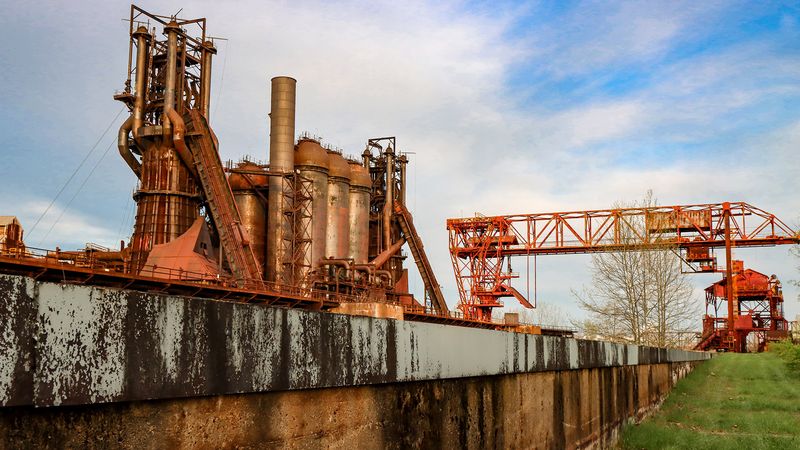
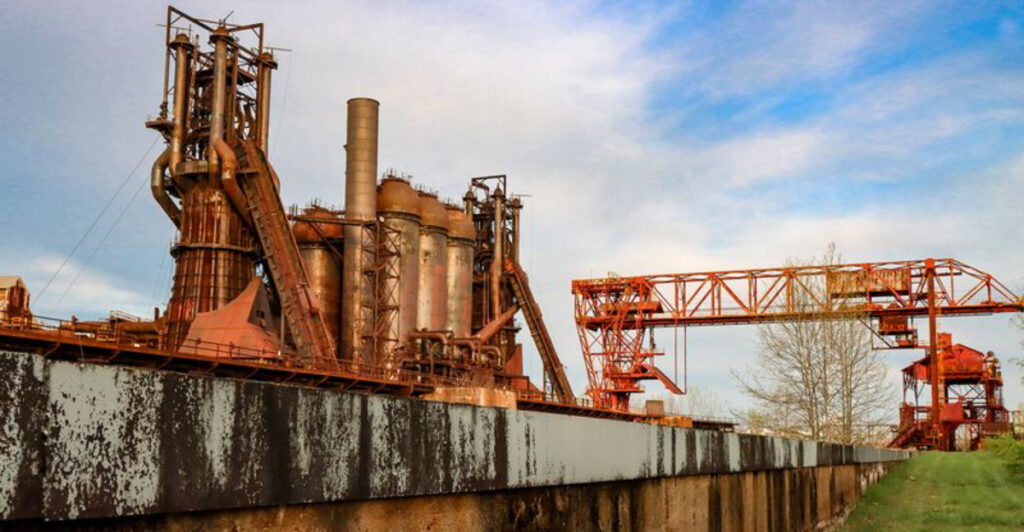
Massive rusted towers rising over the river valley make Carrie Blast Furnaces look bold, gritty, and unforgettable.
Once part of Pittsburgh’s powerful steel industry, the site helped produce iron that fed an economy and shaped whole neighborhoods.
Now the surviving furnaces stand as giant reminders of the labor, heat, and noise that once filled the area.
Even people who know little about steelmaking are often impressed by the scale of the complex.
Pipes, catwalks, brick buildings, and blast furnace structures create a maze of industrial details that photographers love.
Guided tours are usually the best way to experience the site, because they help explain how the furnaces worked and why this place mattered so much to Pennsylvania and the nation.
Expect an outdoor visit with uneven ground and changing weather.
Closed-toe shoes are a smart choice, and listening carefully to safety instructions is important since this is a preserved industrial ruin, not a polished theme attraction.
If you enjoy art, keep an eye out for creative programs and events that sometimes use the dramatic setting in interesting ways.
Carrie Blast Furnaces offers more than dramatic ruins.
It tells a human story about immigrants, factory work, and the rise and decline of heavy industry around Pittsburgh.
There is a rough beauty here that feels very different from a forest trail or ghost town clearing.
Steel history can seem huge and distant in books, but standing beneath these towering structures makes it personal and real.
For anyone exploring abandoned places in Pennsylvania, this site delivers scale, substance, and a powerful look at the machinery that helped build both cities and livelihoods across the region.
11. Dead Man’s Hollow, Near McKeesport
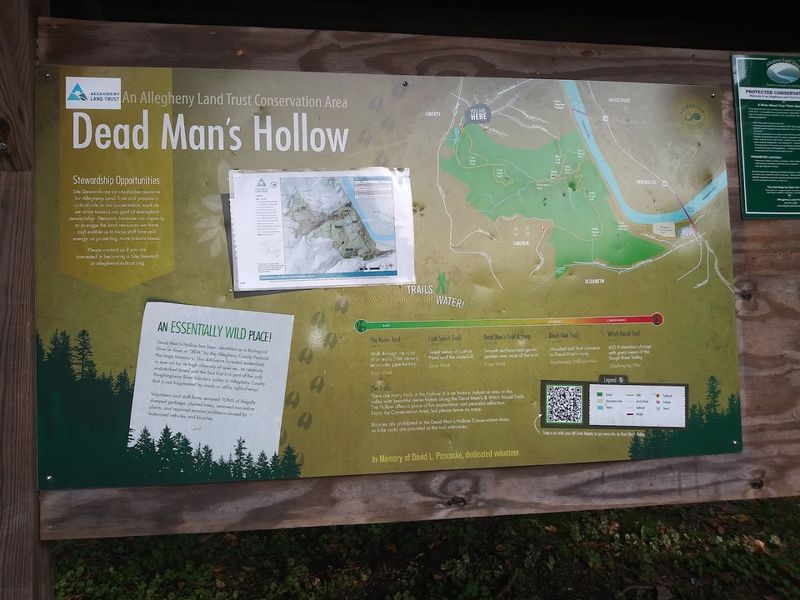
With a name like Dead Man’s Hollow, you already expect something eerie before the trail even begins.
Near McKeesport, this area mixes woodland beauty with industrial leftovers, giving visitors a place that feels both natural and mysterious.
It is the kind of spot where a simple walk can suddenly reveal brick ruins, old foundations, and stories hiding in the trees.
The hollow is part of a conservation area, so the experience is more of a hike than a stand-and-look stop.
As you move along the trails, you may come across remains tied to the region’s industrial past, including furnace and factory features that nature has partly reclaimed.
That blend of history and greenery is what makes the place so appealing, especially for people who enjoy quiet exploration with a little suspense.
Trail conditions can vary, so sturdy footwear is a good idea.
Bug spray, water, and a phone with an offline map can also help, particularly if you plan to spend extra time exploring side paths.
Going during the day is best, since the tree cover can make some areas feel darker and more isolated than expected.
Dead Man’s Hollow has a different mood from Pennsylvania’s bigger abandoned landmarks.
It is less about giant ruins and more about discovery, where every bend in the trail feels like it might reveal another clue from the past.
That makes it especially rewarding for hikers, photographers, and locals looking for a place with atmosphere.
If you want an abandoned site that combines outdoor exercise, regional history, and a slightly spooky edge without needing a long road trip, this hollow offers a memorable finish to any Pennsylvania exploration list.
Share this story