An Ohio mansion built by a tire tycoon has an indoor swimming pool in its basement, and the original wooden diving board is still there. I love that detail way more than I probably should.
Elsewhere in the state, a movie palace hangs a chandelier that stretches 21 feet tall. A shopping arcade from 1890 has gargoyle heads peering down from beams nearly 100 feet up. Honestly, nobody told me buildings could be this dramatic indoors.
November usually hands us gray skies, cold drizzle, and early sunsets. I can’t think of a better excuse to trade the weather for marble staircases, glass ceilings, and painted starry skies.
Each one saves its best work for the indoors. Some host symphonies, some shelter towering palm trees, and one welcomes overnight guests amid spectacular Art Deco details. Together, these eleven landmarks offer memorable indoor escapes when Ohio’s November weather turns cold and gray.
1. Cincinnati Music Hall
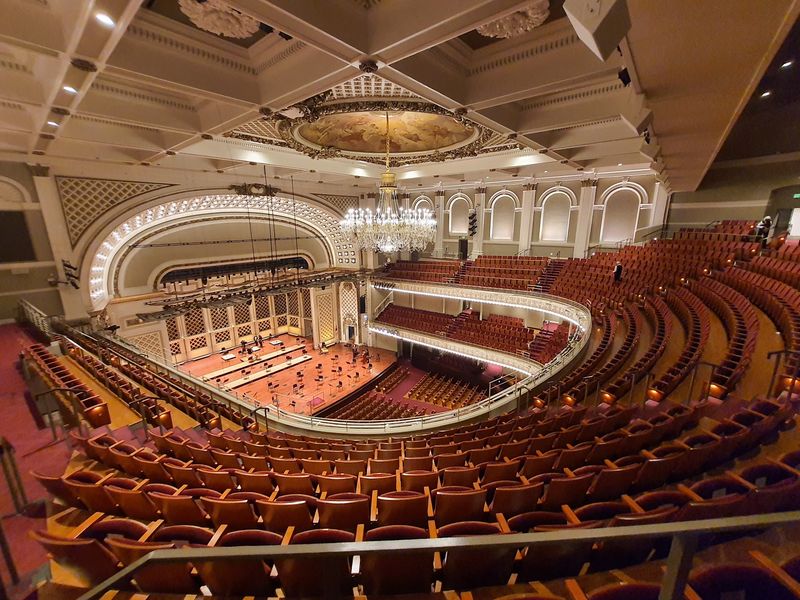
Some buildings are pretty, and some buildings basically wear a crown. Cincinnati Music Hall has been wearing its crown since 1878.
Samuel Hannaford and Sons designed it in a Venetian Gothic style. From the outside, the brick towers already look like a fairy tale castle that took up classical music.
Inside is where November gloom loses the fight. The main room, Springer Auditorium, seats 2,289 people for symphony concerts and 2,439 for the Cincinnati Pops.
That’s a lot of company for a rainy evening. The hall is also famous for its acoustics, so the music sounds as grand as the room looks.
Who plays here? The Cincinnati Symphony Orchestra, Cincinnati Pops, Cincinnati Opera, Cincinnati Ballet, and May Festival Chorus all call it home.
That lineup means you can pick your mood. Want swirling tutus, a booming chorus, or a full orchestra? You’ve got options.
A huge renovation wrapped up in 2017 and cost 143 million dollars. Crews kept the historic character while adding modern upgrades for today’s audiences.
One of the coolest reveals happened in Corbett Tower. Workers uncovered 14 extra feet of ceiling height, coved windows, and rebuilt the historic stenciling.
The Music Hall Ballroom is no shrinking violet either. It spans nearly 20,000 square feet and can hold up to 1,300 guests.
Here’s a planning tip for your gray-day trip. Guided indoor tours are offered throughout the year, including select dates in November, giving visitors a chance to explore the building’s remarkable architecture even without attending a performance. Check the current tour calendar and book tickets in advance.
A guided tour reveals the stories behind the ornate interiors, while an evening performance lets you experience the hall as it was meant to be enjoyed, filled with live music.
The building earned National Historic Landmark status in 1975. After nearly 150 years, it still pulls off a dazzling entrance.
Address: 1241 Elm Street, Cincinnati, Ohio 45202
2. Ohio Theatre
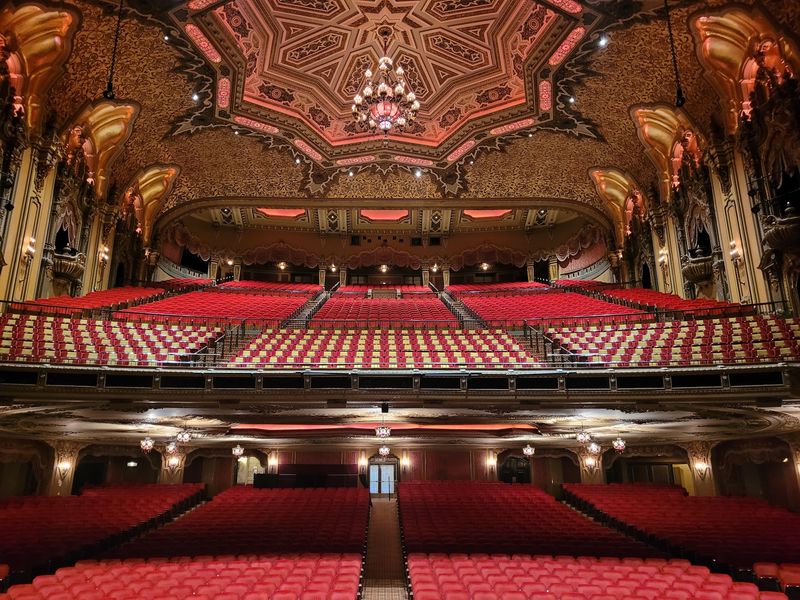
A chandelier 21 feet tall should be enough to brighten any soggy afternoon. Columbus keeps exactly that kind of showstopper inside the Ohio Theatre.
The theater opened on March 17, 1928, as a Loew’s movie palace. Architect Thomas W. Lamb designed it and considered it one of his most successful works.
He went big with a Spanish Baroque style. The lobby is wrapped in intricate plasterwork, and a grand staircase sweeps guests upward like movie stars.
Then you reach the auditorium. It’s designed to look like a Spanish courtyard, with a ceiling that shows a starlit sky.
Yes, you can see stars on a cloudy November night. Ohio weather can’t take that away from you.
The story almost ended differently. In 1969, the building faced demolition until the Columbus Association for the Performing Arts stepped in and saved it.
CAPA later bought the theater and restored it in stages through the 1970s. It officially reopened in 1984 after the work was done.
By then it had already been named a National Historic Landmark in 1977. Not bad for a place that nearly became a memory.
Music lovers should listen for the original Robert-Morton theater organ. It’s still in use today, which feels like a delightful time warp.
The stage stays busy, too. The theater hosts more than 100 performances a year, including the Columbus Symphony Orchestra, BalletMet, and Broadway in Columbus.
So check the calendar before you go. A matinee here turns a dreary weekend into something you’ll actually remember.
Just give yourself a few extra minutes in the lobby. Staring up at that chandelier is half the fun.
Address: 39 E. State Street, Columbus, Ohio 43215
3. Stan Hywet Hall & Gardens
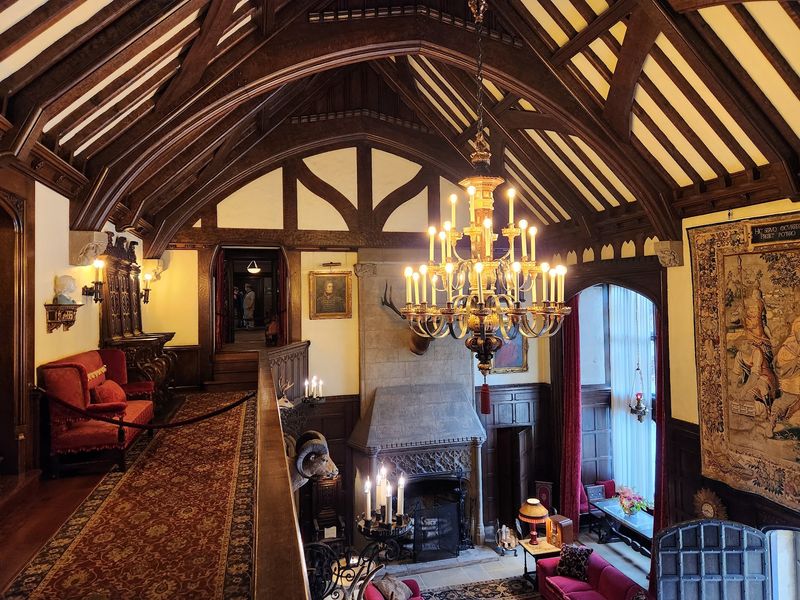
Most basements hold old paint cans and a lonely treadmill. The basement at Stan Hywet holds an indoor swimming pool called the Plunge.
Even better, its original wooden diving board is still there. Somebody in the early 1900s clearly had their priorities straight.
That somebody was F.A. Seiberling, co-founder of The Goodyear Tire and Rubber Company. He and his wife, Gertrude, built the estate between 1912 and 1915.
The Tudor Revival Manor House has 65 rooms and covers 64,500 square feet. About 95 percent of its collections and furnishings are original to the house.
That’s rare, and it makes the tour feel personal. You’re seeing the family’s actual things, not stand-ins from a warehouse.
Head to the Great Hall for tapestries dating back to the 1500s. Then visit the Music Room, where a working organ is built right into the walls.
The formal Dining Room and the smaller Breakfast Room round out the experience. One feels fancy, while the other feels like a sweet morning hangout.
Curious about the name? Stan Hywet is Old English for stone quarry, a nod to the property’s natural features.
Look above the entryway for the family crest. Its motto, Non Nobis Solum, means Not for Us Alone.
The estate became a museum in 1957, and it’s Akron’s oldest National Historic Landmark. A room-by-room restoration of the Manor House finished in 2021.
Timing matters for a November visit. Regular daytime tours run Tuesday through Sunday through November 25, 2026. Beginning November 27, the estate switches to its seasonal Deck the Hall experience on select dates, with holiday decorations and special evening admission.
The estate is closed on Thanksgiving Day, and regular daytime access does not continue during the holiday-event period. Check the official schedule and choose the appropriate admission ticket before visiting.
Address: 714 North Portage Path, Akron, Ohio 44303
4. Severance Music Center
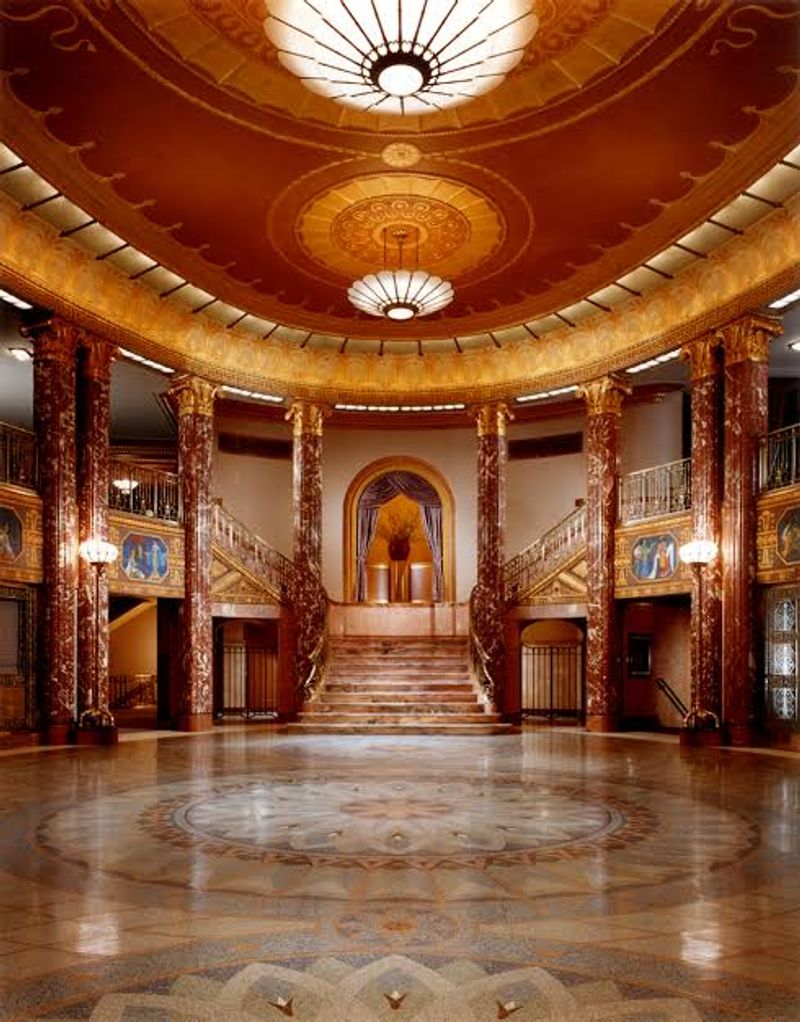
Egyptian lotus flowers in Cleveland? Severance Music Center has them carved into its marble columns, and they look fabulous.
The building opened on February 5, 1931, as the permanent home of The Cleveland Orchestra. It blends Art Deco style with Egyptian Revival flair.
The Grand Foyer is the room to see. Its marble columns feature papyrus and lotus-flower designs, which feel wonderfully unexpected near Euclid Avenue.
The lobby also includes a domed rotunda. Tilt your head back, because the ceiling deserves your full attention.
Cleveland firm Walker and Weeks designed the place. It honors patrons John L. Severance and his wife, Elisabeth Huntingdon DeWitt Severance.
A 36 million dollar renovation finished in 2000 restored the original Art Deco details. That work keeps the space looking sharp nearly a century later.
The main room is now called the Jack, Joseph and Morton Mandel Concert Hall. It received that name in 2021 after a 50 million dollar grant.
About 2,000 people fit inside. If you prefer something more intimate, the Reinberger Chamber Hall seats 402.
Now for the big one. The Norton Memorial Organ is an E.M. Skinner instrument with 6,025 pipes.
Picture trying to dust that. Thankfully, your only job is to listen.
November lines up beautifully here. The orchestra’s classical season usually runs from September through May, so a gray Saturday has plenty of potential.
The center also hosts rehearsals and educational programs year-round. It’s listed on the National Register of Historic Places.
Grab tickets, dress a little nicer than usual, and let the music handle the weather. Cleveland skies can do whatever they want outside.
Address: 11001 Euclid Avenue, Cleveland, Ohio 44106
5. Franklin Park Conservatory and Botanical Gardens
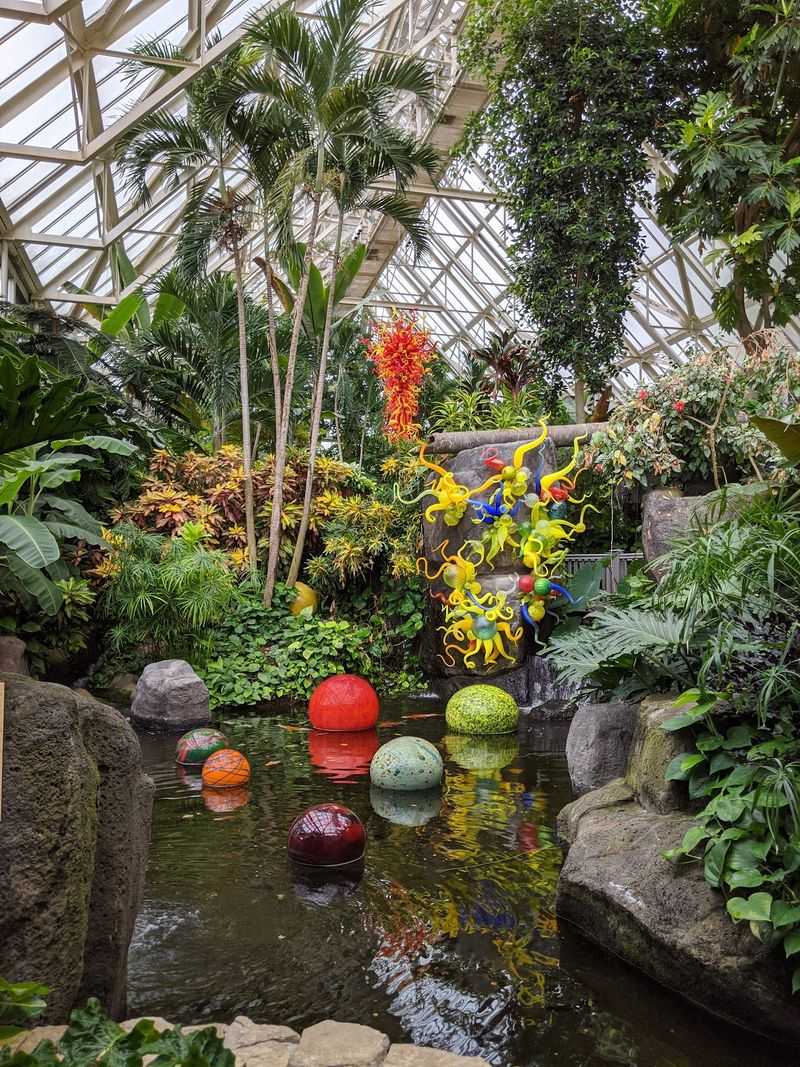
Gray skies outside, tropical rainforest inside. That’s the trade Franklin Park Conservatory offers, and it’s a really good one.
The Victorian glass building opened to the public in 1895. It was modeled after the Glass Palace at the Chicago World’s Fair and Columbian Exposition.
The historic John F. Wolfe Palm House is the star. Standing under tall palms while November drizzle taps on the glass feels like a small rebellion.
The glasshouses cover 83,000 square feet. Inside, you’ll find more than 400 plant species spread across different climate zones.
You can wander from the Himalayan Mountains biome into a Tropical Rainforest. Then come the Desert and the Pacific Island Water Garden.
Plant fans should save time for the Bonsai Courtyard. The tiny trees look like they belong in a storybook for very small giants.
A Showhouse rotates seasonal displays, so there’s often something new. That makes repeat visits a lot more fun.
Art lovers, this one’s for you. The conservatory holds the largest collection of Dale Chihuly glass art in a botanical garden.
Those bright, swirling pieces pop against the greenery. On a dull day, they’re like candy for your eyes.
Stick around until dark if you can. James Turrell’s Light Raiment II lights up the Palm House nightly from dusk until dawn.
November sunsets come early, so you won’t wait long. That’s one gloomy-season perk worth celebrating.
The conservatory joined the National Register of Historic Places in 1974. It’s open daily, which makes spontaneous escapes easy.
Address: 1777 E. Broad St., Columbus, Ohio 43203
6. The Arcade
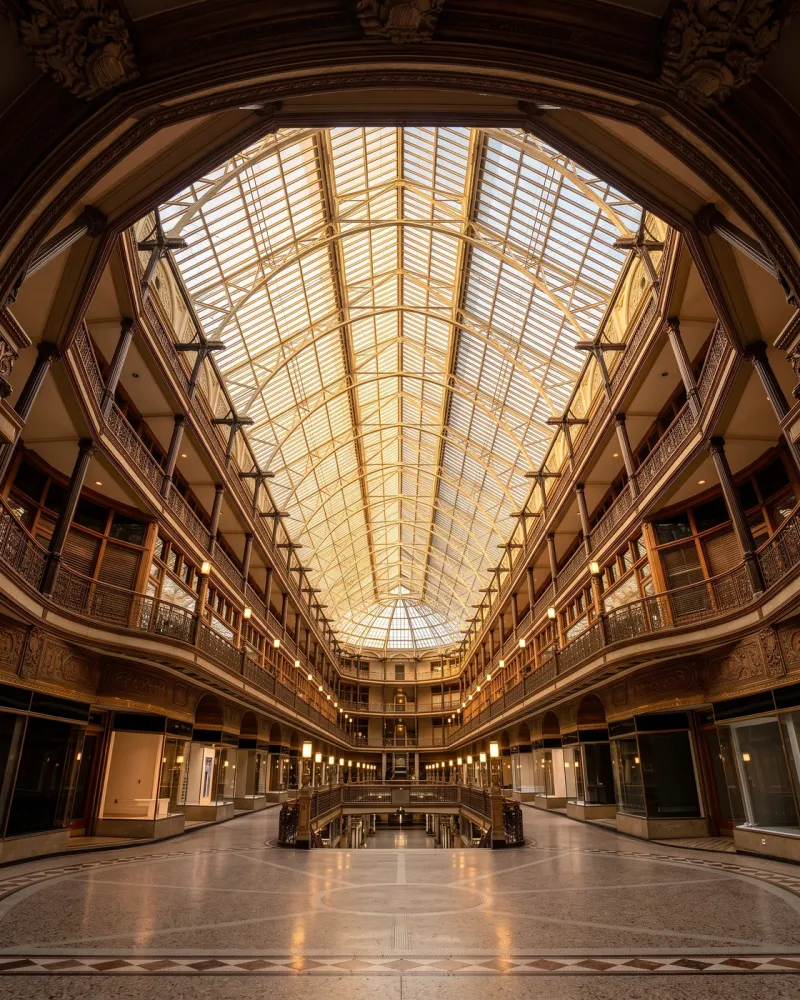
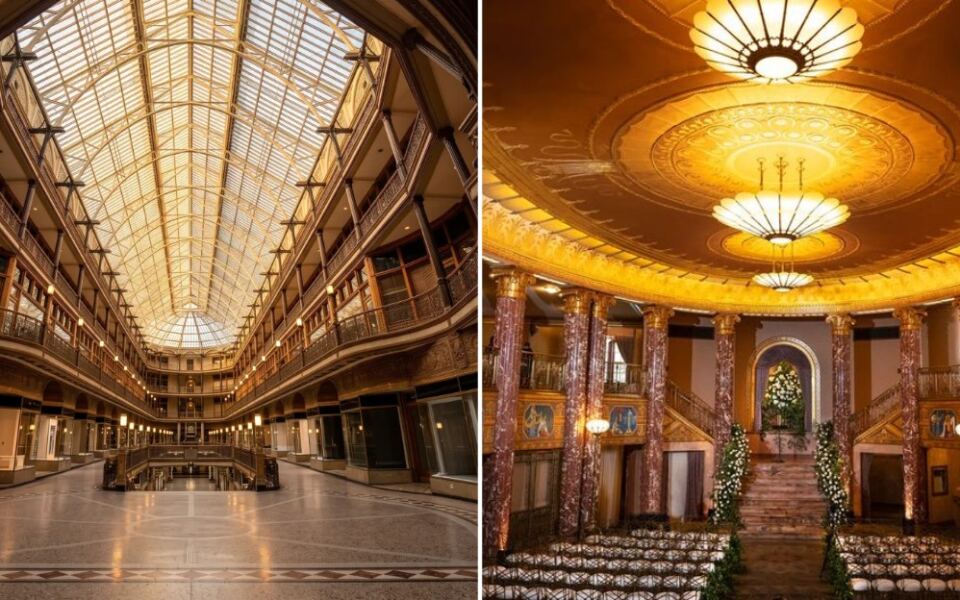
Gargoyles are keeping watch nearly 100 feet above the floor in downtown Cleveland. They jut out from the beams of The Arcade, and they’ve been up there since 1890.
The building opened on Memorial Day, May 30, 1890. It ranks among the earliest indoor shopping arcades in the United States.
Its inspiration came from Milan’s Galleria Vittorio Emanuele II. Architects John Eisenmann and George H. Smith brought that European idea to Ohio.
Money came from big names, too. John D. Rockefeller was among the Cleveland industrialists who helped fund construction.
The setup is clever. Two nine-story buildings are joined by a five-story arcade running between them.
Overhead, a glass skylight stretches more than 300 feet. It lets in daylight even when the sky is the color of old dishwater.
Four levels of balconies line the space with ornate wrought-iron railings. Look down, and you’ll spot Roman mosaic floors.
The storefronts add decorative bronze trim. It’s the kind of detail most modern malls skipped entirely.
Today the Arcade houses shops, restaurants, offices, and a Hyatt Regency hotel on its upper floors. A 2001 renovation created Cleveland’s first Hyatt Regency.
That mix means you can browse, grab lunch, and stare at the ceiling in one stop. Nobody will judge the staring.
History buffs have another reason to appreciate the building. The Cleveland Arcade was added to the National Register of Historic Places in 1973 and designated a National Historic Landmark in 1975. Its remarkable preservation makes a visit feel like stepping into another century.
It also became a National Historic Landmark that same year. Not many shopping trips come with that kind of resume.
Bring a camera and look up often. Those gargoyles deserve a portrait.
Address: 401 Euclid Avenue, Cleveland, Ohio 44114
7. Ohio Statehouse
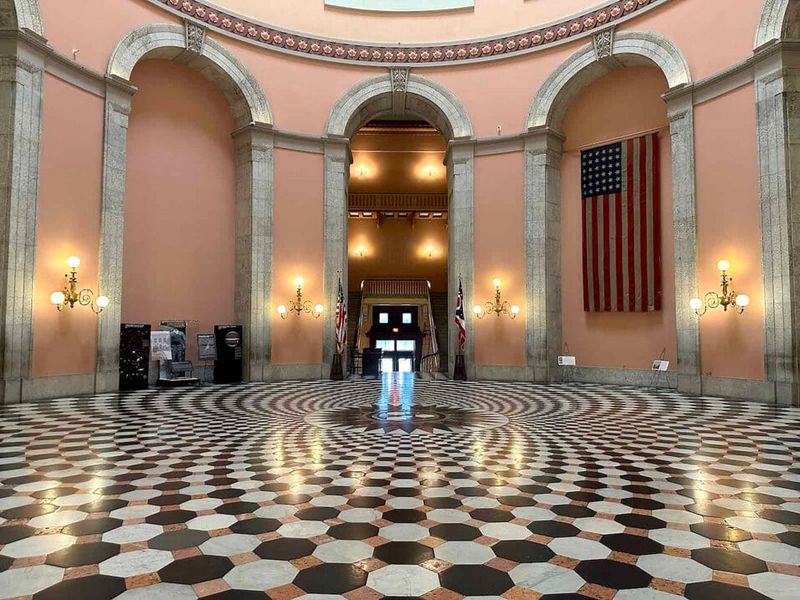
Free tours and a skylight in the middle of a giant dome? The Ohio Statehouse might be the best bargain in Columbus.
Construction took a while, running from 1839 to 1861. That’s more than two decades, which makes your home remodel sound speedy.
The patience paid off. The building is seen as a major architectural achievement of the early republic.
It’s also one of the oldest working statehouses in the country. Lawmakers still use it, so you’re touring a real workplace.
The style is Greek Revival with Doric details. Out front, a recessed porch features a row of columns.
Inside, the Rotunda steals the spotlight. A drum-shaped cupola with an oculus lets light pour down into the space.
On a cloudy day, that soft light feels calm and grand at once. It’s a nice spot to slow down and breathe.
Beyond the Rotunda, you can explore the legislative chambers and committee rooms. Permanent exhibits and interactive displays dig into Ohio history.
The building was restored to look as it did in 1861. It became a National Historic Landmark in 1977.
Now the practical stuff. Free guided tours run weekdays on the hour from 10 a.m. to 3 p.m.
Weekend tours go from noon to 3 p.m. Self-guided visits are also an option if you like setting your own pace.
Hours are 8 a.m. to 5 p.m. on weekdays and 11 a.m. to 5 p.m. on weekends. It closes on state holidays, so double-check around Thanksgiving.
Hungry afterward? The Capitol Cafe and Statehouse Museum Shop are right on-site.
Address: 1 Capitol Square, Columbus, Ohio 43215
8. Memorial Hall OTR
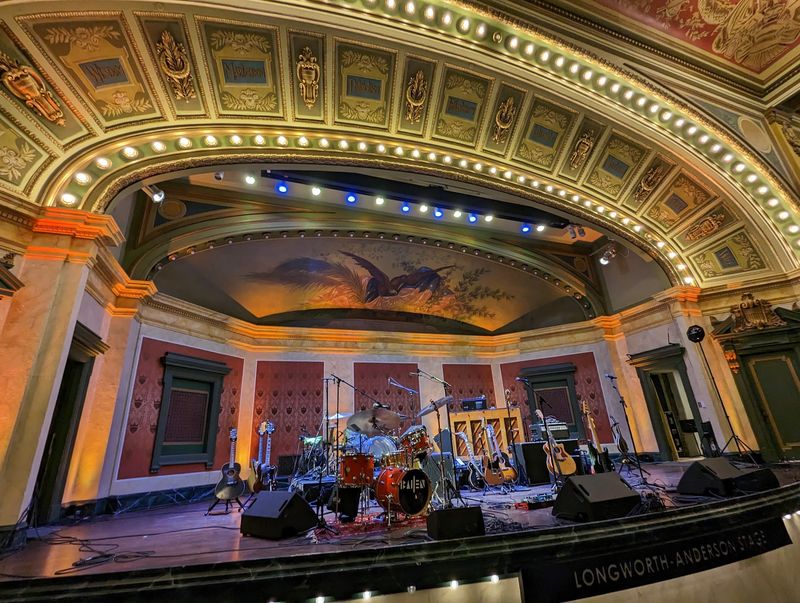
Right next door to a famous concert hall sits a smaller stunner with Tiffany chandeliers. Memorial Hall OTR proves you don’t need thousands of seats to make jaws drop.
The Grand Army of the Republic built it in 1908. It honors Cincinnati veterans of the Civil War and the Spanish-American War.
Its official historic name is the Hamilton County Memorial Building. Samuel Hannaford and Sons designed it, the same firm behind Music Hall.
So yes, these neighbors share architectural DNA. Visit both in one day and you can compare notes.
Start with the marble staircases. Their intricate wrought iron work looks like lace made of metal.
The main theater is the Annie W. and Elizabeth M. Anderson Theater. It’s a 556-seat proscenium space known for excellent acoustics.
A smaller room means you’re closer to the action. Every seat in a hall this size… well, let’s just say the views are friendly.
Look up and around for decorative murals and stenciling by Francis Pedretti. Those Tiffany chandeliers finish the look with plenty of sparkle.
History fans get bonus points here. The building holds artwork and artifacts tied to local civic and military history.
An 11 million dollar renovation ran from 2014 to 2016. It added air conditioning, modern guest amenities, and up-to-date audiovisual equipment.
That means you get old-school beauty without old-school discomfort. A fair trade, honestly.
The hall hosts around 300 events and nearly 100,000 guests each year. Check the lineup and pick a show that fits your November mood.
It joined the National Register of Historic Places in 1978. Over a century in, it still knows how to set a stage.
Address: 1225 Elm Street, Cincinnati, Ohio 45202
9. The Castle
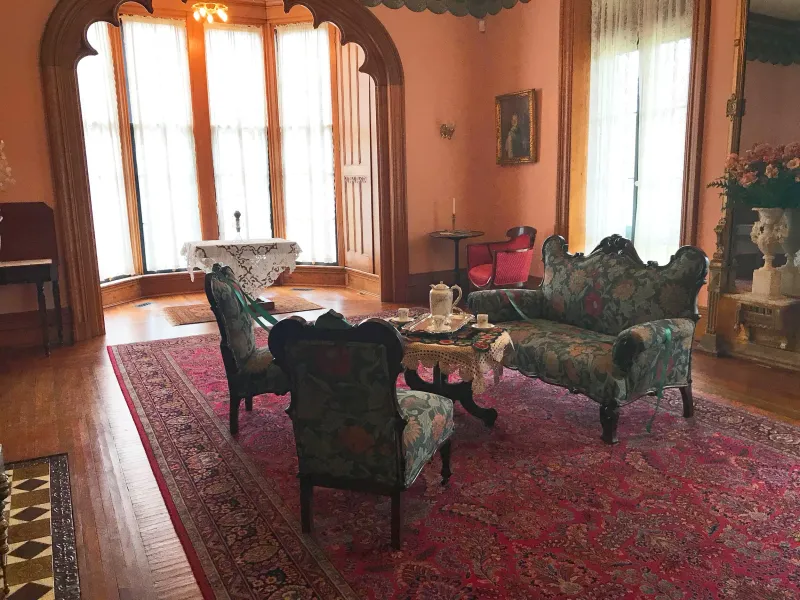
Marietta has a real castle, pointed arches and all. Well, it’s technically a house, but The Castle earns its name.
Built around 1855 for attorney Melvin Clark, it’s a standout example of Gothic Revival architecture. Picture a storybook home that decided to stay in Ohio.
Five families lived here until 1974. Each household added its own chapter to the story.
In 1992, the property was deeded to the Betsey Mills Corporation. Public tours started in 1994.
Guided tours begin at the Carriage House Interpretation Center. There, you’ll watch a short video about the property’s history.
It’s a smart warm-up before heading inside. You’ll recognize names and details once the tour starts.
The furnishings mix some original pieces with other Victorian items from the Marietta area. Together, they help the rooms feel lived in.
Here’s a teaser for the curious. During a fireplace restoration, crews discovered an unusual feature, and the tour explains what it is.
No spoilers here. You’ll have to go find out for yourself.
One rule to know before you arrive. Photos aren’t allowed inside the home, so leave the phone in your pocket.
That might be a blessing, actually. You’ll notice more details when you’re not framing shots.
The Castle opens seasonally from April through December for guided tours. Hours change with the season, so check ahead before making the drive.
Marietta itself is a charming river town with plenty of character. Pair your tour with a stroll downtown and call it a lovely gray-day outing.
Address: 418 Fourth Street, Marietta, Ohio 45750
10. Hower House Museum
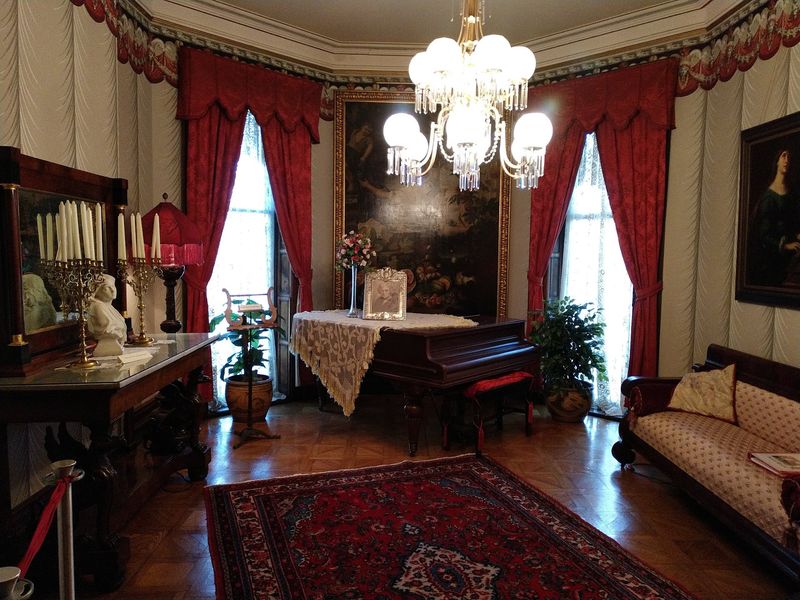
Some families bring home a souvenir magnet from vacation. The Howers brought home hundreds of treasures from around the world and filled a mansion with them.
John Henry Hower, a prominent Akron industrialist, built the house with his wife, Susan Youngker Hower. It was completed in 1871.
Akron architect Jacob Snyder handled the design. He gave it a Second Empire Italianate look with a mansard roof and a tall tower.
That tower makes the house easy to spot. It looks like it’s peeking over the neighborhood to check the weather.
The mansion has 28 rooms, filled with architectural details and furnishings that reflect the Hower family’s life in Victorian-era Akron. Its architect, Jacob Snyder, was also influential in developing the Akron Plan, a design approach widely used in church buildings.
Inside, the collections are the big draw. Furnishings and finds gathered on family travels give the rooms a well-traveled personality.
Think of it as a Victorian scrapbook you can walk through. Each room offers something new to study.
The house ranks among the finest and best-preserved examples of its style in the country. It’s also listed as a National Historic Landmark.
The University of Akron received the property in 1970. The museum now stays open 11 months a year for public and private tours.
Current visits are enhanced self-guided tours. You can move at your own speed and linger wherever you like.
Plan for an earlier start, though. The last tour begins at 2 p.m.
Since you’re already in Akron, consider pairing it with Stan Hywet the same day. Two grand Akron homes make one very satisfying rainy-day loop.
Bring curiosity and comfortable shoes. Those 28 rooms add up quickly.
Address: 60 Fir Hill, Akron, Ohio 44304
11. Hilton Cincinnati Netherland Plaza
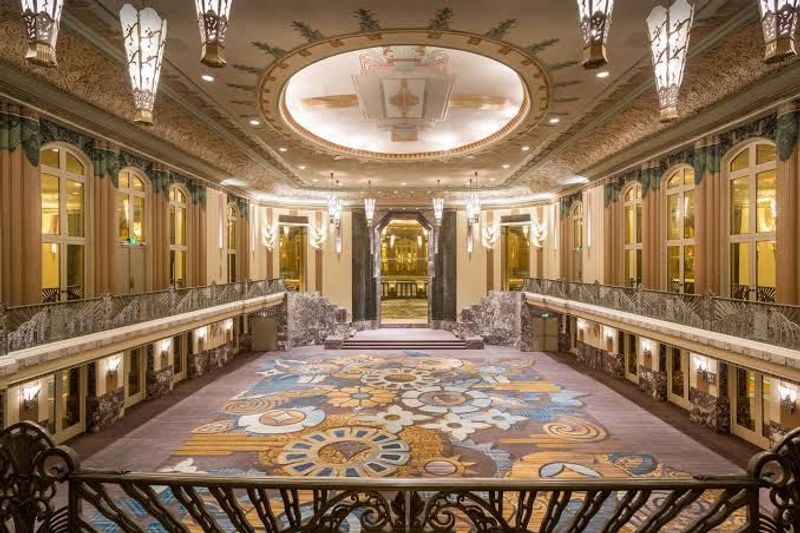
A hotel lobby described as a Hollywood movie palace is exactly where a gloomy day should end. The Hilton Cincinnati Netherland Plaza leans into that glamour hard.
It opened in 1931 as the St. Netherland Plaza, part of the Carew Tower complex. Businessman John J. Emery dreamed up the project.
Architects Walter W. Ahlschlager and Harry B. Hockenberry designed it.
George Unger is credited with the foyer’s interior design.
The style is authentic French Art Deco. Rare Brazilian rosewood, marble, and custom nickel-silver fixtures shine throughout the public spaces.
Above the entry staircase, look for murals by Louis Grell. One carries a friendly message: Welcome Travelers.
That greeting still lands nearly a century later. It’s hard to feel grumpy when the walls are rooting for you.
Keep an eye out for the Rookwood Pottery ram’s head fountain. Rookwood is a famous Cincinnati name, so this piece feels extra local.
The Palm Court area features fan-shaped couches and Baroque-style murals. It’s a fun spot to soak up the old-school sparkle.
The hotel also has three grand ballrooms with French Art Deco details. Original guest rooms were styled with Egyptian touches and floral designs.
Good news for curious visitors. The lobby and public spaces are open to the public, not just overnight guests.
Still, booking a room might be tempting after one look around. Who wouldn’t want to sleep inside a piece of history?
The hotel is a National Historic Landmark and a charter member of Historic Hotels of America. Cincinnati really knows how to finish strong.
Address: 35 West 5th Street, Cincinnati, Ohio 45202
Share this story