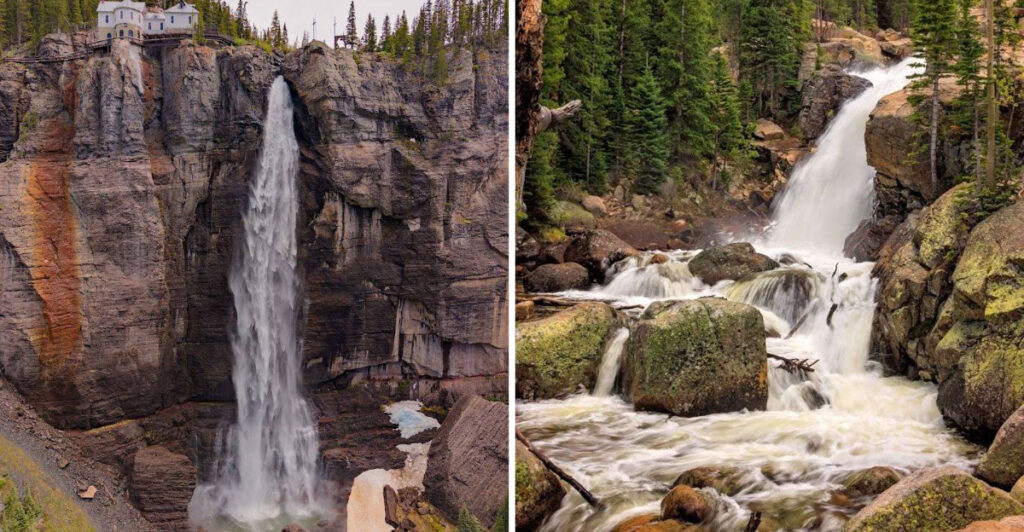
Colorado’s most beautiful waterfalls showcase a side of the state that goes far beyond its famous mountain peaks. Scattered across alpine forests, rugged canyons, volcanic landscapes, and high-country wilderness, these spectacular cascades reward hikers, photographers, and road trippers with unforgettable scenery.
Some plunge hundreds of feet into rocky gorges, while others tumble through moss-covered cliffs or flow beside scenic mountain trails, creating destinations that are just as memorable as the journey itself. Whether you’re planning a weekend hike or a statewide adventure, these 11 stunning Colorado waterfalls deserve a place on every nature lover’s bucket list.
1. Hanging Lake (Glenwood Springs)
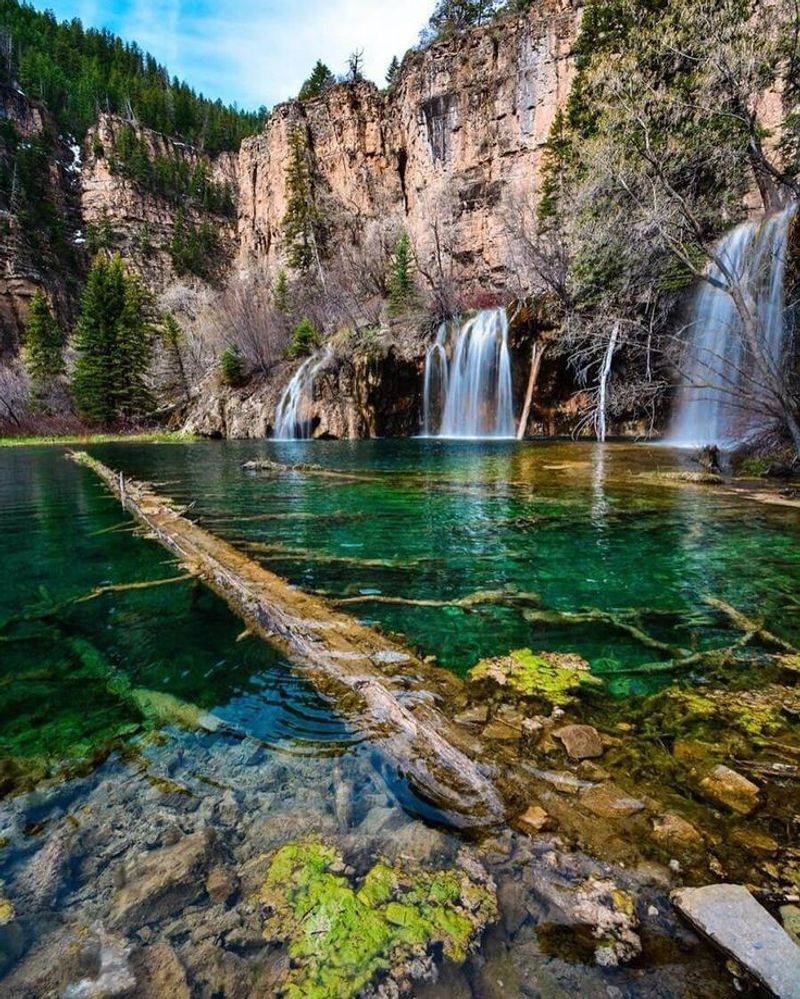
Hanging Lake is the waterfall stop that tends to reset expectations fast. You start with a steep climb through Glenwood Canyon, and by the time the trail tightens and the sound of water gets louder, the whole place already feels dramatic.
Then the lake appears, bright turquoise under hanging gardens and thin silver falls spilling over dark rock. The color is the first thing that grabs you. It looks almost edited, especially when sunlight reaches the water and the moss along the cliff walls glows deep green.
The waterfalls here are not one giant crashing drop, but a delicate curtain system that gives the basin a softer, dreamlike look without losing any impact.
This is one of Colorado’s most recognizable natural scenes, and for good reason. Every angle has contrast – pale water, wet stone, ferns, logs, and canyon walls rising around a fragile pocket of life.
It is the kind of place that makes people lower their voices without being told. The permit system changes the experience in a good way because it helps keep the trail and shoreline from turning chaotic.
You still need to work for the view, but the route is manageable if you pace yourself and bring water. Sturdy shoes matter here, especially when sections of the trail get dusty or slick.
If you go in expecting a swimming hole, you will miss the point completely. Hanging Lake lands best when you treat it like a rare landscape, not a casual pit stop.
Between the climb, the canyon setting, and those glassy falls feeding the lake, this one earns its iconic status without needing any extra hype.
2. North Clear Creek Falls (Creede)
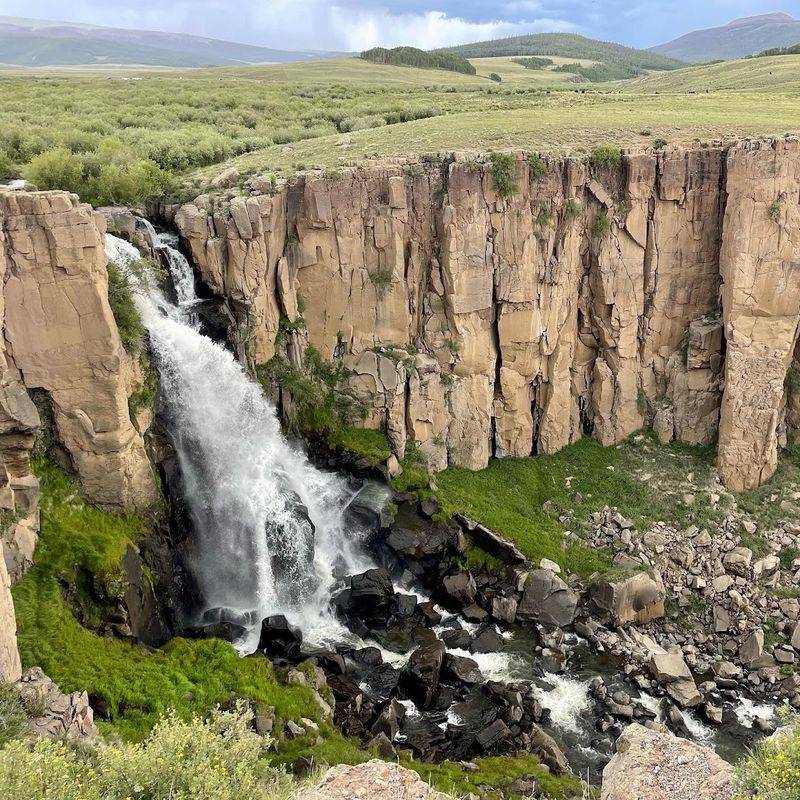
North Clear Creek Falls proves that a major waterfall does not always require a major hike. Just off the Silver Thread Byway, the creek drops straight into a dark volcanic canyon with a forceful, clean plunge that looks bigger the longer you stare at it.
The overlook puts the drama right in front of you almost immediately. That easy access is part of the appeal, but the geology is what really gives this place its edge.
The canyon walls are steep, shadowy, and sharply cut, so the white water stands out against the darker rock in a way that looks almost theatrical. It is a bold scene with very little buildup.
You do not need to grind up switchbacks to get a satisfying view here. A short walk from the parking area leads to overlooks where the depth of the canyon and the height of the fall come into focus fast.
It works especially well on a road trip day when you want a huge payoff without committing half the afternoon. Because the stop is quick, it is easy to linger longer than planned.
The surrounding forest, open sky, and sudden break in the landscape create a strong sense of contrast, especially if you arrive after miles of broad mountain meadows. Bring a camera or just stand still for a minute and watch the spray disappear into the gorge.
North Clear Creek Falls belongs on this list because it delivers scale, texture, and a memorable setting with almost no barrier to entry. That combination is rare.
If your waterfall wishlist includes places that hit hard right away, this one deserves a top spot without any debate.
3. Treasure Falls (Pagosa Springs)
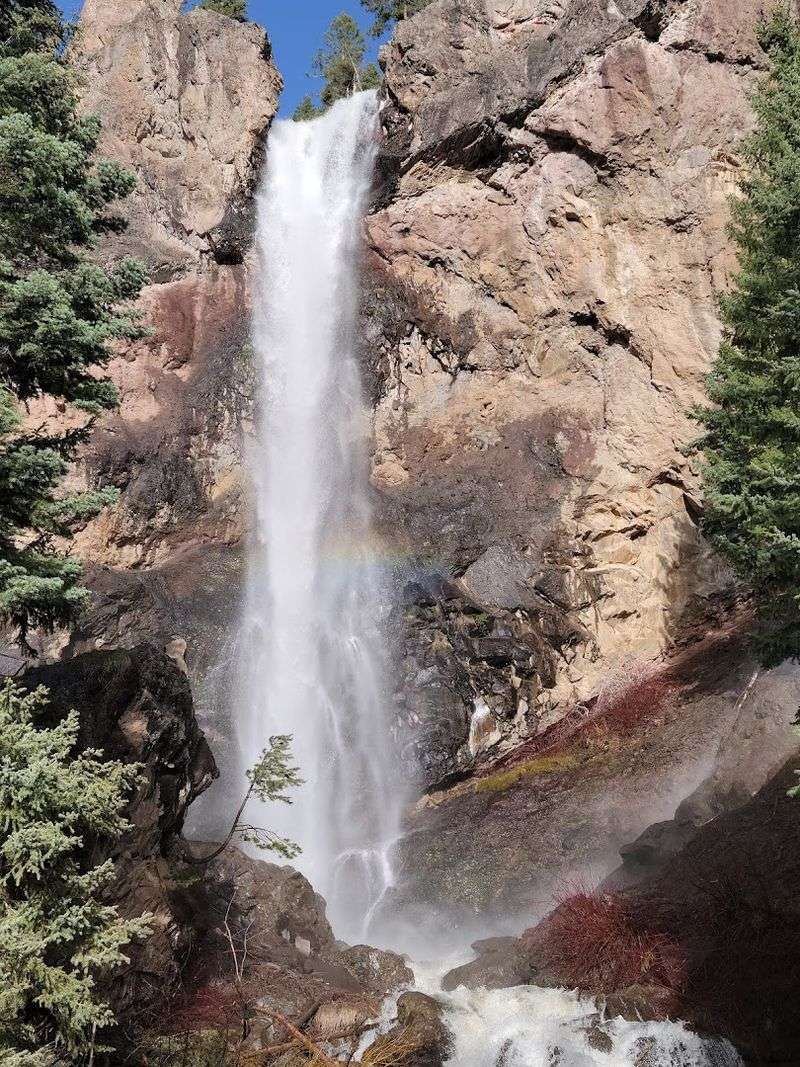
Treasure Falls has the kind of setup that makes a road trip stop turn into a full attention moment. You pull off Highway 160 near Wolf Creek Pass, take a short uphill trail, and quickly end up in front of a powerful cascade dropping through a steep rocky chute.
The sound reaches you before the whole waterfall does, which adds a little suspense. The trail is short, but it is not completely flat, so you still get that satisfying transition from roadside pullout to mountain scenery.
As you climb, views open up and the air tends to feel cooler near the water. By the time you hit the main viewpoint, the waterfall is crashing hard enough to dominate everything else around it.
Snowmelt usually gives this one extra muscle in late spring and early summer, which makes the flow especially photogenic. The water funnels through a narrow cut in the rock, so instead of spreading out gently, it stays concentrated and forceful.
That directness gives Treasure Falls its punch. There is also a layer of local legend that keeps the name memorable.
Stories about buried Spanish gold add a little mystery without distracting from the actual star, which is the waterfall itself. Even if you are not chasing old tales, the name sticks because the scene has enough drama to match it.
Treasure Falls works beautifully for travelers who want something immediate, scenic, and easy to fit into a bigger San Juan Mountains itinerary. It is accessible, striking, and loud in the best way.
For a relatively short walk, the payoff is big, and the setting near the pass gives the whole stop an extra sense of elevation and momentum.
4. Fish Creek Falls (Steamboat Springs)
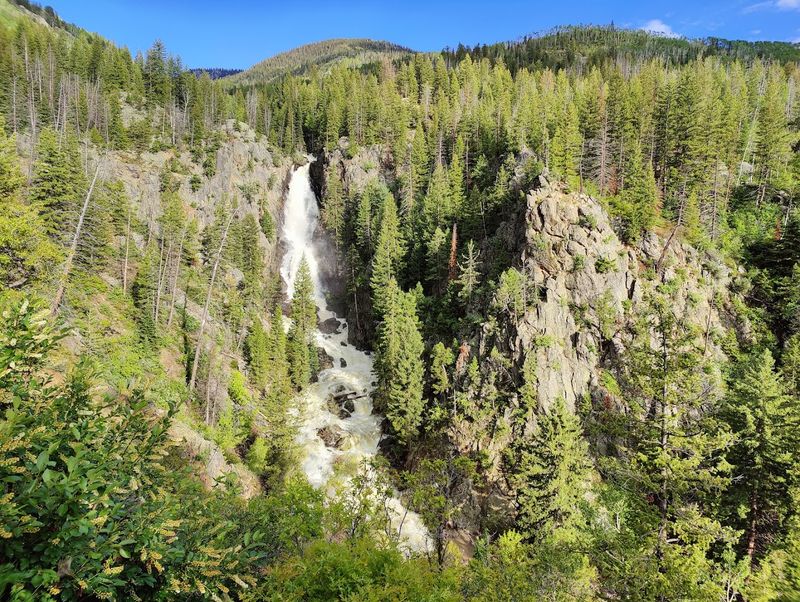
Fish Creek Falls brings serious scale just minutes from downtown Steamboat Springs. The water drops more than 280 feet over rugged cliffs, and the first view has enough force and height to make the canyon feel instantly bigger.
It is one of those places where the sound does half the work before your eyes catch up. The easy overlook is a huge advantage because you get a strong payoff without much effort.
Families, photographers, and anyone short on time can still walk away with the classic view. If you want more than a quick stop, the trail system lets you keep moving deeper into Fish Creek Canyon.
That mix of accessibility and adventure gives this waterfall broad appeal without making it boring. You can treat it as a simple scenic detour or use it as the starting point for a longer outing through forest and rock.
Either way, the main falls deliver a bold first impression that never feels watered down. The cliff face adds texture to every photo, especially when the water is running strong and catching light against darker stone.
In warmer months, the surrounding greenery softens the scene just enough to balance the harder edges of the canyon. The result is dramatic, but not severe.
Fish Creek Falls belongs on a Colorado bucket list because it combines convenience with a genuinely commanding landscape. You are not settling for an easy waterfall here.
You are getting one of northwest Colorado’s standout natural attractions, plus the option to turn a brief overlook into a fuller canyon experience if the day still has energy left.
5. Bridal Veil Falls (Telluride)
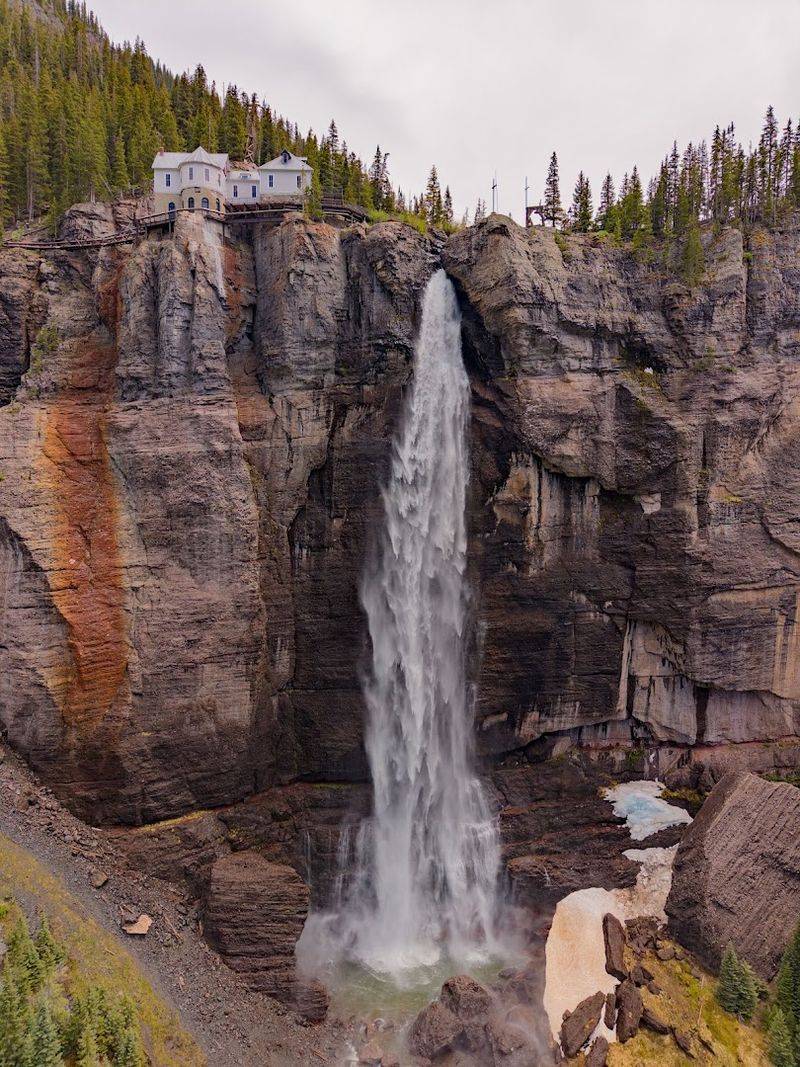
Bridal Veil Falls has a way of dominating Telluride’s box canyon before you are anywhere close to it. The cascade drops from high above town in a long white ribbon, and because the surrounding cliffs are so steep, the whole view reads as grand immediately.
It is the kind of waterfall that changes the scale of everything around it. Seen from town, it already looks impressive.
Get closer by hiking the steep road, and the details sharpen – spray, rock texture, and the historic powerhouse perched above the falls adding even more character to the scene. Few Colorado waterfalls pair raw vertical drama with such a distinctive setting.
This is Colorado’s tallest free-falling waterfall, but the numbers are only part of the story. The box canyon funnels your attention straight toward the drop, and the alpine backdrop does the rest.
On a clear day, the contrast between bright water and dark cliff bands is especially sharp. The route upward is no joke, so pacing matters, especially at elevation.
Still, even people who never hike all the way up can appreciate how the waterfall anchors the entire end of town. It works from a distance, from the roadside, and from higher up where the views back across the canyon start opening wider.
Bridal Veil Falls earns its bucket list spot by being unmistakable. It is tall, visible, and impossible to ignore, yet the landscape around it keeps the experience from feeling one-note.
Between the famous Telluride setting, the powerful drop, and the canyon walls pressing in on both sides, this is one of Colorado’s clearest examples of waterfall drama done at full volume.
6. Helen Hunt Falls (Colorado Springs)
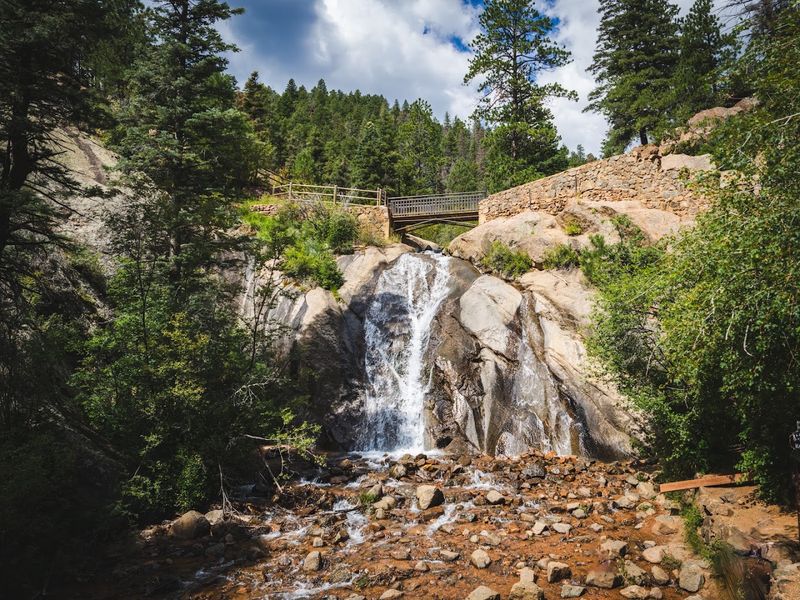
Helen Hunt Falls is proof that easy access does not have to mean underwhelming scenery. Tucked into North Cheyenne Cañon Park, this waterfall gives you a classic mountain cascade after only a short walk from the parking area.
The setting is compact, scenic, and ideal for days when you want a big visual return with minimal planning. The waterfall drops through a rocky channel framed by trees, and the nearby bridge adds an extra layer of charm without making the place look overly polished.
It is photogenic in a very straightforward way. You do not need to search for the angle because the scene is already composed for you.
That makes it one of the most approachable waterfall experiences on this list. Visitors of different energy levels can all enjoy it, whether the goal is a quick scenic stop or the start of a longer outing in the canyon.
If you still have gas in the tank, continuing uphill toward Silver Cascade Falls adds another rewarding layer. North Cheyenne Cañon helps the whole area feel cooler and more enclosed than the city below.
The road in winds through steep slopes and thick vegetation, so by the time you arrive, the shift from urban pace to mountain setting is immediate. Helen Hunt Falls benefits from that transition and never feels like an afterthought.
This is a smart pick for travelers who want scenery without logistical hassle. The waterfall is attractive, the surroundings are strong, and the option to keep exploring makes the stop more flexible than it first appears.
For a place so accessible, Helen Hunt Falls punches well above its weight and deserves far more than a quick glance from the parking lot.
7. Rifle Falls (Rifle)
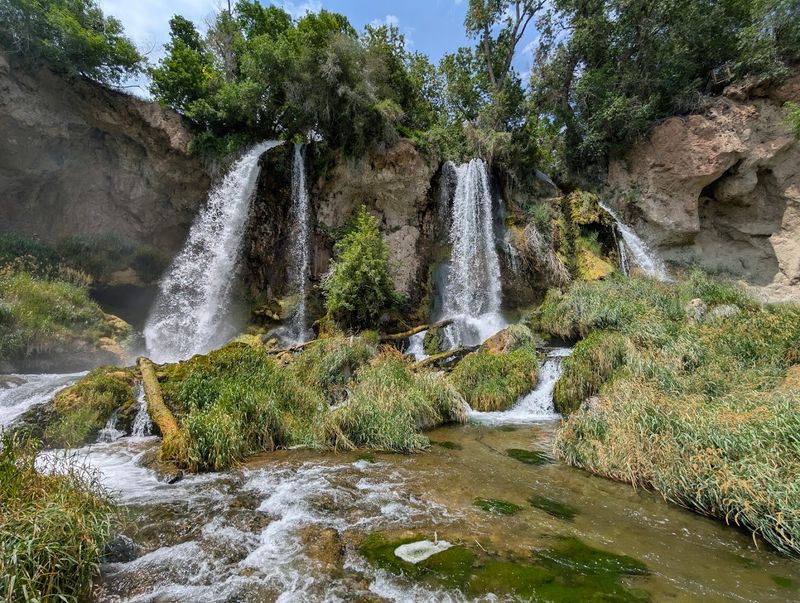
Rifle Falls looks different from almost every other waterfall stop in Colorado, and that is exactly why it stands out. Instead of one narrow alpine drop, you get a triple waterfall fanning over a moss-covered limestone cliff into a dense, green pocket that feels unexpectedly lush.
The whole scene reads more like an oasis than a high-country overlook. The year-round flow helps keep the place vibrant, and the water’s spread gives it a fuller, softer appearance than the sheer plunges found elsewhere on this list.
Moss and vegetation thrive around the falls, adding rich texture that changes the mood completely. It is less about towering height and more about layered detail.
Families tend to love Rifle Falls because the access is friendly and the payoff is immediate. Photographers love it for the same reason, plus the caves tucked behind the waterfall area add extra visual interest.
If you enjoy destinations where you can wander a little rather than just stand at one railing, this park delivers. There is also a satisfying contrast between the limestone cliff and the heavy greenery around it.
Colorado often leans rugged, dry, and angular, but Rifle Falls introduces a wetter, softer side of the state without losing any drama. Mist, sound, and moss do a lot of the heavy lifting here.
Rifle Falls earns its bucket list place because it offers something genuinely distinct within Colorado’s waterfall lineup. The triple drop, easy trails, and cave features create an experience that feels varied even in a relatively compact space.
When you want a waterfall outing with personality, accessibility, and a setting that breaks from the usual mountain formula, this one delivers fast.
8. Zapata Falls (Mosca)
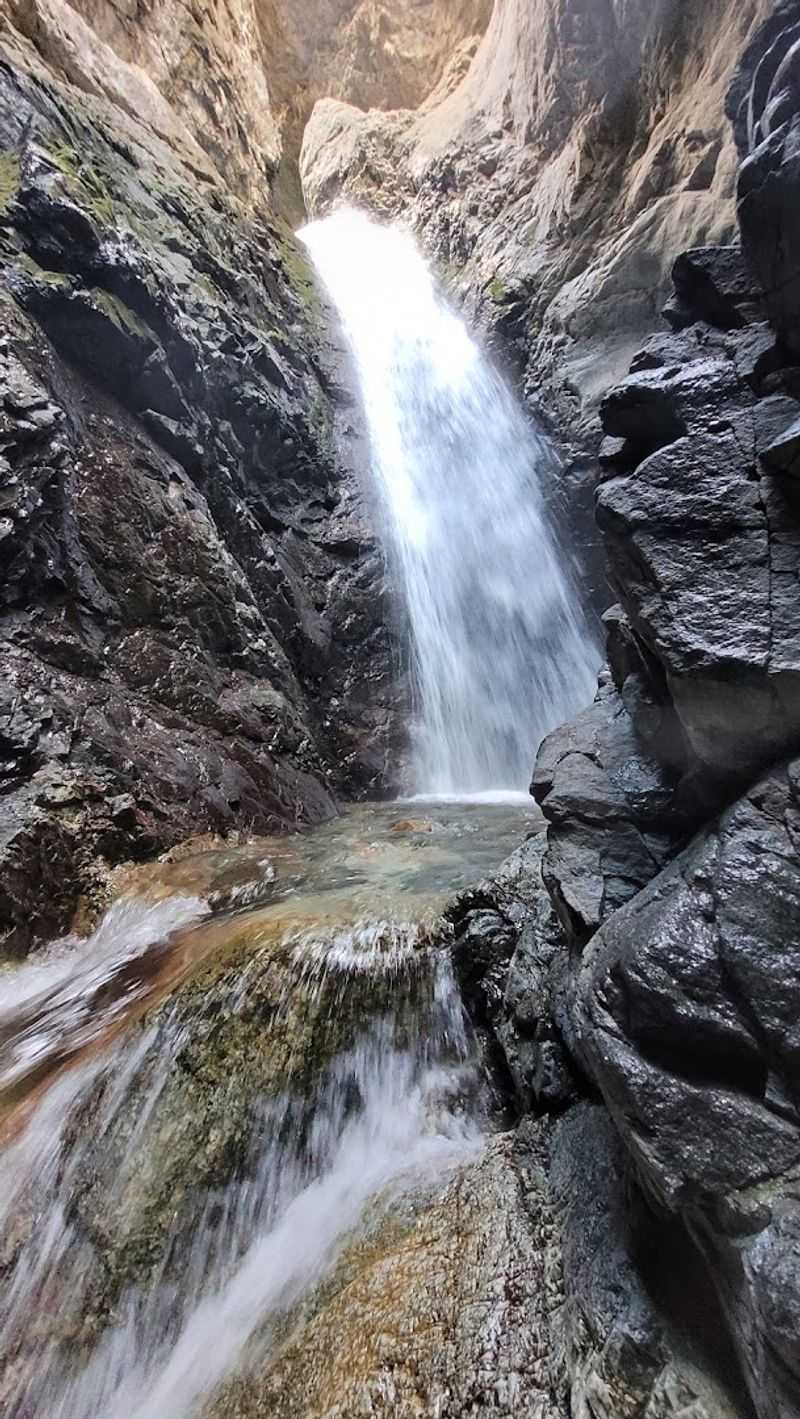
Zapata Falls adds a little adventure to the usual waterfall outing, and that shift is a big part of the fun. Near Great Sand Dunes National Park, the route leads into a narrow rocky gorge where you wade through a shallow creek to reach the waterfall.
By the time you get there, the cool canyon walls and echoing water make the payoff feel earned. This is not a stand-at-the-overlook kind of stop.
You need to get your feet wet, navigate slick rocks, and pay attention to the shape of the gorge as it tightens around you.
That hands-on approach gives the visit a different energy than more accessible waterfalls, even though the waterfall itself is not among the tallest on this list.
The setting does a lot of the work. A 30-foot drop inside a narrow cleft can feel more dramatic than bigger waterfalls in open terrain because the rock walls compress the whole scene.
Light bounces differently in there too, often turning the water and stone into a cooler, darker contrast against the bright landscape outside.
And then there is the broader location. Few waterfall stops pair so well with nearby dune views, which makes the day feel especially varied.
You can spend part of the afternoon around sand, open sky, and distant peaks, then step into a shaded gorge where the temperature and mood change almost instantly.
Zapata Falls belongs on a bucket list because it offers more than a pretty picture. It asks for a little effort, a little balance, and a willingness to get wet, and that tends to make the memory sharper.
When a waterfall outing doubles as a mini adventure with one of Colorado’s strangest nearby contrasts, it is hard to forget.
9. Alberta Falls (Rocky Mountain National Park)
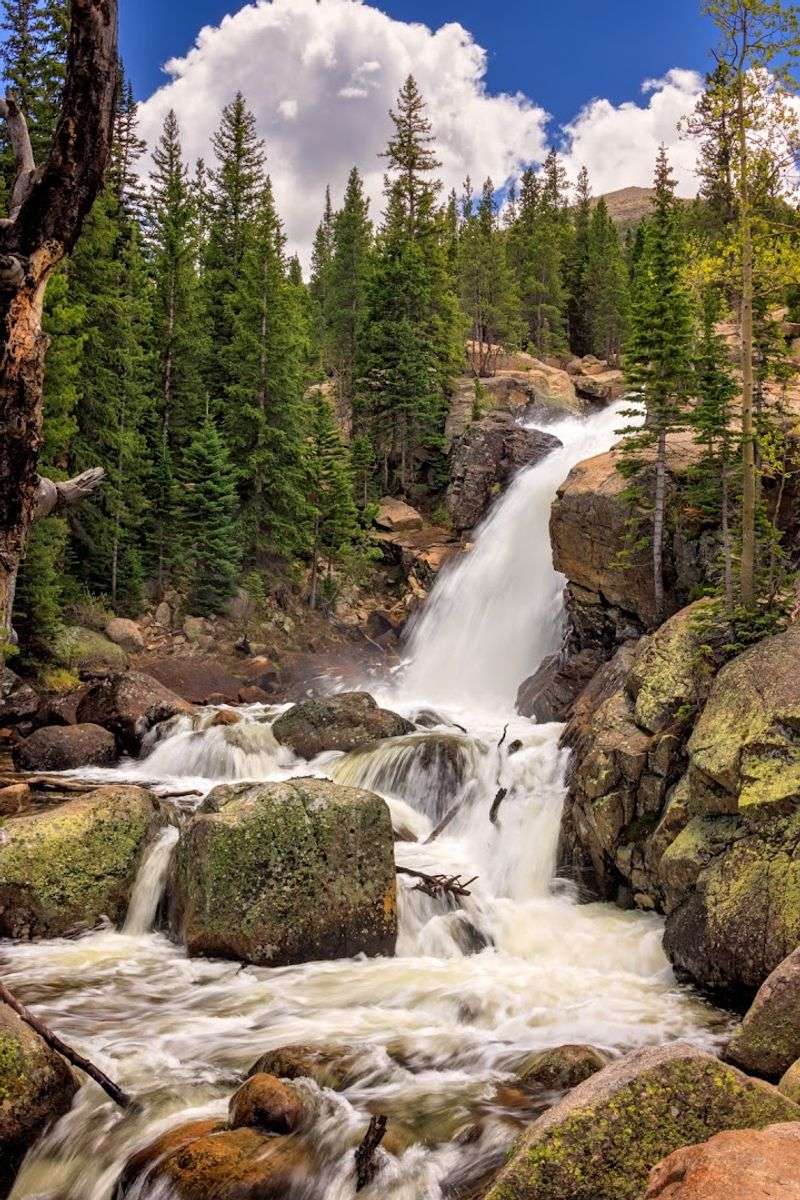
Alberta Falls is one of those classic Rocky Mountain National Park hikes that stays popular for a reason. The trail is relatively short, the route moves through pine forest and granite terrain, and the waterfall delivers a strong reward without requiring an all-day commitment.
For many visitors, it is the right blend of effort and scenery. The falls themselves are not oversized, but they are energetic and beautifully framed.
Water rushes through a rocky chute bordered by boulders and trees, creating a scene that looks exactly how a Colorado mountain waterfall should look.
It is crisp, lively, and easy to appreciate even if your hiking ambitions are modest. This is also a great option for first-time park visitors because it introduces the landscape quickly.
You get forest, elevation, granite, moving water, and that unmistakable national park atmosphere in one manageable outing. Families tend to gravitate here, but seasoned hikers still stop because the setting is simply solid.
Since the trail is well known, timing matters if you prefer a little more breathing room. Earlier starts usually make the walk calmer and the photos easier.
Even so, the popularity makes sense because Alberta Falls offers the kind of dependable scenic payoff people hope for when they enter Rocky Mountain National Park.
On a bucket list, Alberta Falls represents the accessible side of alpine beauty done very well. It does not need extreme height or a difficult approach to make an impression.
The rushing water, rugged framing, and straightforward hike all work together cleanly, giving you a waterfall stop that is easy to recommend and hard to regret.
10. Judd Falls (Crested Butte)
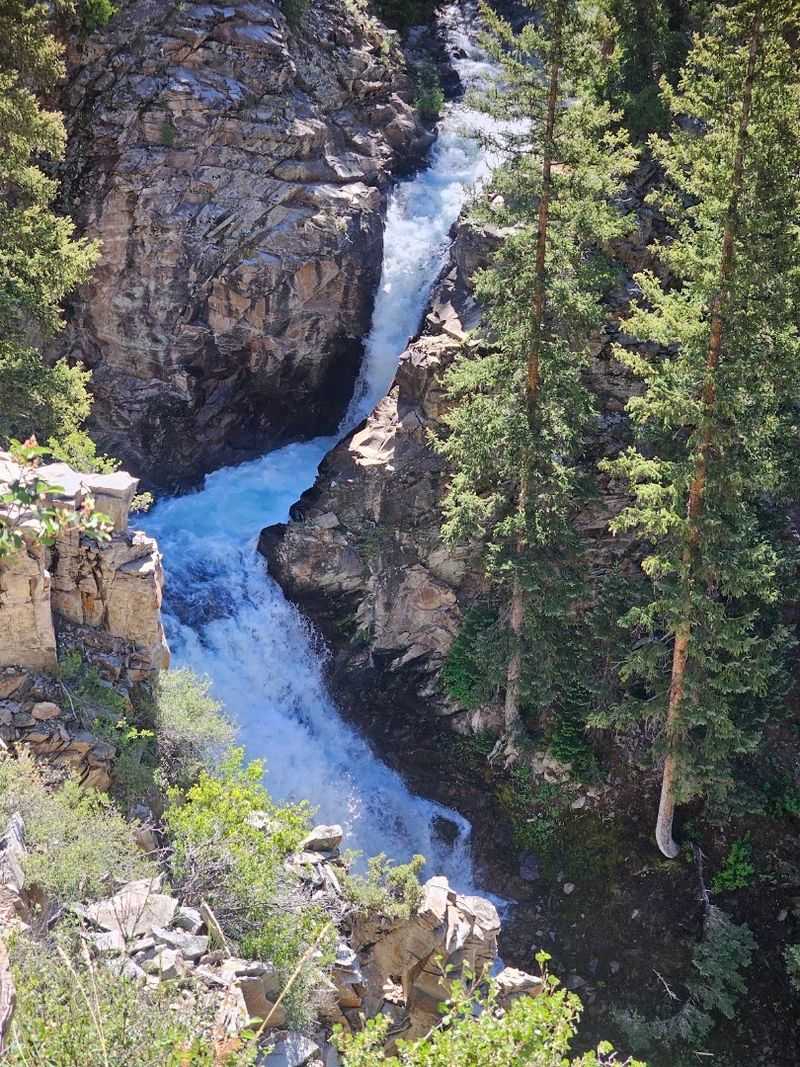
Judd Falls takes a quieter route onto this list, which is exactly its strength. Near Crested Butte in Gunnison National Forest, the trail winds through forest and seasonal wildflowers before revealing a graceful mountain cascade tucked into a calm alpine setting.
It is a softer entrance than some of Colorado’s louder waterfall stars, but it lands well. The hike is relatively easy, so the experience stays approachable without losing that satisfying sense of leaving the road behind.
Trees filter the light, the path feels pleasant rather than punishing, and the scenery builds gradually. When the waterfall finally appears, it fits the mood of the trail instead of trying to overwhelm it.
Judd Falls is a smart pick when you want natural beauty without the crush of a more famous stop. The surrounding landscape does not need huge cliffs or dramatic drop-offs to hold attention.
Wildflowers, forest, and mountain air carry plenty of the experience before the water even comes into view. The cascade itself has an elegant quality, especially against the green backdrop.
Rather than a giant roar dominating a canyon, you get a waterfall that complements the terrain and invites a slower pace. That makes it especially appealing for hikers who enjoy noticing details along the trail, not just rushing to the endpoint.
On a bucket list packed with icons, Judd Falls brings balance. It offers a calmer outing, a beautiful alpine setting, and a trail that feels rewarding without demanding too much.
If your ideal waterfall day includes birdsong, shaded forest, and a satisfying finish that does not rely on crowds or spectacle, this Crested Butte favorite deserves a place near the top.
11. Piedra Falls (Pagosa Springs)
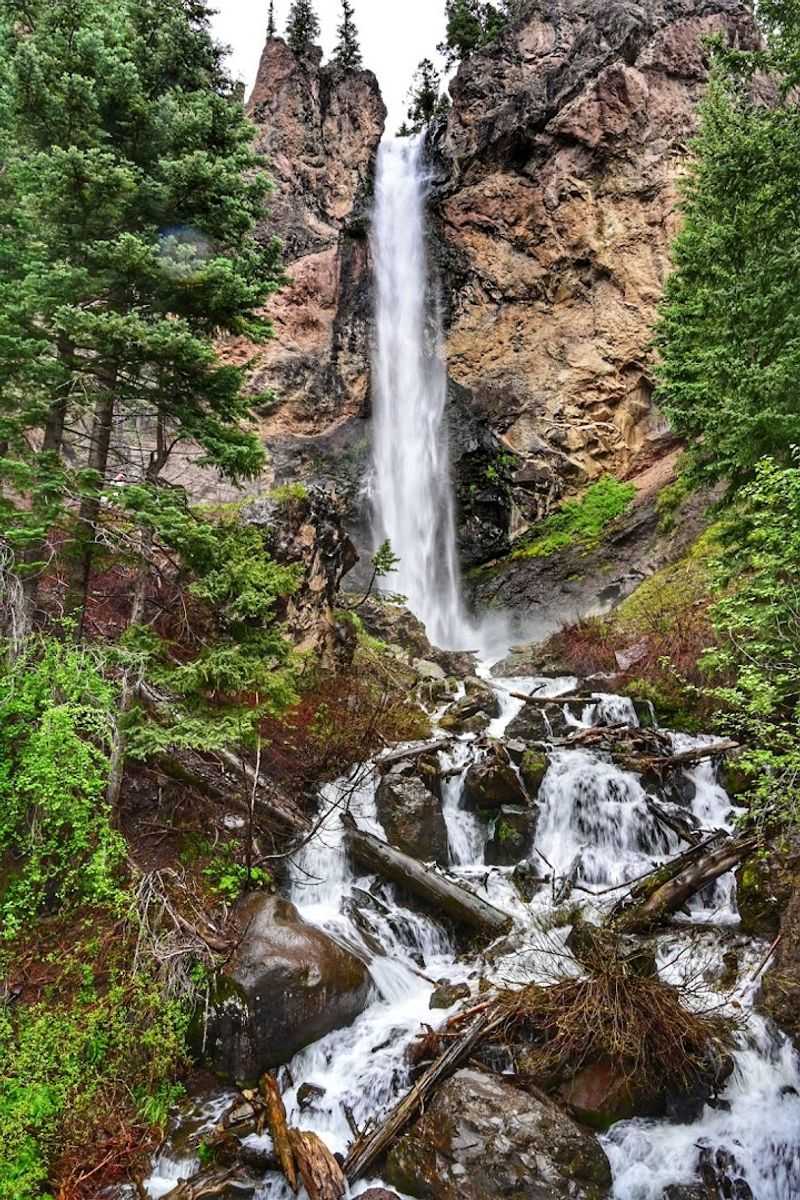
Piedra Falls delivers a strong combination of forest scenery, easy access, and serious water power. Set in the San Juan National Forest near Pagosa Springs, the waterfall drops into a rugged canyon along the East Fork Piedra River, surrounded by tall pines that make the whole area feel properly wild.
It is a short hike with a satisfying amount of payoff. The trail is family-friendly, which makes this an appealing stop for a wide range of travelers.
You do not need advanced hiking legs to reach the viewpoints, but you still get a sense of stepping into a real mountain landscape. That balance is a major reason Piedra Falls stays memorable.
During snowmelt, the water tends to look especially forceful, pushing through the canyon with enough volume to command attention immediately.
Even when you first hear it through the trees, you can tell this is not a gentle trickle. Once the falls come into view, the white water contrasts beautifully with dark rock and deep green forest.
The San Juan setting adds a lot to the experience. Tall timber, cooler air, and the river corridor create a classic southwestern Colorado backdrop without making the outing complicated.
It works well as a standalone stop, but it also fits neatly into a longer day of exploring around Pagosa Springs. Piedra Falls earns its place on this list by being straightforward in the best sense. The trail is manageable, the views are strong, and the waterfall has enough force to leave a real impression.
When you want a destination that is easy to share with family, rewarding for photographers, and anchored by a powerful river drop, Piedra Falls checks every box cleanly.
Share this story