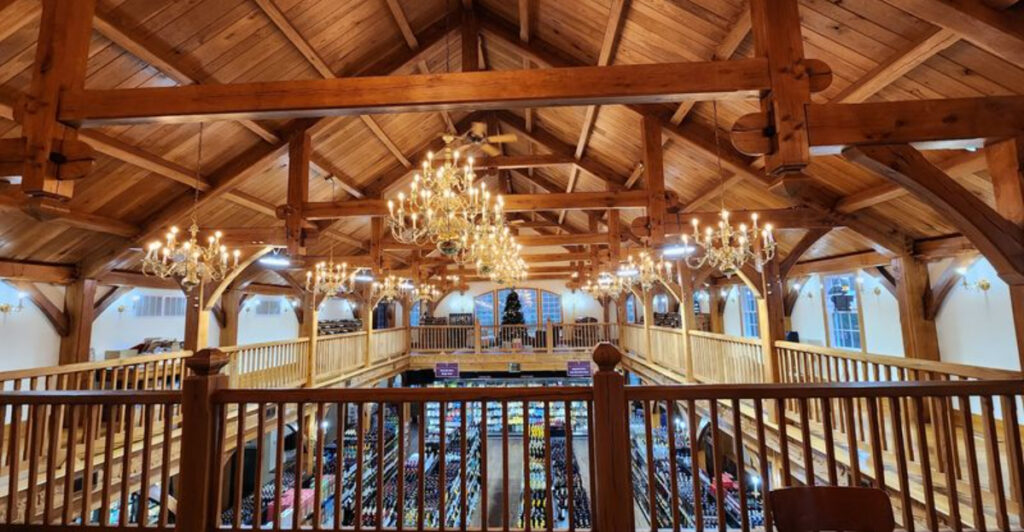
A tiny silver diner built for a world’s fair, a former bank where steaks mature behind a vault door, and a grand Atlantic City landmark with enough Prohibition drama to fill a television series—New Jersey does not make diners choose between a great meal and a great setting.
Some of the state’s most memorable restaurants occupy buildings that would be worth stopping to admire even if nobody inside were cooking.
Historic inns still welcome travelers centuries after their first guests arrived. Victorian porches, exposed barn beams, panoramic windows, and restored train-station details turn dinner into something closer to an outing.
Better yet, these places do not rely on architecture alone. They back up those remarkable surroundings with dry-aged steaks, seasonal farm cooking, French-inspired plates, seafood, sliders, and polished American classics.
Bring an appetite, but remember to look up from the menu. At these 12 New Jersey restaurants, the walls, windows, fireplaces, and rooftops are part of what makes the meal stick with you.
1. Rat’s Restaurant
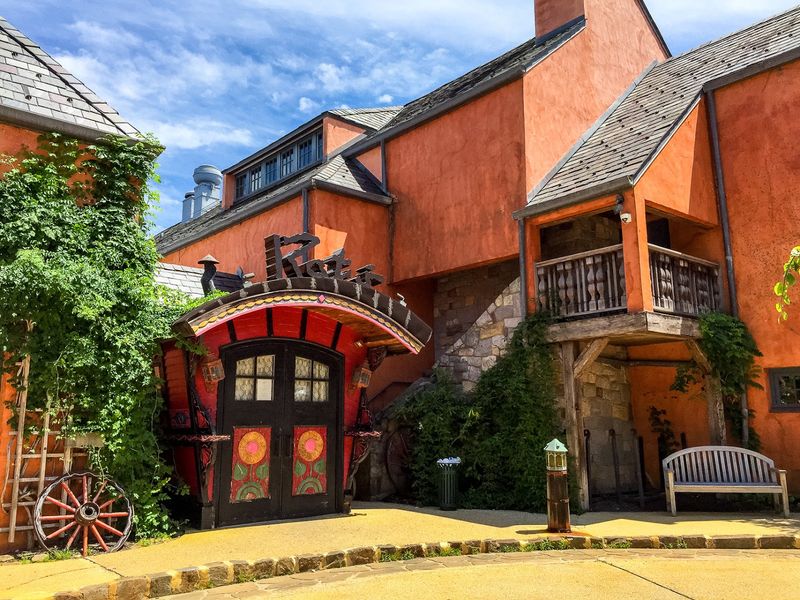
Cross the little bridge beside the lily pond and the scene suddenly looks less like central New Jersey and more like a French country village someone dreamed up after staring at a Monet painting.
Rat’s sits inside Grounds For Sculpture, where artist and founder Seward Johnson created an entire storybook landscape of winding paths, old-looking stonework, fountains, and gardens.
The restaurant’s name comes from the generous, food-loving character in The Wind in the Willows, which helps explain why the building favors whimsy over formal grandeur. Inside, timbered ceilings, fireplaces, stone walls, and warmly lit dining rooms make even a regular weeknight feel removed from the outside world.
The patio is the prize in pleasant weather, particularly when the surrounding plantings are in bloom and the pond reflects the greenery. French influence runs through the menu, although the kitchen works comfortably beyond rigid tradition with seasonal ingredients and contemporary touches.
French onion soup feels especially right in these surroundings, while carefully prepared meats, seafood, and polished desserts suit a longer dinner. Plan time to walk through the sculpture park before your reservation rather than treating the restaurant as a quick stop.
Admission arrangements and restaurant reservations are separate considerations, so check both when planning. This is one place where arriving early is not merely responsible—it gives you more time to enjoy the illusion.
2. Knife & Fork Inn
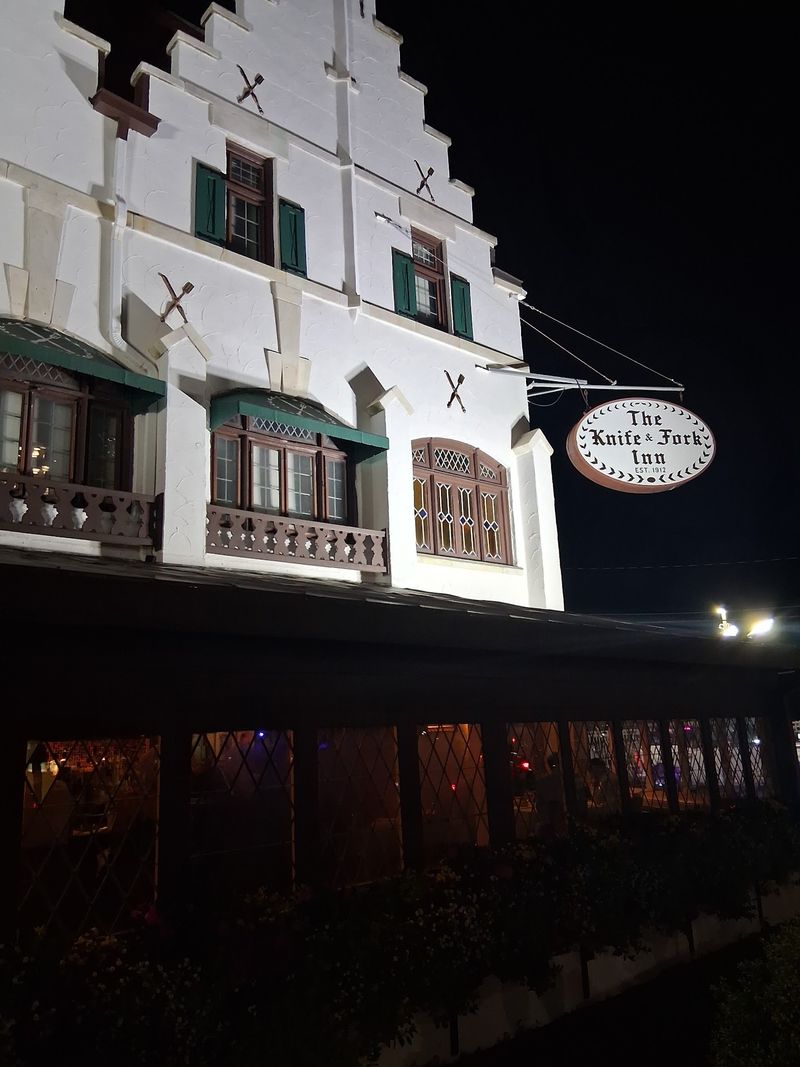
The crossed utensils on the white stucco façade leave little doubt that you have found the place. Rising four stories near the meeting point of Atlantic, Pacific, and Albany avenues, the Knife & Fork Inn has the profile of an eccentric seaside clubhouse and a history to match.
It opened in 1912 as a private men’s drinking and dining club, complete with curtained alcoves, upstairs rooms, and a separate lounge where women waited because they were not allowed at the bar. Prohibition did not immediately stop the drinks, though a federal raid eventually made its point.
Today, the rules have changed considerably, but the restored building still carries the swagger of old Atlantic City. A brass entrance door, sweeping staircase, mahogany woodwork, painted ceilings, chandeliers, murals, and upper-floor ocean views reward anyone who takes a slow look around.
The menu gives steaks and seafood equal billing, making a prime cut, crab cake, or locally appropriate seafood dinner an easy call. Classic sides and a serious wine collection complete the old-school steakhouse experience without making it feel frozen in time.
Reservations are wise, especially on weekends, and different dining rooms offer noticeably different perspectives. Ask about seating when booking if an ocean view or a particularly historic room matters.
Plenty of Atlantic City restaurants compete with spectacle; this one simply lets more than a century of stories do the work.
3. Ninety Acres
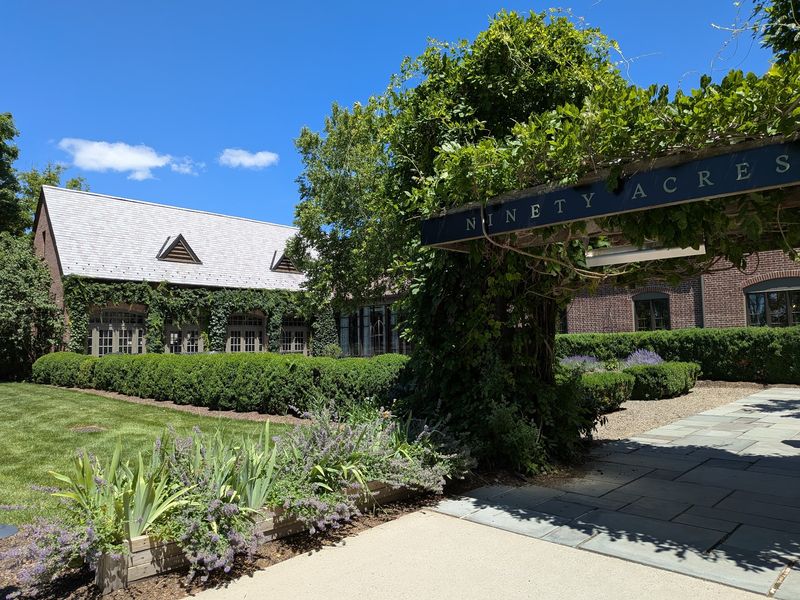
Long before the first plate reaches the table, the drive through Natirar establishes the mood. The road winds across a vast former estate in the Somerset Hills, passing lawns, woodland, and working farmland before arriving at a restored carriage house.
That handsome brick building now contains Ninety Acres, a refined restaurant where the connection between landscape and kitchen is unusually easy to see.
Vaulted spaces, substantial masonry, large windows, and carefully preserved architectural details give the dining room a sense of permanence, while the modern finishes prevent it from resembling a historical exhibit.
The farm is not decorative scenery, either. Herbs, vegetables, and other seasonal ingredients grown on the property help shape dishes that change with the harvest.
A Natirar Farm salad makes a logical starting point, followed by house-made pasta, locally sourced poultry, seafood, pork, or a prime steak, depending on the season. Even the cocktails often pick up fresh produce and botanical flavors.
Prices place this firmly in special-occasion territory, but the experience feels like more than a dressed-up dinner. Guests can see how the old estate buildings, cultivated fields, and restaurant fit together.
Book ahead and leave extra time for the slow approach through the grounds; rushing up the driveway defeats half the pleasure. Once inside, a seat near the windows lets the rolling property remain part of the meal, even after the daylight begins to fade.
4. Lambertville Station Restaurant and Inn
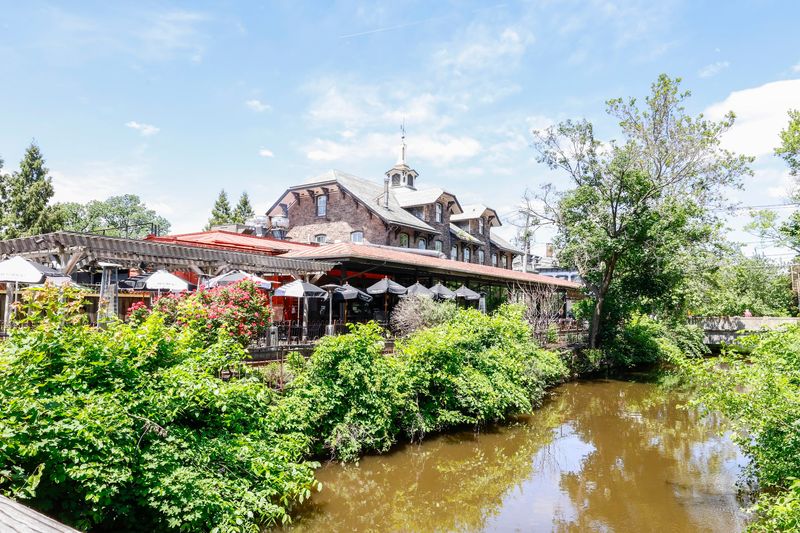
Trains no longer pull up beside this handsome stone building, but nearly everything about Lambertville Station still suggests arrival. Constructed in the 1860s as a railroad depot, the structure stands close to the Delaware River at the foot of one of New Jersey’s best walking towns.
Its broad roofline, substantial stone walls, old station proportions, and trackside location make the building immediately recognizable, especially against Lambertville’s collection of brick storefronts and historic houses.
Inside, the former transportation hub has traded ticket counters and waiting passengers for dining rooms filled with dark wood, white tablecloths, and river-facing windows.
The menu is broad, polished American fare, with seafood, steaks, pasta, burgers, and seasonal specials giving mixed groups plenty of options. Lobster bisque has long been a fitting opener, and a seafood entrée feels appropriate with the Delaware flowing just outside.
The restaurant works equally well as the centerpiece of a day trip or as an easy dinner after browsing Lambertville’s antiques shops and galleries. Parking is available, but weekends can be busy throughout the compact downtown, so an early reservation removes some unnecessary circling.
Ask for a river-facing table if the view is important, though the old depot interior provides plenty to examine on its own. Afterward, walk across the bridge to New Hope or follow the towpath for a few minutes.
The station may no longer send travelers down the tracks, but it remains exceptionally good at making people linger.
5. Strickland’s Steakhouse
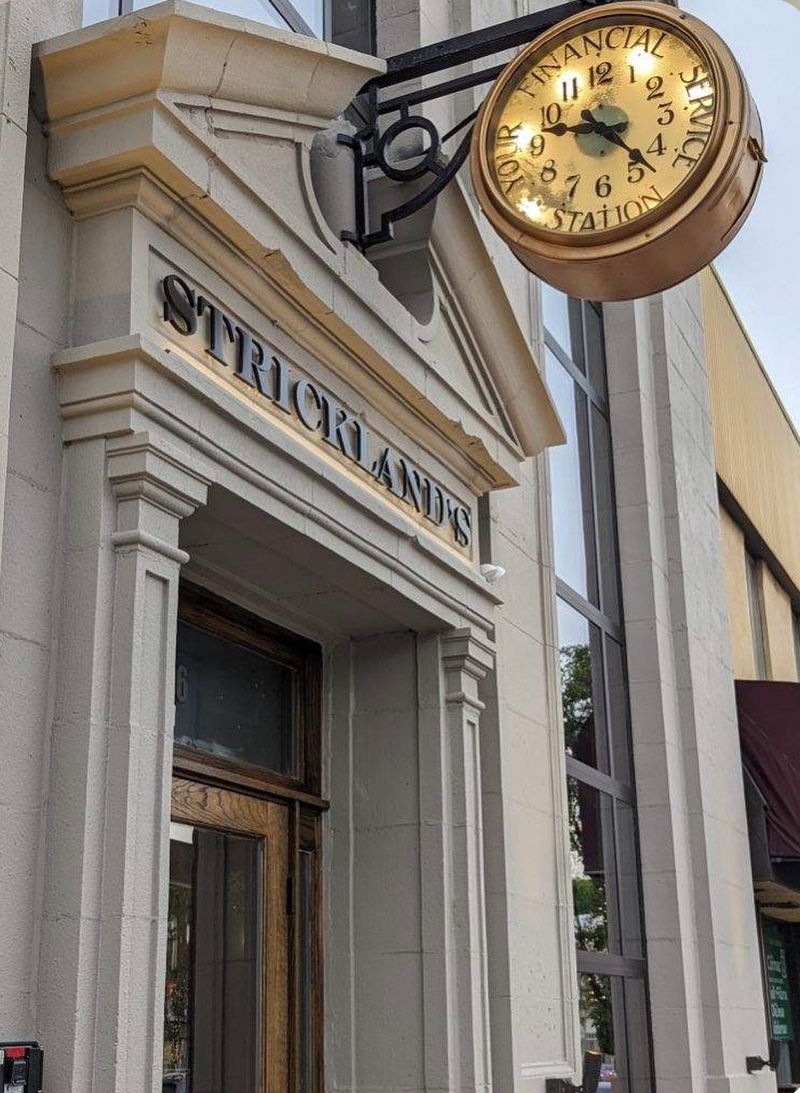
Money once slept behind the massive steel door inside this Main Street building. Now the former bank vault is connected to something arguably more exciting: Strickland’s dry-aged steak program.
The Woodbridge National Bank building supplied the restaurant with architectural advantages no newly constructed steakhouse could easily copy, including soaring ceilings, arched windows, original brick, and a two-level layout that shifts from moody lounge to grand dining hall.
Bank history appears in playful details rather than turning the place into a theme park.
Portraits and references to famous outlaws add a wink, while leather seating, chandeliers, murals, and warm lighting give the rooms a polished Art Deco flavor. Steaks are the natural focus, with dry-aged ribeye and other substantial cuts anchoring the menu.
Thick-cut bourbon bacon, grilled oysters, crab cakes, meatballs with ricotta, and boldly seasoned seafood make it dangerously easy to over-order before the main course.
Non-steak diners have legitimate choices, including roasted fish and scallops, while truffle fries, creamed spinach, mushrooms, and macaroni and cheese cover the classic steakhouse side-dish requirements.
The restaurant feels celebratory, but the downtown setting keeps it connected to Woodbridge rather than sealed inside an anonymous luxury complex. Reserve ahead for Friday or Saturday and consider arriving early for a drink downstairs before dinner.
Whatever you order, find the original vault door. It is the rare restaurant photo opportunity that also explains the building’s entire second act.
6. The Highlawn
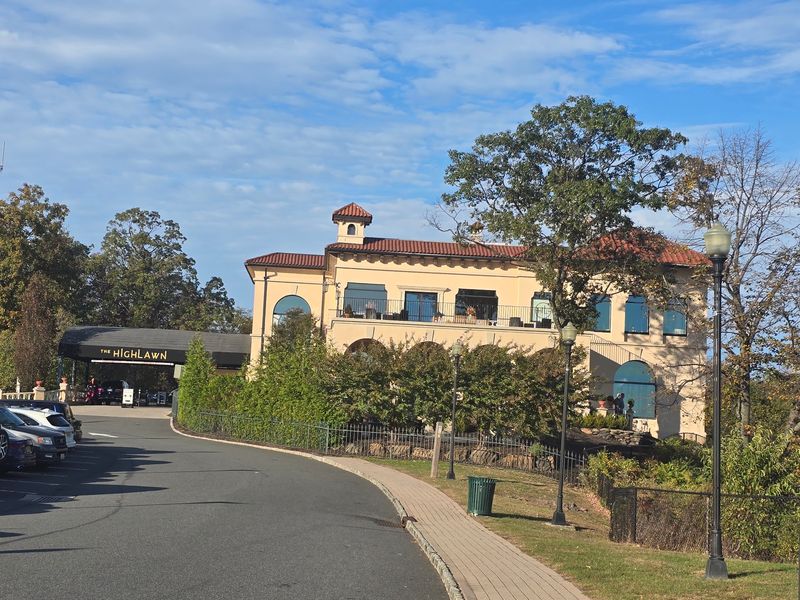
Manhattan appears through the windows like a glowing backdrop, with no traffic, tunnel, or river crossing required. Perched high in Eagle Rock Reservation, The Highlawn occupies a landmark building constructed between 1909 and 1911 as a scenic overlook and refreshment stop.
Its earliest open-air ground floor earned it the nickname “The Casino,” using the old Italian sense of a country dwelling rather than anything involving roulette wheels. The site later played a surprising role in World War I research when Thomas Edison and his team conducted secret experiments there.
After decades of deterioration, the building was painstakingly restored and expanded into the Florentine-inspired destination seen today. Arches, stonework, formal staircases, high ceilings, and enormous windows frame a view that stretches across northern New Jersey to the New York City skyline.
The kitchen matches the setting with polished steakhouse and New American cooking. Seafood, prime beef, pasta, and composed seasonal plates all make sense here, while cocktails in the bar are an easier way to experience the building without committing to a full celebration dinner.
Sunset reservations are especially coveted because the view changes minute by minute before the city lights take over. Give yourself time to stop at the nearby overlook and September 11 memorial, and dress a touch more neatly than you would for a neighborhood tavern.
The architecture is impressive in daylight, but after dark, when the windows turn Manhattan into wall-sized artwork, the room delivers its best trick.
7. The Gables Historic Inn & Restaurant
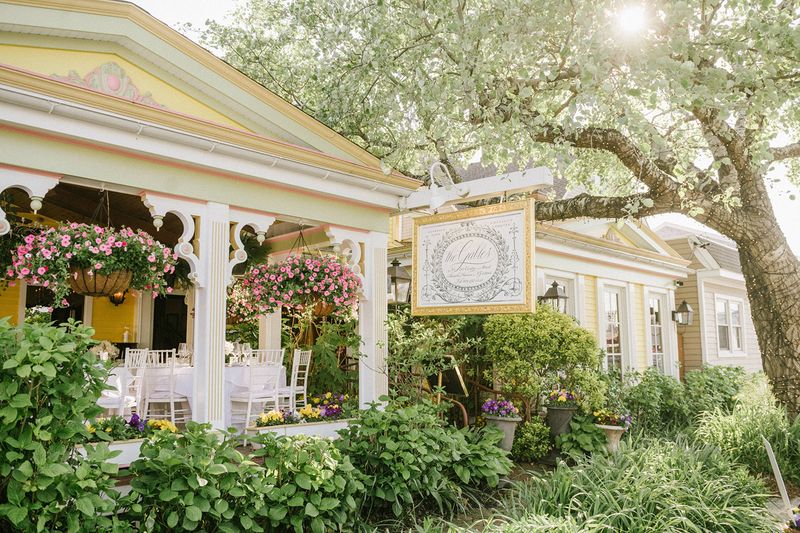
A porch draped in climbing greenery makes The Gables look as though it has been hiding in a romantic novel since the Victorian era. The house was built in 1892 as Kathlyn Cottage and has served several purposes over its long Beach Haven life, including a boarding house and lodging for local lifeguards.
Its restoration preserved the high ceilings, original wide-plank floors, ornate fireplaces, gables, and domestic scale that make dinner here feel closer to attending an elegant house party than visiting a conventional Shore restaurant.
Tables spill into garden spaces filled with flowers and soft lights during the warmer months, while the interior leans into period detail with antiques, patterned wallpaper, and carved mantels.
The food is presented through a multicourse prix-fixe format, and the menu changes frequently enough that ordering becomes part discovery and part decision-making exercise. Seafood naturally appears often, but diners may also encounter duck, pork, steak, handmade pasta, or thoughtfully composed vegetable dishes.
Desserts receive the same careful treatment, so saving room is not optional advice. This is one of the pricier dinners on Long Beach Island and best suited to an anniversary, birthday, or evening when nobody wants to rush.
Reservations are essential in summer, and the leafy courtyard is worth requesting when the forecast cooperates. Beach Haven has plenty of places where flip-flops fit the program; The Gables offers a different pleasure—a reason to clean up, slow down, and let an old house host the evening.
8. The Grain House Restaurant
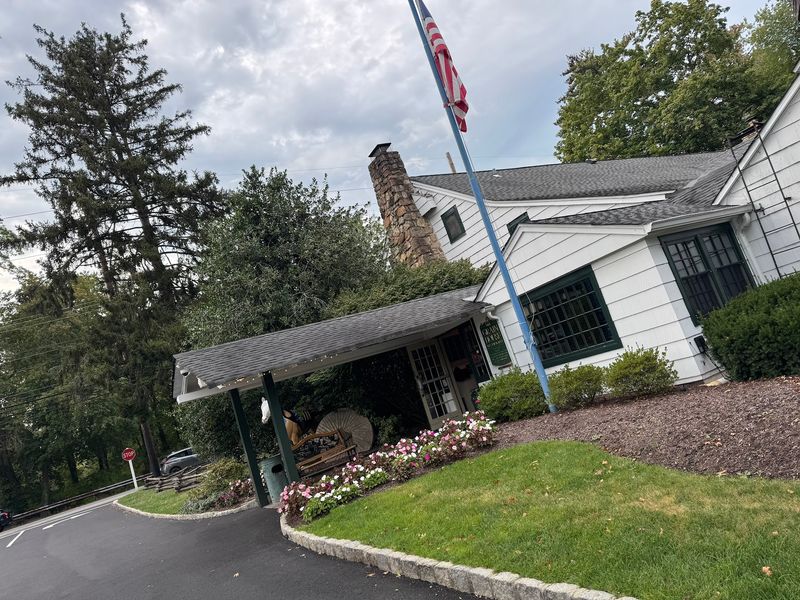
Heavy beams cross the ceiling, fireplaces warm the dining rooms, and thick stone seems to mute the modern world outside. The Grain House began as an 18th-century barn, built in 1768 and later used to store grain for Continental Army troops encamped at nearby Jockey Hollow during the brutal winter of 1779–1780.
It now sits beside the Olde Mill Inn, but the restaurant retains the close, rustic character of a building designed for work rather than display. Original materials and broad hearths supply genuine texture; nothing needs to be artificially distressed because the structure has already earned every mark.
The menu follows an approachable American path, moving among soups, salads, sandwiches, seafood, pasta, and hearty meat dishes. A bowl of French onion soup beside the fireplace is an excellent cold-weather move, while weekend brunch gives visitors a more casual chance to see the building in daylight.
The kitchen emphasizes regional sourcing where practical, and herbs and vegetables from the property’s garden can appear in seasonal preparations. This is a useful choice for groups because the setting feels special without requiring everyone to order a formal multicourse dinner.
Reservations help on weekends, especially when weddings or events bring additional activity to the inn complex. Pair the meal with a visit to Morristown National Historical Park if you want the barn’s Revolutionary connection to land with even more force.
Few restaurants make a simple ceiling beam feel historically significant, but here, it genuinely is.
9. The Smithville Inn
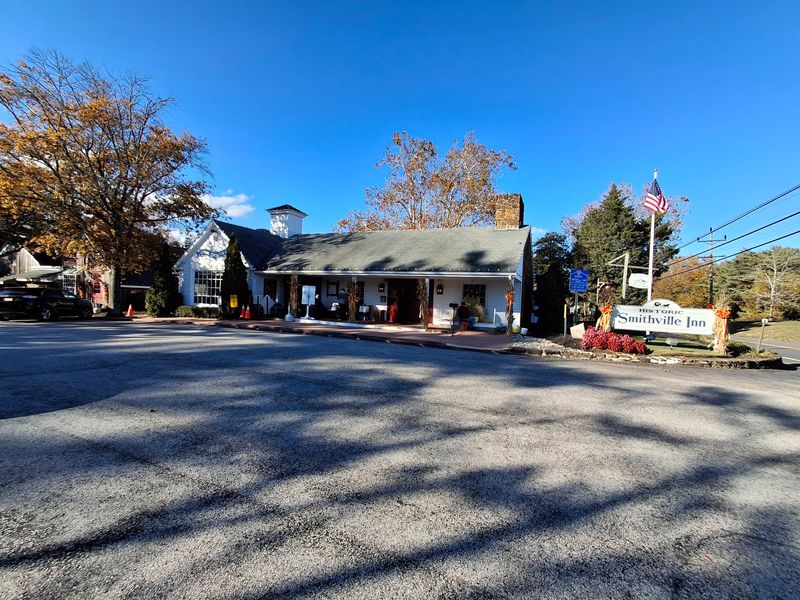
What began as a one-room stagecoach stop in 1787 eventually inspired an entire village. The original Smithville Inn grew over the decades, fell into abandonment, and was rediscovered in 1949 before reopening as a restored 42-seat restaurant in 1952.
Its success encouraged the development of Historic Smithville around it, with old buildings relocated from elsewhere in South Jersey and given new lives as shops and attractions. Today the inn remains the architectural anchor of that rambling lakeside collection.
Dark wood, traditional dining rooms, exposed structural details, fireplaces, and views toward the water make it feel rooted in the landscape rather than added as an afterthought. The menu balances familiar American comfort with enough seafood to remind diners that the coast is not far away.
Crab cakes are a dependable choice, while steaks, poultry, pasta, sandwiches, and seasonal entrées keep the restaurant friendly to broad family tastes. Lunch offers the easiest way to combine a meal with browsing the village’s shops, crossing the footbridges, and watching the tiny train circle the grounds.
Dinner becomes particularly attractive during the holidays, when lights and decorations turn the whole village into an elaborate backdrop. Large events can make certain days busier, so reservations are sensible.
Arrive well before your table time rather than expecting to dash directly from the parking lot. The restaurant is memorable on its own, but the real pleasure lies in seeing how one rescued inn became the center of a destination built around preservation.
10. The Cranbury Inn
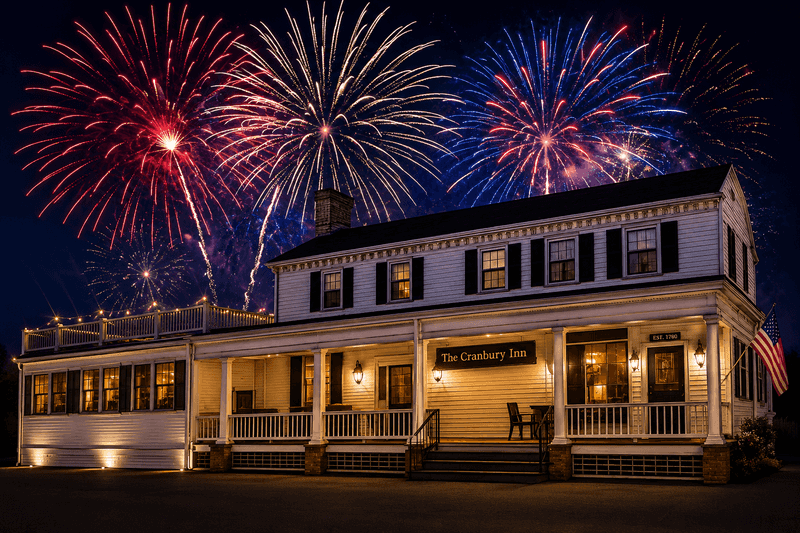
History comes in layers at this Main Street institution. Parts of the Cranbury Inn trace back to tavern buildings from the mid-1700s, and the property continued evolving as generations of travelers passed through one of central New Jersey’s most attractive villages.
Rather than presenting a single perfectly frozen colonial room, the inn reveals how a hospitality business expands and adapts over centuries. Low ceilings, timber framing, old fireplaces, traditional woodwork, and connected dining spaces create the pleasant sense that one doorway might lead into a different era.
The kitchen serves classic American fare with an emphasis on satisfying, recognizable dishes rather than culinary acrobatics. Steaks, seafood, pasta, burgers, and weekend brunch favorites suit the building’s role as both a local gathering place and a special-event destination.
Order according to mood: a composed seafood dinner fits an evening reservation, while an omelet or French toast allows for a relaxed daytime visit. Cranbury itself adds considerably to the outing.
Its preserved streetscape, historic houses, small lake, and walkable center deserve a look before or after the meal. Parking is easier than in many of New Jersey’s better-known historic towns, though private events can make the inn especially busy.
Check the schedule and reserve when visiting on a weekend. Some old restaurants lean so hard on history that dinner feels secondary; here, the rooms remain active with brunches, family meals, celebrations, and community gatherings.
That everyday use is precisely what keeps the centuries-old building from feeling like a museum.
11. White Manna
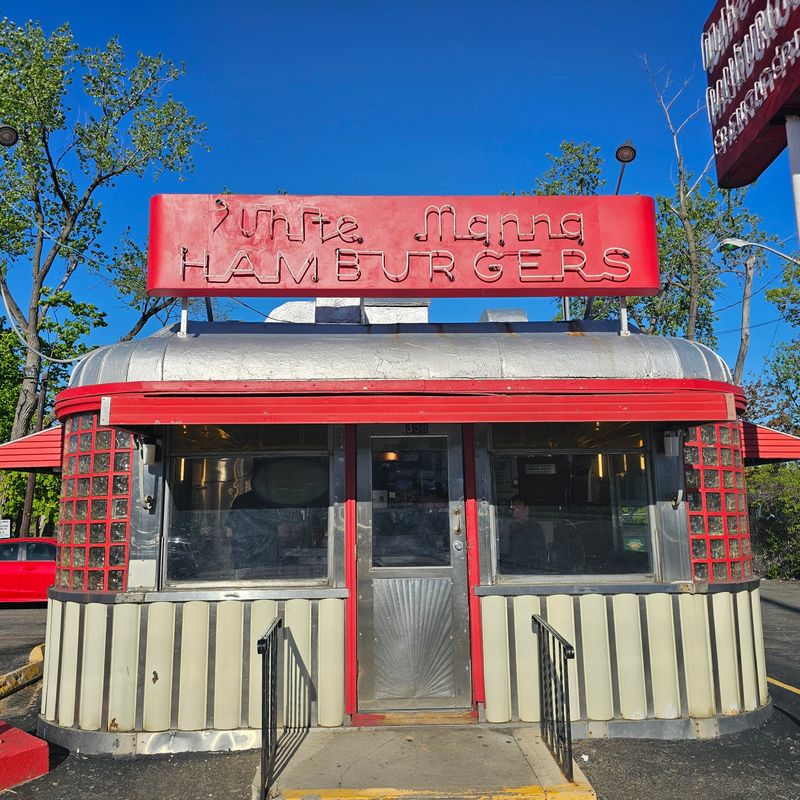
Six stools, a sizzling griddle, and a building that looks like a stainless-steel spaceship are all the decoration White Manna needs. The petite Hackensack diner is associated with the 1939 New York World’s Fair and remains one of New Jersey’s clearest surviving examples of compact, prefabricated diner design.
Its rounded exterior, gleaming metal skin, glass-block details, and curved counter would be memorable even without the steady line of customers waiting for sliders. Inside, there is barely enough room to stand without becoming part of somebody else’s lunch, which is exactly the point.
Everyone watches the same performance: balls of beef hit the griddle, sliced onions pile on top, buns steam over the meat, and cheese melts into the whole glorious mess. Order several cheeseburgers rather than one; these are proper sliders, thin and compact, with onions supplying sweetness and griddled edges adding texture.
Fries, onion rings, and a shake complete the experience without introducing unnecessary complications. Seating turns over quickly, but waits can stretch during peak hours because the building is genuinely tiny.
Parking may require patience as well. Come outside the busiest lunch period if personal space matters, or embrace the crowd and watch the cooks work at close range.
Fine dining rooms impress through scale and ornament. White Manna does it through efficiency, survival, and the undeniable charm of a silver box that has spent decades turning a few ingredients into one of North Jersey’s essential meals.
12. Ho-Ho-Kus Inn & Tavern
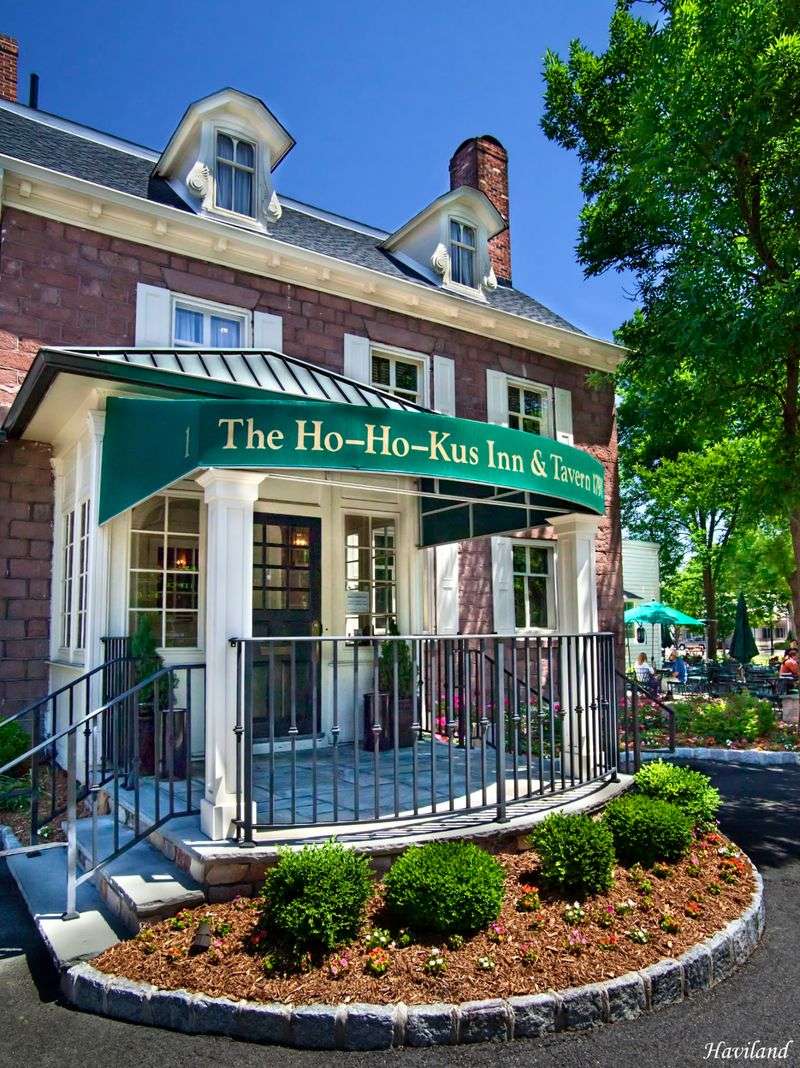
A private home built in 1796 has become one of Bergen County’s most adaptable dining destinations. Over the years, the building served as a residence, a parsonage, and eventually a tavern, with the borough stepping in during the 20th century to save it from demolition.
A substantial renovation later preserved its historic identity while preparing it for modern restaurant life. The result is not one cavernous room but a collection of distinct spaces, each with its own scale and personality.
Traditional millwork, fireplaces, period-inspired colors, intimate windows, and a handsome tavern bar make exploring the interior part of the fun. In warmer weather, the bluestone patio offers a relaxed contrast to the more formal rooms inside.
The menu follows the same flexible approach, covering oysters, salads, burgers, seafood, steaks, and seasonal American dishes. Sunday brunch is particularly appealing because daylight brings the old residential details into sharper view, though dinner beside a fireplace makes the strongest case for visiting in colder weather.
Groups with different expectations can settle comfortably here: one table may be celebrating an anniversary while another stops in for a burger and drinks. The inn generally operates on a limited weekly schedule rather than seven days, so confirm availability before making the drive.
Ask about room placement when reserving if you prefer the tavern, patio, or a quieter dining area. Nearly 230 years after its construction, the building still feels hospitable—and not remotely finished with its story.
Share this story