Pennsylvania is a place where travel can feel hands-on, heartfelt, and deeply connected to real stories. Beyond pretty views and familiar attractions, the state offers gardens that glow after dark, historic train rides through farm country, mountain rivers, coal tunnels, historic battlefields, and memorials that help visitors understand courage, sacrifice, and loss. Each experience gives travelers a different way to connect with the people, landscapes, and traditions that have shaped Pennsylvania over the years.
These experiences matter because they let you listen, touch, taste, walk, explore, and reflect rather than simply take pictures from a distance. They can turn an ordinary weekend into a story you will still be talking about long after you return home. If you want a trip that teaches you something while still feeling fun, meaningful, and memorable, Pennsylvania gives you plenty of ways to slow down, look closer, and feel genuinely part of the place.
1. Experience the Evening Magic of Longwood Gardens
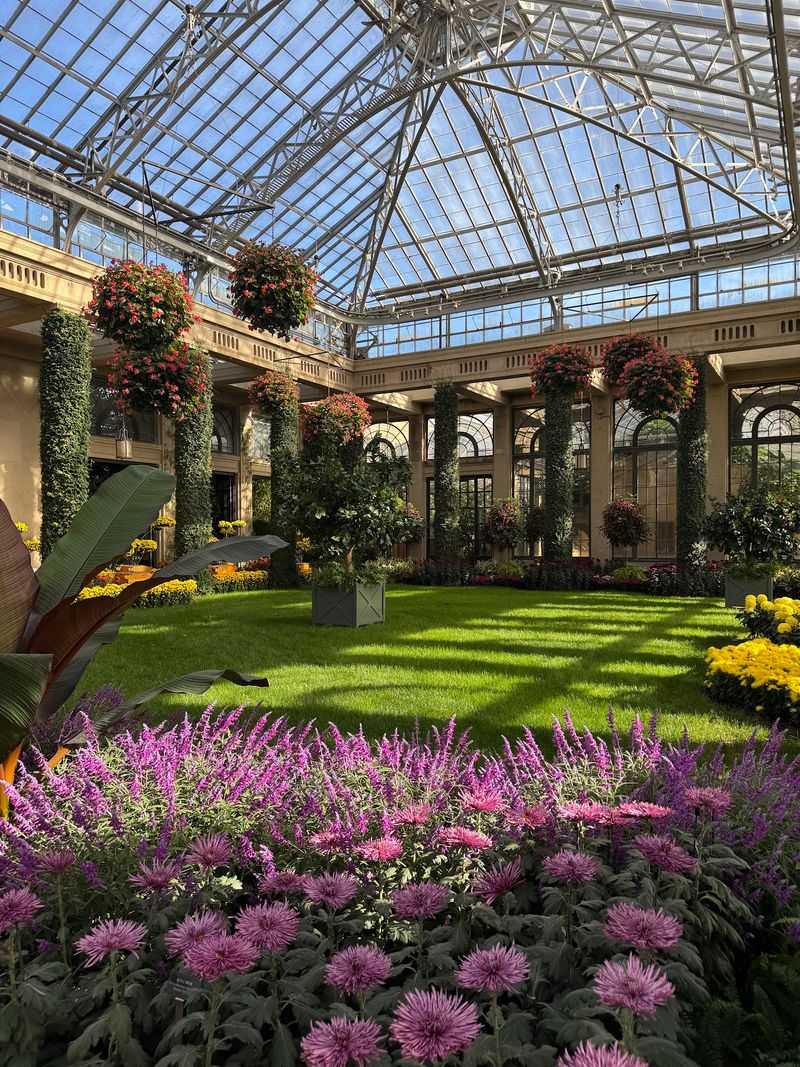
When the sun begins to drop, Longwood Gardens feels like someone turned up the wonder.
Paths glow softly, fountains sparkle, and the huge conservatory shines from within like a glass lantern.
It is a calm but exciting way to enjoy one of Pennsylvania’s most loved garden spaces.
Plan to arrive before sunset so you can see the gardens change from day to night.
The evening light makes flowers, trees, and water features look different by the minute.
Comfortable shoes matter because the grounds are large, and you will probably want to wander longer than expected.
Seasonal events can make the visit even better.
In warmer months, fountain shows mix music, water, and lights in a way that feels almost like theater.
During the holiday season, decorated trees and glowing displays turn the garden into a bright winter walk.
Longwood Gardens began as land saved by industrialist Pierre S. du Pont in the early 1900s.
He wanted to protect historic trees, then slowly shaped the area into a public garden.
That history adds meaning to every greenhouse, meadow, and fountain court.
Bring a light jacket, even in summer, because evenings can cool down.
Check the schedule before going, since timed tickets are often required for popular nights.
Instead of rushing from one display to the next, sit for a few minutes near the fountains or under the trees and let the sounds settle around you.
2. Ride the Strasburg Rail Road Through Pennsylvania’s Farmland
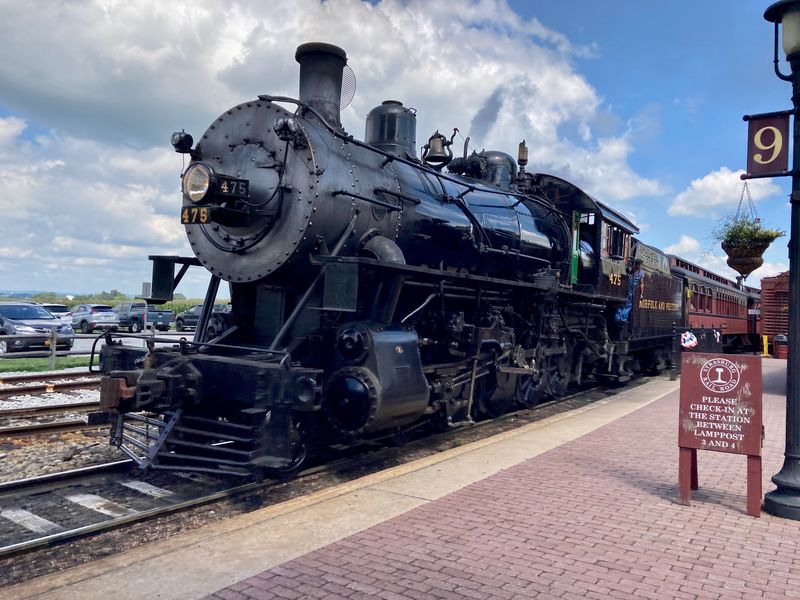
A whistle cuts across the fields, and suddenly the past feels close enough to touch.
The Strasburg Rail Road gives travelers a slow, charming ride through Lancaster County farmland.
Instead of simply looking at the countryside from a car, you roll through it behind a historic steam engine.
The ride is short enough for families but rich enough for train fans.
Wooden coaches, polished details, and the steady rhythm of the wheels make the trip feel special.
Children often love the sound and motion, while adults enjoy the peaceful views of barns, crops, and grazing animals.
Try to book ahead, especially on weekends and during fall.
Different seating options may be available, from standard coach seats to dining cars and first-class cars.
Arriving early gives you time to see the station area and take photos before boarding.
The railroad dates back to 1832, making it one of the oldest continuously operating railroads in the country.
Its steam trains help show how people and goods once moved through rural Pennsylvania.
That makes the ride both fun and educational without feeling like a classroom lesson.
Pair the train trip with nearby Lancaster County stops, such as local markets, quilt shops, or farm stands.
Be respectful when passing Amish farms, and avoid taking close photos of people without permission.
The best part of this experience is its pace, so let the train remind you that travel does not always have to be fast.
3. Paddle the Delaware River Through the Pocono Mountains
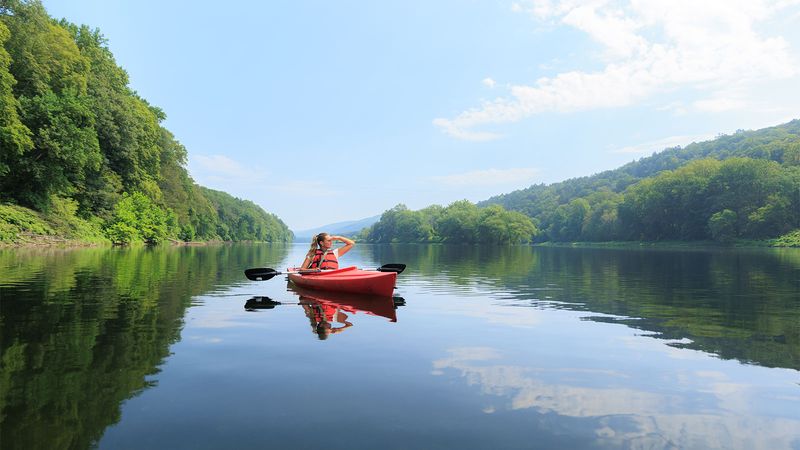
The river does not ask you to hurry, and that is part of its charm.
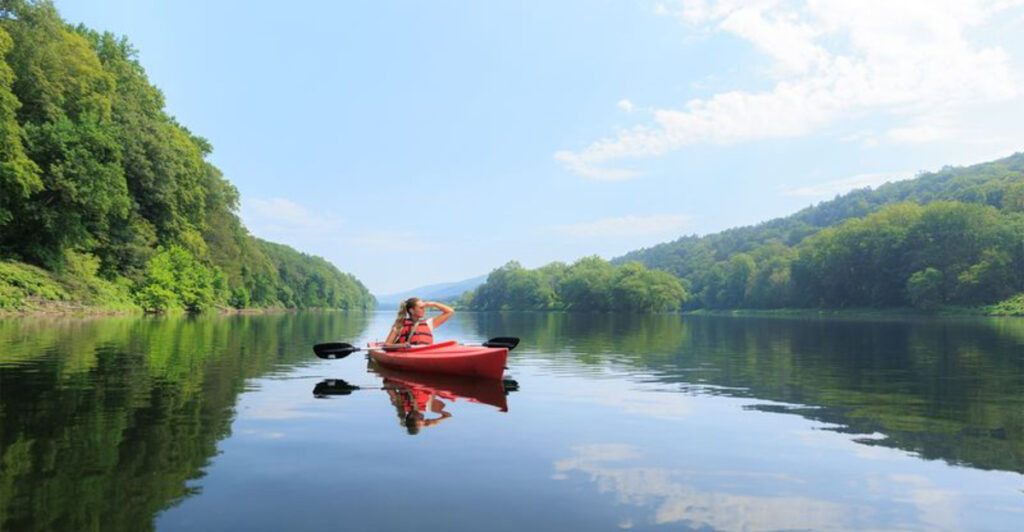
Paddling the Delaware River through the Pocono Mountains lets you trade road noise for birds, moving water, and forested hills.
It is an active experience, but it can still feel peaceful.
Many visitors choose canoe, kayak, or raft trips through the Delaware Water Gap area.
Outfitters can help with gear, route choices, shuttle service, and safety tips.
Beginners should pick a calm section and ask about water levels before heading out.
Wear a life jacket, bring water, and pack snacks in a dry bag.
Shoes that can get wet are a smart choice because riverbanks may be rocky or muddy.
Sunscreen and a hat help too, since open water can be brighter than you expect.
The scenery is the reward.
You may pass tree-covered slopes, quiet islands, bald eagles, and cliffs rising above the water.
In autumn, the leaves turn red, gold, and orange, making the river feel like a moving path through a painting.
This area also carries history.
For generations, the Delaware River has been used for travel, trade, fishing, and recreation.
Indigenous communities lived along its banks long before modern visitors arrived with paddles and coolers.
Respect the river by carrying out all trash and giving wildlife plenty of space.
If you want more than a quick photo stop, floating through the Poconos helps you feel the shape, sound, and rhythm of Pennsylvania’s wild side.
4. Step Into the Past on an Evening Candlelight Tour at Eastern State Penitentiary
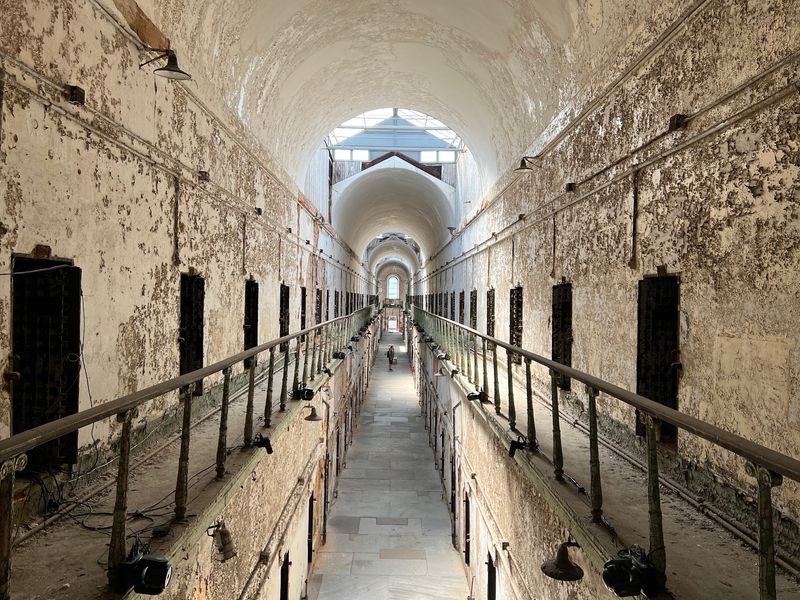
Shadows stretch longer inside old stone walls after dark.
An evening candlelight tour at Eastern State Penitentiary in Philadelphia gives visitors a powerful look at prison history in a setting that feels quiet, eerie, and unforgettable.
It is not just spooky, it is thought-provoking.
The prison opened in 1829 and was once considered a modern model for reform.
Its wagon-wheel design, with cellblocks spreading from a central point, influenced prisons around the world.
Walking those corridors today shows how ideas about punishment and justice have changed over time.
Evening tours often use low lighting to create a different mood than daytime visits.
The soft glow makes peeling walls, empty cells, and high ceilings feel more dramatic.
Guides and exhibits help explain the lives of prisoners, workers, and reformers connected to the site.
Wear sturdy shoes because floors can be uneven.
A jacket is useful, since the building may feel cool even when the weather outside is mild.
Visitors who are sensitive to dark spaces should check tour details before booking.
One famous inmate was Al Capone, whose restored cell is a popular stop.
Still, the deeper story is not about one person.
It is about how society has struggled with crime, isolation, fairness, and second chances.
Give yourself time after the tour to think about what you saw.
Eastern State Penitentiary is a strong choice for travelers who want history with emotional weight.
The experience stays with you because it asks real questions while placing you inside the setting where those questions once shaped daily life.
5. Experience Fallingwater Where Architecture Meets Nature
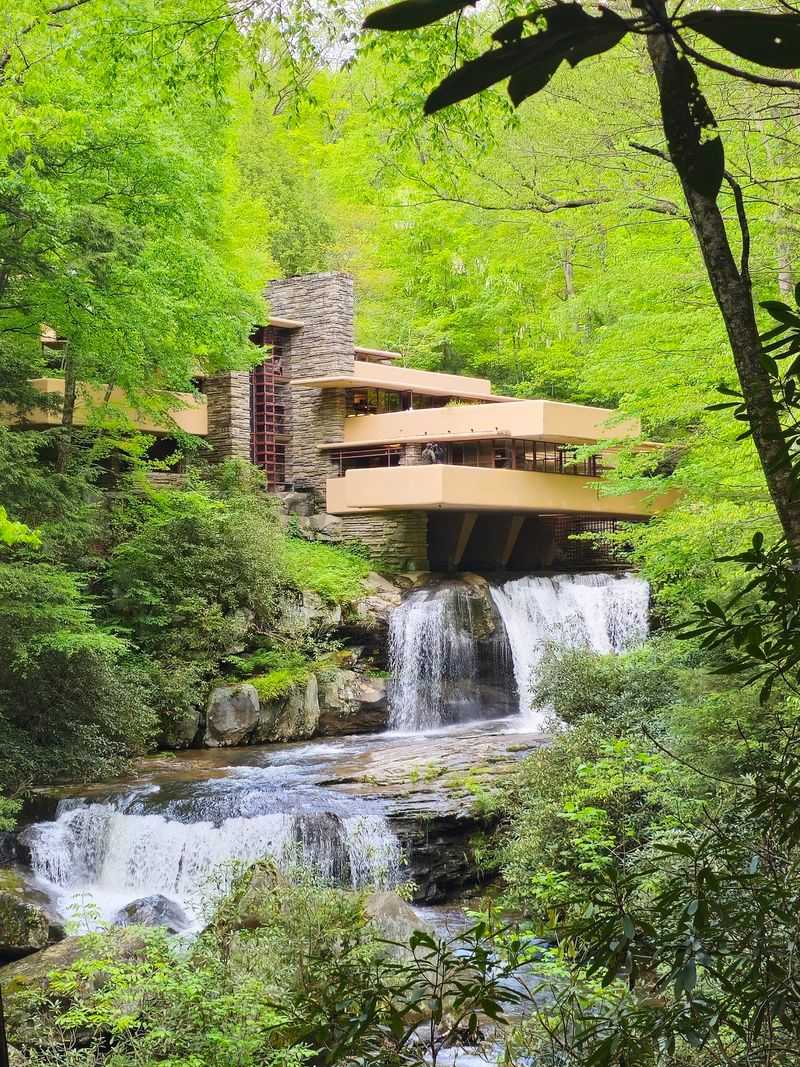
Water rushes beneath the house before you even understand how bold the design is.
Fallingwater, located in the Laurel Highlands, feels less like a building placed in nature and more like a building growing from it.
Frank Lloyd Wright created one of Pennsylvania’s most famous treasures here.
The home was designed in the 1930s for the Kaufmann family of Pittsburgh.
Instead of placing the house beside the waterfall, Wright placed it over the falls.
That choice still surprises visitors and makes the sound of water part of the whole experience.
A guided tour is the best way to understand the details.
Guides point out stone floors, low ceilings, wide terraces, and windows that pull the outdoors inside.
Even people who do not usually care about architecture often find something to enjoy.
Book tickets early because tours can sell out, especially in summer and fall.
Photography rules may vary inside, so check before your visit.
The grounds include paths and viewpoints where you can see the house from classic angles.
Fall is especially popular because the forest adds bright color around the home.
Spring brings fresh green leaves and strong water flow.
No matter the season, the site reminds visitors how design can work with a landscape instead of fighting it.
Wear comfortable walking shoes and allow extra time for the visitor center and trails.
Fallingwater is not a place to rush through.
Stand quietly for a moment, listen to the stream, and notice how stone, glass, trees, and water seem to share the same conversation.
6. Immerse Yourself in Traditional Music and Culture at an Appalachian Festival
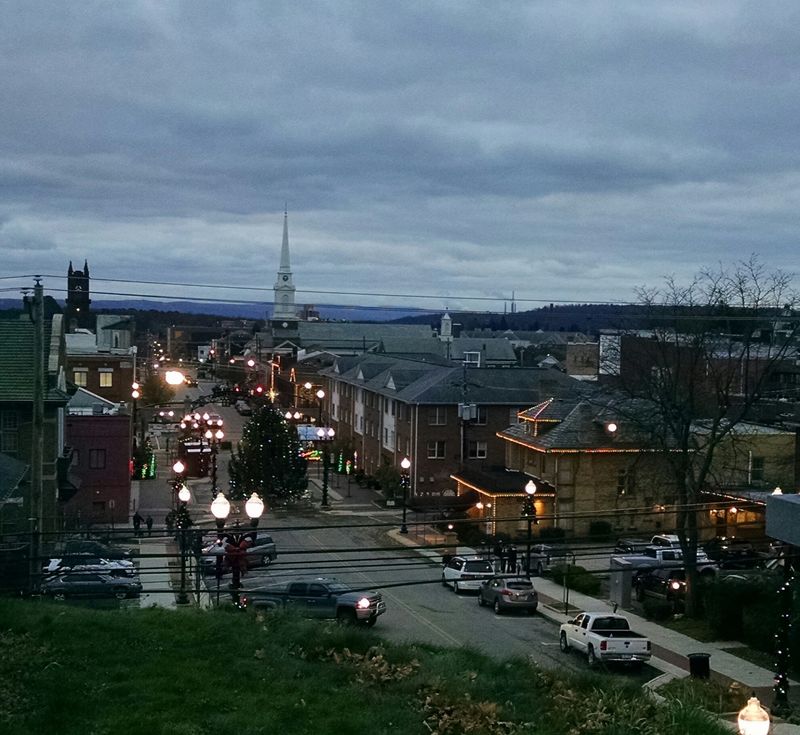
A fiddle tune can pull strangers together faster than a speech.
At an Appalachian festival in Pennsylvania, music, food, crafts, and stories help visitors feel the living culture of the state’s mountain regions.
The mood is often friendly, lively, and proudly local.
Pennsylvania’s Appalachian communities have deep roots shaped by farming, mining, immigration, and mountain life.
Festivals may include bluegrass, old-time music, clogging, storytelling, blacksmithing, quilting, woodcarving, or regional food.
Each activity shows skills passed through families and communities.
Check event schedules before you go because festival programs can change by day.
Some performances happen on main stages, while smaller jams may pop up under tents or near campsites.
Those informal moments often become the most memorable part of the day.
Bring cash for vendors, since not every stand may accept cards.
A folding chair or blanket can make long music sets more comfortable.
If the festival is outdoors, prepare for sun, mud, or cool mountain air.
Do not be shy about asking artists how they learned their craft.
Many are happy to explain a tune, tool, recipe, or family tradition.
Buying directly from makers supports local culture and gives you a souvenir with a real story behind it.
Food can be part of the fun too, from hearty comfort dishes to homemade sweets.
Listen for regional accents, watch the dancers’ feet, and notice how the crowd responds to familiar songs.
An Appalachian festival is more than entertainment because it lets you join a shared rhythm that has carried through Pennsylvania’s hills for generations.
7. Reflect on American History at Gettysburg National Military Park
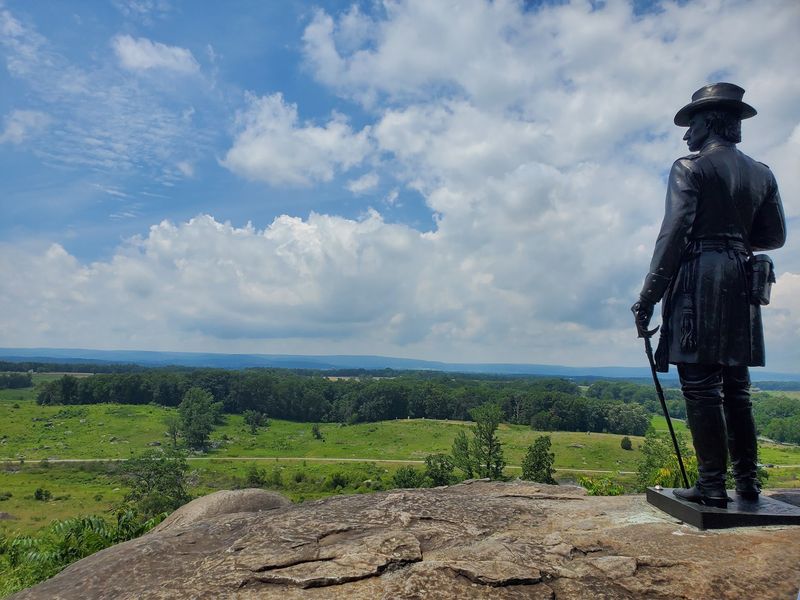
Quiet fields can speak loudly when you know what happened there.
Gettysburg National Military Park is one of Pennsylvania’s most important places for understanding the Civil War.
A visit here is not just about dates and monuments, but about choices, courage, loss, and the future of the country.
The Battle of Gettysburg took place in July 1863 and lasted three days.
It became a turning point in the Civil War, with heavy losses on both sides.
President Abraham Lincoln later gave the Gettysburg Address here, using a short speech to express a large national purpose.
Start at the museum and visitor center if you can.
Exhibits, artifacts, films, and the cyclorama painting help explain the battle before you explore the fields.
Knowing the basic story makes the roads, ridges, and markers much easier to understand.
Many travelers choose a guided tour, either by bus, car, bicycle, or on foot.
Licensed battlefield guides can explain troop movements and personal stories in clear ways.
If you explore alone, use the park map and give yourself more time than you think you need.
Little Round Top, Devil’s Den, Cemetery Ridge, and Pickett’s Charge are well-known stops.
Still, smaller monuments and quiet corners can be just as moving.
Read the signs slowly and remember that real people stood in those places.
Wear good shoes, carry water, and prepare for open sun in warmer months.
Gettysburg asks visitors to be respectful, curious, and patient.
By walking the ground instead of only reading about it, travelers can better feel how Pennsylvania holds a major chapter of American memory.
8. Go Underground on a Historic Coal Mine Tour
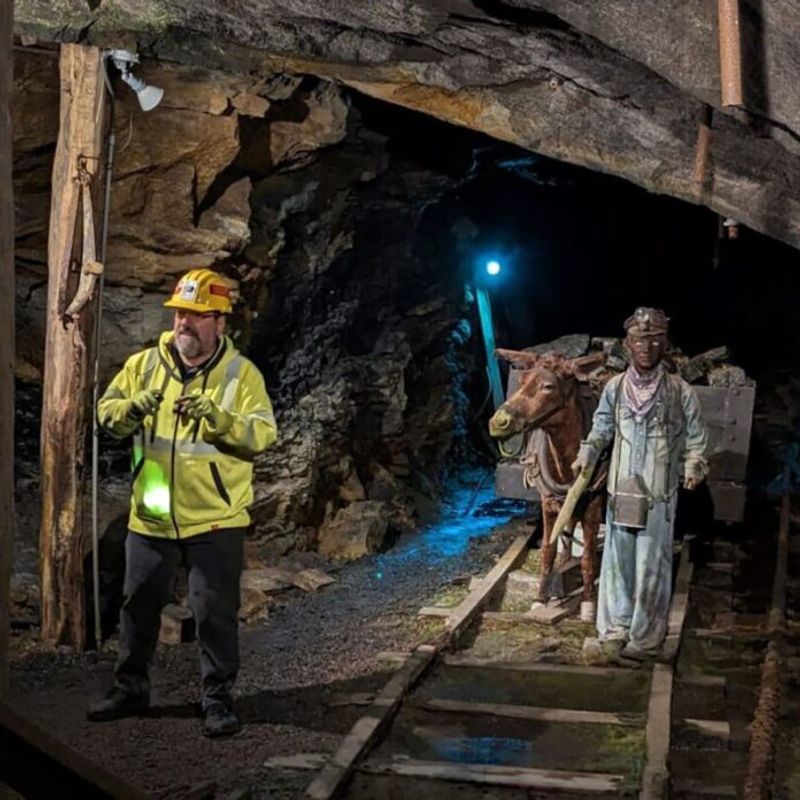
The air changes the moment you head below the surface.
A historic coal mine tour in Pennsylvania takes visitors into the working world that helped fuel homes, factories, railroads, and towns.
It can be dark, cool, and a little gritty in the best educational way.
Pennsylvania has a long coal story, especially in the anthracite regions of the northeast.
Coal mining shaped communities, jobs, rail lines, labor movements, and family life.
Going underground helps travelers understand that history with their senses, not just through a textbook.
Popular tours often provide helmets or safety gear and lead guests through old mine passages.
Guides may explain how miners worked, what tools they used, and how dangerous the job could be.
Hearing those stories while standing near rock walls makes the past feel very real.
Bring a jacket because underground temperatures are usually cool year-round.
Closed-toe shoes are a smart choice, and anyone who dislikes tight spaces should read tour details carefully.
Some mines use small rail cars to carry visitors into the tunnel, which adds to the adventure.
Children often find mine tours exciting because they feel like hidden worlds.
Adults may come away with a deeper respect for workers who spent long hours in tough conditions.
Look for museums nearby that show lamps, maps, photographs, and mining equipment.
A coal mine tour pairs well with visits to old mining towns or heritage centers.
Be ready for a mix of wonder and seriousness.
The experience reminds travelers that Pennsylvania’s landscape is not only mountains, farms, and cities, but also a world beneath the ground that helped build modern life.
9. Reflect on the Past at the Johnstown Flood National Memorial
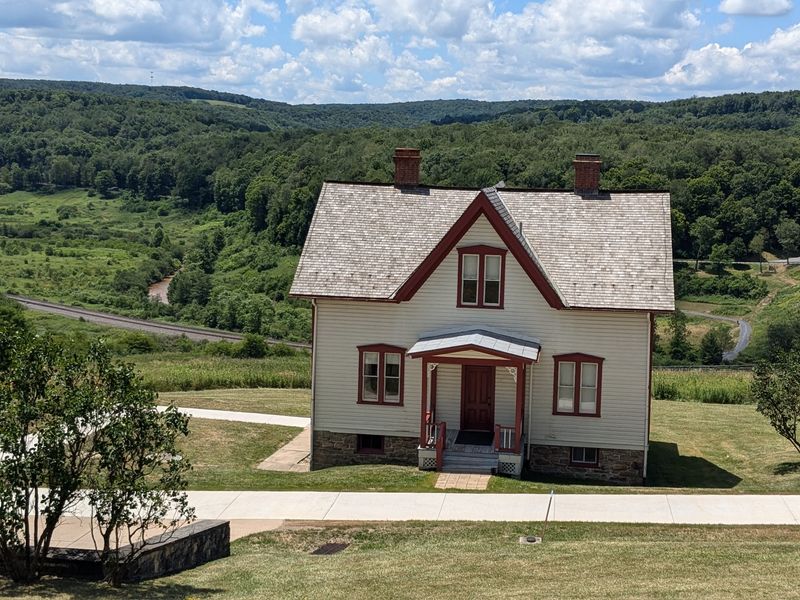
Some places feel still because they carry a heavy story.
The Johnstown Flood National Memorial helps visitors understand one of the worst disasters in Pennsylvania history.
It is a quiet, meaningful stop that turns a tragic event into a lesson about safety, responsibility, and memory.
On May 31, 1889, the South Fork Dam failed after days of heavy rain.
A wall of water rushed down the valley toward Johnstown, destroying homes, businesses, and lives.
More than 2,200 people died, making the flood a national tragedy.
The visitor center is the best place to begin.
Exhibits explain the dam, the storm, the flood path, and the people affected.
A film and historic images help show the scale of the disaster in a way that is easy to follow.
Outside, you can see parts of the former dam area and the landscape that shaped the flood.
Walking the grounds gives space to think about how quickly ordinary life changed for thousands of people.
The peaceful setting makes the story feel even more powerful.
Families can use this visit to talk about community help, engineering, and how decisions affect others.
The memorial does not feel flashy, and that is part of its strength.
It asks visitors to slow down and pay attention.
Bring comfortable shoes and check ranger program times if you want extra context.
Pairing the memorial with a visit to Johnstown can help connect the flood site to the city it changed.
For travelers who want more than sightseeing, this stop offers a thoughtful look at how Pennsylvania remembers both loss and resilience.
10. Experience Amish Life and Traditions Around Lancaster
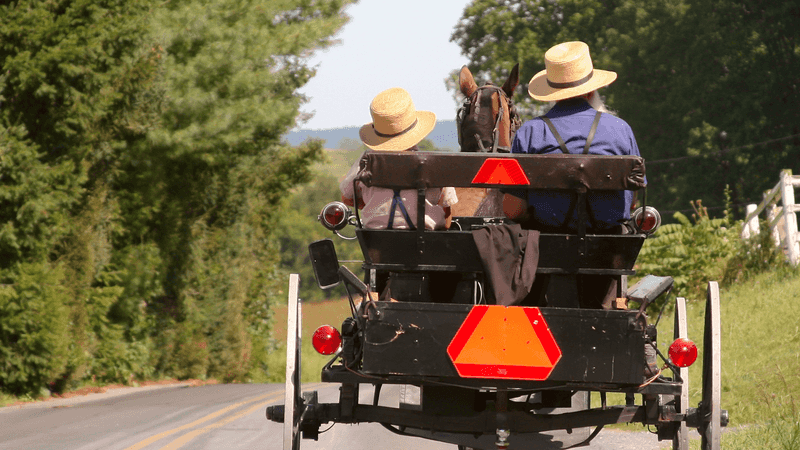
A horse and buggy moving along a country road can make modern life feel suddenly loud.
Around Lancaster, travelers can learn about Amish traditions, farming, food, and family-centered living.
The experience is best when approached with respect rather than curiosity alone.
The Amish are a Christian community known for simple living, plain dress, and limited use of modern technology.
Lancaster County is home to one of the largest Amish populations in the United States.
Visitors often notice buggies, one-room schoolhouses, farm fields, and handmade goods.
Start with a guided tour or a heritage center to learn basic customs.
A good guide can explain why some families avoid cars, electricity from public lines, or certain modern tools.
Understanding the reasons behind the choices helps prevent unfair stereotypes.
Food is a major part of the visit.
Farm markets, bakeries, and family-style restaurants may offer soft pretzels, shoofly pie, fresh bread, jams, noodles, and cheeses.
Buying local goods supports area families and gives you a taste of the region.
Be careful with photos.
Many Amish people prefer not to be photographed, especially in clear face shots.
Take pictures of landscapes, barns, quilts, or buggies from a respectful distance when appropriate.
Traffic can be slow on rural roads, so drive with patience and leave space for horses.
Sundays are quieter because many businesses close for worship and family time.
Lancaster’s Amish country is not a theme park, it is a living community.
When visited thoughtfully, it offers a meaningful chance to learn how different values can shape daily life in Pennsylvania.
11. Pay Tribute at the Flight 93 National Memorial
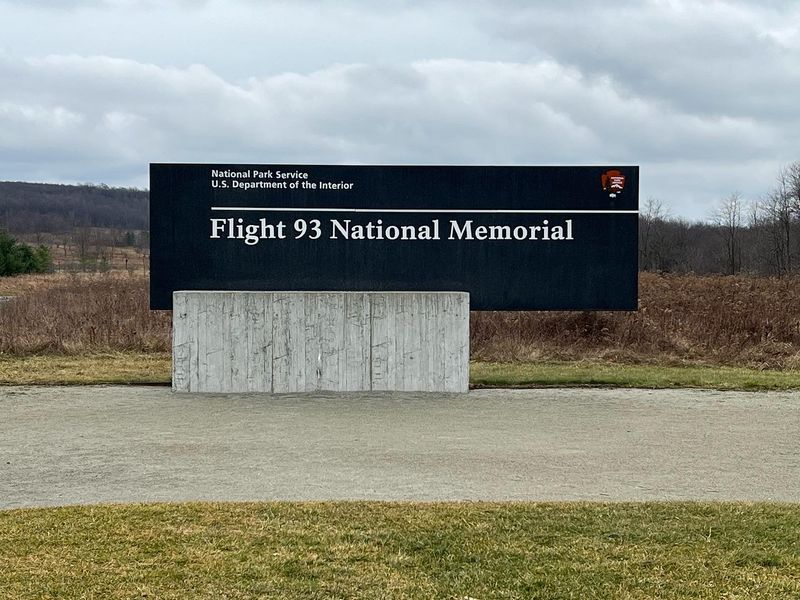
The open field is simple, and that simplicity makes it powerful.
The Flight 93 National Memorial in Somerset County honors the passengers and crew who fought back during the attacks of September 11, 2001.
Visiting is a quiet act of remembrance.
Flight 93 crashed in rural Pennsylvania after passengers and crew learned about the attacks and tried to regain control of the plane.
Their actions likely prevented another target from being hit.
The memorial helps tell their story with care and dignity.
Begin at the visitor center, where exhibits explain the timeline of the flight and the events of that morning.
Personal items, recordings, and displays help visitors understand the people behind the names.
The material can be emotional, so give yourself time.
The memorial plaza leads toward the crash site, which is treated as sacred ground.
The Wall of Names honors each passenger and crew member.
Nearby, the Tower of Voices contains wind chimes that represent the voices of those lost.
Dress for changing weather because the site is open and can be windy.
Walking paths are easy to follow, but the distances can feel longer in heat or cold.
Speak softly and keep the mood respectful, especially near the memorial areas.
This visit is not about entertainment.
It is about gratitude, courage, and national memory.
Many travelers leave with a stronger understanding of how a quiet Pennsylvania field became part of a much larger American story.
For those seeking depth in their travels, the Flight 93 National Memorial offers a place to pause, honor, and reflect.
12. Discover Frank Lloyd Wright’s Vision at Kentuck Knob
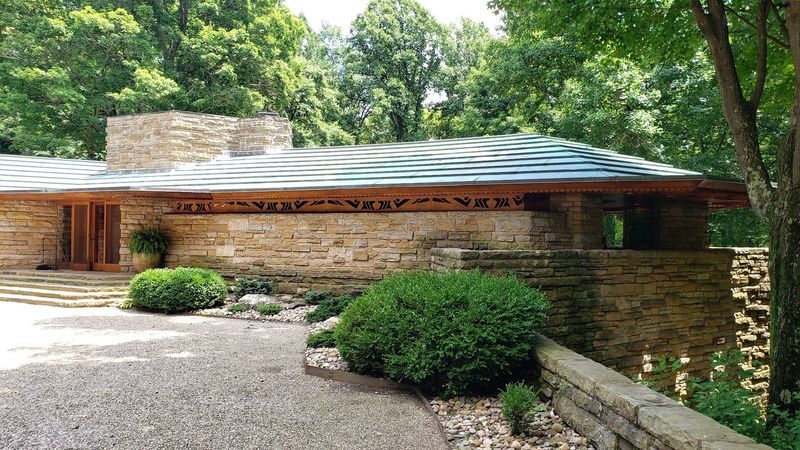
Not every masterpiece shouts for attention.
Kentuck Knob, near Ohiopyle in Pennsylvania’s Laurel Highlands, feels low, warm, and carefully tucked into the hillside.
It shows a quieter side of Frank Lloyd Wright’s design ideas while still giving visitors plenty to notice.
The house was built in the 1950s for the Hagan family, who owned a well-known ice cream company.
Wright designed it as a Usonian home, a style meant to be practical, beautiful, and connected to the land.
Stone, wood, glass, and angles work together throughout the house.
A guided tour helps reveal details you might miss on your own.
Look for built-in furniture, patterned windows, natural materials, and the way rooms guide your eyes outside.
The home feels carefully planned but not stiff.
Kentuck Knob is smaller and less famous than Fallingwater, which can make the visit feel more personal.
The grounds also include outdoor sculptures and walking paths.
A viewpoint offers a wide look across the surrounding mountains and forest.
Reserve tickets ahead, especially during busy travel seasons.
Wear shoes suitable for walking on paths and slopes.
If you enjoy architecture, consider visiting both Kentuck Knob and Fallingwater on the same trip to compare two different Wright homes in Pennsylvania.
The house teaches a simple idea in a memorable way: buildings can belong to their setting.
Instead of trying to dominate the hill, Kentuck Knob seems to rest within it.
Travelers who enjoy design, nature, or quiet discoveries will find this stop both peaceful and surprisingly rich.
Share this story