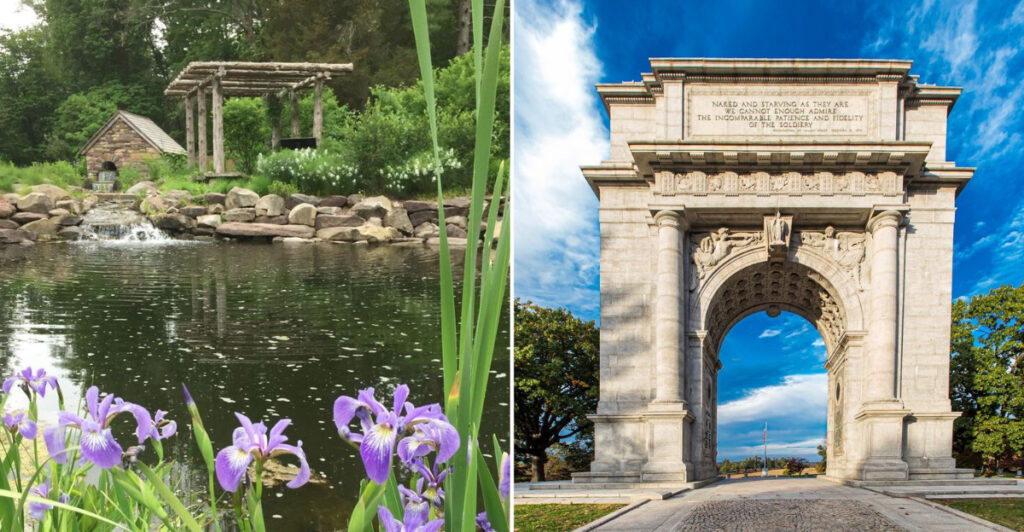
Pennsylvania is full of places where old stories and outdoor beauty meet in memorable ways. Across the state, visitors can walk through quiet gardens, explore historic battlefields, tour grand homes, wander through preserved villages, and stand beside rivers that helped shape American history. These sites give visitors a chance to connect with the past while also enjoying fresh air, trees, trails, flowers, peaceful grounds, and wide-open views. Some are tucked into quiet corners of the countryside, while others sit close to towns and cities, making them easy additions to a weekend outing or scenic road trip.
There is something especially rewarding about learning the story behind an old building or landscape and then seeing that history in person rather than simply reading about it. Families can explore together, students can turn a day trip into an informal history lesson, and photographers can find plenty of beautiful scenery along the way. For road trippers and history fans, these destinations offer a fun way to learn without feeling stuck inside a classroom. They also provide an opportunity to slow down, explore at your own pace, and appreciate how Pennsylvania’s natural landscapes have remained connected to its history for generations. Whether you are drawn to historic architecture, gardens in bloom, important landmarks, or simply a peaceful place with a story to tell, these Pennsylvania sites make it easy to combine history with time outdoors.
1. Ephrata Cloister (Ephrata)
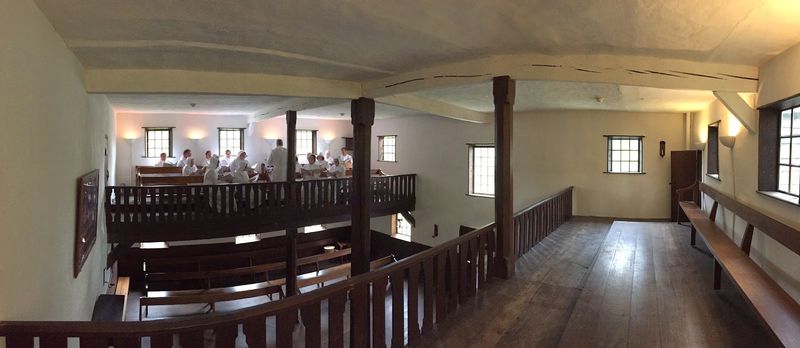
A quiet walk here can feel like stepping into a very different world.
The simple wooden buildings, narrow rooms, and peaceful grounds tell the story of a religious community that began in the 1700s.
At Ephrata Cloister, visitors learn about people who lived with strict daily routines, deep faith, and a strong focus on work, music, and printing.
The site is especially interesting because it shows how early settlers in Pennsylvania built communities based on both belief and survival.
Nature adds to the calm feeling of the place.
Trees, open lawns, and stone paths make it easy to slow down and imagine what life was like before modern noise filled daily life.
Plan time to tour the historic buildings and read the signs carefully.
Families may enjoy talking about how different school, sleep, food, and work would have been for the people who lived here.
Comfortable shoes are helpful because the grounds invite slow exploring.
A visit works well for anyone who enjoys quiet historic places, early American stories, and peaceful outdoor settings in Pennsylvania Dutch Country.
2. Old Bedford Village (Bedford)
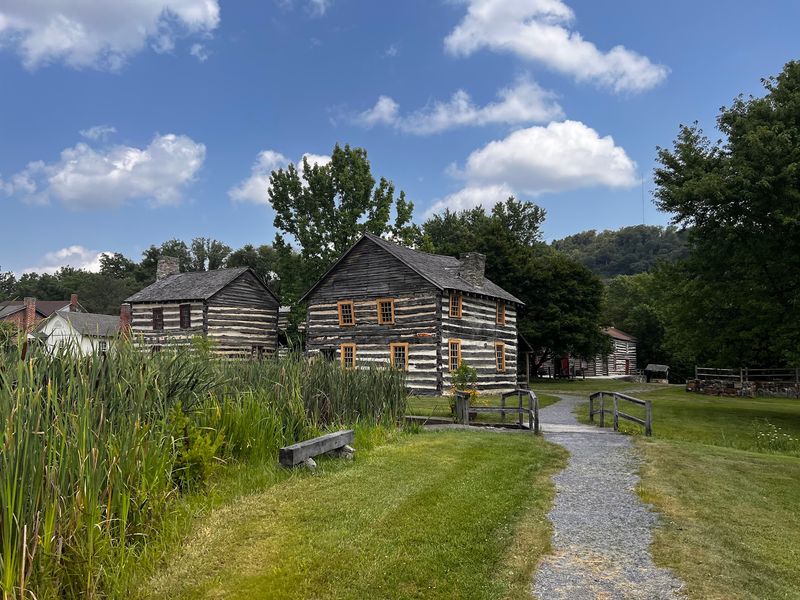
The creak of a wooden door or the ring of a blacksmith hammer makes this village feel alive.
Old Bedford Village brings early Pennsylvania history together in a hands-on outdoor setting.
Instead of seeing just one building, visitors can wander among cabins, shops, schools, and workspaces from different parts of the past.
The village shows how people cooked, traded, learned, built tools, and formed small communities along Pennsylvania roads and valleys.
The outdoor layout is a big part of the experience.
Paths connect the buildings, and the surrounding trees and hills help the village feel separate from modern life.
Living history events are especially helpful for younger visitors.
Costumed guides can make old skills easier to understand, whether they are spinning wool, shaping iron, or explaining frontier chores.
Check the schedule before visiting because special event days can add music, demonstrations, and seasonal activities.
Bring water, wear walking shoes, and give yourself enough time to move slowly from building to building.
Old Bedford Village is a strong choice for travelers who like history they can see, hear, and almost touch while still enjoying a pleasant day outdoors.
3. Washington Crossing Historic Park (Washington Crossing)
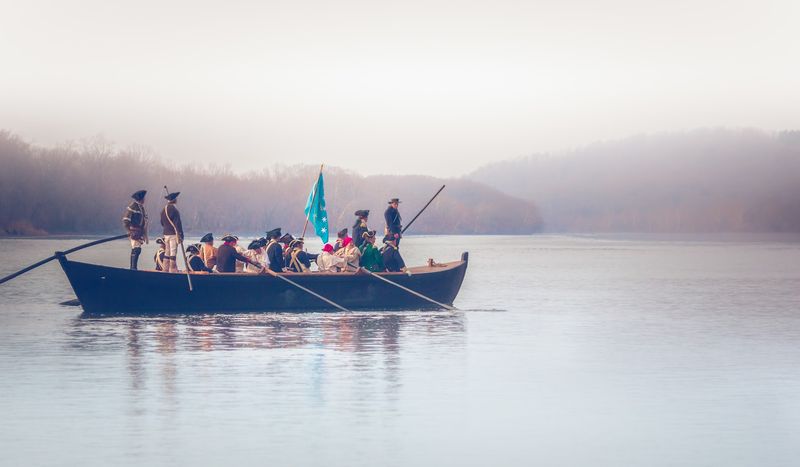
Cold river air gives this place much of its power.
Washington Crossing Historic Park marks the area where George Washington and his troops crossed the Delaware River before a key Revolutionary War victory.
The story is famous, but standing near the river makes it feel more real.
Visitors can picture soldiers facing ice, darkness, fear, and hope as they moved toward Trenton in 1776.
Historic buildings, exhibits, and special programs explain the crossing and the choices that shaped the war.
The park also includes open space, river views, and trails that make it more than a quick history stop.
Families may enjoy visiting during reenactment events, when boats, uniforms, and narration help bring the scene to life.
Even on a quiet day, the riverbank offers a strong sense of place.
Wear layers if visiting in winter, since the weather helps visitors understand the challenge faced by the army.
In warmer months, the park is pleasant for walking, photos, and learning at a relaxed pace.
Washington Crossing Historic Park connects national history with a beautiful Pennsylvania landscape, making it a meaningful stop for anyone curious about courage, risk, and the fight for independence.
4. Grey Towers National Historic Site (Milford)
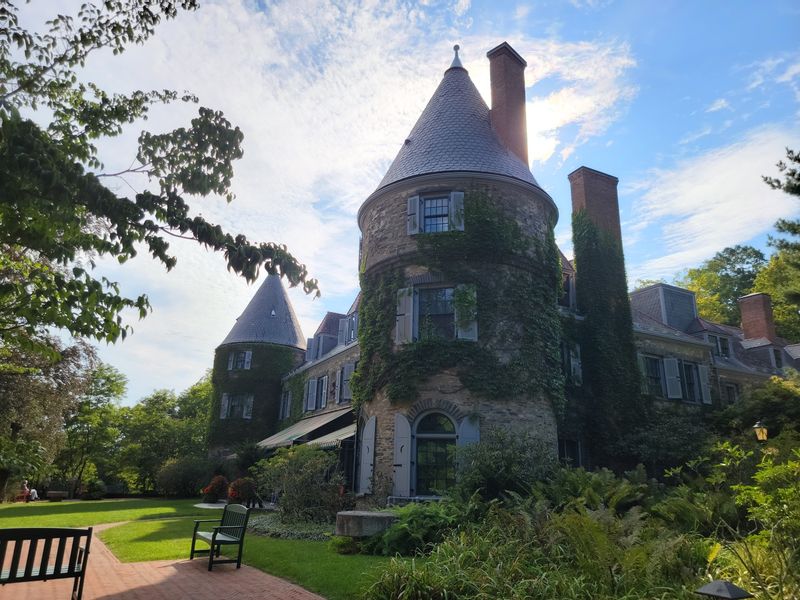
A stone mansion rising above the trees gives Grey Towers a storybook look.
Yet the real magic of this Milford site comes from its connection to conservation and America’s forests.
Grey Towers was the home of Gifford Pinchot, a Pennsylvania governor and an important leader in forest conservation.
His ideas helped shape how the United States protects and manages public lands.
The house itself is impressive, with castle-like walls, terraces, and carefully planned outdoor spaces.
Gardens, shaded paths, and forest views remind visitors that the land around the mansion matters just as much as the building.
Guided tours can help explain the Pinchot family, the design of the home, and the birth of modern forestry.
The grounds are also rewarding for people who simply want a peaceful walk in a historic setting.
Bring a camera, because the mix of stone architecture and green landscape is beautiful in many seasons.
Fall is especially popular, when the trees around Milford turn bright colors.
Grey Towers is a thoughtful stop for visitors who care about nature, leadership, and the choices people make to protect land for future generations.
It proves that history is not only about wars and dates, but also about forests, water, and wise planning.
5. Bowman’s Hill Wildflower Preserve (New Hope)
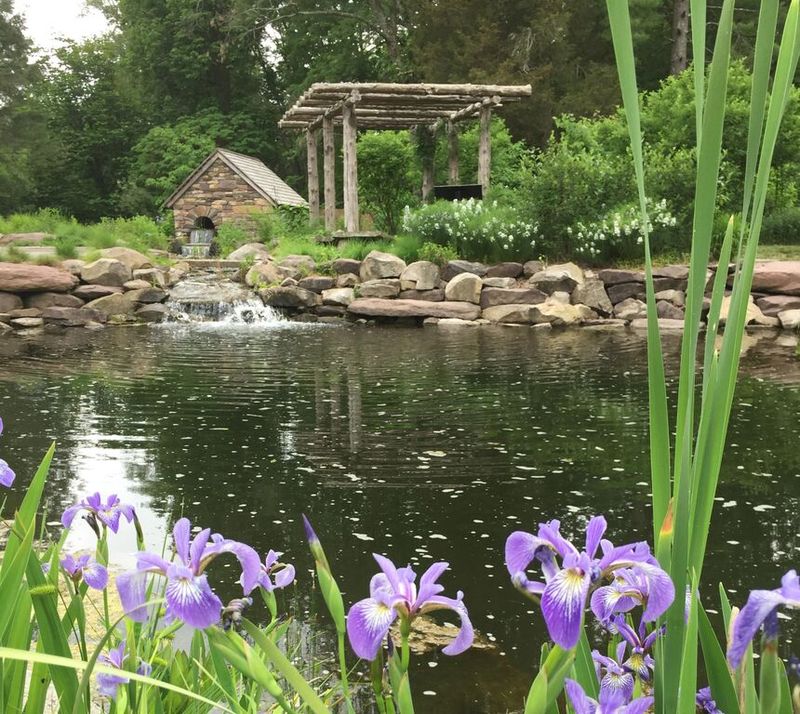
Color seems to pop from every corner during bloom season.
Bowman’s Hill Wildflower Preserve is a lovely place to see Pennsylvania’s native plants while learning how nature and history can share the same ground.
The preserve protects hundreds of native plant species, including wildflowers, ferns, shrubs, and trees.
Many visitors come for spring blooms, but each season has something different to notice.
Trails wind through woods, meadows, wetlands, and quiet garden areas.
Because the paths are peaceful and clearly connected to local ecology, the preserve is a useful place for families to learn plant names and habitats.
The nearby region also has deep Revolutionary War history, which makes the preserve a nice companion stop to Washington Crossing.
Together, they show how the Delaware River area holds both natural beauty and important American stories.
Bring comfortable shoes and allow time to walk slowly.
A field guide or plant app can make the visit more fun, especially for kids who like spotting details.
Visitors should stay on marked paths to protect delicate plants.
Bowman’s Hill Wildflower Preserve is best enjoyed with patient eyes, because some of its greatest treasures are small, quiet, and close to the ground.
6. Valley Forge National Historical Park (Valley Forge)
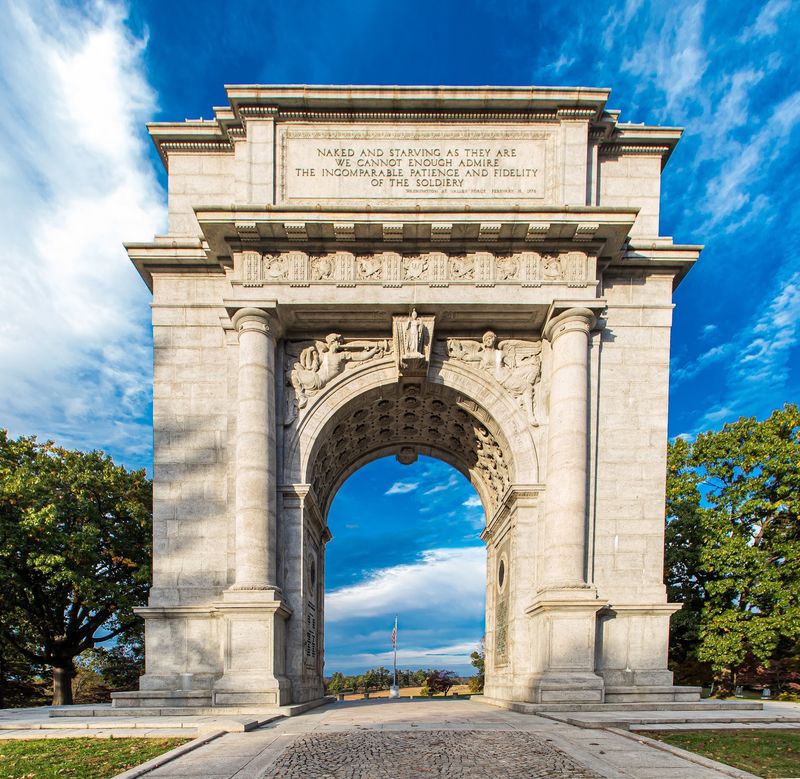
Wide fields can hold heavy stories.
Valley Forge National Historical Park is remembered as the winter camp where George Washington’s army faced hunger, cold, sickness, and uncertainty during the Revolutionary War.
Today, the park is calm and open, with meadows, wooded areas, monuments, and reconstructed huts.
Visitors can walk or drive through the landscape while learning how the army struggled and trained here in 1777 and 1778.
The visitor center is a smart first stop because it explains the main story in a clear way.
After that, trails and tour roads help connect important locations across the park.
One of the best parts of Valley Forge is how much space it offers.
People come to jog, bike, picnic, watch birds, and reflect beside memorials.
For families, the reconstructed huts are often the most memorable feature.
They make it easier to imagine soldiers living through a hard winter with limited supplies.
Bring water, sun protection, and comfortable shoes if you plan to explore beyond the main stops.
Valley Forge blends outdoor recreation with serious history, reminding visitors that perseverance often happens in ordinary fields, under difficult skies, one day at a time.
7. The Highlands Mansion and Gardens (Fort Washington)
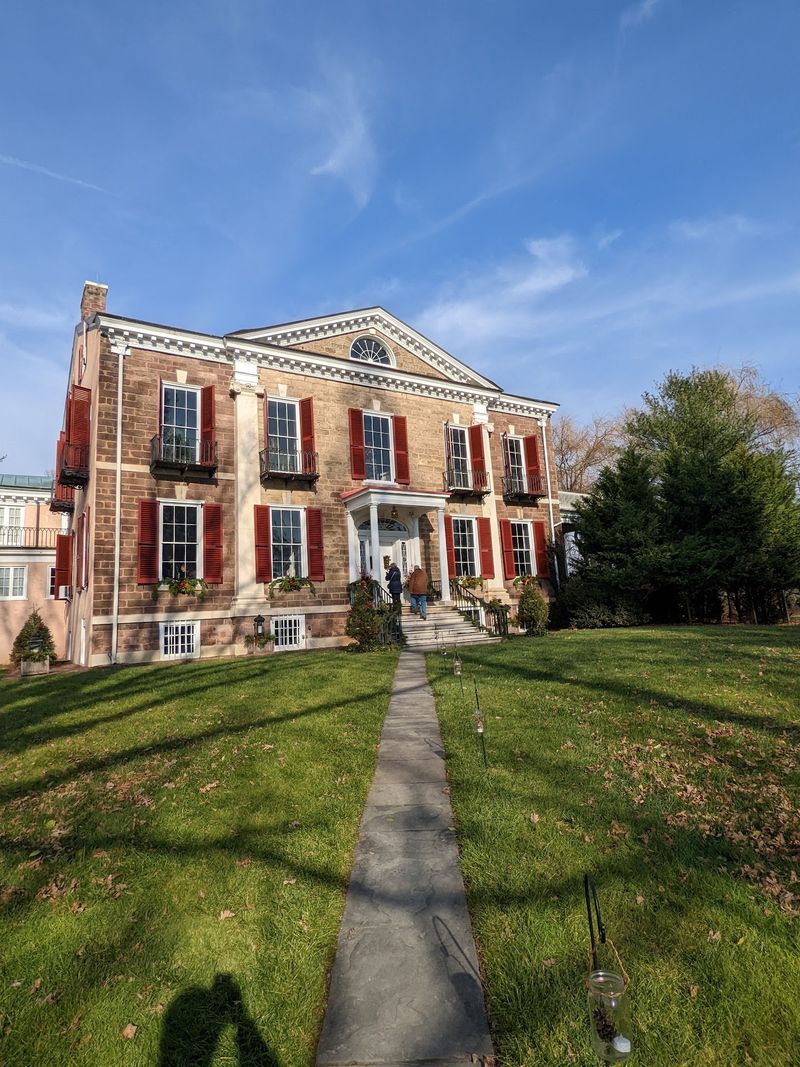
Some homes seem to whisper stories from every hallway.
The Highlands Mansion and Gardens in Fort Washington offers a graceful look at Pennsylvania life from the late 1700s and beyond.
The mansion is a fine example of historic architecture, but the gardens give the site extra charm.
Formal plantings, old trees, and quiet paths create a setting that feels both refined and relaxing.
Visitors can learn about the families who lived here and how homes like this reflected wealth, taste, labor, and changing times.
The site also helps people think about the connection between house design and the land around it.
A tour can reveal details that are easy to miss, such as room layouts, furnishings, and stories of daily life.
Outside, the gardens invite a slower kind of visit, where flowers, stonework, and shade become part of the history lesson.
This is a good stop for travelers who enjoy historic houses but also want fresh air.
It is especially pleasant in spring and summer, when the gardens feel full of life.
Check hours before going, since historic house access can vary.
The Highlands Mansion and Gardens offers a calm, elegant way to experience Pennsylvania’s past without rushing from one exhibit to another.
8. Gettysburg National Military Park (Gettysburg)
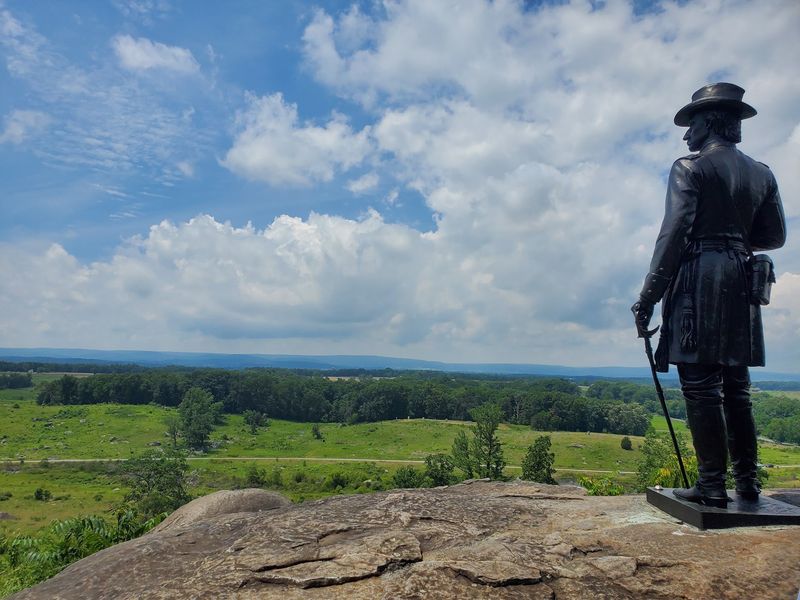
Few Pennsylvania landscapes feel as solemn as Gettysburg.
The fields, ridges, stone walls, and monuments mark the place where one of the Civil War’s most important battles took place in 1863.
Gettysburg National Military Park is large, so visitors should begin at the museum and visitor center.
The exhibits, film, and cyclorama help explain the battle before you head out to the roads and overlooks.
Across the battlefield, signs and monuments show where soldiers fought, marched, and fell.
Places like Little Round Top, Devil’s Den, and Pickett’s Charge help visitors understand the size and human cost of the battle.
Nature gives the park a quiet strength.
Open fields, wooded slopes, and long views make it easier to pause and think about the people who were here.
A guided tour, either with a licensed guide or audio program, can make the visit much clearer.
Without help, the battlefield can feel overwhelming because so much happened across so many acres.
Wear sturdy shoes and bring water if you plan to walk.
Gettysburg is not only a military site, but also a place of memory, reflection, and national meaning set within one of Pennsylvania’s most recognizable historic landscapes.
9. Bartram’s Garden (Philadelphia)
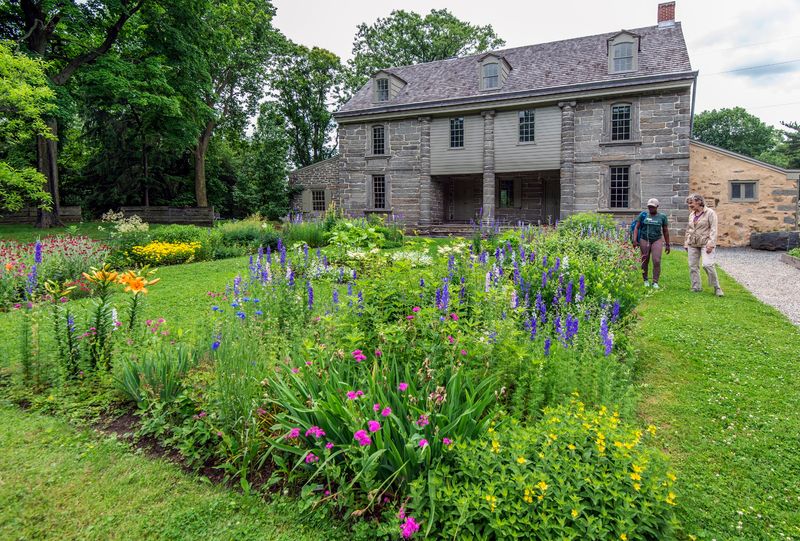
A garden inside a busy city can feel like a secret gift.
Bartram’s Garden in Philadelphia is the historic home and garden of John Bartram, an important early American botanist.
Bartram collected, studied, and shared plants during the 1700s.
His work connected science, gardening, exploration, and the natural world at a time when many people were trying to understand North America’s plants.
The site includes historic buildings, garden areas, meadow spaces, and river views along the Schuylkill.
It is a rare place where visitors can enjoy both Philadelphia history and outdoor calm.
Walking paths make it easy to explore at your own pace.
Depending on the season, you may see flowers, trees, birds, and community garden activity.
Bartram’s Garden is especially useful for families because it shows that history is not always found in battlefields or mansions.
Sometimes it grows in soil, seeds, and careful observation.
Visitors can pair the garden with other Philadelphia historic stops, but it deserves unhurried time of its own.
Bring a picnic, check for public programs, and enjoy how this green space keeps Pennsylvania’s scientific and natural history alive in the middle of the city.
10. Fallingwater (Mill Run)
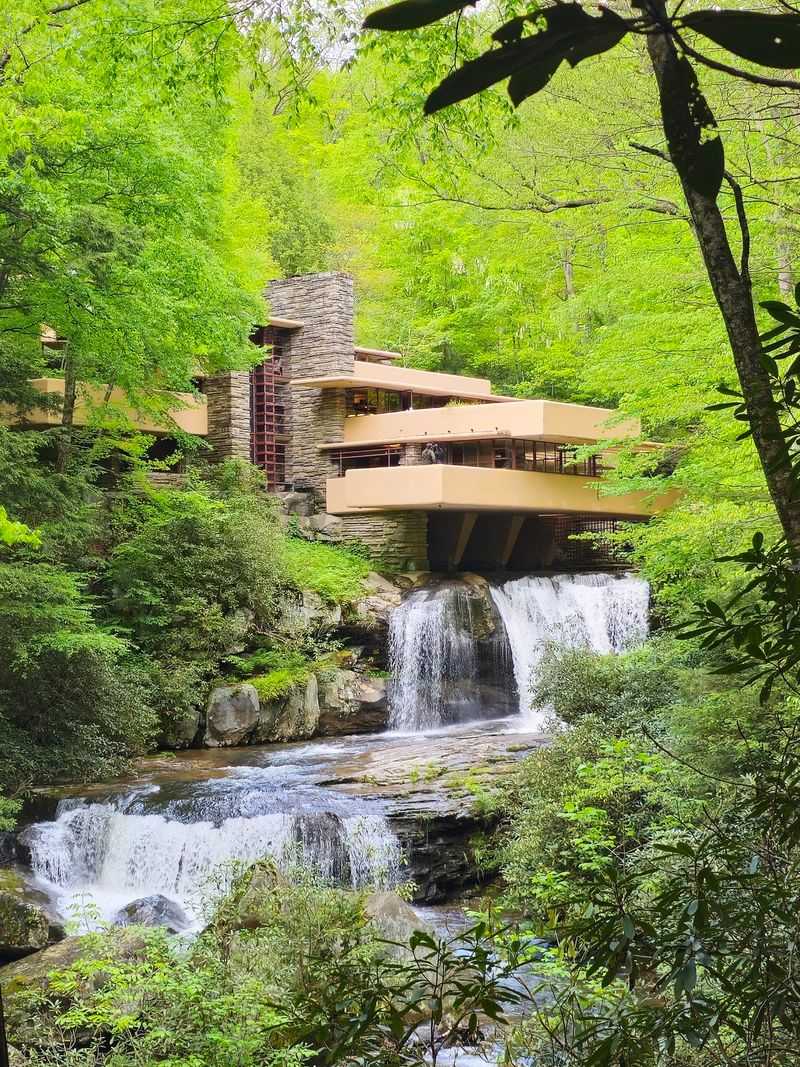
The sound of rushing water is part of the house itself.
Fallingwater, designed by Frank Lloyd Wright, is one of Pennsylvania’s most famous places where architecture and nature work together.
Built above a waterfall in the Laurel Highlands, the home seems to float over rock, stream, and forest.
Wright designed it so the building would feel connected to the land instead of separate from it.
Visitors can tour the house and see how stone, glass, terraces, and natural light shape each room.
The design encourages people to notice the waterfall, trees, and changing seasons from many angles.
The surrounding landscape is just as important as the structure.
Trails, wooded views, and the sound of Bear Run help explain why the house became a world-famous example of organic architecture.
Tickets often sell out, so planning ahead is wise.
Wear comfortable shoes, arrive early, and give yourself time to enjoy the grounds before or after the tour.
Fallingwater is a wonderful stop for people who love design, forests, photography, or unusual homes.
It shows how Pennsylvania’s natural beauty inspired a building that still surprises visitors many decades after it was created.
11. Asa Packer Mansion (Jim Thorpe)
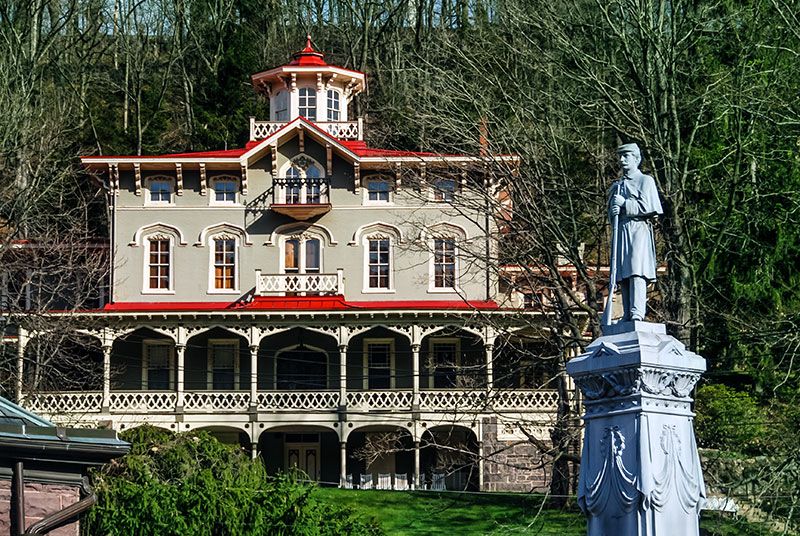
A hilltop mansion can say a lot about a town’s rise.
The Asa Packer Mansion in Jim Thorpe tells the story of industry, wealth, railroads, and family life in 19th-century Pennsylvania.
Asa Packer was a major figure in transportation and business, and his home reflects the success tied to coal and rail development.
The mansion’s rooms, woodwork, and furnishings help visitors picture the world of a powerful Pennsylvania family.
The setting adds another layer to the visit.
Jim Thorpe sits among steep hills, river scenery, and historic streets, making the mansion feel closely linked to the landscape around it.
A guided tour is the best way to understand the details inside the home.
Guides often point out original features and stories that make the rooms feel personal rather than distant.
After touring, spend time walking through Jim Thorpe.
The town’s old buildings, mountain views, and nearby trails make it easy to turn a house tour into a full day trip.
Comfortable shoes are helpful because the area includes slopes and steps.
The Asa Packer Mansion is ideal for visitors who enjoy grand homes, local history, and Pennsylvania towns where architecture and scenery create a strong sense of place.
12. Longwood Gardens (Kennett Square)
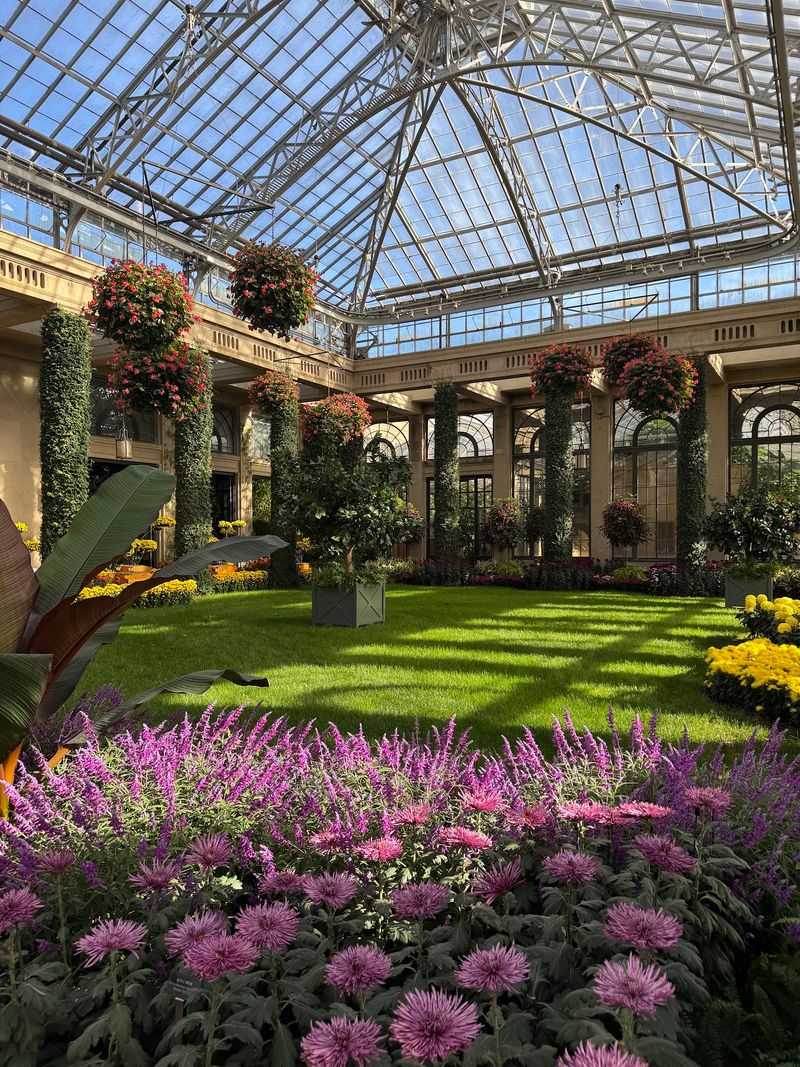
Fountains, flowers, and glowing glasshouses make Longwood Gardens feel almost theatrical.
Yet behind the beauty is a long story of land care, plant collecting, and public education in Pennsylvania.
Located in Kennett Square, Longwood grew from land once connected to farming and trees into one of the world’s great public gardens.
Its history is closely tied to Pierre S. du Pont, who helped shape the gardens into a place for learning and enjoyment.
Visitors can explore outdoor gardens, wooded paths, meadow areas, fountains, and large conservatories filled with plants from many climates.
Every season feels different, from spring bulbs to summer water displays and winter lights.
Longwood is large, so checking the map before walking helps.
Families may want to choose a few main areas instead of trying to see everything in one visit.
Special shows and seasonal events can be very popular, so tickets should be reserved early when possible.
Comfortable shoes are a must, and a camera is hard to resist.
Longwood Gardens brings history and nature together through beauty, planning, and care.
It is a joyful Pennsylvania landmark where visitors can learn about plants while enjoying color, design, music, water, and peaceful outdoor spaces.
Share this story