Texas has some of the most beautiful churches you’ll ever see, and many of them have been standing for hundreds of years. From Spanish missions built by early settlers to grand cathedrals with towering spires, these places of worship tell stories about the people who built them and the communities they serve. Whether you’re interested in history, architecture, or just appreciate stunning buildings, these churches are worth a stop.
Each one has its own personality and charm that makes it special.
1. Ysleta Mission (El Paso)
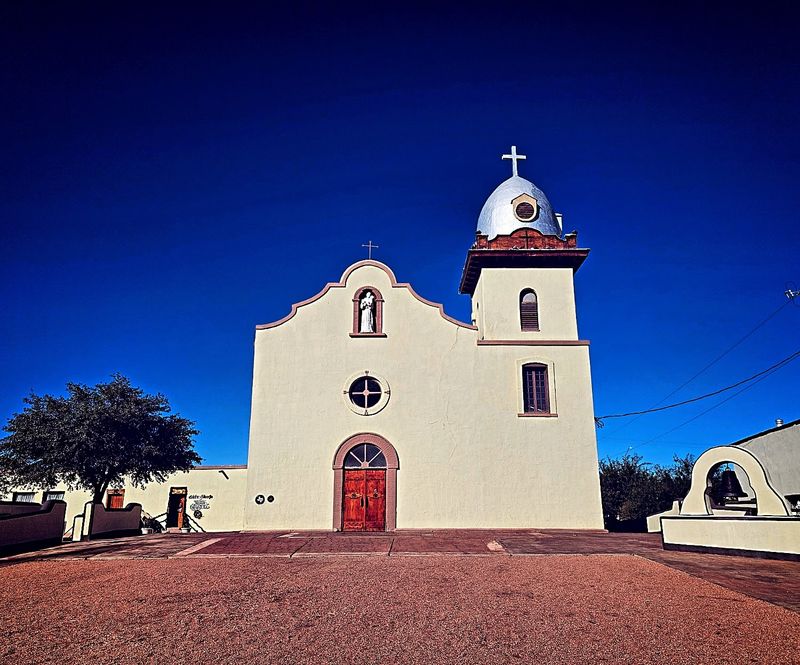
Built around 1682, this place holds the title of one of the oldest continuously active missions in Texas. The walls have witnessed centuries of prayers, celebrations, and community gatherings. Walking up to the entrance, you’ll notice the thick adobe walls that have kept the interior cool through countless scorching El Paso summers.
The mission started when Tigua Indians and Spanish settlers fled south after the Pueblo Revolt in New Mexico. They brought their faith and traditions with them, creating a new home in what would become Texas. The building you see today isn’t the original structure since floods damaged earlier versions, but it still carries that authentic colonial spirit.
Inside, the atmosphere feels peaceful and timeless. Simple wooden beams stretch across the ceiling, and religious art decorates the walls. The church remains an active parish, so you might hear Spanish Mass being celebrated or see families gathering for special occasions.
What makes this mission particularly interesting is how it blends Native American and Spanish influences. The Tigua community still lives nearby and maintains strong connections to the mission. Their cultural center sits just down the road, where you can learn more about their history and traditions.
The exterior features a classic bell tower that rises against the desert sky. White-washed walls reflect the intense West Texas sun, creating a striking contrast with the surrounding landscape. A small courtyard offers a quiet spot to sit and imagine what life was like when this mission served as the heart of a frontier community.
Visit during golden hour when the setting sun bathes everything in warm light, and you’ll understand why photographers love this spot.
2. Saint Mary Cathedral (Austin)
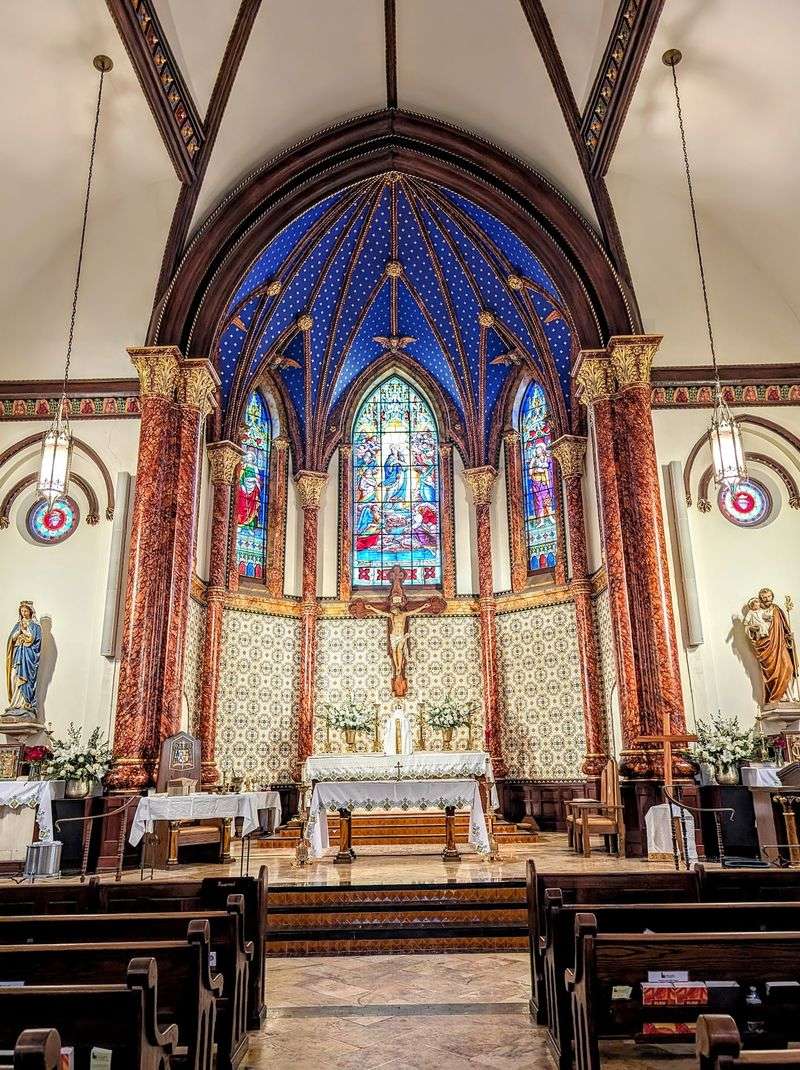
Right in the heart of downtown Austin stands a Gothic Revival masterpiece that looks like it belongs in a European city. The red brick exterior and limestone trim create a dramatic presence among the modern office buildings and condos. Twin spires reach 180 feet into the sky, making this cathedral visible from blocks away.
Construction began in 1872, and the cathedral has served as the spiritual center for Austin’s Catholic community ever since. The architecture draws inspiration from medieval European churches, with pointed arches, ribbed vaults, and stunning stained glass windows. German and Irish immigrants who settled in Austin brought their architectural traditions with them, and this building reflects their craftsmanship.
Step inside and your eyes will immediately go to the vaulted ceiling that seems to lift your gaze heavenward. Rows of wooden pews lead toward an ornate altar, and colorful light streams through stained glass windows depicting biblical scenes. The acoustics are incredible, which makes sense since the cathedral hosts concerts and special musical performances throughout the year.
The building underwent major restoration work in the 1970s after years of wear and tear. Workers carefully preserved original details while updating structural elements to ensure the cathedral would stand for generations to come. They even discovered hidden architectural features during the renovation that had been covered up over the decades.
Located on Brazos Street, the cathedral sits in one of Austin’s oldest neighborhoods. You can easily combine a visit here with exploring other historic downtown sites. The cathedral remains an active parish with daily masses, so check the schedule if you want to experience a service.
The combination of historic architecture and vibrant city life surrounding it creates a fascinating contrast that captures Austin’s unique character perfectly.
3. Mission San José (San Antonio)
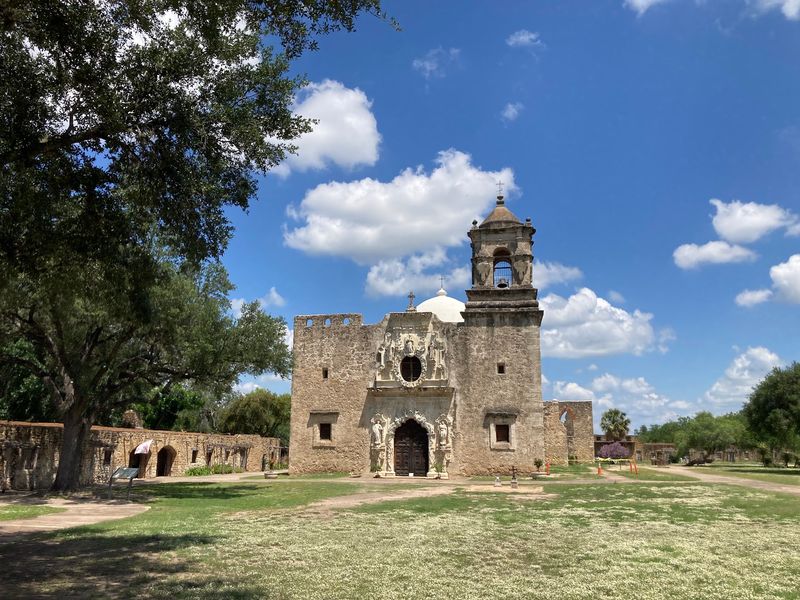
Known as the Queen of the Missions, this sprawling complex represents Spanish colonial architecture at its finest. The famous Rose Window carved into the sacristy wall has become one of the most photographed features of any Texas mission. Legend says a sculptor named Pedro Huizar created it in memory of his lost love, though historians debate whether that romantic story is actually true.
Founded in 1720, the mission once functioned as a self-contained community where missionaries taught Native Americans farming, ranching, and various trades. At its peak, hundreds of people lived within the mission walls, growing crops, raising livestock, and creating goods to trade. The compound included workshops, granary, living quarters, and defensive walls to protect against attacks.
The church itself features elaborate baroque details that contrast beautifully with the simple limestone construction. Intricate carvings decorate the doorways and windows, showing off the skill of craftsmen who worked here centuries ago. The bell tower still stands tall, and you can imagine how its bells once called people to prayer across the surrounding fields.
Today, the mission is part of San Antonio Missions National Historical Park, which means it’s exceptionally well preserved and maintained. Park rangers offer tours that explain the history and daily life of mission residents. You can wander through the compound at your own pace, exploring the church, convento ruins, and reconstructed Native American dwellings.
The mission sits along the Mission Trail, making it easy to visit several historic sites in one trip. Bring comfortable walking shoes because the grounds are extensive, with plenty of shaded areas perfect for taking a break. The combination of stunning architecture, fascinating history, and peaceful atmosphere makes this mission absolutely worth the stop, even if you’ve seen pictures a hundred times before.
4. St. Mary Catholic Church (High Hill)
Out in the rolling countryside between Austin and Houston, this little church surprises every first-time visitor who steps through its doors. From the outside, it looks like a simple white country church with a tall steeple. But inside?
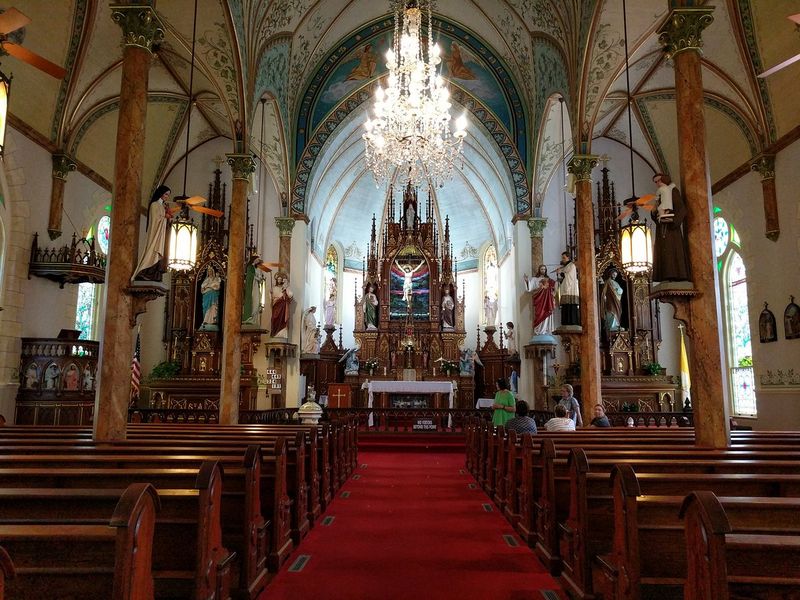
You’ll find yourself surrounded by incredibly detailed religious frescoes covering every inch of the walls and ceiling.
German and Czech immigrants built this church in the 1870s, and they brought Old World artistic traditions with them. They wanted their place of worship to reflect the beautiful churches they’d left behind in Europe. Local artists spent years painting biblical scenes, decorative patterns, and trompe l’oeil architectural details that make the small interior feel grand and uplifting.
The ceiling features a stunning blue sky with clouds and angels, creating the illusion that heaven itself opens above the pews. Columns appear to support arches, though they’re actually flat paintings on the walls. Every surface tells a story or displays intricate patterns in rich colors that have been carefully restored over the years.
This church belongs to a group known as the Painted Churches of Texas, a collection of small rural Catholic churches decorated with similar elaborate artwork. St. Mary’s stands out even among this impressive group for the quality and completeness of its interior decoration. The building remains an active parish, serving the small farming community that surrounds it.
Getting here requires driving through scenic Texas countryside, past farms and small towns that seem frozen in time. The church sits on a hill (hence the town name) with views of the surrounding landscape. Plan your visit during the week when the church is typically open, or check the schedule for Sunday Mass.
The contrast between the humble exterior and breathtaking interior creates an unforgettable moment that perfectly captures the devotion and artistry of Texas’s immigrant communities.
5. Presidio Chapel of San Elizario (San Elizario)
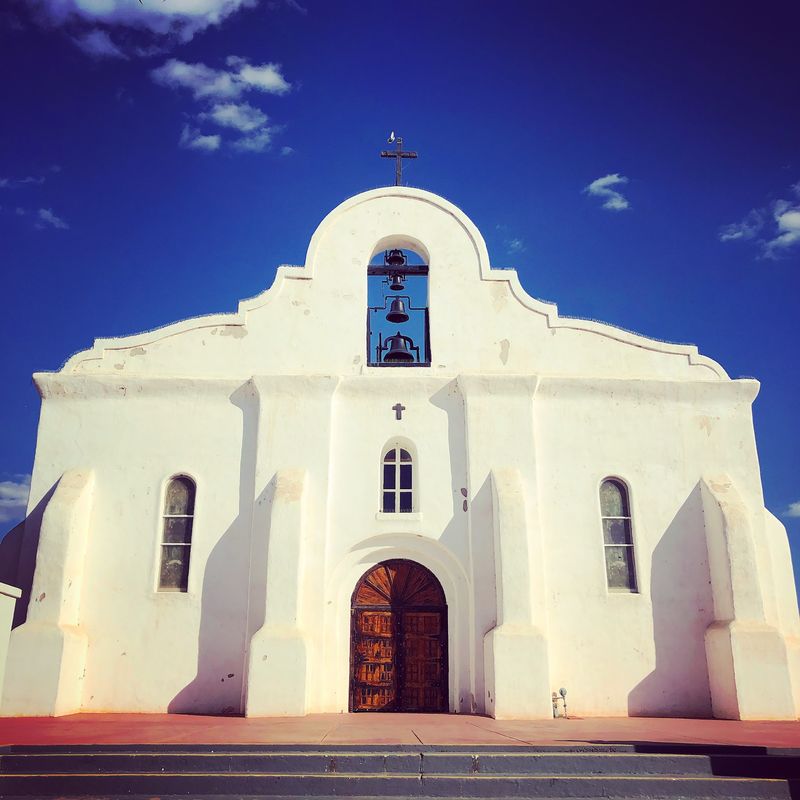
This unassuming chapel in a quiet border town has witnessed more Texas history than most buildings twice its size. The original structure dates back to the 1770s when Spanish soldiers built a presidio to protect settlers and missionaries in the area. The chapel served as the spiritual heart of that military outpost, and it still anchors the town’s historic plaza today.
San Elizario played an important role in early Texas history, serving as the seat of El Paso County before the railroad changed everything. The chapel hosted significant events, including the signing of important documents and community gatherings that shaped the region’s development. During the Salt War of 1877, the town became the center of violent conflict over salt deposits, and the chapel provided sanctuary for frightened residents.
The current building is actually a reconstruction, since the original chapel deteriorated over time and eventually collapsed. Community members worked tirelessly to rebuild it using historical records and remaining foundations as guides. They wanted to preserve this important piece of their heritage for future generations.
The result is a faithful recreation that captures the simple elegance of Spanish colonial religious architecture.
White-washed walls and a modest bell tower give the chapel a peaceful, timeless appearance. The interior maintains that same simplicity, with wooden beams, religious statuary, and traditional decorations. Unlike some of the grander missions, this chapel feels intimate and personal, like a neighborhood church where everyone knows each other.
The surrounding plaza has been beautifully restored, with historic buildings housing small museums, shops, and restaurants. You can easily spend an afternoon exploring the area and learning about border history that often gets overlooked. The chapel remains active, hosting regular services for the local community.
Visit during one of the town’s festivals when the plaza comes alive with music, food, and celebrations that honor the area’s rich cultural heritage.
6. St. Joseph Catholic Church (San Antonio)
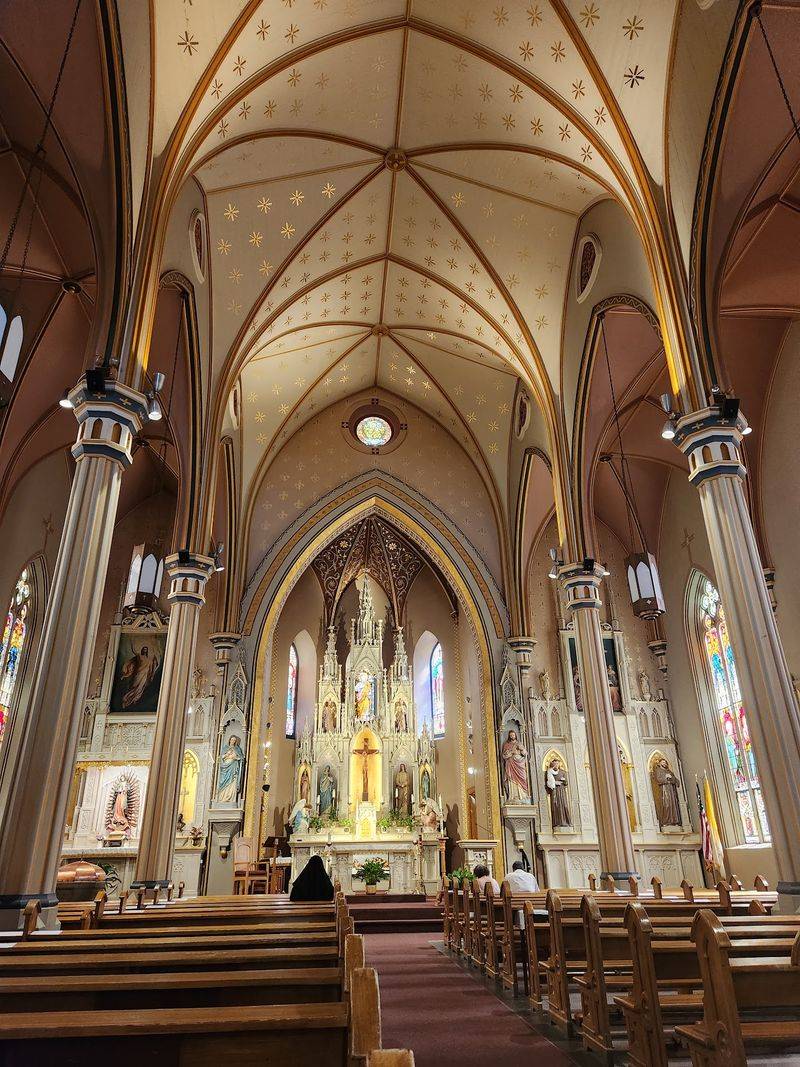
German immigrants founded this parish in 1868, creating a spiritual home that reflected their cultural traditions and architectural preferences. The church they built features distinctive twin steeples that rise above the surrounding neighborhood, announcing its presence from blocks away. Red brick construction and Gothic Revival details give it a solid, enduring appearance that has weathered more than 150 years of Texas weather.
The neighborhood around the church, known as the King William Historic District, was once San Antonio’s most fashionable area. Wealthy German merchants built elaborate Victorian homes along tree-lined streets, and St. Joseph’s served as their parish church. Today, the district remains one of San Antonio’s most charming neighborhoods, with beautifully preserved historic homes and the church still standing as a centerpiece.
Inside, you’ll find traditional Catholic church architecture with high ceilings, stained glass windows, and carved wooden details. The sanctuary creates a sense of reverence and peace, with natural light filtering through colored glass to create shifting patterns on the pews and floor. Original features have been carefully maintained through multiple restoration projects over the decades.
The church has adapted to serve changing communities while maintaining its historic character. It now offers services in both English and Spanish, reflecting San Antonio’s diverse population. The parish remains active and engaged with neighborhood life, hosting community events and maintaining its role as a gathering place for worship and celebration.
Located just south of downtown, the church is easy to reach and makes a perfect stop when exploring the King William area. You can walk through the historic district, admiring the Victorian architecture, then visit the church to see how German Catholic traditions shaped San Antonio’s cultural landscape. The combination of beautiful architecture, rich history, and continuing community connection makes this church more than just a historic building.
It represents the enduring faith and cultural pride of the German immigrants who helped build San Antonio into the city it is today.
7. Mission Concepción (San Antonio)
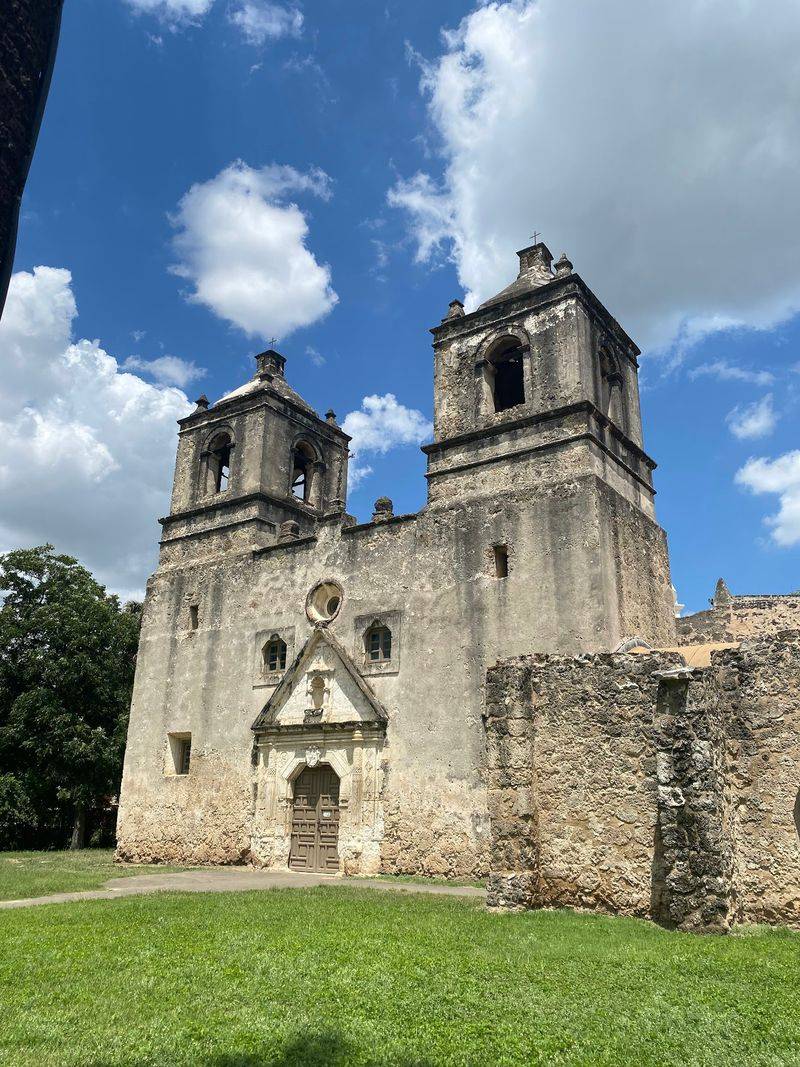
Among San Antonio’s famous missions, this one stands out for retaining its original appearance better than any other. The stone walls have never been plastered over, giving you an authentic view of 18th-century construction techniques. Two bell towers flank the entrance, and a small dome rises above the crossing, creating a distinctive silhouette that has remained unchanged since the 1750s.
Established in 1716 at a different location, the mission moved to its current site in 1731. Franciscan missionaries and Native American converts built the stone church you see today between 1740 and 1755. They quarried limestone from nearby deposits and shaped each block by hand, creating walls several feet thick that provide natural insulation from Texas heat.
The church interior once blazed with colorful frescoes covering the walls and ceiling, though most have faded over the centuries. Restoration experts have uncovered traces of the original artwork, including geometric patterns and religious symbols painted directly onto the plaster. Even in their faded state, these remnants hint at how vibrant and beautiful the church must have looked when newly completed.
Mission Concepción functioned as a complete community where missionaries taught agriculture, ranching, and various trades to Native Americans who chose to live there. The compound included living quarters, workshops, and defensive structures, though only the church and convento remain standing today. Archaeological work continues to uncover artifacts and foundations that reveal more about daily life at the mission.
As part of San Antonio Missions National Historical Park, the site is well maintained and offers excellent interpretive programs. Park rangers provide tours that bring the mission’s history to life, explaining how it functioned and why it mattered to Spanish colonial efforts in Texas. The church still holds regular Catholic services, maintaining an unbroken tradition of worship that spans nearly three centuries.
Standing in the church, surrounded by walls that have witnessed so much history, creates a powerful connection to Texas’s Spanish colonial past.
8. 1859 St. Joseph’s Church (Galveston)
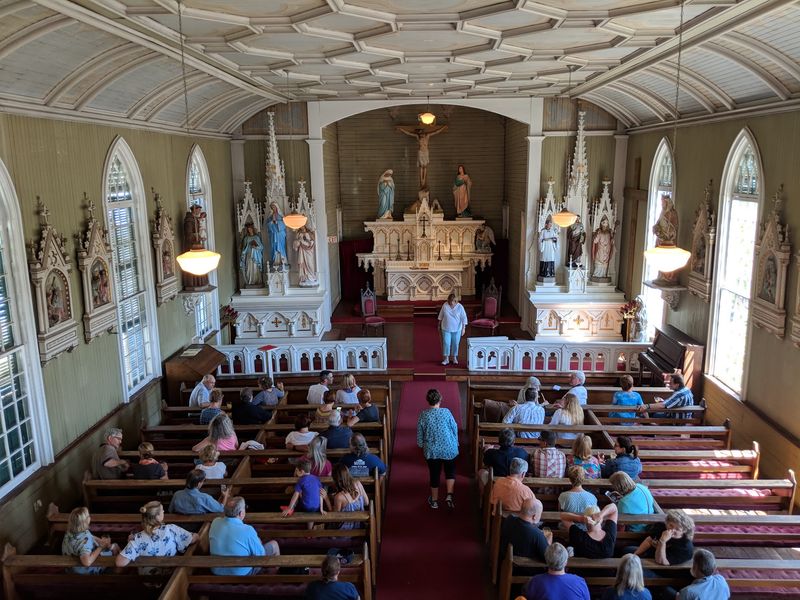
Galveston’s oldest standing church building has survived hurricanes, fires, and the passage of time to remain a beloved landmark in the historic district. German Catholic immigrants built this Gothic Revival structure during Galveston’s golden age when the island city served as Texas’s largest and most prosperous port. The tall spire that pierces the sky became a navigation landmark for ships approaching the harbor.
The church’s construction reflects the wealth and ambition of Galveston’s 19th-century German community. They hired skilled craftsmen to create a building that would rival churches back in Europe, using the finest materials they could obtain. The result showcases excellent stonework, beautiful proportions, and architectural details that demonstrate real artistry.
When the devastating 1900 hurricane struck Galveston, killing thousands and destroying much of the city, St. Joseph’s survived with relatively minor damage. The sturdy construction and elevated location helped it weather the storm that leveled so many other buildings. In the disaster’s aftermath, the church served as a refuge and gathering place for survivors, cementing its importance to the community.
The interior features traditional Catholic church architecture with wooden pews, stained glass windows, and religious artwork. High ceilings create a sense of space and grandeur, while the arrangement of pews and altar follows classic liturgical design. Restoration work over the years has preserved original features while updating systems to keep the building functional.
Located in Galveston’s East End Historic District, the church sits among beautifully restored Victorian homes and other historic buildings. You can easily combine a visit here with exploring the neighborhood’s architecture and maritime history. The church remains an active parish, serving both the local Catholic community and visitors who come to appreciate its historical and architectural significance.
Walking around the exterior, you’ll notice details like pointed arch windows, buttresses, and decorative stonework that make Gothic Revival architecture so distinctive. This church represents not just religious faith but also the determination of immigrants who built lasting institutions in their new Texas home.
9. St. Anthony Cathedral Basilica (Beaumont)
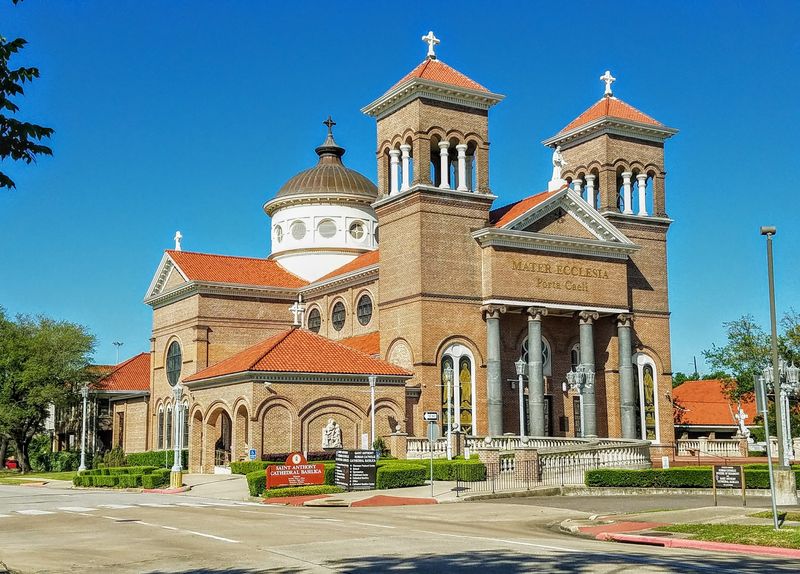
This stunning cathedral rises from downtown Beaumont like a vision of European grandeur transplanted to Southeast Texas. Built between 1903 and 1907, it reflects the prosperity that oil brought to the region following the Spindletop gusher. Local Catholics wanted a cathedral worthy of their growing community, and they spared no expense in creating this architectural masterpiece.
The exterior features elaborate Romanesque Revival details with touches of Byzantine influence. Twin towers frame the entrance, and the facade displays intricate stone carvings, arched windows, and decorative elements that reward close inspection. The building materials include brick, stone, and terra cotta, all combined to create rich textures and colors.
Inside, the cathedral absolutely dazzles visitors with its ornate decoration. The nave stretches toward a magnificent altar area, with rows of columns supporting arched ceilings. Stained glass windows imported from Europe fill the space with colored light, and religious artwork adorns every surface.
The attention to detail is extraordinary, from carved wooden elements to painted designs that cover walls and ceilings.
In 2006, the Vatican elevated the cathedral to the status of minor basilica, recognizing its architectural and historical significance. This honor places it among a select group of churches worldwide that have earned this distinction. The designation acknowledges not just the building’s beauty but also its importance to the Catholic community it serves.
The cathedral underwent extensive restoration in the 1980s when workers discovered the building needed major structural repairs. They carefully preserved original features while reinforcing foundations and updating systems. The project took years and cost millions, but it ensured this treasure would survive for future generations.
Located in downtown Beaumont, the cathedral anchors a historic district that includes other notable buildings from the oil boom era. Free tours are available, and the cathedral welcomes visitors who want to appreciate its architecture and history. Whether you’re religious or simply appreciate beautiful buildings, this cathedral delivers an unforgettable experience that showcases the ambition and faith of early 20th-century Texas Catholics.
10. St. David’s Episcopal Church (Austin)
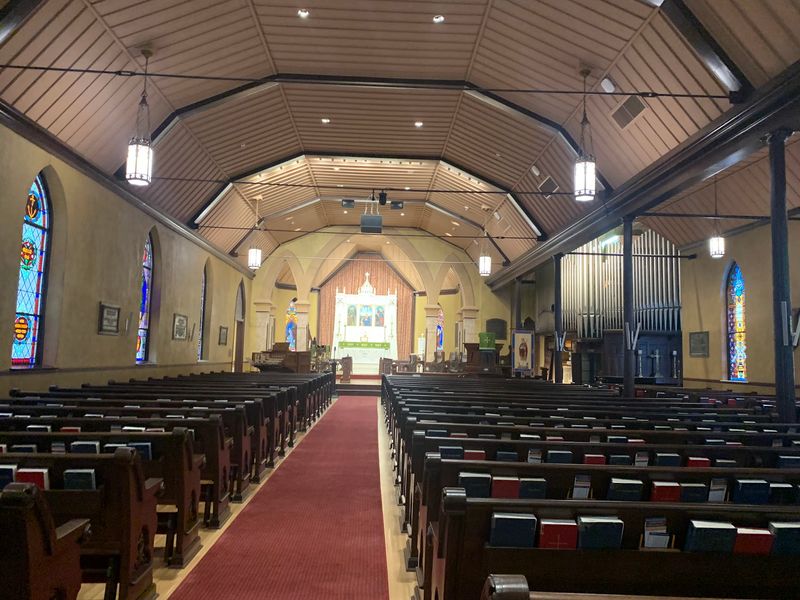
Austin’s oldest Episcopal congregation has worshiped in this beautiful Gothic Revival building since 1870. The church sits on land that was part of the original city plan, donated specifically for religious purposes. Cream-colored limestone quarried from nearby hills gives the exterior a warm glow, especially when late afternoon sun hits the walls.
The building’s design follows traditional English parish church architecture, with a steep roof, pointed arch windows, and a bell tower that rises above the entrance. Inside, exposed wooden beams span the ceiling, and handsome wooden pews lead toward a simple but elegant altar area. Stained glass windows depict religious scenes and memorial dedications, many dating back to the church’s early years.
What makes St. David’s particularly special is how it has maintained its historic character while remaining an active, vibrant congregation. The church hasn’t been turned into a museum or event venue. Real people gather here every Sunday for worship, continuing traditions that began more than 150 years ago.
The parish plays an active role in Austin’s civic life, hosting community programs and maintaining its commitment to service.
The church grounds include a small cemetery where some of Austin’s earliest settlers are buried. Walking among the old headstones provides a tangible connection to the people who built this city when it was still a rough frontier town. The combination of church and cemetery creates a peaceful oasis in the middle of bustling downtown.
Located just blocks from the State Capitol, St. David’s occupies one of Austin’s most historic corners. The surrounding neighborhood has changed dramatically over the decades, with modern high-rises replacing Victorian homes, but the church remains a constant presence. You can visit during the week when the building is often open for prayer and quiet reflection.
The church also hosts concerts and special events that showcase its excellent acoustics. Standing in this space, you’ll feel the weight of history and the continuity of faith that has sustained this congregation through wars, economic booms and busts, and the dramatic transformation of Austin from small capital city to booming tech hub.
11. Mission San Juan (San Antonio)
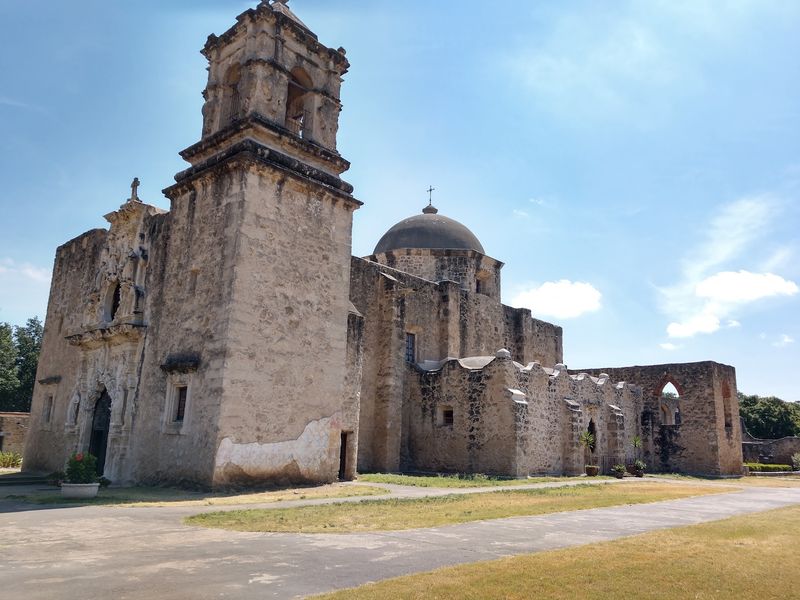
Less visited than some of its sister missions, this site offers a quieter, more contemplative experience. The church and surrounding grounds maintain an authentic feeling of what mission life might have been like centuries ago. Trees shade the compound, birds sing in the branches, and you can actually hear yourself think without competing with crowds of tourists.
Founded in 1716 at a different location, the mission relocated to its current site along the San Antonio River in 1731. The Franciscan missionaries who ran it specialized in teaching agriculture and irrigation techniques. The acequia (irrigation ditch) they built still carries water today, making it one of the oldest continuously operating water systems in the United States.
The church itself presents a simpler appearance than the elaborate Mission San José, but it possesses its own quiet beauty. The facade features a modest bell tower and arched entrance, while the interior maintains traditional mission church architecture with exposed beams and whitewashed walls. Recent restoration work has preserved original features while making the building structurally sound.
Mission San Juan once functioned as a thriving agricultural community. Residents grew corn, beans, squash, and other crops using irrigation systems that made farming possible in the semi-arid climate. They also raised livestock and produced goods for trade with other missions and settlements.
Archaeological work has uncovered foundations of workshops, living quarters, and other structures that reveal how the mission operated.
The mission sits within San Antonio Missions National Historical Park, but its location farther south means it receives fewer visitors than the others. This makes it perfect for people who want to experience mission history without fighting crowds. You can walk the grounds at your own pace, explore the church interior, and follow trails along the river.
Park rangers offer programs and tours that explain the mission’s history and significance. The peaceful atmosphere and well-preserved architecture make this mission a hidden gem that rewards those who make the effort to visit it.
12. San Fernando Cathedral (San Antonio)
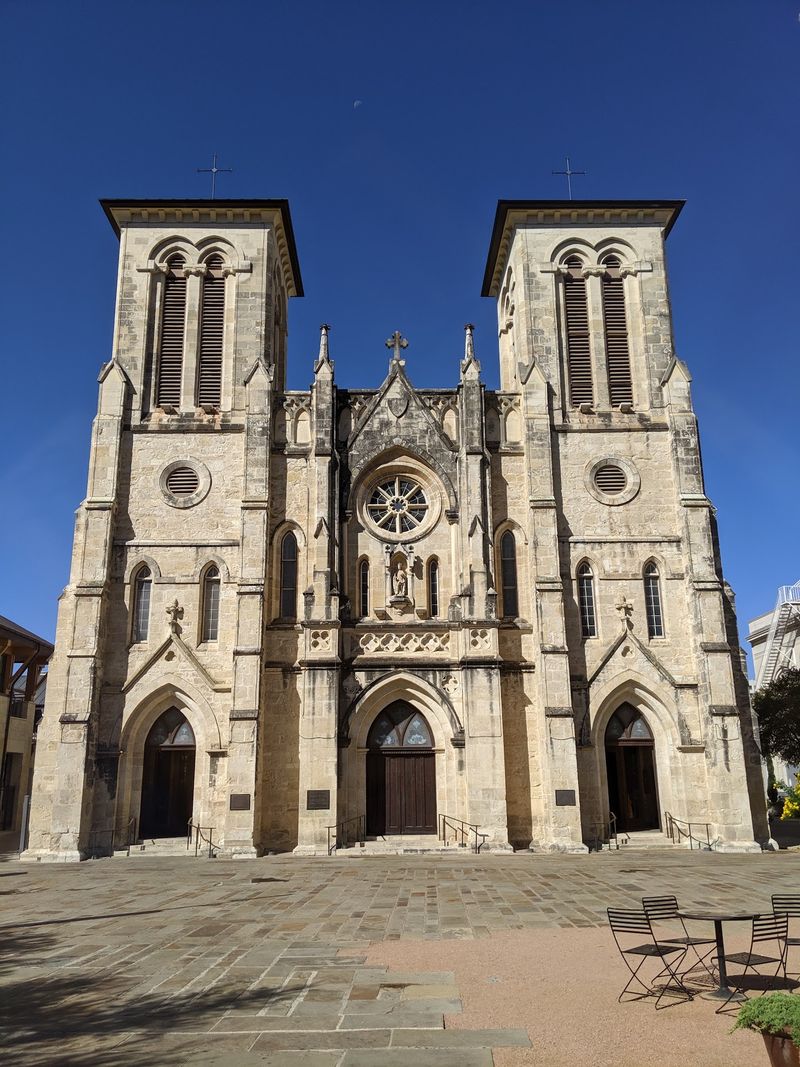
Standing on Main Plaza since 1738, this cathedral holds the distinction of being the oldest continuously functioning religious community in Texas. The building you see today actually combines the original church with a Gothic Revival addition built in the 1860s, creating an interesting architectural hybrid. The older section features simple Spanish colonial design, while the newer portion displays elaborate Victorian Gothic details.
The cathedral witnessed some of the most dramatic moments in Texas history. During the 1836 siege of the Alamo, Mexican General Santa Anna used the church tower to fly a blood-red flag signaling no quarter would be given to defenders. After the battle, some historians believe the remains of Alamo defenders were brought here, though this claim remains disputed and controversial.
Inside, the cathedral impresses with its size and decoration. The nave stretches toward an ornate altar area, and religious artwork adorns the walls. Stained glass windows cast colored light across the pews, and carved details demonstrate the craftsmanship of multiple generations of artisans.
The cathedral underwent major restoration in recent decades, revealing original features that had been covered or modified over the years.
One of the cathedral’s most popular features is the nightly light show projected onto the interior walls and ceiling. This modern addition uses advanced technology to tell the story of San Antonio’s history through images and narration. The show has become a major tourist attraction, drawing crowds who fill the pews to watch the spectacular display.
The cathedral remains the seat of the Archdiocese of San Antonio and hosts regular services in both English and Spanish. Its location on Main Plaza places it at the heart of downtown, surrounded by historic buildings, restaurants, and other attractions. You can easily visit the cathedral as part of exploring San Antonio’s historic center.
The combination of genuine historical significance, beautiful architecture, and continuing religious function makes this cathedral a living monument to San Antonio’s past and present. Whether you come for the history, the architecture, or the light show, you’ll leave with a deeper appreciation for this remarkable building’s role in Texas history.
Share this story