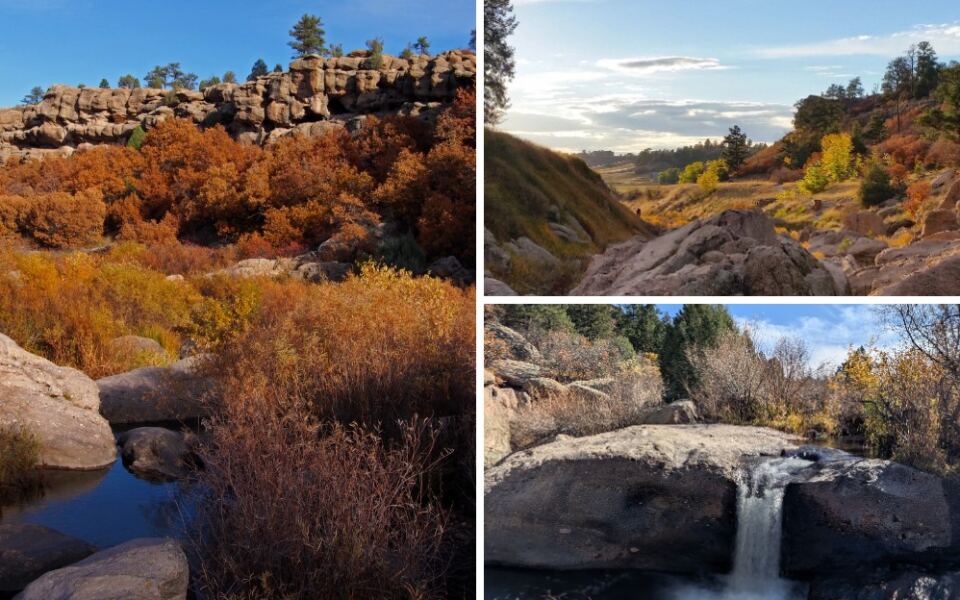
Most Front Range hikers assume a real canyon means a long drive up I-70 and a parking lot fight at the trailhead. A quiet corner of Douglas County proves that idea wrong. Here, a creek has carved a rocky gorge into the edge of the plains, and a full loop of about 4.6 miles packs in rimrock cliffs, boulder-filled ledges, a small waterfall and the broken remains of an old dam.
The trails range from paved paths built for strollers to steep climbs that will get your heart working. Turkey vultures circle overhead, birds fill the scrub, and there is history around nearly every bend. Better yet, the drive is short for anyone south of Aurora.
Keep reading to learn which side to visit first, when to beat the heat, and why locals keep coming back with their kids and grandkids.
1. A Canyon Tucked Into the Plains
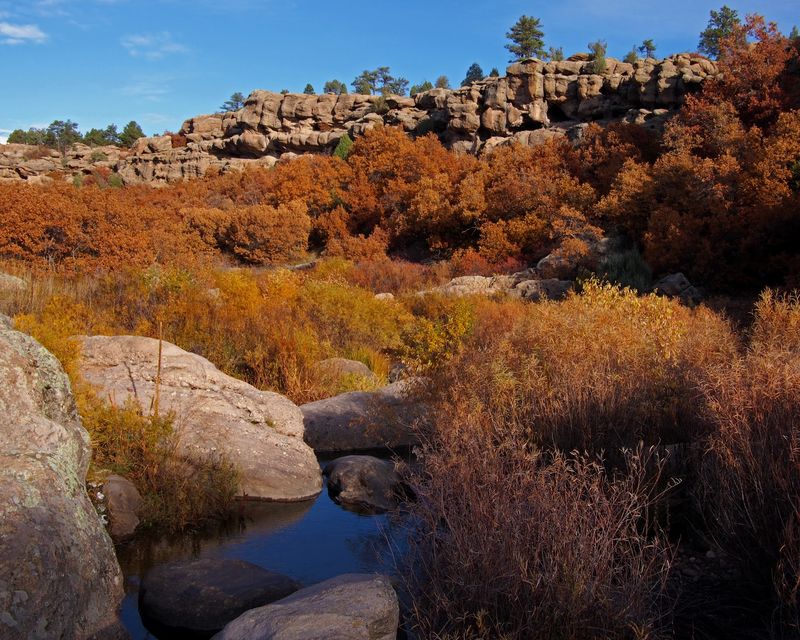
Few people expect a dramatic canyon east of I-25, yet one sits right off a two-lane highway in Douglas County.
Castlewood Canyon State Park is located at 2989 CO-83, Franktown, CO 80116, in the state of Colorado. It is managed by Colorado Parks and Wildlife and runs along Cherry Creek as it winds through a rocky gorge.
The park is described as an expansive natural area with hiking trails, rock climbing walls and wildlife viewing. It also carries a 4.8-star standing from more than 3,600 people, which tells you locals take it seriously.
What makes it special for Front Range residents is the location. It is a fairly large nature area that does not require driving into the Rocky Mountains.
The park sits just south of Aurora and close to the south end of the metro area. Traffic tends to stay light on the way in, which is a welcome change from weekend mountain corridors.
Hikers often call it their favorite place partly because it is so close to home and easy to reach. That convenience matters when you only have a free morning.
So the real question is not whether to go, but which side to start on.
2. Two Entrances, Two Personalities
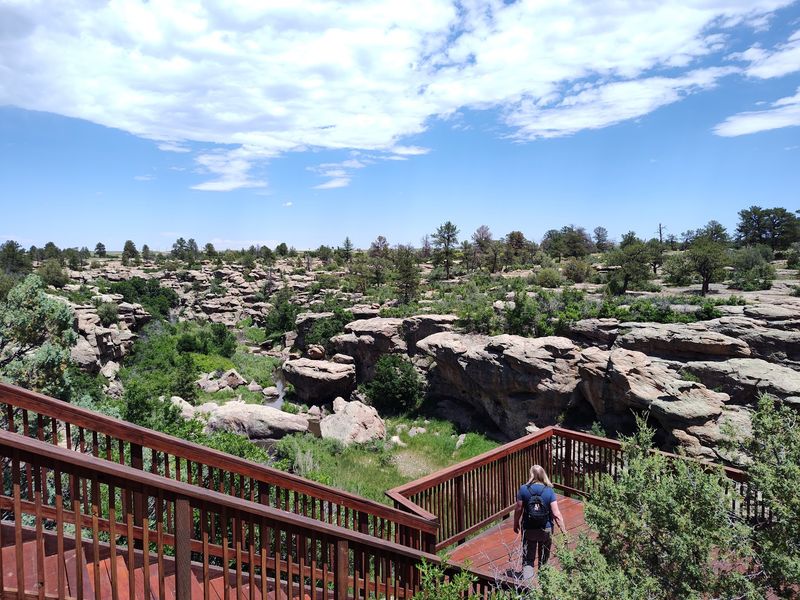
Here is the twist that catches first-timers off guard. The park is split into two separate sections that do not connect by road inside the park.
To get from one to the other, you exit and re-enter through the other entrance. The drive between the east and west sections takes about 15 minutes.
The main entrance with the Visitor Center sits off Highway 83. This side is paved, polished and very friendly for wheelchairs and strollers.
The west side feels much more rugged. Roads and trails there are unpaved, and it tends to be the busier section, especially on warm weekends.
Most of the longer hiking trails sit on the northern part of the park. There is even a trail that runs from one end to the other for those who want to connect both areas on foot.
A small heads-up: Google Maps has not always placed the park entrance in the right spot. Double-check your route before you leave home.
Doing only one side means missing half of what the canyon offers. Plan for both if your schedule allows.
3. The Dam That Gave Way
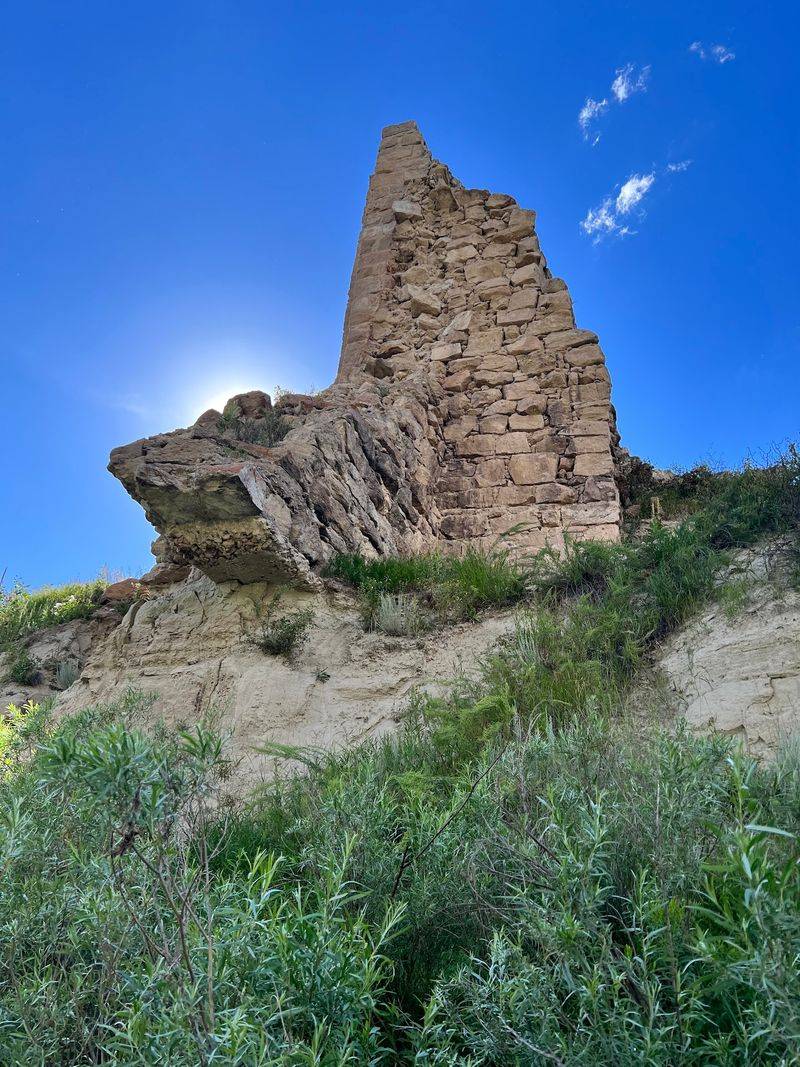
Every good canyon needs a story, and this one has a big one.
The Castlewood Dam once stood across Cherry Creek. A flood eventually destroyed it, and its stone ruins still stand in the canyon today.
The dam is the most talked-about feature in the park by a wide margin. Families who grew up hiking here often name it as the highlight.
Before heading out, stop by the Visitor Center. A film there explains how the dam was built and how the flood brought it down.
That short background makes the ruins far more meaningful once you reach them. Plaques along the way add more history for curious minds.
From the Falls Parking Lot on the west side, the ruins are about a one-mile walk. You can stay on the road to view the dam from above or take the trail down toward the creek and see it from below.
Either route ends at a real piece of Colorado history you can stand next to. Not bad for a morning outing.
4. Where the Little Falls Hide
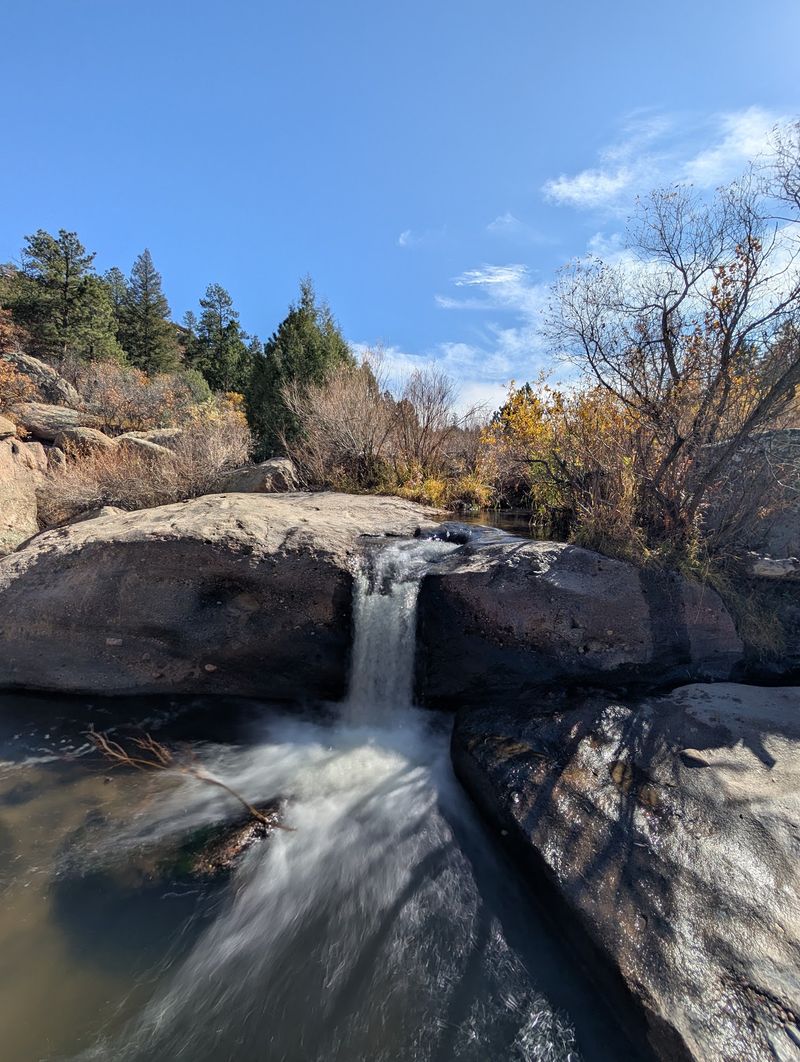
Surprises are rare on well-loved trails, but the falls here still manage one.
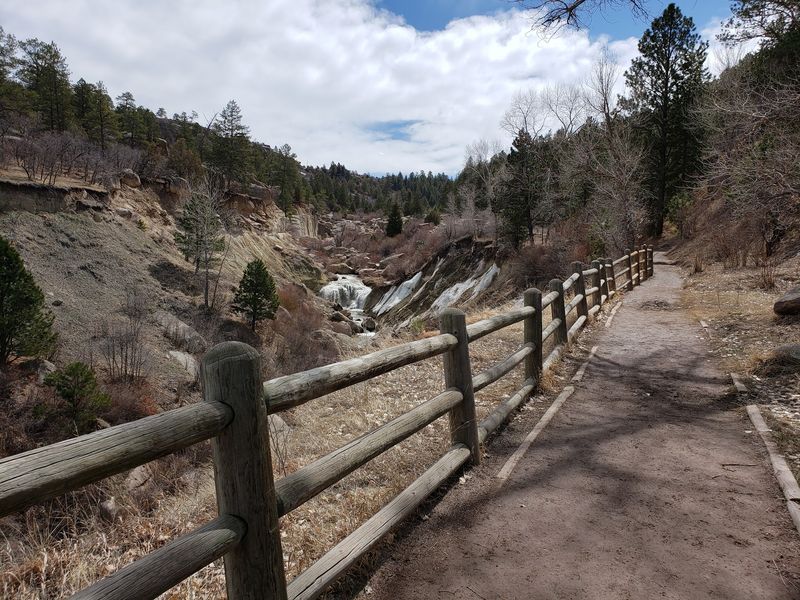
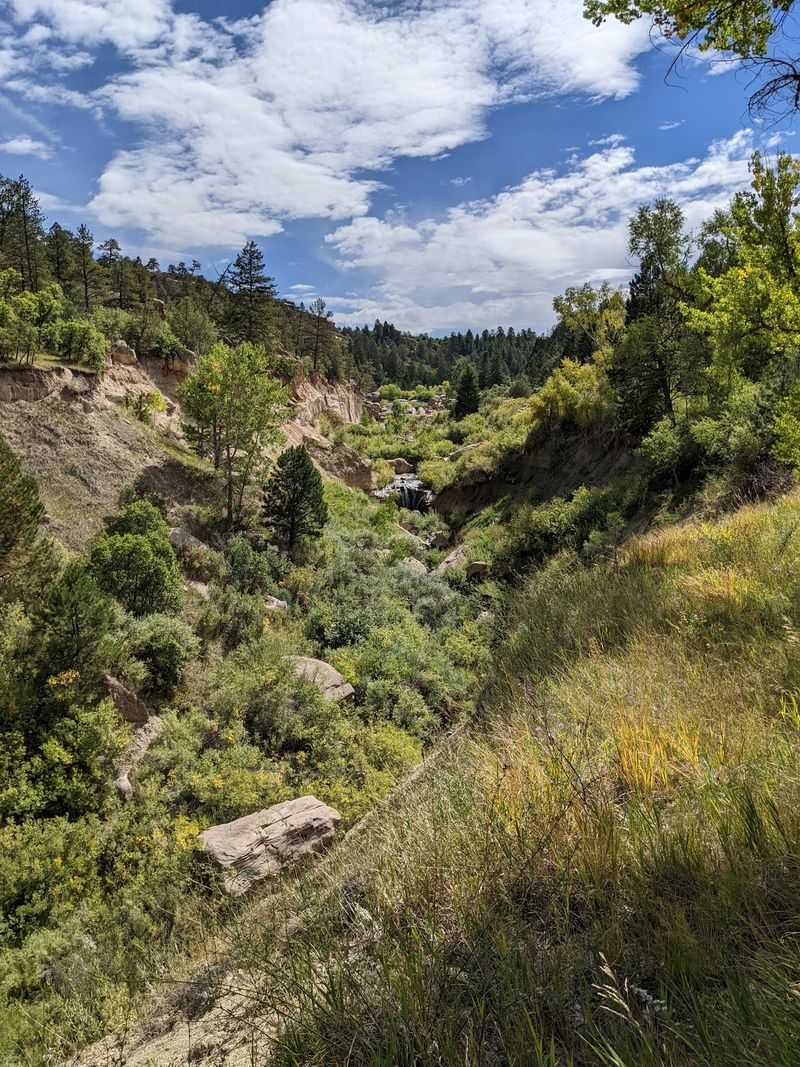
Along the creekside trail on the west side, hikers come across small falls tumbling along Cherry Creek. Many call it one of the best parts of the walk.
The waterfall is a big reason this park stands out. It is one of the few places east of I-25 that offers both a canyon and a waterfall.
The creekside route toward the dam is mostly shaded. That makes it a smart pick on hot days when the open trails turn into a sunbaked slog.
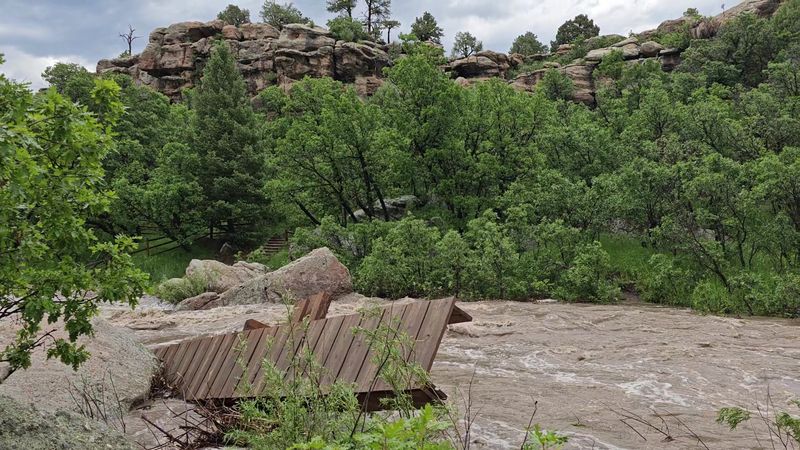
Water levels change, so set your expectations. Some seasons bring very little flow in the creek, and the falls may be modest.
Kids tend to love this stretch the most. The river and waterfall add plenty of fun to an otherwise easy hike.
Reaching it requires a few steps and short climbs down from the parking lot. After that, the trail eases along the water.
5. Rimrock Heights and Cliffside Ledges
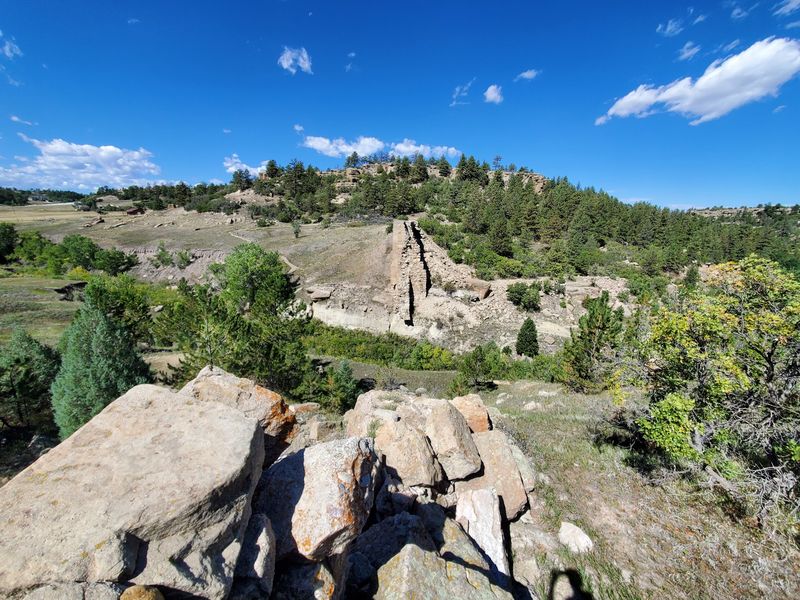
Want the view from above instead of below? The Rimrock Trail delivers that change in perspective.
Paired with other trails, it forms a loop of about 4.6 miles. Hikers describe it as moderate, with some steep climbs mixed into the route.
The payoff is variety. The loop takes you along the top of the canyon and then down into the valley below.
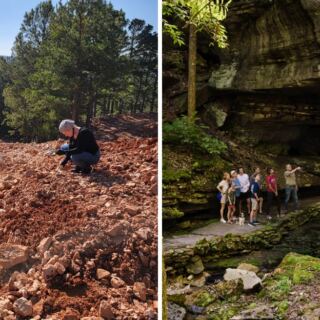
The canyon walls show layers of sedimentary rock stacked one over another. Those layered cliffs, ledges and hollows make the rim walk feel very different from the creek trail.
Some sections require climbing over rocks. Good shoes and a steady pace will serve you well.
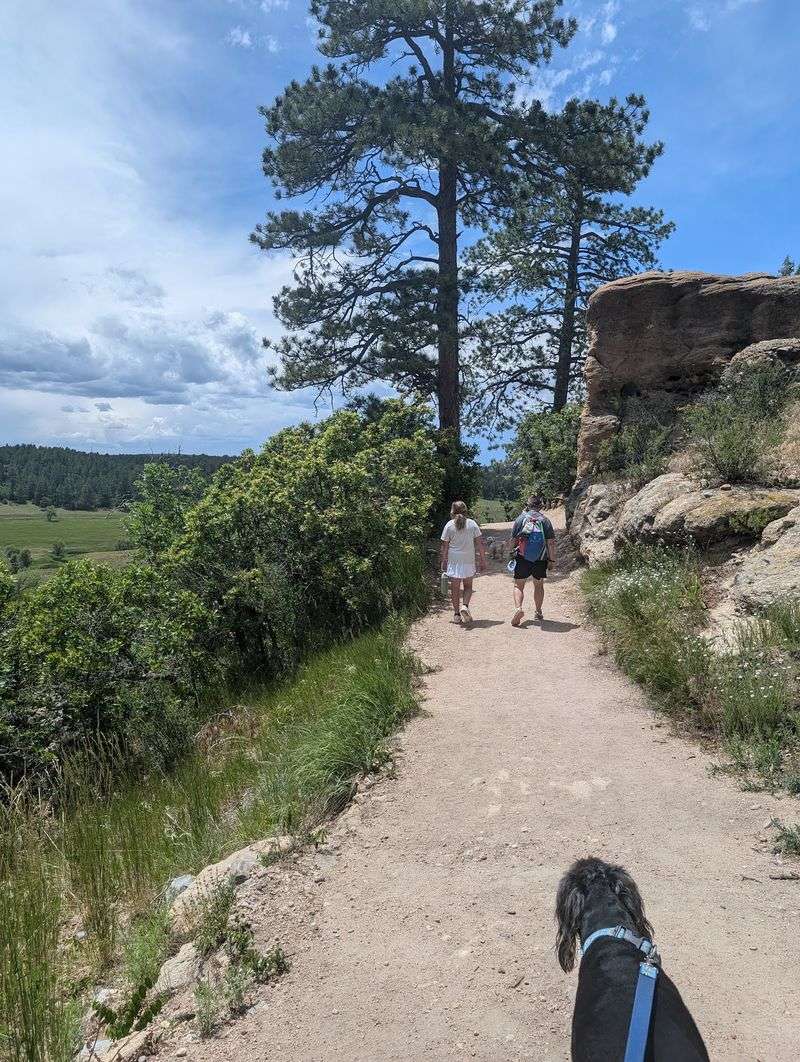
Dogs on leash are welcome on this loop, so your four-legged hiking buddy can join in.
For a longer push, there is also a figure-eight route of about 6 miles with roughly 700 to 800 feet of elevation gain. Runners use it as a regular workout, which says plenty about its challenge.
6. East Canyon Trail Basics
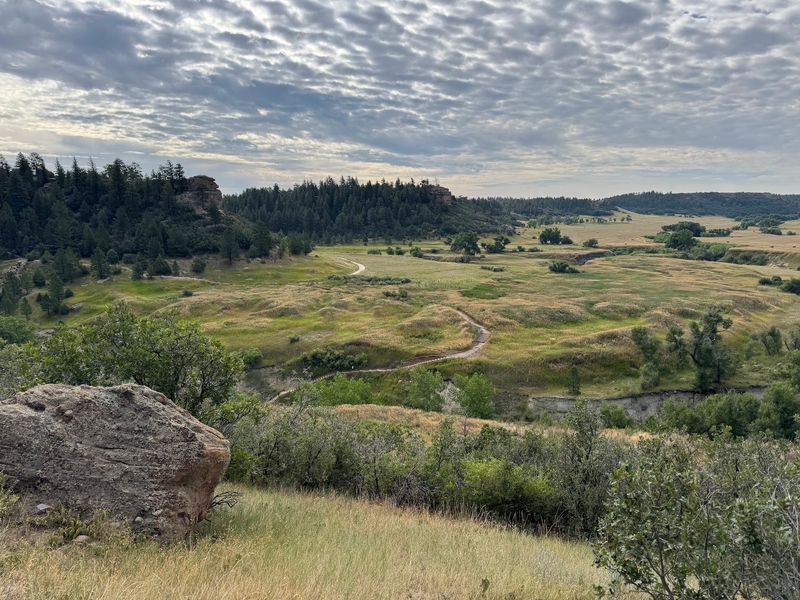
Quieter and wilder, the East Canyon Trail has its own set of rules.
The full route runs right around 4 miles. A family with a child can finish it in about two hours at a relaxed pace.
The terrain is mostly flat with no grueling altitude gain. It lands in the easy-to-medium range for most hikers.
Official signs are sparse along this route. Watch for rock cairns, the stacked stone markers that point you in the right direction.
Pets are not allowed on the East Canyon Trail. The rule protects the local habitat, so leave the pups home for this one.
The trail is also seasonal. It closes each year in November for resource protection, making late summer and fall prime time to complete it.
Most of the path sits in open sun. Bring more water than you think you need.
7. Paved Paths for Every Pace
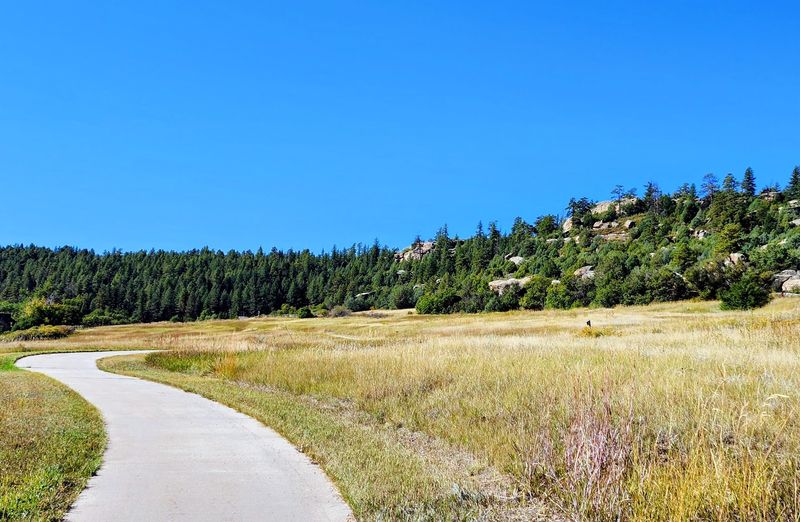
Not every great view should require a scramble. The east side makes sure it does not.
The Canyon View Nature Trail is fully paved with concrete. It works well for wheelchairs and strollers, with no notable stairs or major elevation changes.
Several parking areas connect to the trail, all reachable by paved roads from the entrance. That keeps the walk short for anyone with limited mobility.
The path follows Cherry Creek and passes multiple scenic overlooks. Signs at those points explain the geology and history of the canyon.
Grandparents, new parents and anyone recovering from an injury can all enjoy real canyon views here. It is a rare kind of access in Colorado parks.
Shade is limited along this trail. Morning visits are the smart move during warmer months.
The east side also tends to stay peaceful and surprisingly uncrowded compared with the west.
8. Climbing Walls and Boulder Play
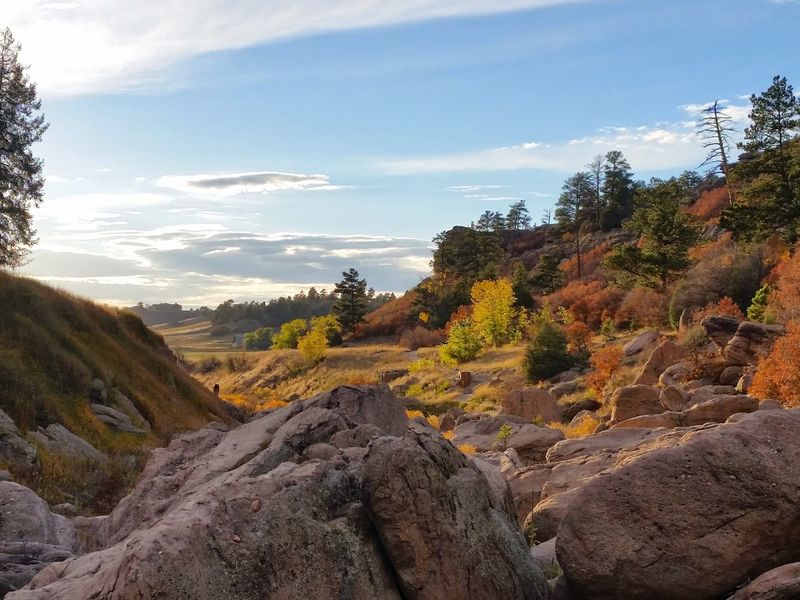
Climbers have quietly claimed this canyon as a favorite for years.
The park offers rock climbing walls along its rocky sides. It is one of the main activities that draws regulars back again and again.
After a day on the rock, many climbers cool off in Cherry Creek. That simple routine is part of the appeal.
Kids get in on the action too, just on a smaller scale. Scrambling on boulders near the creek is a common highlight for younger hikers.
Boulders show up all over the park. Some trails require climbing over rocks, while others stay smooth and accessible.
For families, that mix means everyone can pick their level. Little ones can scramble while experienced climbers tackle the walls.
Bring proper gear if you plan to climb, and check park guidance before your trip. The canyon rewards those who come prepared.
9. Homestead Ruins Along the Creek
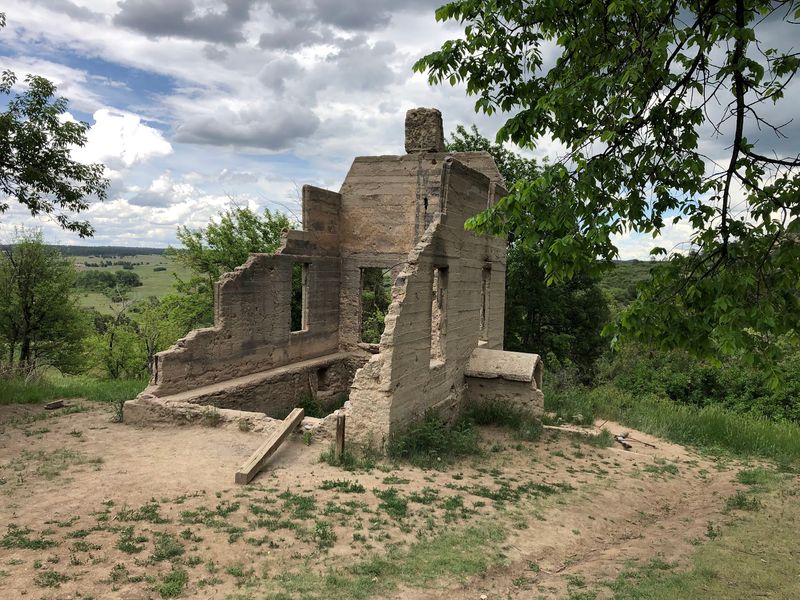
History here goes beyond the dam.
Homestead ruins sit within the park, and kids especially enjoy finding them during an easy creekside hike. They offer a glimpse of people who once lived along this stretch of land.
The creek trail itself mixes open areas with shaded spots. It makes for a comfortable outing in spring when things start greening up.
Plaques around the park describe pieces of the local past. Readers who love Colorado heritage will find plenty to linger over.
Families who grew up visiting often return with their own children several times a year. That kind of tradition says a lot about a place.
The ruins pair nicely with a dam visit. Together they tell a bigger story about life and change in this canyon.
Take your time and read the signs. The past is half the fun here.
10. Wings Overhead, Hooves Below
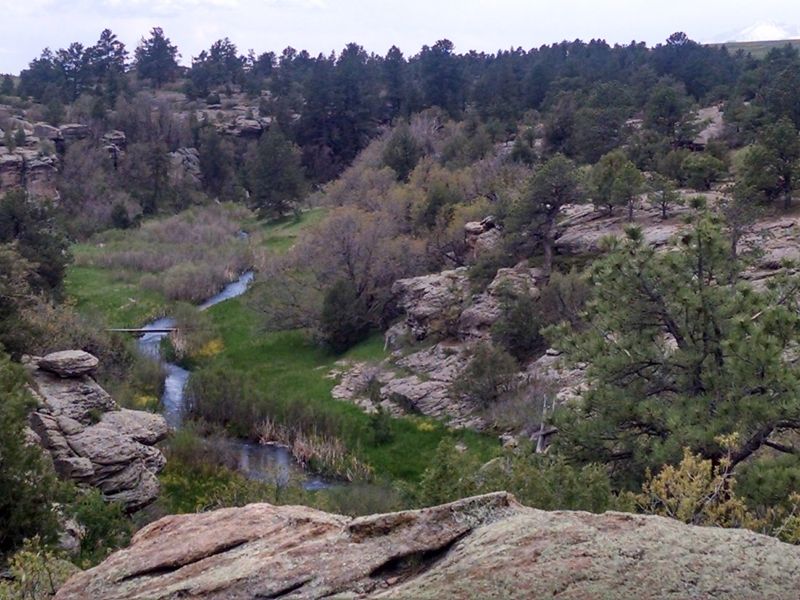
Bring binoculars. The wildlife here often steals the show.
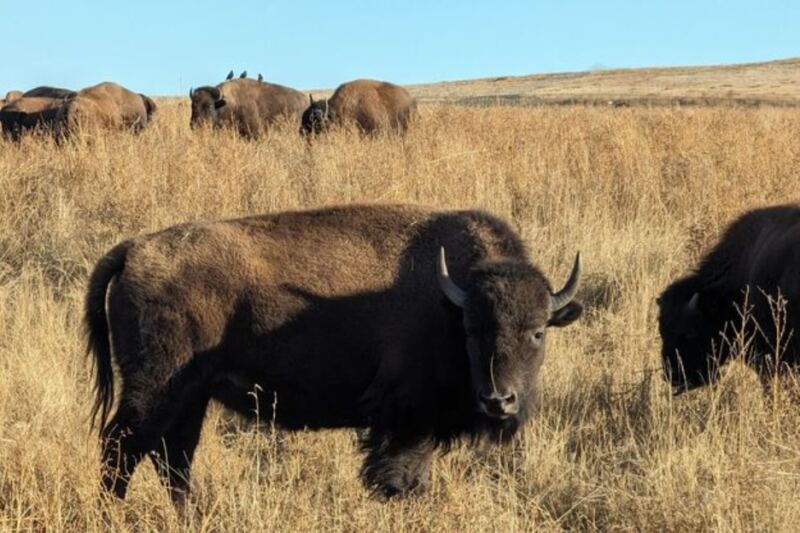
Depending on timing, dozens of turkey vultures may circle above the canyon. It is a striking sight for a park so close to town.
Bird watchers rank this as a top birding stop. Lots of species move through the varied terrain and creekside brush.
Deer show up as well, and their hoof prints often dot the trails. Spring adds flowers to the mix as the canyon starts to green.
Now the less cuddly news. Rattlesnakes live here, so stay on trail and watch where you step.
Keep dogs leashed and close on trails where pets are allowed. It protects both your pup and the wildlife.
A calm, alert hiker usually gets the best sightings. Patience pays off in this canyon.
11. Picnic Spots and Practical Comforts
Good hikes deserve a good break afterward, and the park plans for that.
Picnic tables are scattered throughout, with a big gazebo near the main parking lot. The south end holds a large picnic area, and the north has a few tables of its own.
Barbecue grills sit on the east side as well. That makes a lunch outing easy to pull together.
Restrooms near the parking lot stay clean during the main season. In winter, expect only a shared pit toilet.
Here is a perk many parks lack. Cell signal works here, which is rare among local state parks.
That coverage adds peace of mind for parents and solo hikers. It also helps if you get turned around on a trail.
Pack a lunch, grab a table and stay a while.
12. Beating the Heat and the Crowds
Timing can make or break a trip here.
Many trails sit in full sun with little shade. On an 86-degree day, an exposed trail can feel tough even when it is not long.
Morning is your friend in warm months. Shaded creekside paths offer relief when the sun climbs.
The west side gets busy, with parking lots often full on nice days. Rangers sometimes help with directions at the lots.
The east side tends to stay quieter. If you want calm, start there or arrive early.
Late summer and fall work well for the East Canyon Trail before its November closure. The west side is best enjoyed when conditions are dry.
Shoulder season and weekday mornings may offer the most elbow room. Plan around that and the canyon feels like your own.
13. Hours, Dogs and Trail Etiquette
A few practical details will keep your visit smooth.
The park is open daily from 6:30 AM to 8 PM. That long window gives early risers and after-work walkers plenty of options.
Leashed dogs are welcome on most trails. The East Canyon Trail is the notable exception.
Please pick up after your dog. It keeps the trails pleasant for everyone.
Trail maps can be a bit confusing in spots. Grab one at the entrance and check it often, especially on longer loops.
For current fees and passes, check the Colorado Parks and Wildlife website before you go. Rules and seasonal closures can change.
Bring water, sun protection and sturdy shoes. Those three items cover most of what this canyon asks of you.
14. A Close-to-Home Canyon Worth the Trip
Sometimes the best adventures do not need a mountain pass.
This canyon offers cliffs, boulders, a waterfall, dam ruins and homestead history within a short drive of the south metro. All of it fits into loops under five miles.
The east side suits families, wheelchair users and anyone after a calm walk with views. The west side gives explorers rugged trails and creekside fun.
People of all fitness levels find something here. Easy paths and tougher climbs share the same park.
Many locals return year after year, first as kids and later with their own families. That loyalty is easy to understand after one visit.
Skip the I-70 crawl next weekend. A canyon this good may already be closer than you think.
Pack water, pick a side and let Cherry Creek lead the way.
Share this story