Tennessee barbecue isn’t just food. It’s a living tradition kept alive by pitmasters who still fire up hickory and oak every morning before dawn, refusing to trade smoke-stained brick for gas burners or temperature dials.
These restaurants cook the same way their founders did, whether that means whole hogs over coals in West Tennessee or hand-pulled shoulders in Middle Tennessee smokehouses that have been feeding locals since before your grandparents were born. If you want to taste barbecue the way it was meant to be made, these are the places that never forgot.
1. Ronnie Q’s – Dickson
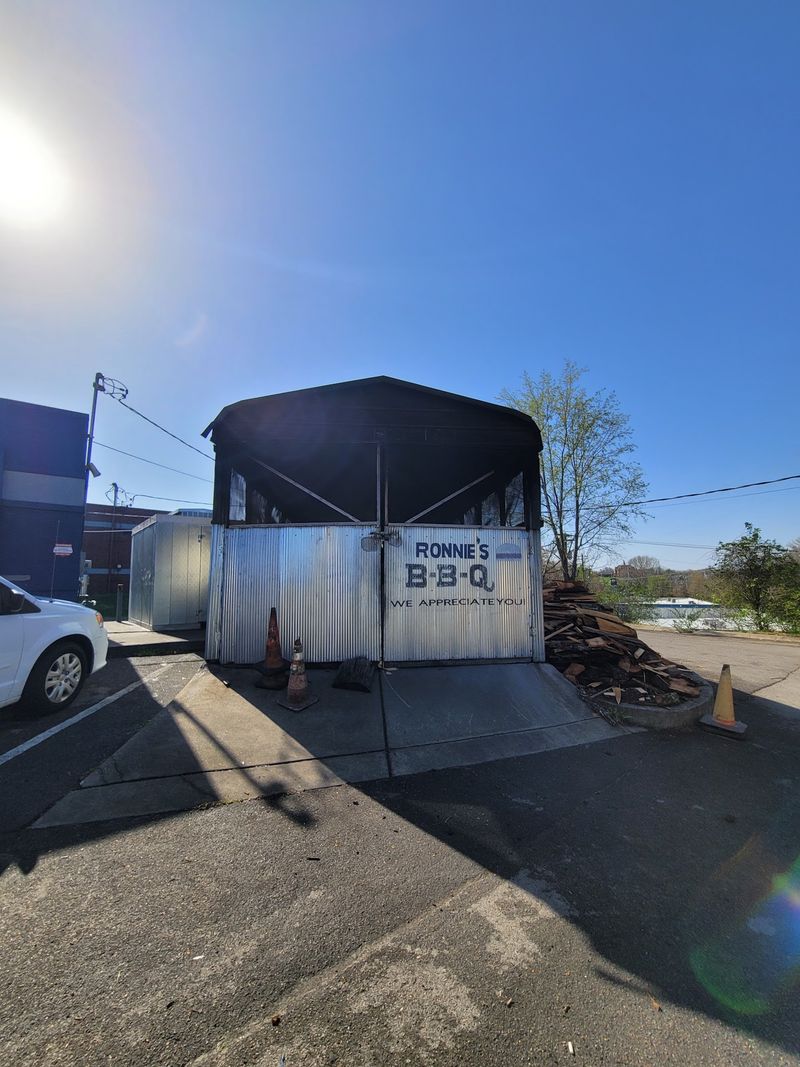
Walk into Ronnie Q’s and you’ll know immediately that this isn’t some franchise operation with a corporate recipe binder. The smell of hickory smoke hangs in the air like a permanent guest, clinging to the walls and your clothes long after you leave.
Owner Ronnie Quick runs his pit the old-fashioned way, cooking ribs and shoulders low and slow until the meat falls apart without any convincing.
Dickson sits just west of Nashville, close enough to catch the overflow but far enough out to keep its small-town barbecue soul intact. Ronnie Q’s fits right into that sweet spot, serving barbecue that tastes like someone’s backyard cookout instead of a production line.
The pulled pork comes with a vinegar-forward sauce that doesn’t try to hide what’s underneath, and the ribs have that deep smoke ring you only get from hours over real wood.
What makes this place worth the drive is the refusal to cut corners. No gas assist, no electric smokers hiding in the back. Just a pitmaster who shows up early, stacks his wood, and tends his fire all day.
The sides follow the same no-nonsense approach: beans that actually taste like beans, slaw that’s crisp and tangy, and cornbread that doesn’t need butter to be good.
Ronnie Q’s doesn’t advertise much or chase food blogger buzz. It just keeps doing what it’s always done, which is smoke meat until it’s right and serve it to people who know the difference.
If you’re driving through Dickson and you’re hungry, this is where locals go when they want barbecue that reminds them why Tennessee earned its reputation in the first place.
2. Shiloh Bar-B-Que – Cumberland Furnace
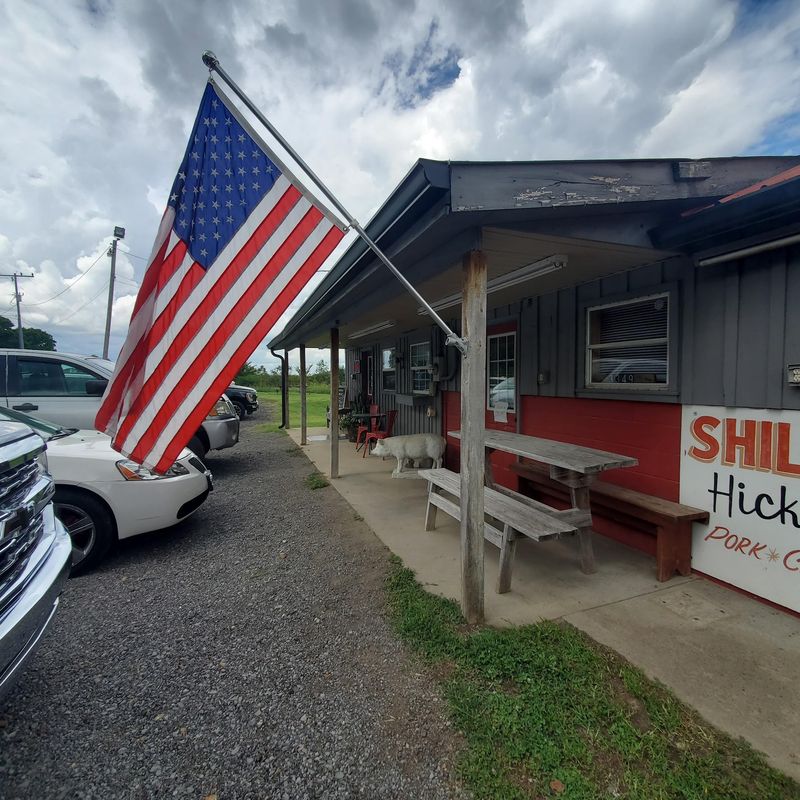
Cumberland Furnace isn’t a town you stumble across by accident. You have to mean to go there, which makes Shiloh Bar-B-Que exactly the kind of hidden barbecue stop that serious eaters hunt for.
Tucked away in the countryside west of Nashville, this place has been smoking meat for decades without worrying about highway visibility or Instagram aesthetics.
The building looks like it grew out of the ground naturally, weathered and comfortable in its own skin. Inside, the menu stays simple because the cooking does the talking.
Pork shoulder gets the long treatment over hickory, coming out tender and smoky with bark that’s worth fighting over. The sauce is there if you want it, but the meat doesn’t need rescuing.
Shiloh represents a vanishing breed of rural Tennessee barbecue joints that never had to reinvent themselves because they got it right the first time. The pit stays hot, the wood stays local, and the recipes stay in the family.
You won’t find fusion experiments or trendy rubs here, just honest barbecue cooked the way it’s been cooked since before food became content.
What strikes you most is the quietness of the place. No loud music, no TVs blaring sports, just the sound of people eating and talking.
The smoke does its work outside, and inside you get the results: meat that tastes like Tennessee, not like a corporate test kitchen. If you’re willing to drive the backroads and eat where the locals eat, Shiloh reminds you that the best barbecue in the state was never on the interstate to begin with.
3. Ramey’s BBQ – Parsons
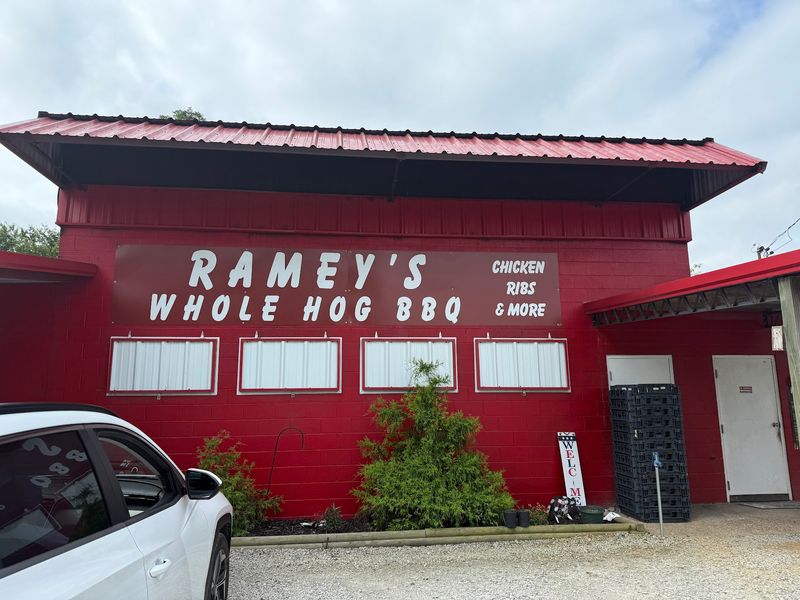
Parsons sits in the heart of West Tennessee, where whole-hog barbecue still means something. Ramey’s BBQ keeps that tradition burning, cooking entire hogs over hardwood the way pitmasters did when this style first took root along the Tennessee River.
This isn’t the kind of place that makes it onto every tourist’s barbecue bucket list, which is exactly why it matters.
Whole-hog cooking is harder than shoulders or ribs. You’re managing different cuts at different thicknesses, all on the same animal, all over the same fire.
It takes experience and patience, two things Ramey’s has in abundance. The result is pork that mixes the richness of dark meat with the lighter, cleaner flavor of loin and shoulder, all pulled together and chopped with crispy bits of skin mixed in.
Parsons doesn’t get the barbecue tourism that Memphis or Nashville does, which means Ramey’s cooks for people who eat there every week, not once in a lifetime. That keeps the quality honest.
The sauce is thin and tangy, designed to complement rather than drown. The beans are slow-cooked and smoky. The slaw has vinegar bite that cuts through the pork’s richness.
What makes Ramey’s special is its place in a disappearing lineage. Whole-hog pits are closing across West Tennessee as older pitmasters retire and younger generations choose easier work.
Every year there are fewer places like this, which makes every visit feel a little more urgent. If you want to taste a style of barbecue that’s fading from the landscape, Ramey’s is where you go before it’s too late.
4. Jacks Creek Bar-B-Que – Jacks Creek
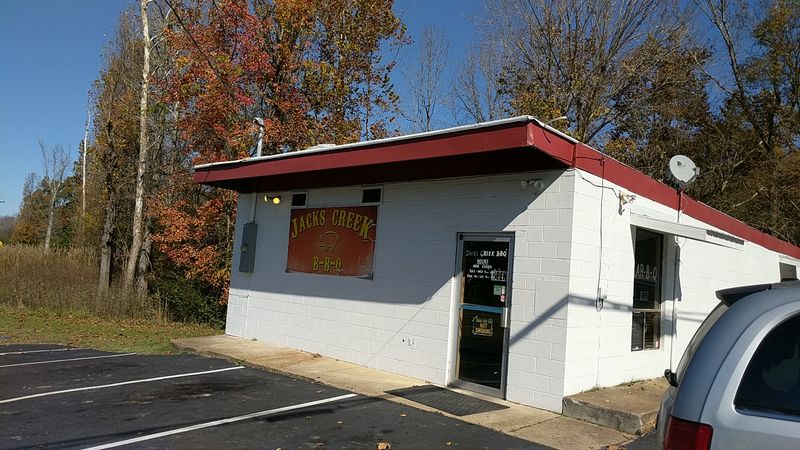
Jacks Creek Bar-B-Que could have disappeared like so many other backroads barbecue joints. Instead, Zach Parker from B.E. Scott’s stepped in to keep the fires burning and preserve one of the last outposts of West Tennessee whole-hog cooking.
That act of preservation matters more than most people realize, because this style of barbecue is on life support across the state.
The location itself feels like a time capsule, sitting on a quiet stretch of road where the only traffic is local. Inside, the focus stays locked on the pit, where whole hogs cook over live fire the way they did when this building first opened.
Parker brought his expertise but kept the soul of the place intact, understanding that what made Jacks Creek special wasn’t something you could improve by changing it.
Whole-hog barbecue done right is a study in contrasts: fatty and lean, crispy and tender, smoky and mild. Jacks Creek nails those contrasts, serving pork that tastes complete instead of one-dimensional.
The outside bark brings crunch and deep smoke flavor, while the inside meat stays moist and pulls apart without shredding into mush. Mixed together and hit with a splash of tangy vinegar sauce, it’s West Tennessee barbecue in its purest form.
What Parker’s doing here goes beyond running a restaurant. He’s keeping a piece of Tennessee’s culinary history alive at a time when most people would rather open something easier and more profitable.
Jacks Creek proves that old-school barbecue can survive if someone cares enough to do the work, even when the work means starting fires before sunrise and cooking all day over coals.
5. Bozo’s Hot Pit Bar-B-Q – Mason
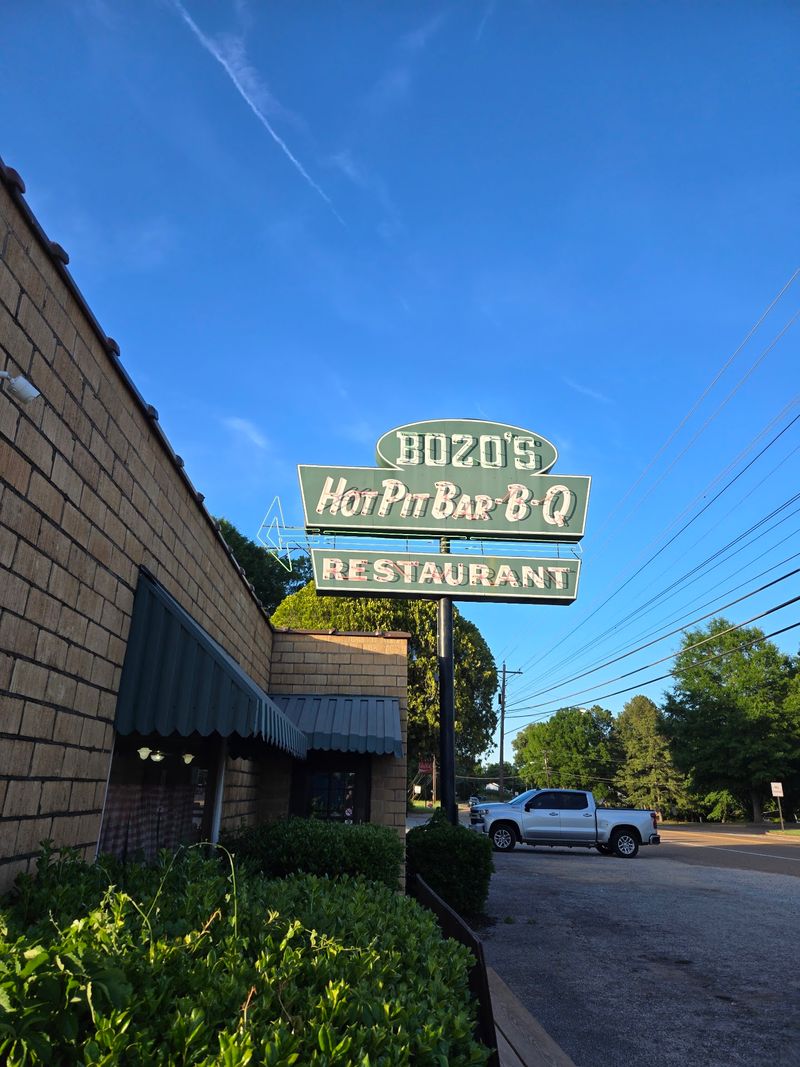
Founded in 1923, Bozo’s carries more barbecue history than most restaurants have years in business. The current building dates to 1950, which makes it older than interstate highways and younger than the recipes still being used inside.
That kind of continuity is rare in any restaurant, but especially in barbecue, where every generation gets tempted to modernize or franchise or sell out.
Thomas Jefferson “Bozo” Williams started this operation more than a century ago, and the family still runs it using techniques and recipes connected to those earliest years. The pork shoulders smoke for hours over hickory and charcoal, developing the kind of flavor you can’t rush or fake.
The sauce recipe hasn’t changed, staying true to the tangy, peppery style that made Bozo’s a destination when most of Tennessee was still dirt roads and Model Ts.
Mason sits in Fayette County, close enough to Memphis to catch some of that city’s barbecue culture but far enough out to maintain its own identity. Bozo’s bridges both worlds, serving barbecue that honors Memphis traditions while staying rooted in its own small-town story.
The pulled pork is the star, smoky and tender with just enough sauce to enhance without overwhelming. The beans are thick and sweet, the slaw is crisp and cool, and the whole meal feels like stepping back to a time when barbecue was simpler and better for it.
What strikes you most about Bozo’s is the weight of all those years. This isn’t a restaurant trying to look old-fashioned. It is old-fashioned, in the best possible way, serving barbecue that’s been perfected through decades of repetition and refinement.
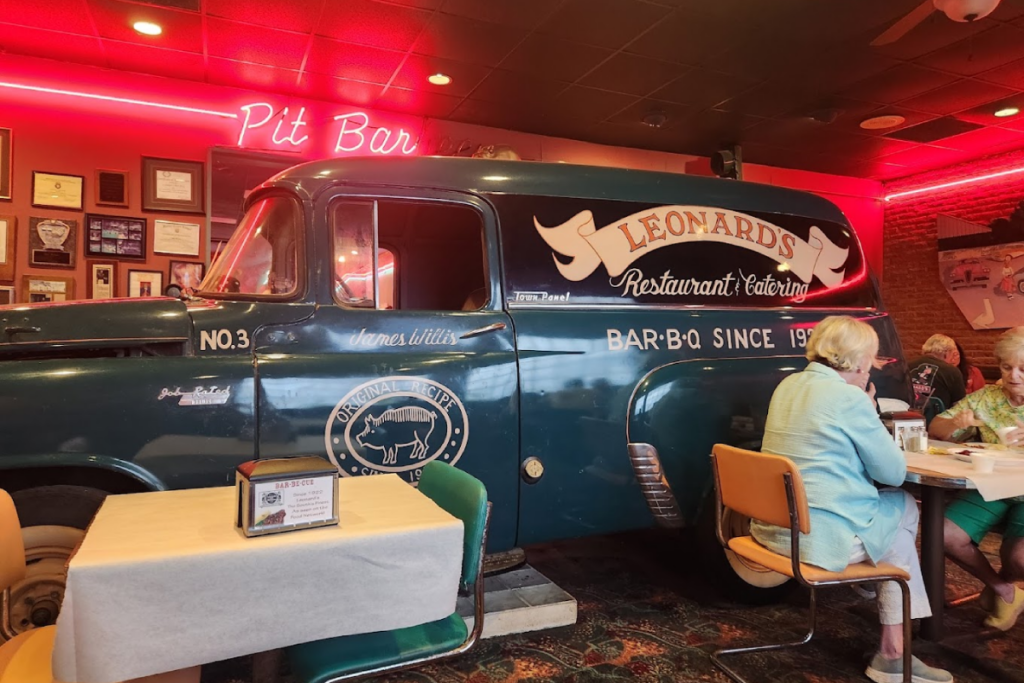
6. Leonard’s Pit Barbecue – Cordova
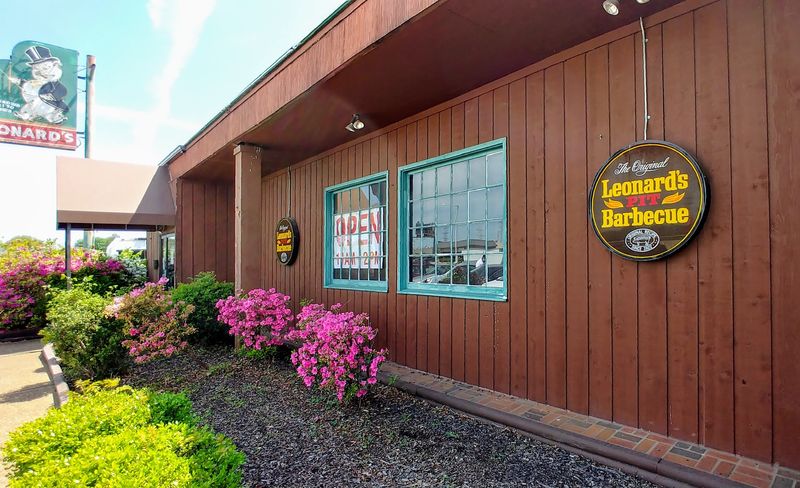
Leonard’s lineage stretches back to 1922, when commercial pit barbecue was still finding its footing in Memphis. The location has moved over the decades, but the connection to those early days remains unbroken, making Leonard’s one of the oldest continuously operating barbecue names in Tennessee.
That history isn’t just marketing. You can taste it in the cooking.
The Cordova location keeps the Leonard’s tradition alive with pork shoulders smoked over hardwood until the meat pulls apart in tender, smoky strands. The sauce follows the Memphis style, tomato-based with vinegar tang and just enough sweetness to balance the smoke.
It’s the kind of sauce that’s been refined over generations, not invented in a corporate kitchen last year.
What makes Leonard’s significant beyond its age is what it represents in the broader story of Tennessee barbecue. When Leonard Heuberger opened his first pit a century ago, barbecue was transitioning from backyard tradition to commercial enterprise.
Places like Leonard’s helped define what Memphis barbecue would become: pork-focused, sauce-forward, and accessible to working people looking for a good meal at a fair price.
The current restaurant honors that legacy without getting stuck in it. The meats still smoke for hours, the recipes still follow family traditions, but the operation runs efficiently enough to serve crowds without sacrificing quality.
Ribs come off the pit with a perfect smoke ring, tender but still with enough chew to remind you you’re eating real barbecue. The sandwiches are generous, piled high with meat and slaw. Even the beans taste like someone cares, slow-cooked with bits of pork mixed in.
7. HUNTS Tennessee BBQ – Henderson
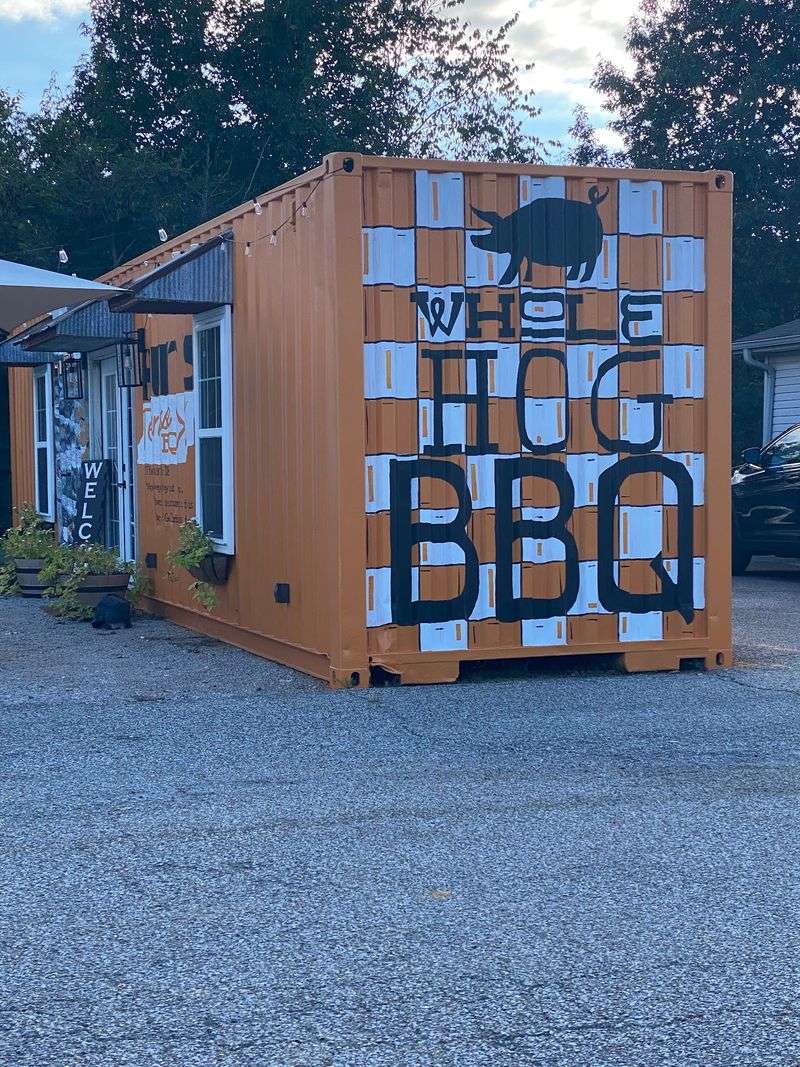
Henderson doesn’t make it onto most barbecue tourism maps, which is exactly what makes HUNTS Tennessee BBQ such a valuable find. Sitting in West Tennessee barbecue country between Memphis and the Lexington-Jackson corridor, this spot serves the kind of honest, unpretentious barbecue that locals depend on when they’re hungry and don’t want to think about it.
The cooking follows the regional playbook: pork smoked low and slow over hardwood, pulled or chopped and served with sauce on the side. HUNTS doesn’t try to reinvent anything or chase trends.
The focus stays on doing the basics right, which is harder than it sounds when you’re cooking every day for people who know what good barbecue tastes like.
What works here is the consistency. The pork comes out tender and smoky every time, with enough bark to add texture and flavor without turning into charcoal.
The sauce is tangy and thin, the way West Tennessee tends to like it, cutting through the richness of the meat without masking the smoke. Sides are straightforward: beans, slaw, potato salad, the kind of things you expect and want when you’re eating barbecue.
Henderson sits in a part of Tennessee that’s easy to overlook if you’re just hitting the big cities and tourist stops. But this is where a lot of Tennessee’s barbecue culture was born, in small towns where people cooked whole hogs for church fundraisers and family reunions.
HUNTS carries that tradition forward, serving barbecue that tastes like the region it comes from. If you’re driving through West Tennessee and want to eat where the locals eat, this is the kind of place that never disappoints.
8. Slick Pig BBQ – Murfreesboro
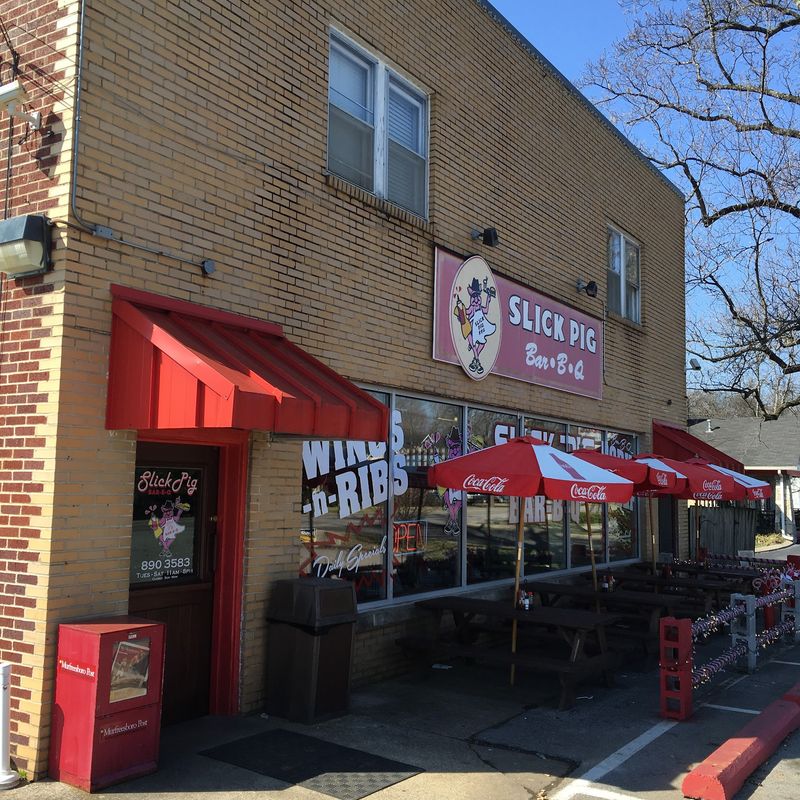
Slick Pig BBQ opened in 1995, which makes it young compared to some of the century-old pits on this list. But nearly three decades of cooking the same way, using the same methods, earns you a place in the conversation about traditional Tennessee barbecue.
The restaurant’s five smokers stay busy turning out hickory-smoked meats that follow tried-and-true techniques instead of chasing whatever’s trending on food TV.
Murfreesboro gives Slick Pig a Middle Tennessee home base, which means the barbecue style leans toward pork shoulders and ribs rather than the whole-hog cooking you find farther west. The meat smokes for hours, low and slow, until it develops that deep mahogany bark and tender interior that only comes from patience and real wood.
No shortcuts, no gas assists, just smoke and time doing what they’ve always done.
The owners emphasize traditional methods, which sounds like marketing until you taste the results. The pulled pork has layers of flavor, smoky and rich with just enough fat to keep it moist.
The ribs pull clean off the bone without falling apart, that perfect balance between tender and toothsome. Even the chicken, which is easy to dry out in a smoker, stays juicy and takes on smoke without tasting like an ashtray.
What keeps people coming back to Slick Pig is the reliability. You know what you’re getting: honest barbecue cooked the right way by people who’ve been doing it long enough to know when something’s ready and when it needs more time.
In a town that’s grown rapidly over the past two decades, that kind of consistency matters more than ever.
9. Corner Pit BBQ – Dellrose
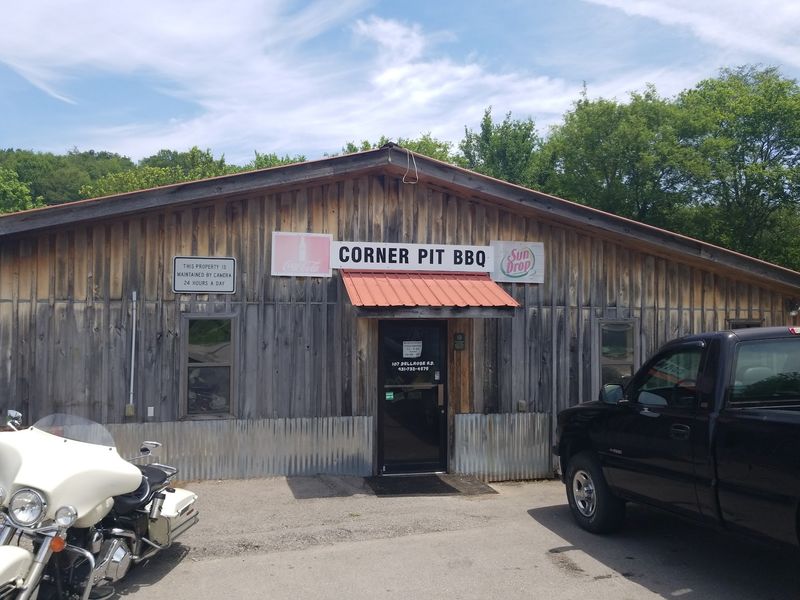
Barbecue has been served on this rural Giles County corner since 1965, which makes Corner Pit BBQ one of those places that feels less like a restaurant and more like a permanent fixture of the landscape. The operation continues an all-wood, low-and-slow smoking tradition that connects directly to the era when barbecue meant tending a fire all day, not pushing buttons on a digital controller.
Dellrose isn’t a destination town. It’s a wide spot in the road where locals live and visitors pass through, usually without stopping.
That makes Corner Pit BBQ the kind of discovery that feels personal, like you found something the rest of the world hasn’t caught onto yet. The building sits right where the name suggests, at a corner, looking like it’s been there forever because it basically has.
The smoking happens out back over real wood, no gas, no electricity, just split logs and coals and a pitmaster who knows when to add more fuel and when to leave things alone. That all-wood approach creates flavor you can’t replicate with modern equipment, a depth of smoke that penetrates the meat completely.
The pork comes off the pit tasting like Tennessee: hickory and oak, rendered fat and crispy bark, tender meat that pulls apart in smoky strands.
What makes Corner Pit special is its stubborn commitment to doing things the hard way. All-wood cooking is labor-intensive and unpredictable.
It requires skill and attention that most restaurants aren’t willing to invest. But the results speak for themselves in every bite of pork, every rib, every sandwich that tastes like it came from a different, better era of American cooking.
10. Papa Turney’s Old Fashion BBQ – Hermitage
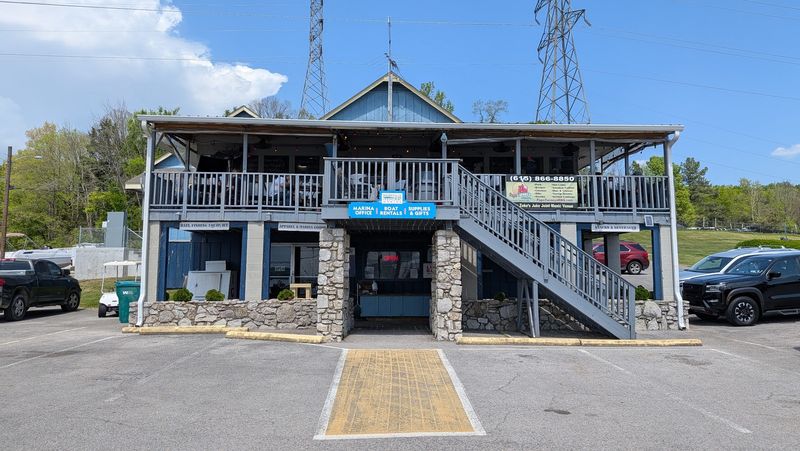
The name practically writes its own story. Papa Turney’s Old Fashion BBQ isn’t trying to be subtle about its approach or its values.
This is barbecue that looks backward on purpose, cooking the way Tennessee pitmasters did before anyone thought to modernize or streamline or make things easier. Hermitage gives the restaurant a Nashville-area address without dropping it right into the downtown restaurant scene, which helps it maintain its own identity.
Old-fashioned here means smoking meat over hardwood until it’s done, not until the timer goes off. It means sauce recipes that haven’t been focus-grouped or optimized for mass production.
It means sides made from scratch because that’s how you make sides when you care about what you’re serving. Papa Turney’s embraces all of that, creating barbecue that tastes like someone’s grandfather made it in his backyard, assuming that grandfather knew what he was doing.
The pulled pork is the foundation, smoky and tender with enough bark to add texture and deep flavor. The ribs come off the pit with meat that’s been transformed by hours of smoke and low heat, tender but not mushy, flavorful all the way through.
Even the chicken, which many barbecue joints treat as an afterthought, gets the full treatment here, smoking until the skin crisps up and the meat stays juicy.
What works about Papa Turney’s is the lack of pretension. This isn’t barbecue trying to be art or attempting to reinvent the genre. It’s just good cooking done the traditional way, served to people who appreciate the difference. In a city where new restaurants open every week chasing the next trend, that kind of steadiness is its own form of rebellion.
11. Martin’s Bar-B-Que Joint – Nashville
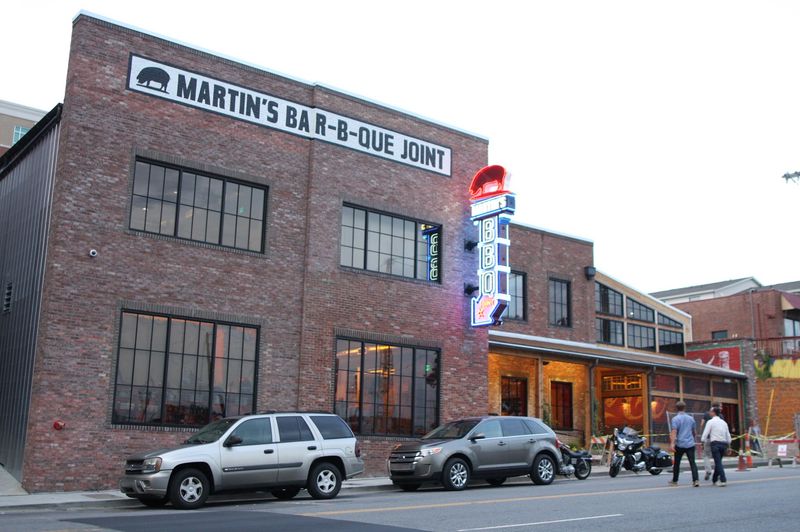
Pat Martin has become one of the loudest advocates for West Tennessee-style whole-hog cooking, bringing a tradition that was fading in its own birthplace to the heart of Nashville. Martin’s Bar-B-Que Joint isn’t the oldest name on this list, but it belongs here because of its commitment to preserving and promoting a cooking method that most people have abandoned as too difficult or too old-fashioned.
Whole-hog cooking over live fire is as traditional as Tennessee barbecue gets. It’s also brutally hard work, requiring constant attention and years of experience to master the balance between too much heat and not enough.
Martin’s does it anyway, cooking entire hogs over burning wood and turning out pork that mixes every part of the animal into one complex, delicious whole.
The result is barbecue that tastes different from the shoulder-focused cooking you find at most Tennessee pits. You get the richness of dark meat mixed with leaner cuts, crispy skin chopped in with tender interior meat, fat and smoke and char all working together.
The sauce is thin and vinegary, designed to enhance rather than cover up. Sides stay traditional: beans, slaw, cornbread, nothing fancy because nothing fancy is needed.
What makes Martin’s significant is its educational mission. Pat Martin doesn’t just cook whole hog, he talks about it, teaches it, and champions it as a vital part of Tennessee’s culinary heritage.
In a restaurant landscape dominated by efficiency and consistency, Martin’s proves that the old ways can still work if someone’s willing to do the work. That commitment to tradition, even when tradition is inconvenient, is what earns this spot on the list.
12. Shuford’s Smokehouse – Chattanooga
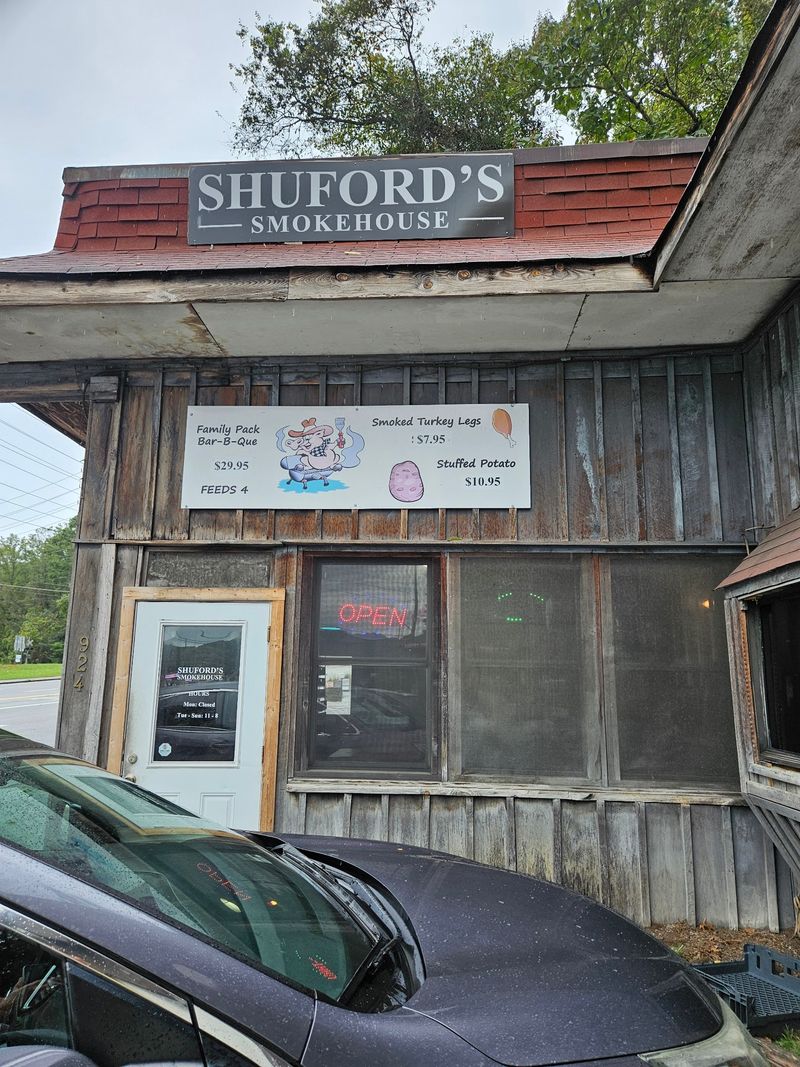
Shuford’s Smokehouse has been run by the same family since 1986, which gives it nearly four decades of smoking meat the same way in the same place. The original Signal Mountain Road location occupies an old 1950s gas station, one of those conversions that works perfectly for barbecue because both businesses depend on people pulling off the road when they need something essential.
The setting creates exactly the kind of old-school roadside atmosphere that defines traditional Tennessee barbecue.
Chattanooga sits in the southeastern corner of Tennessee, where barbecue culture blends influences from Georgia and the Carolinas with Tennessee traditions. Shuford’s stays firmly in the Tennessee camp, smoking its meats with hickory and serving them with sauce that complements rather than dominates.
The pulled pork is the anchor, cooked until it’s tender enough to pull apart easily but still has texture and bite.
What makes the old gas station location work so well is the sense of continuity it creates. This building has been serving travelers for more than seventy years, first with gasoline and now with barbecue.
The bones of the place remain, but instead of fuel pumps you’ve got smokers out back, sending hickory smoke into the Chattanooga air every day. That kind of adaptive reuse feels right for barbecue, which has always been about making do with what you have and making it work.
Shuford’s doesn’t chase trends or try to be something it’s not. The family keeps smoking meat with hickory, keeps following recipes that work, and keeps serving people who want honest barbecue without the fuss.
In a city that’s seen massive growth and change over the past two decades, that kind of consistency is worth celebrating and preserving.
13. Ridgewood Barbecue – Bluff City
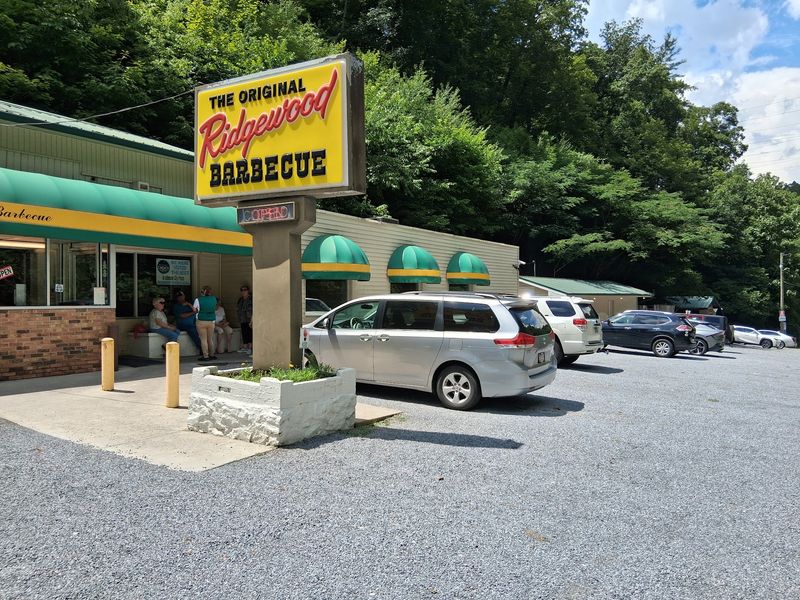
Ridgewood Barbecue finishes this list in far East Tennessee with one of the state’s most distinctive barbecue traditions. While most of Tennessee smokes pork shoulder, Ridgewood has been smoking ham since the 1940s, slicing it thin and covering it with a signature sauce that’s become legendary among people who know.
The outdoor smoke pits are part of what makes this place visually striking, a reminder that great barbecue happens outside, over fire, not in climate-controlled kitchens.
Bluff City sits near the Virginia border, about as far east as you can go and still be in Tennessee. That geographic isolation helped Ridgewood develop and maintain a style that’s uniquely its own.
The smoked ham gets sliced thin, almost deli-style, which creates a completely different texture from pulled pork. The sauce is sweet and tangy, thick enough to coat the meat and add its own layer of flavor without overwhelming the smoke.
What makes Ridgewood such a strong closer for this list is how different it is from everything that came before. This isn’t whole hog or pulled shoulder or Memphis ribs.
It’s smoked ham served in a way you won’t find anywhere else in the state, a regional variation that proves Tennessee barbecue is more diverse and interesting than most people realize. The method goes back eighty years, refined through generations of the same family cooking the same meat the same way.
The outdoor pits are functional, not decorative. They’re where the smoking actually happens, where hickory smoke transforms fresh ham into something completely different.
That commitment to outdoor cooking, to doing things the hard way because that’s how they’ve always been done, is what ties Ridgewood to every other restaurant on this list. Different methods, same values: smoke, time, tradition, and meat that tastes like Tennessee.
Share this story