New Jersey has spent a long time being the state people drive through on the way to somewhere else. That is a shame, because when it comes to the American Revolution, this place was not a side road.
It was the road. Armies marched across it, headquarters moved through it, governments met in it, and some of the war’s most important momentum swings happened right here.
Historians call New Jersey the “Crossroads of the American Revolution” for good reason: more battles and skirmishes were fought here than in any other original colony, and the victories at Trenton and Princeton helped jolt the Patriot cause back to life. What makes that history especially satisfying is that you can still walk into it.
Not in a dusty, distant way, either. These are places with preserved houses, battlefields, barracks, ironworks, river crossings, and landscapes that still make the strategy click.
Visit enough of them and one thing becomes pretty obvious: New Jersey did not just witness the Revolution. It absorbed it, supplied it, and in several critical moments, helped swing it.
1. Ford Mansion, Morristown
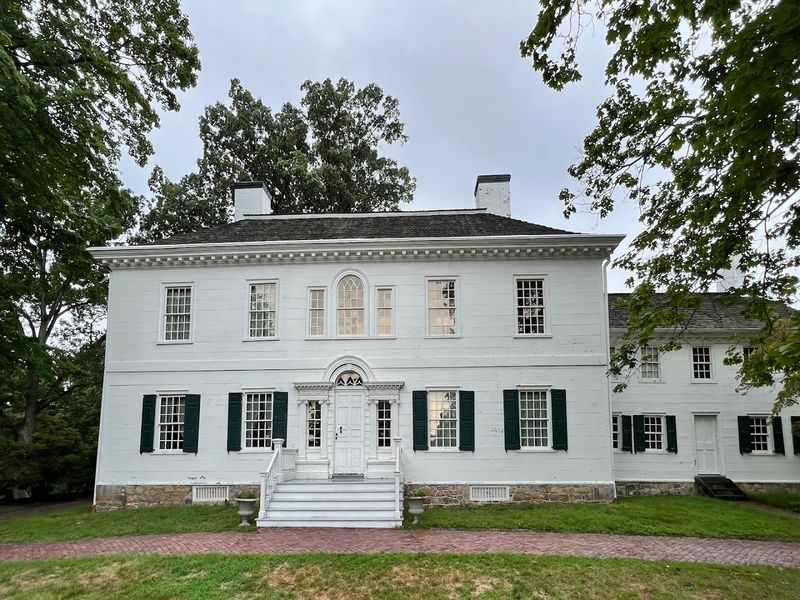
Tucked into Morristown, Ford Mansion is where the Revolution stops feeling abstract and starts feeling intensely personal. This elegant Georgian house served as George Washington’s headquarters during the winter of 1779–1780, one of the harshest seasons the Continental Army ever endured.
You can admire the symmetry of the building and the polished period rooms, sure, but the real story here is contrast. Washington was planning a war from inside a refined home while thousands of his soldiers were freezing, drilling, and struggling for supplies just a short distance away.
That tension is exactly why the place matters. Morristown was not just a camp.
It was a nerve center. Orders moved out from here.
Strategy took shape here. The army held together here when it could easily have fallen apart.
The house belonged to the Ford family, and one of its own, Jacob Ford Jr., had already died before Washington moved in, leaving the widow, Theodosia, to host the commander in chief and his staff. That detail alone gives the site a human texture a lot of battlefield markers cannot match.
Walk through the rooms and it becomes easier to grasp what New Jersey offered the Patriot cause: not just dramatic clashes, but the ability to endure. The army needed defensible terrain, roads, nearby resources, and some degree of access to major cities without being swallowed by them.
Morristown delivered all of that. Ford Mansion is proof that winning the Revolution was not only about charging into battle.
Sometimes it was about surviving the winter, keeping command intact, and making the next move before the enemy did. That is a very New Jersey kind of contribution.
2. Jockey Hollow and the Wick House, Morristown
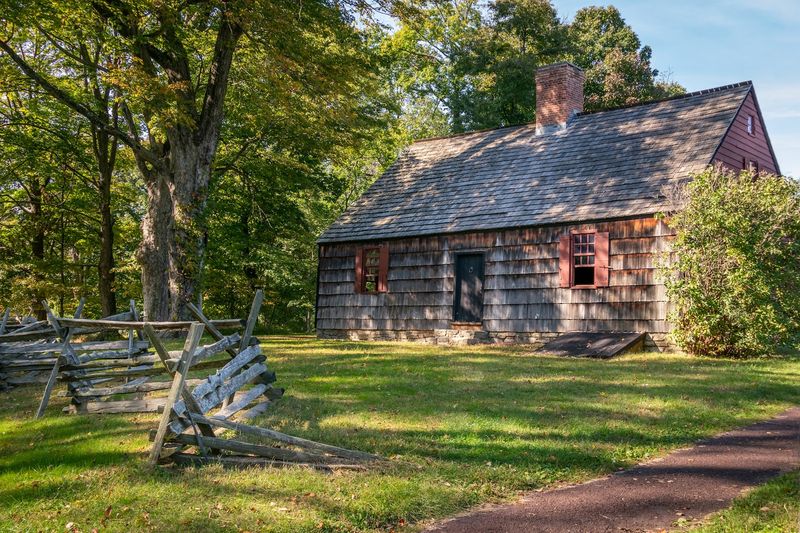
A battlefield can show you how a fight happened. Jockey Hollow shows you how an army stayed alive long enough to keep fighting at all.
Part of Morristown National Historical Park, this sprawling encampment area held thousands of Continental soldiers during the brutal winter of 1779–1780.
It is the kind of place that makes you rethink the Revolution as less of a parade of famous names and more of a daily grind of hunger, cold, mud, smoke, and sheer stubbornness.
The Wick House anchors the story. Built before the war, it stands near the encampment and helps connect military history to ordinary civilian life.
Around it, reconstructed soldiers’ huts and the wider landscape make the scale of the hardship easier to imagine. Men built crude log shelters, endured shortages, and held their position through conditions that wrecked morale and tested loyalty.
This was not glamorous patriotism. This was persistence with frozen boots.
That is why Jockey Hollow belongs in any serious New Jersey Revolution story. The war was not won by speeches alone, and it was definitely not won by one dramatic Christmas crossing and a neat fade to credits.
It was won because the army did not collapse. Morristown’s geography made it a strategic refuge, and New Jersey’s location let Washington stay close enough to British movements in New York while still protecting his force inland.
Spend time here and the state’s role gets clearer. New Jersey was where the Continental Army regrouped, recalculated, and refused to disappear.
The Wick House gives the narrative a face. Jockey Hollow gives it a landscape.
Together, they make a strong argument that the Revolution turned not only on battles, but on endurance. And endurance, in this case, had a Morristown address.
3. Old Barracks Museum, Trenton
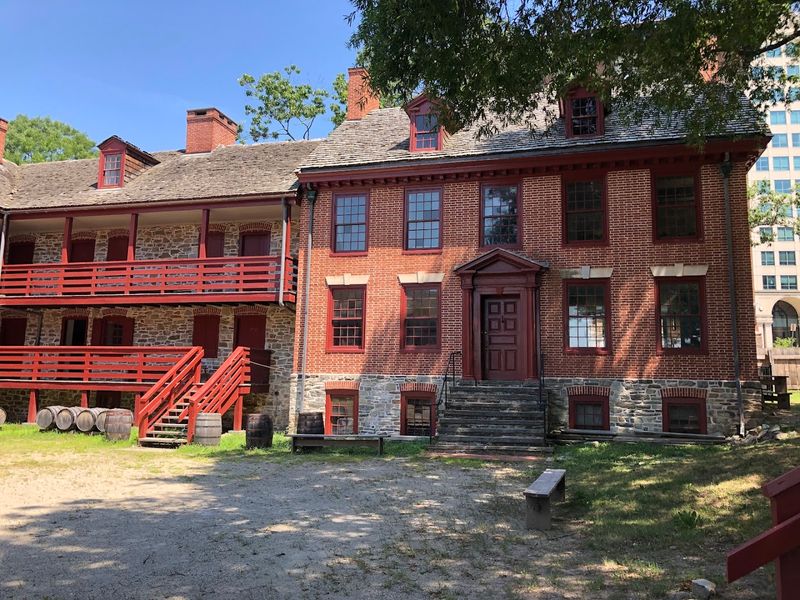
Most American cities would happily build an entire identity around having a surviving eighteenth-century military barracks tied to a world-shifting war. Trenton has the real thing, and the Old Barracks wears that history with zero need for exaggeration.
Constructed in the 1750s and later used during the Revolutionary era, it housed British and Hessian troops before Washington’s stunning attack on Trenton changed the mood of the war. The building’s survival alone is impressive.
Its location in the middle of one of the Revolution’s most consequential places is what makes it essential. The Battle of Trenton has a well-earned reputation as the kind of event that jolted the Patriot cause from near-disaster into something newly possible.
After a run of defeats, Washington crossed the icy Delaware and struck Hessian forces in Trenton on December 26, 1776. The victory did not end the war, of course, but it restored confidence, boosted enlistments, and set up the next phase of the campaign.
Standing at the Old Barracks, you are not floating in broad symbolism. You are in a surviving structure directly tied to the crisis and the comeback.
The museum does a good job leaning into the texture of military life instead of flattening everything into heroic myth. Barracks are practical places.
They remind visitors that wars run on bodies, beds, boots, kitchens, orders, and routine. That grounded quality makes the drama of Trenton hit harder.
New Jersey was not just the backdrop for a famous victory. It was the setting where an army reversed its fortunes in real streets and real buildings.
For this article’s argument, the Old Barracks is almost unfairly useful. It ties together occupation, battle, logistics, and urban history in one stop.
If you want a place that proves New Jersey was the point where the Revolution found its pulse again, this is it.
4. Washington Crossing State Park, Titusville
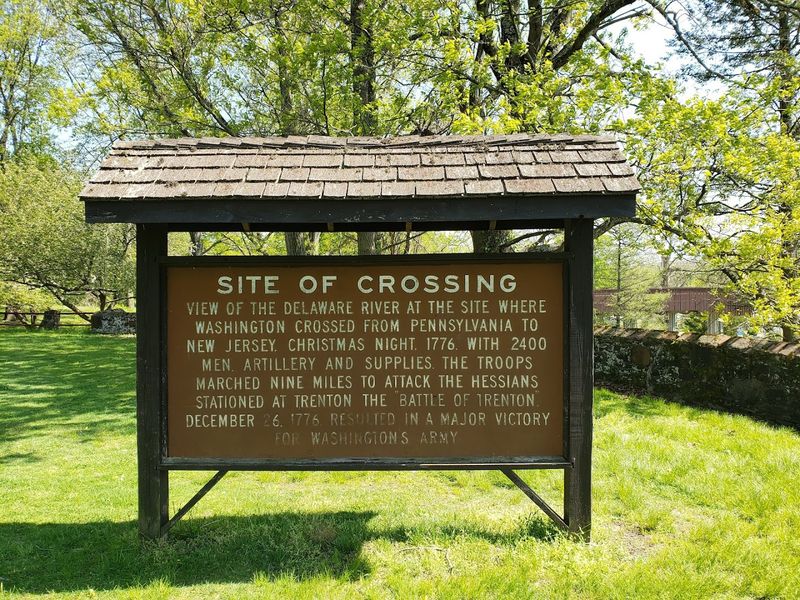
There are famous moments in American history, and then there are famous moments so overexposed they risk turning into wallpaper. Washington’s crossing of the Delaware falls into that category, which is exactly why visiting the New Jersey landing site matters.
Washington Crossing State Park in Titusville pulls the story back out of painting-land and returns it to weather, geography, timing, and nerve. This was not a theatrical flourish.
It was a dangerous river operation in terrible winter conditions, followed by a rapid march into Trenton. The New Jersey side of the crossing often gets less casual attention than the dramatic image of boats on the river, but that shortchanges the whole point.
The crossing mattered because of what happened next on New Jersey soil. The park interprets the “Ten Crucial Days,” that extraordinary stretch from late December 1776 into early January 1777 when Washington’s army crossed, won at Trenton, slipped away, returned, and then beat British forces at Princeton.
Those days rewired the war’s narrative. At the park, the landscape helps the story click.
Rivers are obstacles until somebody turns them into opportunities. Washington did exactly that.
Once the army landed in New Jersey, the campaign became fast, bold, and disruptive. Suddenly the British and Hessian forces were reacting instead of dictating terms.
That shift is why this site belongs in the state’s top tier of Revolutionary places. The most satisfying thing about Washington Crossing State Park is that it makes New Jersey’s role impossible to ignore.
The crossing is legendary, but the Revolution did not pivot in the middle of the river. It pivoted because the army landed here, moved here, and won here.
That makes Titusville less of a side note and more of a starting gun for the comeback.
5. Princeton Battlefield and the Thomas Clarke House, Princeton
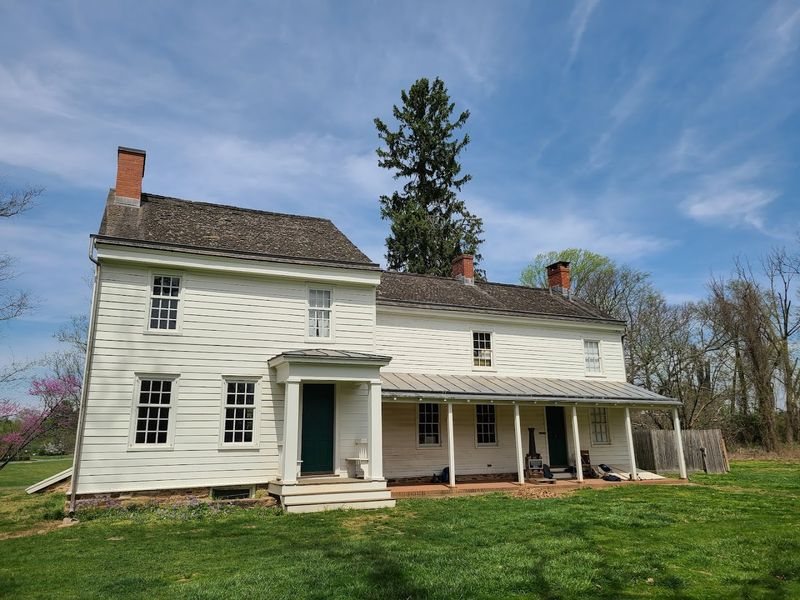
Trenton gets the glory in a lot of popular retellings, but Princeton is where the comeback hardened into credibility. Fought on January 3, 1777, the Battle of Princeton followed the victory at Trenton and turned Washington’s winter campaign into something far larger than a lucky strike.
Princeton showed the Continental Army could keep moving, keep pressuring British forces, and keep winning in New Jersey. That sequence mattered enormously.
One dramatic victory grabs attention. Two in quick succession change strategic perception.
The battlefield itself still carries that sense of open ground and sudden movement. Troops maneuvered across fields and orchards, and the clash helped force British units out of much of New Jersey for a time.
That mattered to morale, recruitment, and the broader political meaning of the war. Washington was not merely surviving anymore.
He was seizing initiative. New Jersey was where that transformation became visible.
Then there is the Thomas Clarke House, which deepens the site beyond troop movements and command decisions. The house served as a field hospital after the battle, bringing the cost of victory into sharp focus.
Wounded soldiers were treated there, including General Hugh Mercer, who died from his injuries after the fighting. Suddenly Princeton is not just a story about tactics.
It is about blood, fear, exhaustion, and the very real bodies behind a turning point. This is one of the best places in the state for making the case that New Jersey was not simply a frequent stage for the Revolution.
It was the place where momentum changed shape. Princeton takes the spark lit at Trenton and turns it into sustained force.
Visit the battlefield, then step into the Clarke House, and the argument almost writes itself: the Revolution’s future looked different after New Jersey.
6. Monmouth Battlefield State Park, Manalapan
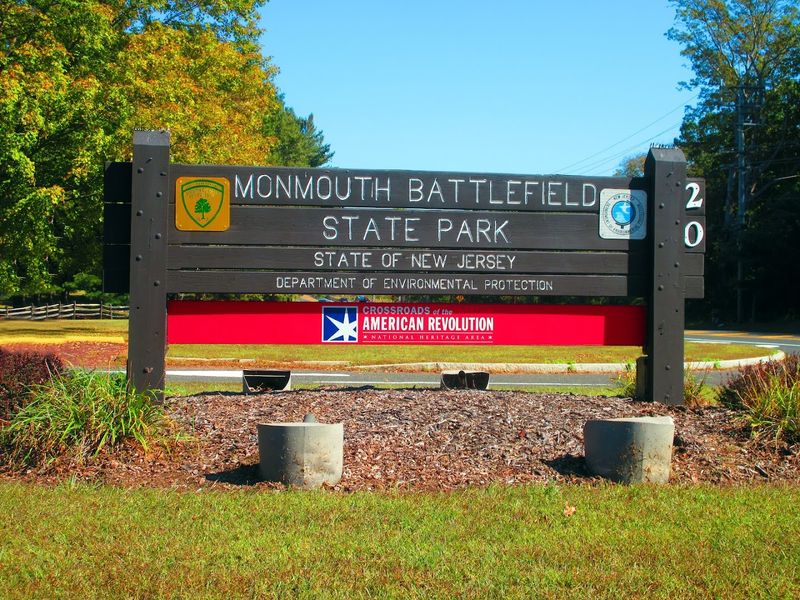
If Trenton and Princeton were the dazzling winter turnaround, Monmouth was the proof that the Continental Army had grown up. The Battle of Monmouth, fought on June 28, 1778, was one of the war’s largest engagements and one of its longest single-day battles.
It unfolded in intense heat across central New Jersey, and by the end of it, the Continental Army had shown it could stand and fight British regulars in a major pitched battle. That was a big deal.
Monmouth comes with all the dramatic ingredients people remember: crushing temperatures, battlefield confusion, Washington’s famous anger at Charles Lee, and the enduring legend of Molly Pitcher. But beyond the lore, the park preserves something more important.
It gives visitors a sense of scale. This was not a quick raid or a clever surprise attack.
This was a sprawling, exhausting test of discipline, command, and staying power. The timing matters, too.
By 1778, the war had changed. France had entered the conflict, and British strategy was shifting.
Monmouth showed that the Continental Army, sharpened by training and experience, was more formidable than it had been in the bleak days of 1776. New Jersey again served as the ground where that reality became undeniable.
Monmouth Battlefield State Park is especially strong for a living-history article because it is a place where the landscape still does a lot of the talking. You can feel distance there.
You can imagine marching there. You can see why command decisions mattered there.
And for the state’s larger claim, Monmouth is a powerhouse: New Jersey was where the Patriots not only recovered, but matured into an army capable of meeting the British head-on. That is more than symbolic importance.
That is hard evidence.
7. Fort Lee Historic Park, Fort Lee
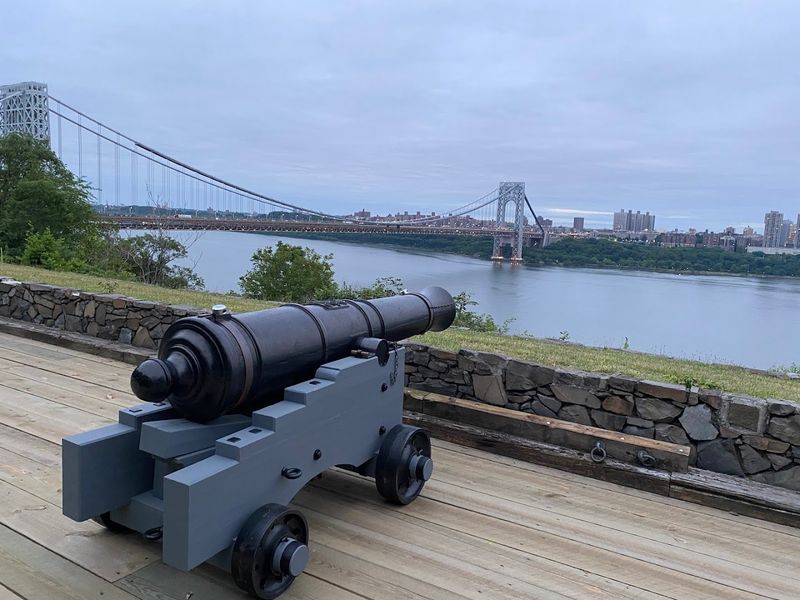
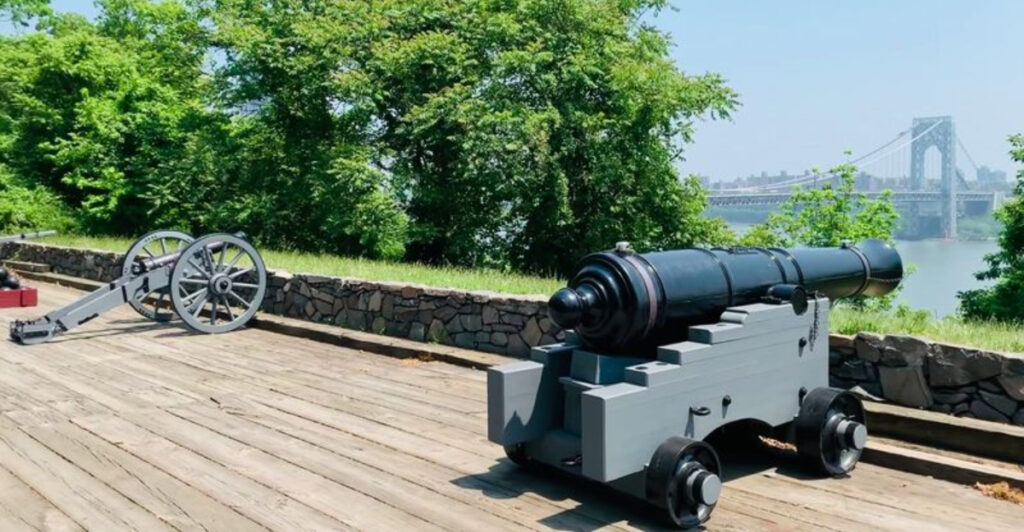
Before New Jersey could become the site of a comeback, it first had to absorb a serious setback. Fort Lee Historic Park tells that part of the story with a dramatic Hudson River backdrop and a clear sense of just how precarious the Patriot cause looked in late 1776.
Positioned atop the Palisades, Fort Lee was meant to help control movement along the river opposite Fort Washington. But after the British captured Fort Washington in November 1776, Fort Lee became vulnerable, and Washington was forced into a hasty retreat across New Jersey.
That retreat matters because it set the stage for everything that followed. New Jersey was not merely the site of shining victories.
It was the landscape through which Washington escaped disaster, preserved the army, and bought time. Fort Lee makes that chain of events easier to understand.
The steep terrain and commanding views show why the location mattered strategically, while the interpretation of the evacuation underscores how quickly fortunes could turn. There is also something useful, editorially speaking, about including a site tied to loss and withdrawal.
It makes the larger argument stronger. The Revolution in New Jersey was not a neat victory parade.
It was messy, unstable, and full of reversals. That is exactly why the state’s later triumphs land so hard.
You cannot appreciate Trenton without understanding the desperation that came before it. Fort Lee Historic Park captures that desperation in a very readable way.
The reconstructed fort elements and the cliffside setting keep the strategy visible. The site reminds visitors that New Jersey’s importance began even before the famous winter victories.
This was where the army fell back, recalculated, and refused to die. In other words, Fort Lee is part of the proof that the turning point was not one moment.
It was a New Jersey sequence.
8. Wallace House, Somerville
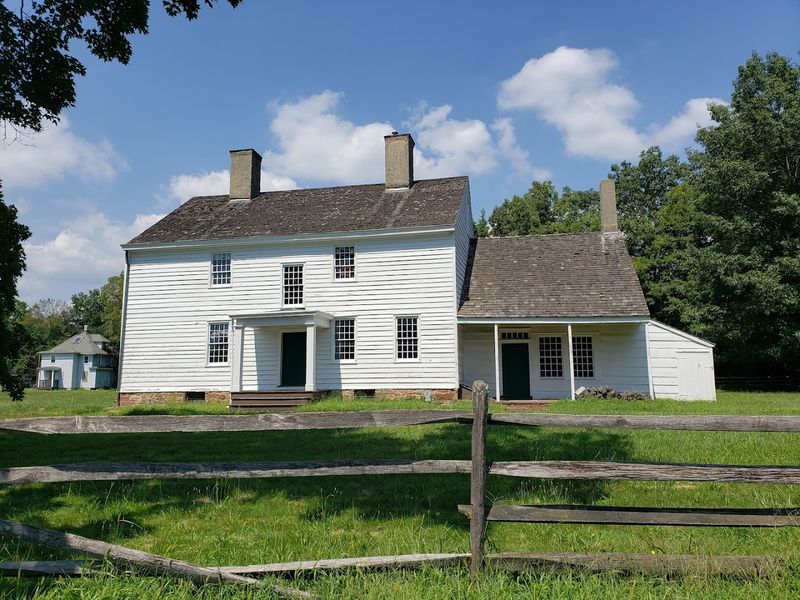
Big Revolutionary sites get most of the attention, but Wallace House in Somerville tells the kind of quieter story that makes the whole war make more sense.
This Georgian home served as George Washington’s headquarters during the Middlebrook encampment in 1778–1779, when the Continental Army occupied a strong position in the Watchung Mountains and nearby lowlands.
It was a strategic perch, not a flashy one, and that is exactly why it matters. From Middlebrook, Washington could monitor British activity around New Brunswick and the Raritan Valley while keeping his own army in a more defensible inland position.
This was New Jersey doing what it did best during the war: offering terrain, road networks, and strategic proximity without handing the enemy an easy target. The Wallace House itself gives that high-level strategy a human frame.
Headquarters were not just places where men stared moodily at maps. They were lived-in rooms where letters were written, intelligence was weighed, and decisions rippled outward.
What makes Wallace House especially satisfying is that it speaks to the long game. The Revolution was not won only through spectacular moves.
It was also won through patience, positioning, and a willingness to let geography do some of the work. New Jersey’s central location made it a battleground, yes, but also a planning ground.
The state was constantly forcing both sides to think in terms of movement and counter-movement. For readers, Wallace House can be a refreshing reset in the article.
It broadens the definition of “turning point” beyond a single battle. Sometimes the decisive advantage comes from being in the right place, seeing more clearly, and waiting for the enemy to overextend.
That is the story this house tells, and it helps prove that New Jersey’s Revolutionary importance was strategic to the core.
9. Dey Mansion, Wayne
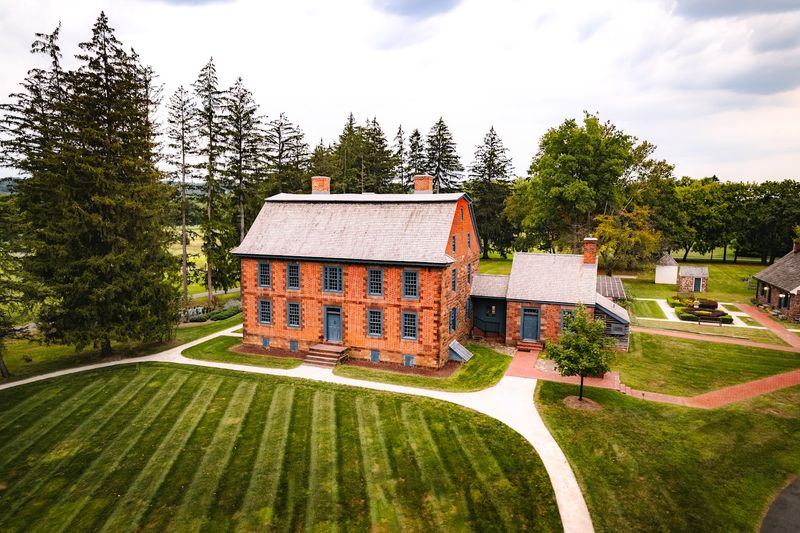
North Jersey gets overlooked in a lot of casual Revolution talk, which makes Dey Mansion a very useful corrective. Located in Wayne, this handsome sandstone house served as Washington’s headquarters multiple times in 1780.
By then, the war had moved beyond its early panic phase, but command still depended on mobility, regional oversight, and access to crucial routes and supplies. Dey Mansion shows that New Jersey’s value did not end after the “Ten Crucial Days.” The state remained central to the war effort.
The house itself is striking, but the larger importance lies in what it represented. Headquarters moved because the war moved.
Washington needed locations that offered security, communication, and strategic reach. Northern New Jersey, positioned between major theaters and threaded with useful roads, fit that need repeatedly.
Dey Mansion also sits within the broader story of the Preakness Valley and nearby encampment activity, which helps visitors see the house as part of a living military landscape rather than an isolated historic showpiece. There is a pattern in New Jersey’s Revolutionary sites, and Dey Mansion reinforces it beautifully.
Again and again, the state appears not just as scenery but as infrastructure. The war’s leaders kept returning because the geography kept making sense.
That is a strong thing to notice in person. When one headquarters house is joined by another, and another, and another across the state, the argument becomes cumulative.
Dey Mansion is also just a smart inclusion because it expands the map. The Revolution in New Jersey was not only a central-Jersey story and not only a Delaware story.
It reached into the north, and the leadership of the army did too. This site proves the state was not briefly important.
It was persistently important.
10. Red Bank Battlefield, Whitall House, and Fort Mercer, National Park
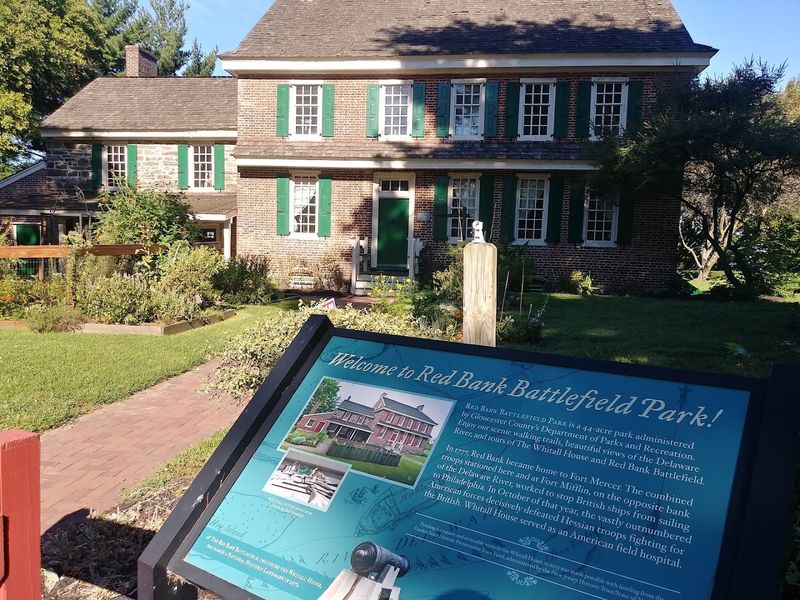
Down in Gloucester County, Red Bank Battlefield gives South Jersey a starring role in a war story that too often clusters around Trenton and Morristown. This was the site of Fort Mercer, where American defenders repelled a Hessian assault in October 1777 during the Philadelphia campaign.
The victory helped frustrate British efforts to fully secure the Delaware River approaches to occupied Philadelphia, which is exactly the kind of strategic disruption New Jersey specialized in. The battlefield is compelling on its own, but the Whitall House adds the kind of specificity that makes the site memorable.
Built before the war and still standing, the house belonged to a Quaker family caught in the middle of military violence. During the battle, it became entangled in the action, giving the site both military and civilian dimensions.
That combination is one of New Jersey’s great Revolutionary strengths. The state’s historic places rarely tell only one type of story.
They tend to show how war spilled into homes, farms, roads, and river corridors. Fort Mercer’s defense also matters because it proves New Jersey’s contribution was not limited to famous Washington moments.
Here, local geography and determined resistance shaped a larger campaign. The Delaware was a lifeline.
Any stronghold affecting river movement carried outsized importance. Red Bank did exactly that.
For the article’s thesis, this site is gold. It widens the state’s Revolutionary reputation and reminds readers that the turning point was not just one county, one general, or one winter.
New Jersey kept altering the war in different regions and in different ways. Red Bank Battlefield makes that case from the southern edge of the state, and it makes it very well.
11. Proprietary House, Perth Amboy
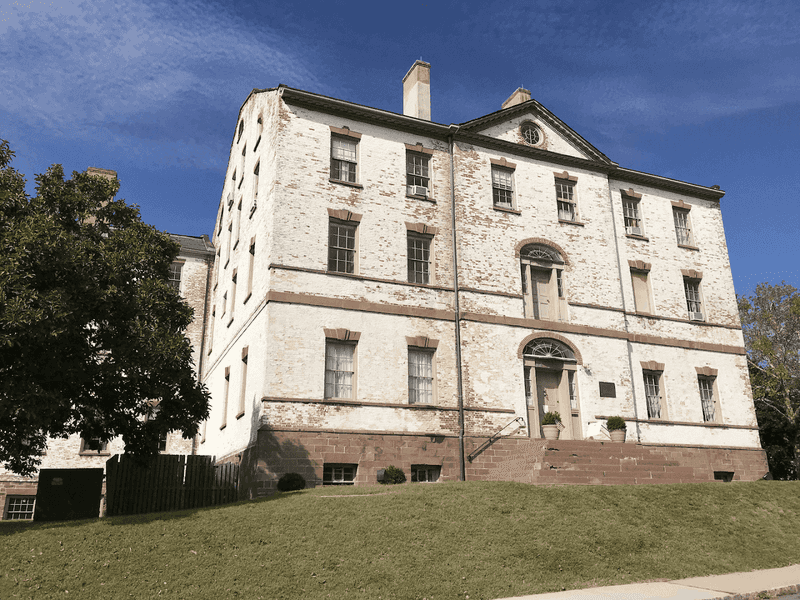
A good Revolutionary article should make room for the awkward truth that not everyone in the colonies was cheering for independence. Proprietary House in Perth Amboy does that beautifully.
Built in the eighteenth century and later used by William Franklin, the last royal governor of New Jersey and the famously Loyalist son of Benjamin Franklin, the house preserves a side of the war that tends to get flattened in patriotic storytelling. That is exactly why it deserves a place here.
New Jersey was a turning point partly because it was contested in every sense of the word. Armies fought over it.
Civilians endured occupation and raids in it. Politically, families and communities divided over the future in it.
Proprietary House makes that division visible. It was not just the home of a royal official.
It was a symbol of the old order hanging on as the colony transformed around it. The setting in Perth Amboy also matters.
This was a significant port city with easy access to New York, which helps explain why the location had political and military relevance. A house like this is useful because it shifts the Revolution from battlefield drama to the struggle over authority itself.
Who ruled? Who belonged?
Who stayed loyal to the Crown, and why? New Jersey did not dodge those questions.
It lived inside them. Including Proprietary House makes the full article smarter.
It tells readers that the “real turning point” was not just about winning battles. It was about breaking from royal power in a place where royal power had real roots.
That gives New Jersey’s story extra tension, and tension makes history much more convincing.
12. Indian King Tavern, Haddonfield
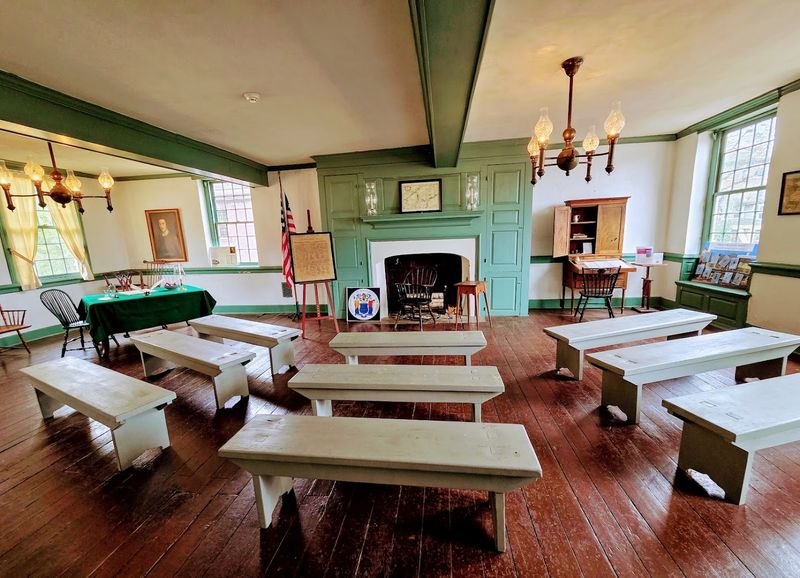
Not every Revolutionary turning point involved muskets and marching orders. Some happened around tables, in meeting rooms, and in buildings that looked ordinary until history moved in.
Indian King Tavern in Haddonfield is one of those places. In 1777, the New Jersey General Assembly met here after the British occupation of Princeton, and while gathered in Haddonfield, the legislature adopted the Great Seal of New Jersey.
That might sound less cinematic than a battlefield charge, but politically, it was enormous. This tavern makes a terrific case for New Jersey’s centrality because it shows the state doing the practical work of becoming a state.
Independence was not just declared in Philadelphia and then magically complete everywhere else. Governments had to function.
Symbols had to be adopted. Civil authority had to continue even as war disrupted normal life.
The Assembly meeting in a tavern because circumstances demanded it is such a perfectly Revolutionary detail. Improvisational government is still government.
Haddonfield also helps widen the map in a satisfying way. South Jersey was not simply watching events unfold elsewhere.
It was participating in the legal and political restructuring of the new nation. Indian King Tavern preserves that side of the story in a form visitors can immediately understand.
Taverns were information hubs, social spaces, and political theaters long before people started calling things “community centers.” For a fast-scanning reader, this section can do a lot of work. It reminds them that wars are won not only by defeating an enemy but by building a functioning replacement for the system you are leaving behind.
New Jersey did that work, too. And it did some of it inside a tavern, which honestly feels exactly right.
13. Liberty Hall Museum, Union
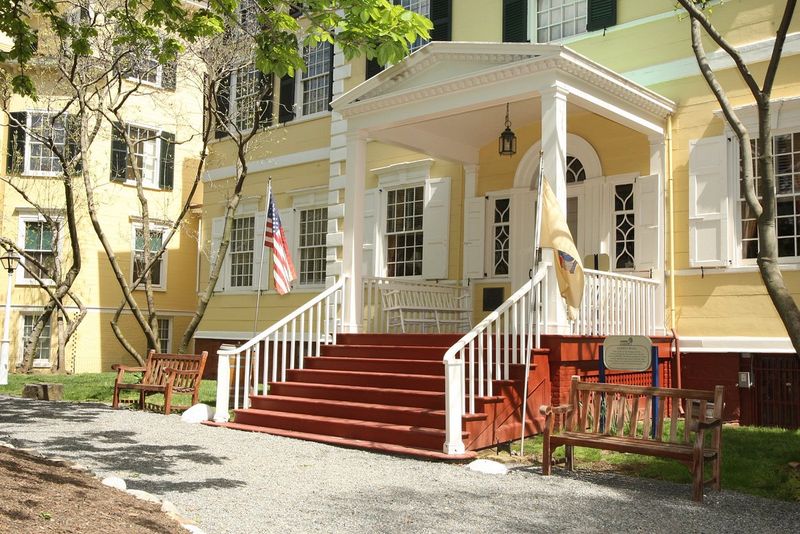
Liberty Hall gives the Revolution a political backbone. Located in Union, this long-standing estate was the home of William Livingston, New Jersey’s first elected governor and one of the state’s most influential Revolutionary figures.
If some sites show where the war was fought, Liberty Hall shows where leadership lived, worked, and shaped the new state’s identity. Livingston is worth more attention than he usually gets in broad popular history.
He was deeply involved in the Patriot cause and served as governor through much of the war. That means Liberty Hall was tied not just to local prestige, but to the actual machinery of wartime governance in New Jersey.
The house’s layered history stretches beyond the Revolution, but its eighteenth-century role is the key reason it belongs in this lineup. This was a place connected to decision-making, influence, and the business of keeping a state aligned with the struggle for independence.
The beauty of Liberty Hall in an article like this is that it balances the soldier-heavy narrative. Readers need battlefield drama, absolutely, but they also need to see who was steering the state, keeping institutions functioning, and helping translate revolt into government.
New Jersey’s claim to Revolutionary importance becomes much stronger when you pair military sites with political homes like this one. There is also a nice tonal advantage here.
Liberty Hall feels less like a grim survival story and more like evidence of a state figuring itself out in real time. That makes it a strong late-article site.
By the time readers arrive here, they have already seen crossings, barracks, headquarters, and battlefields. Liberty Hall reminds them that the end goal was not just to fight well.
It was to build something lasting, and New Jersey had people doing exactly that.
14. Batsto Village, Hammonton
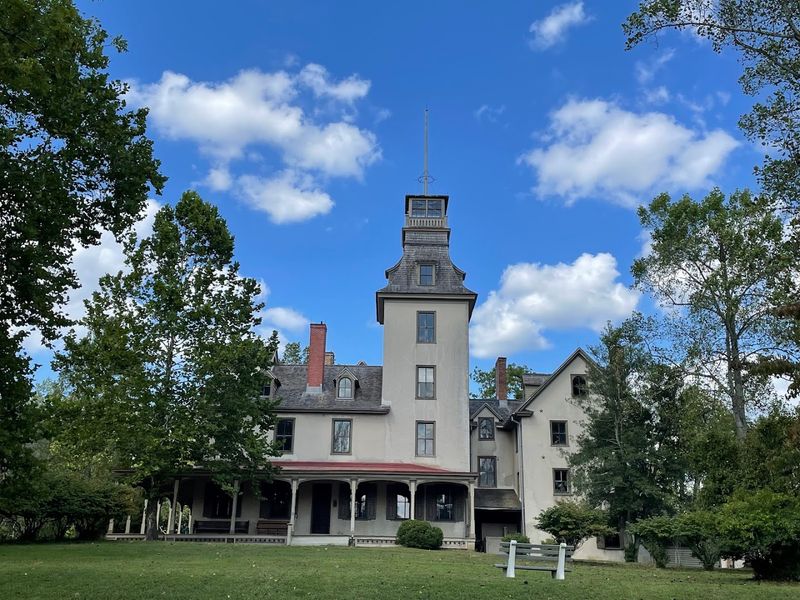
Batsto Village is the plot twist pick, and that is precisely why it works so well. Deep in the Pine Barrens, far from the most famous battlefields, this historic ironworks community helps tell the Revolution through production, materials, and logistics.
During the Revolutionary era, Batsto’s furnaces contributed to the wartime economy by producing iron goods needed for the Patriot cause. That makes the site a reminder that independence was not won on courage alone.
Somebody had to make things. The village is fascinating because it expands the story beyond soldier-versus-soldier action.
Wars run on supply chains, labor, natural resources, transportation routes, and industrial know-how. Batsto had access to the raw ingredients needed for ironmaking, along with a whole community organized around production.
Once you start thinking about the Revolution that way, New Jersey’s importance looks even larger. The state was not just absorbing troop movement.
It was helping sustain the material side of resistance. Batsto also has that rare quality of feeling specific to New Jersey in a way no generic battlefield ever could.
The Pine Barrens setting, the industrial history, the preserved village plan, the sense of a working place rather than a commemorative place alone, all of it gives the site a distinct personality. It tells readers that Revolutionary history in this state is not one-note.
Ending with Batsto works because it leaves the article on a broader and smarter definition of “turning point.” New Jersey mattered because it fought, yes. It also mattered because it housed leaders, anchored strategy, kept governments moving, and supplied the wider effort.
Batsto is proof that the Revolution’s outcome depended on more than battlefield glory, and New Jersey was right in the middle of that bigger story.
Share this story