The creepiest sound in New Jersey is not always a scream from the Pine Barrens. Sometimes it is the scrape of an old cell door in Mount Holly, the imagined crackle of a burning airship over Lakehurst, or the quiet shock of numbered graves where names should be.
That is what makes the state’s haunted places so unsettling. The legends are fun, sure, but the real stories often have sharper teeth: abandoned institutions, lost burial grounds, Revolutionary-era intrigue, disaster sites, lonely roads, and buildings that have survived more grief than any ghost tour could neatly package.
This list is for the reader who likes a chill with a paper trail. Some places are museums you can tour.
Others are active facilities, military property, or former sites best approached with respect and common sense. Either way, these New Jersey haunts prove that history can be far creepier than anything whispered after dark.
1. Burlington County Prison Museum, Mount Holly
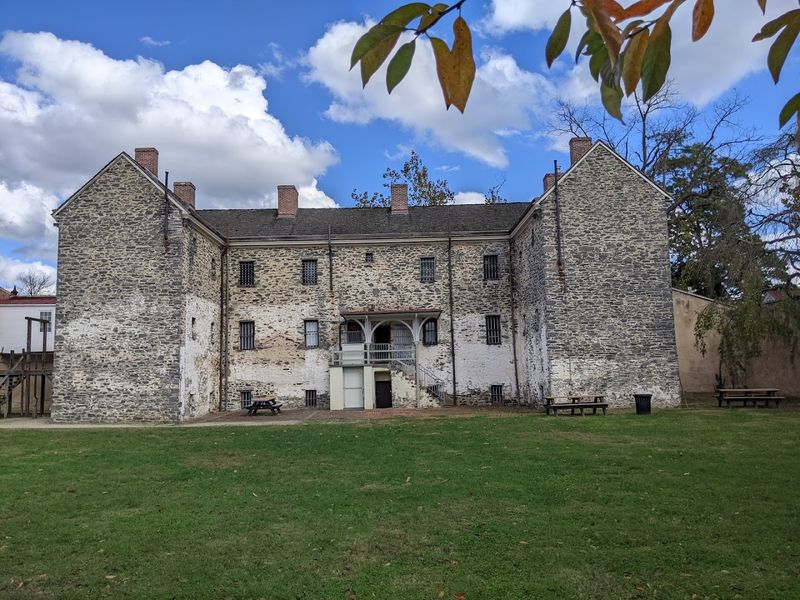
A jail designed with architectural pedigree sounds almost civilized until you step into the old stone reality of it. Completed in 1811, the Burlington County Prison was designed by Robert Mills, one of the first American-born professional architects, and today it stands as a National Historic Landmark in Mount Holly.
That polished résumé makes the place even stranger: this was not some crude lockup thrown together on the edge of town. It was built to last, and it did, holding prisoners for more than a century and a half.
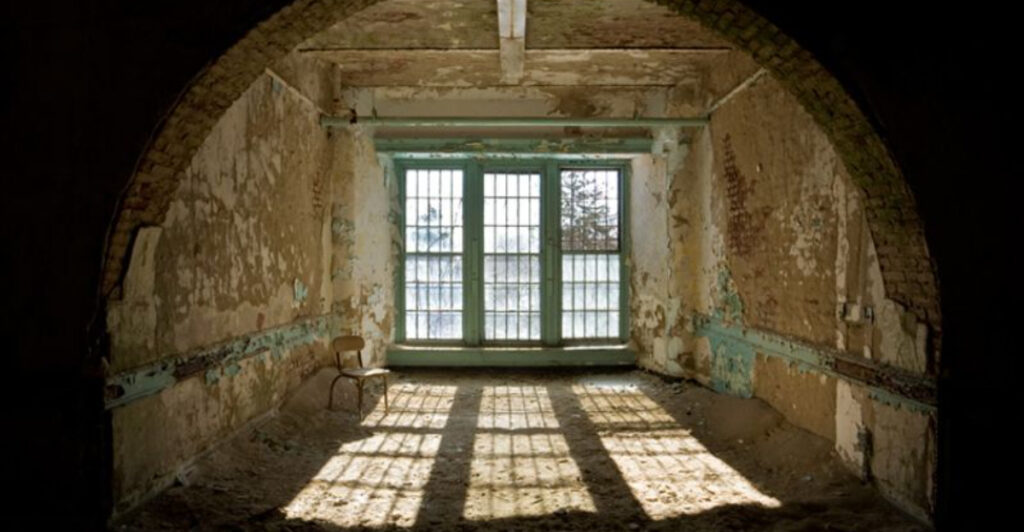
The draw here is the collision between civic pride and human misery. Visitors come for the cellblocks, the heavy doors, the old jail-yard feeling, and the kind of silence that makes every footstep sound accusatory.
The haunted reputation leans into shadowy figures, strange noises, and the lingering energy of people who once had very little control over their own lives. But the real hook is simpler and harsher: generations passed through these walls under a system that treated punishment as architecture.
Make it a Mount Holly history stop rather than a quick ghost-story detour. The downtown setting makes it easy to pair with a walk through the historic district, though the prison itself deserves time, not just a nervous peek through the door.
2. Trenton Psychiatric Hospital, Trenton/Ewing
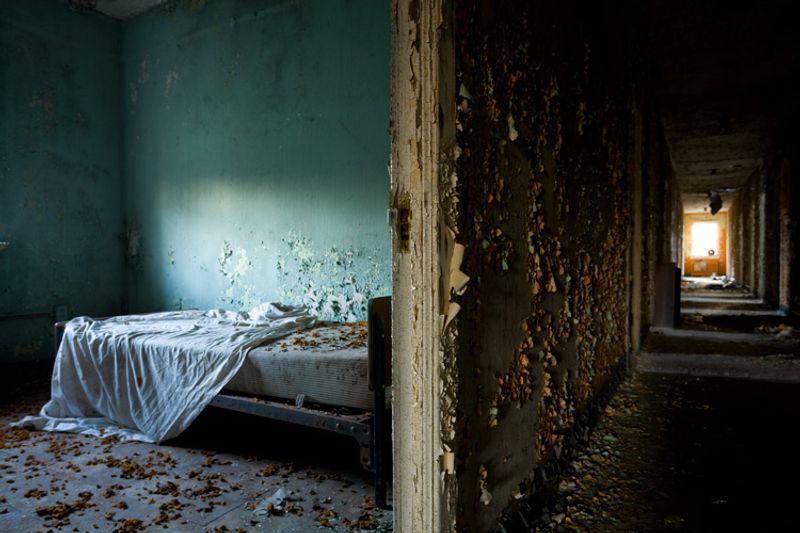
The name alone carries weight, but the history behind Trenton Psychiatric Hospital is what makes it genuinely disturbing. Opened in 1848 as New Jersey’s first public mental hospital, it began with reform-minded intentions connected to Dorothea Dix and the Kirkbride ideal of humane, orderly care.
That hopeful beginning is exactly why the darker chapters land so hard. The hospital later became associated with Dr. Henry Cotton, whose radical theories led to invasive procedures that sound more like body horror than medicine.
This is not a place to treat like an abandoned playground or a spooky photo op. It is an active medical campus, and the respectful way to include it in a New Jersey haunt itinerary is through research, local history, and the broader story of how mental health treatment evolved, failed, and sometimes harmed the very people it claimed to save.
The legends tend to focus on screams, apparitions, and old asylum imagery, but the documented past is already chilling enough. What makes Trenton Psychiatric Hospital worth including is that uncomfortable gap between noble reform and institutional cruelty.
It asks readers to sit with a different kind of haunting: not just ghosts in windows, but medical arrogance, vulnerable patients, and a state history that does not fit neatly into a Halloween tale.
3. Greystone Park Psychiatric Hospital, Morris Plains/Parsippany
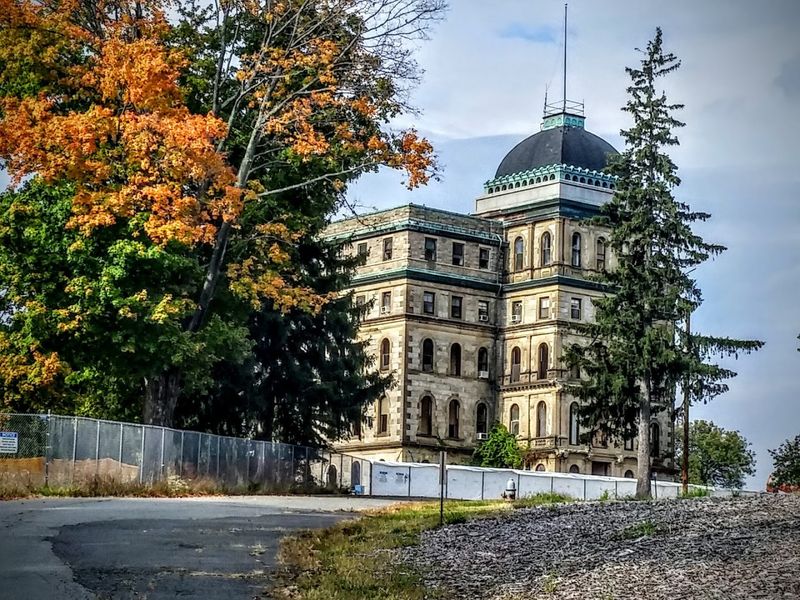
For years, Greystone loomed in the North Jersey imagination like a castle built out of dread. The original hospital opened in 1876 as the State Asylum for the Insane at Morristown, part of a push to relieve overcrowding at Trenton’s asylum, and its enormous Kirkbride building became one of the most recognizable psychiatric hospital structures in the country.
The old main building is gone now, demolished in 2015 after years of preservation fights, but that almost makes the place feel more haunted, not less. Today, the story is layered over a modern psychiatric facility and public parkland, so the best way to experience Greystone is not by hunting for ruins.
It is by walking the grounds that remain open to the public and understanding what stood there: a massive institution that began with ideals of light, air, and moral treatment, then struggled with overcrowding and the realities of long-term confinement.
The legends usually go for the easy asylum scares, but the history is more complicated and more unsettling.
Greystone was a place of treatment, suffering, bureaucracy, reform, neglect, protest, and memory. Bring curiosity, not a trespassing mindset.
The creepiness here is not about sneaking into a building. It is about standing in a quiet landscape and realizing an entire vanished world still presses up through the grass.
4. Marlboro Psychiatric Hospital Cemetery / Former Hospital Grounds, Marlboro
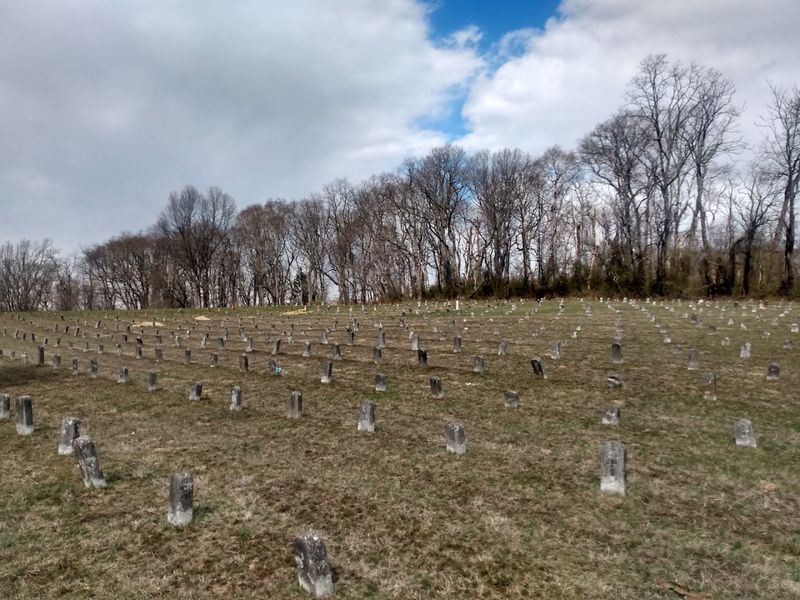
There is something especially sobering about a grave marker with a number instead of a name. Marlboro Psychiatric Hospital opened in 1931 and closed in 1998, and its associated cemetery holds the kind of history that is hard to sensationalize because the truth is already bleak.
State records tie the institution to decades of psychiatric care, while cemetery accounts describe hundreds of patient burials, many marked with plain numbered stones. That is why Marlboro belongs on this list.
The ghost stories are part of the local lore, but the creepiest element is the anonymity. These were people with families, private fears, illnesses, routines, and entire lives, yet many were reduced in death to a number in a field.
The former hospital buildings are not the attraction here, and readers should avoid wandering into restricted or unsafe areas. The meaningful visit, if access is permitted and respectful, is quiet and brief: a cemetery viewed as a memorial, not a thrill ride.
The vibe is less jump-scare and more stomach-drop. It is the kind of place that makes you lower your voice without being told.
Marlboro’s history also works well in an article because it pushes beyond the usual haunted-asylum clichés. The real story is about institutional life, forgotten patients, and the way communities decide who gets remembered.
5. Snake Hill / Hudson County Burial Grounds, Secaucus
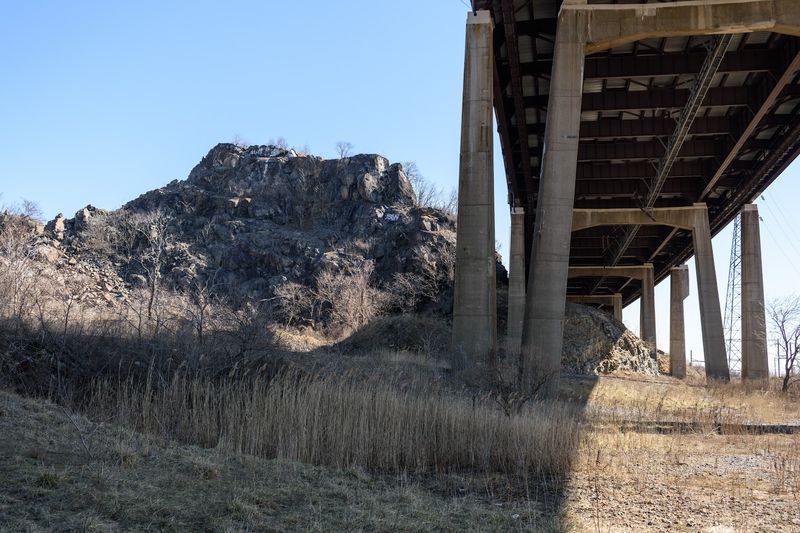
A strange rocky rise beside the Meadowlands would be eerie enough on its own, but Snake Hill comes with a history that sounds almost too grim to be real.
The area once held Hudson County institutions, including facilities connected to poverty, illness, and psychiatric care, and nearby burial grounds became a resting place for people who were often poor, institutionalized, or otherwise forgotten.
During modern transportation work, thousands of remains were disinterred from the old cemetery area, turning a half-buried local memory into a major archaeological and ethical reckoning. That is the heart of Snake Hill’s creepiness: not a monster, not a phantom, but the discovery that so many lives had been literally paved around and nearly erased.
It is not the easiest place to “visit” in the classic tourist sense, and that is probably for the best. This is a history to approach through memorials, documented accounts, and the Meadowlands landscape itself, where highways, rail lines, marshes, and old institutional shadows overlap.
The legend gives Snake Hill a sinister name and silhouette. The history gives it weight.
It is a reminder that New Jersey’s haunted places are often tied to infrastructure, development, and the inconvenient dead. Few sites on this list make the phrase “buried history” feel quite so literal.
6. Hindenburg Crash Site / Hangar No. 1, Lakehurst
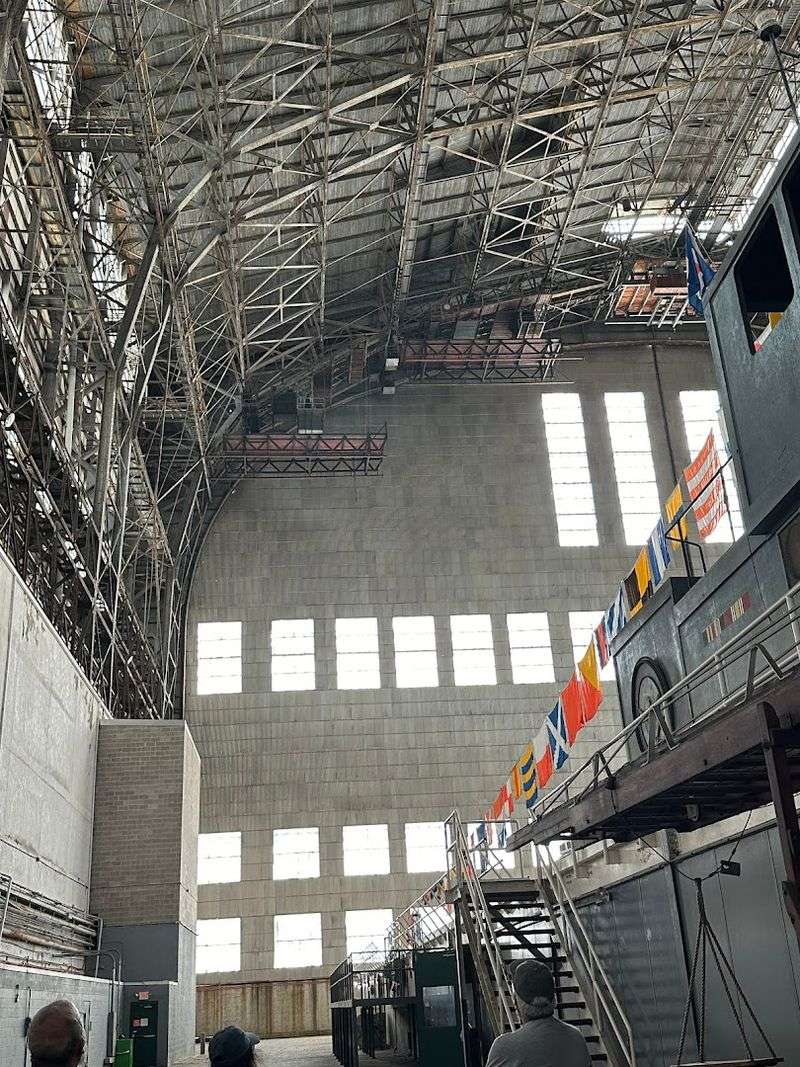
The horror at Lakehurst did not need darkness to become unforgettable. On May 6, 1937, the Hindenburg caught fire while attempting to land at Naval Air Station Lakehurst, and the disaster helped end the glamorous age of commercial airship travel.
Hangar No. 1, built in 1921, remains one of the major surviving structures tied to that era of lighter-than-air flight and is designated as a National Historic Landmark. The haunted reputation here is less about creaky hallways and more about scale.
A huge hangar. A famous catastrophe. A newsreel moment burned into public memory. Visitors who arrange proper access through authorized tours are not just looking at a crash site; they are standing where modern media, aviation ambition, and sudden mass panic collided.
The practical detail matters: this is an active military installation, so it is not a casual pull-over-and-wander destination. Plan ahead, follow tour rules, and do not expect a roadside haunt.
The real chill is imagining the confidence of a transatlantic airship arriving in New Jersey, then the speed with which wonder became disaster. Ghost stories may add a shiver, but the documented scene already has everything: fire, spectacle, screams, reporters, and a symbol of progress collapsing in less than a minute.
7. Clinton Road, West Milford
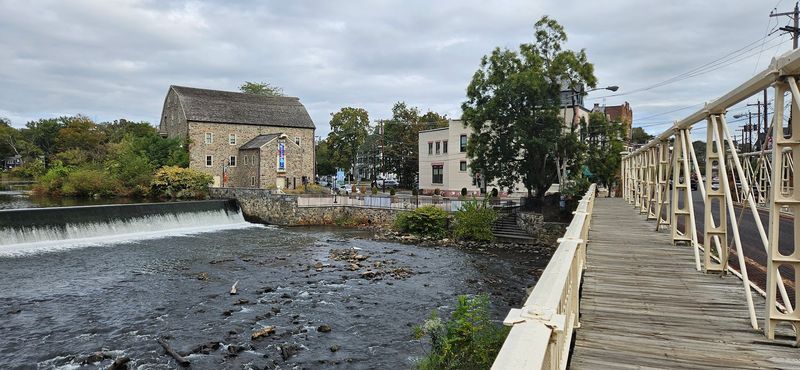
The road looks almost too ordinary at first, which is exactly how it gets you. Clinton Road runs through West Milford for roughly ten miles, cutting past woods, water, and stretches where headlights seem to disappear into black space.
Over time, it has collected a full cabinet of New Jersey folklore: phantom vehicles, strange lights, occult rumors, roadside figures, and the famous bridge story locals love to retell. What makes Clinton Road more interesting than a standard haunted-road entry is that its reputation feeds on isolation.
North Jersey is crowded, noisy, and paved within an inch of its life, yet this road can still feel weirdly remote. That contrast does half the work before any legend shows up.
The best way to experience it is simple: drive it carefully in daylight first, then decide whether you are truly interested in the nighttime version. Do not stop in unsafe spots, do not block traffic, and do not treat nearby property like a movie set.
The appeal is the slow-build unease: the bend in the road, the trees pressing close, the sudden sense that every local warning might have started with someone joking and ended with someone driving faster than they meant to. The history may be scattered, but the legend’s grip on New Jersey is very real.
8. Shades of Death Road, Warren County
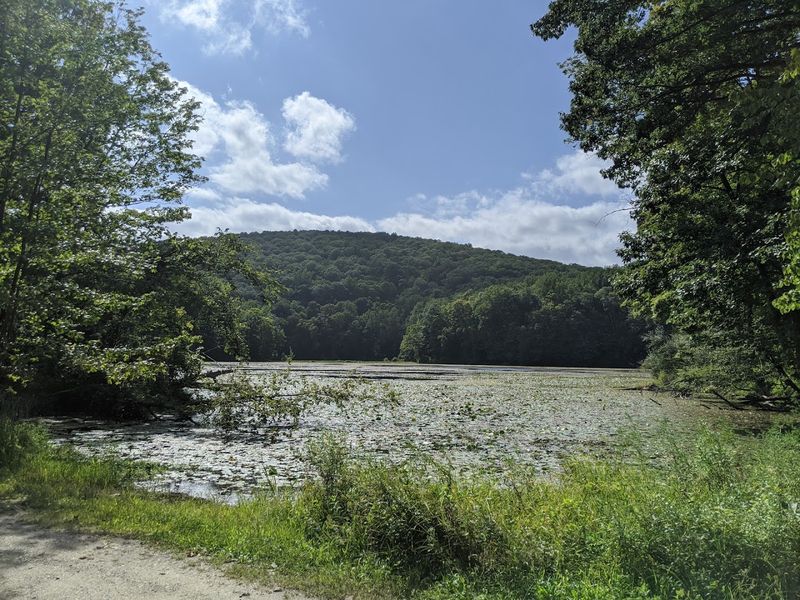
A road named Shades of Death does not have to try very hard. This rural Warren County stretch winds through farmland, forest, and the Jenny Jump State Forest area, and its name has inspired decades of theories, dares, and late-night drives.
Some stories point to old murders, some to disease, some to dangerous terrain, and some to the kind of folklore that grows naturally in places where the trees lean close and the road signs keep disappearing. What gives it staying power is the setting.
Warren County does not feel like the Jersey most outsiders imagine. It is quieter, darker, and more rural, with long patches where the past feels less paved over.
That makes every story easier to believe for at least a minute. If readers go, they should treat it as a scenic, slightly spooky drive rather than a stunt.
Keep to public roads, respect residents, and avoid the midnight chaos that ruins these places for everyone. The “do” here is less about chasing a ghost and more about noticing the mood: the curves, the old fields, the forest edge, the little jolt of seeing that name on a sign.
The creepiest part is that no single origin story fully wins. The road keeps its secrets, and honestly, that is the whole point.
9. The Pine Barrens / Leeds Point, South Jersey
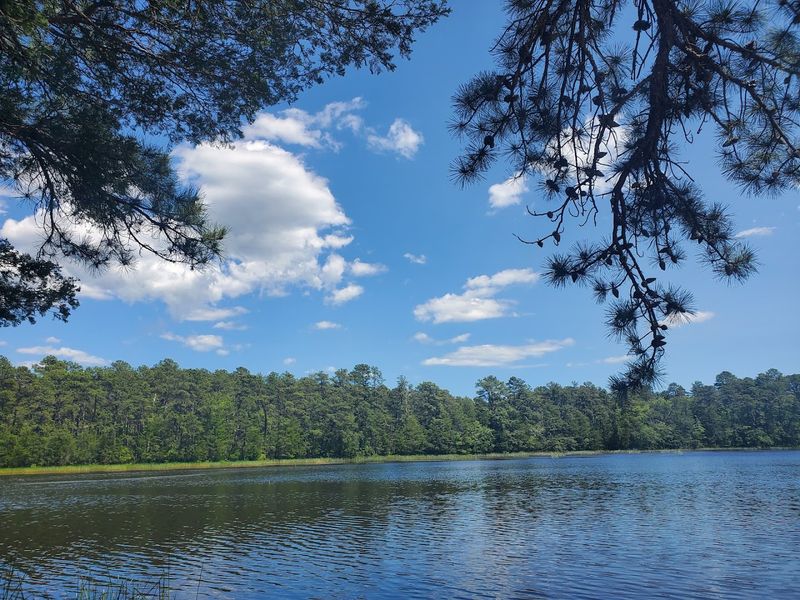
The Pine Barrens do not need a mansion, a prison, or a cemetery to feel haunted. They have sand roads, pitch pines, cedar water, and a way of swallowing sound that makes even a sunny afternoon feel slightly off.
The most famous legend here is the Jersey Devil, often tied to Mother Leeds and Leeds Point, with the creature said to roam the Pinelands after a cursed birth story that generations of South Jersey residents have happily argued over.
But the better reason to include the Pine Barrens is that the legend grew from a real cultural landscape: colonial families, religious disputes, isolation, industry, poverty, and outsiders misunderstanding the people who lived deep in the pines.
That makes the Jersey Devil less like a random monster and more like a symbol of how a region becomes mythologized. For readers, the best visit is not racing around looking for glowing eyes.
Go in daylight, hike marked trails, visit historic villages, or take a slow drive through towns and forests that still feel distinct from the rest of the state. Bring water, a map, and enough humility to admit the woods know themselves better than you do.
The Pine Barrens are creepy because they are vast, old, and stubbornly themselves. The Devil is just the mascot.
10. Emlen Physick Estate, Cape May
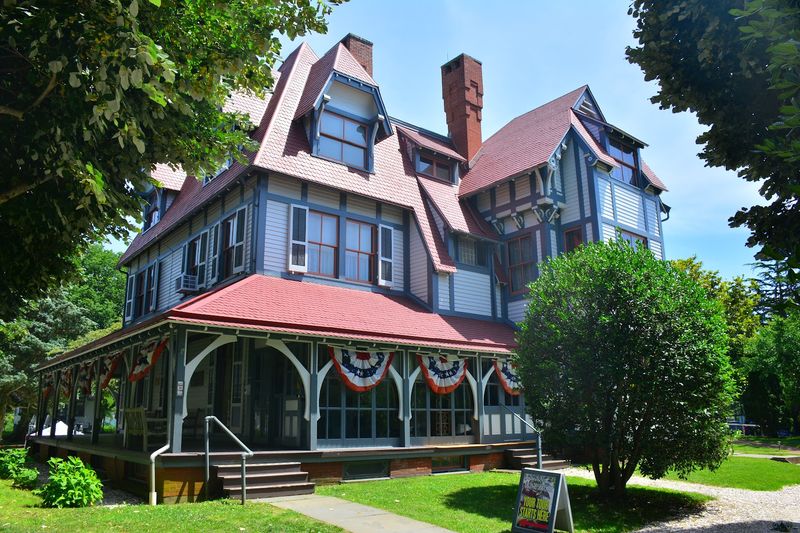
Cape May does Victorian beauty so well that it is easy to forget how strange Victorian beauty can be. The Emlen Physick Estate, built in 1879 and attributed to architect Frank Furness, is Cape May’s only Victorian house museum, with tours that lean into architecture, family life, and the polished rituals of a very particular 19th-century household.
The house earns its haunted reputation because it already looks like it is keeping secrets: angled rooflines, bold Stick-style details, deep porches, and rooms arranged for a world of servants, social codes, illness, mourning customs, and carefully managed appearances. That is the fun of including it.
It is not creepy because it is crumbling. It is creepy because it is preserved.
Visitors can tour the rooms, linger over the oddities of Victorian domestic life, and then step back into bright Cape May as if they have just exited a beautifully dressed time capsule. The practical move is to pair it with a broader Cape May history day rather than rushing in only for ghost lore.
This is a place where the legend works best when you let the house be a house first. The creak on the stairs is more effective after you have pictured who used those stairs, who worked below them, and who may have felt trapped behind all that elegance.
11. Proprietary House, Perth Amboy
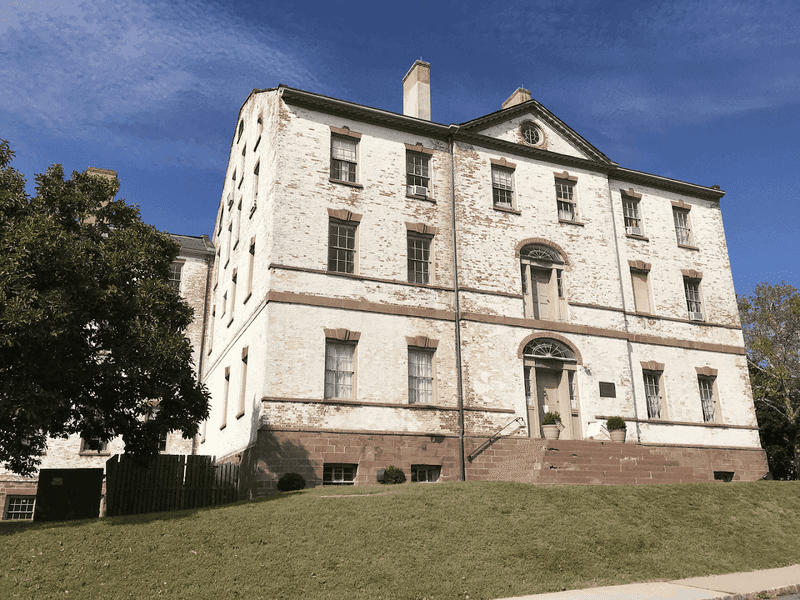
Royal governors are not usually the first thing people associate with haunted New Jersey, which is exactly why Proprietary House is such a good pick. Completed in 1764, the Perth Amboy mansion served as the residence of William Franklin, New Jersey’s last royal governor and Benjamin Franklin’s son.
It later passed through lives as a hotel, private mansion, retirement home, boarding house, office space, and museum, which means the building has had more identities than some entire towns. The haunted stories often circle around old rooms, footsteps, and figures from another century, but the real tension is political and personal.
William Franklin stayed loyal to the Crown while his father became a founding icon of the Revolution. That father-son split gives the place an emotional crackle no ghost writer could improve.
When you visit, look at it less as a spooky mansion and more as a survivor of divided loyalties, changing fortunes, and centuries of reuse. Perth Amboy’s waterfront history adds to the mood; this was once a city with serious colonial importance, not just a dot between bigger destinations.
Proprietary House is worth including because it makes New Jersey’s Revolutionary past feel domestic and uncomfortable. The creepiness is not only in who might linger there.
It is in imagining the conversations, betrayals, and private calculations that once filled those rooms.
12. Seabrook-Wilson House / “Spy House,” Port Monmouth
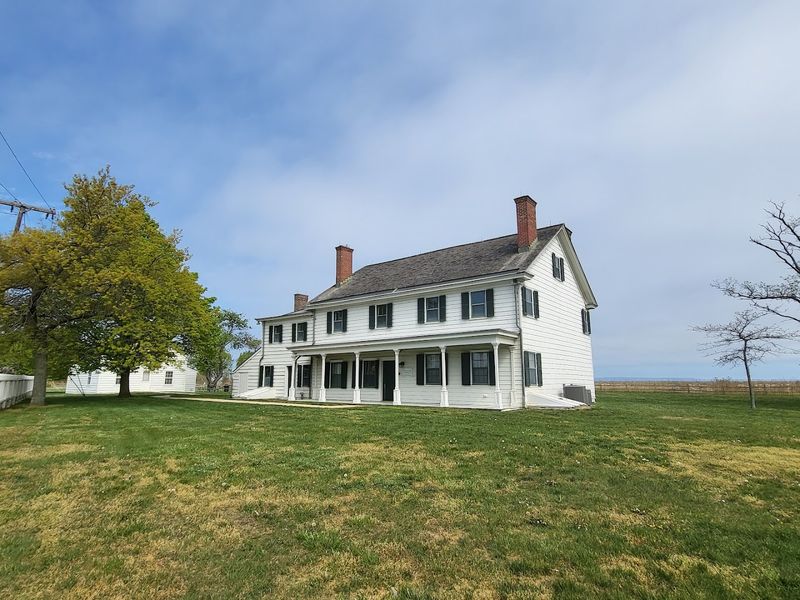
A house nicknamed the “Spy House” practically begs for legends, and this Port Monmouth landmark has gathered plenty. The Seabrook-Wilson House dates to the 18th century and sits within Bayshore Waterfront Park, looking out toward Sandy Hook Bay.
Over the years, it has been tied to stories of spies, ghosts, pirates, and secret Revolutionary-era drama, although the actual documented history is more complicated than the nickname suggests. That tension is what makes it fascinating.
The “spy” story helped make the house famous, but the real value is in the building’s survival and its place in the Bayshore’s maritime and social history.
It served different roles over time, including private residence and later public history site, and today the surrounding park gives visitors a very different kind of haunted atmosphere: salt air, marshland, open water, and an old house that looks like it has watched storms, ships, tourists, and rumors roll past for generations.
The best thing to do is make it a daylight visit, walk the park, and let the setting do the work. This is not a jump-scare stop.
It is stranger than that. It is a reminder that folklore can preserve a place even when the folklore itself gets messy. Sometimes the legend is inaccurate, but the obsession it creates saves the building.
13. Absecon Lighthouse, Atlantic City
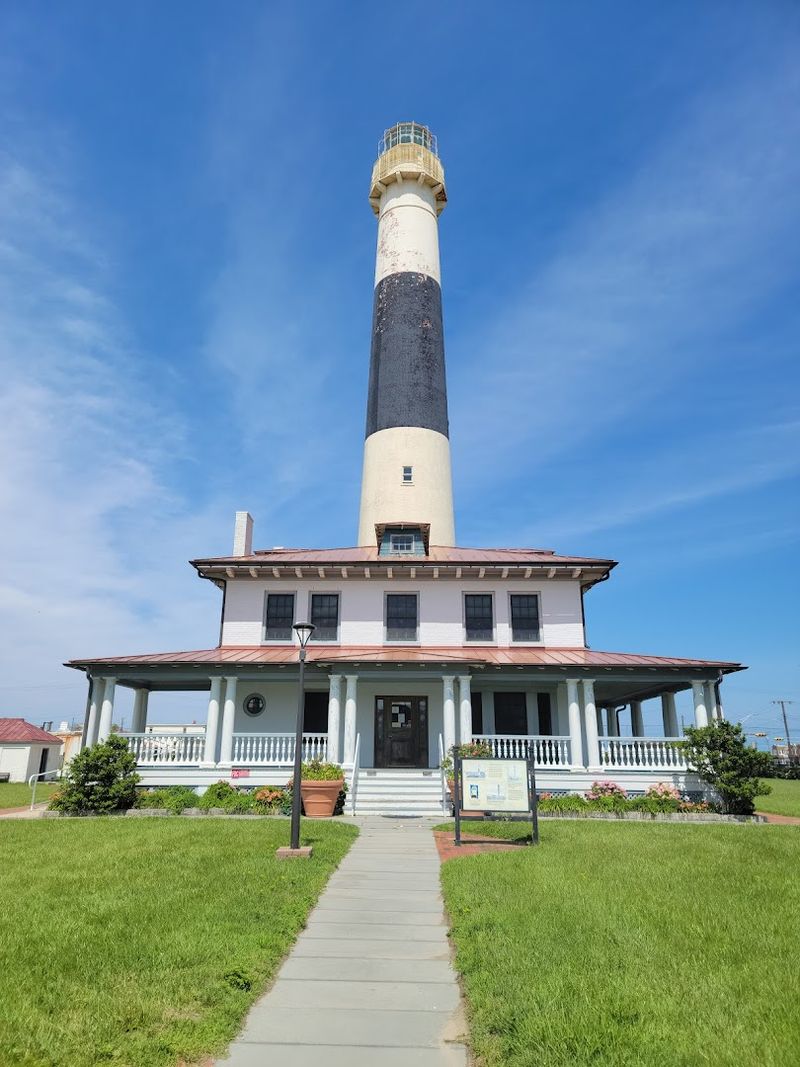
Atlantic City’s casinos throw off so much neon that the old lighthouse can feel like it belongs to a different planet. Absecon Lighthouse was first lit in 1857, rises 171 feet, and invites visitors up 228 steps to see the original first-order Fresnel lens and the city from above.
It is New Jersey’s tallest lighthouse, and that climb has a way of making history feel physical very quickly. The haunted appeal comes from the contrast.
Below, Atlantic City is loud, restless, and constantly reinventing itself. Inside the lighthouse, the spiral upward is narrow, repetitive, and intimate, with every step reminding you that keepers once lived by routines tied to storms, ship traffic, isolation, and the endless responsibility of keeping a light alive.
Lighthouse ghost stories tend to involve watchful figures and unexplained sounds, but the real creepiness is the job itself: long nights, bad weather, dangerous seas, and the knowledge that a failed light could mean death offshore. For visitors, this is one of the easiest entries on the list to actually experience.
Go for the climb, the views, the lens, and the strange pleasure of feeling slightly winded by history. Then look back toward modern Atlantic City and remember that before the boardwalk became the show, the coastline was a warning.
14. Union Hotel, Flemington

Atlantic City’s casinos throw off so much neon that the old lighthouse can feel like it belongs to a different planet. Absecon Lighthouse was first lit in 1857, rises 171 feet, and invites visitors up 228 steps to see the original first-order Fresnel lens and the city from above.
It is New Jersey’s tallest lighthouse, and that climb has a way of making history feel physical very quickly. The haunted appeal comes from the contrast.
Below, Atlantic City is loud, restless, and constantly reinventing itself. Inside the lighthouse, the spiral upward is narrow, repetitive, and intimate, with every step reminding you that keepers once lived by routines tied to storms, ship traffic, isolation, and the endless responsibility of keeping a light alive.
Lighthouse ghost stories tend to involve watchful figures and unexplained sounds, but the real creepiness is the job itself: long nights, bad weather, dangerous seas, and the knowledge that a failed light could mean death offshore. For visitors, this is one of the easiest entries on the list to actually experience.
Go for the climb, the views, the lens, and the strange pleasure of feeling slightly winded by history. Then look back toward modern Atlantic City and remember that before the boardwalk became the show, the coastline was a warning.
15. Historic Village at Allaire, Wall Township/Farmingdale
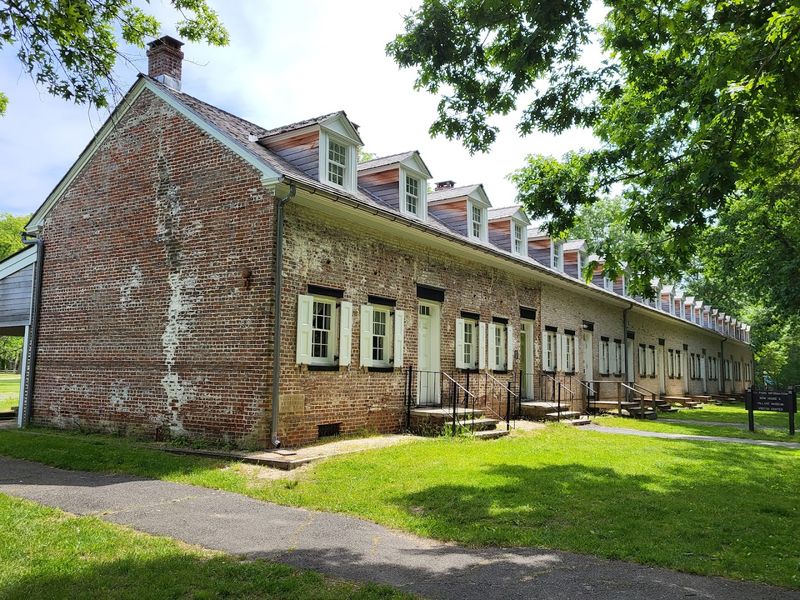
By day, Allaire can look almost charming enough to disarm you: old buildings, costumed interpreters, a village green, and the soft quiet of Allaire State Park.
Then you remember this was once Howell Works, a 19th-century iron-producing company town that grew into a self-sustaining industrial community with workers, housing, shops, a church, and the strict rhythms of labor built into daily life.
The current historic village includes original structures dating from the 18th and 19th centuries and preserves the remains of that company-town world. Its haunted reputation often centers on former residents, especially the Allaire family and village figures said to linger around certain buildings.
But the deeper creepiness comes from the idea of a place where work, home, money, worship, and social life all revolved around one industrial enterprise. That is cozy until it is not.
Visitors should go for the living-history programs, seasonal events, blacksmithing and trade demonstrations when available, and the chance to walk through a preserved village that feels both open-air and oddly enclosed. It is especially good for readers who like their haunts with texture rather than pure gloom.
Allaire does not need to look terrifying to be unsettling. Its power is in how normal it feels, until you start imagining the lives that repeated themselves there day after day, year after year.
Share this story