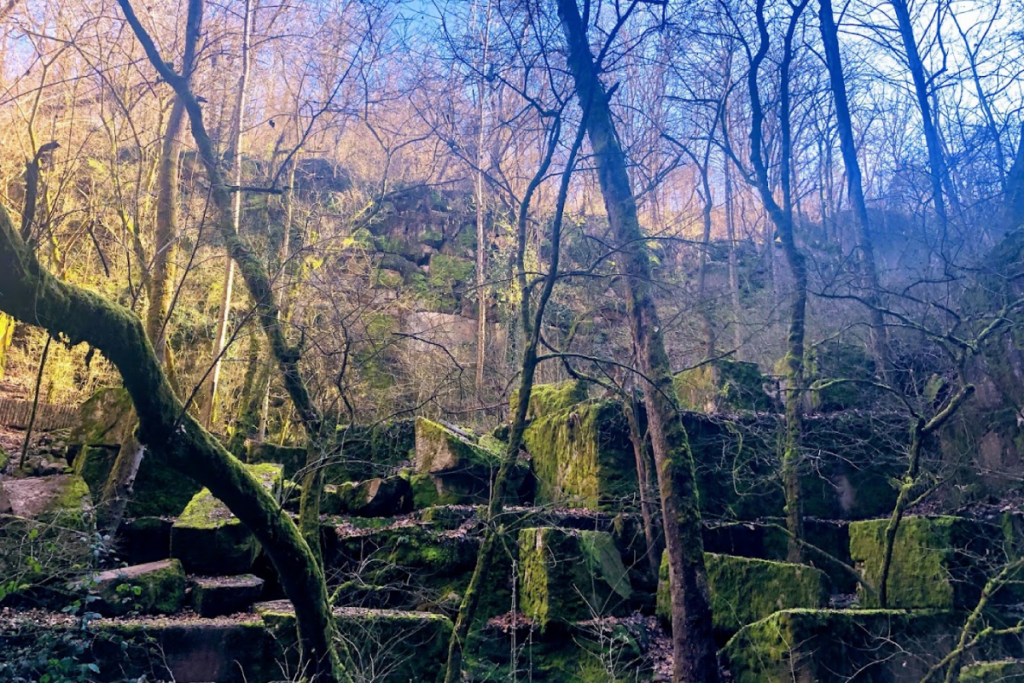
Tennessee hides some seriously strange places if you know where to look. Scattered across the state are crumbling stone structures, ancient earthworks, and abandoned industrial sites that feel more like fantasy movie sets than real locations you can actually visit.
These towering ruins range from 2,000-year-old ceremonial walls to Civil War fortifications and forgotten quarries now reclaimed by nature, each one offering a glimpse into a different chapter of history while looking absolutely otherworldly today.
1. Ross Marble Quarry, Knoxville
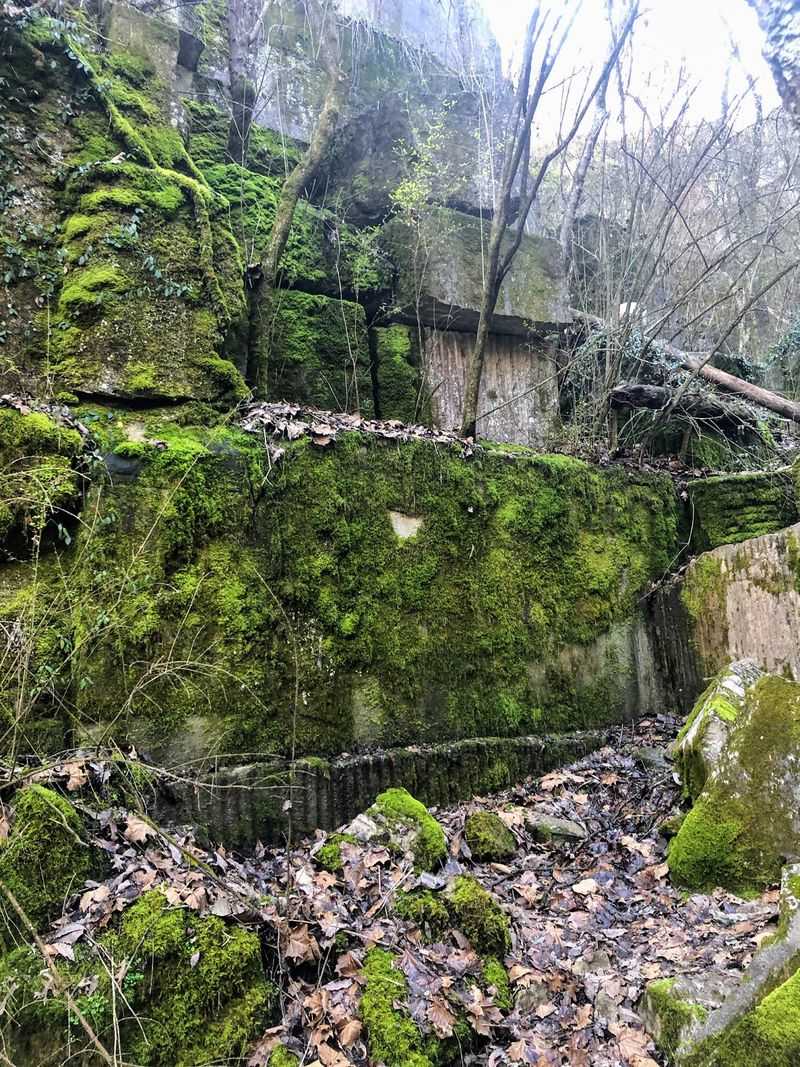
Walking into Ross Marble Quarry feels like stepping through a portal into some ancient temple complex. The massive limestone walls rise straight up from the quarry floor, their pale surfaces scarred with the marks of industrial cutting but now softened by decades of moss, vines, and weather.
What was once a working marble operation inside Ijams Nature Center has transformed into something that genuinely looks like it belongs in a lost civilization documentary.
The star attraction here is the Keyhole, a man-made passage cut through solid rock that frames the forest beyond in a perfect arch. Standing beneath it, you get a real sense of the scale of the operation that once ran here.
The walls tower overhead, some reaching heights that make you tilt your head back just to see the top.
Limestone formations jut out at odd angles throughout the quarry, creating natural sculptures that look almost intentional in their strangeness. Some sections appear as though giant blocks were simply abandoned mid-extraction, left to weather into something far more interesting than any finished product.
The contrast between the geometric cuts made by human hands and the organic reclamation by nature creates this weird visual tension.
Light plays tricks here depending on the time of day. Morning sun illuminates the eastern walls while leaving deep pockets of shadow in the carved-out sections. Late afternoon brings a golden glow that makes the whole place look even more surreal, like something out of a fantasy novel.
The quarry sits within the larger Ijams Nature Center, so you get the benefit of maintained trails without losing that sense of discovery. Wooden boardwalks guide you through sections, but there are plenty of spots where you can step off and explore the rockier areas yourself.
The combination of accessibility and genuine visual drama makes this spot particularly satisfying.
What really sells the otherworldly vibe is how thoroughly nature has moved back in. Trees grow from cracks in the stone. Moss blankets entire wall sections in emerald green. Water collects in low spots, creating still pools that reflect the towering walls above.
The quarry stopped operating decades ago, and every year since has pushed it further from industrial site and closer to ancient ruin.
You can easily spend an hour just wandering the main quarry area, finding new angles and perspectives on the stone formations. Photographers love this place for obvious reasons.
The dramatic verticality, the textures, the interplay of human engineering and natural reclamation create endless composition possibilities. Even if you just bring your phone, you will leave with shots that look like they came from somewhere far more exotic than East Tennessee.
2. Old Stone Fort, Manchester
Despite what the name suggests, Old Stone Fort has nothing to do with European-style military architecture. This site dates back roughly 2,000 years to when Native Americans built a massive ceremonial enclosure using stone-and-earth walls that still stand today.
The location they chose sits on a plateau where the Duck and Little Duck rivers meet, creating natural boundaries on two sides while the constructed walls close off the third.
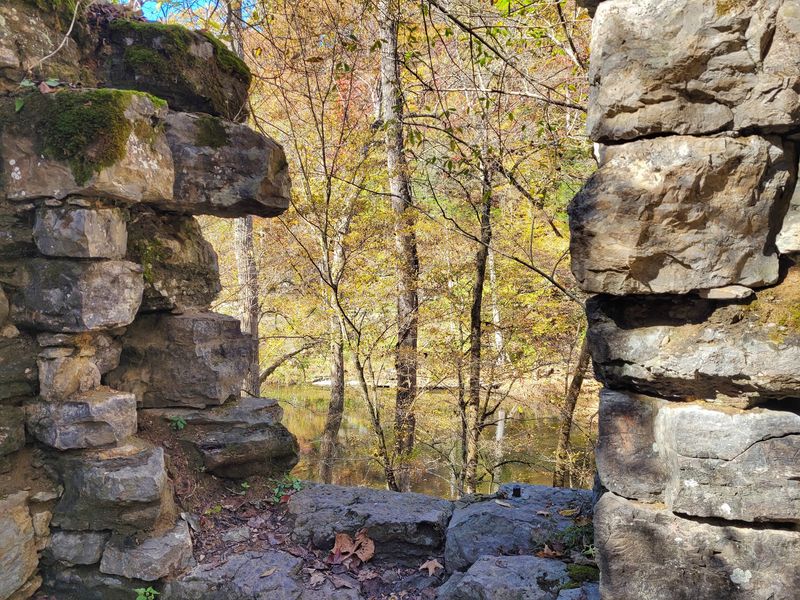
The walls themselves reach heights of 15 to 20 feet in places, built from limestone rocks stacked and packed with earth. Walking alongside them, you get this eerie sense that you are tracing the footsteps of people who lived here two millennia ago.
The forest has grown up around and over much of the structure, but the walls remain clearly visible, snaking through the trees in long, deliberate lines.
Two waterfalls add to the lost-civilization atmosphere. Big Falls drops about 30 feet over a limestone ledge, while Step Falls cascades down in multiple tiers. Both are accessible via trails that wind through the 50-acre enclosure.
The combination of ancient stonework, rushing water, and dense hardwood forest creates this layered sense of timelessness.
Archaeologists still debate the exact purpose of the enclosure. The most widely accepted theory points to ceremonial use rather than defensive fortification.
The walls do not really make sense from a military standpoint, but they create a clearly defined sacred space that would have been impressive even in its original context.
The trails here are well-maintained but not overly developed. You can walk right up to the walls in most places, run your hands over stones placed by people who lived entire lives you can barely imagine.
There are interpretive signs that provide historical context, but they do not overwhelm the site with modern infrastructure.
Spring and fall offer the best visiting conditions. Spring brings wildflowers and higher water flow over the falls, while fall provides that classic leaf-peeping experience with the added bonus of ancient architecture. Summer can get hot and buggy, and winter sometimes closes trails if ice becomes an issue.
What makes Old Stone Fort particularly striking is how completely it defies the typical Tennessee experience. You are not looking at a Civil War battlefield or a pioneer homestead.
This predates European contact by well over a thousand years. Standing inside those walls, surrounded by forest and the sound of falling water, you get a genuine sense of connection to a much deeper history than most Tennessee sites can offer.
The scale and ambition of the project become clear when you walk the full perimeter and realize just how much labor went into creating this space.
3. Fort Negley, Nashville
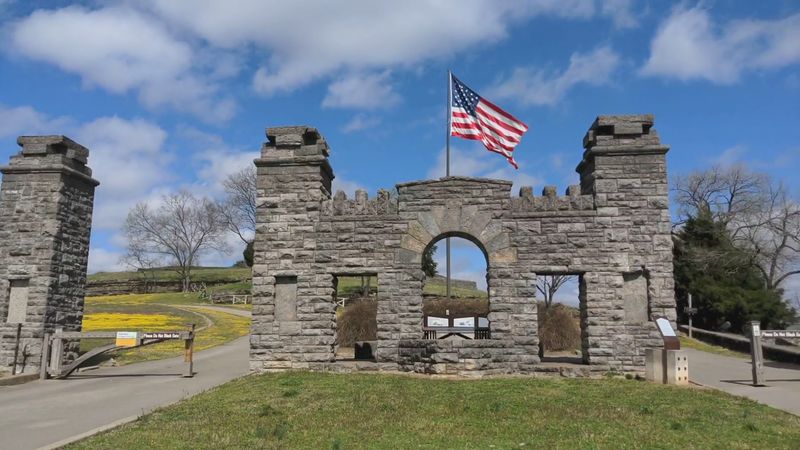
Fort Negley rises above south Nashville like something that belongs on a European battlefield, not in the middle of a growing American city. The enormous limestone walls still stand in jagged sections, their angular design and sheer bulk creating this visual presence that stops you cold when you first see it.
Built during the Civil War using both free and enslaved labor, the fort represented one of the largest inland stone fortifications constructed during the entire conflict.
The limestone blocks that form the walls came from local quarries, cut and stacked to create defensive positions that could withstand artillery bombardment. Time and weather have broken down sections, leaving gaps and collapsed areas that somehow make the whole structure more impressive.
You can see where walls once stood complete, imagine the original footprint, and appreciate just how massive this installation was at full strength.
From the top of the fort, you get sweeping views of downtown Nashville and the surrounding neighborhoods. That commanding position was the whole point militarily, but today it just adds to the dramatic effect.
Standing on those broken ramparts with the modern skyline spread out below creates this weird temporal dissonance, past and present occupying the same visual field.
The stonework shows real craftsmanship despite being built under wartime pressure. Individual blocks fit together tightly in many sections, while others show the hasty construction methods used when speed mattered more than perfection.
Walking through the fort, you can read the history in the walls themselves, see where different building phases created different patterns and techniques.
A visitors center provides historical context and helps you understand what you are looking at, but the fort itself tells most of the story. The scale speaks to the strategic importance Nashville held during the war.
The deterioration speaks to the decades when the site sat abandoned and neglected. The recent restoration work speaks to efforts to preserve what remains.
Sunset hits the fort in a particularly dramatic way. The western light catches the limestone and turns it golden while casting long shadows through the broken sections.
Photographers and history buffs both find plenty to work with here. The visual drama combines with genuine historical significance in ways that most sites struggle to match.
What really sells the otherworldly feeling is how the fort sits isolated on its hill, surrounded by modern development but somehow separate from it. You climb up through the trees, emerge at the fortifications, and suddenly you are in a different era entirely.
The stone walls block out much of the contemporary context, creating this bubble where the 1860s feel more present than the 2020s. Even knowing you are in Nashville, even seeing the skyline, the fort maintains this ability to transport you somewhere else entirely, some medieval stronghold reimagined in Tennessee limestone.
4. Dunlap Coke Ovens, Dunlap
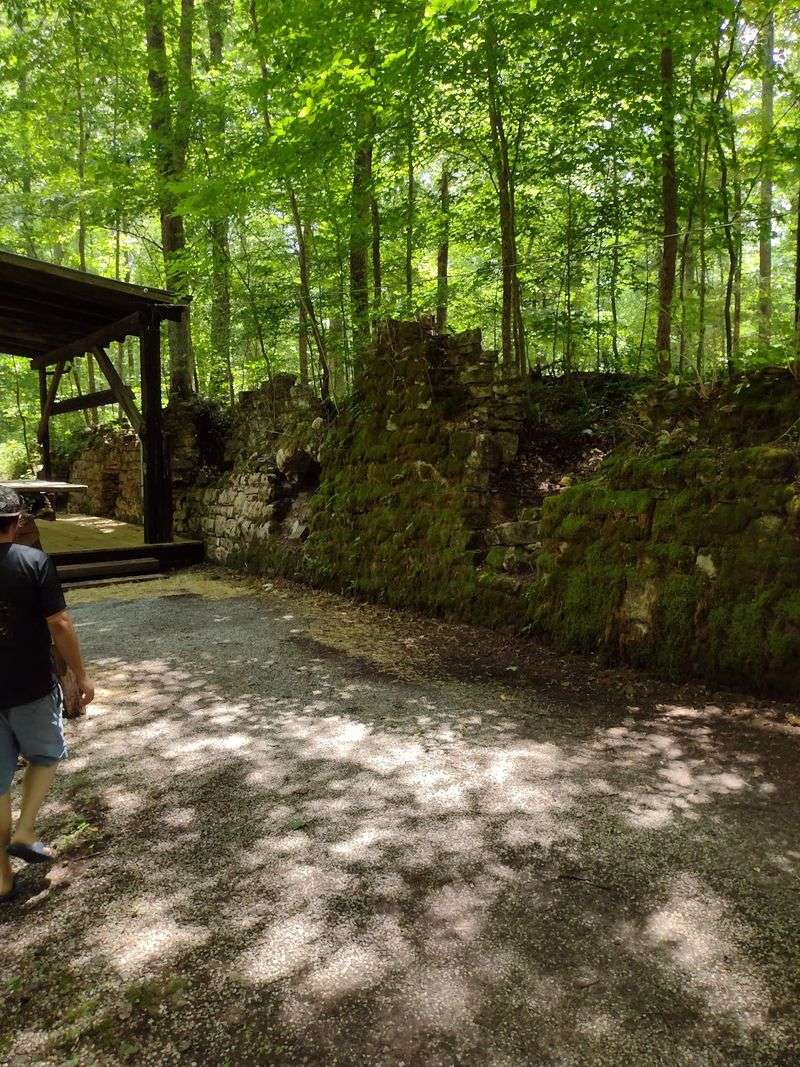
Rows of dark openings stare out from the hillside like the entrances to some fantasy dungeon. The Dunlap Coke Ovens sit scattered across the slopes of Fredonia Mountain, their arched doorways and domed shapes creating this repeating pattern that feels almost too deliberate to be real.
Built in the 1890s to produce coke for iron smelting, these stone-and-brick structures have been slowly consumed by the forest for over a century.
Each oven stands roughly 12 feet tall with walls thick enough to withstand the intense heat required to convert coal into coke. The interiors are black with soot and carbon, their surfaces glazed in places from the extreme temperatures.
Moss and lichen cover the exteriors in shades of green and orange, softening the industrial lines and making the whole complex look far older than it actually is.
What makes the site particularly eerie is how the ovens emerge from and disappear back into the surrounding woods. You will round a bend on the trail and suddenly face a cluster of three or four ovens, their dark mouths gaping open.
Walk a bit further and the forest closes in again, hiding them from view until the next grouping appears. The effect creates this sense of discovery, like you are exploring genuine ruins rather than a documented historical site.
The original complex included over 250 ovens arranged in long batteries, though only a portion remains accessible today. Even that fraction gives you a sense of the industrial scale.
These were not small operations. The coke produced here fueled iron furnaces across the region, supporting the mining and manufacturing boom of the late 19th century.
Trees grow right up against and sometimes through the oven structures. Roots crack the masonry. Vines drape across openings. The reclamation by nature is nearly complete in some sections, while others remain remarkably intact.
That variation keeps the site visually interesting as you explore.
Light barely penetrates the oven interiors, leaving them in permanent shadow even on bright days. Peering into those dark spaces, you can almost imagine the glow of burning coal, the heat radiating out, the workers tending the fires around the clock.
The reality was brutal, dangerous work in terrible conditions, but time has stripped away everything except the stone shells.
The trail system that connects the ovens is relatively easy, though it does involve some uphill sections and uneven footing. You are walking through active forest on paths that were never really designed for heavy traffic.
That rough-around-the-edges quality adds to the adventure rather than detracting from it. This does not feel like a manicured state park. It feels like you found something you were not supposed to find.
Winter offers the clearest views since the leaves are down, but fall provides better photo opportunities with the contrast between autumn colors and dark stone. Spring can be muddy. Summer brings full forest canopy that makes the ovens even more hidden and mysterious, though also hotter and buggier for exploring.
5. Pinson Mounds, Pinson
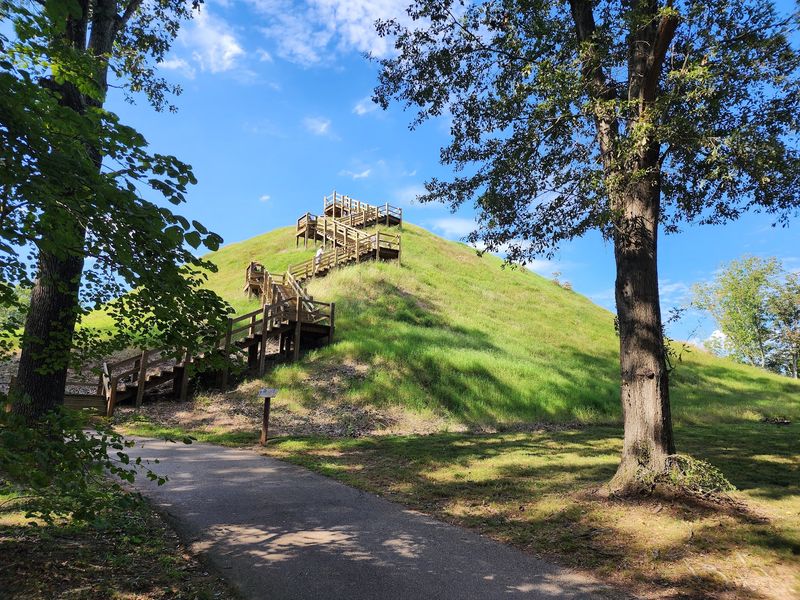
Sauls Mound rises from the flat landscape like a grass-covered pyramid, its slopes climbing roughly 72 feet into the air. Standing at the base, looking up at the summit, you get a real sense of just how much earth had to be moved to create this thing.
The mound forms the centerpiece of one of the largest Middle Woodland period ceremonial complexes in the entire United States, built between roughly 1 and 500 CE.
The scale does not fully register until you are actually there. Photos make it look like a hill. In person, you understand immediately that this is not a natural landform. The shape is too regular, too deliberate.
The placement within the larger complex of smaller mounds and earthworks makes the intentionality obvious.
Archaeologists have identified at least a dozen other mounds within the state park boundaries, though Sauls Mound dominates everything else. Some of the smaller structures served as platforms for buildings or ceremonial activities. Others appear to be burial mounds.
Together they create this planned landscape that required generations of sustained effort to complete.
You can climb Sauls Mound via a wooden staircase installed to prevent erosion on the earthwork itself. The stairs take you up the western slope to a platform near the summit.
From there, you get panoramic views of the surrounding farmland and forest, the same commanding perspective the original builders would have experienced.
The museum and visitors center provide crucial context for understanding what you are looking at. Without that background, Sauls Mound might just register as a big hill.
With even basic knowledge of the construction methods, the cultural significance, and the sheer labor investment, it transforms into something far more impressive. Thousands of basket-loads of earth, carried and placed by hand, layer by layer, year after year.
The site feels peaceful in a way that makes sense given its ceremonial purpose. The modern park preserves about 1,200 acres, giving the mounds space to breathe within a landscape that probably looks somewhat similar to how it appeared 1,500 years ago.
Farmland has replaced some forest, but the basic topography and openness remain.
Walking the trails that connect the various mounds, you start to see the relationships between structures. Sight lines between certain mounds suggest deliberate alignments.
The spacing and arrangement imply a sophisticated understanding of landscape architecture. These were not random piles of dirt. This was planned, executed, and maintained over centuries.
What makes Pinson Mounds otherworldly is precisely that it does not look like conventional ruins. There are no stone walls or crumbling buildings.
Just these enormous earthworks rising from the ground, their surfaces covered in grass and trees, their interiors holding secrets that archaeologists are still working to understand. The simplicity of the forms combined with the monumental scale creates this visual impact that sneaks up on you.
You think you are just looking at hills until your brain adjusts and you realize what you are actually seeing. Then those hills become something else entirely, evidence of cultures and capabilities that do not fit neatly into simplified narratives about ancient America.
6. Bear Spring Furnace, Dover
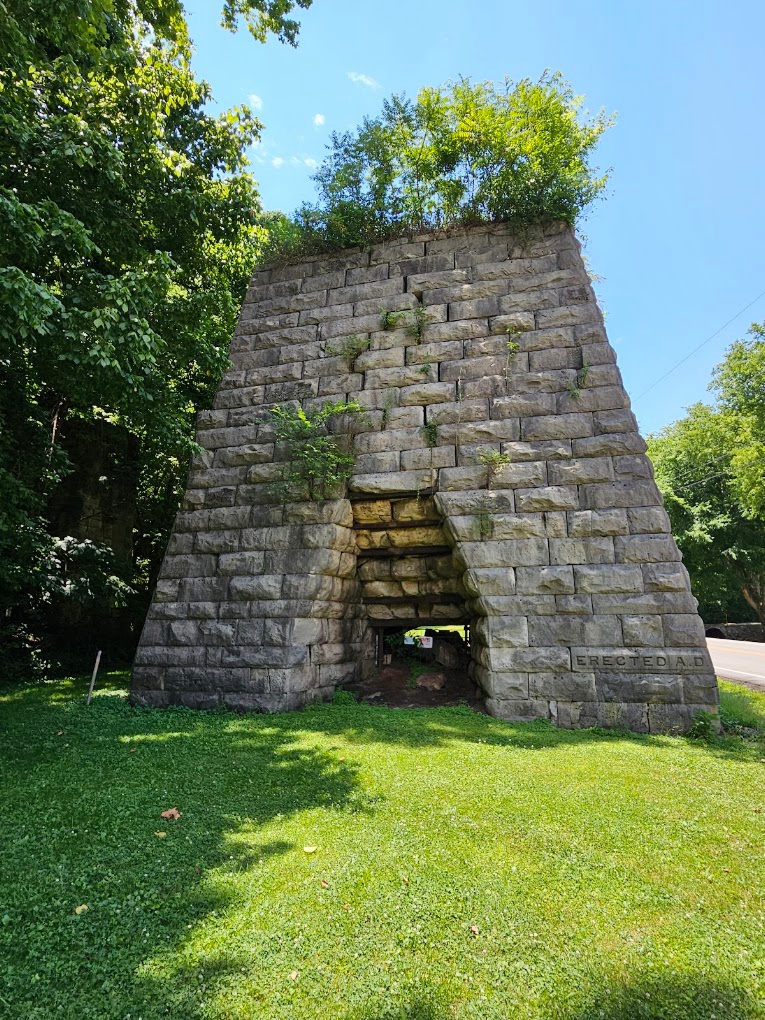
The stone stack of Bear Spring Furnace rises from the forest floor like the tower of some forgotten castle. Built in the 1870s to smelt iron ore, the furnace operated for only a few years before economic conditions shut it down permanently.
What remains is the limestone stack, still standing at about 30 feet tall, its arched opening gaping like a mouth waiting to be fed ore and charcoal that will never come.
The stonework shows real craftsmanship. Individual blocks were cut and fitted to create a structure that could withstand repeated heating and cooling cycles, the thermal stress of bringing iron ore to melting temperature and then letting everything cool down again.
The arch over the main opening demonstrates particular skill, each stone carefully shaped to bear the load above it.
Moss and lichen cover much of the exterior now, adding texture and color to the gray limestone. Small trees and shrubs have taken root in cracks and crevices, their roots slowly working their way into the mortar.
The reclamation by nature is well underway but not yet complete, leaving the furnace in that perfect sweet spot where it still reads clearly as human construction while looking thoroughly abandoned.
The site sits in a hollow near a spring, which provided the water power that drove the bellows and other machinery. You can still see remnants of the water management system if you know where to look.
Stone channels, earthen berms, the footprint of the wheel pit. The furnace itself is the most dramatic survivor, but it was part of a much larger industrial complex.
Walking around the structure, you can peek through openings and see into the interior spaces. The charging platform where workers would have dumped ore and fuel is gone, but you can see where it attached.
The casting arch at the base, where molten iron would have been tapped off, remains intact. Reading the structure teaches you how the whole operation worked.
What makes Bear Spring Furnace particularly atmospheric is its isolation. This is not a heavily visited site. There are no interpretive signs or paved paths. You park along the road and walk into the woods to find it.
That lack of development means you get the full effect of stumbling onto ruins in the forest, discovering something that feels lost even though it is documented and known.
The surrounding forest has matured significantly since the furnace shut down. The trees are tall enough now that the canopy shades the site heavily, creating this dim, green-filtered light that adds to the mysterious vibe.
Depending on the season, undergrowth can make approaching the furnace feel like genuine exploration rather than a casual walk.
Iron furnaces once dotted Tennessee and neighboring states, feeding the industrial appetite of the late 19th century. Most have been completely obliterated or reduced to scattered stones.
Bear Spring Furnace survived largely because it was remote enough that no one bothered to salvage the materials. That same remoteness today is part of its charm, keeping it quiet and uncrowded, a genuine ruin in the woods rather than a tourist attraction pretending to be one.
Share this story