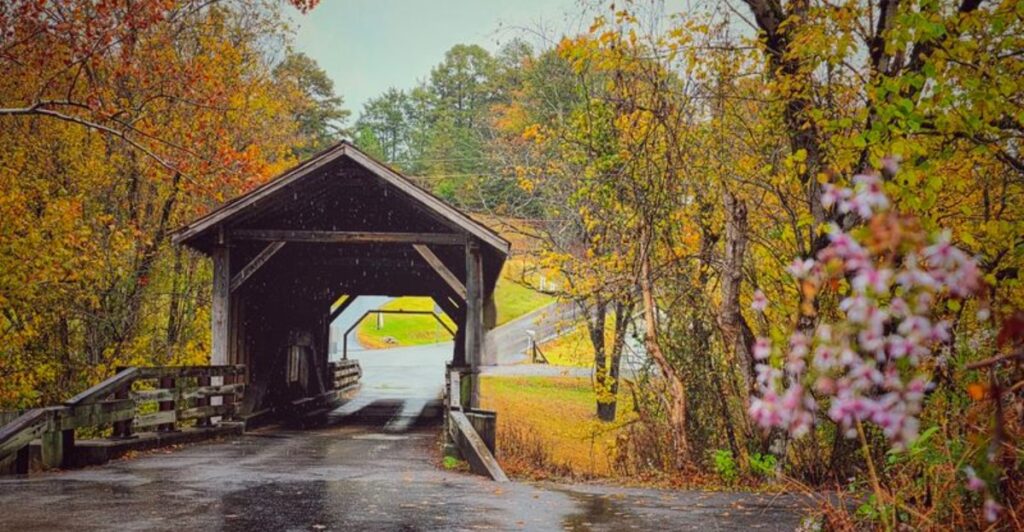
A wooden covered bridge built in 1875 still carries cars across a mountain river today. That fact alone made me grin.
It’s a single lane, just 83 feet long, and it has outlasted horses, buggies, and more than a century of floods. Another bridge on this list stretches about 200 feet across a rushing cascade. A third was built in 2000 just to honor the old ones.
Tennessee seems to collect these crossings like storybook props. Some swing, some creak, and some wear little green roofs like hats. I love that each one sits along a trail you can actually walk today.
So which bridge would you cross first? The swaying one, the covered one, or the one leading to a roaring waterfall? I honestly can’t pick, so let’s look at every single one together.
1. Fall Creek Falls State Park
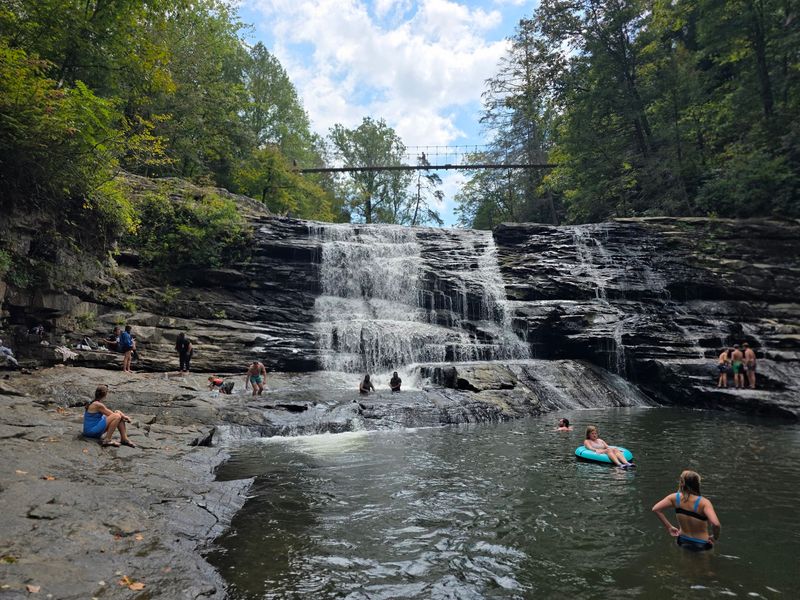
Two hundred feet of swaying bridge hangs over a 45-foot waterfall here. Your knees may have opinions about that.
Fall Creek Falls State Park spreads across about 29,800 acres of the Cumberland Plateau. That’s a lot of room for waterfalls, and the park has several.
The star crossing stretches over Cane Creek Cascades. Those cascades sit just upstream from Cane Creek Falls, so you get a double dose of rushing water.
Head to the Betty Dunn Nature Center to reach the park’s iconic suspension bridge. It’s a handy starting point for first-timers who want the big view fast.
Walk slowly in the middle and look down. The water churns below while the bridge does its gentle little wobble.
Want a second bridge without a long hike? The trail to Piney Creek Falls is only about 0.6 miles roundtrip.
A scenic suspension bridge crosses Piney Creek along that path. From it, you can gaze over a forested gorge that looks painted.
Short trails like that are great for kids or tired legs. You still get the payoff without spending your whole afternoon climbing.
Plan around park hours before you go. Gates open a half-hour before sunrise and close a half-hour after sunset.
Some trails may close now and then for weather or upkeep. Checking conditions before your drive can save you a disappointed car ride.
Wear shoes with good grip, too. Wet boards and rocky paths near waterfalls can get slick in a hurry.
Honestly, it’s tough to find a better welcome to Tennessee bridge hiking. One swaying crossing here, and you’ll want to find six more.
2. Gatlinburg Trail
Your dog finally gets a ticket into the Smokies on this one. It’s one of only two park trails where leashed pets are allowed.
Bikes are welcome too, which makes the Gatlinburg Trail a rare treat. Most trails in Great Smoky Mountains National Park ban both.
The path runs about 1.9 miles one way. It stays fairly flat, so you won’t spend the whole time huffing up switchbacks.
Forest lines the route as it follows the West Prong of the Little Pigeon River. You can hear water much of the way.
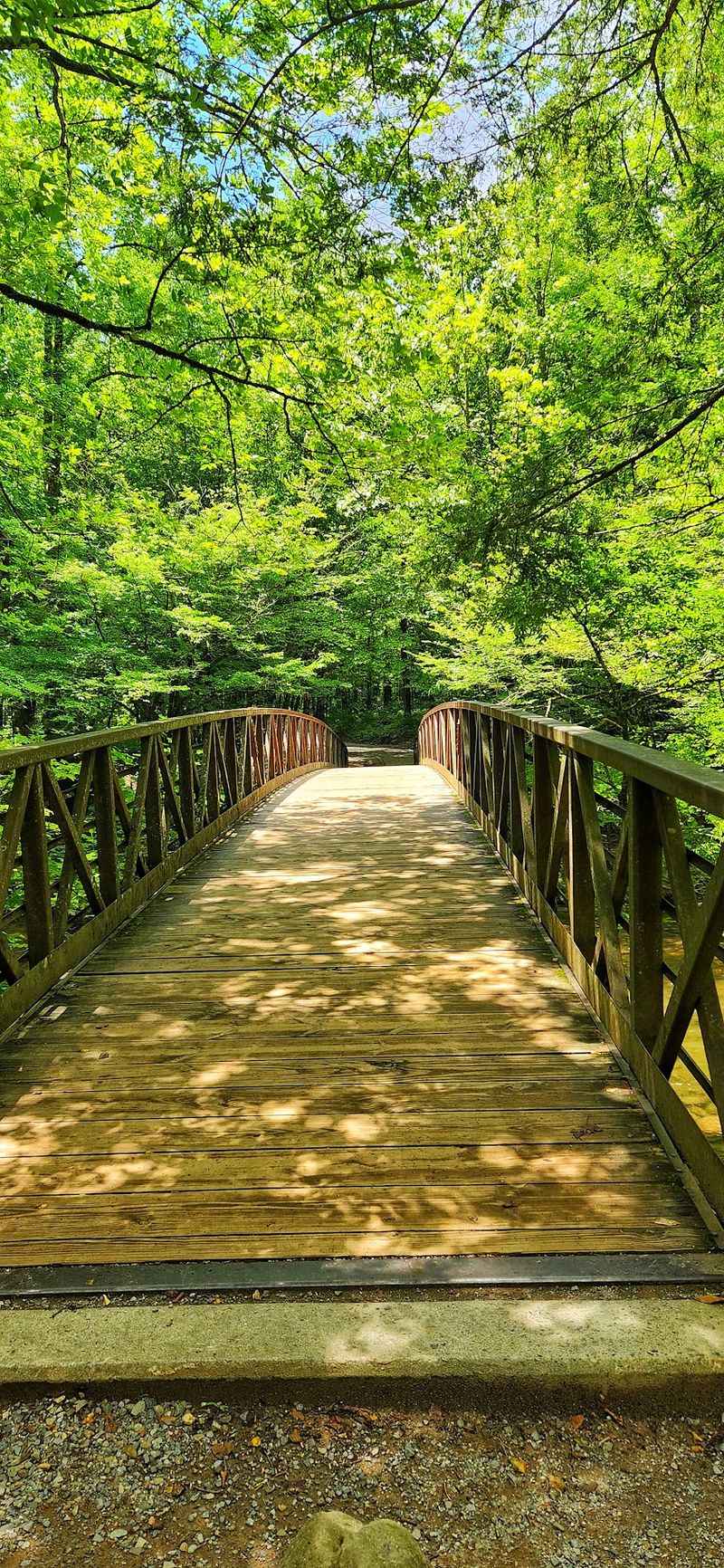
The big moment is the pedestrian footbridge over the river. It’s considered one of the longest footbridges in the whole park.
Pause in the middle and let the river slide by beneath you. Your pup will probably want to sniff something anyway.
You can start from either end. One trailhead sits at the Sugarlands Visitor Center on Newfound Gap Road.
The other trailhead is on River Road near downtown Gatlinburg. That end is handy if you’re already in town grabbing snacks.
Since the trail is about 1.9 miles each way, plan for close to four miles out and back. Pack water for you and your four-legged buddy.
Bring a leash and waste bags, of course. Sharing the path with bikers means staying aware and keeping pets close.
The park stays open around the clock, every day of the year. Early morning walks can be a nice way to beat the busier hours.
Flat ground makes this trail friendly for families with younger hikers. It’s a great warm-up before tackling steeper Smoky Mountain paths.
Few walks blend town convenience with river views so easily. And few let your dog brag about crossing a famous footbridge.
3. Harrisburg Covered Bridge
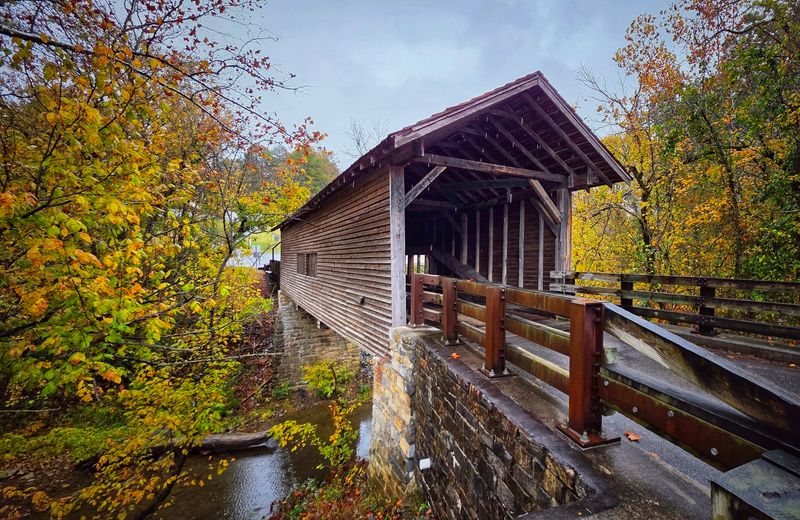
Cars still roll across a bridge built back in 1875. Somewhere, a horse and buggy must feel a little jealous.
The Harrisburg Covered Bridge is a single-lane wooden crossing near Sevierville. It stretches across the East Fork of the Little Pigeon River.
It goes by a few other names, too. You might hear Pigeon River Covered Bridge, East Fork Bridge, or McNutts Bridge.
That many nicknames usually means a place has been loved for a long time. In this case, the bridge has earned every one.
Tennessee only has a few surviving covered bridges. This one stands among them, still doing its original job.
The National Register of Historic Places added it in 1975. That was right around its 100th birthday, which feels fitting.
Unlike the other spots here, this isn’t a long hike. Think of it as a short, sweet stop that adds history to your bridge tour.
Because it’s an active roadway, stay alert. Cars use the single lane, so wait for a clear moment before snapping photos.
The river below makes a peaceful backdrop. Stand back on the bank to capture the whole wooden frame in one shot.
The bridge stays open around the clock. Soft evening light can make the old boards look extra golden.
Kids may get a kick out of driving through something older than their great-great-grandparents. Roll the windows down and listen to the tires on the wood.
Pair this stop with Emert’s Cove Bridge nearby for a covered bridge double feature. Sevier County clearly takes its bridges seriously.
History doesn’t always live behind glass in a museum. Sometimes it waits quietly over a river, ready for your car.
4. Emert’s Cove Historic Covered Bridge
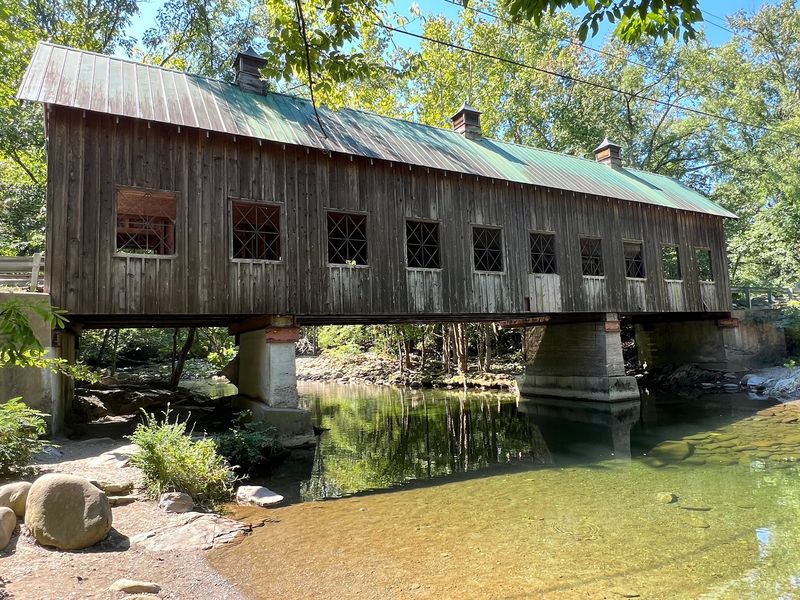
A covered bridge built in the year 2000 might sound like a costume party. Yet this one was made on purpose to honor the past.
Emert’s Cove Historic Covered Bridge celebrates Sevier County’s covered bridge heritage. It sits in the small town of Pittman Center.
The bridge crosses the Middle Prong of the Little Pigeon River. Mountain water rushes beneath its natural wood frame.
Look up at the roof. It’s a deep green that pops nicely against the wooden sides.
Behind it, the Great Smoky Mountains skyline rises up. That combo makes it a favorite for photos in Tennessee.
Curious about the name? It honors Frederick Emert, who was the area’s first settler back in 1790.
So the bridge is young, but the story behind it is old. I love that it connects a modern build to a family from centuries ago.
You don’t need a long hike to enjoy this spot. It’s more of a scenic pause than a trek.
Bring a picnic blanket or simply stretch your legs after a drive. The river view is the main event here.
Photographers should try a few angles. Shooting from the riverbank can frame the green roof with the mountains above.
Visiting Harrisburg Covered Bridge on the same day makes great sense. One is from 1875, and one is from 2000, which makes a fun comparison.
Pittman Center sits close to the Smokies, so you can easily add a hike nearby. This bridge makes a lovely starting or ending point.
5. Pickett CCC Memorial State Park
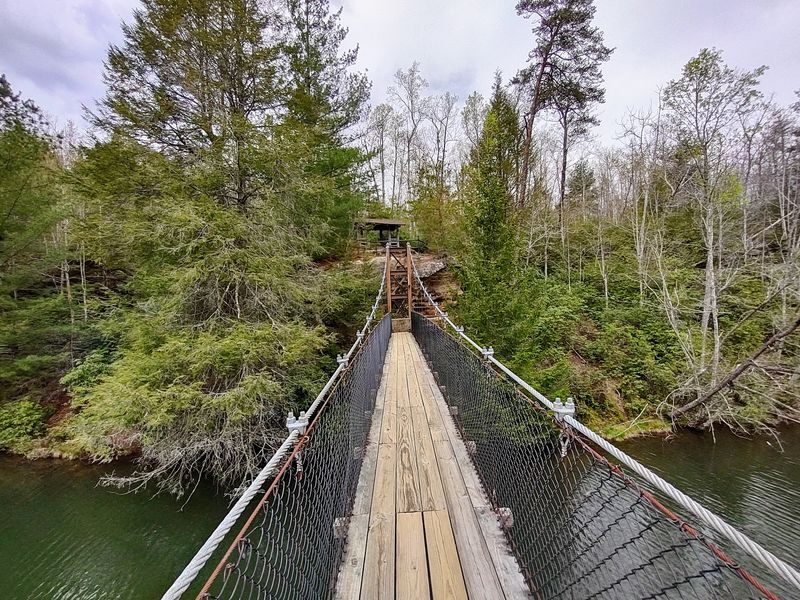
Tiny bridge, giant payoff. A little wooden crossing here leads you toward a stone arch carved by nature.
Pickett CCC Memorial State Park sits near Jamestown in a quiet, remote corner of Tennessee. It’s known for sandstone bluffs and odd rock formations.
The Natural Bridge area is a highlight. As you head toward the arch, you’ll step across a small wooden bridge.
It feels like a fairy tale setup. First the humble wooden boards, then a massive rock bridge waiting ahead.
The park also has a suspension bridge over Arch Lake. That gives you a swaying crossing to go with the sturdy little footbridge.
Forested trails wind throughout the park. Sandstone walls and shady woods make the scenery feel far from busy roads.
Remote places come with a few smart habits. Fill your gas tank and pack snacks before you arrive.
Some trails have closed from time to time because of storm damage. The Lake Trail has been one of them.
Check trail conditions before setting out. That way you can plan a route that’s open and ready for you.
Bring sturdy shoes for rocky paths. Sandstone and roots can trip up even careful hikers.
Curious kids will love scrambling near the rock formations. Just keep a close eye near bluffs and drop-offs.
The park’s name honors the Civilian Conservation Corps. That group helped shape many Tennessee parks long ago.
For storybook vibes, this place really delivers. Wooden steps, swaying cables, and a natural stone arch make quite the trio.
6. Abrams Falls Trail
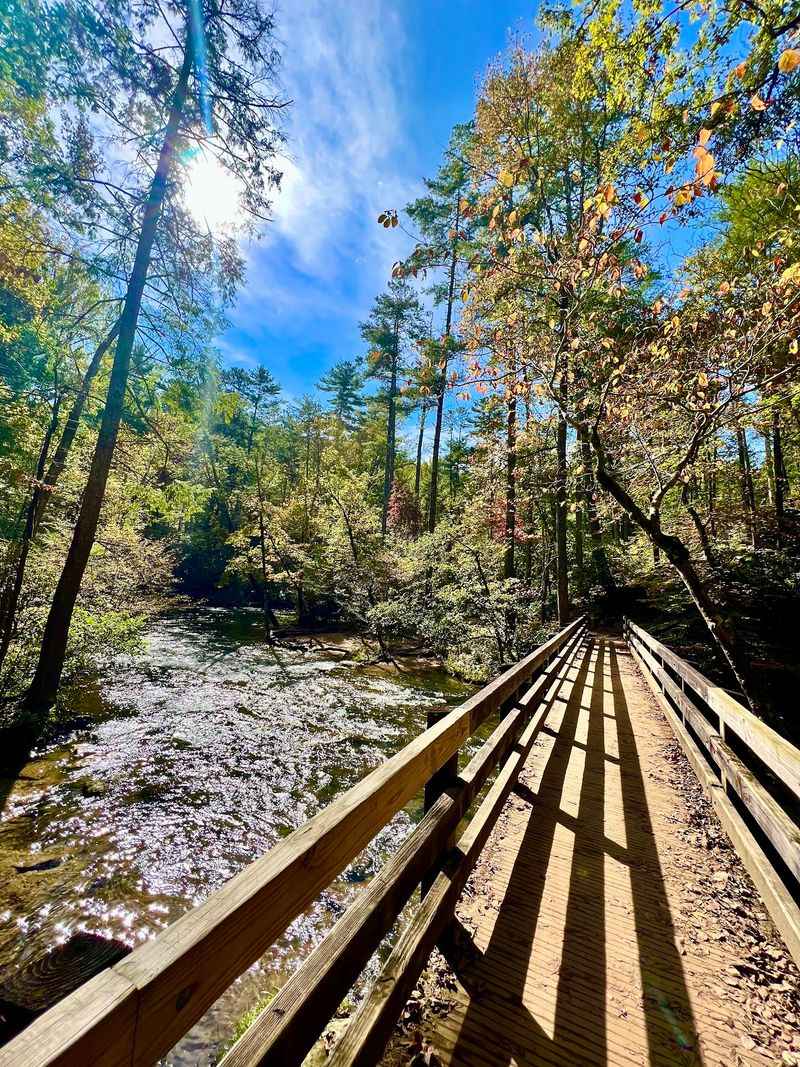
Most hikes save the bridge for later. This one hands it to you right at the start.
Abrams Falls Trail begins with a large wooden bridge over Abrams Creek. It’s like the opening page of an adventure book.
From there, you’ll hike about five miles roundtrip. The trail is rated moderate, so expect some ups and downs.
Pine-oak forests line the route. Hemlocks and thick rhododendron patches add shade and green tunnels.
Your reward is Abrams Falls, about 25 feet tall. What it lacks in height, it makes up for in sheer water volume.
The falls pour into a deep, scenic pool. Enjoy the view from a safe distance, and avoid swimming because of dangerous currents and undertow.
Fresh news for bridge fans: crews recently worked to replace aging footlog bridges. That project was set to wrap up by October 1, 2026. Check the National Park Service’s latest trail alerts to confirm the trail is open before visiting.
Getting there takes a little planning. The trailhead sits at the end of Abrams Falls Road off the Cades Cove Loop Road.
Look for the turn between signposts 10 and 11. Cades Cove Loop is one-way, so don’t miss it.
You’ll need a Great Smoky Mountains National Park parking tag. Grab one before your trip to avoid a hassle.
The trail includes several rock-hopping creek crossings. Shoes with solid grip will make those much easier.
Pack plenty of water for the five-mile trek. You’ll want energy for the hike back out.
One wooden bridge, a forest path, and a powerful waterfall. That’s a pretty perfect Smoky Mountain day.
7. Cumberland Mountain State Park
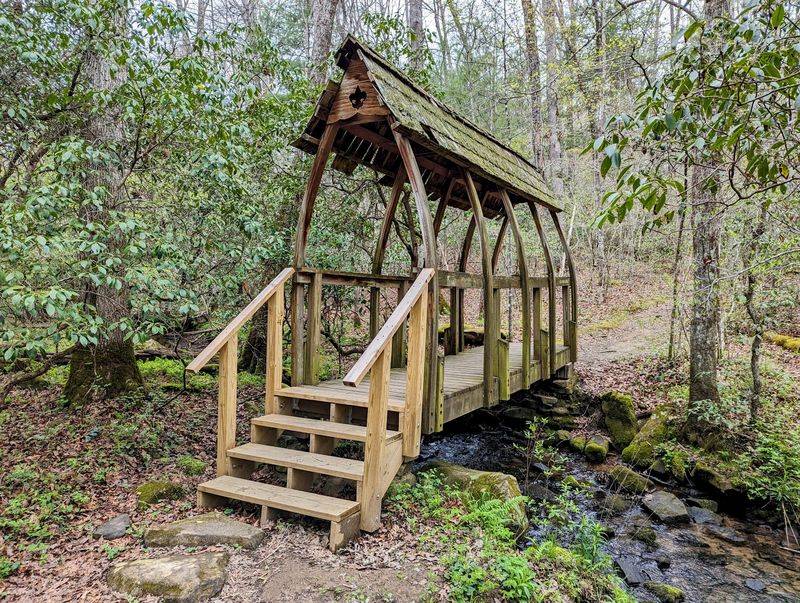
Stone bridges, swinging bridges, and a footbridge by the boat dock. This park basically runs a bridge sampler platter.
Cumberland Mountain State Park sits on the Cumberland Plateau near Crossville. Its stone bridge built by the Civilian Conservation Corps is a true landmark.
For wooden crossings, try the Pioneer Short Loop Trail. It’s a popular hike of about 1.8 miles.
The path follows the banks of Byrd Lake. Along the way, you’ll reach the park’s famous swinging bridge.
Expect a little bounce as you cross. That gentle sway is half the fun, especially for kids.
There’s also a footbridge at the boat dock across Byrd Creek. So you get two very different bridge moods on one short loop.
Keep an eye on the ground, too. Original rock steps built by the CCC still line parts of the trail.
Those steps are history you can actually stand on. The workers who placed them likely never pictured families snapping selfies there.
Craving a longer outing? The Overnight Trail stretches into a six-mile loop. That route also crosses a swinging bridge.
You’ll hop over several creeks and streams as well.
Plan for park hours before you arrive. Tennessee state parks usually open a half-hour before sunrise.
They typically close a half-hour after sunset. Starting early gives you time to linger at each bridge.
Wear shoes that handle damp ground near the creeks. Lakeside trails can stay muddy after rain.
Ending your bridge tour here feels like a grand finale. You get history, sway, and lake views, all in one easy loop.
Share this story