Red and purple leaves can bring rich, eye-catching color to Pennsylvania yards long before the traditional fall display begins. Despite the title, none of the plants below keeps red foliage year-round in Pennsylvania: all eventually lose their leaves, and some develop their most striking colors during the summer growing season. Most provide beautiful seasonal interest and can add contrast, depth, and visual appeal to an otherwise green landscape.
However, there are important differences to keep in mind. Japanese barberry, for example, is a shrub rather than a tree, and it is banned from sale and cultivation in Pennsylvania. Understanding these distinctions can help you choose plants that fit your landscape, avoid misleading expectations, and enjoy vibrant foliage throughout the growing season without unwanted surprises later on.
1. Forest Pansy Redbud: Heart-Shaped Leaves with Spring Sparkle
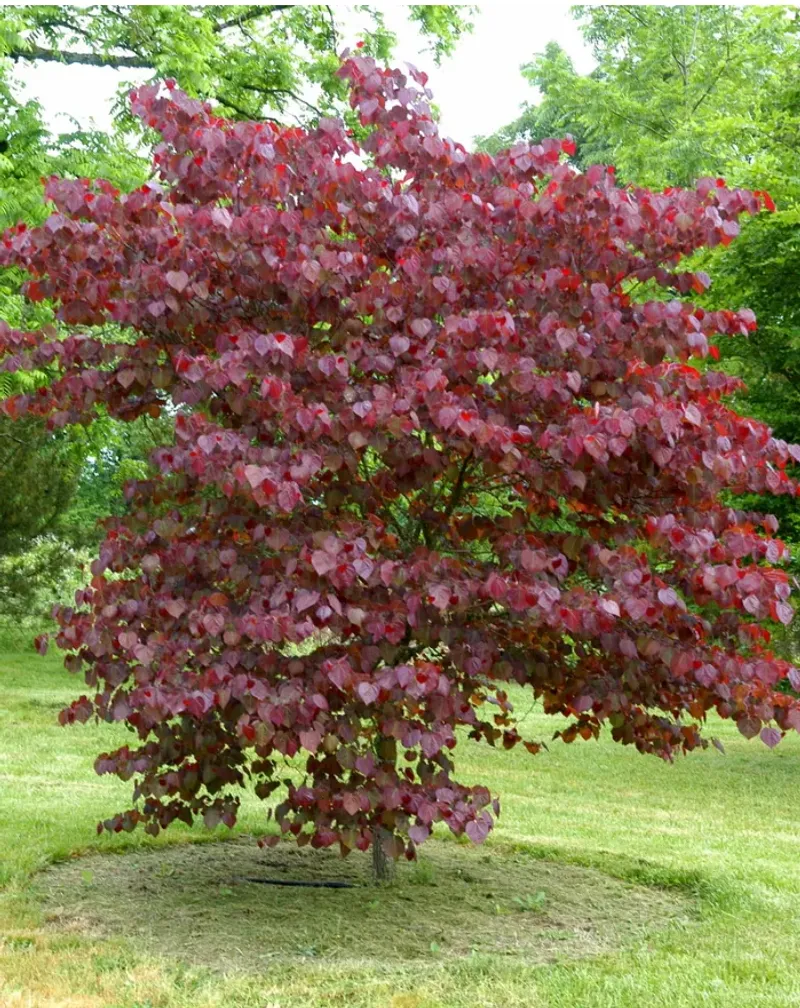
Before its heart-shaped leaves unfold, a cloud of rosy flowers makes this small tree hard to miss.
Forest Pansy redbud brings two different kinds of color to a Pennsylvania garden, first with spring blossoms and then with reddish-purple foliage.
It is a cultivar of eastern redbud, a species native to parts of Pennsylvania.
That connection makes it especially appealing to gardeners who want an ornamental tree with a local link, although its selected leaf color differs from ordinary green-leaved redbuds.
Expect a mature height and spread of roughly 20 to 30 feet under favorable conditions.
Give the branches room to develop their broad, graceful shape rather than squeezing the tree beside a wall or beneath low utility wires.
Choose well-drained soil and a location with sun or light afternoon shade.
Morning sunshine can support good leaf color, while some protection from intense afternoon heat may reduce stress during hot Pennsylvania summers.
The foliage does not stay equally purple all season.
Leaves often become greener as summer advances, especially in heat or shade, and fall color may include yellow, orange, or reddish tones before the branches become bare.
Water deeply during dry spells while the tree establishes, checking the soil rather than following a rigid calendar.
Spread mulch over the root area, but leave a clear gap around the trunk to discourage moisture problems.
Prune sparingly to remove damaged branches and improve structure.
Redbuds can develop cankers and other stress-related problems, so good drainage and careful planting matter more than frequent trimming or heavy fertilizer applications.
For a welcoming front-yard feature, place it where the spring flowers and unusual leaves are easy to see.
Just remember that its winter beauty comes from branching structure, not red foliage, and its summer color can be softer than nursery photographs suggest.
2. Thundercloud Flowering Plum: A Dark Canopy Above Pink Blossoms
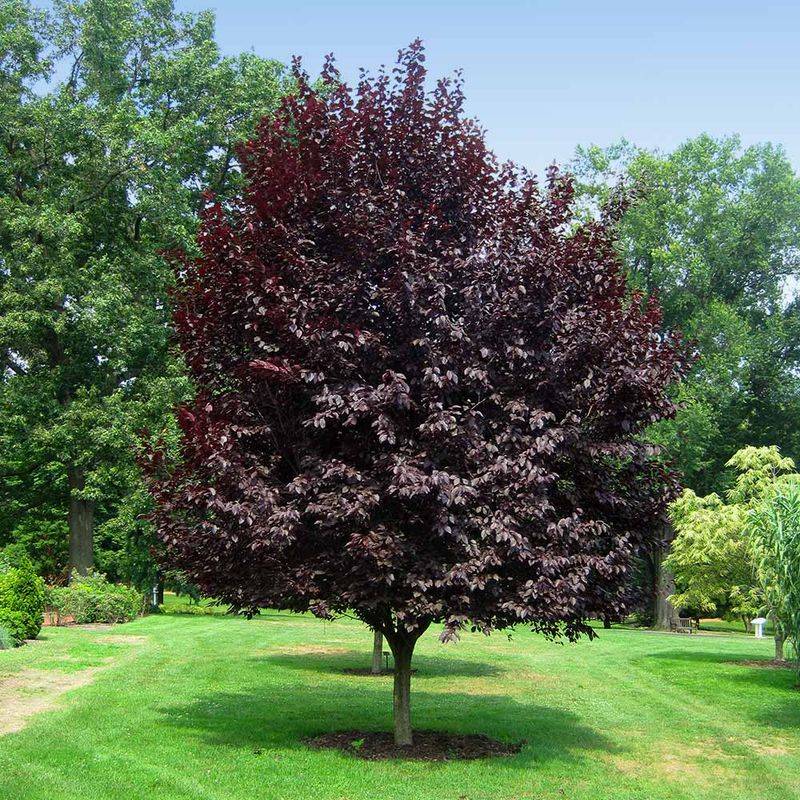
Picture pale pink blossoms floating against leaves the color of dark grape juice.
That striking contrast is the main attraction of Thundercloud flowering plum, an ornamental selection that can brighten a sunny Pennsylvania yard during spring.
Its foliage usually holds a deep purple or reddish-purple shade through much of the growing season.
The color is not evergreen, however, and the tree drops its leaves in fall before spending Pennsylvania winters with bare branches.
Many specimens reach about 15 to 25 feet tall, with a similar spread.
This makes Thundercloud easier to fit into a smaller landscape than a large shade tree, though it still needs breathing room around its canopy.
A sunny location generally produces stronger foliage color and better flowering.
Plant in soil that drains freely, and avoid low spots where water collects after rain or melting snow, since wet roots can weaken the tree.
Check the nursery label for cold hardiness before buying, especially in colder northern Pennsylvania locations.
A protected site may help, but shelter cannot make up for a tree that is poorly matched to local winter temperatures.
Despite its ornamental purpose, Thundercloud can sometimes produce small fruits.
These may attract birds or create cleanup beneath the canopy, so consider keeping it away from a heavily used patio, narrow sidewalk, or parking space.
Plums can face pests and diseases, including borers, leaf spots, and black knot.
Inspect branches for unusual swellings or dieback, and seek advice from Penn State Extension when symptoms appear rather than spraying without identifying the problem.
Regular watering during establishment and a sensible mulch ring help reduce stress.
Think of this tree as a colorful accent with maintenance needs, not a permanent red screen, and plan its position so spring flowers remain visible from your favorite window throughout their brief display.
3. Tricolor Beech: Pink Edges That Look Hand-Painted
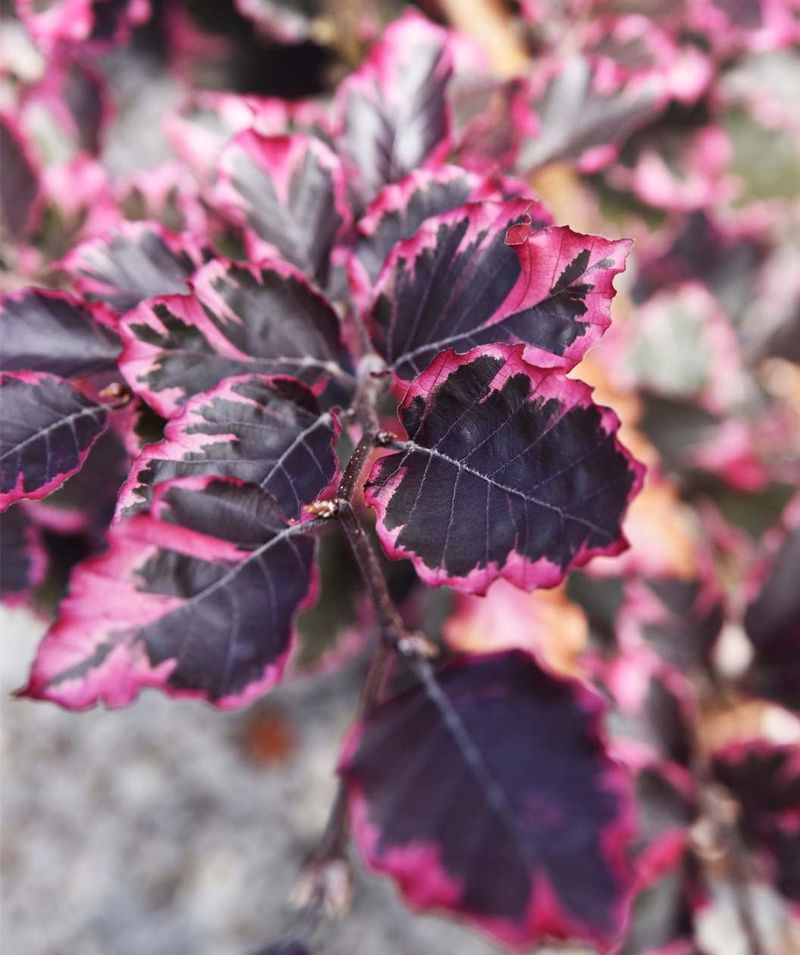
A leaf can look almost painted when pink edges frame a purple center.
Tricolor beech offers that unusual effect, bringing a softer mix of rose, cream, and burgundy to Pennsylvania landscapes instead of one solid red shade.
Often sold as a variegated European beech, this tree grows slowly and rewards patient gardeners.
Mature size varies with conditions, but it can eventually reach around 20 to 35 feet tall and develop a substantial spreading canopy.
Its delicate-looking foliage needs thoughtful placement.
A site with morning sun and protection from harsh afternoon light can help reduce leaf scorch, especially during hot, dry stretches when pale leaf margins may turn brown.
Do not confuse afternoon shelter with deep shade.
Too little light can lessen the show, so aim for a balanced location with bright conditions, good airflow, and enough room for the branches to grow without constant cutting.
Provide evenly moist, well-drained soil and avoid places where standing water lingers.
Young trees benefit from attentive watering, while established trees still appreciate help during extended drought, particularly when surrounding lawn competes for soil moisture.
The pink markings are often strongest on fresh spring growth.
Their appearance can soften or change during summer, and autumn brings another shift before leaf drop, so a nursery photograph should not suggest an unchanging year-round display.
Beeches have shallow roots that dislike disturbance and compacted soil.
Skip digging new beds beneath an established canopy, and avoid parking equipment nearby, since root damage can affect the tree long after the work is finished.
Use Tricolor beech as a carefully placed specimen rather than a crowded background plant.
Against a simple green backdrop, its patterned leaves can stand out beautifully, but Pennsylvania winter interest comes from smooth bark and branching, not living red leaves through the cold months ahead.
4. Copper Beech: A Grand Tree with Bronze-Purple Leaves
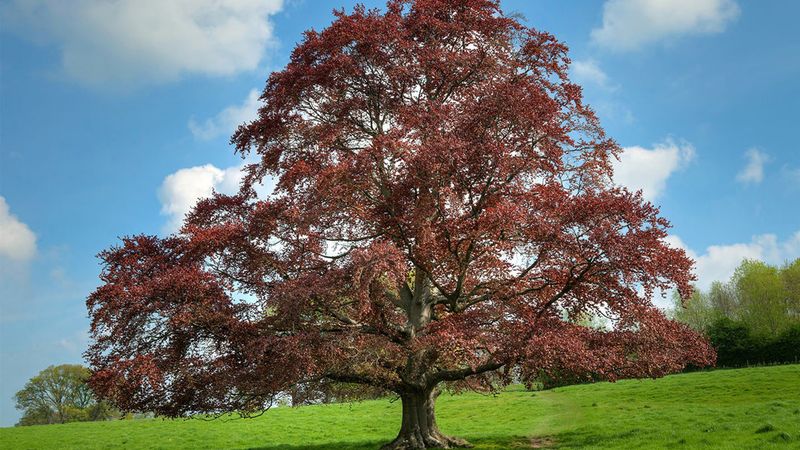
Some trees decorate a garden; others seem to become the garden itself.
With its broad crown and rich bronze-purple leaves, copper beech belongs in the second group, offering a strong visual anchor for spacious Pennsylvania properties.
The name generally refers to purple-leaved forms of European beech rather than one single cultivar.
Leaf color and growth habit can differ between selections, so ask the nursery for the exact name and expected mature dimensions.
A mature tree may reach 50 to 60 feet tall or more, with a wide canopy.
That size makes careful placement essential, particularly around houses, driveways, overhead wires, and neighboring properties where large branches could create future conflicts.
Its leaves often open with rich copper or purple tones, then deepen or become greener as the season progresses.
Fall may bring warm bronze shades, but this is still a deciduous tree, not a source of red winter foliage.
Some beeches hold dried brown leaves into winter, especially when young.
Those retained leaves are dead foliage, not evergreen growth, and they should not be mistaken for the lasting red canopy promised by the article’s title.
Choose deep, well-drained soil with reliable moisture and enough space for roots.
Avoid repeatedly walking or driving over the root area, because soil compaction limits the air and water that a large tree needs to stay healthy.
Beech leaf disease is a serious concern in Pennsylvania and affects European beeches as well as native ones.
Watch for dark bands between leaf veins, curling, or thinning foliage, and consult current Penn State Extension guidance if problems develop.
For the right property, copper beech offers shade, texture, and lasting landscape presence.
For a small yard, its scale and health concerns may outweigh its beauty, making a smaller ornamental a more practical choice for your available planting space.
5. Purple Leaf Plum: Choose the Cultivar Before the Color
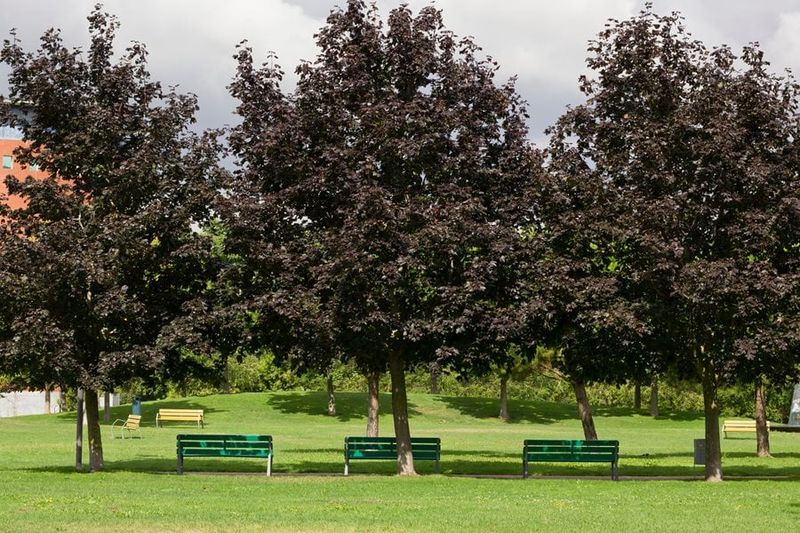
A plant label that says only purple leaf plum leaves plenty of questions unanswered.
The term covers several ornamental plum selections, including Thundercloud, so this entry is a broader planting category rather than a completely separate kind of tree.
In Pennsylvania, these trees are valued for reddish-purple leaves and early spring flowers.
Depending on the selection, blossoms may look white or pale pink, while leaf color can range from dark burgundy to a more muted purple.
Ask for the cultivar name before making a purchase.
Mature size, winter hardiness, fruit production, and color retention can vary, and a tree suited to a warmer southeastern Pennsylvania site may struggle in a colder upland garden.
Many common selections grow roughly 15 to 25 feet tall.
Their manageable scale can suit a lawn edge or garden border, provided the site offers full sun, good drainage, and space for a rounded or upright canopy.
Do not choose one solely for a promise of constant red leaves.
Sun exposure, seasonal growth, weather, and cultivar all affect the display, and every purple-leaved ornamental plum discussed here loses its foliage during the cold season.
Plant with the root flare visible at ground level rather than burying the trunk.
Water the root zone thoroughly during establishment, and keep mulch away from the bark instead of building a mound around the tree.
These plums often require more attention than their cheerful nursery appearance suggests.
Watch for damaged leaves, oozing bark, branch swellings, or early leaf drop, and remember that a stressed tree may be more vulnerable to insects and disease.
A good buying decision starts with the right cultivar and realistic expectations.
If you already have Thundercloud, another purple leaf plum might repeat the same look rather than add much variety, so compare its features carefully before bringing another tree home to your garden.
6. Crimson King Maple: Bold Color with Important Trade-Offs
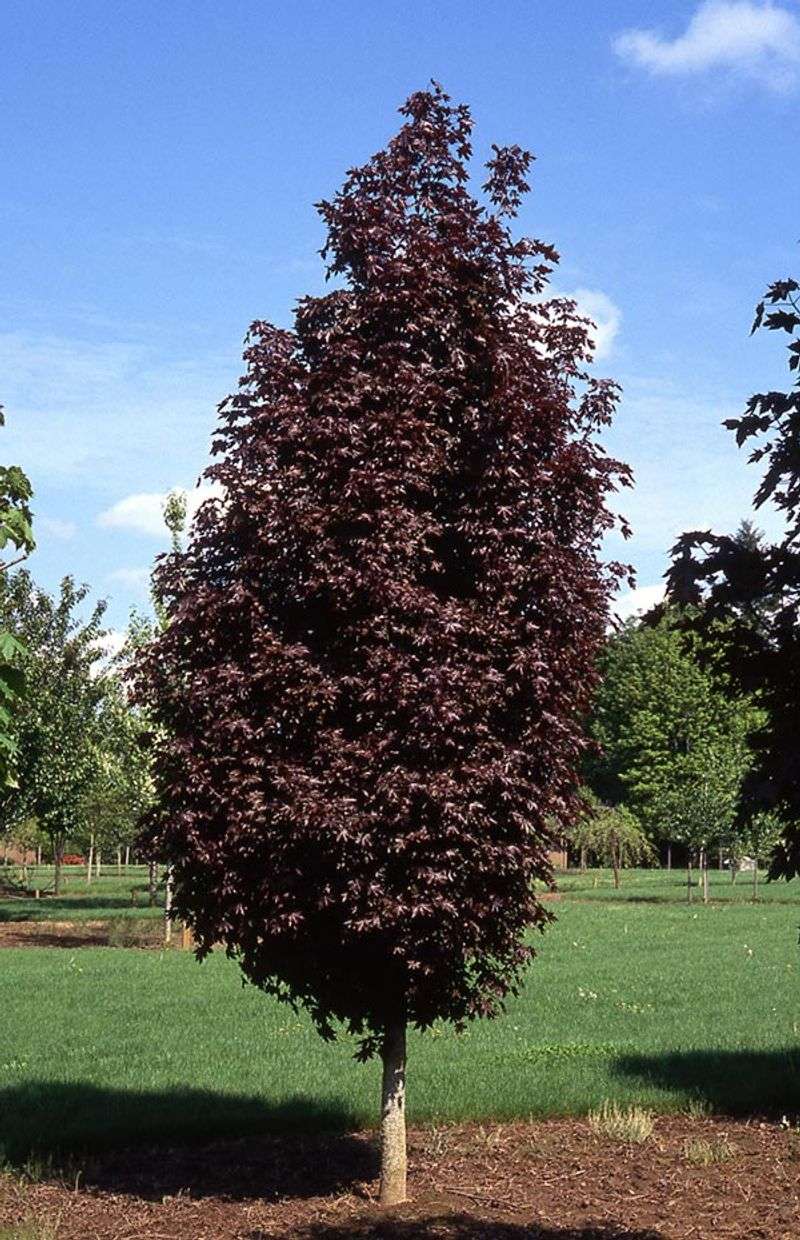
From across the street, a dark maroon canopy can look like a giant splash of ink.
Crimson King maple creates that bold effect, holding purple-red foliage through much of Pennsylvania’s growing season when many neighboring trees are green.
There is a major catch: Crimson King is a cultivar of Norway maple, a nonnative species considered invasive in Pennsylvania.
Its landscape popularity does not erase the ecological concerns linked to Norway maple spreading beyond planted yards.
Norway maple can establish in wooded areas and compete with native plants.
For a new Pennsylvania planting, consider a suitable native shade tree instead, even if that means choosing green summer leaves and enjoying red color mainly in autumn.
Existing Crimson King trees can reach roughly 40 to 50 feet tall, sometimes larger, with broad crowns.
Their dense shade and shallow roots can make lawn growth difficult and limit the plants that thrive beneath them.
If one already stands in your yard, avoid cutting major roots to install paths or garden beds.
Root injury can weaken a mature tree, and changes near the trunk should be discussed with a qualified arborist before work begins.
The foliage is usually dark purple or maroon rather than bright scarlet.
It falls before winter, so even this strong color holder does not provide a living red canopy during Pennsylvania’s snowy months.
Watch surrounding beds and nearby natural areas for volunteer maple seedlings.
Remove unwanted seedlings while they are small, and seek professional help if a mature tree has structural problems, declining branches, or roots affecting important structures.
Its dramatic appearance explains why Crimson King appears in older neighborhoods, but beauty is only part of the decision.
Treat this entry as a guide to recognizing and managing an existing tree, not a recommendation to add another Norway maple to the state’s landscapes today.
7. Red Japanese Barberry: A Colorful Shrub Pennsylvania Restricts
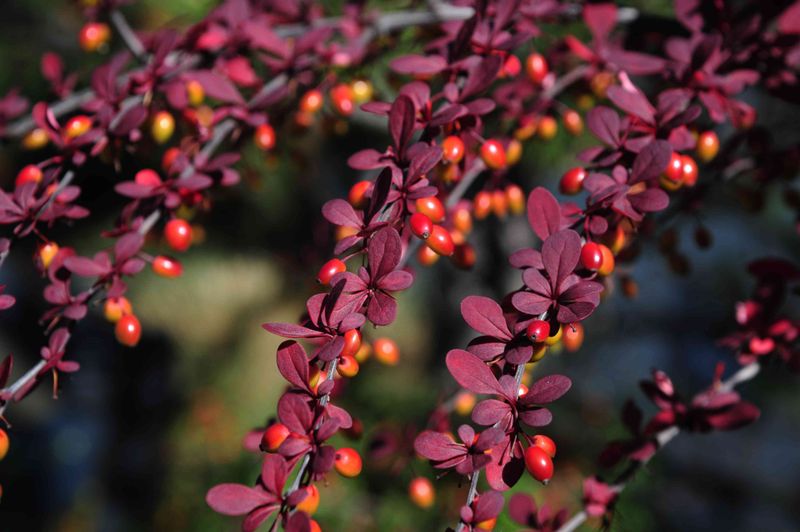
Bright burgundy leaves can hide a troublesome story.
Red Japanese barberry may look tidy in older Pennsylvania landscapes, but it is an invasive shrub, not a tree, and it does not belong on a recommended planting list.
Pennsylvania lists Japanese barberry as a noxious weed, and its sale and cultivation are prohibited under state rules.
That makes this entry useful for identification and replacement rather than shopping advice, regardless of its attractive red-leaved nursery forms.
Most garden selections remain much shorter than ornamental trees, although sizes vary.
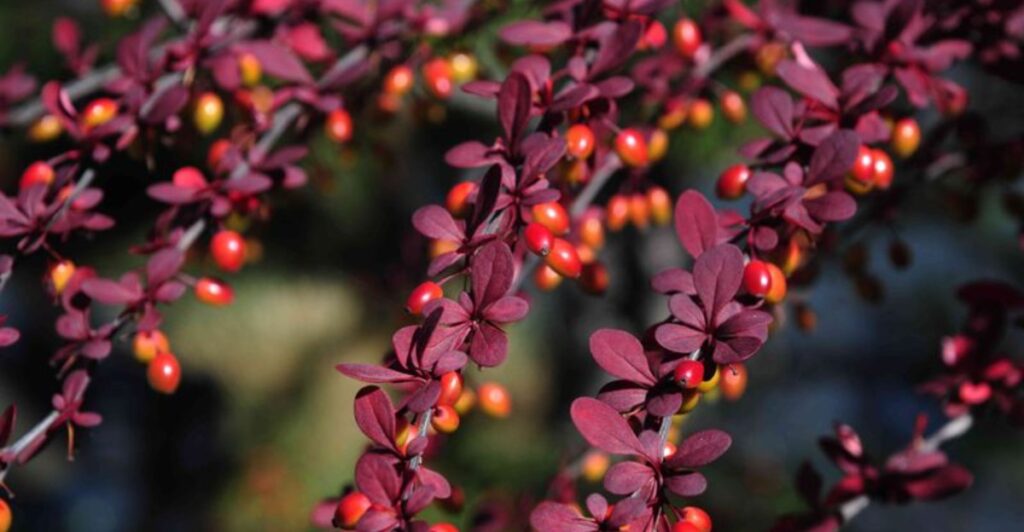
Small oval leaves, thorny stems, and compact branching help distinguish the shrub, while some plants produce red berries that birds can carry into other places.
Those seeds help barberry spread into Pennsylvania woodlands, where dense growth can crowd native plants.
Research has also linked barberry thickets with conditions favorable to ticks, adding another reason to avoid maintaining large patches near outdoor activity areas.
Its foliage may be red, purple, or green depending on the cultivar and growing conditions.
Leaves fall during the cold season, so barberry fails both parts of the title’s promise: it is neither a tree nor a year-round red-leaved plant.
If you discover an established shrub, wear sturdy gloves and protective clothing before handling its thorny branches.
Small plants may be removable with their roots, while larger infestations often need a planned approach and follow-up checks for regrowth.
Consult Penn State Extension or your local invasive-plant program for removal guidance suited to the site.
Avoid moving berries or contaminated soil elsewhere, and check current disposal advice instead of assuming yard waste collection will accept everything.
For replacement, consider native shrubs such as red chokeberry or Virginia sweetspire where conditions suit them.
They will not keep red leaves all year, but their seasonal color offers a more responsible way to brighten a Pennsylvania garden.
8. Japanese Maple ‘Bloodgood’: A Refined Burgundy Garden Accent
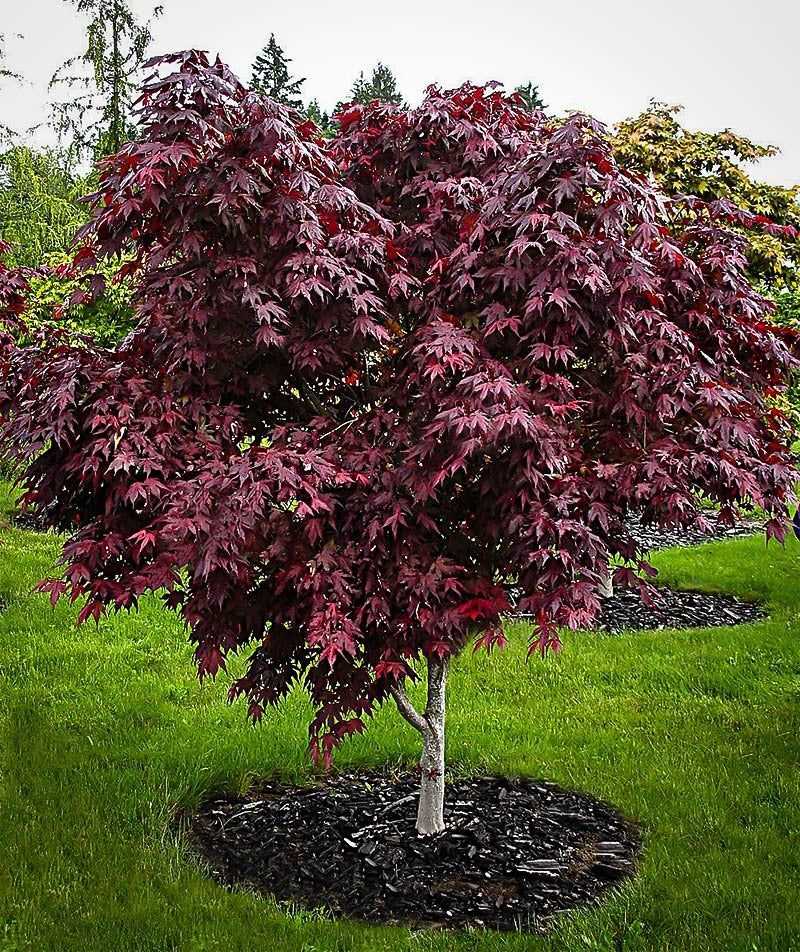
Beside a quiet garden path, finely cut burgundy leaves can make even an ordinary afternoon feel special.
Bloodgood Japanese maple brings that delicate texture to Pennsylvania landscapes, combining a graceful outline with rich growing-season color.
Unlike the laceleaf maples that often form low, weeping mounds, Bloodgood usually develops an upright shape.
It commonly reaches around 15 to 20 feet tall and wide, although age and growing conditions influence its final size.
The foliage generally holds dark red or purple tones well, particularly with suitable light.
Strong heat or heavy shade can change its appearance, and fall often brings brighter crimson shades before the leaves drop for winter.
Pick a sheltered location with morning sun and some afternoon shade where summers are hot.
Protection from drying winds helps, but avoid tight corners where poor airflow or reflected heat from walls can create other problems.
Winter hardiness deserves extra attention in Pennsylvania’s colder areas.
Bloodgood is commonly listed for zones 5 through 8, but exposed sites, late frosts, and sudden temperature swings can still damage buds, new foliage, or young branches.
Well-drained soil is essential because Japanese maples dislike waterlogged roots.
Keep moisture reasonably steady during establishment, checking below the surface before watering, and apply a modest mulch layer without covering the trunk or root flare.
Pruning should preserve the tree’s natural shape rather than force it into a tight ball.
Remove dead or crossing branches carefully, and avoid taking off large amounts of healthy growth simply to make the canopy look perfectly symmetrical.
Bloodgood works well as a focal point near a seating area or along a visible garden border.
Leave enough space to appreciate its branches in winter, because its beauty continues after leaf fall through structure and silhouette, not through red leaves remaining on the tree all year.
Share this story