Tennessee is home to some of the most unusual and fascinating roadside attractions you’ll find anywhere, and many of them exist for one simple reason: somebody couldn’t stop themselves from building. When most people have a hobby, they might collect a few items or work on a project in their spare time.
But the creators behind these eight landmarks took their passions to an entirely different level, spending years or even decades bringing their visions to life. What started as a single sculpture, a childhood fascination, or a wild dream eventually grew into something so remarkable that travelers now make special trips just to see it.
1. Billy Tripp’s Mindfield

Walking up to Billy Tripp’s Mindfield feels like stumbling onto a secret industrial cathedral rising from the West Tennessee countryside. Steel beams twist and climb skyward, forming towers, walkways, and geometric shapes that seem to grow organically from the ground.
This isn’t the work of a team of engineers or a commissioned public art project. It’s the product of one man’s unrelenting need to build, weld, and create.
Billy Tripp started Mindfield in 1989, and he’s never really stopped. The entire structure functions as a kind of three-dimensional autobiography, with each section representing different phases of his life, thoughts, and experiences.
He fabricates much of the steel himself, often working alone, adding new pieces as inspiration strikes. The result is a sprawling, ever-evolving sculpture that now covers a significant chunk of land.
What makes Mindfield so compelling isn’t just its size or ambition. It’s the deeply personal nature of the work.
Tripp hasn’t followed a master plan or tried to please an audience. He’s simply building what he feels compelled to build, turning his internal landscape into something you can walk through and experience.
Some sections soar several stories high, while others form intimate spaces you can stand inside.
Visitors are welcome to explore the sculpture freely, and many spend hours wandering through the maze of steel. The experience changes depending on the time of day and the angle of the sun, casting dramatic shadows and highlighting different aspects of the construction.
It’s become a pilgrimage site for folk art enthusiasts and curious travelers who appreciate raw, unfiltered creativity.
Tripp has faced challenges over the years, including financial struggles and debates about the sculpture’s future. But he continues working, driven by something deeper than recognition or profit.
Mindfield stands as proof that one person’s obsession can become a landmark that draws people from across the country. It’s not polished or perfect, and that’s exactly why it matters.
The sculpture sits in Brownsville, easily visible from the road, and there’s no admission fee. You can visit anytime and take as long as you want to explore.
Tripp himself is sometimes on site, welding or adding new elements. If you catch him there, he’s usually happy to talk about the work, though the sculpture speaks for itself pretty effectively.
It’s one of those rare places that exists purely because someone had to create it, consequences and practicality aside.
2. Greenback Castle
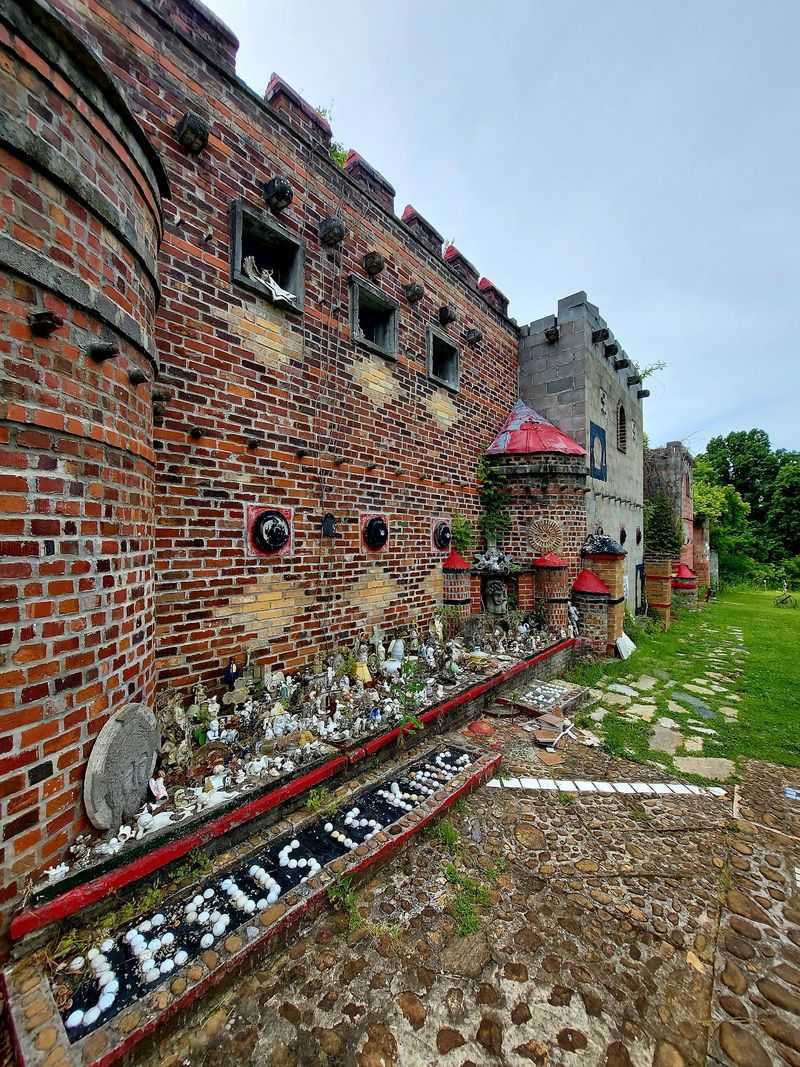
Floyd “Junior” Banks didn’t hire architects or follow blueprints when he decided to build a castle. He just started stacking stones and never really stopped.
What emerged over the following decades is Greenback Castle, a sprawling, eccentric structure that looks like it was lifted from a fever dream and dropped into the Tennessee countryside. Every corner reveals something unexpected: a hidden passageway, a room filled with symbolic decorations, or a tower that seems to serve no practical purpose except that Banks wanted it there.
Banks began construction with little formal training in masonry or architecture. He worked largely by intuition, adding rooms and features as ideas came to him.
The castle incorporates found objects, recycled materials, and all sorts of curiosities that caught his attention over the years. Walking through it feels less like touring a building and more like exploring someone’s mind made solid.
The interior is just as remarkable as the exterior. Themed rooms reflect different interests and obsessions, with walls decorated in mosaics, religious imagery, and personal symbols.
Some spaces are cozy and intimate, while others open up into surprising heights. Banks didn’t worry about conventional design principles or resale value. He built what he wanted to see, and the result is genuinely unlike anything else.
Greenback Castle has become something of a local legend, attracting visitors who’ve heard rumors about the mysterious stone structure hidden away near Maryville. Banks himself lived in the castle for years, continuing to modify and expand it even as he aged.
The building stands as a testament to what one person can accomplish when they’re willing to dedicate decades to a singular vision, practical concerns be damned.
The castle’s future has been uncertain at times, especially as Banks has gotten older. Preserving such an idiosyncratic structure presents unique challenges since there are no plans to follow and no standard restoration techniques that apply.
But the castle remains standing, still drawing curious visitors who want to see what happens when someone decides to build their own castle from scratch.
Visiting Greenback Castle requires a bit of planning since it’s private property and not always open to the public. But when access is available, it’s an unforgettable experience.
You’ll see craftsmanship born from pure determination rather than formal training, and architecture that follows emotional logic rather than structural conventions. It’s proof that you don’t need permission or credentials to create something remarkable.
You just need the obsession to keep building, stone by stone, year after year, until your vision stands solid enough for others to walk through.
3. E.T. Wickham Sculpture Trail
Enoch Tanner Wickham spent most of his life farming tobacco, not making art. But after he retired, something shifted.
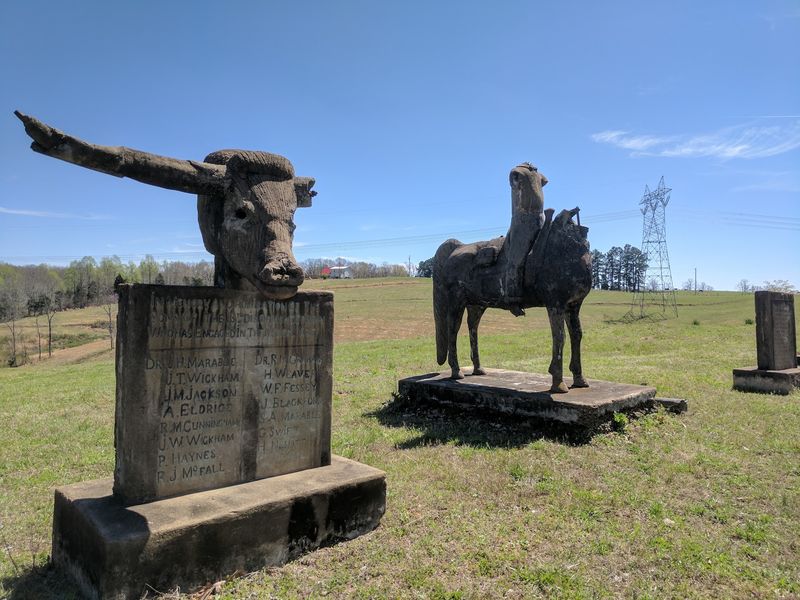
He started sculpting concrete figures in his yard, creating life-size representations of historical figures, biblical characters, and people from his own life. One sculpture became two, then five, then dozens.
Eventually, his property transformed into a full-blown folk art environment that stretches along the roadside in Palmyra.
Wickham had no formal art training. He learned by doing, mixing concrete and shaping it with his hands and basic tools.
His sculptures have a raw, honest quality that comes from someone working purely from imagination and memory rather than following established techniques. Some figures stand tall and proud, while others crouch or sit, each one capturing a specific moment or personality that mattered to Wickham.
The trail includes representations of famous figures like Abraham Lincoln and Davy Crockett, alongside religious scenes and depictions of everyday people. Wickham didn’t distinguish much between the famous and the ordinary in his work.
Everyone got the same careful attention, the same effort to capture something true about their character. Walking the trail feels like stepping into someone’s personal mythology, where historical figures and neighbors exist side by side.
What’s particularly striking about Wickham’s work is how it reflects a specific time and place in rural Tennessee. These aren’t generic sculptures meant to appeal to tourists. They’re deeply personal creations that happened to become public because Wickham placed them where anyone driving by could see them.
He wasn’t trying to start a roadside attraction. He was just compelled to create, and the public nature of his work came naturally from his desire to share these figures with his community.
The sculptures have weathered over the years, taking on the patina of age and exposure to the elements. Some have cracked or eroded, which only adds to their character.
Wickham continued adding to the collection until his death, leaving behind a remarkable legacy that documents both his personal vision and the folk art tradition of self-taught Southern artists.
The E.T. Wickham Sculpture Trail remains accessible to visitors, though it exists in a somewhat informal state since it was never designed as a formal park or museum.
You can drive or walk along the road where the sculptures stand, taking your time to appreciate each figure. There’s no admission fee, no gift shop, no official signage explaining everything.
It’s just art in its most direct form: one person’s obsession made visible, standing along a Tennessee roadside for anyone curious enough to stop and look.
4. Backyard Terrors Dinosaur Park
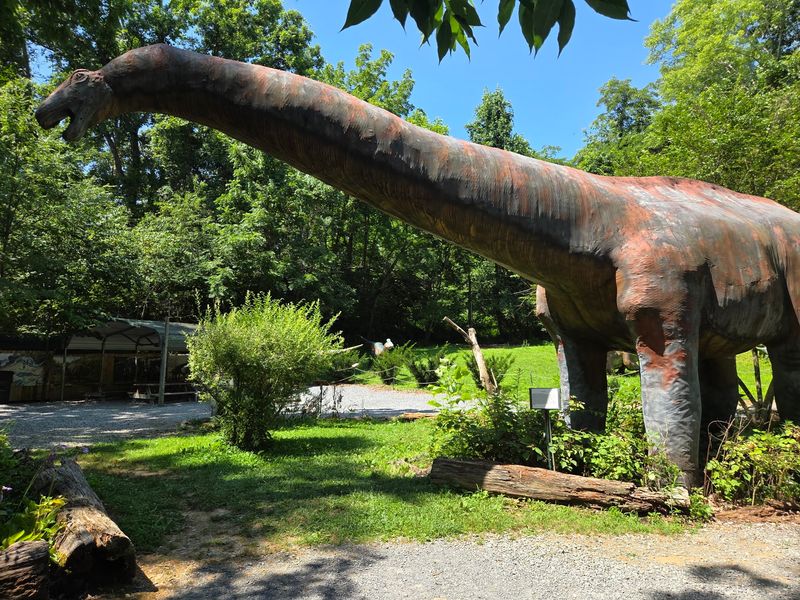
Chris Kastner loved dinosaurs as a kid, which isn’t unusual. Plenty of children go through a dinosaur phase. But Kastner never really grew out of it. In 2007, he decided he needed a life-size dinosaur in his backyard.
So he built one himself, using whatever materials he could find and figure out. That single dinosaur should have been the end of it, a quirky yard decoration and a personal project completed.
Except it wasn’t the end. Kastner built another dinosaur. Then another. People started noticing the massive prehistoric creatures visible from the road and began stopping to take pictures.
Kastner realized he had accidentally started something bigger than a personal hobby. His backyard was becoming a destination.
Rather than scale back, Kastner leaned into it. He kept building dinosaurs, expanding his collection to include multiple species in various poses.
The creatures aren’t scientifically precise museum replicas. They’re homemade creations with personality and character, built by someone who cared more about capturing the spirit of these ancient animals than achieving paleontological accuracy.
Some stand tall and menacing, while others seem almost playful.
Backyard Terrors officially became a dinosaur park, complete with pathways winding through Kastner’s property so visitors could get up close to each creature. He added signage with information about the different species, turning his obsession into an educational experience.
Kids especially love the park, getting to see dinosaurs at a scale that makes them feel real and present rather than distant museum exhibits behind glass.
What makes Backyard Terrors special is how organic its growth has been. Kastner didn’t start with a business plan or seek investors.
He just kept building dinosaurs because he couldn’t stop himself, and the park emerged naturally from that compulsion. Every dinosaur represents hours of work, problem-solving, and pure dedication to bringing these creatures to life in his own backyard.
The park sits in Bluff City and welcomes visitors who want to see what happens when childhood fascination meets adult determination and building skills. There’s a small admission fee now since Kastner has turned his obsession into something resembling a business, but the atmosphere remains decidedly DIY and personal.
You’re not visiting a corporate attraction. You’re walking through someone’s yard where they’ve spent years building the dinosaurs they always wanted to see.
Kastner continues adding to the park when inspiration and resources allow. New dinosaurs appear periodically, and existing ones get improvements or repairs.
It’s a living project that exists because one person decided that life would be better with homemade dinosaurs in it, and then had the commitment to make that vision real enough that thousands of other people now agree.
5. Castle Gwynn
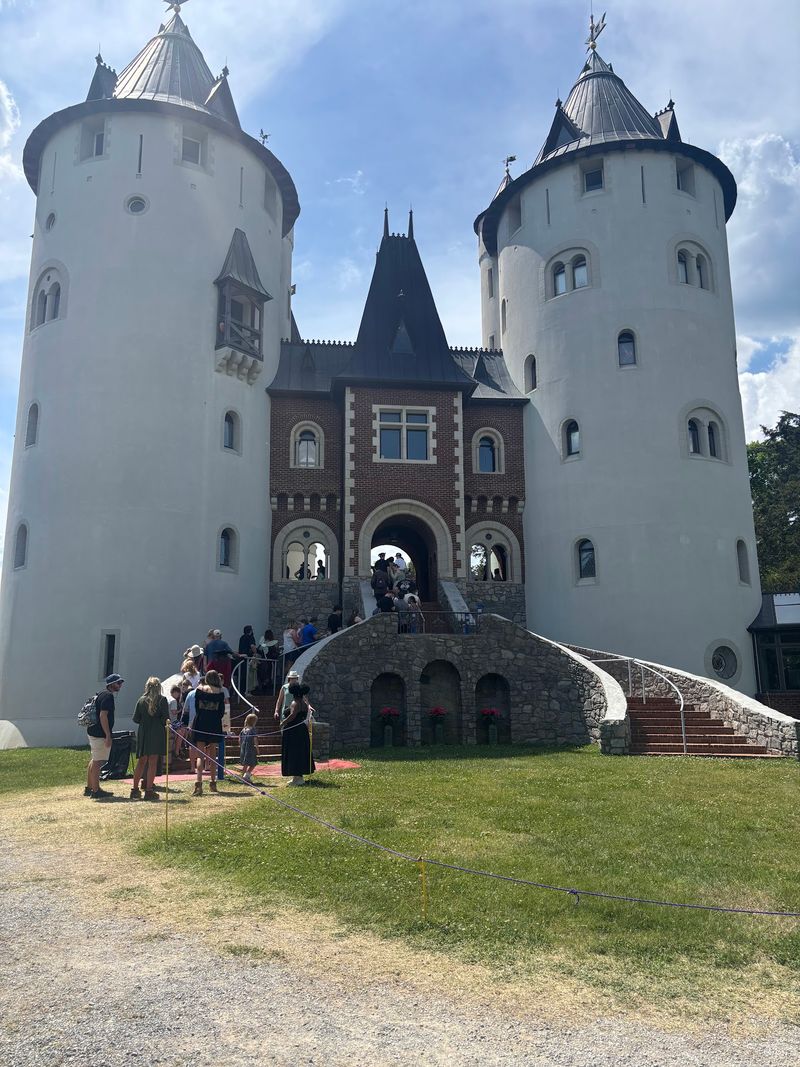
Mike Freeman sketched his dream castle during a high school architecture class in 1970. Most teenagers who draw castles in class move on to other interests. Freeman never did. He kept that sketch, bought land for it, and a decade later actually broke ground on building a real medieval castle in Tennessee.
That level of commitment to a teenage dream is rare enough to be remarkable on its own.
Construction on Castle Gwynn has continued for decades, with Freeman overseeing every aspect of the project. He hasn’t done all the physical labor himself.
Skilled masons and other craftspeople have contributed their expertise to ensure the castle is structurally sound and authentic in its medieval details. But the vision has remained consistently Freeman’s, guided by that original sketch and his decades of research into medieval architecture and construction techniques.
The castle isn’t a facade or a themed building with modern construction hidden behind decorative stonework. It’s built using traditional methods and materials, with genuine stone walls, towers, and battlements.
Walking through it feels like stepping into a different era, which is exactly what Freeman intended. He wanted to create something that would have fit seamlessly into medieval Europe, just transplanted to the Tennessee countryside.
Freeman has used the castle for various purposes over the years, including hosting events and educational programs about medieval history and architecture. But the building’s primary purpose has always been the realization of his personal vision.
It exists because he decided, as a teenager, that he wanted to live in a castle, and then spent his adult life making that happen.
The castle includes multiple rooms, towers, and authentic medieval features like a great hall and stone staircases. Details matter here.
Freeman didn’t cut corners or accept modern compromises when they would undermine the authentic medieval feel. The result is a structure that honors the architectural traditions Freeman studied while also being uniquely his own creation.
Castle Gwynn occasionally opens for tours and special events, giving visitors a chance to see what decades of dedicated castle-building can achieve. The experience is surreal in the best way.
You’re standing in Tennessee, but you’re surrounded by stone walls and medieval architecture that could have been lifted from Europe centuries ago. It’s proof that childhood dreams don’t have to fade if you’re willing to spend a lifetime bringing them into reality.
The castle continues to evolve as Freeman adds finishing touches and refinements. After spending this much time on a project, there’s always something that could be improved or another detail to perfect.
Castle Gwynn stands as a testament to the power of never letting go of a dream, no matter how impractical it might seem. Freeman drew a castle in high school, and now that castle is real, solid stone and mortar, towering over the Tennessee landscape.
6. Museum of Appalachia
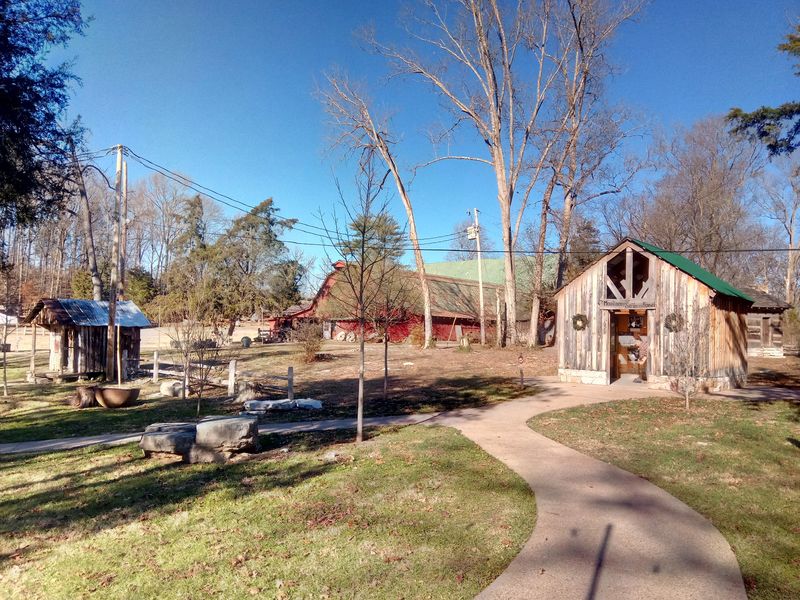
John Rice Irwin couldn’t stand to see old Appalachian buildings torn down or historic objects thrown away. So he started saving them.
At first, it was just a few items here and there, things that caught his eye or held historical significance. But Irwin’s collecting habit quickly grew into something much larger.
He began rescuing entire buildings, moving log cabins and barns piece by piece to his property to preserve them.
What eventually emerged from decades of collecting is the Museum of Appalachia, a sprawling pioneer village that contains dozens of historic structures and an absolutely massive artifact collection. Irwin didn’t just accumulate random old stuff.
He focused specifically on preserving the material culture of Appalachia, documenting a way of life that was rapidly disappearing. Every object tells a story about the people who made it, used it, or treasured it.
The museum village includes authentic log cabins, a schoolhouse, a church, barns, and various other structures that Irwin relocated and restored. Walking through the village feels like stepping back in time to experience pioneer life firsthand.
But it’s not a sanitized, simplified version of history. Irwin preserved the complexity and richness of Appalachian culture, including the ingenuity, hardship, and creativity that defined mountain life.
Inside the buildings and throughout the museum, you’ll find thousands upon thousands of artifacts. Tools, household items, musical instruments, clothing, furniture, and countless other objects fill every available space.
The collection is almost overwhelming in its scope. Irwin spent his life hunting down these pieces, often hearing stories from the original owners about how the items were used and what they meant to their families.
The Museum of Appalachia has become one of Tennessee’s most respected cultural institutions, recognized nationally for its authenticity and educational value. But at its heart, it’s still the product of one man’s obsessive dedication to preservation.
Irwin couldn’t stop collecting, couldn’t stop rescuing buildings and objects from destruction. That compulsion created something far more valuable than he probably imagined when he saved his first artifact.
The museum sits in Clinton and welcomes visitors year-round. You can easily spend an entire day exploring the village, examining artifacts, and absorbing the history preserved here.
Special events throughout the year, including traditional music festivals and craft demonstrations, bring Appalachian culture to life in ways that pure museum displays can’t match.
Irwin’s work ensured that future generations can understand and appreciate Appalachian heritage in tangible, concrete ways. The museum exists because one person cared enough to spend his life collecting, preserving, and protecting a culture that might otherwise have been lost.
It’s a landmark built not from steel or stone, but from relentless dedication to saving the past.
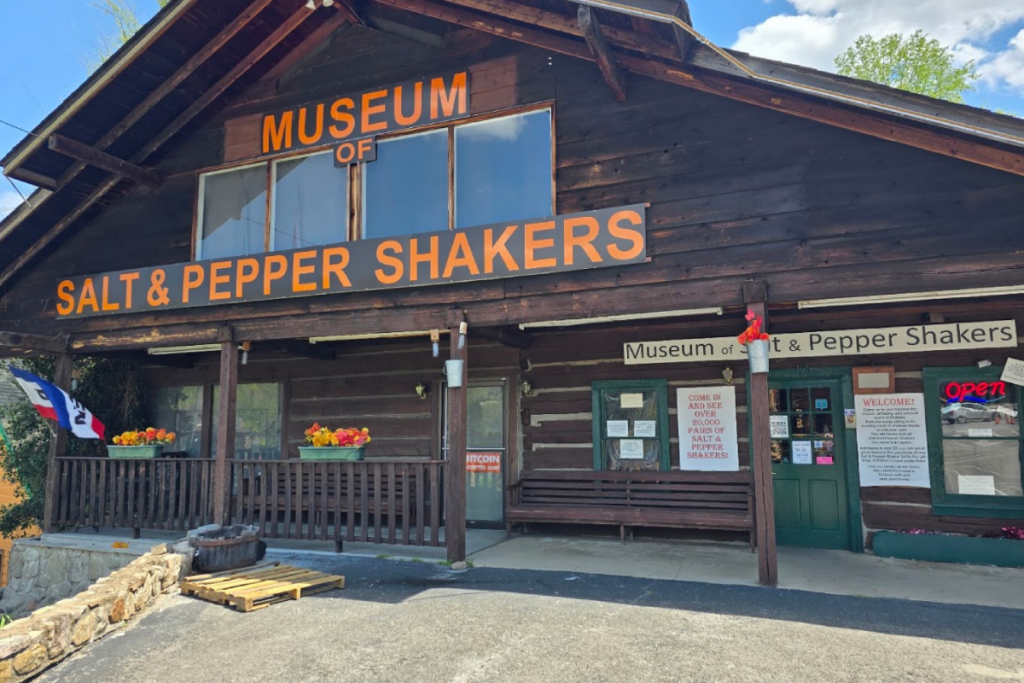
7. Salt and Pepper Shaker Museum
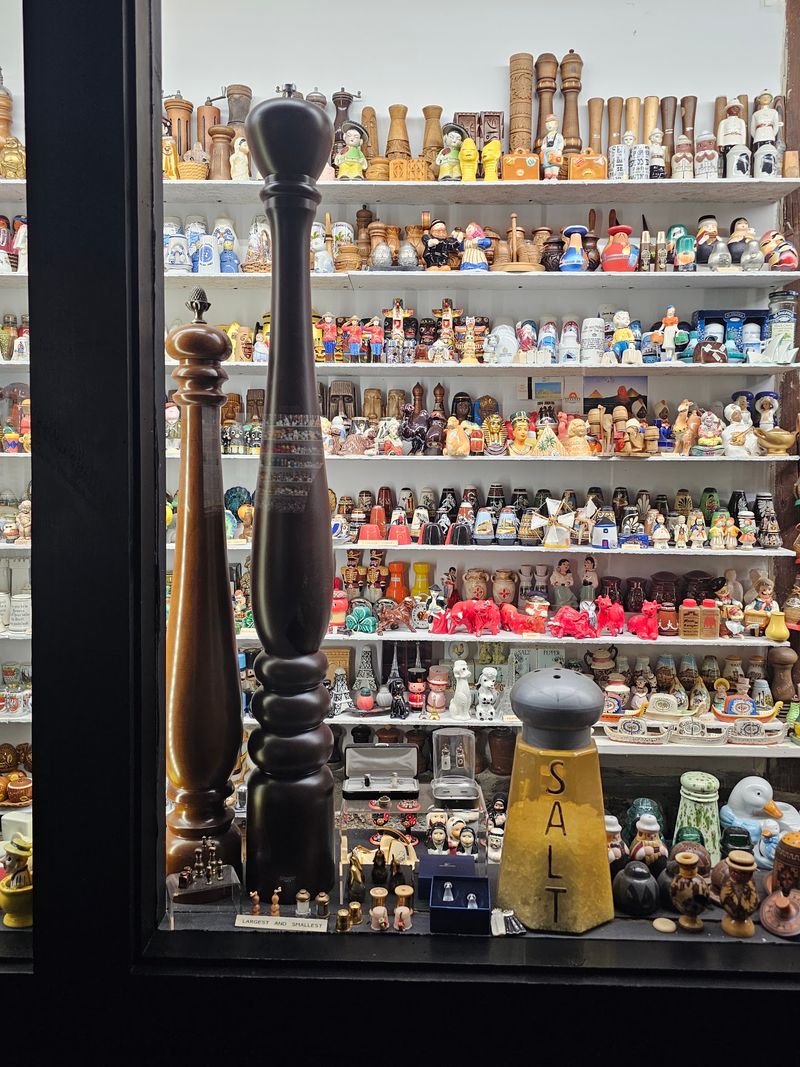
Andrea Ludden started collecting pepper mills, which seems reasonable enough. Lots of people collect things. But then salt and pepper shakers entered the picture, and Ludden’s collecting took on a life of its own. One set became ten, then a hundred, then thousands.
The collection grew so large that it eventually needed its own dedicated space. That’s how the Salt and Pepper Shaker Museum came to exist in Gatlinburg.
Today, more than 20,000 salt and pepper shaker sets fill the museum. That’s not a typo.
Twenty thousand sets, representing every imaginable theme, style, era, and level of absurdity you can think of. There are elegant vintage sets, kitschy novelty pairs, souvenir shakers from around the world, and designs so bizarre you can’t quite figure out what the creators were thinking.
The collection is exhaustive, overwhelming, and oddly mesmerizing.
Ludden didn’t set out to open a museum. She just kept collecting because she found the objects fascinating and couldn’t resist adding to her growing assemblage.
Eventually, the collection outgrew her home, then outgrew storage spaces, until the only logical solution was to create a public museum where others could appreciate the fruits of her obsession. What started as a personal hobby became a legitimate tourist attraction.
The museum is organized to help visitors navigate the massive collection, with displays grouped by theme or style. You can see shakers shaped like animals, famous landmarks, cartoon characters, vehicles, food items, and countless other subjects.
Some are beautifully crafted pieces of mid-century design. Others are wonderfully tacky tourist souvenirs.
All of them found their way into Ludden’s collection because she saw something worth preserving.
What makes the museum particularly enjoyable is how it celebrates something most people consider completely mundane. Salt and pepper shakers are everyday objects that rarely get a second thought.
But when you see thousands of them together, you start noticing the creativity, humor, and craftsmanship that went into designing these tiny functional sculptures. Ludden’s obsession helps visitors see ordinary objects in extraordinary ways.
The museum sits right in Gatlinburg, making it an easy stop for tourists visiting the area. Admission is inexpensive, and you can browse the collection at your own pace.
Many visitors arrive skeptical that a salt and pepper shaker museum could possibly be interesting and leave genuinely impressed by the scope and variety of the collection. It’s one of those attractions that sounds silly until you actually experience it.
Ludden’s collection continues to grow, with new acquisitions regularly added to the displays. People now donate shakers to the museum, knowing their pieces will join a collection that’s unmatched anywhere else in the world.
The museum exists because one person’s collecting habit crossed the line from hobby to obsession to public institution. It’s a landmark built from 20,000 tiny, functional objects that someone cared enough to preserve and share.
8. Millennium Manor
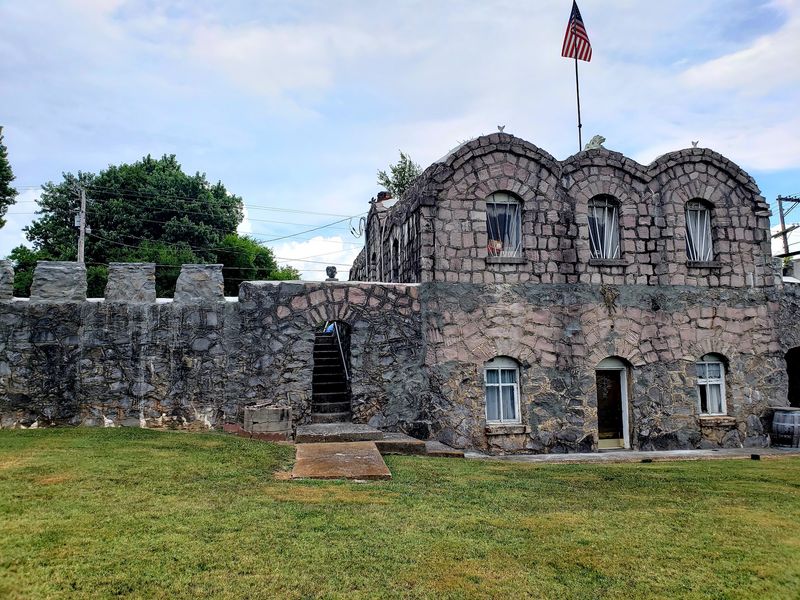
William Andrew Nicholson and his wife Emma believed something catastrophic was coming. Exactly what that event would be remained unclear, but they were certain it would be devastating enough to require serious preparation.
So between the late 1930s and 1946, they built Millennium Manor, a house designed to withstand whatever apocalyptic scenario they envisioned. The result is one of the most unusual residential structures in Tennessee.
The house is extraordinarily heavy, built with thick stone walls and construction techniques that prioritize durability and protection over aesthetics or comfort. The Nicholsons weren’t interested in architectural trends or creating an attractive home.
They wanted a fortress that would keep them safe when disaster struck. Every design choice reflects that single-minded focus on survival.
Walking through Millennium Manor today, you can feel the weight of the construction. Walls are far thicker than necessary for a normal house.
Materials were chosen for strength rather than beauty. The building feels solid in a way that modern construction rarely achieves, like it was built to outlast civilizations rather than just provide shelter for a few decades.
Historical records credit both William and Emma Nicholson with the construction, so this isn’t quite a one-person project. But William often gets foregrounded in accounts of the house, probably because stories about obsessive builders tend to focus on individual visionaries.
The reality is that both Nicholsons shared the apocalyptic beliefs that drove the construction, and both contributed to turning those beliefs into solid stone and mortar.
The house stands in Alcoa, a monument to conviction so strong that it drove a couple to spend years building a structure designed for the end of the world. The apocalypse they feared never came, at least not in their lifetimes.
But Millennium Manor remains, a testament to how deeply held beliefs can shape physical reality.
The house has changed hands over the years and undergone some modifications, but its essential character remains intact. You can still see the evidence of the Nicholsons’ obsession in every thick wall and overbuilt detail.
It’s recognized by Tennessee’s historic preservation organizations as a significant example of Depression-era construction influenced by apocalyptic thinking.
Millennium Manor isn’t regularly open for public tours since it’s a private residence, but its exterior and the story behind it continue to fascinate people interested in unusual architecture and the psychology of survival preparation. The house exists because two people believed strongly enough in an impending disaster to spend years building protection against it.
That obsession created a landmark that outlived its original purpose, standing solid and heavy long after the fears that built it have faded into history. It’s a reminder that obsessions don’t have to be joyful or artistic to create something remarkable and lasting.