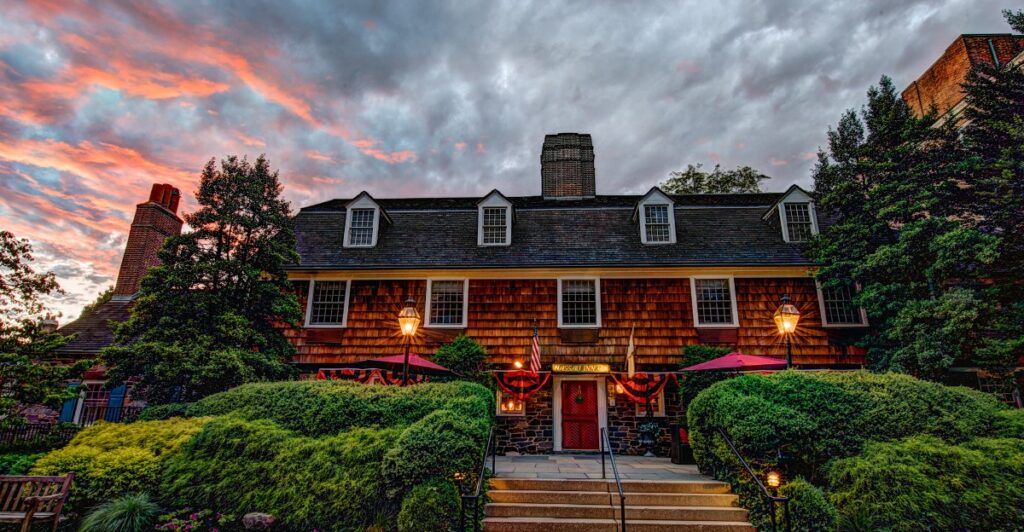
A steamer trunk scrapes across an empty room in Cape May. A woman in an old-fashioned nightgown puzzles over a television in Frenchtown.
In Ocean City, a young figure known as the Lady in White reportedly laughs, sings, and slips through walls.
New Jersey’s historic hotels offer more than antique furniture and creaking floorboards; many come with stories that have survived renovations, ownership changes, and generations of skeptical overnight guests.
Most of these tales are friendly rather than frightening, although that distinction may feel less reassuring when unexplained footsteps stop outside your door at 2 a.m.
From grand seaside resorts to a pink Victorian inn and an Ivy League landmark, these properties give adventurous travelers a chance to sleep unusually close to the past.
Whether the phenomena are paranormal, architectural, or products of excellent imaginations, the stories add an irresistible extra layer to nine already fascinating places to stay.
1. The Flanders Hotel – Ocean City
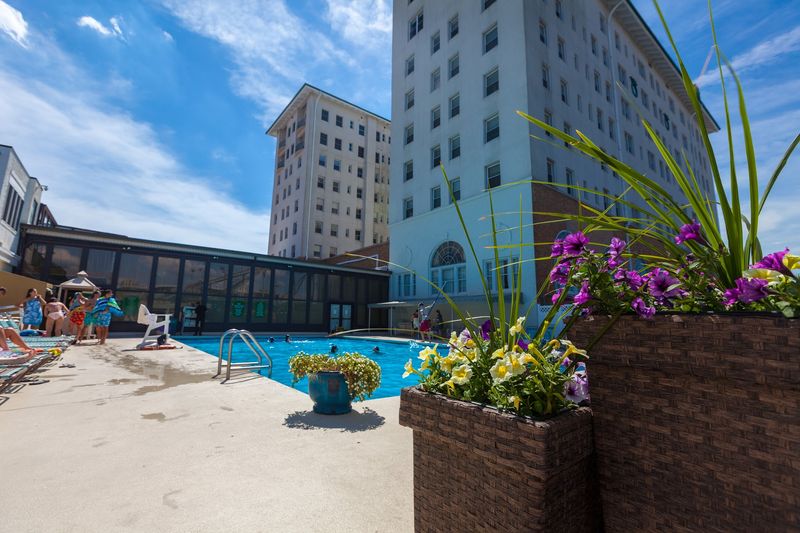
Emily has never officially booked a room, but she may be the best-known guest at this Ocean City landmark. Usually described as a young woman with long brown hair and white clothing, the hotel’s “Lady in White” has reportedly been spotted in the lobby and along the second and fourth floors.
Witnesses portray her as more playful than terrifying. Stories credit her with singing, laughing, turning doorknobs, unscrewing lightbulbs, and disappearing through walls as if hotel architecture were merely a suggestion.
A portrait based on descriptions of Emily hangs on the second floor, giving curious visitors a face to connect with the legend. The setting provides plenty of fuel for an active imagination.
Opened in 1923, the Flanders rises just off the Ocean City Boardwalk in an ornate Spanish Mission Revival style. Its concrete-and-steel construction helped it survive a destructive 1927 boardwalk fire, and the building later earned a place on the National Register of Historic Places.
Today, accommodations are arranged as individually owned suites, many with kitchens, making this a practical choice for families as well as ghost hunters. Guests also have access to an outdoor pool and an easy walk to the beach and boardwalk.
Ask about Emily at the hotel and you may hear another version of her story. Just remember that if a lightbulb suddenly loosens, she already has an alibi.
2. Congress Hall – Cape May
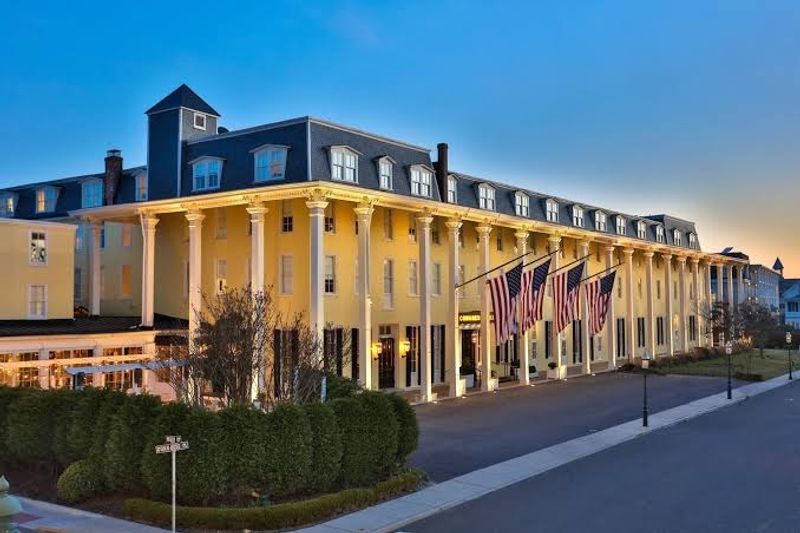
Few buildings can make an unexplained footstep feel as historically plausible as a hotel that has welcomed travelers for more than two centuries. Congress Hall began in 1816 as a boarding house called the Big House, though doubtful locals preferred the nickname “Tommy’s Folly.”
The skeptics were wrong: it flourished, hosted presidents, survived changing fashions, and was rebuilt in brick after Cape May’s devastating 1878 fire.
With that much history packed into one oceanfront block, ghost stories were almost inevitable. Guests and employees have described shadowy figures, doors that seem to operate without assistance, and strange noises moving through otherwise quiet corridors.
Some accounts mention a woman in period clothing, while others tell of invisible children playing beyond sight. The reports vary, which is exactly how a good hotel legend stays alive.
Congress Hall does not feel like a manufactured haunted attraction. Its pale yellow façade, broad lawn, rocking chairs, and busy public rooms create a cheerful resort setting where the supernatural remains a whispered subplot.
Visitors can settle into the Brown Room for a cocktail, dine at the Blue Pig Tavern, or learn about the property on a history tour. Its location beside the Washington Street Mall also makes exploring central Cape May easy without moving the car.
The ghosts, if present, have chosen exceptionally convenient accommodations.
3. The Southern Mansion – Cape May
A trace of perfume with no obvious wearer is the signature calling card in this restored Cape May estate. The scent is often attributed to Ester, the great-niece of original owner George Allen and the final family member to reside in the house.
She reportedly loved entertaining, and the gentler versions of the legend suggest she remains delighted to see the mansion filled with conversation, dinners, and celebrations again.
Visitors and staff have described unexplained laughter, rustling fabric, sudden cold spots, soft touches, and fleeting glimpses of a woman dressed for another era.
The kitchen receives particular attention in the stories, as though Ester still wants to make sure everything is running properly.
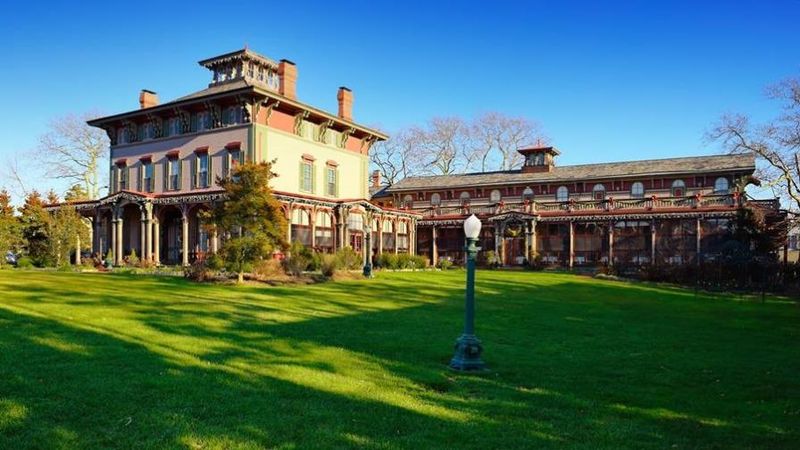
Built in 1863 and 1864 as the George Allen House, the Italianate mansion later became a boarding house and spent years declining before an extensive restoration began in the 1990s.
Its carved woodwork, tall windows, period furnishings, and sweeping staircases now look suitably grand, while 1½ acres of gardens give the property surprising breathing room near downtown Cape May.
The atmosphere is elegant, but not museum-stiff; breakfast is part of the overnight experience, and the Washington Street Mall is within walking distance.
Historical tours may also be available for people who want to see the common rooms without staying overnight. Paranormal investigators have examined the property, but Ester’s story remains folklore rather than settled fact.
Even so, catching an unexpected floral scent in an empty hallway might make a believer move a little faster.
4. Hotel Macomber – Cape May
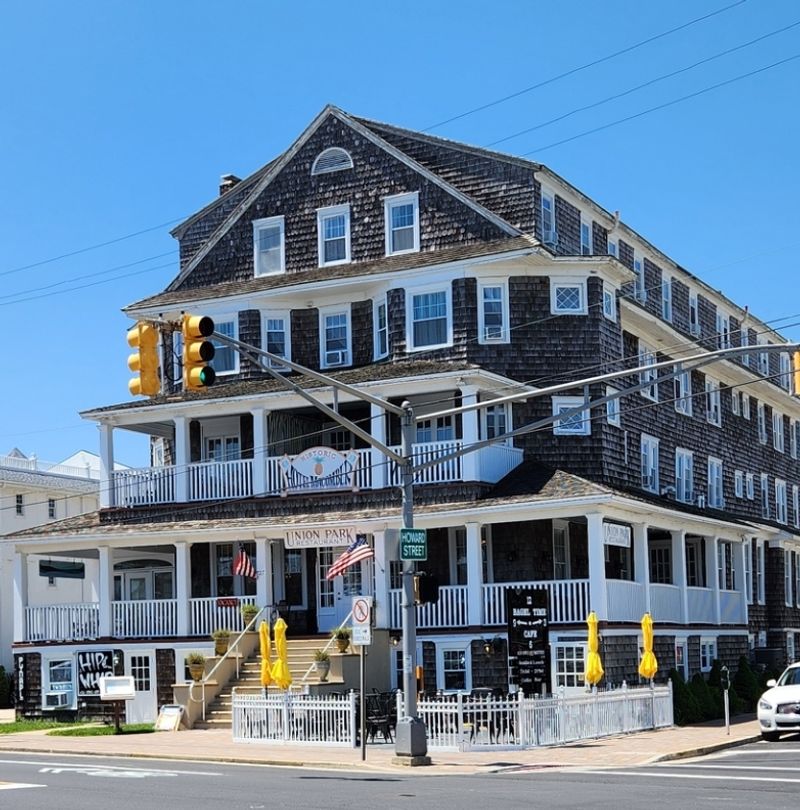
Listen closely in the room historically identified as Room 10, and you may hear something much heavier than ordinary footsteps.
According to the hotel’s most enduring tale, a steamer trunk sometimes sounds as if it is being dragged across the floor, announcing the return of a longtime summer visitor known as Irene Wright.
Nicknamed the Trunk Lady, Irene reportedly favored the hotel during the 1940s and returned for extended seasonal stays after her husband died. Stories now credit her with unexplained knocking, shifted furniture, and occasional appearances in old-fashioned clothing.
Some witnesses claim to have seen a woman rocking quietly on the porch, only for her to vanish before they could get a better look. Irene is not the property’s only rumored presence.
Tales also mention a former owner, a Depression-era waitress, and a gruff basement voice rather appropriately nicknamed the Growler. Opened in 1916 as the New Stockton Villa, the white-shingled hotel faces the ocean from Beach Avenue and retains the intimate scale of an earlier Cape May.
It is a seasonal property rather than a giant resort, with rooms that vary in size and appointments. Room numbering has changed over the years, so ghost hunters should ask the front desk which accommodation carries the old Room 10 association.
The beach is directly across the street, and the center of town is walkable. Irene, meanwhile, apparently still travels with more luggage than anyone else.
5. The Chalfonte Hotel – Cape May
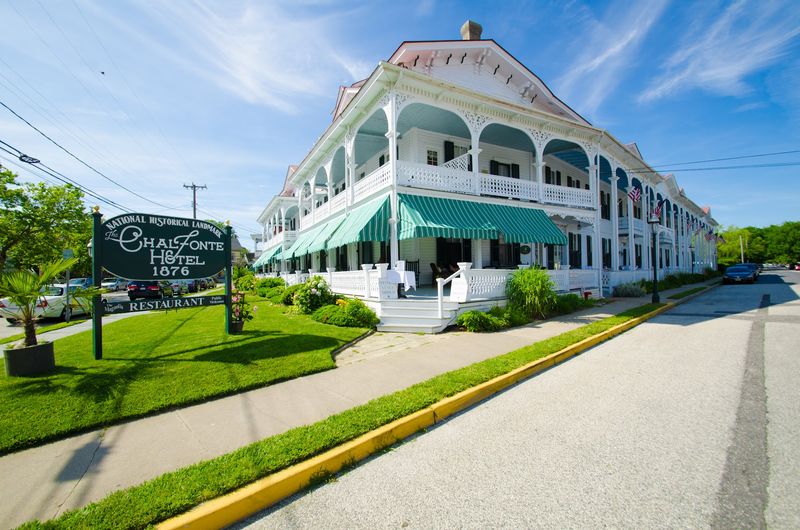
Rocking chairs line the long gingerbread-trimmed veranda, louvered doors catch the sea breeze, and the floorboards make sure nobody forgets this hotel dates to 1876.
The Chalfonte was built by Civil War veteran Colonel Henry Sawyer, whose biography is dramatic enough without adding anything supernatural.
Captured during the war, Sawyer was selected for execution in retaliation for the deaths of Confederate prisoners before political intervention and a prisoner exchange spared his life. He returned to Cape May and eventually created the boarding house that grew into today’s sprawling hotel.
His name naturally appears in the property’s ghost lore, with tales of a protective male presence and bootsteps crossing rooms that should be empty. Other stories center on unexplained voices, children’s laughter, and activity around the Magnolia Room and kitchen.
The building itself does much of the mood-setting. Its ship-like profile, Italianate cupola, original fixtures, narrow corridors, and deliberately old-fashioned guestrooms feel far removed from standardized modern lodging.
That authenticity also means travelers should review room amenities carefully before booking; historic charm sometimes comes with fewer contemporary extras. A meal in the Magnolia Room is part of the classic Chalfonte experience, especially for visitors drawn to its long tradition of Southern cooking.
Even skeptics may find themselves pausing after a hallway creak. Here, every sound seems to arrive carrying 150 years of possible explanations.
6. Angel of the Sea – Cape May
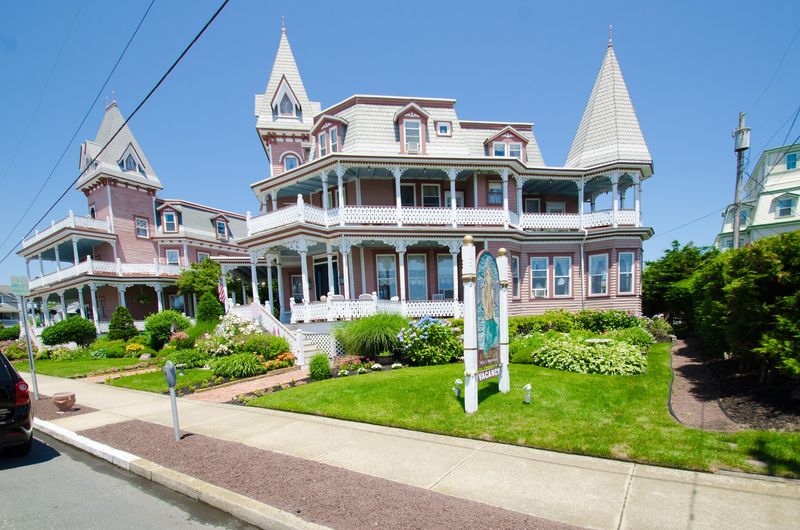
Before worrying about ghosts, consider what the buildings themselves have survived.
The elaborate Victorian structures associated with Angel of the Sea were threatened with demolition after the 1962 Ash Wednesday Storm, moved from the beachfront by flatbed truck, used as student and employee housing, abandoned, and eventually restored as a bed-and-breakfast.
That complicated journey supplies the backdrop for the legend of Miss Brown, a young woman said to have lived here during the student-housing era. According to the often-repeated story, she returned after curfew without her key and tried to reach her room from outside, only to fall to her death.
Contemporary documentation has never conclusively established her identity or the accident, but the tale refuses to disappear. Guests have since reported vibrating beds, moving furniture, flickering electronics, and footsteps with no visible owner.
Ocean wind, aging floorboards, and old pipes offer sensible explanations for many nighttime sounds, though reason becomes less comforting when the mattress seems involved.
Located a half-block from the beach on Trenton Avenue, the inn is instantly recognizable by its turrets, porches, balconies, and extravagant gingerbread detailing.
Rooms are individually decorated, and a stay includes breakfast and afternoon refreshments. It sits slightly removed from Cape May’s busiest central blocks, creating a quieter base near the ocean.
Miss Brown’s story may be impossible to prove, but it gives checking the window locks an entirely new significance.
7. The Grenville Hotel & Restaurant – Bay Head
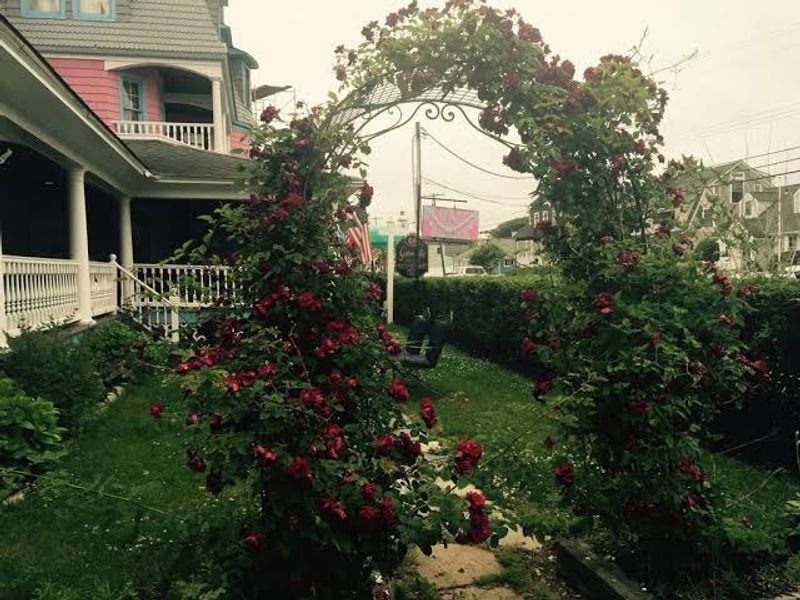
The Grenville looks more like a pink gingerbread house than the setting for a ghost story, which makes reports of children laughing in empty corridors particularly effective. Built in 1890 by Wyckoff Applegate, the Bay Head hotel has long been associated with unexplained sounds and moving objects.
Several of Applegate’s children died young, and local lore connects their spirits to footsteps, voices, and glimpses of children playing inside the building. The dining room supplies another category of stories.
Glasses, dishes, silverware, and even tablecloths have reportedly moved without visible assistance, while employees have described noises coming from vacant rooms. Guests have also told of misty forms, furniture changing position, and figures dressed in late-19th- or early-20th-century clothing.
Rooms on the third floor, particularly those historically numbered 303 and 304, are commonly identified as paranormal hot spots. Of course, an 1890 hotel filled with people, pipes, doors, and settling wood produces its own collection of perfectly earthly sounds.
The fun comes from deciding which explanation fits. The Grenville stands on Main Avenue in Bay Head, close enough to walk to the beach while offering an alternative to the Shore’s larger resorts.
Its wraparound porch, decorative trim, restaurant, and comparatively intimate room count preserve the feeling of a traditional coastal inn. If ghost hunting is the goal, ask about third-floor availability.
If sleeping is the goal, perhaps keep that particular interest to yourself.
8. The National Hotel – Frenchtown
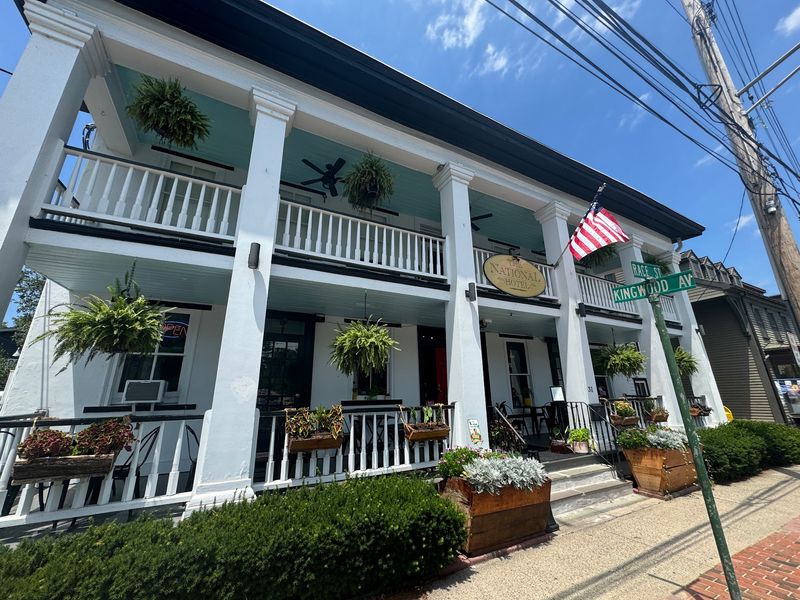
One of New Jersey’s friendliest alleged ghosts is less interested in scaring people than in understanding their gadgets. Guests at this historic Frenchtown hotel have reported encountering an older woman in a nightgown who asks questions about telephones, televisions, and other unfamiliar technology.
Another recurring account describes a woman with reddish curls and a white dress, sometimes identified in local lore as Lizzie. She reportedly appears solid enough to be mistaken for an ordinary guest, then vanishes from a room or hallway without an obvious exit.
Hotel logbooks and stories shared by former owners helped keep the tradition circulating long after individual witnesses checked out. Less cheerful history also shadows the building: in 1898, a traveler named J.D.
Emory died in his room after taking laudanum. No firm evidence connects him to later paranormal reports, but the incident gives the property’s past a genuinely somber chapter.
The National has occupied a prominent spot near the Delaware River since the 19th century, welcoming travelers into the center of one of Hunterdon County’s most walkable small towns. Its guestrooms sit above a restaurant and bar, while boutiques, cafés, galleries, and the riverside path are close at hand.
Parking may require a little patience during popular weekends, so arriving earlier in the day is sensible. Travelers worried about spectral questions should prepare a simple explanation of Wi-Fi before going to bed.
9. Nassau Inn – Princeton
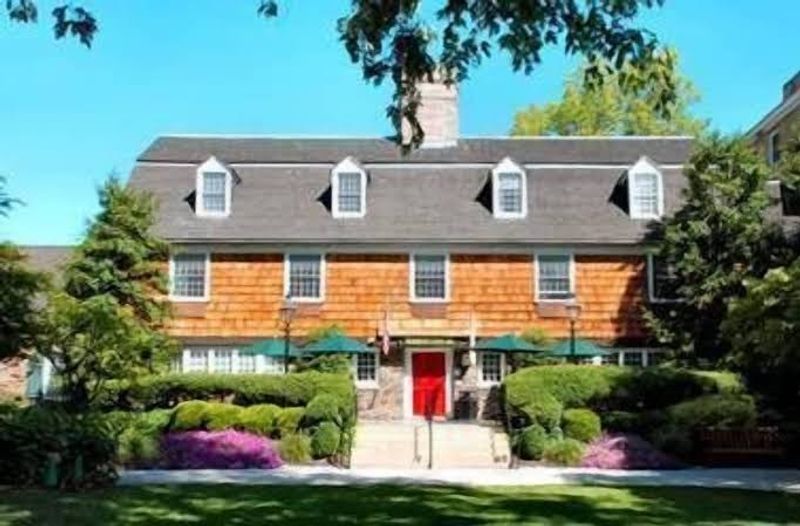
A cold patch near a pair of red lobby chairs sounds minor until you learn who once sat there. Albert Einstein and mathematician Kurt Gödel are closely associated with Princeton, and tradition holds that their walks sometimes ended with tea at the Nassau Inn.
More recent ghost lore connects Gödel to those chairs, where visitors have described abrupt temperature changes and an unsettled feeling. Elsewhere in the hotel, witnesses have reported a woman in period dress descending a staircase and a curious-looking figure whose clothing recalls the Revolutionary era.
The legends tend to borrow freely from Princeton’s long history, so it helps to separate the inn’s lineage from its present walls. The original Nassau Inn opened in 1756 and played a role in colonial community life, but today’s Palmer Square building opened in 1938.
That does not spoil the stories; it simply gives them a more intriguing question about whether a haunting follows bricks, objects, memories, or names. The modern inn occupies one of Princeton’s best locations, steps from shops, restaurants, and the university campus.
Its Yankee Doodle Tap Room contains a large Norman Rockwell mural painted directly onto the wall, plus the sort of dark wood and historic character that can make an evening drink feel pleasantly unstuck in time. Stay for the walkable setting and old-Princeton atmosphere.
Any encounter with a spectral logician should be considered an exceedingly intellectual bonus.
Share this story