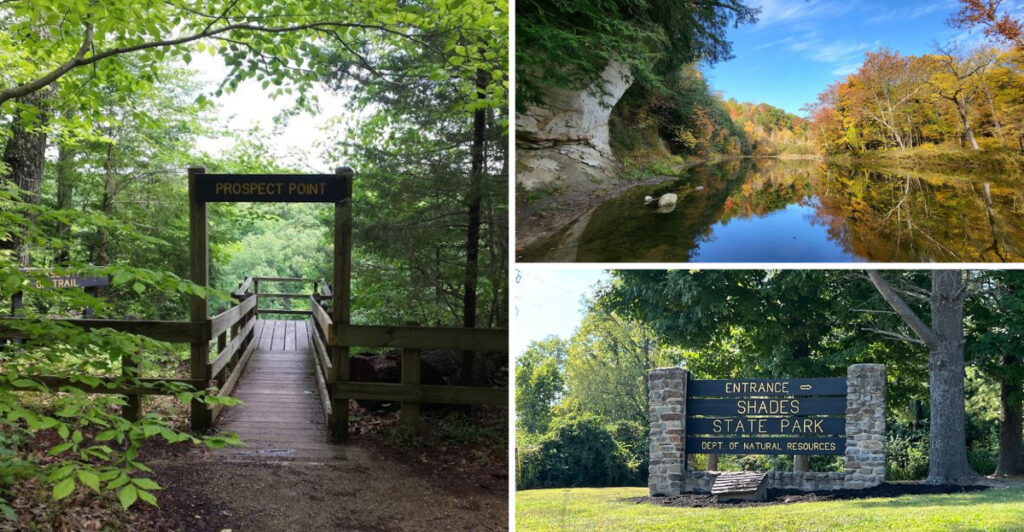
Shades State Park is one of Indiana’s most beautiful hidden state parks, offering nearly 3,000 acres of rugged ravines, sandstone cliffs, scenic overlooks, and peaceful forest trails that feel far removed from everyday life.
Located near Waveland in west-central Indiana, this underrated destination rewards hikers with dramatic creek valleys, towering rock formations, wooden stairways, and lush woodlands that showcase a surprisingly wild side of the Hoosier State. Its quieter atmosphere makes it an ideal alternative to some of Indiana’s more heavily visited parks. If you’re searching for an unforgettable outdoor escape, Shades State Park deserves a place on your Indiana bucket list.
The Ravines Hit Fast
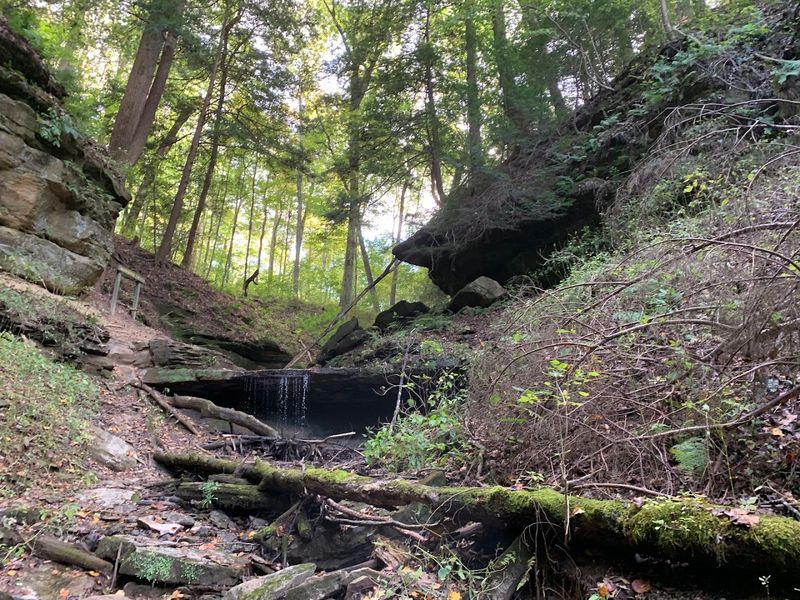
Shades State Park does not ease you in with bland scenery and then save the good part for later. The landscape starts changing almost as soon as you leave the central area, trading ordinary woodland for steep ravines, rock-lined passages, and stairways that drop you into cooler, darker pockets of forest.
Even before the trail gets especially rough, the ground begins folding and dipping in a way that makes the park seem much bigger than a quick glance at the map suggests.
That dramatic terrain is the park’s first real surprise. In a state better known for farmland, Shades delivers sudden sandstone walls, narrow hollows, and stream-cut slopes that look more Appalachian than Midwestern.
The trees close in overhead, moisture lingers in the low spots, and the air can shift noticeably as you descend, especially on warm days when the ravines hold onto shade and a bit of chill.
The visual contrast is part of the appeal, but so is the movement. Trails here are rarely a long, flat march. You are stepping down, climbing back out, crossing uneven ground, and paying attention to roots, rocks, and creek edges, which gives the whole place a more active, immersive rhythm than many easy state park loops.
That means the park announces itself through terrain, not flashy infrastructure. Shades feels shaped by water, stone, and erosion first, with the human additions mostly there to help you navigate it.
If your ideal park experience includes boardwalks and wide paved paths, this is a different mood entirely. If you want Indiana scenery with edges, drop-offs, and a little mud on your boots, this opening impression lands hard.
Sugar Creek Steals the Middle Distance
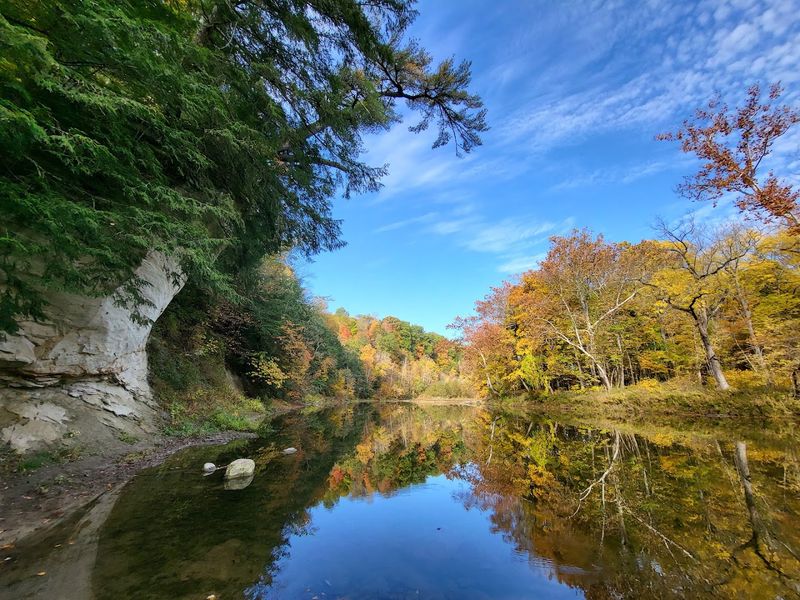
Once the ravines pull you in, Sugar Creek becomes the feature that gives the whole park its scale. It is not just a nice water view tucked off to one side.
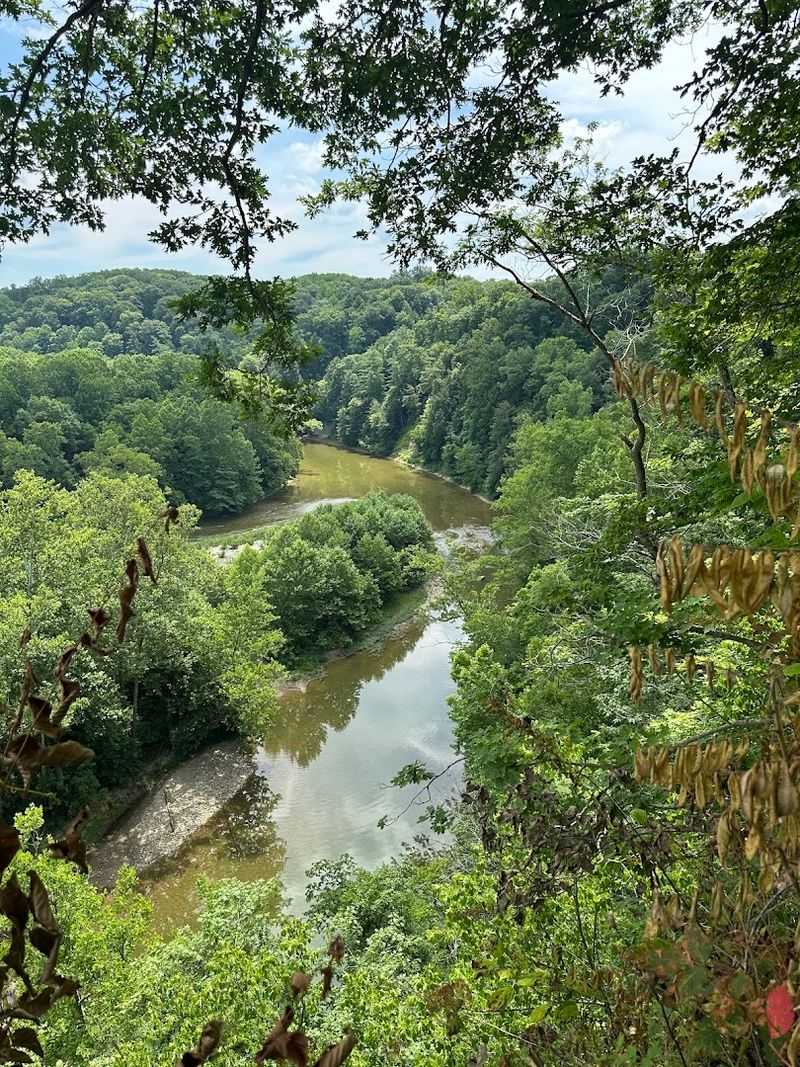
The creek helps shape the cliffs, the overlooks, and the sense of depth that separates Shades from flatter, more predictable parks, creating long views where the forest suddenly opens and the valley drops away below you.
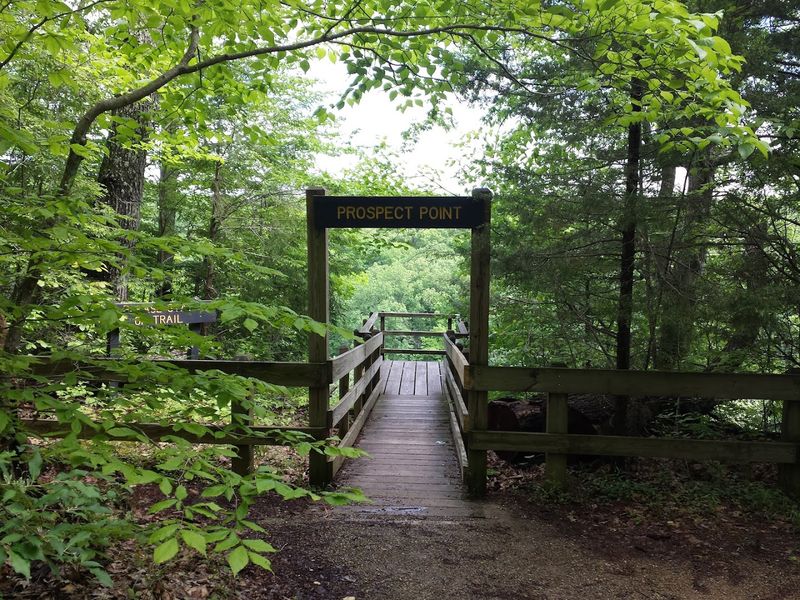
At overlooks such as Prospect Point, the park shifts from enclosed and intimate to broad and cinematic. One minute you are moving through shaded trail corridors, and the next you are looking across treetops toward a ribbon of water that cuts through the landscape with quiet authority.
Those transitions matter because they keep the hike from settling into one visual note, replacing repetition with surprise and giving each rise and bend more purpose.
Sugar Creek also broadens the park’s personality beyond hiking. It is part of why canoeing, fishing, and creekside wandering fit naturally here instead of feeling like side activities added to a trail system.
Even when you are not on the water, the creek remains present in the scenery, the humidity, the exposed rock, and the way certain overlooks frame the valley like a natural amphitheater.
The best part is that the view does not need exaggeration to work. You are not looking at some heavily built attraction designed for a photo stop and a quick exit.
You are looking at a creek valley that has carved its own drama over time, and the park lets that topography do the talking. In Indiana, that kind of layered, elevated creek scenery is a major reason Shades punches far above its reputation.
Indiana Trails With Ladders, Stairs, and a Little Attitude
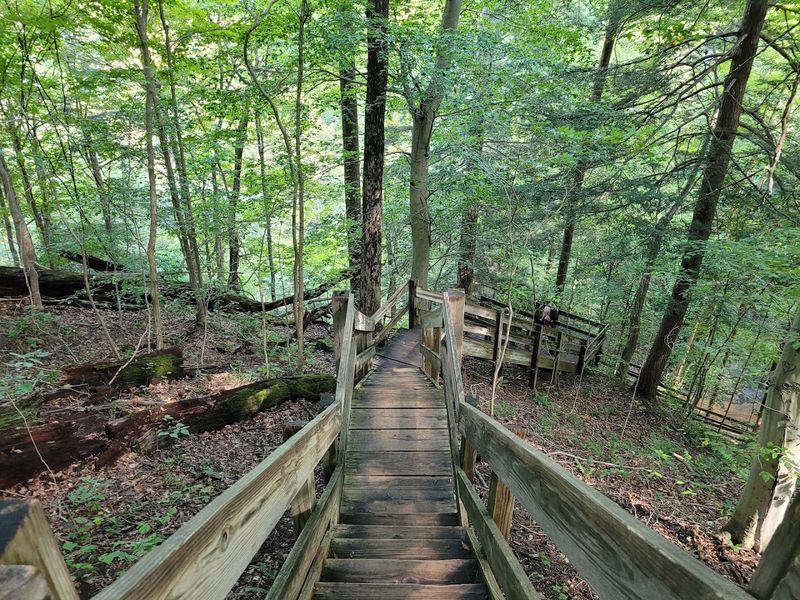
Plenty of parks advertise hiking, but Shades State Park means it in a more physical way. This is not a place where every trail is a gentle loop with occasional scenery breaks.
Several routes involve long stair sections, steep descents, creek-bed walking, and ladders that turn a simple hike into something closer to a low-key adventure course, especially if you are used to smoother paths elsewhere in Indiana.
That ruggedness is not a gimmick. It comes directly from the park’s terrain, which drops sharply into ravines and climbs back to high ground through narrow cuts in the forest.
Trail names and numbers matter here because some routes ask much more from your legs and balance than others, and the difference between an easy stroll and a demanding hike can be a few turns on the map.
Footwear makes a real difference. Reviews consistently mention mud, wet ground, and rough sections, and that lines up with the park’s natural layout rather than temporary conditions alone.
If you show up in thin sneakers expecting a casual afternoon walk, the stairs, slick spots, and uneven creek crossings may change your mood fast. Boots, water, and a little patience go a long way.
The upside is that these trails feel engaging from start to finish. You are not simply covering distance to reach one viewpoint and then retracing your steps through forgettable scenery.
The route itself becomes the event, with every ladder, descent, and ravine floor adding texture to the day. For hikers who like a park to have some personality underfoot, Shades offers Indiana trails with enough grit to stay interesting long after the first overlook.
Why It Stays Quieter Than Its Famous Neighbor
One reason Shades State Park catches people off guard is simple: it often feels calmer than its scenery suggests it should. In a region where Turkey Run draws much of the attention, Shades can seem like the park that slipped behind the curtain.
That quieter profile changes the entire experience, because dramatic ravines and overlooks land differently when you are hearing birds, water, and wind instead of a constant stream of footsteps and chatter.
The park is not empty, and it is not trying to be remote wilderness. Still, the spacing, the wooded terrain, and the lighter traffic create a stronger sense of seclusion than many popular state parks manage.
Even near central trail connections, the mood can stay relatively subdued, and once you drop into a ravine or start following a less busy stretch, the park gains a tucked-away quality that matches its name beautifully.
That quieter character also changes how you move through the trails. You can pause on stairs without feeling rushed, study the rock walls instead of shuffling in a line, and listen for the creek rather than for someone announcing every switchback.
The scenery has room to breathe. So do you, which matters in a park where so much of the appeal comes from noticing small shifts in elevation, temperature, sound, and light.
Shades benefits from not being oversold. It does not rely on a big-lodge identity or a heavily built entertainment layer to keep attention fixed on it.
Instead, the park leans on terrain, forest, and atmosphere in the plainest sense of the word: actual air, actual quiet, actual distance between groups. If your best days outdoors involve fewer crowds and more trail focus, that relative calm becomes one of the park’s strongest assets.
The Best Way to Spend a Day Here
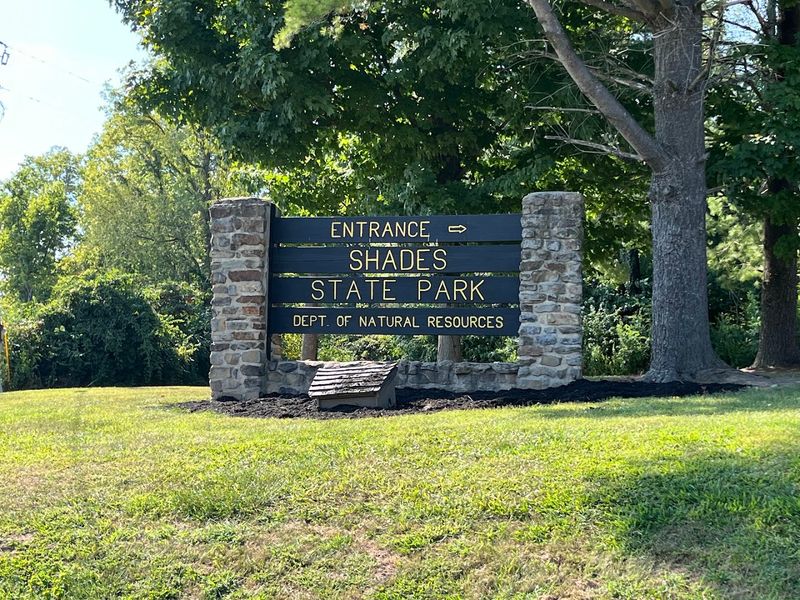
The smartest way to do Shades State Park is to treat it like a focused hiking day rather than a place for scattered, half-committed stops. Start with the trail map, check which routes match your energy level, and decide early whether you want overlooks, ravines, creekside sections, or a tougher combination.
The park rewards a little planning because the terrain can turn a casual outing into a sweaty one faster than the wooded entrance might suggest.
If you want the most dramatic version of Shades, build your day around the ravine trails and allow extra time for stairs, uneven footing, and pauses at overlooks. Moving slowly is not wasted time here.
The details that make the park special live in the transitions: cool air dropping into a hollow, a narrow run of water at the base of rock walls, or a sudden opening where Sugar Creek appears well below the trees.
Timing matters too. Early hours tend to suit the park’s quieter personality, especially if you prefer hearing the forest instead of other hikers.
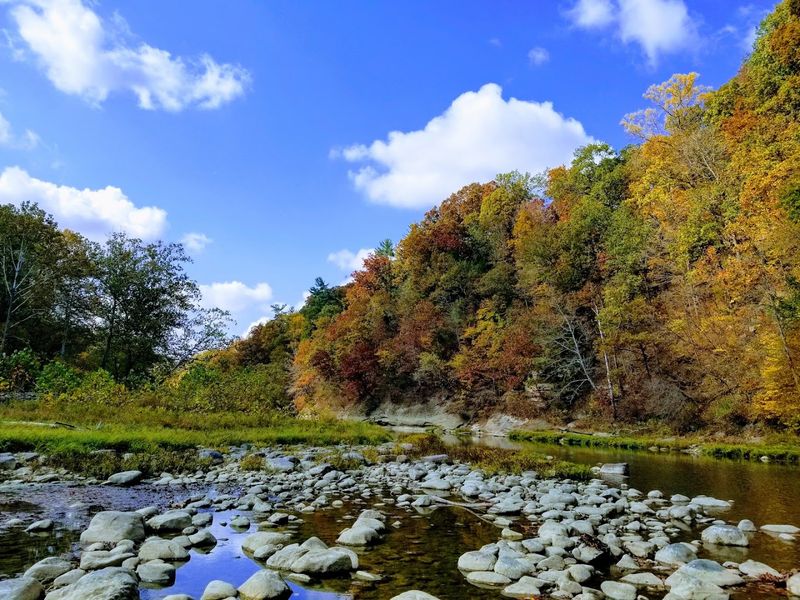
Spring can bring stronger water flow and muddier footing, while fall sharpens the color and makes the valley views pop. Summer delivers deep green shade, but it also makes good shoes, bug protection, and extra water feel less optional.
Keep expectations aligned with the park’s style. Shades is not about rushing through every numbered trail for bragging rights, and it is not built around one oversized attraction with everything else serving as filler.
A better plan is to pick a few strong routes, let the terrain set the pace, and leave room for detours, creek views, and photo stops. Done that way, a day here feels full without becoming a grind.
Camping, Comfort, and the Park’s More Rustic Side
Shades State Park is strong on scenery first and amenities second, and that balance is useful to understand before you go. The campground adds an overnight option for people who want more than a day hike, but the park’s overall character remains rustic rather than resort-like.
That works in its favor if you prefer a place where the forest takes center stage and the developed features stay mostly in the background.
The camping setup is part of that appeal. Campers often point to a bit more privacy than you might expect in a state park campground, which fits the broader personality of Shades as a less crowded, more tucked-away destination.
Many campsites sit within a wooded setting, and the experience seems geared toward people who value quiet evenings, dark tree lines, and easy access to trails over a long list of built-in conveniences.
At the same time, this is not the park to choose for maximum extras. Shades does not carry the same amenity-heavy identity as larger, more famous destinations, and that can shape the kind of trip it suits best.
If your ideal getaway depends on lots of indoor attractions, dining options, or highly polished infrastructure, you may notice the difference. If your priority is waking up near ravines, cliffs, and Sugar Creek country, the tradeoff makes sense.
Even day visitors benefit from understanding that rustic streak. Trail conditions can be uneven, some areas may feel more natural than manicured, and the overall experience asks you to meet the landscape on its terms.
In return, the park offers something increasingly hard to find: a developed public space that still preserves a strong sense of roughness. Shades works best when you lean into that instead of expecting every edge to be sanded down.
Why Shades State Park Belongs on Your Indiana List
Shades State Park stands out because it offers a version of Indiana that many travelers do not expect to find. This is not a park built around one pretty picnic area and a few pleasant walking paths.
It is a landscape of ravines, cliffs, creek valleys, stairs, ladders, and wooded elevation changes that make the whole day feel more dimensional, more active, and more visually varied than the park’s modest fame would ever suggest.
That contrast gives the place real editorial interest. The park is peaceful, but it is not sleepy. It is scenic, but not polished into blandness. It is accessible enough for a weekend outing, yet rugged enough to demand attention with every descent and climb.
Those qualities rarely line up so neatly, and they help explain why hikers who know the park tend to speak about it with a little extra conviction.
Shades also benefits from staying focused on natural structure rather than oversized development. Sugar Creek provides the broad views.
Sandstone and water-cut ravines provide the drama at ground level. Forest cover supplies shade, temperature shifts, and the sense of separation that makes even a short hike feel immersive.
The park does not need a flashy headline attraction because the terrain itself keeps changing the story as you move.
If your Indiana park list has room for only places that feel distinctive, Shades belongs near the top. It delivers quiet without dullness, challenge without needing technical skill, and scenery that keeps shifting from enclosed canyon-like passages to high overlooks above the valley.
That mix is the reason this 3,000-acre park deserves more than a passing mention. It deserves a full day, sturdy shoes, and enough time to let the ravines show off properly.