
Some of Indiana’s best burgers come from the places you’d least expect, and The Lemon Drop in Anderson has been proving that for generations. This longtime counter-service favorite has built a devoted following with thin, flavorful burgers cooked on a well-seasoned flat-top, crispy fries, creamy shakes, and the kind of friendly service that keeps locals coming back year after year.
The retro atmosphere, complete with its famous model train circling overhead, adds another layer of charm to an already memorable meal. If you’re searching for one of Indiana’s best old-school burger joints, The Lemon Drop deserves a spot on your must-visit list.
A Bright Yellow Landmark With Zero Interest in Blending In
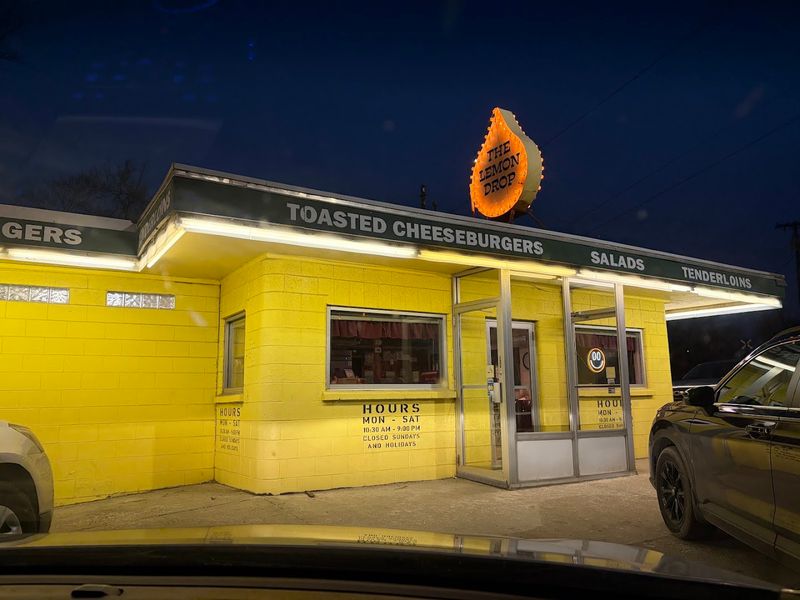
On a road lined with ordinary commercial buildings, The Lemon Drop announces itself with cheerful confidence. The yellow exterior is impossible to miss, and that visual pop tells you right away this is not a place chasing modern minimalism or polished chain aesthetics.
It looks like a survivor from another era, the sort of local fixture that has outlived trends simply by knowing exactly what it is.
That first impression matters because the building sets the mood before a burger ever hits the grill. There is a compactness to the place that reads as practical rather than precious, with a plainspoken diner personality that fits Anderson beautifully.
Nothing about it tries to manufacture nostalgia, which is exactly why the nostalgia lands so well. Inside, the room stays true to that promise. Counter seating, a handful of tables, and retro details create an intimate layout where every seat feels close to the action.
Instead of spreading out, the space draws everything inward, so the sizzle from the flat-top and the quick rhythm of service become part of the setting.
Then your eye catches one of the most charming details in the room, a small train circling overhead. In a bigger restaurant, a feature like that could feel gimmicky.
Here it fits the scale, the humor, and the throwback spirit, adding motion to a room already buzzing with conversation and short-order energy.
The overall effect is immediate and specific. The Lemon Drop looks like the kind of place that has stories built into the walls, where lunch is still allowed to be fun and unfussy.
Before you even order, the building has already done important work: it has separated this meal from the interchangeable blur of everyday dining in the best possible way.
The Onion Burger That Changes the Whole Conversation

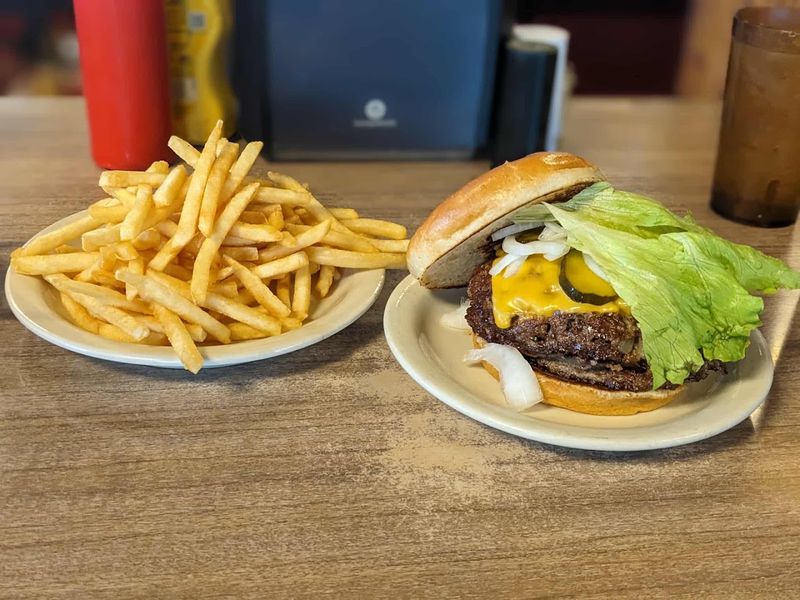
The star order at The Lemon Drop is the onion burger, and it earns that status without any need for exaggeration. This is not a towering stunt burger built for photos first and eating second.
It is a flatter, griddled, deeply savory kind of burger, the type that depends on balance, heat, and timing rather than bulk.
The key move is the way the onions cook into the burger itself. Instead of sitting on top as a separate topping, they sear right into the patties, softening and caramelizing against the meat as everything cooks together.
That gives each bite a sweeter edge and a richer aroma, with onion flavor woven through the burger rather than dropped on afterward.
Because the patties are thin, the texture changes fast on the grill. You get browned edges, juicy centers, and a concentrated beefiness that works especially well with the onion steam and the soft bun.
It is a burger designed for momentum, hot, fast, and best eaten before you have time to overthink it. That rhythm is part of why the burger lands so hard. There is no elaborate presentation to distract from the fundamentals, just a straightforward sandwich arriving at the right temperature with the right amount of mess.
If you are used to burgers overloaded with specialty sauces and oversized toppings, this version is a reminder that restraint can hit harder than excess.
Plenty of diners have a signature item, but not all signatures carry their house style so completely. The onion burger does.
It is modest in appearance, big on character, and perfectly suited to a room where the grill is never far away and the whole experience revolves around simple food done with conviction.
Fries, Rings, and Shakes That Know Their Role
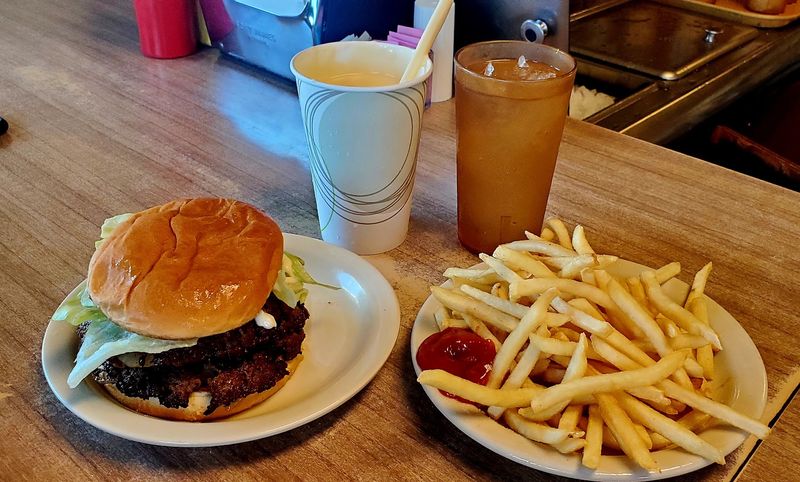
A lot of burger places treat sides like background noise. The Lemon Drop does not. Here, the fries, onion rings, and milkshakes complete the meal in a way that reinforces the diner’s old-school identity, giving you the full counter-service rhythm instead of a single standout sandwich floating on a weak supporting cast.
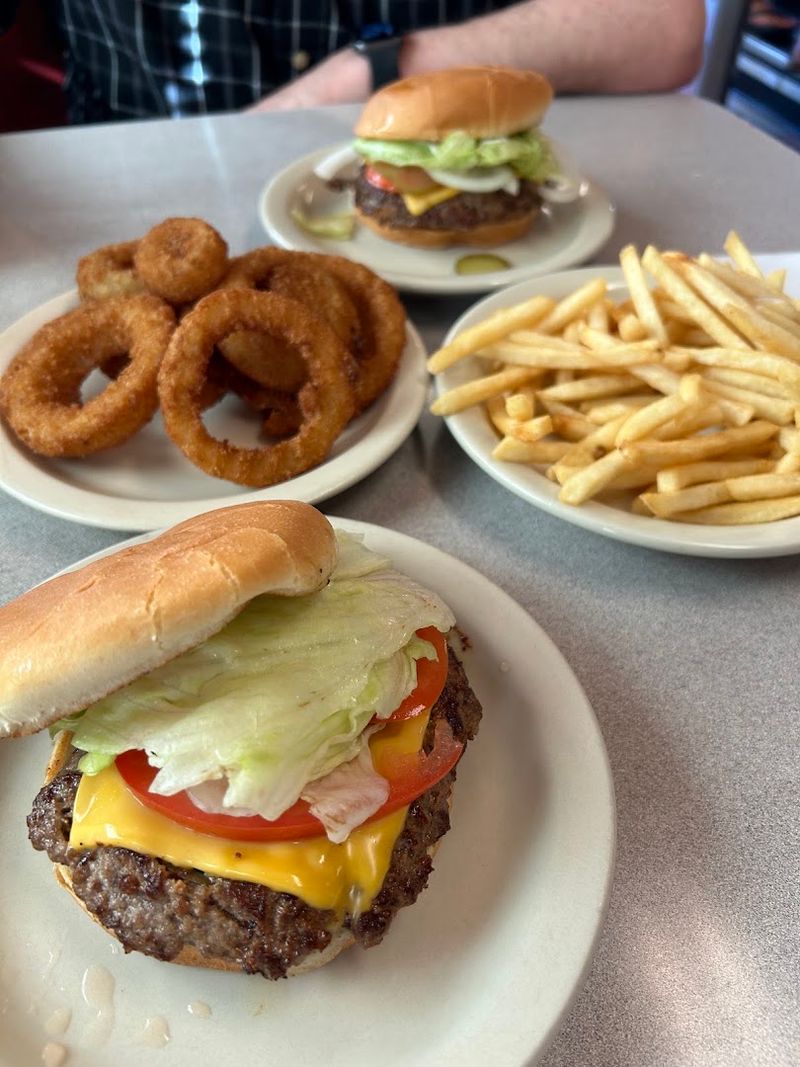
The fries fit the classic diner mold, crisp enough to stay interesting, soft enough inside to disappear quickly. They are the kind of fries that belong next to a burger instead of competing with it, easy to grab, easy to finish, and especially satisfying when eaten straight from the tray while the burger is still too hot to rush.
That restraint works in their favor. Then there are the onion rings, which naturally carry extra importance in a place known for onion burgers.
The best versions of this side need real sweetness from the onion, a coating with crunch, and enough heat to arrive at the table almost too fresh to handle.
That is the style The Lemon Drop is built to deliver, and it keeps the onion theme running through the meal without becoming repetitive.
Shakes bring in the cooler, sweeter side of the menu. In a room packed with griddle sounds and savory aromas, a simple milkshake rounds out the experience by slowing everything down for a minute.
It is a natural fit in a retro diner setting, and it connects the meal back to the time-capsule mood that makes this place so enjoyable. Nothing on this supporting lineup tries to reinvent diner food. That is the point.
These are familiar American comfort staples handled with enough care that they strengthen the whole meal instead of merely taking up space on the tray. At The Lemon Drop, the extras are not decorative. They are structural, and lunch works better because of them.
Why This Anderson, Indiana, Diner Works So Well in a Tiny Room
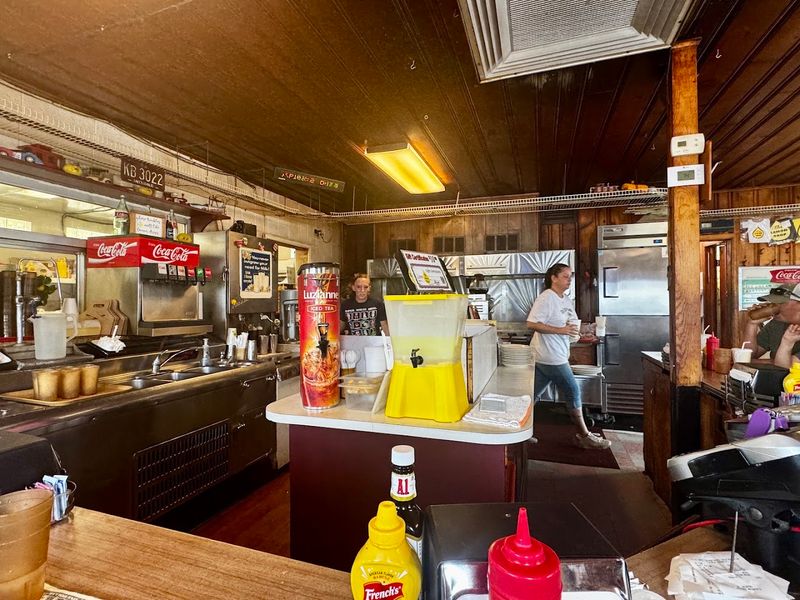
Small restaurants can be cozy, cramped, lively, or chaotic, sometimes all within the same fifteen minutes. The Lemon Drop succeeds because its limited space is not an accident to work around.
It is part of the operating logic, shaping the pace, the sound, and the closeness that define the experience once the lunch rush starts rolling.
There are only so many stools and tables, which means every occupied seat adds energy to the room. Instead of disappearing into separate zones, everyone shares the same compact orbit around the counter and grill.
That arrangement keeps the action visible, and visibility creates its own kind of entertainment while you wait for your food.
The train overhead adds movement, but the real motion is human. Orders get called, plates move quickly, staff weave through tight spaces, and conversations bounce between parties close enough to register one another without feeling forced into interaction.
You are not sealed off in a private dining bubble here. You are part of a functioning little lunch ecosystem. That layout also reinforces the counter-service identity of the place. This is a burger joint, not a leisurely dining room trying to perform grandeur.
The small footprint keeps the emphasis on quick cooking, quick turnover, and direct contact with the food as it comes off the flat-top, which gives the whole meal more immediacy.
The danger in a tiny diner is that intimacy can tip into discomfort. The Lemon Drop avoids that by pairing its compactness with warmth, movement, and visual charm rather than clutter for clutter’s sake.
You notice the retro details, the stools, the constant activity, and the train tracing its route above the room. Together, those elements make the space feel active and affectionate instead of merely short on square footage.
A Long-Running Local Institution Without the Museum Energy
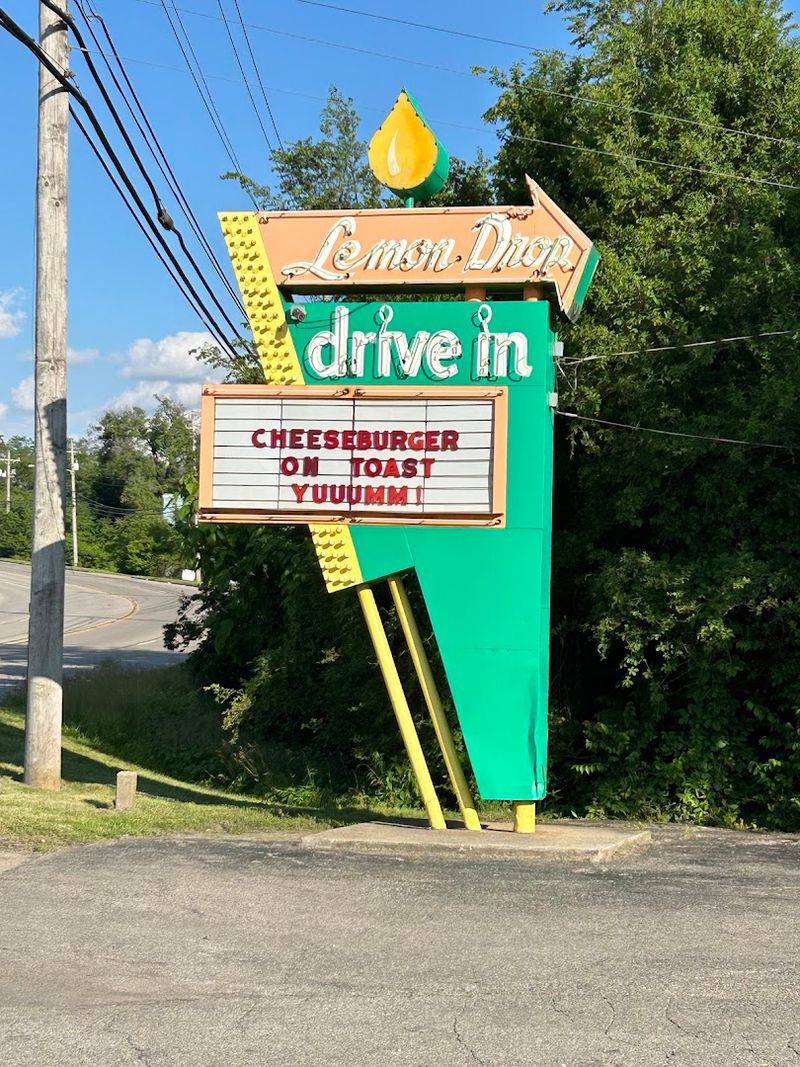
The Lemon Drop carries the reputation of a long-running local institution, but the place does not present itself like a shrine to its own past. That distinction matters.
Some historic eateries can feel frozen behind glass, more admired than enjoyed, as if their main function is reminding you how old they are. This one still moves with the pace of a working lunch spot.
Its retro identity is visible, of course. The counter, the scale of the room, the vintage touches, and the train overhead all point clearly toward an older diner tradition.
Yet the lasting appeal comes less from staged nostalgia than from the fact that those features remain connected to daily use, regular traffic, and food people actually crave.
That practical continuity gives the place weight in Anderson. A restaurant becomes woven into local life when it is not only remembered, but relied on.
The Lemon Drop appears to occupy that role, serving as both a throwback and a routine stop, which is harder to achieve than simply surviving for decades on name recognition.
You can sense that balance in the way the menu and room stay focused. There is no attempt to sprawl into a massive concept or chase every passing food trend.
The value of the place is in consistency, familiarity, and execution, the qualities that keep a neighborhood restaurant relevant long after novelty fades.
For anyone traveling through Indiana in search of local food with real place-specific texture, that makes The Lemon Drop more compelling than a polished retro imitation. It has the visual cues people love, but it also carries the lived-in functionality of an establishment still doing its job.
History is present here, yet it never overwhelms lunch. The past hangs in the room, while the grill keeps the whole thing anchored in the present tense.
How to Time Your Visit and Order Like You Mean It
The Lemon Drop is the kind of place where planning helps, especially because the room is small and the appeal is not exactly a secret. Hours are straightforward, with service running from late morning into the evening most days of the week and Sunday off the schedule.
That means your best strategy is less about overcomplicating the trip and more about understanding the room’s limited capacity.
If you arrive at a prime lunch rush, be prepared for a little friction. In a tiny diner, a short wait can feel longer simply because you can already smell the burgers and see plates moving around the counter.
On the other hand, that same visibility makes the wait easier to justify, since you can literally watch the pace of the place and understand why seats turn over only so fast.
The smartest move is to come with a focused order in mind. Start with the onion burger if it is your first visit, because skipping the signature item at a place like this makes little sense.
Add fries if you want the classic plate, onion rings if you want to double down on the house specialty, and a shake if you are building the full diner experience.
Counter seating is especially worthwhile when available. In a room centered on the griddle, sitting close to the action turns a quick meal into a miniature show, with all the sounds and motion that make old-school burger joints so engaging.
You are not waiting for ambience to reveal itself. It is already right in front of you. The main practical tip is simple: go in ready for a compact, busy, highly specific local experience rather than a sprawling casual chain routine. That mindset puts you on the restaurant’s wavelength immediately.
Once you are there, the place tells you how it wants to be enjoyed, one hot burger and one fast-moving seat at a time.
Why This Little Spot Hits Harder Than Bigger Names
There are bigger burger names in Indiana, flashier dining rooms, and plenty of places with more expansive menus. The Lemon Drop still manages to cut through that noise because it offers a more complete identity than many of its larger competitors.
Every part of the visit, from the bright exterior to the compact interior to the overhead train and sizzling onion burgers, works toward one clear experience.
That clarity is rare. Too many restaurants hedge their bets, trying to satisfy every possible craving while sanding down the personality that might have made them memorable.
The Lemon Drop goes the other direction. It stays narrow, direct, and confident, which lets the food and setting reinforce each other instead of fighting for attention.
The burger is central, obviously, but the place would not hit as hard if the room felt generic. Nor would the retro charm matter much if the grill turned out forgettable food.
The sweet spot is the way the physical setting, service style, and signature items line up so naturally that the whole meal reads as one continuous argument in favor of small, specialized diners.
For out-of-towners, that makes it an excellent detour. For locals, it explains why the place keeps its grip on the city’s dining map.
You are not showing up for spectacle or status. You are showing up for an onion burger with real personality in a room that still understands the pleasure of a stool, a shake, and a little mechanical train tracing circles near the ceiling.
In the end, The Lemon Drop stands out because it does not confuse simplicity with dullness. It proves that modest scale can sharpen an experience rather than limit it.
When a counter-service burger spot this small delivers food this satisfying inside a setting this distinctive, the result is exactly the kind of discovery that resets your standards for what an everyday diner can do.