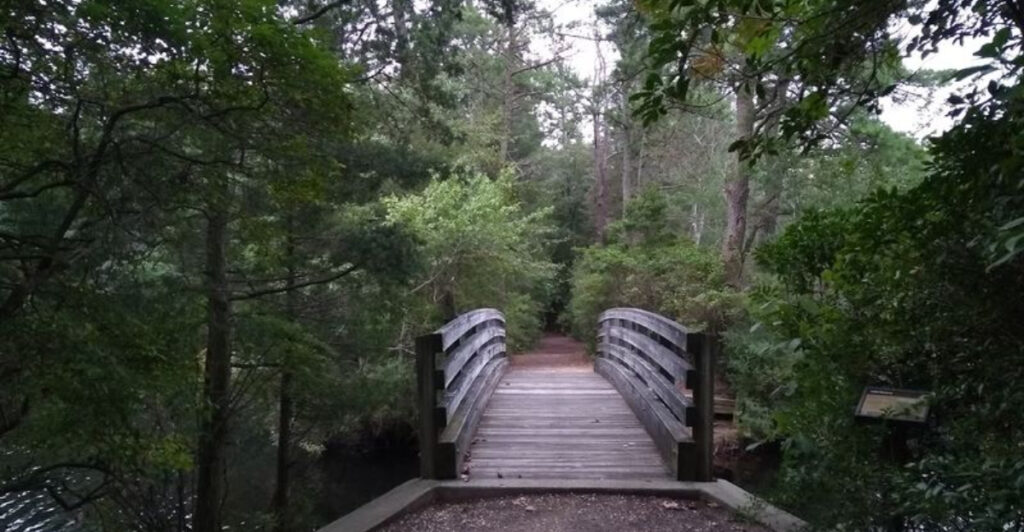
A wooden path floats above a blackwater swamp while frogs plunk into the shallows, and somewhere beyond the cattails, a Manhattan skyline rises where absolutely no skyline should be. That is the trick New Jersey’s inland boardwalks keep pulling.
Instead of funnel cake and arcade bells, these routes deliver cedar bogs, migration stopovers, rhododendron tunnels, abandoned munitions ruins, and the occasional suspension bridge wobbling over a creek.
Some are barely long enough for a relaxed after-lunch stroll; others plug directly into serious hiking networks where clean sneakers become a questionable choice.
What unites them is the pleasure of walking straight into terrain that would otherwise soak your socks by step three. These 12 trails stretch from the Highlands to the Pinelands, with urban wetlands and neighborhood nature preserves in between.
Bring binoculars, bug spray, and enough time to stop at every observation deck. The beach can wait; New Jersey has plenty of boards elsewhere.
1. Pochuck Boardwalk on the Appalachian Trail — Vernon
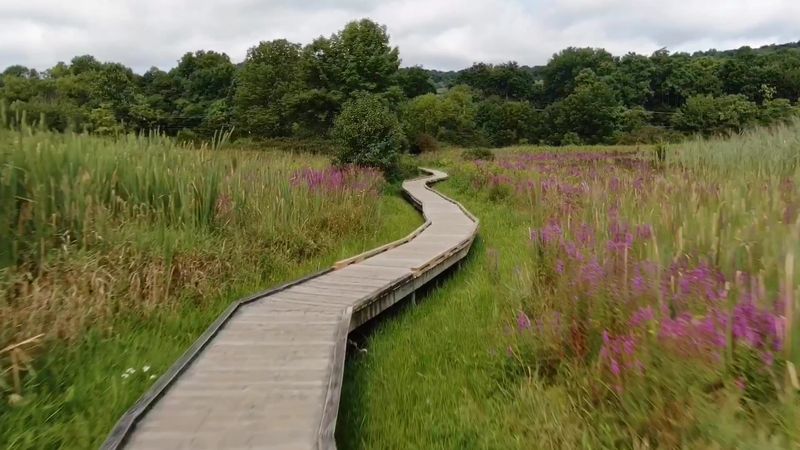
The first surprise is how long the boards keep going. Pochuck is not a decorative footbridge or a quick crossing but a raised ribbon that winds for roughly 6,000 feet across the wetlands of Vernon Valley.
It forms one of the most approachable pieces of the Appalachian Trail in New Jersey, yet still feels like a genuine little expedition once farm fields and cattails begin closing around the path.
The route’s signature moment is the suspension bridge over Pochuck Creek, where the floor shifts just enough to make children delighted and cautious adults suddenly interested in the handrails.
This is a good pick for mixed-ability groups because the boardwalk portion stays largely level, though anyone extending the walk toward the Stairway to Heaven section should expect a much tougher climb. Early morning brings softer light, cooler temperatures, and better odds of hearing wetland birds before the trail becomes busy.
Parking near the access points can fill quickly on pleasant weekends, so arriving early is less a hiking virtue than a practical strategy. Wear shoes with grip after rain, keep moving when others need to pass, and resist treating the narrow boards like a photo studio.
The best part is the steady change in perspective: one minute your feet hover over marsh grasses, and the next the mountain ridge ahead reminds you that this easy-looking walkway belongs to a trail stretching far beyond Vernon.
2. Marsh Discovery Trail at Richard W. DeKorte Park — Lyndhurst
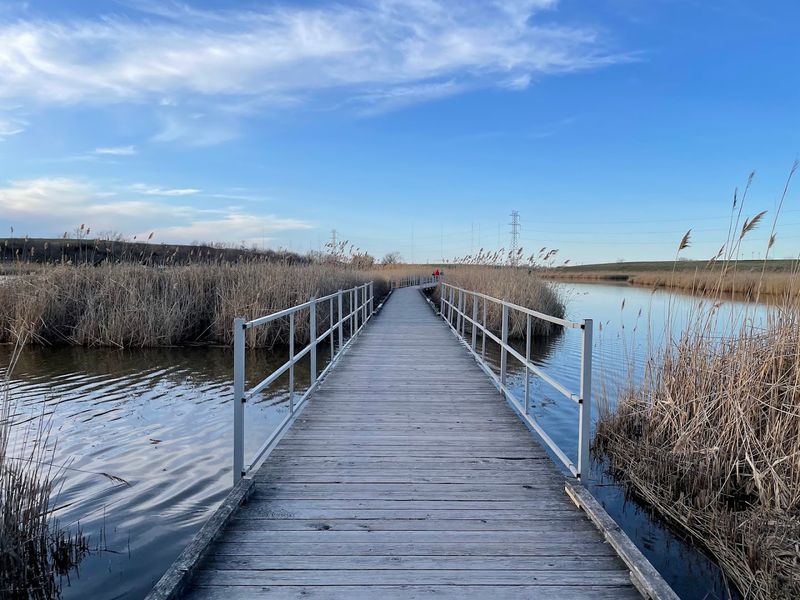
Few walks serve up egrets, tidal mud, electrical towers, and the Manhattan skyline in the same half mile. The Marsh Discovery Trail loops over the Shorebird Pool at DeKorte Park, turning a former industrial landscape into one of North Jersey’s most interesting places to slow down and look carefully.
Bird blinds and study docks break up the boardwalk, so the experience is less about marching from start to finish and more about stopping whenever wings flash above the reeds.
Depending on the season and tide, the pool may hold shorebirds picking through exposed mud, ducks resting on the water, or herons standing with the concentration of someone waiting for a very late bus.
Benches and seating areas make this an easy outing for families, new birders, and anyone who wants nature without a strenuous hike. The park opens from 7 a.m. to dusk, and the light near sunset can turn the marsh surprisingly cinematic, especially with the city in the distance.
Dogs are not permitted on the Marsh Discovery Trail, even though they are allowed on several other DeKorte routes, so leave the leash at home for this loop. Parking is available inside the park; do not gamble on roadside spots outside the gate.
Bring binoculars if you have them, but the broad views and wonderfully odd collision of wetland and infrastructure work even without specialized gear.
3. Wildlife Observation Center Boardwalk Trails at Great Swamp National Wildlife Refuge
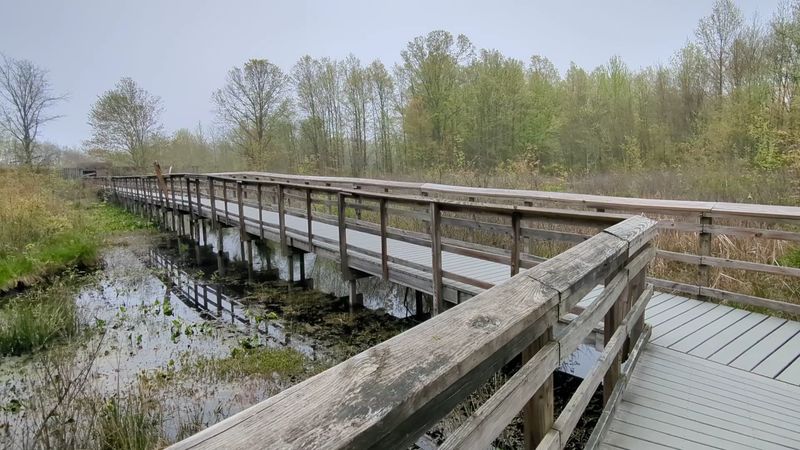
Silence works better than speed here. The boardwalk network at the Wildlife Observation Center leads through a patchwork of woods and wetlands to viewing blinds where visitors can sit, wait, and let the refuge reveal itself on its own schedule.
Several short branches make it easy to shape the outing around your available time, whether that means a quick walk to the nearest blind or a slower circuit that includes multiple observation points.
The terrain is especially friendly for visitors who do not want roots, rocks, or steep grades: nearly all trails at the center are accessible to wheelchairs and strollers, with the exception of the final 0.11 mile leading to the Friends blind.
The refuge opens from sunrise to sunset, and mornings are usually the sweet spot for bird activity and fewer conversations carrying through the trees. This is protected habitat rather than a casual neighborhood park, so pets are not allowed on the refuge trails, and visitors should stay on the designated paths.
That rule is hardly a burden when the boardwalk already places you at eye level with cattails, wet woodland, and the edges where wildlife tends to appear. Pack binoculars, silence your phone, and give each blind more than a token glance.
A five-minute pause may look uneventful; the sixth minute can deliver a turtle surfacing, a heron stepping from cover, or a ripple that sends everyone leaning toward the same narrow window.
4. Great Swamp Outdoor Education Center Boardwalk Trails — Chatham Township
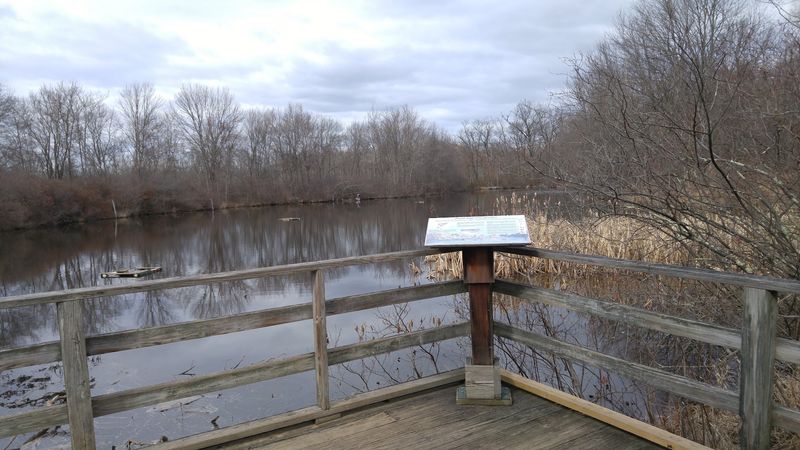
A sightings board near the visitor center sets the tone before your shoes ever touch the trail. Someone may have logged an owl, a fox, a snake, or a particularly cooperative woodpecker, instantly turning an easy walk into a low-stakes scavenger hunt.
The Great Swamp Outdoor Education Center offers about two miles of flat trails and boardwalks through forest, marsh, meadow, pond, and swamp habitat, making it one of the most approachable nature outings in Morris County.
The routes are short enough for young walkers but varied enough that adults will not feel as though they are circling a playground.
Observation areas encourage lingering, while the wetland sections provide that satisfying boardwalk sensation of entering a place where ordinary shoes would otherwise be useless. Stop inside the visitor center for a self-guided trail booklet, check current conditions, and take a look at the model Lenape wigwam before heading out.
The center is generally open from 9 a.m. to 4 p.m., though the outdoor experience is the main event. Pets are not permitted at county outdoor education centers, which helps keep wildlife encounters calmer and the narrow walkways easier to navigate.
This is not the same facility as the federal refuge’s Wildlife Observation Center, despite the shared Great Swamp landscape, so double-check the Chatham Township address before leaving.
Come after a light rain and the swamp smells richer, the greens look brighter, and every small bridge seems to lead deeper than the map suggests.
5. Watershed Reserve Boardwalk — Hopewell Township
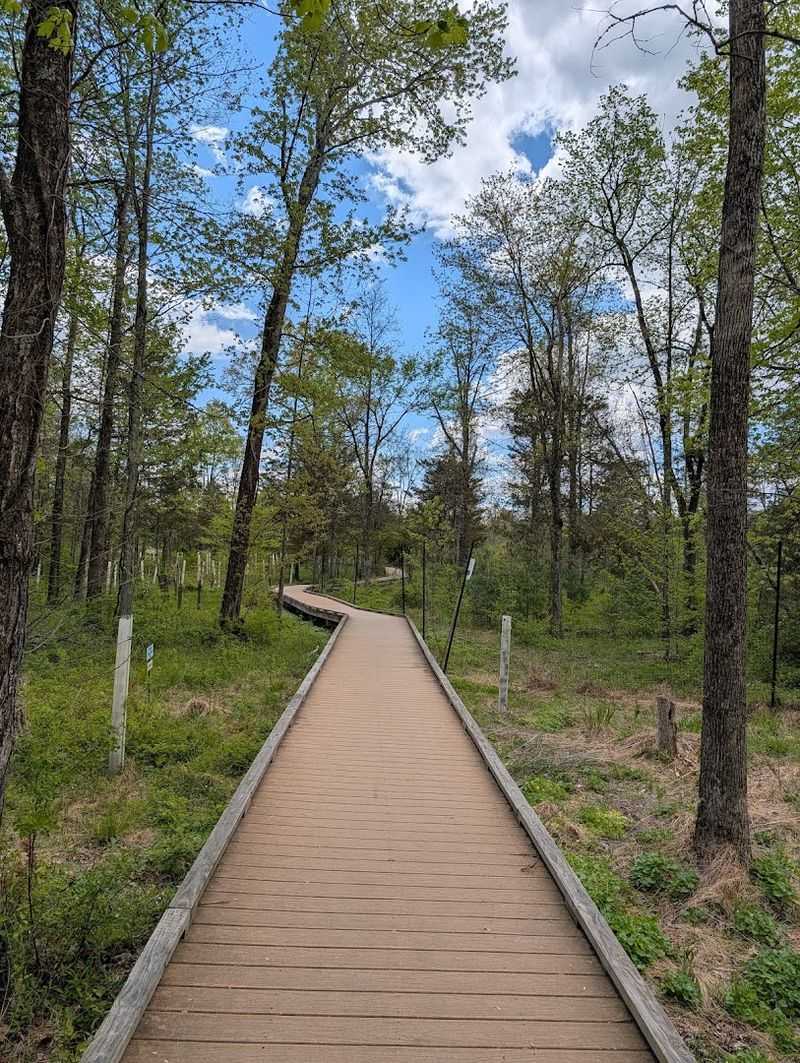
Here is the rare boardwalk that feels polished without feeling overbuilt. The Watershed Reserve’s 0.7-mile raised route is fully accessible, gliding through wet ground while keeping visitors close to the textures of the forest and marsh.
It is a smart choice when your group includes a stroller, wheelchair user, reluctant hiker, or someone who simply prefers a walk without surprise boulders.
The boardwalk is only one piece of a nearly 1,000-acre reserve, so energetic visitors can connect their outing with portions of more than 10 miles of trails through meadows, woods, farmland, and stream corridors.
That flexibility makes the property useful for both a 30-minute reset and a half-day ramble. Access to the trails is free, and they are open from dawn to dusk year-round.
The Watershed Center nearby adds exhibits, restrooms, and a useful starting point; its hours are more limited than the outdoor trails, so check the clock if an indoor stop matters to your plans.
Families can also look for the butterfly house when it is operating seasonally, while walkers seeking more distance can explore links toward the Lawrence Hopewell Trail.
The overall mood is calm and thoughtfully educational rather than rugged. You notice water moving under the boards, plants changing with the seasons, and how quickly central New Jersey can lose its suburban edges.
Pack a snack, but plan to carry everything back out and leave the reserve exactly as quiet as you found it.
6. Swamp Trail Boardwalk at Estell Manor County Park — Estell Manor
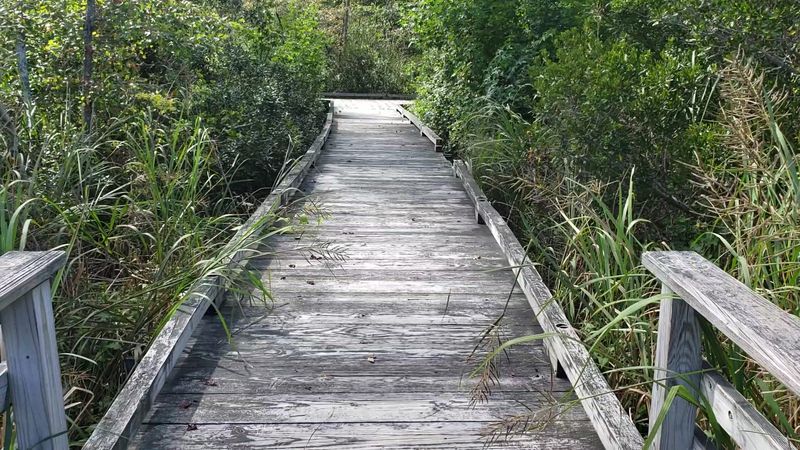
History appears between the cedar trunks in pieces of concrete and brick. Estell Manor’s Swamp Trail Boardwalk does more than cross a wetland; it passes remnants of the Bethlehem Loading Company, a World War I-era munitions operation that once occupied this now-wooded landscape.
The contrast gives the 1.8-mile elevated route an identity all its own. One stretch delivers streams and coastal forest, another enters cedar swamp, and then an old ruin interrupts the green like evidence from a story the woods have nearly covered.
Two boardwalk bump-outs open toward the South River, offering good places to pause without blocking the main path. The trail begins directly behind the Warren E.
Fox Nature Center and continues to Artesian Well Road, with an extension connecting toward Oak Ridge Trail for visitors who want a longer outing. Because the boardwalk is fully accessible, it works well for wheelchairs, strollers, and anyone looking for substantial mileage without rough footing.
The nature center is useful for restrooms and local exhibits and is generally open daily from 8 a.m. to 4 p.m. Still, the trail itself supplies the memorable details: tea-colored water, straight cedar trunks, and ruins that invite questions without turning the walk into an outdoor textbook.
Mosquito repellent is a sensible addition in warm weather, and fallen leaves can make damp boards slick in autumn. Give yourself time; this is too interesting to speed-walk.
7. Cedar Swamp Trail at High Point State Park
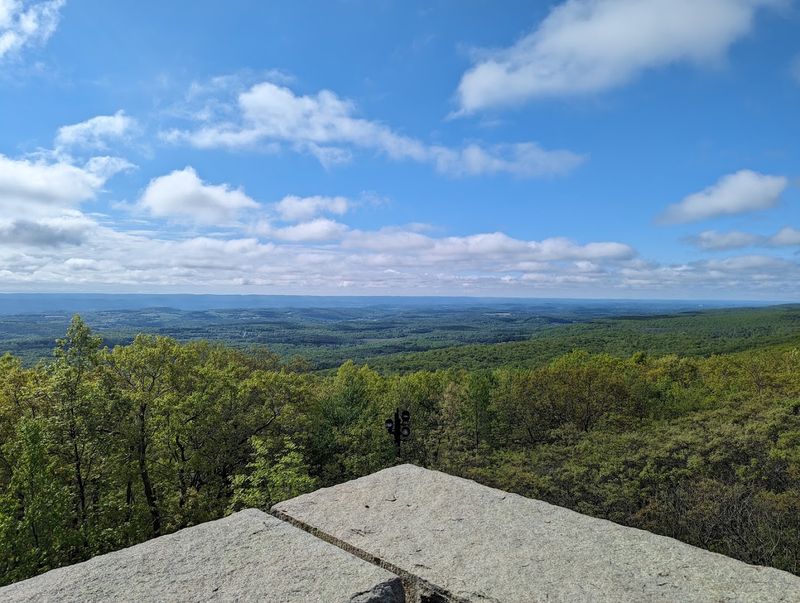
The landscape at New Jersey’s highest state park is not all ridge views and mountain breezes. Down in the Kuser Natural Area, the Cedar Swamp Trail enters a glacially formed wetland where Atlantic white cedars, blueberry shrubs, ferns, and dark bog water create a scene that feels far removed from the monument crowds.
The route follows a closed access road before looping around the swamp, with a boardwalk carrying hikers across the most open and saturated section. It is roughly two miles, mostly easy, and a welcome change of pace for anyone who wants High Point scenery without committing to a rocky summit hike.
Pick up the self-guided trail booklet at the park office or interpretive center if available; numbered stops explain how the wetland developed and why its plant community is unusual. The trailhead is reached from the Cedar Swamp Picnic Area, where you drive to the end of the road and park near the yellow gate.
Quiet walkers may hear barred owls or notice movement in the thickets, but this is also black bear country, so standard bear-aware habits matter: keep food secured, give wildlife space, and never approach for a photograph.
The boardwalk can be damp even when nearby upland trails are dry, making shoes with decent traction a better choice than smooth-soled sneakers.
Save the grand overlook for later. This trail’s reward is smaller and stranger—a mountain bog crossed one careful plank at a time.
8. Absegami Trail at Bass River State Forest
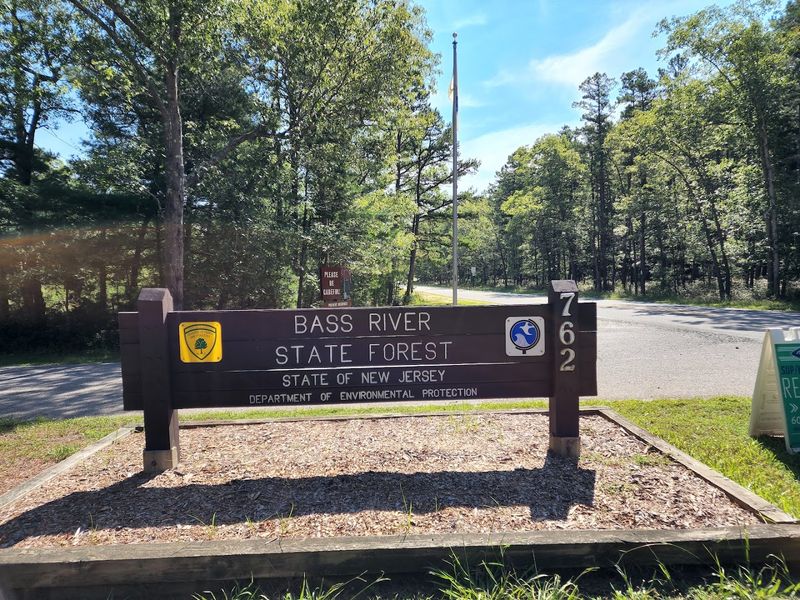
Not every boardwalk walk needs to consume the afternoon. The Absegami Trail is a compact, self-guided nature route of about half a mile, ideal for families, campers, or anyone who wants a quick dose of the Pinelands before moving on to a longer trail.
Its wooden footbridge and bench area provide the boardwalk moment, lifting the route through damp forest where cedar, pine, and still water soften the sounds from the day-use area.
The pace should be unhurried; on a trail this short, racing only means missing the details that make the Pine Barrens distinctive, from sandy soil underfoot to the sharp scent of needles warming in the sun.
Bass River State Forest has a much larger network of marked trails, so Absegami also works as a gentle introduction before trying the lake loops or a longer forest route. The trail starts near the developed Lake Absegami area, where parking and facilities make access straightforward.
Although there is a freshwater swimming beach nearby in season, this is emphatically not a Shore boardwalk—the soundtrack is wind in the trees rather than arcade machines.
Official descriptions classify the forest’s short trails as easy but not ADA accessible, so do not assume the presence of a bridge means the entire route suits every mobility device.
Bring bug spray in summer and consider visiting in fall, when cooler air and rust-colored undergrowth make this brief loop feel much bigger than its mileage suggests.
9. Plymouth Trail at Wawayanda State Park
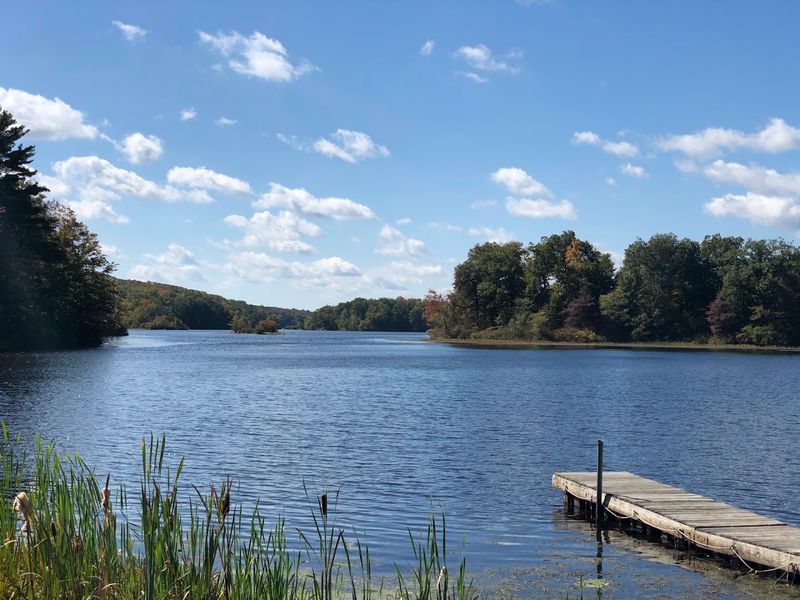
Rhododendron branches crowd the path closely enough to make portions of Plymouth Trail feel like a green hallway. This one-mile route skirts Wawayanda Swamp through hardwood forest, thick vegetation, and multiple boardwalk sections, packing a surprising amount of atmosphere into a short distance.
It carries a moderate rating rather than an easy one, partly because the footing and vegetation can be less forgiving than the mileage suggests. Roots, wet boards, and encroaching plants all encourage hikers to pay attention instead of strolling on autopilot.
Plymouth is also not a simple trailhead-to-parking-lot loop. It begins from Double Pond Trail on the eastern side of the park and connects with Turkey Ridge Trail, so study the map before setting out and treat it as part of a larger route.
That extra planning is worth it for hikers who enjoy Wawayanda’s quieter, swampier side more than its busy lakefront. After rain, the boardwalks become particularly useful—and potentially slick—while the surrounding wetland seems to press closer to the trail.
Long pants are a good call during peak tick season, and waterproof footwear earns its keep when muddy approaches appear between raised sections. Wawayanda contains more than 60 miles of marked trails, but Plymouth stands out because it feels enclosed and intimate rather than panoramic.
You do not come here for a sweeping overlook. You come for the sensation that the forest has narrowed to a secret passage, with a red blaze showing the way through.
10. Green Trail at Cheesequake State Park
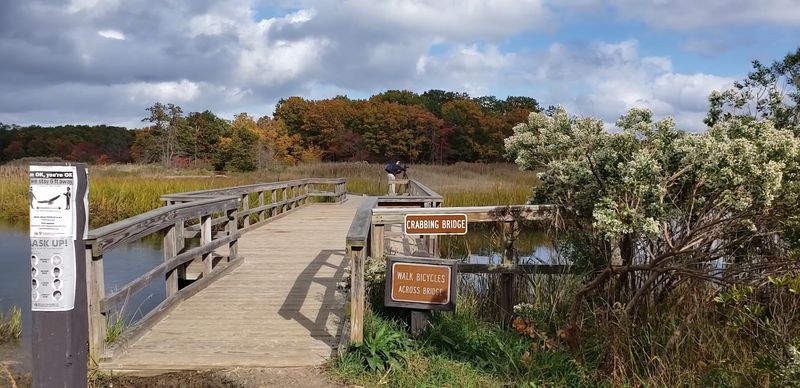
The boardwalk begins with steps, which is Cheesequake’s way of warning you that this will not be a perfectly flat marsh stroll. Green Trail runs for roughly 3.2 miles through one of New Jersey’s most ecologically varied parks, combining raised wooden sections with bridges, hills, staircases, hardwood forest, and uneven ground.
Early on, the stepped boardwalk passes oaks, sassafras, and sweet pepperbush before a small bridge leads uphill toward the nature center. It is worth pausing there, both for the exhibits and because the route soon asks for another long set of steps.
From that point, the loop continues through changing terrain that helps explain why Cheesequake feels unusual: northern hardwoods, Pine Barrens influences, wetlands, and tidal environments meet within a relatively compact area. The trail is hiking-only, so you will not be sharing the narrow sections with mountain bikes.
Still, weekends can be busy, and the trailhead parking lot may fill during peak foliage or mild spring weather. Arrive early, bring water, and do not let the word “boardwalk” talk you into sandals.
This is a real hike with slippery leaves, inclines, and enough mileage to make a casual walker feel pleasantly accomplished. The park’s location near major highways makes the shift especially satisfying.
Traffic noise fades, the woods close in, and within minutes you are climbing wooden steps through sweet pepperbush instead of inching along the Garden State Parkway.
11. Nature Trail Boardwalk at J.A. McFaul Environmental Center — Wyckoff
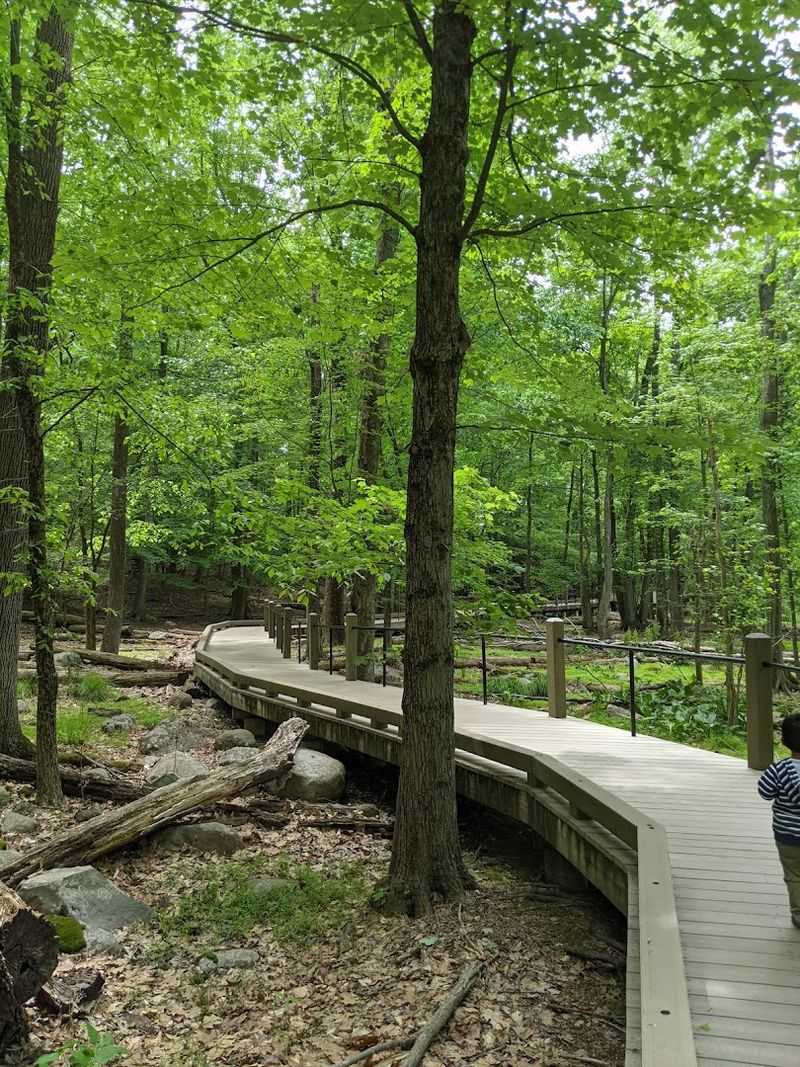
A former pig farm is not the obvious starting point for a wildlife sanctuary, which is precisely why the J.A. McFaul Environmental Center is such a good North Jersey surprise.
Bergen County transformed the 81-acre property into a mix of woodland, gardens, ponds, educational exhibits, and animal habitat, tied together by an easy nature trail. The mapped route is about two-thirds of a mile and includes a boardwalk and observation deck overlooking a seasonal swamp.
That combination makes the center especially useful for families: children get enough variety to stay engaged, while adults can enjoy a genuine patch of habitat without organizing a full hiking day. Waterfowl on the pond, bird shelters, hardwood forest, and specialty gardens create different stops rather than one repetitive loop.
Spring brings daffodils and flowering trees; later in the year, the woodland and swamp sections become the stars. The center’s indoor exhibits and nature programs add value, but hours can vary by season, so confirm them before promising children that every building will be open.
The outdoor trail remains the main reason to visit, and parking at the Crescent Avenue property keeps the logistics simple. This is a good place to introduce binoculars without demanding patience for a three-hour birding session.
Walk the boardwalk, check the pond, wander the gardens, and let the trip expand only as attention spans allow. For a densely developed county, the sudden quiet around the observation deck feels like a particularly clever use of 81 acres.
12. Luisi’s Trail at Fanwood Nature Center — Fanwood
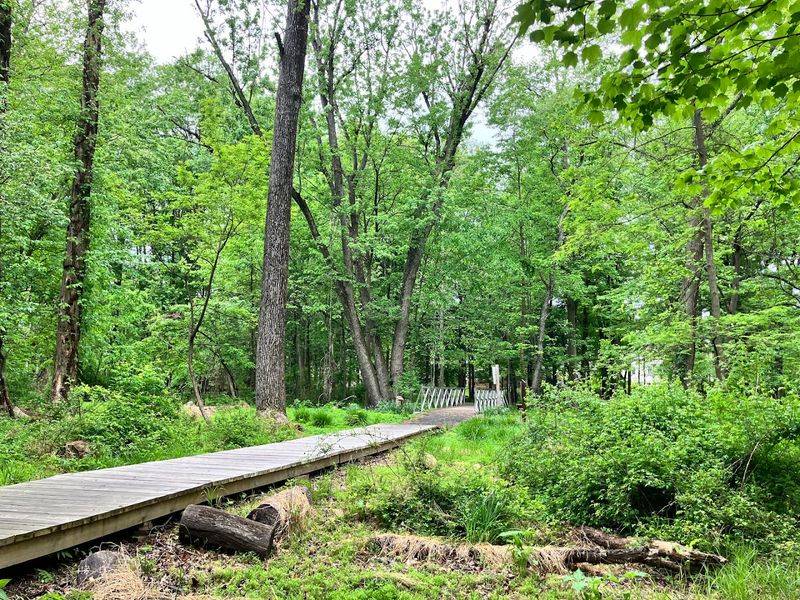
Sometimes the most appealing boardwalk is the one hidden behind an ordinary suburban street. Fanwood Nature Center occupies a small borough preserve along Terrill Road, tucked between residential neighborhoods and a utility right-of-way.
Luisi’s Trail threads through this pocket of woods and wet ground, using boardwalk sections to keep the route passable when the preserve turns soggy. It is not a destination for mileage collectors or dramatic overlooks.
Its charm comes from scale: a quick walk can still deliver birdsong, muddy pools, leafy cover, and the strange pleasure of temporarily forgetting how close the nearest houses are. The nature center was established in 1974 and is maintained with significant help from local volunteers, which gives the trail a community-built character.
That spirit is visible in the boardwalk itself; a section was reconstructed as an Eagle Scout project, replacing worn planks and improving the path through the wet area.
Access is available near the power-line corridor and from the parking area by the Bible Chapel on Terrill Road, but the preserve’s boundaries sit close to private property, so follow the marked route carefully.
After heavy rain, expect mud around the approaches even where the boards are sound. This is an easy add-on to a Fanwood or Scotch Plains afternoon, especially for families who need fresh air more than a major adventure.
Luisi’s Trail proves that a worthwhile nature walk does not require a park gate, a visitor center, or an hour in the car.