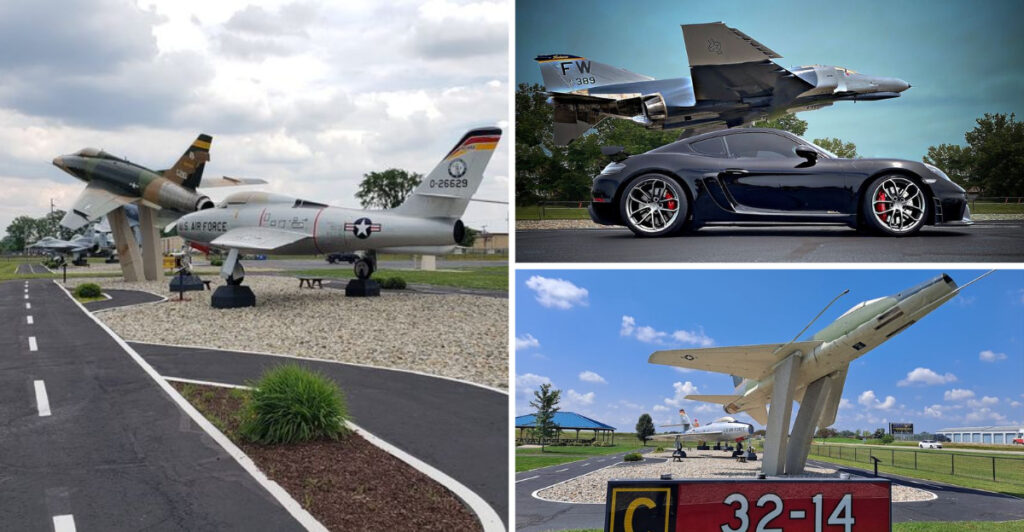
Aviation enthusiasts don’t have to visit a massive museum to get an up-close look at remarkable military aircraft. The 122nd Fighter Wing & Heritage Park in Fort Wayne offers visitors the chance to see rare retired jets, aviation exhibits, and historic military displays in an easy-to-explore outdoor setting beside Fort Wayne International Airport.
The combination of preserved aircraft and active planes taking off nearby creates an experience that’s both educational and surprisingly exciting. Whether you’re traveling with kids or simply enjoy aviation history, this hidden Indiana attraction is well worth adding to your road trip itinerary.
The Kind of Entrance That Stops You Cold
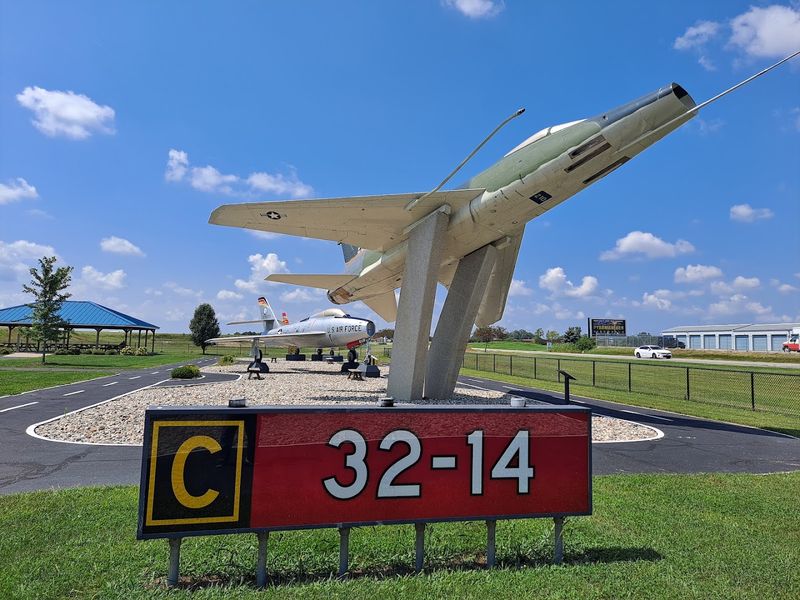
The first surprise at 122nd Fighter Wing & Heritage Park is how abruptly the scenery shifts. One turn off West Ferguson Road and the usual airport-edge landscape gives way to a compact public park where retired aircraft immediately dominate the view.
Instead of being tucked behind fences or hidden inside a museum hangar, the planes are right there in the open, set against grass, pavement, and broad Indiana sky.
That directness changes the whole mood of the visit. You are not preparing for a long institutional experience with ticket counters, dark galleries, or ropes guiding every step.
You pull in, park, and within moments you are looking up at military aviation hardware that appears almost oversized against the calm neighborhood scale of the park.
The setting adds to the impact. The displays sit in a space that is approachable rather than theatrical, so the aircraft read less like distant artifacts and more like preserved machines with weight, shape, and history.
Even before reading a single plaque, the outlines of wings, intakes, landing gear, and fuselage details give the place an immediate visual charge.
Because the park is modest in size, the aircraft never get visually lost. There is no long trudge between points of interest, no confusion about where to start, and no sense that the best part is hidden somewhere farther in.
The displays announce themselves quickly, which makes this an unusually satisfying stop for anyone short on time.
It is the kind of entrance that resets expectations in less than five minutes. A simple public park suddenly becomes an aviation landmark, and the contrast is exactly why the place grabs attention so fast.
Static Displays, Real Presence: Why the Aircraft Hit Harder Up Close
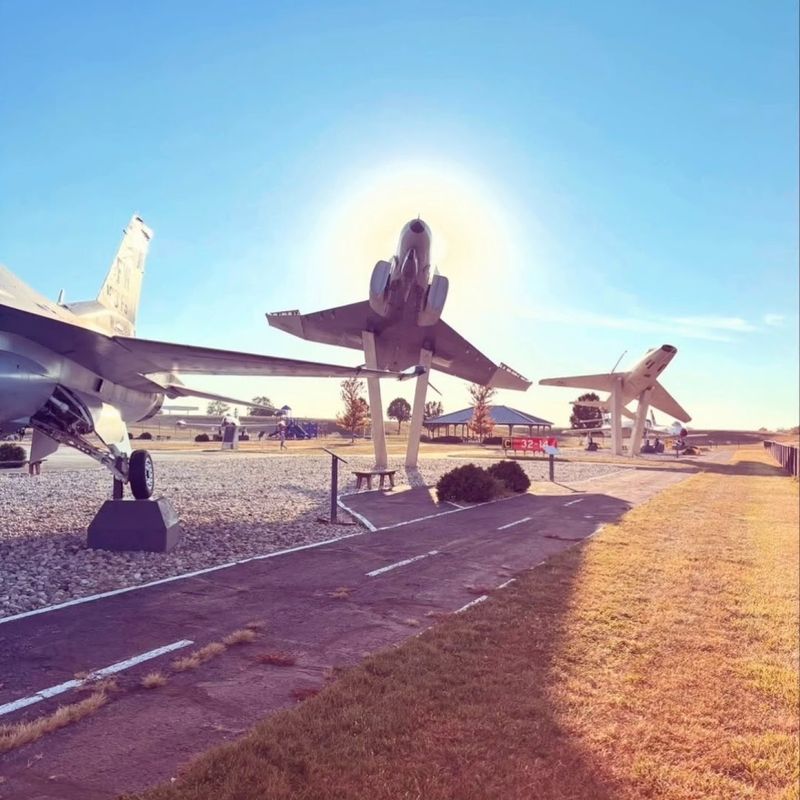
Photos do not fully prepare you for how physical these aircraft look in person. At 122nd Fighter Wing & Heritage Park, the static displays are not background decorations for a playground.
They are the core attraction, and their scale becomes clearer with every step along the paved path. Up close, the jets reveal the parts that usually disappear in fast flyovers or distant museum viewing.
You start noticing the hard geometry of the wings, the narrow cockpit profile, the way landing gear sits under all that metal, and the subtle wear that gives retired aircraft a lived-in look. Those details make the displays less abstract and much easier to connect with.
The plaques matter here too. They help translate aluminum and paint into a local aviation story, giving context without turning the experience into homework.
Instead of staring at an anonymous aircraft shape, you can link each display to service, technology, and the long military presence associated with Fort Wayne.
Because this is an outdoor setting, your perspective keeps changing. A jet can look sleek from one angle, bulky from another, and almost sculptural when seen against open sky.
That movement is part of the appeal, especially for kids who want to circle around and adults who like taking their time with mechanical details.
There is also a refreshing lack of distance between viewer and object. The park format makes the aircraft accessible in a way that feels casual yet respectful, which is not always easy to pull off with military history.
You leave with a much stronger sense of their form, their engineering, and their presence than you get from a quick airport glance or a framed photo on a wall.
Indiana Plane Watching Without the Crowds
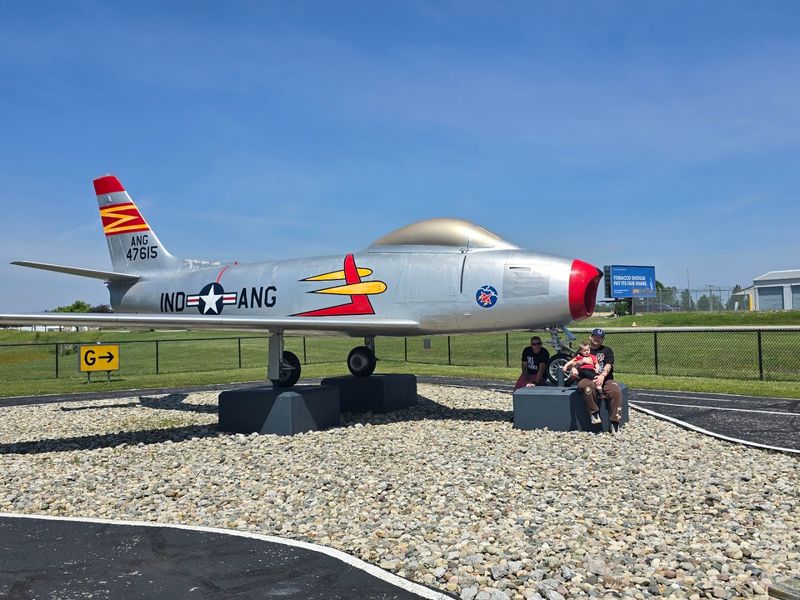
One of the smartest things about this park is that it offers two versions of aviation at once. The static displays give you history on the ground, while the nearby airport environment adds live motion overhead and in the distance.
That combination keeps the visit from feeling still, even when the park itself is quiet. You might hear aircraft before spotting them. The sound arrives first, then heads tilt upward, and suddenly the visit expands beyond the memorial layout into the active sky over Fort Wayne.
It is a small thrill, but an effective one, especially for children who want something happening right now instead of only something to look at.
What makes the experience work is the balance. The park is close enough to aviation activity to deliver takeoffs, landings, and flyover moments, yet not so overwhelmed by noise that conversation becomes impossible.
You can stand by the displays, talk through what you are seeing, and still catch the excitement when a plane passes overhead.
That gives the place a rhythm many small parks do not have. There are quiet minutes spent reading plaques or walking the paved path, then a burst of sound that turns everyone toward the airport side of the horizon.
The shifting pace keeps the stop lively without requiring an event day or formal program. For travelers waiting on time, families needing a break, or locals looking for an easy outing, that live-airfield connection is a major advantage. You are not just visiting a memorial park.
You are spending time in a setting where aviation remains part of the surrounding landscape, and that extra layer gives the whole place more energy than its footprint suggests.
More Than a Memorial: A Park That Actually Works for Families
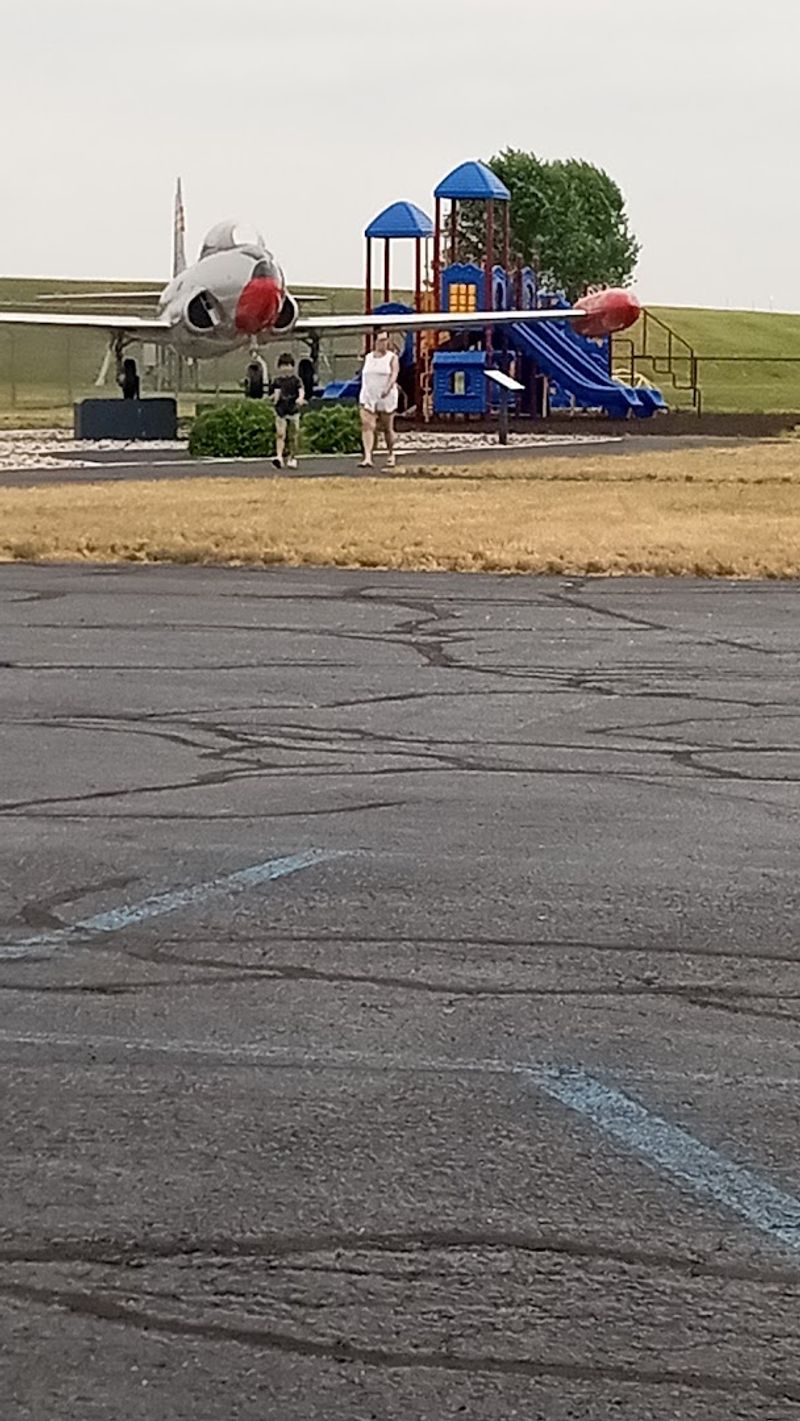
It would be easy for a military heritage park to lean entirely on displays and overlook comfort. This one does not. 122nd Fighter Wing & Heritage Park has a practical family side that makes it much easier to turn a quick aviation stop into a relaxed outing.
The layout helps right away. There is a fenced setting, a manageable amount of parking, a paved walking route around the displays, and a playground area that gives younger kids a reason to stay longer after the jets have been inspected.
That mix broadens the audience without diluting the identity of the place. The pavilion and picnic tables are especially useful. They create a natural pause point where adults can sit, regroup, or eat while still keeping the aircraft in the visual field.
Instead of treating the displays and play area like separate worlds, the park blends them into one compact, easy-to-understand experience.
That matters because many interesting roadside stops fall apart once basic needs enter the equation. A place can be visually exciting for ten minutes and then become awkward if there is nowhere shaded to sit or no safe space for children to burn off energy.
Here, the infrastructure quietly supports the visit rather than getting in its way. The overall tone is simple and unpretentious. You are not navigating a giant attraction with long distances, high costs, or too many decisions.
You are spending time in a tidy public space where military aircraft, playground movement, and casual lunch breaks coexist without friction. For parents, grandparents, and anyone trying to please different attention spans at once, that is not a minor detail.
It is the reason the park works as more than a photo stop and becomes a place you can comfortably use for an hour or more.
Fort Wayne’s Air Guard Story Told in Open Air
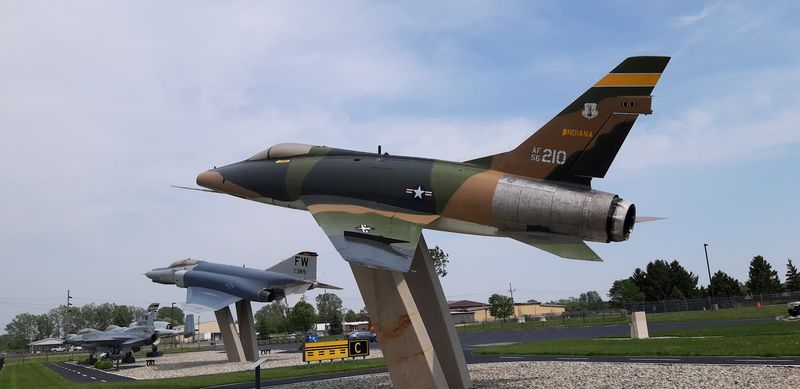
Beneath the family-friendly setup, this park carries a serious local story. The aircraft and interpretive elements connect to the long evolution of military aviation in Fort Wayne, giving the space a civic purpose beyond recreation.
It functions as a public reminder that air power here is not abstract national history but part of the city’s own landscape.
The outdoor format suits that mission well. Instead of confining the story to a building that must be sought out, the park places it in everyday view, where a lunch break, a short walk, or a stop with children can turn into a small history lesson.
That accessibility gives the memorial aspect more reach than a formal museum setting might. The tone remains grounded rather than overly ceremonial.
Plaques provide context, the displays honor service, and the arrangement encourages observation without demanding silence or specialized knowledge.
You can engage at your own pace, whether that means reading every marker carefully or simply using the aircraft as an entry point to broader conversations about the base and its role in the community.
That local connection gives the park depth. Without it, the jets would still be visually impressive, but they would risk feeling generic.
With it, the displays become part of Fort Wayne’s identity, tied to the 122nd Fighter Wing and to generations of military presence that shaped the area around the airport.
There is also a quiet dignity in the way the place balances remembrance with public access. It does not try to overwhelm you with grand gestures.
Instead, it lets scale, context, and careful presentation do the work. The result is a park where engineering, service, and regional history all share the same open-air stage in a way that is easy to approach yet difficult to dismiss.
How to Time Your Stop for the Best Experience

This is the kind of place that rewards a little timing strategy. Because 122nd Fighter Wing & Heritage Park is compact and outdoors, your experience depends less on an itinerary and more on choosing the right moment to arrive.
Even a small shift in time of day can change the park from a quick walkthrough into a very satisfying stop. For the strongest visual payoff, bright but not harsh daylight works best.
Clear conditions make the aircraft profiles stand out sharply against the sky, and that contrast is part of what makes the displays photograph so well.
Late afternoon can be especially appealing, when shadows stretch across the pavement and the metal surfaces pick up more texture.
If you are visiting with children, a mealtime stop makes sense. The picnic shelter gives the park a natural lunch or snack break function, and the playground helps extend the visit after the aircraft have been explored.
That rhythm tends to work better than trying to rush through on a strict in-and-out schedule. Short visits can still be rewarding, especially if you are waiting before an airport run or looking for a place to stretch your legs.
The path is easy to navigate, the parking is close, and the layout lets you see a lot without committing to a long walk. That convenience is one of the park’s strongest practical advantages.
There is one planning note worth keeping in mind: this is a simple public park, not a full-service attraction. Comfort expectations should stay realistic.
Arrive ready for an outdoor visit, take advantage of the shade and seating, and let the stop unfold at an unhurried pace. In the right window, even forty-five minutes here can feel surprisingly full.
Why This Small Airpark Stands Out in a Big Way
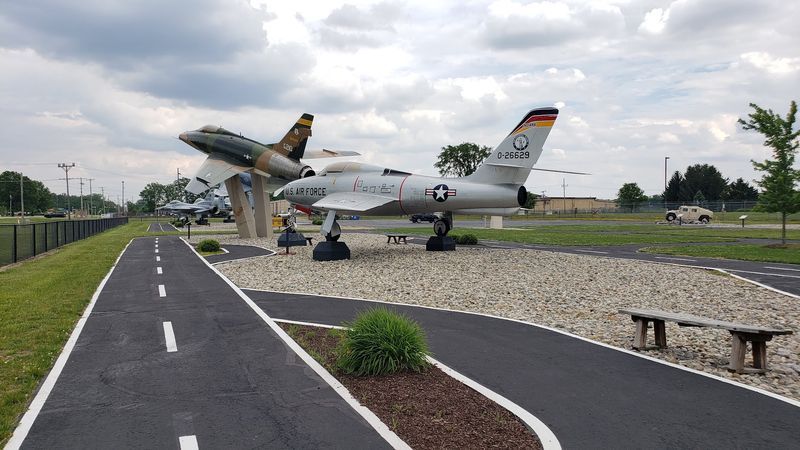
Some places impress by sheer scale. This one works differently. 122nd Fighter Wing & Heritage Park stands out because it packs aviation history, local identity, family usefulness, and active-sky excitement into a footprint small enough to explore without effort.
That efficiency is a major part of its charm. You do not have to commit a whole day, buy a ticket, or navigate a sprawling complex to get something memorable out of the stop.
Within a short visit, you can study retired jets, read contextual plaques, catch aircraft activity overhead, and settle under a pavilion while kids head for the playground.
Few public parks combine those elements this cleanly. Many aviation attractions skew heavily toward enthusiasts and leave casual visitors behind, while many family parks offer convenience but little distinction.
Here, the balance is unusually tight. The displays are substantial enough for aircraft fans, and the layout is easygoing enough for anyone who simply wants an interesting place to spend an hour.
The location near the airport adds one last layer of personality. It keeps the setting connected to living aviation rather than turning it into a static history island.
That link between past aircraft on display and present aircraft in motion gives the park a sense of continuity that larger attractions sometimes miss.
In the end, the appeal is not complicated. This is a well-kept Fort Wayne park where military jets are visible up close, history is readable without fuss, and the experience remains accessible to families, travelers, and locals alike.
If you are the kind of person who notices unusual roadside landmarks and immediately wants to pull over, this is exactly the stop you hope to find – specific, unfussy, and much cooler than its modest size suggests.