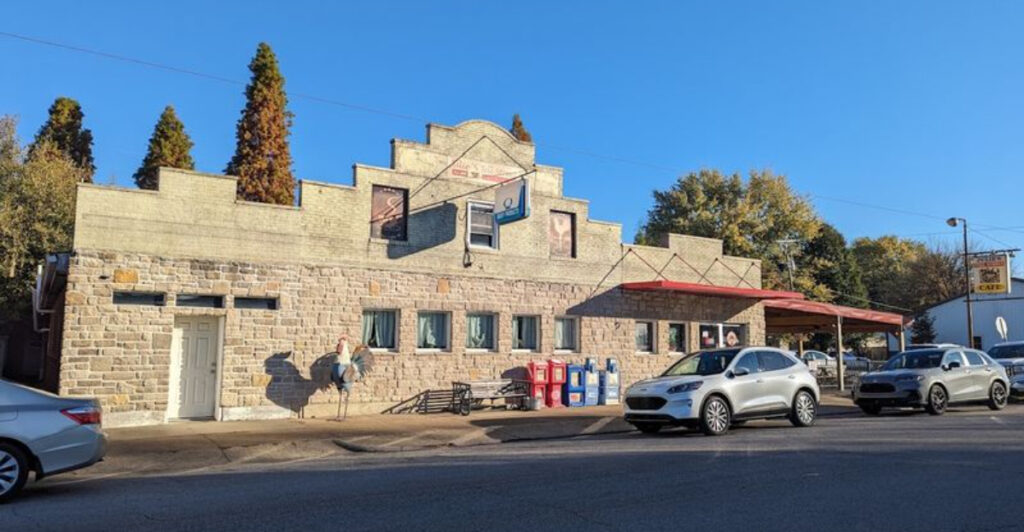
Great budget meals are getting harder to find, which makes Julie’s Tell Street Cafe in Tell City all the more remarkable. This longtime Southern Indiana diner has built a loyal following with a famously affordable $3.50 hamburger, hearty home-style breakfasts, daily lunch specials, fresh coffee, and the kind of friendly service that keeps regulars on a first-name basis.
The low prices may bring first-time visitors through the door, but the consistently satisfying comfort food is what keeps them coming back. If you’re searching for one of Indiana’s best cheap eats, Julie’s Tell Street Cafe is a stop that’s well worth making.
The Kind of Storefront That Signals Breakfast Before You Read the Menu
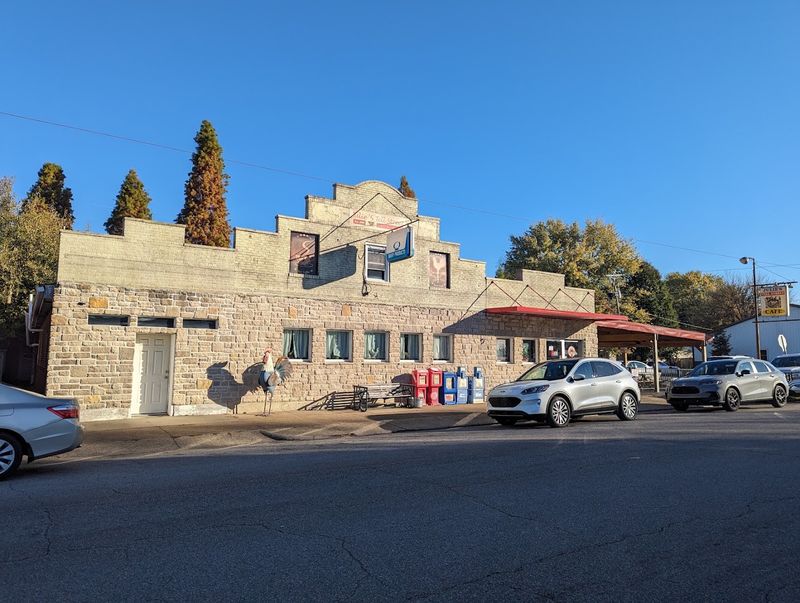
Julie’s Tell Street Cafe does not rely on flashy curb appeal or oversized signage to pull you in. Its draw is more old-school than that: a lived-in street presence, practical location, and the quiet confidence of a spot that knows regulars will show up early.
In Tell City, that kind of understatement reads less like modesty and more like proof. Step inside and the room registers as a working cafe, not a themed throwback.
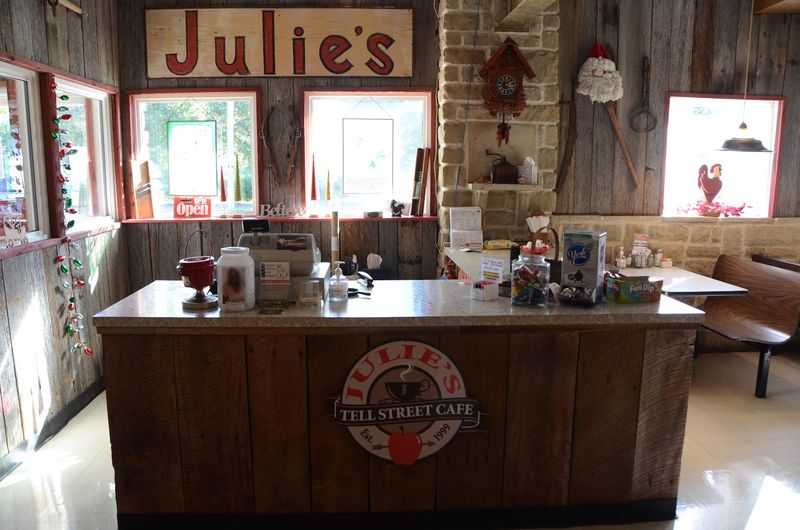
Tables turn, servers move with purpose, coffee keeps circulating, and the decor leans into straightforward Americana rather than polished nostalgia.
That difference matters, because Julie’s feels organized around feeding people first, with style arriving as a byproduct of routine rather than a branding exercise.
The energy shifts with the clock. At breakfast, the place has that hum of forks, cups, and short conversations before the day gets moving; by lunch, the room can get louder and busier, which matches the pace of a cafe that closes in the early afternoon instead of stretching into dinner.
Those limited hours give the restaurant a specific identity, and you can sense it in the way service and kitchen timing are built around mornings and midday.
There is also a useful clarity to the whole setup. You are not walking into a destination designed for lingering over craft cocktails or a dramatic dining-room reveal.
You are walking into a Tell City cafe that has built its reputation on familiar food, fair prices, and a dependable sense of motion, and that simple first read sets up everything that follows once the plates start landing.
Why the $3.50 Hamburger Gets the Spotlight
The burger at the center of this story is not trying to compete with towering steakhouse builds or trend-chasing smashburger stacks. Its appeal starts with the number attached to it: $3.50, a price that sounds almost out of step with the current dining landscape.
That low cost changes the way you look at the plate before the first bite even happens. At Julie’s, the hamburger works because it fits the cafe’s wider logic.
This is a place where value is not treated like a gimmick, and where straightforward American food has room to be exactly what it sounds like.
A burger in that setting does not need clever toppings or a backstory; it needs to arrive hot, taste properly grilled, and make the price seem even more surprising once it hits the table.
The strongest cheap meals always carry a little tension between expectation and delivery. You brace for compromise because the number is so low, then the food arrives with enough care to make the math feel generous instead of suspicious.
That is the sweet spot Julie’s appears to understand, especially in a town cafe where diners notice quickly if low prices come with corner-cutting.
It also helps that the burger is part of a broader menu identity built on dependable comfort food. Even when breakfast plates, daily specials, or hash browns grab more attention in conversation, the hamburger stands out as a clean measure of the place: accessible, unfussy, and easy to return to.
In Indiana, cheap meals become local legends when they still read as a real meal, and this one clearly lands in that category.
Hash Browns, Giant Pancakes, and the Breakfast Side of the Story
If the burger is the hook, breakfast is the supporting argument that makes Julie’s more than a one-item curiosity. The cafe opens early, starting at 5:30 AM, and that schedule tells you a lot about its role in town.
Places that open before sunrise tend to survive by being useful, not theatrical, and the menu energy follows that same practical line.
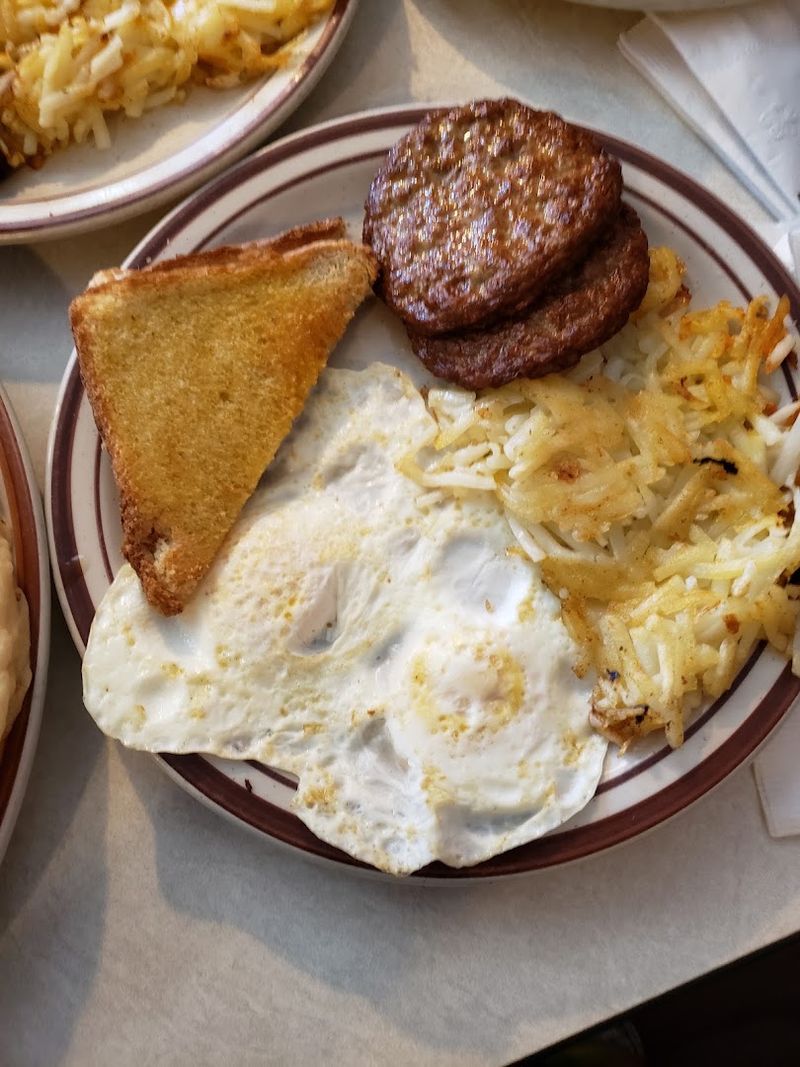
Breakfast here reads broad and familiar, but several details keep surfacing for good reason. Hash browns get singled out, pancakes are notably large, and bacon appears to hit that happy middle ground between crisp and tender rather than swinging hard in either direction.
Those are not glamorous traits, yet they are exactly the details that decide whether a diner becomes part of a weekly routine or stays a one-time stop.
The cafe also benefits from serving breakfast all day, which widens the mood of the room. Lunch can bring sandwiches or daily specials, but plenty of tables still want eggs, toast, potatoes, or biscuits later in the morning, and the menu structure makes space for that.
In a small-town American restaurant, all-day breakfast is less a novelty than an agreement to meet people where they are.
Even the bigger plates seem to play into the place’s reputation for solid value. Steak and eggs, biscuits and gravy, western omelets, French toast, and breakfast specials all fit the kind of menu that rewards appetite without demanding a large budget.
The result is a cafe where the burger might spark curiosity, but breakfast is often what turns a casual stop into a repeat habit.
Southern Indiana Lunch That Moves Fast Without Acting Rushed
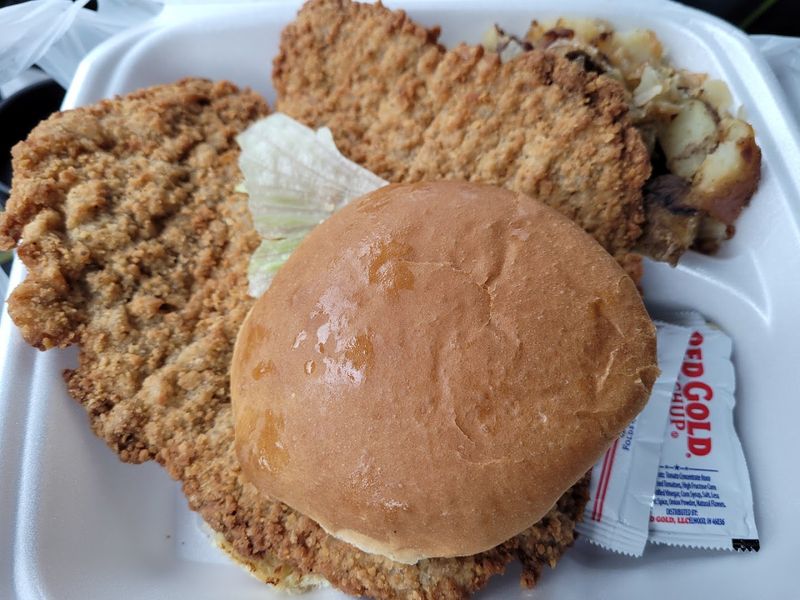
Lunch at Julie’s has a different personality from breakfast. The room fills, the sound level rises, and the pace tightens in a way that suits a cafe built around early service and a firm closing time.
Because the restaurant closes at 2 PM on weekdays and 1 PM on Saturday, midday service carries a little urgency, but it is the productive kind rather than pure chaos.
That rhythm matters when you are deciding what kind of stop this is. Julie’s is not designed for a drawn-out afternoon meal; it is better understood as a place that catches people on their way through the day with quick service, filling portions, and enough range to satisfy different appetites at the same table.
Breakfast can sit next to salad, fish, chili, grilled chicken, or a burger without the menu feeling confused. The lunch side also broadens the cafe beyond diner shorthand.
Cornbread, fried pickles, white fish, salads, and daily specials all suggest a restaurant working in the practical American cafe tradition rather than limiting itself to one narrow lane.
That flexibility is useful in a town setting, where a good lunch spot often needs to serve workers, families, regular coffee drinkers, and weekend drop-ins without changing its personality for any of them.
Timing, though, is part of the experience. Arriving before the peak can make the room easier to read and the pace easier to enjoy, while the heart of lunch service delivers the full busy-cafe soundtrack.
Either way, Julie’s comes across as a place shaped by turnover, consistency, and midday momentum, which is exactly what many people want when the goal is a satisfying meal, not a leisurely event.
The Staff Rhythm Is Part of the Meal
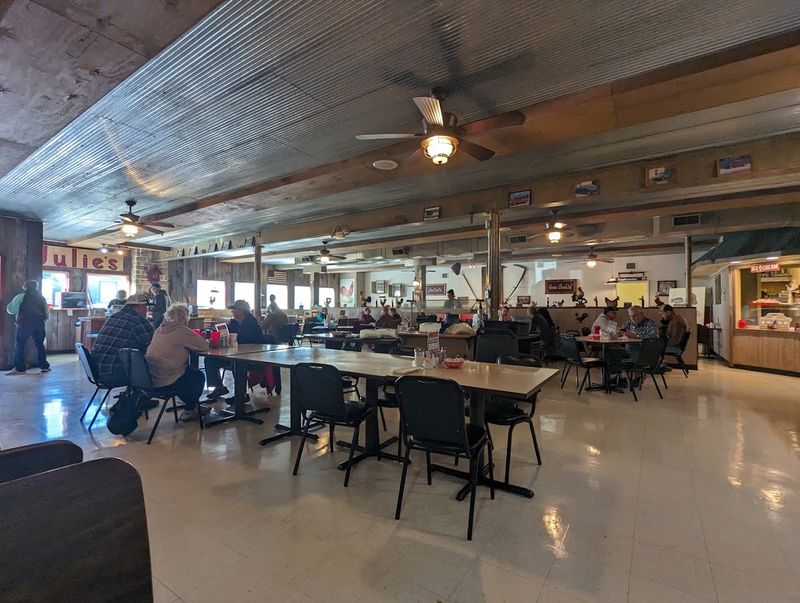
Some restaurants win people with decor, and some win on a single signature dish. Julie’s appears to gain a lot of ground through service style, which is harder to stage and easier to notice over time.
The language tied to this cafe keeps circling back to friendly faces, quick attention, refills that stay on schedule, and a front-of-house team that gives the room its momentum.
That is especially important in a place operating at breakfast and lunch speed. When tables are turning fast, friendliness alone is not enough; the room needs a practical kind of hospitality that makes movement look natural instead of frantic.
Coffee has to keep flowing, orders need to land in a reasonable window, and a crowded dining room has to feel lively rather than neglected.
Julie’s seems strongest when that rhythm is locked in. A cafe with regulars and first-timers sharing the same room can easily drift into favoritism or uneven pacing, yet the ideal version of this kind of establishment is one where everyone gets folded into the same current.
You notice it in the way a server checks cups before they go empty, in how quickly plates replace anticipation, and in whether the room keeps its shape at peak times.
Service also defines how a modestly priced restaurant is remembered. Low numbers on the menu can attract attention, but genuine value depends on whether the whole meal feels competently handled from greeting to check.
At Julie’s, that people-centered side is not a decorative extra attached to the food. It is one of the main reasons the cafe functions as a local habit instead of just a cheap place to eat.
A Tell City Address That Still Runs on Morning Logic
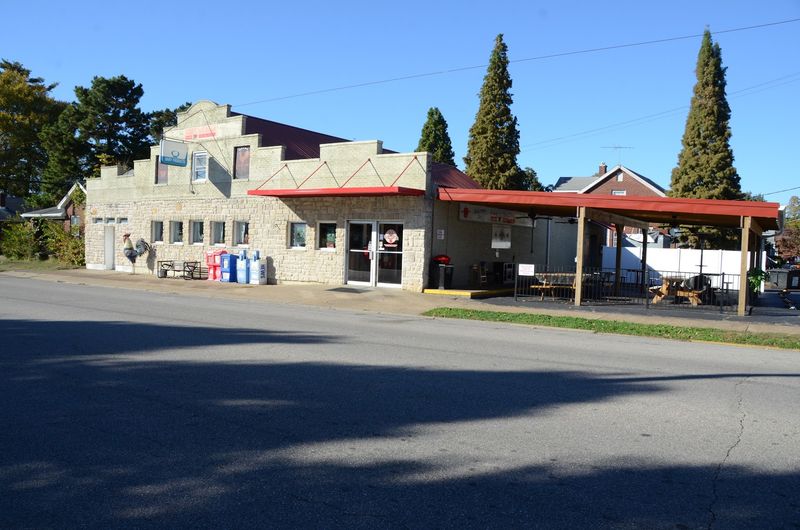
Location matters differently for a cafe like Julie’s than it does for a flashy destination restaurant. At 922 Tell Street in Tell City, the appeal is tied to placement within daily life, not separation from it.
The address works best when understood as part of the town’s regular circulation, a spot folded into errands, workdays, and breakfast plans rather than reserved only for special occasions.
That practical identity is reinforced by the hours. Julie’s is open Monday through Saturday beginning at 5:30 AM, closes at 2 PM most days, trims Saturday to 1 PM, and stays closed Sunday.
Those hours draw a clear outline around the experience: this is a morning and midday institution, one that commits to the busiest functional parts of the day and lets evening belong to someplace else.
For travelers, that means planning actually matters. Showing up late in the afternoon will not work, and treating the cafe like an all-day roadside stop misses the whole point of its rhythm.
Julie’s rewards early starts, brunch-minded timing, or a lunch break that lands before the room starts winding toward closing procedures.
There is also a subtle upside to that schedule. A restaurant that knows when it serves best can keep its identity sharper than one trying to stretch into every possible dining occasion.
At Julie’s, the limited hours create a sense of focus: breakfast remains central, lunch still gets its due, and the cafe never has to pretend it is built for nightlife. In Tell City, that kind of clarity can be more attractive than availability around the clock.
Why This Cheap Indiana Meal Lands Harder Than the Price Suggests
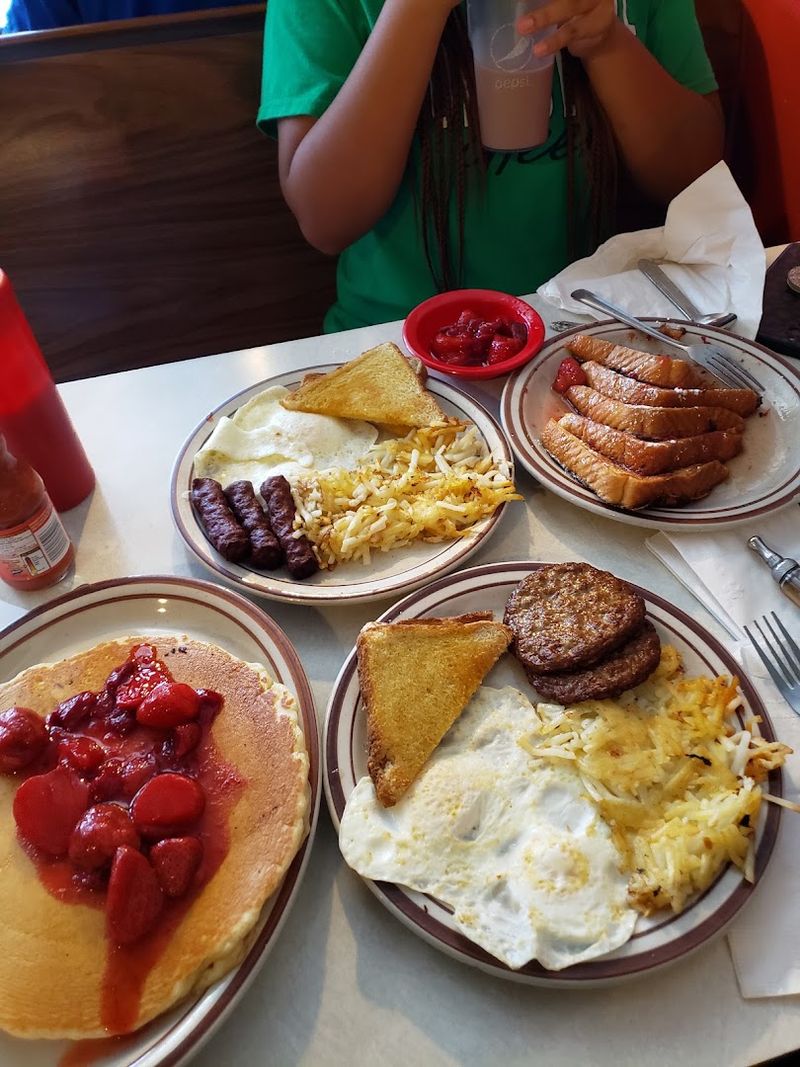
The easiest way to misunderstand Julie’s Tell Street Cafe is to reduce it to a bargain headline. Yes, a $3.50 hamburger is eye-catching, especially now, and it gives the story an irresistible starting point.
But the reason the place matters is larger than one low number on a menu board. Julie’s represents a kind of local restaurant that has become more noticeable precisely because it is less common than it used to be.
It opens early, closes early, serves American standards without apology, and appears comfortable letting usefulness drive its reputation.
In that environment, affordability is not isolated from quality, speed, or friendliness; it works together with them, which is why the cafe reads as a complete place rather than a novelty stop.
The broader appeal comes from how many roles the restaurant can play without straining. It can be a quick breakfast before the day starts, a lunch stop with enough variety to satisfy a mixed table, a coffee refill spot that keeps the room moving, or a budget-friendly meal that does not feel skimpy.
That flexibility gives the burger more meaning, because it sits inside a system that already understands value from several angles.
So the final takeaway is straightforward. If you are driving through Tell City or looking for a true small-town Indiana cafe experience, Julie’s is compelling not because it tries to impress with spectacle, but because it handles ordinary diner expectations with discipline and warmth.
The burger gets the headline, breakfast deepens the case, and the whole operation makes a convincing argument that cheap meals still matter when they are attached to a place with real local shape.