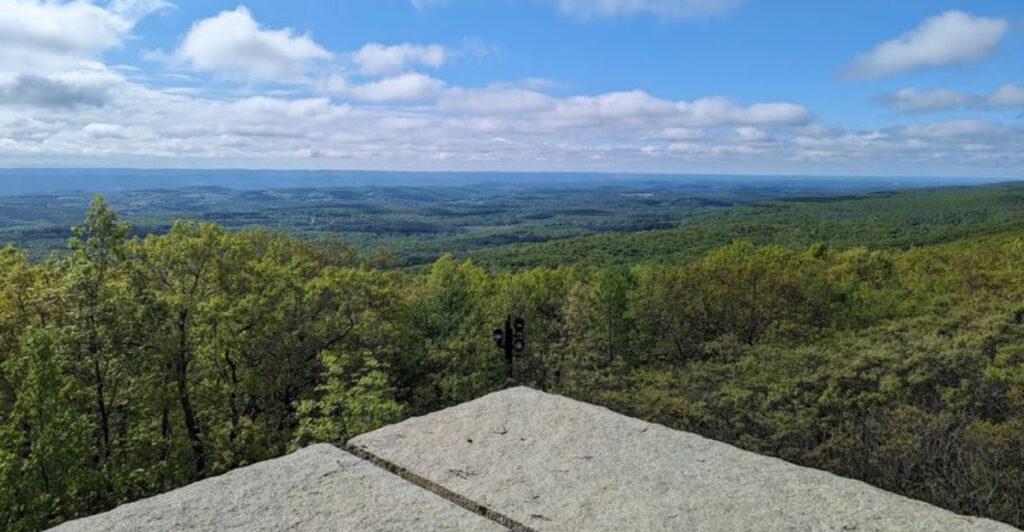
The parking lot rarely tells the whole story. At some New Jersey parks, the first few minutes offer little more than tree roots, trail markers, and the faint suspicion that you packed too many snacks.
Then the path bends, the woods open, and suddenly the Hudson River is below your feet or the Delaware Water Gap is filling the horizon. These are not pull-up, snap-a-photo, and leave kinds of places.
Their best scenery requires at least a little curiosity, whether that means climbing a rocky ridge, following a boardwalk through salt marshes, or continuing past the spot where casual walkers turn around. Some trails demand sturdy shoes and a respectable amount of effort.
Others deliver their payoff after a surprisingly manageable stroll. What they share is the pleasure of discovery: that satisfying moment when an ordinary-looking path reveals a view that was hidden just beyond the first turn.
1. Worthington State Forest – Columbia
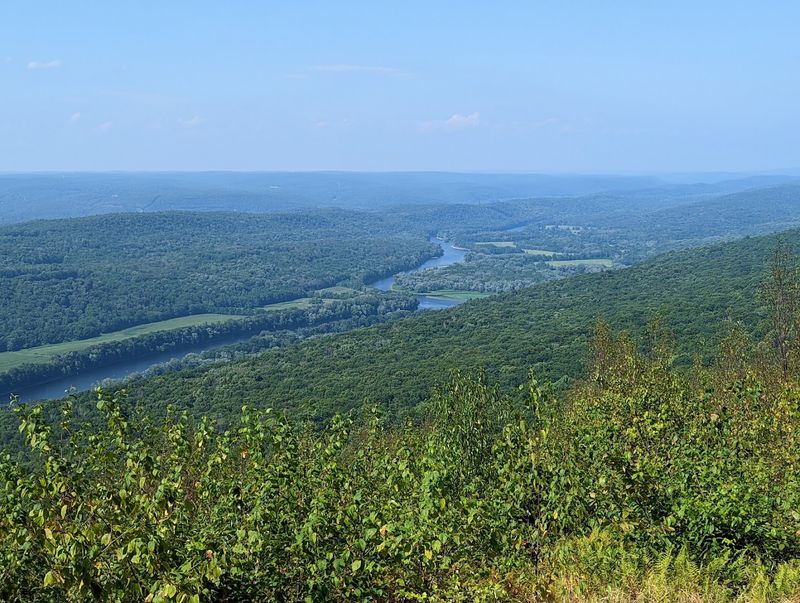
The first stretch toward Mount Tammany does not bother easing anyone into the experience. Rocks appear quickly, the incline makes itself known, and the trail seems determined to find out whether you were serious when you said you wanted a hike.
Keep climbing, though, because the overlook from the mountain’s southern face is one of New Jersey’s signature views. The Delaware River curves through the gap below, Mount Minsi rises directly across the water in Pennsylvania, and the forested ridges seem to stack themselves toward the horizon.
The classic route uses the steep Red Dot Trail for the ascent, followed by the Blue Dot Trail for a somewhat gentler descent. It is a relatively compact loop, but the elevation gain and rocky footing make it feel far more substantial than the mileage suggests.
Crowds can build on pleasant weekends, so an early arrival gives you a better shot at parking and a quieter climb. Worthington also has nearly 20 miles of trails, including sections of the Appalachian Trail and routes leading toward Sunfish Pond, so Mount Tammany is not the only prize hiding beyond the trailhead.
Still, when that first open ledge appears and the river comes into view, it is easy to understand why hikers keep returning to this demanding corner of Warren County.
2. Wawayanda State Park – Vernon and West Milford
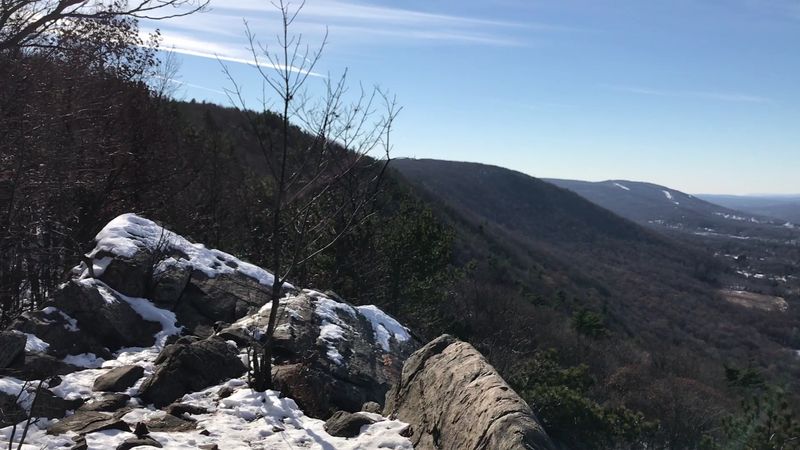
A quiet lake, a swimming beach, and picnic tables make the entrance area feel like the main attraction. That impression changes once you head into the hills.
Wawayanda State Park spreads across a huge swath of northern New Jersey, with roughly 60 miles of trails threading through hardwood forest, wetlands, rocky ridges, and old iron-mining country.
The most memorable scenery waits around Bearfort Mountain and Terrace Pond, where the terrain becomes rougher and the park’s gentler lakeside personality gives way to exposed rock and broad Highland views.
Reaching the pond involves uneven footing, short scrambles, and trail intersections that reward anyone who downloaded a map before losing cell service. The payoff is an unexpectedly dramatic mountaintop setting, with dark water surrounded by boulders and forest instead of lawns or boat docks.
Treat Terrace Pond as a place to admire rather than a swimming hole, and bring more water than the moderate distance might suggest; the rocky surface can slow your pace considerably. For a less strenuous outing, sections of the Appalachian Trail and paths around Wawayanda Lake still provide plenty of forest atmosphere.
This is a park that improves the farther you wander from the busy recreation area, especially when the trees thin and the landscape finally reveals how high you have climbed.
3. Ramapo Mountain State Forest – Oakland and Wanaque
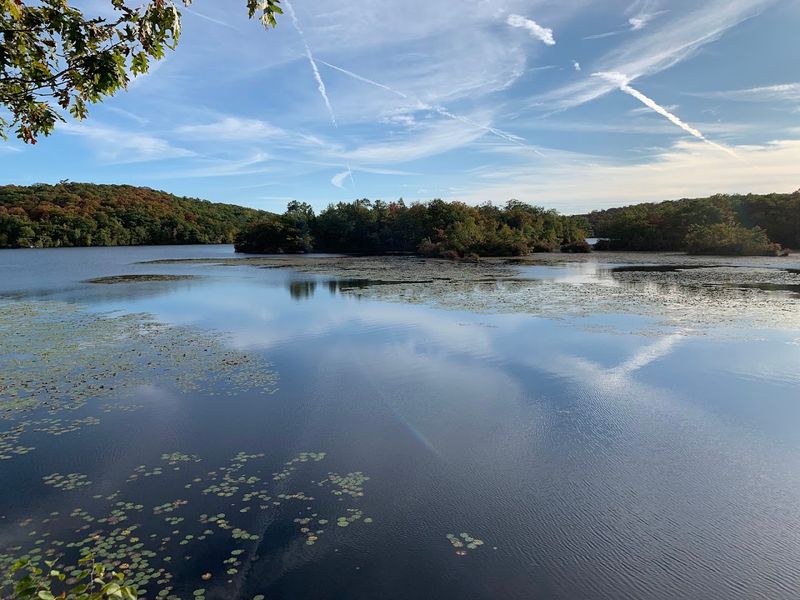
Ruined stone walls are not what most people expect to find above a North Jersey lake. That is precisely why the climb to Van Slyke Castle feels like such a good surprise.
The forest initially delivers a familiar mix of old roads, woodland paths, and steady uphill walking, but the route eventually reaches the remains of a grand early-20th-century estate on Fox Hill.
Roofless rooms, partial walls, and stone foundations sit among the trees, creating the strange impression that an abandoned European manor somehow landed in the Ramapo Mountains.
Continue around the ruins and the scenery becomes even better. Rock ledges open toward Ramapo Lake, surrounding ridges, the Wanaque Reservoir, and, in clear conditions, the distant Manhattan skyline.
The park contains more than 4,000 acres, with trails used by hikers, mountain bikers, horseback riders, and cross-country skiers, so choosing the right loop matters. Some intersections can be confusing, particularly where woods roads and marked trails overlap.
Carrying an offline map is a smart move rather than an overly cautious one. The combination of lake views, rugged forest, and castle ruins makes this outing feel more layered than a standard overlook hike.
You do not simply arrive at a viewpoint; you uncover pieces of the landscape one at a time until the whole scene finally comes together.
4. Norvin Green State Forest – Ringwood and West Milford
There is very little decorative landscaping to soften Norvin Green’s edges. No grand entrance announces the wilderness, and no paved promenade carries visitors toward the scenery.
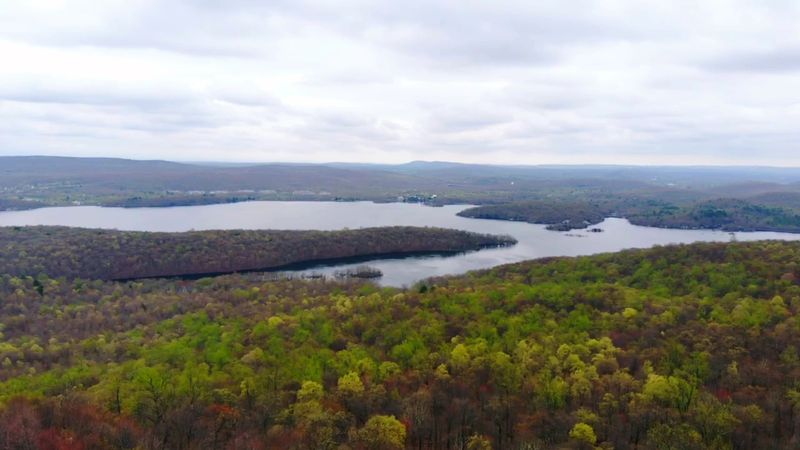
The forest is accessed on foot, and its trails climb directly into the rocky Wyanokie Highlands, where the reward comes in the form of exposed summits and wide reservoir views. Wyanokie High Point is the best-known destination, but the journey through Carris Hill and nearby ridges can be just as memorable.
From the open rock, hikers can look across the Wanaque Reservoir, surrounding hills, Lake Sonoma, and, when visibility cooperates, all the way toward the Manhattan skyline. The landscape feels unusually remote considering how close it sits to North Jersey’s busy highways and towns.
That remoteness comes with a few practical realities. Trails are often rocky, elevation changes arrive repeatedly, and route-finding requires more attention than it would on a simple park loop.
This is not the place to rely on a vague screenshot of a trail description. Plan a specific route, carry a proper map, and allow extra time for the climbs.
The forest is especially striking in late fall and winter, when bare branches reveal distant ridgelines that summer leaves partially conceal. Norvin Green earns its place on this list because the view never feels handed to you.
It appears only after the trail has made you work for it.
5. Pyramid Mountain Natural Historic Area – Montville
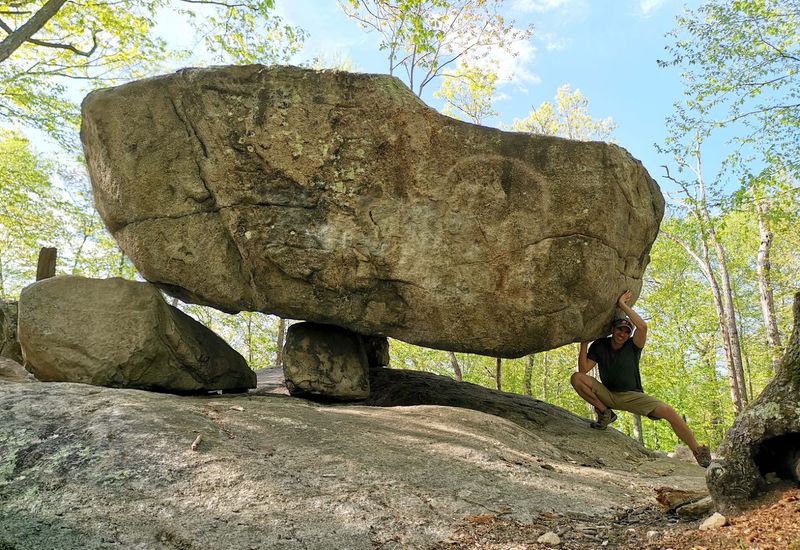
The headline attraction here is a boulder that appears to be ignoring basic instructions from gravity. Tripod Rock is a massive glacial erratic balanced on three smaller stones, and seeing it in person is far more impressive than its familiar photos suggest.
The hike leading there passes streams, hardwood forest, wetlands, and scattered boulders before climbing onto a long ridge above the surrounding valley. That progression is what makes Pyramid Mountain so satisfying.
The scenery arrives in stages rather than through one dramatic reveal, with each turn producing another geological curiosity or glimpse through the trees.
Bear Rock, rocky ledges, and smaller perched boulders give the preserve an almost puzzle-like quality, as though the glacier that shaped the landscape left behind a collection of oversized props.
Several trail combinations can be used to reach Tripod Rock, and longer loops allow visitors to explore more of the ridge instead of treating the famous boulder as a quick turnaround point. Expect roots, mud after rain, and enough intersecting paths to make a trail map useful.
The preserve sits in a developed part of Morris County, yet the interior quickly feels removed from traffic and neighborhoods. Tripod Rock may get top billing, but the broader pleasure is realizing how much strange, rugged terrain was hiding beyond such an unassuming entrance.
6. Palisades Interstate Park – Alpine and Fort Lee
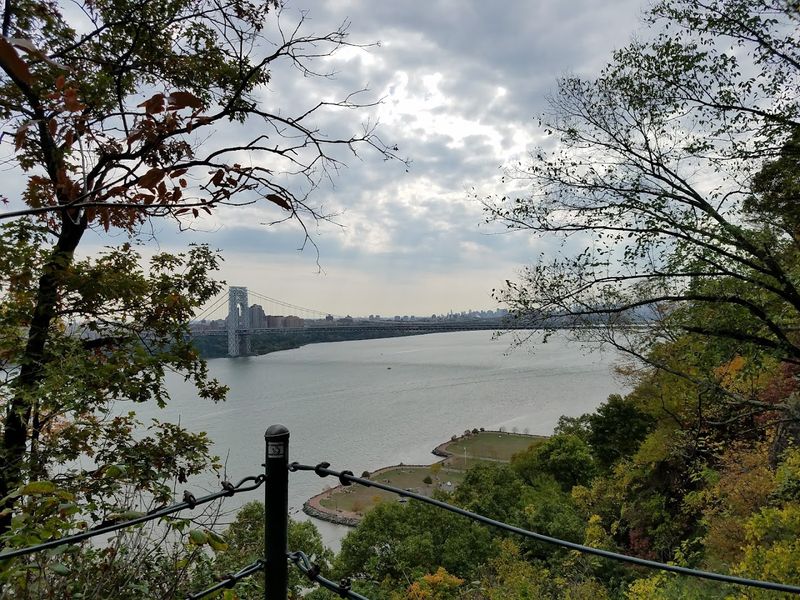
The Hudson River looks entirely different when viewed from the top of a wall of ancient rock. Along the New Jersey Palisades, wooded paths suddenly reach cliffside openings where the river spreads below and the buildings of New York rise across the water.
Some overlooks are accessible by car, but the better experience comes from following the Long Path or one of the connecting trails beyond the busiest pull-offs.
The forest briefly hides the edge, then releases you onto another viewpoint with a fresh angle on the Hudson, the George Washington Bridge, or the communities along the opposite shore.
State Line Lookout and the northern sections around Alpine are especially good starting points for combining scenery with a real walk. Trail difficulty varies sharply.
A clifftop route can be manageable, while paths descending toward the river introduce steep grades, stone steps, and rugged footing. Rockfalls can also produce temporary closures, so posted notices should be taken seriously and current conditions checked before choosing a route.
The park’s appeal is bigger than one famous overlook. It stretches for miles along the river, allowing hikers to build anything from a relaxed woodland stroll to a demanding climb between the shoreline and the cliffs.
Few New Jersey landscapes create such a strong contrast between dense forest, vertical stone, moving water, and one of the world’s busiest metropolitan areas.
7. Hartshorne Woods Park – Highlands
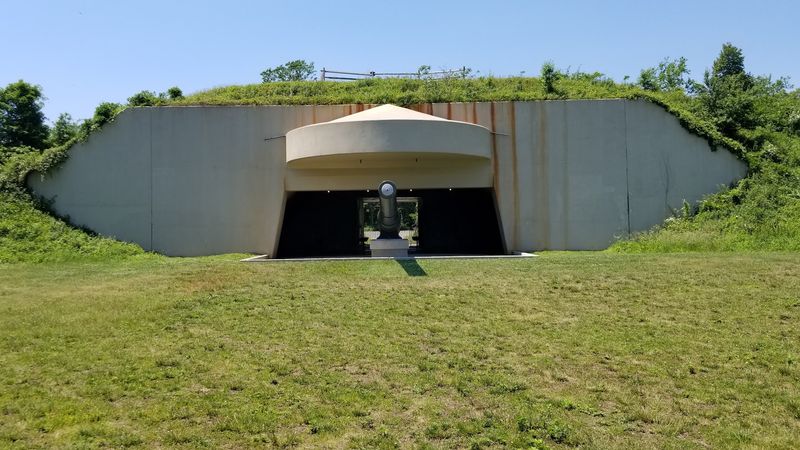
A concrete gun battery overlooking the coast sounds like the setting for an old military film, not a county park hike. Yet that is exactly what waits in the Rocky Point section of Hartshorne Woods.
The trails climb through one of the highest points along the Atlantic coast of New Jersey before reaching Battery Lewis, part of a former military reservation built to defend New York Harbor.
One of its enormous gun positions now displays a 16-inch naval gun associated with the USS New Jersey, while nearby overlooks open toward Sandy Hook, the Navesink River, and the Atlantic approaches beyond.
The view becomes more meaningful once you understand why the military chose this ridge: it commands an enormous sweep of water. Hartshorne offers around 16 miles of trails, ranging from easy walks to steep, twisting routes popular with mountain bikers.
For the most direct scenery, the Lewis Overlook and Battery Loop are approachable choices, while the Rocky Point Trail provides a longer, more demanding outing. Black Fish Cove adds another layer, descending toward a small beach and fishing area below the wooded heights.
Parking areas can become busy on weekends, particularly during mild spring and fall weather. Come prepared to share the trails, listen for approaching bikes, and take your time around the historic structures.
The mixture of forest, military ruins, and saltwater views is unlike anything else on this list.
8. South Mountain Reservation – West Orange, Maplewood, and Millburn
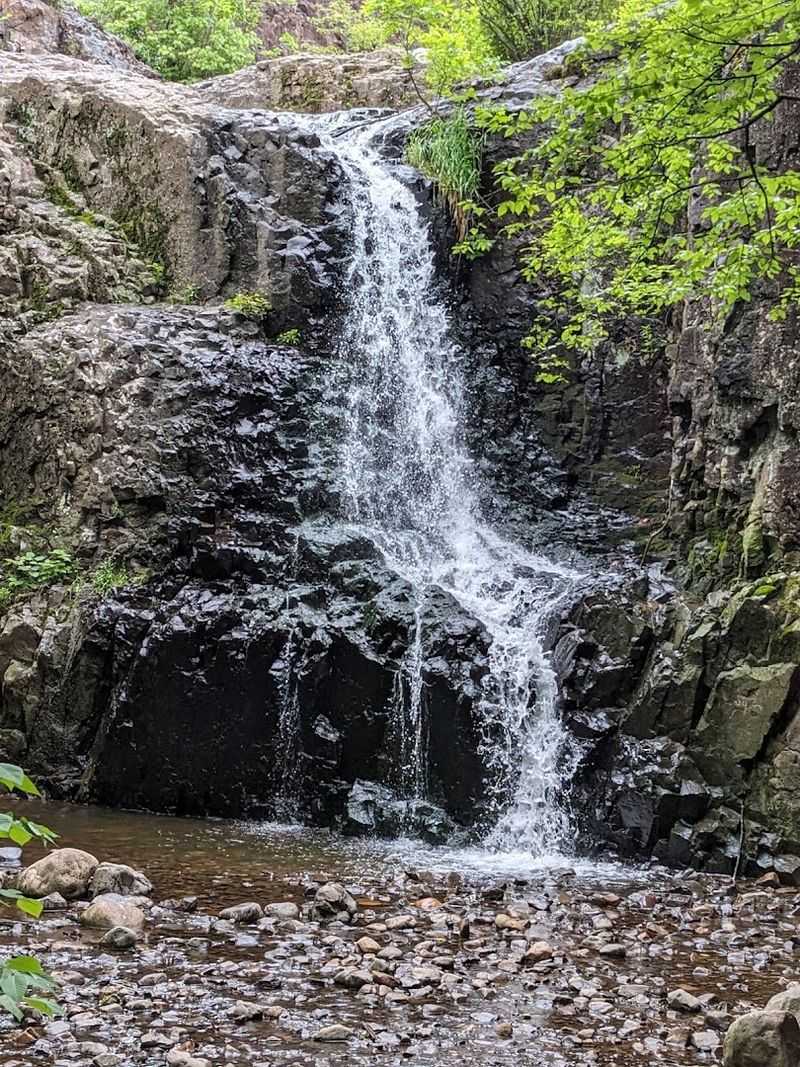
Hemlock Falls has a habit of stealing the itinerary. Visitors follow the Rahway River through the woods, reach the cascade, take the required photos, and assume they have seen the reservation’s main event.
The better move is to keep going. South Mountain Reservation covers more than 2,000 acres across Essex County, with a web of trails climbing the ridges above Millburn, Maplewood, and West Orange.
Higher points such as Crater View reveal how dramatically the landscape rises above the surrounding suburbs. On a clear day, the skyline stretches from Jersey City and Manhattan toward Staten Island and the industrial lowlands, creating a view that is more expansive and complicated than a simple city panorama.
The reservation’s stone bridges, old carriage roads, streams, and forested slopes reflect a park system developed beginning in the late 19th century, with planning connected to the Olmsted tradition. That history helps explain why the terrain feels wild without being inaccessible.
Multiple trailheads make it possible to design a short waterfall walk or a longer loop connecting overlooks and river paths. The downside is that the trail network can be confusing, especially where informal paths cross marked routes.
A map will prevent an intended hour-long walk from becoming an accidental afternoon expedition. Hemlock Falls deserves its popularity, but the ridge views prove that the reservation still has surprises beyond its most photographed stop.
9. Mills Reservation – Montclair and Cedar Grove
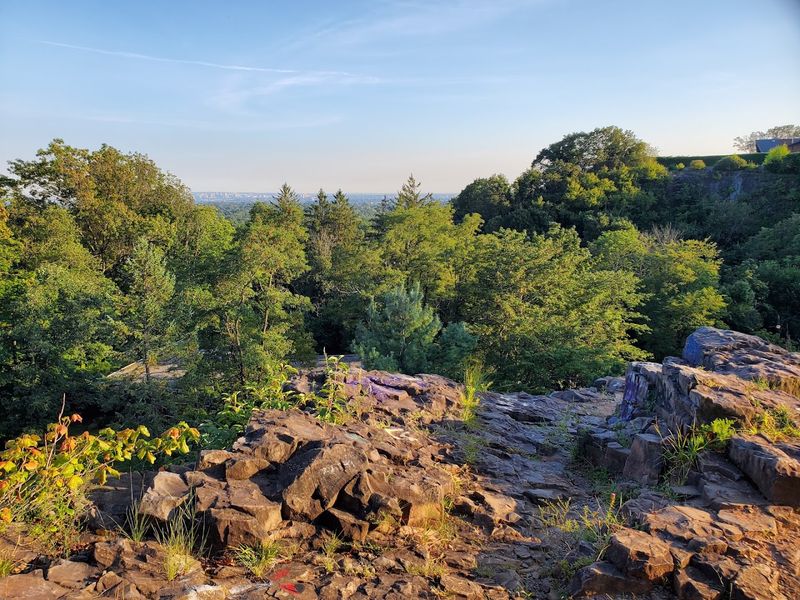
For several minutes, this Montclair-area walk feels like a pleasant neighborhood forest with no particular intention of showing off. Then the trail reaches Quarry Point, the trees step aside, and New York City appears beyond the rooftops and lowlands of North Jersey.
The contrast is the whole appeal. Mills Reservation covers only about 157 acres, making it far smaller than the mountain forests farther north, but it delivers a legitimate skyline overlook without requiring an all-day hike.
The main loop is roughly a mile and a half, and other marked paths—including a section of the Lenape Trail—allow visitors to vary the distance. Quarry Point itself carries traces of the site’s past.
The cliff is connected to an old quarry operation, and a circular concrete platform remains from a World War II-era searchlight installation that once watched the skies around the metropolitan region. Today, the same elevation attracts birders during migration, particularly those watching for hawks passing above the ridge.
Trails are generally manageable, though rocks, roots, and fallen leaves can make the footing slick. Parking is available from more than one access point, which is helpful when the primary lot is busy.
Mills Reservation is ideal when you want the satisfaction of finding a hidden view but do not have the time, energy, or footwear for a major mountain climb.
10. The Tourne – Boonton Township and Denville
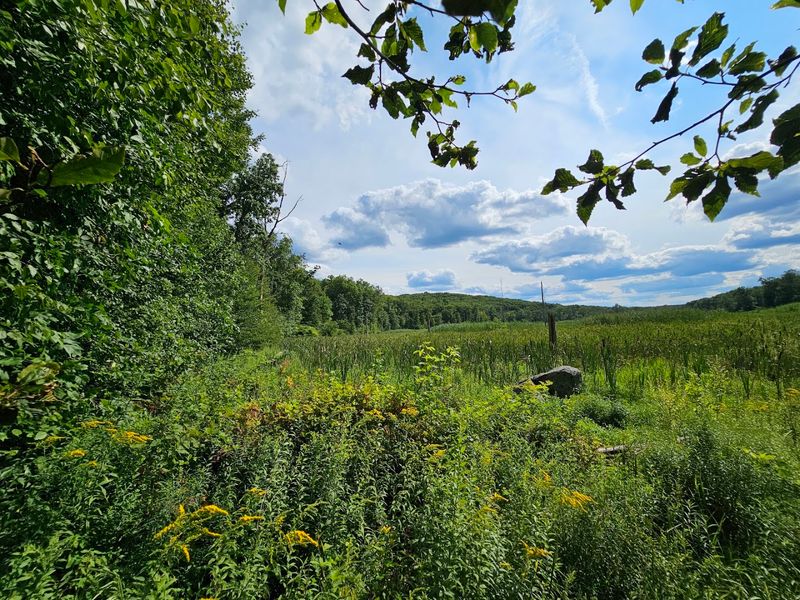
A hand-built road from the 1800s still helps lead walkers toward one of Morris County’s most quietly rewarding summits. Clarence Addington DeCamp, an early owner of the land and an enthusiastic local conservationist, created routes up the hill long before it became a county park.
Modern visitors now follow a broader network of wooded trails toward the top of the Tourne, where the forest opens over the Rockaway Valley. Looking east, the distant New York skyline can appear on a crisp day, giving the overlook its familiar local nickname: the New York Overlook.
The climb is moderate rather than punishing, which makes the park a good choice for families, casual hikers, and anyone who wants a summit without turning the outing into a test of endurance. Trails also accommodate mountain biking and horseback riding, so paying attention at bends is important.
At the top, a September 11 memorial adds a reflective note to the view. The Tourne changes character with the seasons: spring brings wildflowers, summer fills the paths with shade, autumn opens colorful views across the valley, and winter turns the hill into a popular place for sledding and cross-country skiing.
Its appeal comes from how gradually the scenery develops. You begin among suburban roads and picnic areas, climb through ordinary-looking woods, and emerge somewhere that suddenly feels much farther from town.
11. Sourland Mountain Preserve – Hillsborough
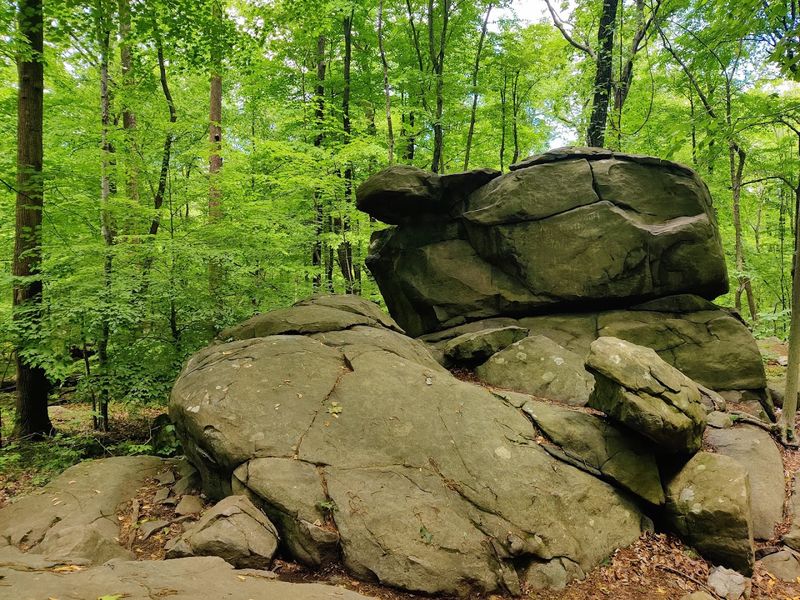
Loose stones crunch underfoot, enormous boulders rise between the trees, and suddenly Central Jersey feels much wilder than its reputation allows.
Sourland Mountain Preserve protects more than 3,000 acres along a diabase ridge in Somerset County, offering a trail system that is rocky, uneven, and far more demanding than many first-time visitors expect.
The best-known routes explore features such as Roaring Brook, exposed boulder fields, and the aptly named Devil’s Half-Acre. These are not manicured garden paths.
Roots cross the trail, rocks shift beneath your boots, and wet conditions can turn low sections muddy. Higher ground provides openings across the surrounding landscape, while the utility corridor crossing the ridge can offer long-distance views and, in especially clear conditions, a glimpse toward Manhattan.
The preserve is worth visiting even when haze blocks the skyline because its real personality comes from the geology. Massive rocks interrupt the forest like abandoned walls, and narrow passages make the hike feel exploratory rather than repetitive.
Several loops can be combined, but mileage alone is a poor predictor of difficulty here; rocky terrain slows everything down. Sturdy shoes and an offline trail map make the day considerably more enjoyable.
Sourland is the park to choose when you want a rugged North Jersey-style hike without driving all the way to the Highlands.
12. Cattus Island County Park – Toms River
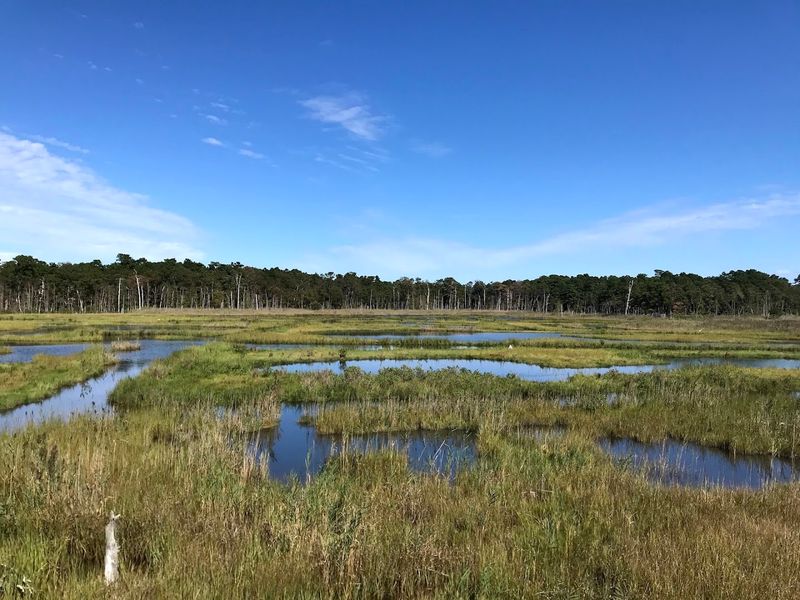
There is no mountain summit waiting at the end of this trail, and that is exactly what makes the reveal so effective. Cattus Island begins with maritime forest, sandy paths, freshwater wetlands, and stands of cedar that keep Barnegat Bay mostly out of sight.
Follow the trails toward the outer edges of the park, however, and the woods give way to salt marsh, open water, and long coastal horizons.
Boardwalks and shoreline paths reach views across Silver Bay, Applegate Cove, and the broader Barnegat Bay landscape, where ospreys, herons, egrets, and other waterbirds provide much of the movement.
The scenery is horizontal rather than towering: grasses bending in the wind, dead cedar trunks rising from wet ground, and sunlight flashing across shallow water.
More than seven miles of generally easy trails make this one of the most accessible outings on the list, though summer heat, ticks, and mosquitoes can turn a casual walk into an itchy lesson in preparedness.
Bring repellent and save the sunniest routes for cooler parts of the day. The Cooper Environmental Center near the entrance provides exhibits on the wildlife and habitats found around Ocean County, making it a useful stop before or after the walk.
Cattus Island proves that a hidden view does not need elevation. Sometimes the best reveal is simply the moment the forest ends and the bay begins.